

Partner, Wiley Rein, LLP
Megan L. Brown is a partner at Wiley Rein LLP. She has significant litigation, appellate and regulatory experience before state and federal courts and agencies.
Ms. Brown helps businesses respond to federal, state and local regulation and investigations raising administrative law, statutory interpretation, and constitutional issues, including the First Amendment.
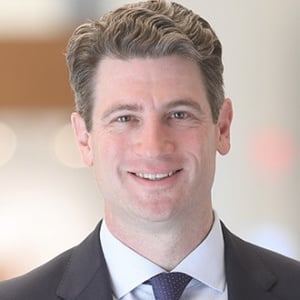
General Counsel and Corporate Secretary, Citigroup
Brent McIntosh joined Citi as General Counsel and Corporate Secretary in October 2021. Brent leads Citi's global legal team, including Citi security and investigative services, and oversees Citi’s independent compliance risk management function.
Brent served as Under Secretary of the Treasury for International Affairs from 2019 to 2021. He led the Treasury Department’s engagement in the G7 and G20, represented the United States on the Financial Stability Board, and managed U.S. participation at the IMF and World Bank. He oversaw Treasury’s international economic and financial policy work, including significant engagements on investment security and regulation of digital currencies. During 2020, he coordinated initiatives to alleviate the COVID-19 pandemic’s economic consequences.
From 2017 to 2019, Brent served as Treasury’s General Counsel, leading the department’s approximately 2,000 lawyers and spearheading its regulatory reform efforts. Prior to that, he was a partner in the law firm of Sullivan & Cromwell, where his practice focused on complex disputes involving financial institutions and multinational corporations.
Brent served in the White House from 2006 until 2009, first as Associate Counsel to the President and then as Deputy Assistant to the President and Deputy Staff Secretary. Before that, he was a Deputy Assistant Attorney General at the Justice Department, where his work focused on national security matters.
A Michigan native, Brent holds an A.B. in economics and political science from the University of Michigan and a J.D. from Yale Law School. Following law school, he was a law clerk to two federal appellate judges, Dennis Jacobs of the Second Circuit and Laurence H. Silberman of the D.C. Circuit. Brent serves on the Board of Directors of the Alexander Hamilton Society, the Board of Advisors for the National Security Institute at George Mason University’s Antonin Scalia Law School, and the Advisory Council of the Official Monetary and Financial Institutions Forum. He is a member of the Council on Foreign Relations, where he previously served as an Adjunct Senior Fellow for International Economics and Finance, as well as the Bretton Woods Committee and the International Institute for Strategic Studies.
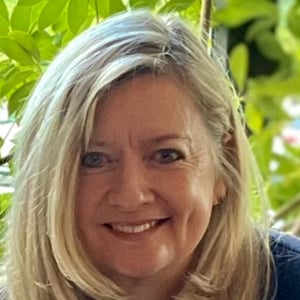
Rebecca Seidel currently resides in Louisville, Kentucky and in 2023 recently joined the state office of Senator Rand Paul, M.D, as Grant Coordinator. In this position, Ms. Seidel tracks grant opportunities, both public and private, that could aid constituents and works to provide support and helpful information to those in need who can benefit.
Prior to moving to Kentucky in 2016 Rebecca Seidel was General Counsel of the Senate Commerce Committee in Washington D.C. In that role, Ms. Seidel handled cybersecurity, privacy, data security, vehicle safety and consumer protections issues. She also oversaw committee investigations and oversight of the executive branch and private sector companies. Prior to joining the Commerce Committee, Ms. Seidel held positions in the Senate, the Executive Branch and in private sector law practice.
Immediately prior to the Commerce Committee, Ms. Seidel was counsel to the Senate Impeachment Trial Committee, formed for the trial of Judge G. Thomas Porteous. Before that Ms. Seidel was Deputy Assistant Attorney General for Legislative Affairs at the Department of Justice. Previously she served as senior counsel on the Senate Judiciary Committee handling legal reform issues including asbestos and class action. Prior to that she started her government career as counsel to then Senator George V. Voinovich.
Ms. Seidel’s time in private law practice was spent in the Boston, Massachusetts area where she was a litigator for five years practicing federal and state civil litigation defense in complex product liability, premises liability, liquor liability, and ERISA cases. She received her undergraduate degree from the University of Notre Dame and her law degree from the University of Dayton.

Partner, Steptoe & Johnson LLP
Stewart Baker is a partner in the law firm of Steptoe & Johnson in Washington, D.C. From 2005 to 2009, he was the first Assistant Secretary for Policy at the Department of Homeland Security. His law practice covers cybersecurity, data protection, homeland security, and travel and foreign investment regulation; he has been awarded one patent.
Mr. Baker has been General Counsel of the National Security Agency and General Counsel of the commission that investigated WMD intelligence failures prior to the Iraq war. He is the author of Skating on Stilts, a book on terrorism, cybersecurity, and other technology issues; he also hosts the weekly Cyberlaw Podcast.
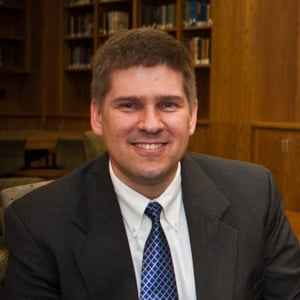
Associate Professor of Law, Brigham Young University J. Reuben Clark Law School
Eric Talbot Jensen teaches and writes in the areas of Public International Law, Criminal Law, The Law of Armed Conflict, International Criminal Law, and National Security Law. His recent scholarship has appeared in the Texas, Temple, Houston, and Israel Law Reviews, as well as the Stanford Law and Policy Review, Virginia Journal of International Law, Vanderbilt Journal of Transnational Law, and Stanford Journal of International Law. Professor Jensen is a co-author on an Oxford University text analyzing application of the laws of war to the war on terror and is also co-authoring a law school casebook on the Law of Armed Conflict for Aspen Publishing.
Prior to joining the BYU law faculty in 2011, Professor Jensen spent 2 years teaching at Fordham Law School in New York City and 20 years in the United States Army as both a Cavalry Officer and as a Judge Advocate. During his time as a Judge Advocate, Professor Jensen served in various positions including as the Chief of the Army’s International Law Branch; Deputy Legal Advisor for Task Force Baghdad; Professor of International and Operational Law at The Judge Advocate General’s Legal Center and School; legal advisor to the US contingent of UN Forces deployed to Skopje, Macedonia as part of UNPREDEP; and legal advisor in Bosnia in support of Operation Joint Endeavor/Guard.
Director of the Institute for Law, Science and Global Security a, Georgetown University
Professor Catherine Lotrionte is the Director of the Institute for Law, Science and Global Security and Visiting Assistant Professor of Government and Foreign Service at Georgetown University. Professor Lotrionte teaches courses on national security law, U.S. intelligence law, and international law. In addition to teaching, Professor Lotrionte coordinates research projects and events for the Institute for Law, Science and Global Security at Georgetown. She is the Institute Liaison for the Program on Nonproliferation Policy and Law, funded by the Defense Threat Reduction Agency, in cooperation with the Monterey Institute for International Studies’ James Martin Center for Nonproliferation Studies. Professor Lotrionte is also the Director of the CyberProject. Professor Lotrionte and the Institute focus on the role of international and domestic law in recent and upcoming developments in cyber technology and cyber threats.
In 2002 she was appointed by General Brent Scowcroft to be Counsel to the President's Foreign Intelligence Advisory Board at the White House, a position she held until 2006. In 2002 she served as a legal counsel for the Joint Inquiry Committee of the Senate Select Committee on Intelligence. Prior to that, Professor Lotrionte was Assistant General Counsel with the Office of General Counsel at the Central Intelligence Agency, where she provided legal advice relating to information warfare, foreign intelligence and counterintelligence activities, and international terrorism. Before working in the Office of General Counsel at the Central Intelligence Agency, Professor Lotrionte served in the U.S. Department of Justice.
Professor Lotrionte earned her Ph.D. from Georgetown University and her J.D. from New York University and is the author of numerous publications, including a forthcoming book concerning U.S. national security law in the post-Cold War era. She is a frequent speaker at cyber conferences held by academic, military, government, and media organizations. She is a Life Member of the Council on Foreign Relations.

Professor Emeritus of Law, Antonin Scalia Law School, George Mason University
Jeremy A. Rabkin is a Professor Emeritus of Law at the Antonin Scalia Law School, George Mason University. Before joining the faculty in June 2007, he was for over two decades a professor in the Department of Government at Cornell University. Professor Rabkin serves on the board of directors of the Center for Individual Rights, a public interest law firm based in Washington, D.C. Previously he was a board member of the U.S. Institute of Peace and the board of academic advisors of the American Enterprise Institute.
Professor Rabkin’s books include Law Without Nations? (Princeton University Press, 2005). He authored “If You Need a Friend, Don’t Call a Cosmopolitan,” a chapter in Varieties of Sovereignty and Citizenship (Sigal R. Ben-Porath & Rogers M. Smith eds., University of Pennsylvania Press, 2012). His articles have appeared in major law reviews and political science journals and his journalistic contributions in a range of magazines and newspapers, including the Washington Post and the Wall Street Journal.

Emanuel S. Heller Professor of Law, University of California at Berkeley; Thomas Smith Senior Research Fellow, The Civitas Institute, University of Texas at Austin
John Yoo is the Emanuel Heller Professor of Law at the University of California at Berkeley. He is also the Thomas Smith Senior Research Fellow, Civitas Institute, at the University of Texas at Austin. He is also a Nonresident Senior Fellow at the American Enterprise Institute.
His most recent book, The Politically Incorrect Guide to the Supreme Court, co-authored with Robert Delahunty, was published in 2023. Professor Yoo’s other books include Defender-in-Chief: Trump’s Fight for Presidential Power; Striking Power: How Cyber, Robots, and Space Weapons Change the Rules for War; Point of Attack: Preventive War, International Law, and Global Welfare; and Crisis and Command: A History of Executive Power from George Washington to George Bush.
He is a co-author of volumes 1 and 2 of R. Rossum, G. Tarr, V. Munoz & J. Yoo American Constitution Law (Routledge, 2026), and a co-editor of the eight-volume series on the 250th anniversary of the American Revolution, We Hold These Truths, with Yuval Levin and Adam White of the American Enterprise Institute.
Professor Yoo has published more than 100 articles in academic journals on subjects including national security, constitutional law, international law, and the Supreme Court. He also regularly contributes to the editorial pages of the Wall Street Journal, New York Times, Washington Post, Los Angeles Times, and National Review, among others.
Professor Yoo has served in all three branches of government. He was an official in the U.S. Department of Justice, where he worked on national security and terrorism issues after the 9/11 attacks. He served as general counsel of the U.S. Senate Judiciary Committee. He has been a law clerk for Supreme Court Justice Clarence Thomas and federal appeals Judge Laurence Silberman. He has been a visiting professor at the University of Texas at Austin’s School of Civic Leadership, Seoul National University, the Interdisciplinary Center Herzliya, Keio University, Trento University, the University of Chicago, and the Free University of Amsterdam.
Professor Yoo supervises the Public Law and Policy Program and the California Constitution Center. He also serves on the boards of Founding Forward, the Washington Legal Foundation, the Pacific Legal Foundation, the Ulysses Grant Institute, the Federalist Society’s Separation of Powers and Federalism Division, the Universidad Cientifica del Sur Law School, and the Asia-Pacific Law Institute at Seoul National University. He is a winner of the Federalist Society’s Paul Bator award and the Heritage Foundation’s Edwin Meese III Originalism Lectureship.
Professor Yoo graduated from Yale Law School and summa cum laude from Harvard College.
Partner, Steptoe & Johnson LLP
Stewart Baker is a partner in the law firm of Steptoe & Johnson in Washington, D.C. From 2005 to 2009, he was the first Assistant Secretary for Policy at the Department of Homeland Security. His law practice covers cybersecurity, data protection, homeland security, and travel and foreign investment regulation; he has been awarded one patent.
Mr. Baker has been General Counsel of the National Security Agency and General Counsel of the commission that investigated WMD intelligence failures prior to the Iraq war. He is the author of Skating on Stilts, a book on terrorism, cybersecurity, and other technology issues; he also hosts the weekly Cyberlaw Podcast.
Associate Professor of Law, Brigham Young University J. Reuben Clark Law School
Eric Talbot Jensen teaches and writes in the areas of Public International Law, Criminal Law, The Law of Armed Conflict, International Criminal Law, and National Security Law. His recent scholarship has appeared in the Texas, Temple, Houston, and Israel Law Reviews, as well as the Stanford Law and Policy Review, Virginia Journal of International Law, Vanderbilt Journal of Transnational Law, and Stanford Journal of International Law. Professor Jensen is a co-author on an Oxford University text analyzing application of the laws of war to the war on terror and is also co-authoring a law school casebook on the Law of Armed Conflict for Aspen Publishing.
Prior to joining the BYU law faculty in 2011, Professor Jensen spent 2 years teaching at Fordham Law School in New York City and 20 years in the United States Army as both a Cavalry Officer and as a Judge Advocate. During his time as a Judge Advocate, Professor Jensen served in various positions including as the Chief of the Army’s International Law Branch; Deputy Legal Advisor for Task Force Baghdad; Professor of International and Operational Law at The Judge Advocate General’s Legal Center and School; legal advisor to the US contingent of UN Forces deployed to Skopje, Macedonia as part of UNPREDEP; and legal advisor in Bosnia in support of Operation Joint Endeavor/Guard.
Director of the Institute for Law, Science and Global Security a, Georgetown University
Professor Catherine Lotrionte is the Director of the Institute for Law, Science and Global Security and Visiting Assistant Professor of Government and Foreign Service at Georgetown University. Professor Lotrionte teaches courses on national security law, U.S. intelligence law, and international law. In addition to teaching, Professor Lotrionte coordinates research projects and events for the Institute for Law, Science and Global Security at Georgetown. She is the Institute Liaison for the Program on Nonproliferation Policy and Law, funded by the Defense Threat Reduction Agency, in cooperation with the Monterey Institute for International Studies’ James Martin Center for Nonproliferation Studies. Professor Lotrionte is also the Director of the CyberProject. Professor Lotrionte and the Institute focus on the role of international and domestic law in recent and upcoming developments in cyber technology and cyber threats.
In 2002 she was appointed by General Brent Scowcroft to be Counsel to the President's Foreign Intelligence Advisory Board at the White House, a position she held until 2006. In 2002 she served as a legal counsel for the Joint Inquiry Committee of the Senate Select Committee on Intelligence. Prior to that, Professor Lotrionte was Assistant General Counsel with the Office of General Counsel at the Central Intelligence Agency, where she provided legal advice relating to information warfare, foreign intelligence and counterintelligence activities, and international terrorism. Before working in the Office of General Counsel at the Central Intelligence Agency, Professor Lotrionte served in the U.S. Department of Justice.
Professor Lotrionte earned her Ph.D. from Georgetown University and her J.D. from New York University and is the author of numerous publications, including a forthcoming book concerning U.S. national security law in the post-Cold War era. She is a frequent speaker at cyber conferences held by academic, military, government, and media organizations. She is a Life Member of the Council on Foreign Relations.
Professor Emeritus of Law, Antonin Scalia Law School, George Mason University
Jeremy A. Rabkin is a Professor Emeritus of Law at the Antonin Scalia Law School, George Mason University. Before joining the faculty in June 2007, he was for over two decades a professor in the Department of Government at Cornell University. Professor Rabkin serves on the board of directors of the Center for Individual Rights, a public interest law firm based in Washington, D.C. Previously he was a board member of the U.S. Institute of Peace and the board of academic advisors of the American Enterprise Institute.
Professor Rabkin’s books include Law Without Nations? (Princeton University Press, 2005). He authored “If You Need a Friend, Don’t Call a Cosmopolitan,” a chapter in Varieties of Sovereignty and Citizenship (Sigal R. Ben-Porath & Rogers M. Smith eds., University of Pennsylvania Press, 2012). His articles have appeared in major law reviews and political science journals and his journalistic contributions in a range of magazines and newspapers, including the Washington Post and the Wall Street Journal.
Emanuel S. Heller Professor of Law, University of California at Berkeley; Thomas Smith Senior Research Fellow, The Civitas Institute, University of Texas at Austin
John Yoo is the Emanuel Heller Professor of Law at the University of California at Berkeley. He is also the Thomas Smith Senior Research Fellow, Civitas Institute, at the University of Texas at Austin. He is also a Nonresident Senior Fellow at the American Enterprise Institute.
His most recent book, The Politically Incorrect Guide to the Supreme Court, co-authored with Robert Delahunty, was published in 2023. Professor Yoo’s other books include Defender-in-Chief: Trump’s Fight for Presidential Power; Striking Power: How Cyber, Robots, and Space Weapons Change the Rules for War; Point of Attack: Preventive War, International Law, and Global Welfare; and Crisis and Command: A History of Executive Power from George Washington to George Bush.
He is a co-author of volumes 1 and 2 of R. Rossum, G. Tarr, V. Munoz & J. Yoo American Constitution Law (Routledge, 2026), and a co-editor of the eight-volume series on the 250th anniversary of the American Revolution, We Hold These Truths, with Yuval Levin and Adam White of the American Enterprise Institute.
Professor Yoo has published more than 100 articles in academic journals on subjects including national security, constitutional law, international law, and the Supreme Court. He also regularly contributes to the editorial pages of the Wall Street Journal, New York Times, Washington Post, Los Angeles Times, and National Review, among others.
Professor Yoo has served in all three branches of government. He was an official in the U.S. Department of Justice, where he worked on national security and terrorism issues after the 9/11 attacks. He served as general counsel of the U.S. Senate Judiciary Committee. He has been a law clerk for Supreme Court Justice Clarence Thomas and federal appeals Judge Laurence Silberman. He has been a visiting professor at the University of Texas at Austin’s School of Civic Leadership, Seoul National University, the Interdisciplinary Center Herzliya, Keio University, Trento University, the University of Chicago, and the Free University of Amsterdam.
Professor Yoo supervises the Public Law and Policy Program and the California Constitution Center. He also serves on the boards of Founding Forward, the Washington Legal Foundation, the Pacific Legal Foundation, the Ulysses Grant Institute, the Federalist Society’s Separation of Powers and Federalism Division, the Universidad Cientifica del Sur Law School, and the Asia-Pacific Law Institute at Seoul National University. He is a winner of the Federalist Society’s Paul Bator award and the Heritage Foundation’s Edwin Meese III Originalism Lectureship.
Professor Yoo graduated from Yale Law School and summa cum laude from Harvard College.
Director, Center for Religious Freedom, Hudson Institute
An international human-rights lawyer for over thirty years, Nina Shea joined Hudson Institute as a Senior Fellow in November 2006, where she directs the Center for Religious Freedom. Shea works extensively for the advancement of individual religious freedom and other human rights in U.S. foreign policy as it confronts an ascendant Islamic extremism, as well as nationalist and remnant communist regimes. She undertakes scholarship and advocacy in defense of those persecuted for their religious beliefs and identities and on behalf of diplomatic measures to end religious repression and violence abroad, whether from state actors or extremist groups.
Ms. Shea was appointed by the U.S. House of Representatives to serve seven terms as a Commissioner on the U.S. Commission on International Religious Freedom (June 1999 - March 2012). During the Soviet era, Shea’s first client before the United Nations was Soviet Nobel Peace Laureate Andrei Sakharov. Since then, she has been appointed as a U.S. delegate to the United Nation's main human rights body by both Republican and Democratic administrations. She also served as a member of the Clinton administration's Advisory Committee on Religious Freedom Abroad. In 2009, she was appointed to serve as a member of the U.S. National Commission to UNESCO.
Ms. Shea played a leading role in building grassroot support for the adoption of the International Religious Freedom Act (1998). For seven years ending in 2005, she helped organize and lead a coalition of churches and religious groups that worked to end a religious war against non-Muslims and dissident Muslims in southern Sudan. In 2014, she initiated and helped lead a coalition of hundreds of prominent American religious leaders to issue The Pledge of Solidarity for Persecuted Iraqi, Syrian and Egyptian Christians and Other Minorities, which was released by a bi-partisan Congressional panel on May 7. In summer 2014, she met with Pope Francis to discuss the persecution of Christians in the Middle East.
At Hudson, she has organized conferences for Nigerian schoolgirls and others who survived Boko Haram attacks, Christian converts formerly imprisoned in Iran, Coptic bishops from Egypt, Catholic bishops from China and the Gulf, Muslim scholars, and many others. Ms. Shea advocates in the nation's capital on behalf of a broad range of persecuted religious minorities around the world; and, for such work, was honored by the Ahmadiyya Muslim Community USA with the Community's inaugural "Ahmadiyya Muslim Humanitarian Award."
She has authored and/or edited four widely-acclaimed reports on Saudi state educational materials that promote extremist views and in 2011 had an opportunity to travel to Saudi Arabia and speak directly about her findings with the Ministers of Education, Justice and Islamic Affairs. Her reports include: Ten Years On: Saudi Arabia's Textbooks Still Promote Religious Violence (2011), Update: Saudi Arabia's Curriculum of Intolerance (2008), Saudi Arabia's Curriculum of Intolerance (2006), and Saudi Publications on Hate Ideology Invade American Mosques (2005), all of which translated and analyzed Saudi governmental publications that teach hatred and violence against the religious "other."
She is the co-author of Silenced: How Apostasy & Blasphemy Codes are Choking Freedom Worldwide, with a Foreword by Kyai Haji Abdurrahman Wahid, the former President of Indonesia and head of Nahdlatul Ulama, the world's largest Muslim organization (Oxford University Press, 2011). Her most recent book, which she also co-authored, is Persecuted: The Global Assault on Christians (Thomas Nelson Publishers, 2013). She regularly presents testimony before Congress, delivers public lectures, organizes briefings and conferences, and writes frequently on religious freedom issues. Her writings have appeared in the Wall Street Journal, Washington Post, CQ Researcher, Weekly Standard, National Review Online, CNN, Fox, The Daily Beast, HuffingtonPost, and RealClearWorld, among others.
For the ten years prior to joining Hudson, Ms. Shea worked at Freedom House, where she directed the Center for Religious Freedom, an entity which she had helped found in 1986 as the Puebla Institute.
She is a member of the bar of the District of Columbia. She is a graduate of Smith College, and American University's Washington College of Law.
Founder and President, American Islamic Forum for Democracy
M. Zuhdi Jasser, M.D. is the Founder and President of the American Islamic Forum for Democracy (AIFD). A devout Muslim, Dr. Jasser founded AIFD in the wake of the 9/11 attacks on the United States as an effort to provide an American Muslim voice advocating for the preservation of the founding principles of the United States Constitution, liberty and freedom, through the separation of mosque and state. Dr. Jasser is a first generation American Muslim whose parents fled the oppressive Baath regime of Syria in the mid-1960’s for American freedom. He is leading the fight to shake the hold that the Muslim Brotherhood and their network of American Islamist organizations and mosques seek to exert on organized Islam in America.
Dr. Jasser earned his medical degree on a U.S. Navy scholarship at the Medical College of Wisconsin in 1992. He served 11 years as a medical officer in the U. S. Navy. His tours of duty included Medical Department Head aboard the U.S.S. El Paso which deployed to Somalia during Operation Restore Hope; Chief Resident at Bethesda Naval Hospital; and Staff Internist for the Office of the Attending Physician to the U. S. Congress. He is a recipient of the Meritorious Service Medal. Dr. Jasser is a respected physician currently in private practice in Phoenix, Arizona specializing in internal medicine and nuclear cardiology. He is a Past-President of the Arizona Medical Association.
AIFD seeks to counter political Islam the ideology that fuels radical Islamists. AIFD’s current passions include the Muslim Liberty Project (MLP) and involvement in the newly formed American Islamic Leadership Coalition (AILC). The Muslim Liberty Project seeks to instill the ideas of liberty into young Muslim adults in order to inoculate them against the viral threat of political Islam. The project brought together its first class of Muslim Youth in March 2011 with tremendous success. AILC is a broad based coalition of diverse Muslim organizations that provide a stark alternative to the domestic and global network of Islamist organizations.
Dr. Jasser is also actively involved in the Syrian-American community as the co-founder of Save Syria Now! which was formed by Americans of Syrian descent to put pressure on the United States to call for immediate action to end the regime of Bashar Assad of Syria and to help bring true liberty to the people of Syria. Dr. Jasser has also been asked to play a formative role in the emerging Syrian Democracy Council which is creating an opposition roadmap for a free, secular, and non-Islamist post-Assad Syria. Dr. Jasser briefed members of the U.S. House of Representatives on the situation in Syria in July 2011.
Dr. Jasser regularly briefs members of the House and Senate congressional anti-terror caucuses on the threat of Political Islam. Dr. Jasser testified before the United States House of Representatives Committee on Homeland Security on March 10, 2011 on “The Extent of Radicalization in the American Muslim Community and that Community’s Response” and again on June 20, 2012 on the “The American Muslim Response to Hearings on Radicalization within their Community.” On June 24, 2011 Dr. Jasser testified before the Constitution Subcommittee of the Judiciary Committee of the United States House of Representatives on the importance of HR 963 “The See Something, Say Something” Act of 2011. On March 20, 2012, Dr. Jasser was appointed by Senate Minority Leader Mitch McConnell (R-KY) to the United States Commission on International Religious Freedom (USCIRF).
Dr. Jasser is an internationally recognized expert in the contest of ideas against political Islam and American Islamist organizations. He has been featured in the Wall Street Journal, The Washington Times, The New York Post, The Dallas Morning News, CNN, CBS, Fox News Channel, MSNBC and BBC in addition to nationally syndicated radio programs. He has spoken at hundreds of national and international events including universities, places of worship, and government venues. In just the past year he has spoken at the Hudson Institute’s “The Perils of Global Intolerance: The UN and Durban III,” The U.S. Strategic Command’s 2011 Deterrence Symposium panel on “What did the rest of world learn about deterrence from the recent upheavals in the Middle East and Africa?,” and at the National FBI National Executive Institute on “Whose Voice are you listening to? What are the questions we should be asking?” In the past, Dr. Jasser has lectured on Islam to deploying officers at the Joint Forces Staff College at Norfolk, VA and was part of a select Muslim group that briefed Admiral Mike Mullen, Chairman of the Joint Chiefs of Staff, on the “Contest of Ideas with the Muslim World.”
Dr. Jasser was presented with the 2007 Director’s Community Leadership Award by the Phoenix office of the FBI and was recognized as a “Defender of the Home Front” at the annual Keeper of the Flame Dinner of the Center for Security Policy in 2008. Dr. Jasser is a contributing writer to a number of books and is the author of The Battle for the Soul of Islam: An American Muslim Patriot’s Fight to Save His Faith (Simon & Schuster, June 2012). He is featured in four documentaries: America at Risk, Islam v Islamists, A Question of Honor and The Third Jihad.

Thomas M. Siebel Senior Fellow, The Hoover Institution, Stanford University; Gary T. Schwartz Distinguished Professor of Law Emeritus, UCLA School of Law
Eugene Volokh is the Thomas M. Siebel Senior Fellow at the Hoover Institution (Stanford), as well as the Gary T. Schwartz Distinguished Professor of Law Emeritus and Distinguished Research Professor at UCLA School of Law. He recently retired from teaching at UCLA, after 30 years there, and is now focusing on research.
Volokh is the author of the textbooks The First Amendment and Related Statutes (8th ed. 2023), and Academic Legal Writing (5th ed. 2016), as well as over 100 academic law journal articles, mostly on First Amendment law. He is a member of The American Law Institute; the editor-in-chief of the Journal of Free Speech Law; and the creator and coauthor of The Volokh Conspiracy, a leading legal blog founded in 2002 (hosted at the Washington Post from 2014 to 2017 and now at Reason Magazine).

Professorial Lecturer in Law, The George Washington University
Paul Rosenzweig is an accomplished writer and speaker with a national reputation in cyber security and homeland security. He is the founder of Red Branch Consulting PLLC, a homeland security consulting company. He is also a Senior Advisor to The Chertoff Group. Mr. Rosenzweig formerly served as Deputy Assistant Secretary for Policy in the Department of Homeland Security.
He is a Professorial Lecturer in Law at George Washington University, and a Senior Fellow in the Tech, Law & Security Program at the American University, Washington College of Law. He serves as an advisor to and former member of the American Bar Association Standing Committee on Law and National Security, and a Contributing Editor of the Lawfare blog. He is a member of the ABA Cybersecurity Legal Task Force and of the United States Court of Appeals for the District of Columbia Circuit Advisory Committee on Admissions and Grievances. He serves, as well, as a Hearing Committee Member of the District of Columbia Board of Professional Responsibility. In 2011 he was a Carnegie Fellow in National Security Journalism at the Medill School of Journalism, Northwestern University.
Mr. Rosenzweig is a cum laude graduate of the University of Chicago Law School. He has an M.S. in Chemical Oceanography from the Scripps Institution of Oceanography, University of California at San Diego and a B.A from Haverford College. Following graduation from law school he served as a law clerk to the Honorable R. Lanier Anderson, III of the United States Court of Appeals for the Eleventh Circuit.
He is the author of Cyber Warfare: How Conflicts in Cyberspace are Challenging America and Changing the World and of three video lecture series from The Great Courses, Thinking About Cybersecurity: From Cyber Crime to Cyber Warfare; The Surveillance State: Big Data, Freedom, and You; and Investigating American Presidents.
He is the co-author (with James Jay Carafano) of Winning the Long War: Lessons from the Cold War for Defeating Terrorism and Preserving Freedom and co-editor (with Jill D. Rhodes and Robert S. Litt) of the Cybersecurity Handbook (3rd ed.). He is also co-editor (with Timothy McNulty and Ellen Shearer) of two books, Whistleblowers, Leaks and the Media: The First Amendment and National Security, and National Security Law in the News: A Guide for Journalists, Scholars, and Policymakers. Mr. Rosenzweig is a member of the Literary Society of Washington.
Senior Correspondent, The Daily Beast, and ASU Future of War Fel, New America
Shane Harris is an author and journalist who has written extensively about intelligence and national security. His new book, @War: The Rise of the Military Internet Complex, explores the frontlines of America's new cyber war (Eamon Dolan/Houghton Mifflin Harcourt, 2014). Mr. Harris' first book, The Watchers: The Rise of America's Surveillance, tells the story of five men who played central roles in the creation of a vast national security apparatus and the rise of surveillance in America (Penguin Press, 2010). The Watchers won the New York Public Library's Helen Bernstein Book Award for Excellence in Journalism, and the Economist named it one of the best books of 2010. Mr. Harris is the winner of the 2010 Gerald R. Ford Prize for Distinguished Reporting on National Defense. He has four times been named a finalist for the Livingston Awards for Young Journalists, which honor the best journalists in America under the age of 35.
Mr. Harris is currently a senior correspondent at The Daily Beast, where he covers national security, intelligence, and cyber security. He is also an ASU Future of War Fellow at New America. His work has appeared in The New York Times, The Wall Street Journal, Slate, TheAtlantic.com, National Journal, The Washington Post, The Bulletin of the Atomic Scientists, and the U.S. Naval Institute's Proceedings. He has provided analysis and commentary for CNN, NPR, the BBC, The History Channel, National Geographic, several foreign media organizations and many local public radio stations.
Prior to joining The Daily Beast, Mr. Harris was a senior writer at Foreign Policy magazine and, before that, at the Washingtonian magazine, where he was part of the team that won the publication its 2011 award for Excellence in Writing from the City and Regional Magazine Association. In 2012, Washingtonian won the coveted General Excellence award for the print magazine and web site, where Mr. Harris wrote a blog on national security called ADead Drop.
From 2005 to 2010, Mr. Harris was a staff correspondent for National Journal, where he wrote about intelligence and homeland security. Before that post, he was the technology editor and a staff correspondent at Government Executive magazine. Mr. Harris also was the managing editor for Movieline magazine in Los Angeles. He began his journalism career in 1999, as the research coordinator and a writer for Governing magazine in Washington.
Mr. Harris graduated from Wake Forest University with a B.A. in Politics in 1998. He is also a fiction writer. While living in Los Angeles, he helped found and served as the artistic director of a sketch comedy troupe. Mr. Harris is a Sundance Film Festival screenwriting finalist.
William J. Friedman and Alicia Townsend Friedman Professor of La, Harvard Law School
Lucian Bebchuk is the William J. Friedman and Alicia Townsend Friedman Professor of Law, Economics, and Finance and Director of the Program on Corporate Governance at Harvard Law School. Bebchuk is also a Fellow of the American Academy of Arts and Sciences, Research Associate of the National Bureau of Economic Research, Inaugural Fellow of the European Corporate Governance Network, and Director of the SSRN Corporate Governance Network.
Trained in both law and economics, Professor Bebchuk holds an LL.M. and S.J.D. from Harvard Law School and an M.A. and a Ph.D. in Economics from the Harvard Economics Department. His research focuses on corporate governance, law and finance, and law and economics. Upon electing him to membership in 2000, the American Academy of Arts and Sciences cited him as "[o]ne of the nation's leading scholars of law and economics," who "has made major contribution to the study of corporate control, governance, and insolvency."
Bebchuk is the author or coauthor of more than one hundred research papers, as well the widely acclaimed book Pay without Performance: the Unfulfilled Promise of Executive Compensation. Bebchuk’s papers have appeared in the top academic journals in law, in economics, and in finance. The Social Science Research Network (SSRN) ranks him first among legal academics of all fields in terms of citations to his work.
Bebchuk’s work has been recognized by his having been elected to serve as President of the Western Economics Association International, President of the American Law and Economics Association, and Chair of the Business Association Section of the American Association of Law Teachers. His recent awards include the International Corporate Governance Network’s Award for Excellence in Corporate Governance, the Investor Responsibility Research Center Institute’s best academic paper award, and the Marshall Blume prize in financial research.
Bebchuk has been a frequent contributor to policy-making, practice, and public debate in the fields of corporate governance and financial regulation. He has appeared in hearings and roundtables before the Senate Finance Committee, the Senate Banking Committee, the House of Representatives Committee of Financial Services, and the SEC; has authored numerous op-ed pieces, including in the Wall Street Journal, the New York Times, and the Financial Times; has advised governmental bodies, such as the Special Master on TARP executive compensation during the financial crisis, and publicly traded firms; has served on the board of directors of OJSC MMC Norilsk Nickel, the world’s largest producer of nickel and palladium; and heads the Shareholder Rights Project, a program that has represented public pension funds and charitable organizations in bringing about board declassifications at more than 75 S&P 500 and Fortune 500 companies. Bebchuk was included in the list of the "100 most influential players in corporate governance" of Directorship, the "100 most influential people in finance" of Treasury & Risk Management, and the list of top 10 ”governance stars” of Global Proxy Watch.
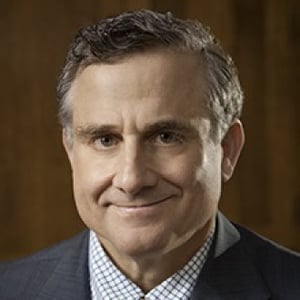
Sam Harris Professor of Corporate Law, Corporate Finance, and Securities Law, Yale Law School
Jonathan R. Macey is Sam Harris Professor of Corporate Law, Corporate Finance, and Securities Law at Yale University, and Professor in the Yale School of Management. From 1991 – 2004, Professor Macey was J. DuPratt White Professor of Law, Director of the John M. Olin Program in Law and Economics at Cornell Law School, and Professor of Law and Business at the Cornell University Johnson Graduate School of Business. Professor Macey earned his B.A. cum laude from Harvard in 1977, and his J.D. from Yale Law School in 1982, where he was Article and Book Review editor of The Yale Law Journal. In 1996, Professor Macey received a Ph.D. honoris causa from the Stockholm School of Economics. Following law school, Professor Macey was law clerk to Judge Henry J. Friendly on the U.S. Court of Appeals for the Second Circuit.
Professor Macey is the author of several books including the two-volume treatise, Macey on Corporation Laws, published in 1998 (Aspen Law & Business), and co-author of two leading casebooks, Corporations: Including Partnerships and Limited Liability Companies (2003 Thomson West), which is in its eighth edition, and Banking Law and Regulation (2002 Aspen Law & Business), which is now in its third edition. He also is the author of over 100 scholarly articles. His recent articles have appeared in the Banking Law Journal, the University of Chicago Law Review, the Stanford Law Review, The Yale Law Journal, the Cornell Law Review, the Journal of Law and Economics, and the Brookings Wharton Papers on Financial Institutions. He has published numerous editorials in such publications as The Wall Street Journal, Forbes, The Los Angeles Times, and The National Law Journal.
Professor Macey has taught at major universities throughout the world, including Bocconi University (Milan), the University of Tokyo; the University of Toronto; the University of Turin, the University of Amsterdam Department of Finance, and the Stockholm School of Economics, Department of Law. He also has been Professor of Law at the University of Chicago (1990) and Visiting Professor of Law at Harvard Law School (1999). Professor Macey is a Senior Research Fellow at the International Centre for Economic Research (ICER) in Turin, Italy. Professor Macey also serves on the Academic Advisory Board (Comitato Scientifico) of the Associazione Disiano Preite for the study of corporate law (per lo studio del diritto dell’impresa). In 1995, Professor Macey was awarded the Paul M. Bator prize for excellence in Teaching, Scholarship and Public Service by the Federalist Society for Law and Public Policy. In 1996, he received a Ph.D., honoris causa from the Stockholm School of Economics. And in 1998, he received the D.P. Jacobs prize for the most significant paper in volume 6 of the Journal of Financial Intermediation for his paper (co-authored with Maureen O’Hara), “The Law & Economics of Best Execution.”
In 1999 Professor Macey was made an honorary Fellow of the Society For Advanced Legal Studies. In 2000, Professor Macey became a member of the Legal Advisory Committee to the Board of Directors of the New York Stock Exchange. In 2001 Professor Macey was appointed a Bertil Daniellson Distinguished Visiting Professor in Banking and Finance at the Stockholm School of Economics. In 2002 Professor Macey was appointed to the Economic Advisory Board of the National Association of Securities Dealers (NASD). In 2004 Professor Macey was awarded a Teaching Award by the Yale Law Women in recognition of his “commitment to excellence in teaching, mentoring and inspiring.” In 2005 Professor Macey became a member of the Board of Editors of Thomson West Publishing Company.
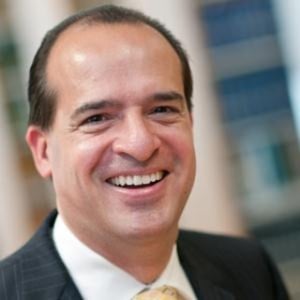
Professor of Law and Rouse Chairholder, Antonin Scalia Law School, George Mason University
Professor Miller holds an Allison and Dorothy Rouse Chair in Law at the Antonin Scalia Law School. An elected member of the American Law Institute and a research member of the European Corporate Governance Institute, Professor Miller is also a Fellow and the Co-Director of the Program on Organizations, Business and Markets at the Classical Liberal Institute at the New York University Law School, an Adjunct Fellow at the Manhattan Institute, and an Affiliated Scholar at the James Wilson Institute on Natural Rights and the American Founding. Prior to joining George Mason University in 2025, Professor Miller was the F. Arnold Daum Chair in Corporate Finance and Law and a Professor of Law at the University of Iowa College of Law, where he had also served as the Associate Dean for Faculty Development.
Professor Miller’s research concerns corporate and securities law, the economic analysis of law, and the philosophy of law. He is particularly interested in applying economic concepts and methods to understand provisions in contracts between sophisticated commercial parties. He has written on material adverse effect clauses under Delaware law, the fiduciary duties of corporate directors, director oversight liability, the history and development of Delaware corporate law, and much more. His articles and working papers are available on his SSRN page.
Professor Miller has been cited by federal and state courts in the United States, including the Delaware Supreme Court and the Delaware Court of Chancery, as well as by the Commercial Court of the United Kingdom and the Ontario Superior Court of Justice (Commercial List) in Canada. Additionally, he is a member of the Committee on Mergers, Acquisitions & Corporate Control Contests and a former chair of the Corporation Law Committee of the New York City Bar Association.
Earlier in his career, Professor Miller was a Professor of Law at the Villanova University School of Law and the Associate Director of the Matthew J. Ryan Center for the Study of Free Institutions and the Public Good at Villanova University. He has been a Visiting Professor of Law at the University of Pennsylvania Law School, a Visiting Assistant Professor of Law at the Cardozo Law School, and an Olin Fellow in Law and Economics at the Columbia Law School.
Before entering academia, Professor Miller was an associate with Wachtell, Lipton, Rosen & Katz. He earned his J.D. from the Yale Law School where he was a Senior Editor of the Yale Law Journal and an Olin Fellow in Law, Economics and Public Policy. He earned his M.A. and M.Phil. degrees in philosophy from Columbia University, where he held a Mellon Fellowship in the Humanities from the Woodrow Wilson National Fellowship Foundation and a Western Civilization Fellowship from the Intercollegiate Studies Institute. He earned his B.A. in philosophy and mathematics from Columbia College.
Partner, Wachtell, Lipton, Rosen & Katz
Steven A. Rosenblum has been a partner at Wachtell, Lipton, Rosen & Katz since 1989, and serves as co-chair of the firm’s Corporate Department. He focuses on mergers and acquisitions, buyouts, takeover defense, shareholder and hedge fund activism, proxy fights, joint ventures, corporate governance and securities law. Mr. Rosenblum has extensive experience representing major companies in each of these areas. He has been recognized by Chambers Global as one of the world's leading transactional lawyers.
Mr. Rosenblum received his J.D. from Yale Law School in 1982 and his B.A. from Harvard College magna cum laude and Phi Beta Kappa in 1978. Prior to joining the firm, he was a law clerk to the Honorable Joseph L. Tauro, United States District Court Judge for the District of Massachusetts.
Mr. Rosenblum is a member of the American Law Institute, the ABA Committee on Corporate Laws, and the Board of Advisors of the Yale Law School Center for the Study of Corporate Law. He has written and participated in panels on a number of topics, including mergers and acquisitions, shareholder and hedge fund activism, corporate disclosure, proxy reform and corporate governance. He has served as co-chair of the Annual Federal Securities Institute in Miami since 2005.
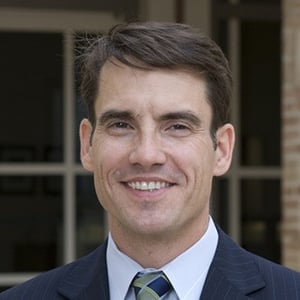
Professor, Dale E. Fowler School of Law, Chapman University
Professor Bell joined the faculty of Fowler School of Law in 1998. Professor Bell specializes in high-tech legal issues and has written a variety of works on intellectual property and Internet law, including the book, Intellectual Privilege: Copyright, Common Law, and the Common Good (2014). He received his Juris Doctor from the University of Chicago Law School in 1993, where he served both as a member of the University of Chicago Law Review and as Articles Editor and cofounder of the University of Chicago Legal Roundtable. After graduating from law school, Professor Bell joined the Silicon Valley law firm of Wilson Sonsini Goodrich & Rosati. He entered teaching in 1995, when he became an Assistant Professor of Law in the Law and Technology Program at the University of Dayton School of Law. During a one year leave of absence from that school, and just prior to joining the Fowler School of Law faculty, he served as Director of Telecommunications and Technology Studies at the Cato Institute in Washington, D.C. Professor Bell joined the faculty of Fowler School of Law in 1998. In addition to writing a steady stream of scholarly works, Professor Bell has appeared on or been quoted in the Wall Street Journal, CNN, Economist, Los Angeles Times, and many other news sources, and starred in several online videos addressing timely legal issues.

Assistant Professor, George Mason University School of Law
Assistant Professor Christopher M. Newman graduated magna cum laude from the University of Michigan Law School in 1999, where he served as book review editor for the Michigan Law Review and received Michigan's highest law school award, the Henry M. Bates Memorial Scholarship. He also holds a BA in classical liberal arts awarded by St. John's College in Annapolis, Maryland.
Following law school, Professor Newman was a clerk for the Honorable Alex Kozinski of the U.S. Court of Appeals for the Ninth Circuit, with whom he co-published What's So Fair About Fair Use?, 46 J. Copyright Soc'y 513 (1999). From 2000-2007, he was a litigation associate with Irell & Manella LLP in Los Angeles, where he represented clients in disputes involving contracts, business torts, intellectual property, corporate and securities litigation, and appellate matters, as well as pro bono family and criminal law matters. Professor Newman left practice at the beginning of 2007 to serve an Olin/Searle Fellowship in Law at the UCLA School of Law, where he focused on his research and writing in the areas of property theory and intellectual property, and from January 2008 until his arrival at Mason Law served as a research fellow of UCLA's Intellectual Property Project.
President and CEO, Consumer Electronics Association
Gary Shapiro is president and CEO of the Consumer Electronics Association (CEA)®, the U.S. trade association representing more than 2,000 consumer electronics companies, and author of the New York Times best-selling books Ninja Innovation: The Ten Killer Strategies of the World’s Most Successful Businesses and The Comeback: How Innovation Will Restore the American Dream. His views are his own. Connect with him on Twitter: @GaryShapiro.

Professor of Law, Stanford Law School
Orin S. Kerr is a Professor of Law at Stanford Law School, where he teaches and writes in the areas of criminal procedure and computer crime law. Kerr earned mechanical engineering degrees from Princeton University and Stanford University before graduating with a J.D. from Harvard Law School. He is a former law clerk to Justice Anthony M. Kennedy at the United States Supreme Court and Judge Leonard I. Garth of the U.S. Court of Appeals for the Third Circuit.
President and Executive Director, Electronic Privacy Information Center
Marc Rotenberg is President and Executive Director of the Electronic Privacy Information Center (EPIC) in Washington, DC. He teaches information privacy law at Georgetown University Law Center and frequently testifies before Congress on emerging privacy and civil liberties issues. He testified before the 9-11 Commission on "Security and Liberty: Protecting Privacy, Preventing Terrorism." He has served on several national and international advisory panels, including the expert panels on Cryptography Policy and Computer Security for the OECD, the Legal Experts on Cyberspace Law for UNESCO, and the Countering Spam program of the ITU. He chairs the ABA Committee on Privacy and Information Protection. He is a founding board member and former Chair of the Public Interest Registry, which manages the .ORG domain. He is editor of "The Privacy Law Sourcebook," and co-editor of "Information Privacy Law" (Aspen Publishing 2006) and "Litigation Under the Federal Open Government Laws" (EPIC 2010). He is a graduate of Harvard College and Stanford Law School. He served as Counsel to Senator Patrick J. Leahy on the Senate Judiciary Committee after graduation from law school. He is the recipient of several awards, including the World Technology Award in Law, the American Lawyer Award for Top Lawyers Under 45, the Norbert Weiner Award for Social and Professional Responsibility, and the Vicennial medal from Georgetown University.
Senior Vice President, Chief Legal Officer and General Counsel, Ryan LLC
John Smith is the Senior Vice President, Chief Legal Officer and General Counsel at Ryan, LLC. Based at Ryan’s global headquarters in Dallas, Texas, John Smith brings more than 20 years of experience as a proven leader in the legal, business, and national security communities, including all three branches of the United States Government.
Prior to joining Ryan, Mr. Smith spent 12 years in Texas and Virginia at Raytheon Technologies, an American multinational aerospace and defense corporation. He pioneered roles as the company’s first cybersecurity lawyer and first privacy lawyer. During the last seven years, as a divisional Vice President and General Counsel, Mr. Smith led the legal departments of the two Raytheon divisions focused primarily on services.
Before Raytheon, Mr. Smith served as Associate Counsel to U.S. President George W. Bush. He was the lead lawyer for the White House Homeland Security Council staff. He began his legal career by clerking for Judge Samuel Alito, a few years before Alito’s elevation to the U.S. Supreme Court, and then by practicing at the international law firm of Covington & Burling.
Mr. Smith served a decade as a U.S. Army reservist and two years as a missionary in Ukraine and Russia, a few years after the collapse of the Soviet Union. He graduated with high honors from both Princeton University and Brigham Young University Law School.
Partner, Steptoe & Johnson LLP
Michael A. Vatis is a partner in the New York office of Steptoe & Johnson LLP. His practice focuses on Internet, e-commerce, and technology matters, providing legal advice and strategic counsel on matters involving privacy, security, encryption, intelligence, law enforcement, Internet gambling, and international regulation of Internet content. He also is an experienced appellate litigator, representing clients before the US Supreme Court and federal courts of appeals.
Mr. Vatis has spent most of his career addressing cutting edge issues at the intersection of law, policy, and technology. He was the founding director of the National Infrastructure Protection Center at the FBI, the first government organization responsible for detecting, warning of, and responding to cyber attacks, including computer crimes, cyber terrorism, cyber espionage, and information warfare. Before that, Mr. Vatis served as Associate Deputy Attorney General and Deputy Director of the Executive Office for National Security in the Department of Justice, where he advised the Attorney General and Deputy Attorney General and coordinated the Department’s activities involving counterterrorism, intelligence, encryption, and cyber crime. In that capacity, he also helped lead the development of the nation’s first policies regarding critical infrastructure protection. Mr. Vatis served as Special Counsel at the Department of Defense, where he handled sensitive legal and policy issues for the Secretary and Deputy Secretary of Defense and the General Counsel, receiving the Secretary of Defense Award for Excellence.
After leaving the government in 2001, Mr. Vatis served as the first Director of the Institute for Security Technology Studies at Dartmouth, a federally funded counterterrorism and cyber security research institute. He was simultaneously the founding Chairman of the Institute for Information Infrastructure Protection (I3P). I3P, a consortium of leading cyber security research organizations, worked with industry, government, and academia to develop a comprehensive research and development agenda to improve the security of the nation’s computer and communications networks. Mr. Vatis also served as the Executive Director of the Markle Task Force on National Security in the Information Age, a highly influential group of technology company executives, former government officials, and civil libertarians that recommended ways the government could more effectively use information and technology to combat terrorism while preserving civil liberties. Mr. Vatis was the principal author of the group’s second report, whose recommendations were adopted by the 9/11 Commission and included in the 2004 Intelligence Reform Act.
Mr. Vatis has been a Senior Fellow at New York University Law School’s Center on Law and Security and a member of numerous expert working groups on counterterrorism, intelligence, and technology issues. He is currently a member of the National Academy of Science/National Research Council Committee on the Policy Consequences and Legal/Ethical Implications of Offensive Information Warfare and served on the Commission on Cyber Security for the 44th Presidency, an independent group of cyber security experts who examined existing and potential cyber security threats and developed recommendations for the US government and private businesses. Mr. Vatis has also regularly testified before congressional committees on counterterrorism, intelligence, and cyber security issues. He is also interviewed frequently on television, radio, and in print media, and has been a guest lecturer at many prestigious law schools and universities and a speaker at industry conferences worldwide.

Fellow, National Security Institute, Antonin Scalia Law School, George Mason University
Vince Vitkowsky chaired the Executive Committee of the Federalist Society’s International and National Security Law and Policy Practice Group for over a decade. He is also a Fellow at the National Security Institute of George Mason University Law School. Vince spent 45 years in private practice, primarily in AmLaw 100/200 firms and their spin-offs. His practice included domestic and international commercial arbitration and litigation, as well as cyber risks and liabilities. Vince's current focus is on national security policy, artificial intelligence, cybersecurity, and counterterrorism. He has often written and spoken on national security and other public policy issues. Among other affiliations, Vince has been an Adjunct Fellow at the Center for Law and Counterterrorism of the Foundation for the Defense of Democracies, a member of the Executive Committee of the American Branch of the International Law Association, and Co-Chair of the Committee on Interventions and Trial Observations of the International Bar Association’s Human Rights Institute. He received his B.A. from Northwestern University and his J.D. from Cornell Law School.

Cybersecurity: Private Sector Faces Increasing Regulatory Risk From Agency Enforcement and Informal “Guidance” Becoming Standard of Care
TeleforumPanel II: Are We @Cyberwar, and If So, How Should We Fight It?
Stewart A. Baker, Eric Jensen, Catherine B. Lotrionte, Jeremy A. Rabkin, John C. Yoo
Several significant cyber incidents, including the recent Sony hack, have been attributed to nation-states or...
Panel II: Are We @Cyberwar, and If So, How Should We Fight It?
Stewart A. Baker, Eric Jensen, Catherine B. Lotrionte, Jeremy A. Rabkin, John C. Yoo
Several significant cyber incidents, including the recent Sony hack, have been attributed to nation-states or...
Panel II: Are We @Cyberwar, and If So, How Should We Fight It?
2015 National Security Symposium
Washington, DCThe “Hecklers’ Veto” - Podcast
Nina Shea, Zuhdi Jasser, Eugene Volokh
Two American Muslim professors have been targeted by ISIS for criticizing the Charlie Hebdo attacks....
@War: The Rise of the Military-Internet Complex - Podcast
Paul Rosenzweig, Shane Harris
The United States military currently views cyberspace as the “fifth domain” of warfare (alongside land,...
The Short-Termism Debate
Lucian Bebchuk, Jonathan R. Macey, Robert T. Miller, Steven A. Rosenblum, E Veasey
For thirty years, the economic analysis of corporate law has been based on the assumption...
Copyright Originalism - Podcast
Thomas W. Bell, Christopher Newman
Professor Tom W. Bell, Chapman University, Fowler School of Law, participated in a Teleforum conference call...
Look to Ninja Innovators, Not Government, to Change the World
Gary Shapiro
During a typical week, I split my time between Washington, where I work, and Detroit,...
Panel Two: Economic Security
Orin S. Kerr, Marc Rotenberg, John Smith, Michael Vatis, Vincent Vitkowsky
Both President Bush and President Obama directed comprehensive reviews of America's cyber security strategy. The...