
Chief Deputy Solicitor General, Office of Florida Attorney General
Daniel Bell serves as Chief Deputy Solicitor General in the Florida Office of the Attorney General. He has also served as General Counsel to the Florida House of Representatives, and took a leave of absence from government service to manage Blake Masters' U.S. Senate campaign in 2020.
Before government service, Mr. Bell was a litigator at Williams & Connolly LLP in Washington, D.C. He graduated from Florida State University with degrees in economics and history and from Stanford Law School, after which he clerked for Judges Alex Kozinski and Paul Watford of the U.S. Court of Appeals for the Ninth Circuit.
Mr, Bell is a Florida native, husband, and father of three girls.
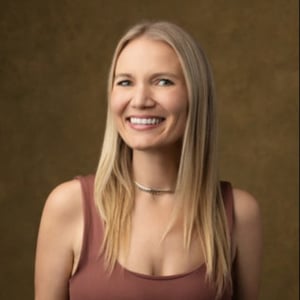
Constitutional Scholarship Director and Senior Legal Analyst, Pacific Legal Foundation
Anastasia Boden is Director of Constitutional Scholarship at Pacific Legal Foundation, where she leads the organization’s Supreme Court commentary and directs scholarly analysis in support of the firm’s litigation. She has represented entrepreneurs and small businesses nationwide in challenges to onerous licensing regimes, anti-competitive titling restrictions, Certificate of Need (“competitor’s veto”) laws, and other forms of unnecessary red tape that block economic opportunity.
Prior to this role, Anastasia developed nearly a dozen constitutional challenges to Certificate of Need laws across the country, helping spur legislative reform in Montana, Pennsylvania, and West Virginia. Her victories include a ruling invalidating Houston’s busking restrictions, multiple appellate decisions expanding access to the courts for civil rights plaintiffs, and the legislative repeal of Virginia’s happy-hour advertising ban.
Her writings on law and liberty have been featured in USA Today, The Washington Post, The Wall Street Journal, the Los Angeles Times, the Chicago Tribune, Forbes, and more, and she has appeared on Headline News, CBS News, Fox News, ReasonTV, Newsmax, and John Stossel. In 2020, she was featured on Libertarian Party presidential candidate Jo Jorgensen’s Supreme Court shortlist.
Anastasia earned her BA with dean’s honors from the University of California, Santa Barbara, and her JD from Georgetown University Law Center, where she was research assistant to Professor Randy E. Barnett—the “intellectual godfather” of the constitutional challenge to Obamacare. She is the co-creator of the podcast Dissed, about infamous Supreme Court dissents. She authors the biweekly newsletter SCOTUS Scoop and the column, “In Dissent” for SCOTUSblog.
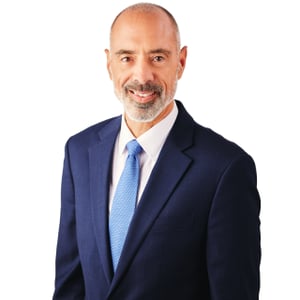
Founding Partner, Lawson Huck Gonzalez, PLLC
Alan Lawson retired from the Florida Supreme Court in late 2022 after a 35-year legal and judicial career, founding the firm with his partners in early 2023.
Earlier in his legal career, Alan practiced as an associate and partner with a major Florida law firm, Steel Hector & Davis, and with the Orange County Attorney’s Office. In these capacities, Alan handled a wide array of case types in state and federal court, and before administrative agencies, including construction, government procurement, eminent domain, contract claims, public utility regulatory proceedings, business disputes, and class action defense, attaining a Martindale-Hubbell “AV” rating. This rating reflects a peer-review ranking at the highest level of professional excellence for legal knowledge, communication skills and ethical standards.
In 2002, Alan was appointed by then-Governor Jeb Bush as a Judge of the Ninth Judicial Circuit and served there for four years, presiding over more than 100 jury trials. Alan was then appointed by Governor Bush to the Fifth District Court of Appeal, where he served for eleven years, including a term as Chief Judge. In 2016, Governor Rick Scott appointed Alan to the Florida Supreme Court, where he served until his retirement from the bench. Throughout his career, Alan received numerous awards and recognitions, and has maintained a reputation for diligence, excellence, skill and professionalism.
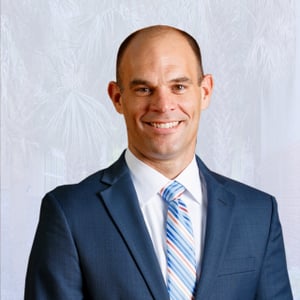
Associate Professor of Law, University of Florida Levin College of Law
Professor Marshfield teaches and writes in the areas of local government law, state constitutional law, and constitutional change. His research has appeared in the University of Pennsylvania Law Review, Northwestern University Law Review, Boston University Law Review and the Michigan Law Review, among others. His state constitutional law research has been cited by the New Jersey Supreme Court, and his research into constitutional change has been cited by leading scholars in law reviews, textbooks, and academic journals. Professor Marshfield has also served as a consultant to foreign officials regarding issues of constitutional revision, and he has advised public policy groups regarding voter awareness and ballot issues.
Before joining the University of Florida, Professor Marshfield taught at the University of Nebraska College of Law, where he twice won Professor of the Year for this teaching. Professor Marshfield also taught at the University of Arkansas School of Law and practiced as a commercial litigator with Latham & Watkins LLP and Saul Ewing LLP. He clerked for Judge Robert B. Kugler, United States District Judge for the District of New Jersey, and Chief Justice James R. Zazzali of the Supreme Court of the State of New Jersey.
Professor Marshfield grew up in Durban, South Africa.
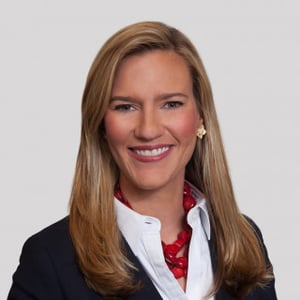
United States District Judge, Middle District of Florida
Judge Moe currently serves as a United States District Judge for the Middle District Of Florida.
At the time then-Governor Rick Scott appointed her to the bench in 2017, Judge Moe was an equity shareholder at Bush Ross, P.A. She was AV-rated by Martindale-Hubbell and was recognized by Best Lawyers in America, Florida Trend: Legal Elite, and Florida Super Lawyers in the field of commercial litigation. As a lawyer, her trial experience included jury and non-jury cases in state and federal court and in arbitration. Her last trial in private practice involved a dispute between the State of Florida and the Seminole Indian Tribe over the Tribe’s Class III gaming compact. While her clients were most often business people engaged in or trying to avoid business disputes, she also handled pro bono cases on behalf of a nun, a convicted murderer serving three life sentences in federal prison, and a participant in the Middle District of Florida’s Intensive Re-Entry Program. She is a past president of the Tampa Bay Chapter of the Federal Bar Association and a past chair of a Florida Bar Grievance Committee.
Prior to entering private practice, she clerked for United States District Judge Virginia M. Hernandez Covington in the Middle District of Florida. During law school, she was editor-in-chief of the law review and interned for Justice Kenneth B. Bell during his service on the Florida Supreme Court and the Honorable Jeffrey Hotham on the Maricopa County Superior Court. She is an honors graduate of the Sandra Day O’Connor College of Law at Arizona State University, Furman University, and Cambridge Christian School (formerly known as Seminole Presbyterian School).
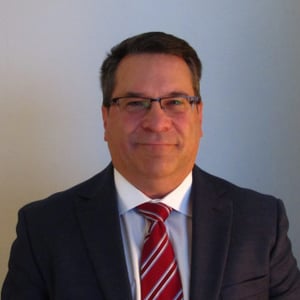
Executive Director and Vice President of Legal Studies , Washington Legal Foundation
Glenn G. Lammi is Executive Director and Vice President of Legal Studies at Washington Legal Foundation (WLF), a national public-interest law firm and policy center. He was a law clerk to WLF’s Legal Studies Division in 1990 and began in January 1992 as the division’s Chief Counsel. Glenn assumed leadership of the Legal Studies Division in 1995, and WLF’s Board appointed him Executive Director in 2021. In his Executive Director role, Glenn has a direct hand in fundraising, donor relations, communications, and the group’s strategic vision. As leader of its publishing and programs division, Glenn monitors legal-policy developments in federal and state courts, regulatory agencies, and legislatures, manages all aspects of WLF’s educational publications and its WLF Legal Pulse blog, and designs and moderates its programming. He is a member of the International Association of Defense Counsel. Glenn earned his bachelor’s degree from Pennsylvania State University in 1988 and graduated from American University’s Washington College of Law in 1991.

Judge, United States Court of Appeals, Ninth Circuit
Judge Carlos Bea serves as a judge on the United States Court of Appeals for the Ninth Circuit. He received his Bachelor's Degree from Stanford University in 1956 and his J.D. from Stanford Law School in 1958. Judge Bea was born in San Sebastian, Spain, and immigrated with his family to Cuba in 1939. In 1952, he represented Cuba on the Cuban National basketball team in the Helsinki Olympics. Judge Bea became a naturalized citizen of the United States in 1958. He engaged in private practice in San Francisco, principally in the area of civil trials (jury and non-jury), from 1959-75 at Dunne, Phelps & Mills and from 1975-90 at Carlos Bea, A Law Corporation. He taught courses in civil litigation advocacy at Hastings College of Law and Stanford Law School. From 1990 to 2003, Judge Bea served as a judge of the San Francisco Superior Court. He was nominated by President George W. Bush to the United States Court of Appeals for the Ninth Circuit and was confirmed in 2003.
Judge Bea and his wife Louise reside in San Francisco, where they raised their four sons, Sebastian, Alexander, Nicholas, and Dominic.
Provost and Senior Vice President for Academic Affairs, University of Southern California
Elizabeth Garrett was appointed provost and senior vice president for academic affairs on October 28, 2010. As the university’s second-ranking officer, she oversees the USC Dana and David Dornsife College of Letters, Arts and Sciences as well as the Keck School of Medicine of USC and 16 other professional schools, in addition to the divisions of student affairs, libraries, information technology services, research, student religious life and enrollment services. She also sits on the governing board of the USC hospitals.
As Provost, Garrett has directed substantial new efforts to hire transformative faculty members, including initiatives to recruit faculty in neuroscience, the humanities, and the social sciences, with the goal of catalyzing targeted fields of scholarship and invigorating USC’s research environment. She has also accelerated the recruitment of Provost Professors and created recruitment of the Provost’s Post-Doctoral Scholars Program in the Humanities. From 2006 to 2011 she led USC’s successful reaccreditation through the Western Association of Schools and Colleges. Garrett has also been instrumental in the integration of the new Keck Hospitals of USC and the faculty practice plans into the university, which created an academic medical center on the Health Sciences Campus. Garrett is the Frances R. and John J. Duggan Professor in the USC Gould School of Law. In addition to this primary faculty appointment, she has joint appointments in USC Dornsife College and the School of Policy, Planning, and Development, as well as a courtesy appointment in the USC Annenberg School for Communication and Journalism.
She serves on the Board of Directors of the Initiative and Referendum Institute at USC and, in August 2009, was appointed one of five commissioners on the California Fair Political Practices Commission, the state’s independent political oversight agency. Then-president George W. Bush appointed her to serve on the nine-member bipartisan Tax Reform Panel in 2005. She previously served as director of the USC-Caltech Center for the Study of Law and Politics.
Garrett previously served as USC’s vice president for academic planning and budget, a position she had held since June 2006.
Garrett’s primary scholarly interests are legislative process, direct democracy, the federal budget process, democratic institutions, statutory interpretation, administrative law and tax policy. The author of more than 50 articles, book chapters and essays, she is co-author of the fourth edition of the leading casebook on legislation and statutory interpretation, Cases and Materials on Legislation: Statutes and the Creation of Public Policy, and co-editor of Statutory Interpretation Stories and Fiscal Challenges: An Interdisciplinary Approach to Budget Policy.
Before joining the faculty of USC, she was a professor of law at the University of Chicago, where she also served as deputy dean for academic affairs, and she has been a visiting professor at Harvard Law School, the University of Virginia Law School, Central European University in Budapest, and the Interdisciplinary Center Law School in Israel. Before entering academics, she clerked for Justice Thurgood Marshall on the U.S. Supreme Court, and she served as legal counsel and legislative director for Senator David L. Boren (D-Okla.). She received her B.A. in History with special distinction from the University of Oklahoma and her J.D. from the University of Virginia School of Law.
Garrett is a fellow of the American Law Institute, a life fellow of the American Bar Foundation, and a member of the Pacific Council for International Policy. In 2011 she was elected a Harold Lasswell Fellow of the American Academy of Political and Social Science. She also serves on the editorial board of Election Law Journal, and is a member of the World Economic Forum’s Global Agenda Council on the United States 2011.
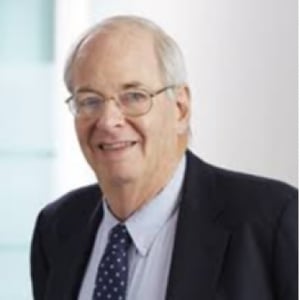
Professor of Law, UCLA Law School
Daniel Lowenstein was the first American law professor to specialize in Election Law and established a leading reputation in that field. He authored the first twentieth century textbook in the field — Election Law: Cases and Materials (Carolina Academic Press, 1995), now in its sixth edition. As co-editor with Professor Rick Hasen he inaugurated the Election Law Journal, the leading journal in the field. On January 29, 2010, leading scholars in Election Law put on a festschrift celebrating Lowenstein’s work in the field.
On July 1, 2009, Lowenstein became Director of the new UCLA Center for the Liberal Arts and Free Institutions (CLAFI), intended to facilitate and promote study of the great works and achievements of western civilization. He currently teaches undergraduate courses, primarily in literature.
Lowenstein worked as a staff attorney at California Rural Legal Assistance for two and one-half years beginning in 1968. While working for California's Secretary of State, Edmund G. Brown Jr. starting in 1971, he specialized in Election Law and was the main drafter of the Political Reform Act, an initiative statute that California voters approved in 1974, thereby creating a new Fair Political Practices Commission. Governor Brown appointed Lowenstein as first chairman of the Commission in 1975. Lowenstein has served on the national governing board of Common Cause and has been a board member and a vice president of Americans for Nonsmokers' Rights. He has also served as chairman of the Board of Directors of the award-winning theatre troupe Interact and regularly brings the company to the School of Law to perform plays with legal themes, such as Sophocles' Antigone, Ibsen’s An Enemy of the People, and Wouk's The Caine Mutiny Court Martial.
Professor Lowenstein’s published research runs the gamut of Election Law subjects, including campaign finance, redistricting, voting rights, political parties, and initiatives. He has also published literary criticism on works such as The Merchant of Venice and Bleak House.
To obtain news and information about CLAFI or about the Interact play readings at the School of Law, please write to Lowenstein at Lowenstein@law.ucla.edu.
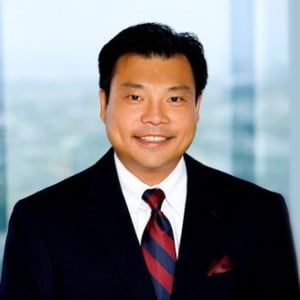
Attorney and Legal Commentator
John Shu is an attorney and legal commentator. His focus areas include constitutional law, securities & corporate law, antitrust law, administrative law, politics, and international affairs. Mr. Shu has lectured and published on a wide variety of issues.
Mr. Shu served President George H.W. Bush and President George W. Bush. He also served Judge Stanley Sporkin, U.S. District Court for the District of Columbia, who was Director of Enforcement at the U.S. Securities & Exchange Commission and General Counsel at the Central Intelligence Agency, and Judge Paul Roney, U.S. Court of Appeals for the Eleventh Circuit, who was Presiding Judge of the Foreign Intelligence Surveillance Court of Review.
Mr. Shu is a member of the National Committee on U.S. - China Relations, the Pacific Council on International Policy, and the Foreign Policy Association.

Panel II: Amending the Florida Constitution: Ballot Initiatives and Judicial Review
Daniel Bell, Anastasia P. Boden, Alan Lawson, Jonathan L. Marshfield, Anne-Leigh Gaylord Moe
The citizen-initiative process allows the People of Florida to propose amendments to the state constitution,...
Citing Rule Against "Log Rolling," Oklahoma Supreme Court Overturns Comprehensive State Tort Reform
Glenn G. Lammi
The practice of tucking tax breaks or other legislative favors for special interests into “must...
Panel II: Contemporary Themes in Direct Democracy
Carlos T. Bea, Elizabeth Garrett, Daniel H. Lowenstein, John Matsusaka
The Federalist Society presented this panel during the Second Annual Western Conference at The Ronald...
Same-Sex Marriage in the State Courts
John Shu
Gay marriage litigation continues to occur in several states. In the first half of 2006,...
The Colorado Supreme Court: Independence or Activism?
Shawn Mitchell
Politicians, academics, and even U.S. Supreme Court Justices have joined the debate over the role...