
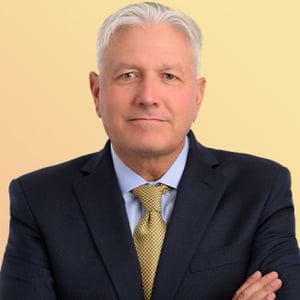
Partner, King & Spalding
A partner in the firm’s Government Advocacy and Public Policy group, J.C. helps companies and trade associations navigate legal, political and regulatory issues commonly associated with doing business in Europe and the United States. He is recognized by clients for his strong, bipartisan relationships with Members of Congress, State Attorneys General, congressional staff and senior government officials across key regulatory and executive branch agencies. He is trusted for his ability to rapidly synthesize complex information and communicate its strategic implications to policymakers and senior institutional stakeholders as well as his candid evaluation of options and potential for success.
As former counsel to the Senate Banking Committee, J.C has developed a deep expertise in financial services, fintech, and emerging technology policy. He has a proven track record of influencing federal legislation, regulatory frameworks, and agency rulemaking impacting digital assets, banking, payments, and technology platforms. J.C. regularly interfaces with financial regulators on a wide array of policy and institution-specific issues, and as co-chair of the firm’s State Attorneys General practice, delivers results on high-impact legal work at the intersection of law, policy and regulation.
J.C. is skilled in developing and executing comprehensive advocacy strategies, shaping legislative language, and positioning clients to successfully navigate complex and evolving policy environments at the federal, state and international levels. As President of the Parliamentary Intelligence-Security Forum, he has briefed policymakers throughout Europe, Africa, Latin America, and the Indo-Pacific. JC also advises international clients seeking to invest, expand, or operate in the United States.
President George W. Bush appointed J.C. to a six-year term as U.S. representative to the World Bank’s International Centre for Settlement of Investment Disputes (ICSID). Mayor Muriel Bowser also appointed J.C. to the District of Columbia; Board of Elections, in which capacity he also served on the U.S. Election Assistance Commission Standards Board. He is currently chairman of the Board of Visitors of The Catholic University Columbus School of Law and President of the Parliamentary Intelligence-Security Forum, where he is a regular speaker on cryptocurrency, artificial intelligence and critical minerals.
Earlier in his career, J.C. established the Boggs Scholarship for Public Service at the University of Delaware in honor of his grandfather and namesake, former U.S. Congressman, Senator and Governor of Delaware, J. Caleb Boggs. He has also served on numerous corporate and non-profit boards, including Jobs for Delaware Graduates (Chairman); The Reserve Trust Company (Vice Chairman), Global Center for Social Entrepreneurship Network (Secretary), Republican National Lawyers Association (President), Kimball Union Academy (Chairman of the Committee on Trustees), and AAA Mid-Atlantic.
J.C. enjoys open-water swimming and is member of U.S. Masters Swimming and the historic Serpentine Swimming Club situated in London's Hyde Park. He has competed in swimming events across all 50 states, ten Canadian provinces and around the world.
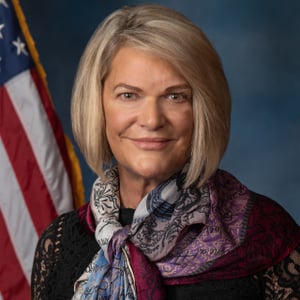
U.S. Senate, Wyoming
Cynthia Lummis was sworn into the United States Senate on January 3, 2021, becoming the first woman to serve as United States Senator from the great State of Wyoming.
Born on a cattle ranch in Laramie County, Senator Lummis has spent her entire career fighting for Wyoming families, communities, businesses and values. From the halls of the Wyoming House to the halls of the U.S. House, her time in public service has always been focused on advocating for Wyoming’s future.
First elected to the U.S. House in 2008, Senator Lummis quickly earned her reputation as a no-nonsense conservative and principled policymaker. She was a founding member of the House Freedom Caucus, a group consisting of the most unflinching conservative Members of the House of Representatives. She fought throughout her tenure in Congress to rein in spending and reduce the federal deficit, working with the bipartisan Committee for a Responsible Federal Budget and ultimately co-sponsoring several bipartisan budget proposals.
In the House of Representatives, Senator Lummis effectively elevated western issues, pushing through the first Interior and Environment (EPA) Appropriations bill to pass the House in seven years under her chairmanship. This marked a significant milestone for the Western Caucus and the rural communities across the West they represent. She also worked to keep public lands open to the public and available for multiple use. She successfully passed the National Forest System Trails Stewardship Act in 2016, a bipartisan effort led by Cynthia to maintain over 157,000 miles of trails within our national forests.
Senator Lummis is a dedicated champion of Wyoming’s mineral and energy resources. In Washington, she fought off attacks from the environmental left while advocating for market opportunities both at home and abroad. She is the proud godmother of the ANSAC Wyoming, a commercial shipping vessel transporting trona from the U.S. to Southeast Asia and is the recipient of the lifetime achievement award from the Washington Coal Club.
Prior to serving in the House of Representatives, Senator Lummis spent eight years as Wyoming State Treasurer and 14 years as a member of the Wyoming State House and Senate. She also worked as general counsel to Wyoming Governor Jim Geringer and Director of the Office of State Lands and Investments, as well as a law clerk at the Wyoming Supreme Court.
After departing U.S. House of Representatives in 2016, Senator Lummis operated her family’s cattle ranches, and the Sweetgrass development in Laramie County, with her brother and sister. She is a three-time graduate of the University of Wyoming in animal science, biology and law. She and her late-husband, Al Wiederspahn, have one daughter, Annaliese, son-in-law Will Cole and grandsons Gus and Al.
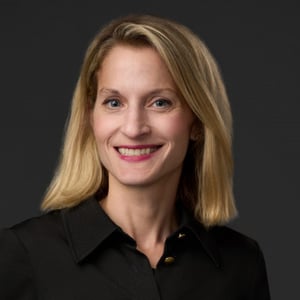
Executive Vice President & Co-Head of Regulatory Affairs, Bank Policy Institute
Paige Paridon is Executive Vice President & Co-Head of Regulatory Affairs for the Bank Policy Institute. Ms. Paridon is a member of BPI’s legal and regulatory affairs team and leads BPI’s consumer financial regulation advocacy alongside digital assets, payments and innovation regulatory policy. She also works on a number of other bank regulatory policy, strategy and advocacy issues.
Prior to joining BPI, Ms. Paridon served as Managing Director and Senior Associate General Counsel of The Clearing House. In that capacity, Ms. Paridon led the advocacy efforts of The Clearing House on a wide array of bank regulatory legal and policy issues impacting large financial institutions, including bank rating systems, national bank preemption, industry compensation limitations, brokered deposit restrictions, Community Reinvestment Act regulations and structural and activity limitations impacting banking organizations. Prior to joining The Clearing House, Ms. Paridon served as Counsel in the Legal Division of the Board of Governors of the Federal Reserve System in the Banking Regulation and Policy Group. While at the Board, Ms. Paridon drafted regulations and developed policies in connection with the Board’s implementation of the Dodd-Frank Act, including those related to the establishment of the Financial Stability Oversight Council; restrictions on transactions between banks and their affiliates; and prohibitions on management interlocks.
While at the Board, she received the Chairman’s Special Achievement Award for leading the interagency effort to implement the Financial Stability Oversight Council’s nonbank designation authority. Ms. Paridon received her J.D. magna cum laude from The Georgetown University Law Center where she was elected to membership in the Order of the Coif and holds a B.A. from Yale University.

Senior Fellow, Mises Institute
Alex J. Pollock is a Senior Fellow with the Mises Institute, providing thought and policy leadership on financial issues and the study of financial systems. His work includes cycles of booms and busts, financial crises with their political responses, housing finance, government-sponsored enterprises, risk and uncertainty, central banking, banking and financial regulation, corporate governance, retirement finance, student loans, and the politics of finance.
He previously served as the Principal Deputy Director of the Office of Financial Research in the U.S. Treasury Department 2019-2021. He was a Distinguished Senior Fellow with the R Street Institute 2015-2019 and 2021, and a resident fellow at the American Enterprise Institute, 2004-2015. Among the many aspects of his AEI work, he developed the One Page Mortgage Form to give borrowers in clear form the key information they need in order to know what they are committing themselves to. He was President and CEO of the Federal Home Loan Bank of Chicago from 1991 to 2004. There he invented the Mortgage Partnership Finance program, which successfully created front-end mortgage credit risk sharing beginning in 1997. His decades of banking experience include being a Visiting Scholar at the Federal Reserve Bank of St. Louis, 1991.
Pollock was a director of the CME Group 2004-2019 and of Ascendium Education Group 1989-2019. He is a director and past-chairman of the Great Books Foundation and a past president of the International Union for Housing Finance.
He is the co-author of Surprised Again! - The COVID Crisis and the New Market Bubble (2022), and the author of Finance and Philosophy—Why We’re Always Surprised (2018) and Boom and Bust: Financial Cycles and Human Prosperity (2011), as well as numerous articles and Congressional testimony.
Pollock is a graduate of Williams College, the University of Chicago, and Princeton University.
His work is available on alexjpollock.com.
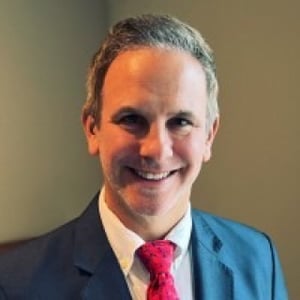
Deputy General Counsel of Regulatory Strategy and Global Policy, Circle
Corey Then is the Deputy General Counsel of Regulatory Strategy and Global Policy at Circle, where he leads U.S. policy and global regulatory strategy. Among other things, he helped lead the company’s advocacy on stablecoin legislation, which ultimately culminated in the GENIUS Act. Prior to joining Circle, Corey served in a variety of legal and leadership roles, including in the White House as an attorney, Special Assistant to the President and leader of the Economics team in Presidential Personnel, and as Deputy General Counsel of the U.S. Department of Agriculture.
He has also served as the Chief Legal Officer of Moneta, an investment adviser, as a white-collar attorney at Williams & Connolly law firm in Washington, D.C., as an adjunct professor at Washington University Law School, and as a member of the CFTC Technology Advisory Committee. He is a graduate of Duke Law School.
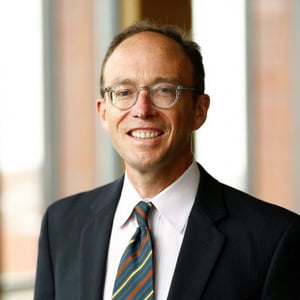
Professor of Legal Studies & Business Ethics, The Wharton School, The University of Pennsylvania
David Zaring’s scholarship addresses administrative and regulatory law from an international perspective. Professor Zaring comes to the business school from the Washington & Lee University School of Law. At Washington & Lee, he was an assistant professor and Alumni Faculty Fellow from 2005 to 2007. He had previously served as Acting Assistant Professor in the Lawyering Program at New York University School of Law from 2002 to 2005, and as a visiting professor at Vanderbilt Law School in the fall of 2007. After graduating magna cum laude from Harvard Law School, Professor Zaring clerked for Chief Judge William Matthew Byrne Jr. of the U.S. District Court for the Central District of California and then for Judge Judith Rogers on the US. Court of Appeals for the D.C. Circuit. He served as a trial attorney for the U.S. Department of Justice in the Federal Programs Branch of the Civil Division and as a special assistant to the General Counsel in the U.S. Department of Housing and Urban Development before entering the academy.
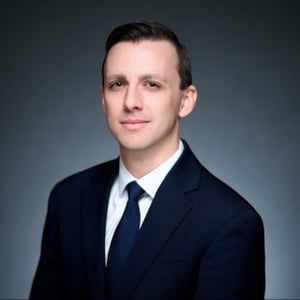
Managing Director, BGR Group
Sean Cooksey, a former senior official in the Trump administration and on Capitol Hill, works as a Managing Director with BGR Group’s Commerce and Infrastructure Practice. He brings a wealth of executive branch, legislative, and private sector experience to his work with clients on issues ranging from congressional oversight and investigations, competition and antitrust matters, intellectual property and technology policy, and litigation support.
Prior to joining the BGR team, Sean was Counsel to Vice President JD Vance. In this role, he served as the Vice President’s chief legal adviser and a senior policy staffer within the White House. As part of the Trump-Vance administration, he regularly advised the Vice President and senior White House staff on constitutional law, domestic policy, ethics, and executive and judicial nominations.
Previously, Sean was a member of the Federal Election Commission, after being nominated by President Trump in 2020. Sean served on the FEC for four years and was elected Chairman for the 2024 presidential election year, overseeing an agency of 300 staff to administer federal campaign-finance law.
Sean began his political career in the United States Senate, where he served as General Counsel for Senator Josh Hawley (R-MO) and Deputy Chief Counsel for Senator Ted Cruz (R-TX). During his tenure in both offices, Sean worked on the Senate’s Committee on the Judiciary on some of the Senate’s most high-stakes matters, including major legislation and two Supreme Court confirmations.
Prior to his Senate service, Sean worked at an international law firm in Washington, D.C., where his practice focused on appeals and constitutional law. He also served as a law clerk for Judge Jerry E. Smith of the United States Court of Appeals for the Fifth Circuit in Houston, Texas.
Sean has appeared on television, on radio, and in print in outlets such as The Ingraham Angle, Varney & Co., Morning Edition, The New York Times, The Wall Street Journal, The Washington Post, Axios, and Politico. He speaks regularly at major conferences, including the Republican National Lawyers Association and the National Association of Business PACs.

Founder and Executive Director, National Security Institute; Assistant Professor of Law, Antonin Scalia Law School, George Mason University
Jamil N. Jaffer is the Founder and Executive Director of the National Security Institute at the Antonin Scalia Law School at George Mason University where he also serves as an Assistant Professor of Law, Director of the National Security Law and Policy Program, and Director of the Cyber, Intelligence, and National Security LLM Program. Jamil also teaches classes on counterterrorism, intelligence, surveillance, cybersecurity, and other national security matters, as well as a summer course held abroad with U.S. Supreme Court Justice Neil M. Gorsuch. Jamil is also affiliated with Stanford University’s Center for International Security and Cooperation and previously served as a Visiting Fellow at the Hoover Institution from 2016 to 2019.
Jamil is also a Venture Partner with Paladin Capital Group, where he assists the firm with investments across the full range of its themes and theses, including a focus on dual-use national security technologies. Jamil also serves on the board of directors of RangeForce, a cybersecurity training and readiness platform startup and Tozny, a digital identity startup, and on the advisory boards of U.S. Strategic Metals, North America’s largest primary producer of cobalt, a critical mineral used in EV batteries, aerospace, and other national security applications; and Constella Intelligence, a deep and dark web intelligence startup. Jamil also serves as an advisor to Beacon Global Strategies, a strategic advisory firm and Duco, a technology platform startup that connects corporations with geopolitical and international business experts. Jamil is also the managing director of Trigraph Caveat Capital, a private investment vehicle.
Among other things, Jamil currently serves on the Board of Directors for the Greater Washington Board of Trade, the Board of Advisors for the Global Cyber Alliance, and the Advisory Board of the Foundation for the Defense of Democracies’ Center on Cyber and Tech Innovation, the Executive Committee of the Reagan Institute Strategy Group. Jamil is also a Fellow at the Academy for Judaic, Christian, and Islamic Studies, an advisor to the Concordia Summit, and is a member of the Board of Directors for the Center for Intelligence Policy, the Board of Directors of Speech First, and the Executive Committee of the International Law and National Security Practice Group of the Federalist Society.
Immediately prior to his current positions, from 2015-2021, Jamil served as a senior business leader at IronNet Cybersecurity, helping take the company from a bootstrapped first-year technology products startup through two rounds of venture capital fundraising, growing from 40 employees to over 300, and through its listing on New York Stock Exchange. In his role as IronNet's Senior Vice President for Strategy, Partnerships & Corporate Development, Jamil worked directly for the co-CEOs of the company, Gen (ret.) Keith B. Alexander, the former Director of the National Security Agency and Founding Commander of U.S. Cyber Command, and Bill Welch, the former COO of Zscaler and Duo; in that role, Jamil led all of the company’s strategic and technology partnership efforts, including developing go-to-market and technology integration plans with some of the largest cloud platforms and cybersecurity companies in the market, evaluating potential acquisition targets, and developing overall corporate strategy and thought leadership around collective security and collaborative defense in the cyber arena.
Prior to his time at IronNet, Jamil served on the leadership team of the Senate Foreign Relations Committee as Chief Counsel and Senior Advisor under Chairman Bob Corker (R-TN), where he worked on key national security and foreign policy issues, including leading the drafting of the proposed Authorization for the Use of Military Force against ISIS in 2014 and 2015, the AUMF against Syria in 2013, and revisions to the 9/11 AUMF against al Qaeda. Jamil was also the lead architect of the Iran Nuclear Agreement Review Act and two sanctions laws against Russia for its first intervention in Ukraine.
Prior to joining SFRC, Jamil served as Senior Counsel to the House Permanent Select Committee on Intelligence under Chairman Mike Rogers (R-MI) where he led the committee’s oversight of NSA surveillance, NRO intelligence issues, and NGA analytic and collection matters, as well as intelligence community-wide counterterrorism issues. Jamil was also the lead architect of the Cyber Intelligence Sharing and Protection Act, the nation’s first cyber threat intelligence sharing legislation that was signed into law in 2015.
In the Bush Administration, Jamil served in the White House as an Associate Counsel to the President, handling Defense Department, State Department, and intelligence community matters, and serving as one of the White House Counsel’s primary representatives to the National Security Council Deputies Committee.
Prior to the White House, Jamil served on the leadership team of the Justice Department’s National Security Division as Counsel to the Assistant Attorney General for National Security, where he focused on counterterrorism and intelligence matters. At NSD, Jamil helped lead the division’s work on In re: Directives, the first ever two-party litigated matter in the FISA Court and the second case before the FISA Court of Review in its 30-year history. Jamil also led NSD’s efforts on the President’s Comprehensive National Cybersecurity Initiative (CNCI), including the drafting of NSPD-54/HSPD-23, and related classified matters, and advised the National Security Agency (NSA) and U.S. Cyber Command’s predecessor organization, the Joint Function Component Command for Network Warfare (JFCC-NW), on matters related to cyber intelligence collection and offensive cyber activities. For his work on these matters, Jamil was awarded the Assistant Attorney General’s Award for Special Initiative and was among the group of lawyers awarded the Director of National Intelligence’s 2008 Legal Award (Team of the Year – Cyber Legal).
Jamil also served in other positions in the Justice Department, including in the Office of Legal Policy, where he worked on the confirmations of Chief Justice John G. Roberts, Jr. and Justice Samuel A. Alito, Jr. to the United States Supreme Court.
Jamil also served as a lawyer in private practice at Kellogg Huber, a Washington, DC-based litigation boutique, as a policy advisor to Congressman Bob Goodlatte (R-VA), and as a staff member or senior advisor on a number of political campaigns, including two presidential campaigns and a presidential transition team. While in law school, Jamil was a member of the University of Chicago Law Review, managing editor of the Chicago Journal of International Law, and National Symposium Editor of the Harvard Journal of Law & Public Policy. Following law school, Jamil served as a law clerk to Judge Edith H. Jones of the United States Court of Appeals for the Fifth Circuit and, later in his career, as a law clerk to then-Judge Neil M. Gorsuch when he first joined the United States Court of Appeals for the Tenth Circuit as well as a law clerk to Justice Neil Gorsuch when he joined the U.S. Supreme Court.
Jamil has published multiple op-eds and academic articles on national security, foreign policy, cybersecurity, counterterrorism, encryption, and intelligence matters, and is the co-author of a book chapter with former NSA Director Gen. (Ret.) Keith B. Alexander on national security and the press in National Security, Leaks, and the Freedom of the Press: The Pentagon Papers Fifty Years On (2021) and a book chapter with former CIA Director Gen. (ret.) Mike Hayden on ISIS, al Qaeda, and other international terrorist groups in Choosing to Lead: American Foreign Policy for a Disordered World (2015). Jamil has also written book chapters on cybersecurity and surveillance, as well as op-eds and policy papers with former Attorney General Michael B. Mukasey, former National Counterterrorism Center Director Matt Olsen, and Congressman Mike Waltz (R-FL), among others.
Jamil has previously taught graduate-level courses in intelligence law and policy at George Washington University’s Elliott School of International Affairs and the National Intelligence University, served an outside advisor to the Cyberspace Solarium Commission, and has recently testified before committees of the U.S. Senate and House of Representatives on China, cybersecurity, counterterrorism, and other national security matters. Jamil has also recently appeared on a range of national television and radio outlets including CNN, Fox News, Fox Business, MSNBC, Bloomberg, PBS, Voice of America, and National Public Radio, and in various print and online publications, including the Wall Street Journal, New York Times, and the Washington Post on a range of national security matters including cybersecurity, counterterrorism, surveillance, encryption, privacy, and foreign policy issues.
Jamil holds degrees from UCLA (BA, cum laude), the University of Chicago Law School (JD, with honors), and the United States Naval War College (MA, with distinction).
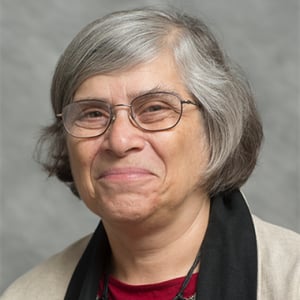
Professor of Cyber Security and Policy, Tufts University
Susan Landau is Professor of Cyber Security and Policy in the Department of Computer Science, Tufts University. Earlier, as Bridge Professor of Cyber Security and Policy at the Fletcher School and School of Engineering, she founded Tufts's innovative MS degree in Cybersecurity and Public Policy. Prior to Tufts, Landau was Senior Staff Privacy Analyst at Google, Distinguished Engineer at Sun Microsystems, and faculty member at Worcester Polytechnic Institute, the University of Massachusetts Amherst, and Wesleyan University.
An interdisciplinary scholar, Landau works at the intersection of privacy, surveillance, cybersecurity, and the law. She has testified before Congress and briefed US and European policymakers on encryption, Landau and Whitfield Diffie won the McGannon Book Award for Social and Ethical Relevance in Communication Policy Research for Privacy on the Line: The Politics of Wiretapping and Encryption. She received the Surveillance Studies Book Prize for Surveillance or Security? The Risks Posed by New Wiretapping Technologies, the USENIX Lifetime Achievement Award, shared with Steven Bellovin and Matt Blaze, and the American Mathematical Society's Bertrand Russell Prize. Landau has served on committees of the National Academies of Sciences, Engineering, and Medicine, on the National Science Foundation Computer and Information Science Engineering Advisory Board, the National Institute of Standards and Technology Information Security and Privacy Advisory Board, and on mathematics and computer science journal editorial boards. Landau received her BA from Princeton, MS from Cornell, and PhD from MIT.
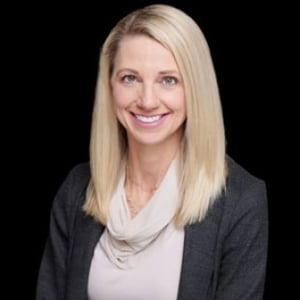
Strategic Council, Silverado Policy Accelerator; former Republican Deputy Staff Director, U.S. Senate Select Committee on Intelligence
Tara Caroselli McFeely is a senior national security executive with expertise spanning defense, intelligence, and technology policy, political, and budgetary domains. She serves on the Strategic Council at Silverado Policy Accelerator, advising on innovative, data-driven national security policy initiatives, and is an Adjunct Professor in the Master of Science in Foreign Service program at Georgetown University’s Edmund A. Walsh School of Foreign Service.
In government, she most recently served as the Republican Deputy Staff Director on the U.S. Senate Select Committee on Intelligence (SSCI) driving the national security and intelligence policy and Executive Branch oversight strategic direction. She also co-led the professional staff oversight functions of the policies and programs of the U.S. intelligence enterprise spanning six Departments: Defense, Energy, Homeland Security, Justice, Treasury, State; and two independent agencies: the Central Intelligence Agency and the Office of the Director of National Intelligence. Prior to this role she served as the SSCI Budget Director, leading the staff oversight of the Intelligence Community (IC) and Defense Intelligence Enterprise annual $100.0+ billion budget and programs. Formerly, she was the SSCI Chairman’s Senior Advisor for Counterterrorism and the Federal Bureau of Investigation’s intelligence programs.
In the research domain, Ms. McFeely was the Deputy Director of the Intelligence Analyses Division at the Institute for Defense Analyses. In this role she led a large team of senior social sciences and STEM researchers on complex multidisciplinary research and analysis projects.
At Booz Allen Hamilton, she was a senior advisor for multiple IC and Department of Defense clients. She also led numerous multifaceted contracts across the U.S. Government landscape globally, including multilateral counter-Biological Weapons (BW) program initiatives.
Ms. McFeely began her career serving globally in the U.S. Navy, initially as a Surface Warfare Officer conducting U.S. 2nd Fleet and NATO operations across the Atlantic, and subsequently as a Naval Intelligence Officer supporting operations in the Balkans and the Global War on Terror.
Ms. McFeely has a Bachelor of Science in Political Science from the U.S. Naval Academy where she was a letterwoman on the Women’s Varsity Basketball Team. She also has a Master of Arts in Law and Diplomacy (MALD) from The Fletcher School of Law and Diplomacy, Tufts University.
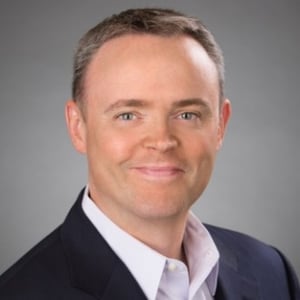
Senior Fellow, R Street Institute
Prior to R Street, Adam spent 12 years as a senior fellow at the Mercatus Center at George Mason University. Before the Mercatus Center, he served as the president of the Progress and Freedom Foundation. Adam has also worked for the Adam Smith Institute, the Heritage Foundation and the Cato Institute.
Adam has published 10 books on a wide range of topics, including online child safety, internet governance, intellectual property, telecommunications policy, media regulation and federalism.
In 2008, Adam received the Family Online Safety Institute’s “Award for Outstanding Achievement.”
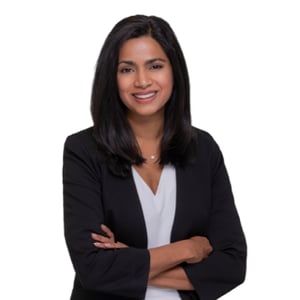
Partner, K&L Gates
Varu Chilakamarri is a partner in the K&L Gates Environment, Land, and Natural Resources practice group. Her practice focuses on litigation services, particularly in appellate matters and in administrative, environmental, and energy law. Varu also counsels clients on government-facing matters, which often involve strategic analysis of legal risks and opportunities presented by statutory and regulatory frameworks.
Varu joined K&L Gates after a 17-year career at the US Department of Justice, where she was a successful federal district and appellate court litigator and held various senior leadership roles. Most recently, she served as Deputy Assistant Attorney General in the DOJ's Civil Division. In this role, Varu was the head of the Torts Branch, an office of over 230 litigators and staff who defend the United States in a wide range of suits for monetary damages—including toxic tort cases arising out of environmental regulatory actions, constitutional tort cases, and cases brought under unique statutory compensation programs.
Before that, Varu was an appellate attorney in the Environment and Natural Resources Division, serving as lead counsel in complex civil and criminal appeals. These included facial challenges to the constitutionality of federal laws and regulations, and challenges to the validity of federal permitting and land use decisions (e.g., cases involving the National Environmental Policy Act, the Endangered Species Act, and the Clean Water Act). She also litigated enforcement cases, including those involving violations of substantive environmental laws, recordkeeping requirements, and various Title 18 provisions. She argued cases before the US Court of Appeals for the Third, Fifth, Ninth, Tenth, D.C., and the Federal Circuit, and she has practiced in several other federal appellate and district courts. Varu was previously appointed as the Division's first counselor for animal welfare matters and served as Chief of Staff to the Assistant Attorney General in DOJ's Environment and Natural Resources Division. Varu's work at the DOJ often centered on novel legal challenges arising from a broad suite of federal statutes, including two preemption lawsuits that went to the US Supreme Court.
Varu joined the DOJ in 2006 through the Attorney General's honors program as a trial attorney in the Civil Division's Federal Programs Branch, and during her tenure, also worked in the office of the Associate Attorney General as Acting Deputy and served on detail to the White House Counsel's Office. Before joining the DOJ, Varu clerked for Judge R. Guy Cole in the US Court of Appeals for the Sixth Circuit and Judge Timothy B. Dyk in the US Court of Appeals for the Federal Circuit.
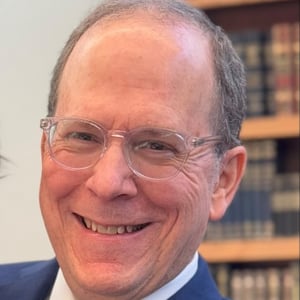
Executive Counsel - Issues and Advocacy, Exxon Mobil Corporation Law Department
Robert Levy serves as Executive Counsel at ExxonMobil, where he leads the company’s legal strategy on advocacy and civil justice reform. His work includes representing ExxonMobil in state and national organizations dedicated to improving the legal system and the rule of law, coordinating amicus support on key policy and litigation matters, and advising on data privacy and information governance. He previously oversaw the company’s eDiscovery compliance and cybersecurity law initiatives.
Robert currently chairs the Board of the American Tort Reform Association and previously served as President of the Civil Justice Reform Group. He is Treasurer of Lawyers for Civil Justice (LCJ), chairs its Discovery Committee, and serves on its Amicus Committee. He is also actively involved with the U.S. Chamber of Commerce’s Institute for Legal Reform and Litigation Center and sits on the Executive Committee of the Texas Civil Justice League. Additionally, he is an active member of the Federalist Society and its In-House Counsel Network.
A long-standing member of the Texas Supreme Court Advisory Committee, Robert has served for over 14 years and currently chairs one of its subcommittees. He also sits on the Advisory Councils of the Atlantic Legal Foundation, the Center for Law & Public Policy, and the Mountain States Legal Foundation. In recognition of his leadership, LCJ awarded him with the Al Cortese Award for his contributions to civil justice reform. Texans for Lawsuit Reform and the Texas Civil Justice League have honored Robert for his years of service to TCJL and Texas civil justice reform.
He has also been deeply engaged in community and bar activities, serving for over a decade on the board of Houston Volunteer Lawyers and on the board of the Houston Jewish Federation. He is a former Chair of the Board of Robert M. Beren Academy, where he was honored with the Dena and Baruch Brody Award for his leadership and service. Additionally, he served as President of United Orthodox Synagogues, reflecting his longstanding commitment to faith-based and civic leadership.
Robert is a frequent speaker at legal conferences and continuing legal education (CLE) programs. Early in his career, he served as a briefing attorney for the Honorable Judge Robert Parker of the U.S. District Court for the Eastern District of Texas. He has practiced law for over 39 years and earned his J.D. with honors from the University of Texas School of Law in 1986.
Before joining ExxonMobil, Robert was a partner at Haynes and Boone, LLP for over 14 years, where he practiced in the Business Litigation Section. He also held positions at Johnson & Gibbs and Weil, Gotshal & Manges.
Robert and his wife Barbara reside in Houston, Texas, where they raised four children and now enjoy their role as proud grandparents to three grandchildren.
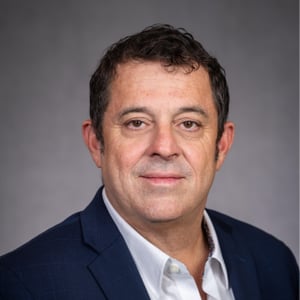
Senior Fellow for Law, Economics, and Technology, The Heritage Foundation; Professor, Florida International University
Mario Loyola is a Senior Fellow for Law, Economics, and Technology at The Heritage Foundation.
Loyola served in the Trump Administration as Associate Director for Regulatory Reform at the White House Council on Environmental Quality. In that role, he was one of the principal drafters of the One Federal Decision policy, which helped to streamline the permitting and environmental review of large infrastructure projects. While at CEQ, he was a member of the U.S. delegation to the USMCA free trade negotiations with Mexico and Canada, as well as the United Nations conference on biodiversity on the high seas. Loyola initially joined the White House in February 2017 as a Presidential Speechwriter, employing his expertise in many areas of foreign and domestic policy.
After beginning his career in M&A and corporate finance law, Loyola served in the Bush 43 Administration as a special assistant to the Undersecretary of Defense for Policy. He left that position to start writing on national defense issues in magazines such as National Review and The Weekly Standard, reporting from the front lines of the war on terrorism in Lebanon, Israel, and Iraq. He finished the Bush Administration as Foreign and Defense Counsel to the U.S. Senate Republican Policy Committee, then under the chairmanship of Senator Kay Bailey Hutchison of Texas. He subsequently moved to Texas and joined the Texas Public Policy Foundation, where he specialized in energy, environment, and federalism.
Loyola is a frequent contributor to The Wall Street Journal, National Review, and The Atlantic, among others. He teaches environmental and administrative law at Florida International University, where he is Founding Director of the Environmental Finance and Risk Management program in FIU’s prestigious Institute of Environment. He received a bachelor’s degree in European history from the University of Wisconsin–Madison and a J.D. from Washington University School of Law.

Partner, Vinson & Elkins
Corinne principally practices in environmental law, with an emphasis on litigation, regulatory compliance, internal investigations, and defense against government investigations and enforcement actions.
Corinne draws on wide experience at the U.S. Department of Justice, including serving as Senior Counsel in the Office of the Associate Attorney General, which oversees all civil litigation on behalf of the United States, and as Counselor in the Office of the Attorney General.
Corinne most recently served as Counsel and Chief of Staff in the Environment and Natural Resources Division of the U.S. Department of Justice, where she assisted in managing a 600-person division that included 400 lawyers. In this role she helped manage the Division’s civil and criminal litigation arising under more than 150 environmental and natural resources laws.
She also worked closely with the General Counsel’s Offices for multiple federal agencies, including the EPA, Departments of Interior, Defense, Energy, Commerce, and Agriculture, as well as the White House and Counsel on Environmental Quality to advise high-ranking officials on policy and litigation risks associated with the environmental and natural resource laws.
She has personally argued cases in three U.S. Courts of Appeals, and multiple district courts, and served as the lead or co-lead counsel in district court litigation defending agency regulations, approvals, and permits related to oil and gas operations and other energy extraction projects.
Her roles in government have given her a unique perspective into the decision-making processes in the federal government.
In the private sector, Corinne counsels clients on environmental compliance across a variety of industries, including energy, chemical, manufacturing, and mining sectors. In the transactional context, she assists in the drafting and negotiating of the environmental terms in purchase and sale agreements, lease agreements, credit agreements, and disclosures for debt and equity offerings and public filings. She has also drafted comments on behalf of clients to agencies on proposed rules with significant implications for the oil and gas industry.
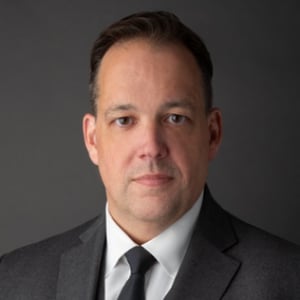
Counsel, Boyden Gray PLLC
Jim Wedeking is counsel at Boyden Gray PLLC. He has extensive experience with environmental regulations, providing compliance counseling for large industrial and agricultural companies and their related trade associations, drafting comments on proposed environmental rulemakings from a variety of federal agencies, and challenging those rules in court. For over 20 years he has helped companies obtain various permits and other authorizations for constructing major infrastructure projects, including fossil fuel-fired power plants, natural gas pipelines, and offshore wind turbines, as well as defend those permits and authorizations through litigation. Mr. Wedeking frequently writes on federal environmental law topics, including for the Washington Legal Foundation.
He has also counseled clients on several Freedom of Information Act matters, including the protection of confidential business information from disclosure to third parties and how the Supreme Court’s Food Marketing Institute v. Argus Leader Media decision increased protections for company information provided to regulatory agencies.
Before joining the firm, Mr. Wedeking was counsel in Sidley Austin’s Washington, D.C. environmental, health, and safety practice group. There, he represented industrial companies in defending against civil and criminal enforcement actions and toxic tort suits.
Mr. Wedeking received a J.D., cum laude, from the Catholic University of America Columbus School of Law and a B.A. in Criminology and Criminal Justice from the University of Maryland.
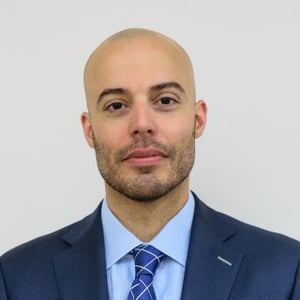
Executive Director, Wyoming Stable Token Commission
Anthony Apollo is the Exeuctive Director of the Wyoming Stable Token Commission, which is responsible for developing and issuing the first publicly-issued, fully-reserved stablecoin in the United States, the Wyoming Stable Token (WYST). The WYST is backed by U.S. Treasury securities and cash, and is designed to be redeemable for U.S. dollars.

Beth and Marc Goldberg Professor of Law, Cornell Law School
Dan Awrey is the Beth and Marc Goldberg Professor of Law at Cornell Law School. Dan’s teaching and research interests reside in the field of financial regulation, including the regulation of banks, investment funds, derivatives markets, payment systems, and financial market infrastructure. Dan has undertaken research and provided advice at the request of organizations including the Bank for International Settlements, U.S. Treasury Department, Federal Reserve Board, the President’s Working Group on Financial Markets, Her Majesty’s Treasury, UK Financial Conduct Authority, Commonwealth Secretariat, Canadian Department of Finance, and European Securities and Markets Authority. His research has been featured in publications including the Yale Law Journal, New York University Law Review, Georgetown Law Journal, Duke Law Journal, Cornell Law Review, Yale Journal on Regulation, Harvard Business Law Review, and the Journal of Comparative Economics. Dan is a co-author of one of the leading textbooks on financial regulation, Principles of Financial Regulation, published by Oxford University Press. He is also a founding co-managing editor of the Journal of Financial Regulation. His latest book, Beyond Banks: Technology, Regulation, and the Future of Money was published by Princeton University Press in October 2024.
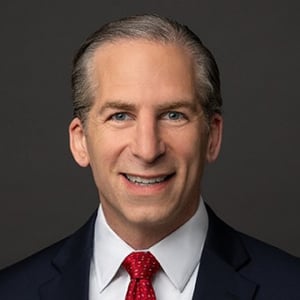
Partner, Cahill Gordon & Reindel LLP; Special Professor of Law, Maurice A. Dean School of Law, Hofstra University
Gary E. Kalbaugh is a nationally recognized leader in commodities, futures, and derivatives law.
Gary is a partner in the New York office of Cahill Gordon & Reindel LLP as well as a Special Professor of Law at the Maurice A. Deane School of Law at Hofstra University, where he teaches derivatives law and banking law.
A preeminent authority in the derivatives field, Gary is the author of the principal treatise Derivatives Law and Regulation (3rd ed. 2021) and serves as Editor-in-Chief of the Futures and Derivatives Law Report, the foremost industry publication. He is a past chair of the New York City Bar Association’s Committee on the Regulation of Futures and Derivatives and has over 15 years of experience as a professor teaching derivatives and banking law.
Gary is the leading derivatives lawyer in the digital assets space, and one of few to truly understand the technical side of emerging financial technology. He serves on the CFTC’s Future of Finance Subcommittee, reflecting his recognized leadership at the intersection of financial regulation and emerging technologies. A frequent speaker, writer, and commentator on derivatives, banking law, artificial intelligence, and digital assets regulation, he has served as conference co-chair for the American Bar Association’s “Artificial Intelligence and Derivatives Market” conference and regularly speaks at major industry conferences on cutting-edge issues in financial regulation and technology. Gary is sought after as a thought leader on the evolving landscape of digital asset regulation and the regulatory implications of AI in financial markets.
At ING, Gary served as Deputy General Counsel and Director, where he chaired swap dealer and security-based swap dealer regulatory committees and provided strategic leadership on U.S., European, and other regulations impacting the organization. He had global responsibility for U.S. derivatives regulatory issues and maintained strong relationships with regulators. Gary also co-developed ING legal’s global artificial intelligence training program and was responsible for U.S. regulatory issues relating to ING’s blockchain-based pilot programs and crypto initiatives.
Previously, Gary served as a lecturer-in-law at Columbia Law School and held senior roles at WestLB, where he was executive director, counsel, and chief U.S. data protection officer and chaired the global Dodd-Frank and underwriting committees. He began his career as an associate at a notable international firm.

Head of Legal for Blockchain, Crypto and Digital Currencies, Paypal Inc.
Jerome Roche is an experienced legal professional specializing in blockchain, cryptocurrency, and digital currencies, currently serving as the Head of Legal at PayPal. Previously, Jerome held partner positions at Linklaters and Mayer Brown, and served as Associate General Counsel at TIAA-CREF, along with an associate role at WilmerHale. Jerome earned a Juris Doctor from the University of Michigan Law School (1994-1997) and a Bachelor of Science in Mathematics from Purdue University (1988-1992)
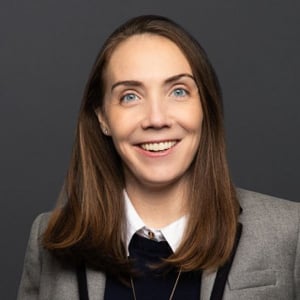
General Counsel and Corporate Secretary, Circle
Sarah is responsible for leading Circle’s legal function to progress the company’s vision and priorities across commercial and M&A transactions, regulatory and product initiatives, corporate governance, and litigation. Sarah honed her corporate legal practice at Sullivan & Cromwell LLP before transitioning in-house, most recently serving as the Chief Legal Officer of a PE-backed company.

Head of AI Policy, Abundance Institute
Neil Chilson is the Head of AI Policy at the Abundance Institute. Prior to this position, he served as a Senior Research Fellow at the Center for Growth and Opportunity. Chilson is a lawyer, computer scientist, and author of the book “Getting Out of Control: Emergent Leadership in a Complex World.”
Chilson was previously the senior research fellow for Technology and Innovation at Stand Together, where he guided efforts to understand and promote the legal and cultural paradigms that best enable people to discover, innovate, and improve all our lives.
Before Stand Together, Chilson was the Chief Technologist at the Federal Trade Commission, where he focused on the economics of privacy and blockchain-related issues. Previously, he was an attorney advisor to Acting FTC Chairman Maureen K. Ohlhausen. In both roles he advised Chairman Ohlhausen and worked with staff on nearly every major technology-related case, report, workshop, or other FTC proceeding since January 2014. Neil joined the FTC from telecom firm Wilkinson Barker Knauer. Neil is frequently quoted by the press and his work has appeared in numerous news outlets, including The Wall Street Journal, The Washington Post, USAToday, and Newsweek. Neil has a J.D. from The George Washington Law School, a M.S. in computer science from University of Illinois, Urbana-Champaign, and a B.S. in computer science from Harding University.

Senior Legal Fellow, The Future of Free Speech, Vanderbilt University
Ashkhen Kazaryan is a renowned expert in First Amendment law and technology policy, specializing in digital free speech, artificial intelligence, and the intersection of constitutional rights with emerging technologies. As a Senior Legal Fellow at the Future of Free Speech at Vanderbilt University, she leads initiatives to protect free expression and shape policies that uphold the First Amendment in the digital age.
Previously, Ashkhen was the lead for North and Latin America on the content regulation team at Meta, where she also served as the company’s policy lead on Section 230. She has also been a Senior Fellow at Stand Together and the Director of Civil Liberties at TechFreedom, where she worked extensively on platform liability, free speech, and internet governance. She is currently Fellow for the First Amendment at the Freedom Forum.
Ashkhen earned her specialist in law degree summa cum laude from Lomonosov Moscow State University in 2012 and later received a master of law degree from Yale Law School in 2016. During her time at Yale, she contributed as an articles editor for the Yale Journal of Law and Feminism, a senior editor for the Yale Law and Policy Review, and an editor for the Yale Journal of Law and Technology, while also serving as co-chair of the Public Interest Fellowship.
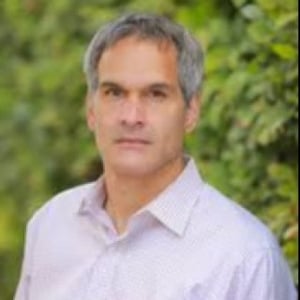
Nonresident Senior Fellow, Brookings Institute, Professor of Electrical Engineering and Law, UCLA
John Villasenor is a professor of electrical engineering, law, public policy, and management at UCLA, and is the faculty co-director of the UCLA Institute for Technology, Law, and Policy. He is also a nonresident senior fellow at the Brookings Institution and a member of the Council on Foreign Relations.
Professor Villasenor’s work addresses the intersection of technology, law, and policy, with a focus on topics including digital communications, artificial intelligence, cybersecurity, and privacy. He has published in many academic journals as well as in the Atlantic, Billboard, the Chronicle of Higher Education, Fast Company, Forbes, the Los Angeles Times, the New York Times, Scientific American, Slate, the Washington Post.
He has also provided congressional testimony on multiple occasions. Prior to joining the faculty at UCLA, Professor Villasenor was with the NASA Jet Propulsion Laboratory, where he developed methods of imaging the earth from space. He holds a B.S. degree from the University of Virginia, and an M.S. and Ph.D. from Stanford University.
Head of AI Policy, Abundance Institute
Neil Chilson is the Head of AI Policy at the Abundance Institute. Prior to this position, he served as a Senior Research Fellow at the Center for Growth and Opportunity. Chilson is a lawyer, computer scientist, and author of the book “Getting Out of Control: Emergent Leadership in a Complex World.”
Chilson was previously the senior research fellow for Technology and Innovation at Stand Together, where he guided efforts to understand and promote the legal and cultural paradigms that best enable people to discover, innovate, and improve all our lives.
Before Stand Together, Chilson was the Chief Technologist at the Federal Trade Commission, where he focused on the economics of privacy and blockchain-related issues. Previously, he was an attorney advisor to Acting FTC Chairman Maureen K. Ohlhausen. In both roles he advised Chairman Ohlhausen and worked with staff on nearly every major technology-related case, report, workshop, or other FTC proceeding since January 2014. Neil joined the FTC from telecom firm Wilkinson Barker Knauer. Neil is frequently quoted by the press and his work has appeared in numerous news outlets, including The Wall Street Journal, The Washington Post, USAToday, and Newsweek. Neil has a J.D. from The George Washington Law School, a M.S. in computer science from University of Illinois, Urbana-Champaign, and a B.S. in computer science from Harding University.
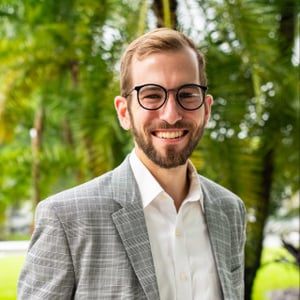
AI Innovation and Law Fellow, University of Texas School of Law
Kevin Frazier is an AI Innovation and Law Fellow with University of Texas School of Law.

Senior Vice President, Americans for Responsible Innovation
Satya Thallam is Senior Vice President for Government of Government Affairs at Americans for Responsible Innovation, focused on AI policy issues. He is also Non-Resident Senior Fellow at the Foundation for American Innovation. He is a policy expert and advisor, having served in senior roles in the congressional and executive branches and as an executive at a biotechnology startup, and is frequently invited to testify before Congress and appear in media.
Previously, he was a senior policy official at the White House Office of Management and Budget (OMB), with direct oversight, review, and negotiation of all federal regulatory policymaking across over a dozen cabinet agencies. In this role, he advised the Director of OMB and fellow senior White House colleagues on regulatory policies and process. His time in government began in the U.S. Senate, at the Committee on Homeland Security and Governmental Affairs, where for nearly five years he was the Senate’s point person on regulatory reform, as well as the committee’s expert on areas running the breadth of the committee’s jurisdiction.
Satya has also spent many years in the think tank sector, leading programs primarily related to financial services policy, at both university-based and independent organizations. In this capacity, he authored policy reports, congressional testimonies, op-eds, and presentations, and built new research programs. Satya’s policy career began at the Goldwater Institute, the premier state policy-focused think tank, beginning as an intern and rising to a director-level role leading the organization’s fiscal policy program.
Senior Fellow, R Street Institute
Prior to R Street, Adam spent 12 years as a senior fellow at the Mercatus Center at George Mason University. Before the Mercatus Center, he served as the president of the Progress and Freedom Foundation. Adam has also worked for the Adam Smith Institute, the Heritage Foundation and the Cato Institute.
Adam has published 10 books on a wide range of topics, including online child safety, internet governance, intellectual property, telecommunications policy, media regulation and federalism.
In 2008, Adam received the Family Online Safety Institute’s “Award for Outstanding Achievement.”
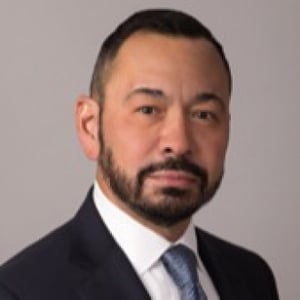
Partner, Gibson Dunn & Crutcher LLP
Miguel A. Estrada is a partner in the Washington, D.C. office of Gibson, Dunn & Crutcher.
Mr. Estrada has represented clients before federal and state courts throughout the country in a broad range of matters. He has argued 24 cases before the United States Supreme Court, and briefed many others. He has also argued dozens of appeals in the lower federal courts.
Best Lawyers® recognized Mr. Estrada as a 2020 Lawyer of the Year in Intellectual Property Litigation and as a Lawyer of the Year in Appellate Practice. He has been recognized by Benchmark Litigation as a 2020 U.S. Appellate Litigation “Star”. In 2014, The American Lawyer named Mr. Estrada a “Litigator of the Year,” praising his “brains and tenacity” and noting he is the lawyer to call for “a tough, potentially unwinnable case.” From 2014-2021, Chambers & Partners has named him as one of a handful of attorneys that it ranked in the top tier among the nation’s leading appellate lawyers. Chambers & Partners noted that “clients are impressed by his intellect and ability, with one saying, ‘His papers are just blindingly clear in what they say and devastating in how they marshal the arguments.’” The Atlantic described his oral argument in a 2014 high-profile separation-of-powers case as “one of the most dazzling arguments the marble chamber has heard in many years.”
Mr. Estrada was selected by his peers for inclusion in the 2020 edition of The Best Lawyers in America® in the area of Appellate Law, in addition to previous recognition by the publication in the specialties of Bet-the-Company Litigation, Commercial Litigation and Criminal Defense: White Collar, Intellectual Property Litigation, and Regulatory Enforcement Litigation in the areas of SEC, Telecom, and Energy. In 2017, he was elected as a member of the American Law Institute. In 2021, Mr. Estrada was named among the Lawdragon 500 Leading Lawyers in America. In 2004, Legal Times named him one of the top 12 appellate litigators in the D.C. area, noting that “people who follow appellate practice in Washington have known for several years that Estrada . . . is one of the best around.” Also in 2004, Washingtonian Magazine named him one of the top constitutional law lawyers “who could become one of the legends of the Supreme Court bar.”
Mr. Estrada joined Gibson Dunn in 1997, after serving for five years as Assistant to the Solicitor General of the United States. He previously served as Assistant U.S. Attorney and Deputy Chief of the Appellate Section, U.S. Attorney’s Office, Southern District of New York. In those capacities, Mr. Estrada represented the government in numerous jury trials and in many appeals before the U.S. Court of Appeals for the Second Circuit. Before joining the U.S. Attorney’s Office, Mr. Estrada practiced corporate law in New York with Wachtell, Lipton, Rosen & Katz.
Mr. Estrada is a Trustee of the Supreme Court Historical Society. He was formerly a member of the Board of Visitors of Harvard Law School.
Mr. Estrada served as a law clerk to the Honorable Anthony M. Kennedy in the U.S. Supreme Court from 1988 to 1989 and to the Honorable Amalya L. Kearse in the U.S. Court of Appeals for the Second Circuit from 1986 to 1987. He received a J.D. degree magna cum laude in 1986 from Harvard Law School, where he was editor of the Harvard Law Review. Mr. Estrada graduated with an A.B. degree magna cum laude and Phi Beta Kappa in 1983 from Columbia College, New York. He is fluent in Spanish and proficient in French.
Representative Supreme Court matters include:
In 2011, the Supreme Court appointed Mr. Estrada to brief and argue two criminal cases –Dorsey v. United States and Hill v. United States – in which the Solicitor General declined to defend the judgments of the court of appeals. Mr. Estrada was appointed to argue the position that the Solicitor General had declined to defend.
Mr. Estrada was also part of the team that successfully presented then Governor Bush’s position to the Supreme Court in Bush v. Gore (2000). Other cases that Mr. Estrada handled in the Supreme Court include Granholm v. Heald (2005) (dormant Commerce Clause and Twenty-First Amendment), Vermont Agency of Natural Resources v. United States ex rel. Stevens (2000) (False Claims Act, Article III standing and Eleventh Amendment immunity), Old Chief v. United States (1997) (rules of evidence), United States v. Mezzanatto (1995) (evidence and plea bargaining), United States v. Robertson (1995) (constitutional limits on Congress’s Commerce Clause powers), Citizens Bank of Maryland v. Strumpf (1995) (bankruptcy law), and NOW, Inc. v. Scheidler (1994) (RICO).
Recent Court of Appeals matters include:
In addition, Mr. Estrada is lead appellate counsel to Vivendi S.A. in two securities-fraud appeals from jury verdicts that are currently pending in the Second Circuit, and to the National Association of Broadcasters in a challenge to certain procedures promulgated by the FCC in connection with the upcoming Spectrum Auction. Mr. Estrada also recently presented argument before the D.C. Circuit on behalf of the tobacco industry in a first amendment challenge to certain compelled disclosures that were imposed as part of the government’s long-running civil RICO case against the industry.
Other matters:
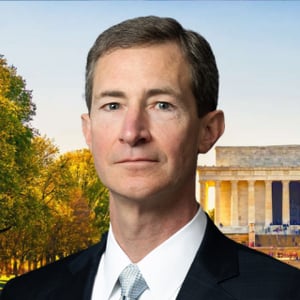
Partner, Torridon Law, PLLC
Pat Philbin brings to Torridon thirty years’ of experience in Washington, including in senior roles in the federal government. His work has involved a broad range of matters from litigating disputes for Fortune 100 companies, to responding to congressional investigations, to crisis management on legal issues making front page news. In addition to handling critical litigation matters, Pat draws on his extensive experience both in and out of government to counsel clients confronted with complex legal issues presenting multi-dimensional challenges.

Thomas M. Siebel Senior Fellow, The Hoover Institution, Stanford University; Gary T. Schwartz Distinguished Professor of Law Emeritus, UCLA School of Law
Eugene Volokh is the Thomas M. Siebel Senior Fellow at the Hoover Institution (Stanford), as well as the Gary T. Schwartz Distinguished Professor of Law Emeritus and Distinguished Research Professor at UCLA School of Law. He recently retired from teaching at UCLA, after 30 years there, and is now focusing on research.
Volokh is the author of the textbooks The First Amendment and Related Statutes (8th ed. 2023), and Academic Legal Writing (5th ed. 2016), as well as over 100 academic law journal articles, mostly on First Amendment law. He is a member of The American Law Institute; the editor-in-chief of the Journal of Free Speech Law; and the creator and coauthor of The Volokh Conspiracy, a leading legal blog founded in 2002 (hosted at the Washington Post from 2014 to 2017 and now at Reason Magazine).
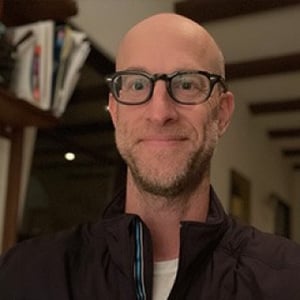
General Counsel, Associate
Jordan Gimbel manages the Open Innovation Team at Microsoft. Prior to joining Microsoft in March 2024, Jordan served as the Deputy General Counsel at Twitch managing teams responsible for global litigation, enforcement and compliance initiatives, government inquiries, product advice, trust & safety initiatives, advertising matters, and the privacy program. Before that, Jordan served as the Head of Global Brand Protection, Domains, and Copyright at Yahoo!.
After law studies, Jordan worked at Jones Day as a member of its intellectual property group focusing on litigation matters ranging from copyright (served as a member of the trial team in the Shepard Fairey v. AP case) to patent. He would also moonlight on the IP transactional team assisting the corporate team on a deal or negotiating a research and development agreement. As part of Jordan's post-law studies Jordan participated in two LLM programs at Stockholm University on IT and European IP law as a Fulbright Scholar in Sweden.

U.S. Court of Federal Claims and Jurist-In-Residence Professor of Law, The University of Akron School of Law
Judge Ryan T. Holte was sworn in as a judge on the United States Court of Federal Claims in July 2019. Prior to confirmation he served as the David L. Brennan Professor of Law and Director of the Center for Intellectual Property Law and Technology at The University of Akron School of Law (2017-2019) and an assistant professor of law at Southern Illinois University School of Law (2013-2017). Judge Holte has written and presented widely on patent law subjects and empirical legal studies of Federal Circuit and district court patent law cases. His most recent articles were published in the Iowa Law Review (2019), George Mason Law Review (2018), and Washington Law Review (2017).
In practice, Judge Holte served for six years as general counsel and partner of an electrical engineering technology company and is co-inventor of multiple patents related to Systems and Methods for Countering Satellite-Navigated Munitions. Prior to entering academia, Judge Holte practiced as a litigation attorney at the Federal Trade Commission and an associate in the Intellectual Property Practice Group at Jones Day. Prior to practice, he served as a law clerk to Judge Stanley F. Birch, Jr. on the United States Court of Appeals for the Eleventh Circuit and as a law clerk to Judge Loren A. Smith on the United States Court of Federal Claims.
Judge Holte received his JD from the University of California Davis School of Law and his BS, magna cum laude, in engineering from the California Maritime Academy where he was a First Class graduate of the Corps of Cadets Third Engineering Division and sailed as a U.S. Merchant Marine oiler.
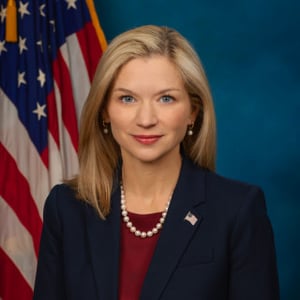
U.S. Attorney, U.S. Attorney's Office for the District of Utah
Melissa Holyoak was nominated by President Trump to serve as U.S. Attorney for the District of Utah on January 29, 2026. Holyoak was appointed on November 17, 2025 by Attorney General Pam Bondi to serve as Interim U.S. Attorney for the District of Utah.
Prior to that, Holyoak served as a Commissioner of the Federal Trade Commission from March 25, 2024 until her appointment as U.S. Attorney. During her FTC tenure, Commissioner Holyoak strove to vigorously enforce the antitrust and consumer protection laws while acting within the agency’s constitutional and statutory remit. She spoke widely about a range of FTC priorities, including improving competition enforcement, effectively applying existing laws to emerging trends in technology, and protecting children and teens online. She also published numerous statements about FTC matters.
Holyoak brings extensive experience as a litigator and leader. She served as Solicitor General with the Utah Attorney General’s Office where she oversaw the civil appeals, criminal appeals, constitutional defense and special litigation, and antitrust and data privacy divisions. She also managed multistate matters including those involving consumer protection and antitrust claims.
Before taking on that role, she served as president and general counsel of Hamilton Lincoln Law Institute, a Washington, D.C.-based public interest law firm and in other public interest attorney positions with the Competitive Enterprise Institute and the Center for Class Action Fairness. Holyoak represented class members challenging unfair class actions and consumers fighting regulatory abuse in federal district courts and appellate courts across the country.
Holyoak has argued in the Fifth, Seventh, Eighth, Ninth, Tenth and D.C. Circuits. She is a former prosecutor and attorney with O’Melveny & Myers LLP. She graduated from the University of Utah S.J. Quinney College of Law in 2003 as a member of the Order of the Coif and the Law Review. Holyoak is a member of the bars of Utah, D.C., and Missouri (inactive). Her husband Dr. Joshua Holyoak is a urologist and together they have four beautiful children.
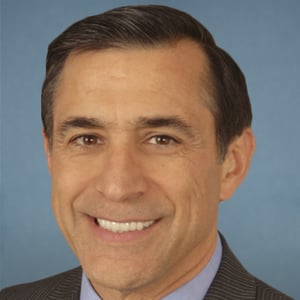
R-CA 48th District, United States House of Representatives
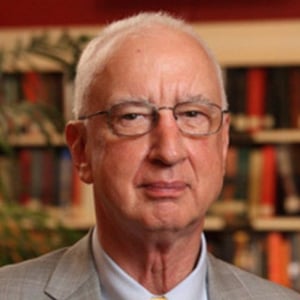
Former Chief Judge, United States Court of Appeals for the Federal Circuit
Judge Michel served for more than 22 years on the Federal Circuit, retiring on May 31, 2010. From December 25, 2004 until his retirement, he also discharged the duties of Chief Judge of this national court, serving simultaneously on the U.S. Judicial Conference -- the Judiciary's governing body -- and by appointment of the Chief Justice on its seven-judge Executive Committee.
He judged several thousand appeals and authored more than 800 opinions, one third concerning intellectual property law. Intellectual Asset Management magazine inducted him into its Hall of Fame and he was designated one of the 50 most influential leaders in intellectual property law in the world. His contributions were also recognized by lifetime achievement and similar awards by the American Intellectual Property Law Association (AIPLA); Intellectual Property Owners Education Foundation (IPO); the American Bar Association's Intellectual Property Section; Managing Intellectual Property magazine; the Sedona Conference; the Patent and Trademark Office Society (PTOS); the New York, Chicago, Philadelphia, and Los Angeles Intellectual Property Law Associations; and the William C. Connor, the Giles S. Rich, and the Richard Linn Intellectual Property American Inns of Court. In 2010 the Los Angeles IP Inn was renamed in his honor as the Paul R. Michel IP Inn.
Judge Michel received the Jefferson Medal, the Eli Whitney Award, and the Katz-Kiley Prize as well as Honorary Doctor of Law degrees from the Catholic University of America and the John Marshall Law School. He is a lifetime Member of Honore of FICPI, the international association of private practitioners of intellectual property law. Williams College granted him the Kellogg Award for "outstanding leadership in law and public service."
Judge Michel has written numerous articles on patent law and advocacy, taught related courses and master classes at George Washington University, the University of Akron, and John Marshall law schools, serving as well on their IP advisory boards and on counterpart boards at the universities of California (Berkley), Washington, and Maryland. He co-authored a casebook, Patent Litigation and Strategy (West, 1999) and an August 2010 editorial in the New York Times on strengthening the patent system to promote prosperity and create new jobs.
A frequent speaker at conferences and law schools during his judicial tenure and since, he retired from a lifetime appointment to be free to speak out on the national need for better patent policy and protection of intellectual property and the vital, unmet resource needs of the courts, the PTO, the International Trade Commission, and other IP-related agencies. He was appointed Distinguished Scholar in Residence by IPO, following his retirement. Judge Michel also consults for law firms and their clients in intellectual property litigations, conducting moot courts, mock trials, case evaluations, editing briefs, advising on strategy and providing mediation and arbitration services.
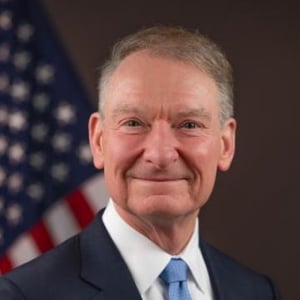
Chairman of the Securities and Exchange Commission
Paul S. Atkins was sworn into office as the 34th Chairman of the Securities and Exchange Commission on April 21, 2025, after being nominated by President Donald J. Trump on January 20, 2025, and confirmed by the U.S. Senate on April 9, 2025.
Prior to returning to the SEC, Chairman Atkins was most recently chief executive of Patomak Global Partners, a company he founded in 2009. Chairman Atkins helped lead efforts to develop best practices for the digital asset sector. He served as an independent director and non-executive chairman of the board of BATS Global Markets, Inc. from 2012 to 2015.
Chairman Atkins was appointed by President George W. Bush to serve as a Commissioner of the SEC from 2002 to 2008. During his tenure, he advocated for transparency, consistency, and the use of cost-benefit analysis at the agency. Chairman Atkins also represented the SEC at meetings of the President’s Working Group on Financial Markets and the U.S.-EU Transatlantic Economic Council. From 2009 to 2010, he was appointed a member of the Congressional Oversight Panel for the Troubled Asset Relief Program.
Before serving as an SEC Commissioner, Chairman Atkins was a consultant on securities and investment management industry matters, especially regarding issues of strategy, regulatory compliance, risk management, new product development, and organizational control.
From 1990 to 1994, Chairman Atkins served on the staff of two chairmen of the SEC, Richard C. Breeden and Arthur Levitt, ultimately as chief of staff and counselor, respectively. He received the SEC’s 1992 Law and Policy Award for work regarding corporate governance matters.
Chairman Atkins began his career as a lawyer in New York, focusing on a wide range of corporate transactions for U.S. and foreign clients, including public and private securities offerings and mergers and acquisitions. He was resident for 2½ years in his firm's Paris office and admitted as conseil juridique in France.
A member of the New York and Florida bars, Chairman Atkins received his J.D. from Vanderbilt University School of Law in 1983 and was Senior Student Writing Editor of the Vanderbilt Law Review. He received his A.B., Phi Beta Kappa, from Wofford College in 1980.
Originally from Lillington, North Carolina, Chairman Atkins grew up in Tampa, Florida. He and his wife Sarah have three sons.
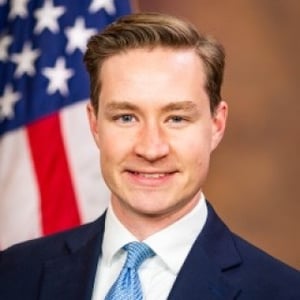
Assistant Attorney General, Office of Legal Counsel, U.S. Department of Justice
T. Elliot Gaiser is the Office of Legal Counsel’s 27th Assistant Attorney General. He was nominated by President Donald Trump on April 29, 2025, confirmed by the United States Senate on July 30, 2025, and sworn in as AAG by Attorney General Pam Bondi on August 4, 2025.
Prior to joining the Office of Legal Counsel, Mr. Gaiser served as the 11th Solicitor General of Ohio. In that role, he represented his home state and its agencies before the Supreme Court of the United States, the United States Court of Appeals for the Sixth Circuit, the Supreme Court of Ohio, and other state and federal courts. He also advised Ohio Attorney General Dave Yost on significant legal and constitutional matters important to the people of Ohio.
Mr. Gaiser clerked for Justice Samuel A. Alito, Jr. of the Supreme Court of the United States, Judge Neomi Rao of the United States Court of Appeals for the D.C. Circuit, and Judge Edith H. Jones of the United States Court of Appeals for the Fifth Circuit. In the private sector, Mr. Gaiser worked at the law firms Jones Day, Boyden Gray, and Gibson Dunn. He graduated from the University of Chicago Law School and Hillsdale College. He is also a husband and father.

Partner, O'Melveny & Myers LLP
Gregory Jacob is a partner in O’Melveny’s Washington, D.C. office. Greg Jacob represents financial services companies including banks, investment managers, health care payors, and insurers, as well as other employers, in class action and other litigation concerning ERISA and other labor and employment matters. A former Solicitor of Labor, Greg has extensive knowledge on a wide variety of labor and employment issues including ERISA, FLSA, OFCCP, and whistleblower law. He regularly litigates in federal courts throughout the country, defends clients against Department of Labor investigations, and provides counseling to plans and plan sponsors.
Prior to rejoining O’Melveny in 2021, Greg served as Counsel to Vice President Pence and Deputy Assistant to the President. He directly advised the Vice President on all legal issues relating to the Office of the Vice President, and advised the White House Coronavirus Task Force concerning the Defense Production Act and other legal issues related to bolstering the domestic supply chain.
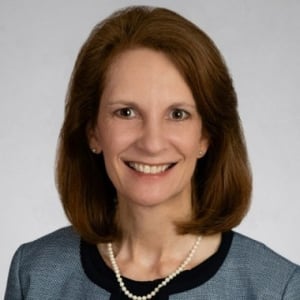
Managing Partner, Rose Legal Advisory PLLC
Sharon is an experienced regulatory counsel and advocate in enforcement and litigation matters. She regularly represents corporations and individuals in investigations and proceedings before federal and state regulatory agencies and in related litigation, including the Department of Labor, Department of Justice, the Securities and Exchange Commission, the Commodity Futures Trading Commission, the Equal Employment Opportunity Commission, and the Federal Energy Regulatory Commission. She has extensive experience advising clients on issues related to compliance with the federal securities and commodities laws and other laws and regulations that impact corporate entities, including federal contractor obligations, the Employee Retirement Income Security Act (ERISA), the False Claims Act (FCA), the Foreign Corrupt Practices Act (FCPA), and federal and state employment laws. She has represented clients worldwide in matters involving alleged fraud, market manipulation, disruptive trading practices, insider trading, accounting and internal controls irregularities, and other financial and trading issues. In addition to matters before the federal government, she represents clients in enforcement proceedings and other inquiries by state regulatory agencies, regulated exchanges, the Financial Industry Regulatory Authority (FINRA), and foreign government agencies.
Sharon previously served as Senior Counsel in the Office of the Solicitor at the Department of Labor, where she advised the Office of the Secretary and Department agencies on a variety of regulatory, enforcement, and litigation matters. She was integrally involved in several key rulemakings and litigation actions within the Employee Benefits Security Administration (EBSA) and the Office of Federal Contract Compliance Programs (OFCCP), including those concerning fiduciary investment advice, ESG investing, proxy voting, QPAM exemptions, health and welfare benefit plans, and important reforms to OFCCP’s procedures for non-discrimination enforcement actions. She routinely liaised with DOJ and other executive branch departments on joint litigation matters and amicus briefs requested by the Supreme Court addressing first amendment and ERISA issues.
Prior to entering government service, Sharon practiced in the Washington, D.C. and Singapore offices of an international law firm. She subsequently co-founded a litigation boutique firm representing plaintiffs and defendants in government enforcement and litigation matters and merged the practice into Berliner Corcoran & Rowe in 2022. Sharon is a summa cum laude graduate of Westmont College, earned her M.B.A. at the Claremont Graduate University—Drucker School of Management, and earned her law degree from the University of California, Davis, where she was an editor of the U.C. Davis Law Review and the U.C. Davis Business Law Journal. In her personal time, Sharon devotes time to several nonprofit organizations, including serving on the Board of Trustees of a private liberal arts college.

The CLARITY Act and Fed Master Accounts: Defining Crypto's Place in the U.S. Financial System
J.C. Boggs, Cynthia Lummis, Paige Paridon, Alex J. Pollock, Corey Then, David Zaring
Join us for a timely discussion on two developments shaping the future of digital assets...
Foreign State Actors, Security, and Privacy: What is the Future of End-to-End Encryption?
Sean Cooksey, Jamil N. Jaffer, Susan Landau, Tara C. McFeely
The 2015 terrorist attack in San Bernardino, California kicked off a debate over whether U.S....
AI at a Crossroads [Shaped Docuseries Ep. 3]
Adam Thierer
AI at a Crossroads [Shaped Docuseries Ep. 3] As AI becomes increasingly integrated into everyday...
Energy Emergency: Executive Power and the Future of U.S. Energy
Varu Chilakamarri, Robert L. Levy, Mario Loyola, Corinne Virginia Snow, Jim Wedeking
Energy Emergency: Executive Power and the Future of U.S. Energy Wednesday, May 21 2025 at...
Stablecoins Unpacked: Law, Policy, and Practice
Anthony Apollo, Dan Awrey, Gary Kalbaugh, Jerome Roche, Sarah Wilson
Stablecoins are important emerging financial products, and this webinar will explore their benefits, opportunities, and...
Stargate and DeepSeek: The International and Technological Implications of the AI “Arms Race”
Neil Chilson, Ashkhen Kazaryan, John Villasenor
On January 22, 2025, newly-elected President Trump announced a widespread project to invest $500 billion...
AI Policy In President Trump's Second Term
Neil Chilson, Kevin Frazier, Satya Thallam, Adam Thierer
There have been significant changes in federal AI policy over the course of the first...
16th Annual Rosenkranz Debate & Luncheon
Miguel A. Estrada, Patrick F. Philbin, Eugene Volokh
RESOLVED: That Congress Can Ban TikTok Featuring: Mr. Miguel Estrada, Partner, Gibson Dunn & Crutcher...
Intellectual Property: Intellectual Property Rights with the Emergence of AI
Jordan Gimbel, Ryan T. Holte, Melissa Holyoak, Darrell Issa, Paul Redmond Michel
Artificial Intelligence is now part of daily life. AI has improved efficiency, predicted outcomes with...
Utah v. Su: Are DOL (and SEC) regulations that encourage ESG investing lawful?
Paul S. Atkins, T. Elliot Gaiser, Gregory Frederick Jacob, Sharon A. Rose
The panelists will discuss Biden Administration policies and regulations at the DOL and SEC addressing...