

Associate Professor of Law, Antonin Scalia Law School at George Mason University
Robert Luther III was appointed Associate Professor of Law in 2025 after serving as Distinguished Professor of Law from 2024-2025 and Adjunct Professor of Law from 2019-2024. He teaches and writes on the federal courts, legal and judicial ethics, political law, Congress, and professional sports. He has served at high levels in all three branches of the federal government and recently founded Constitutional Solutions PLLC—a law firm that navigates judicial candidates, judges, elected officials, professional athletes, and executives through high-stakes hearings, investigations, and reputational attacks.
Immediately before joining the Scalia Law faculty, Professor Luther spent over five years in the Washington, D.C. office of Jones Day, where his practice focused on strategic counseling, crisis management, and litigation. Prior to joining Jones Day, he served as Associate Counsel to the President of the United States in the White House Counsel’s Office. In the White House, he co-managed the judicial selection process and supervised the preparation of over 150 federal judicial nominees for their successful U.S. Senate confirmation hearings. The New York Times Magazine referred to his work on judicial selection during this period as “unique in White House history.” Before joining the White House, Professor Luther served as Counsel to then–U.S. Senator Jeff Sessions (R-Ala.) on the U.S. Senate Judiciary Committee, where he served as a core member of the team that prepared the Senator for confirmation as United States Attorney General. Professor Luther was also a law clerk to Judge Daniel A. Manion of the U.S. Court of Appeals for the Seventh Circuit. Earlier in his career, Professor Luther practiced civil and appellate litigation at a boutique firm in Williamsburg, Va. and taught at William & Mary Law School.
Professor Luther frequently speaks on the legal profession, political law, and federal judicial selection. His public work has been covered by or appeared in The New York Times, The Washington Post, The Wall Street Journal, Bloomberg, Fox News, The Hill, Politico, the Washington Examiner, National Law Journal, Law360, The Washington Reporter, and elsewhere, while his scholarship is published in the law journals of nearly twenty universities including three journals of Harvard University. He holds active law licenses in Virginia, the District of Columbia, the U.S. Supreme Court, and half of the U.S. Courts of Appeals.
In 2025, Virginia Governor Glenn Youngkin appointed Professor Luther to the Board of Visitors to Mount Vernon. He is an elected member of the American Law Institute (ALI) and serves on the Advisory Board of the Wilson Center for Leadership at Hampden-Sydney College. Since 2019, he has helped over 200 of his students secure clerkships with federal judges.
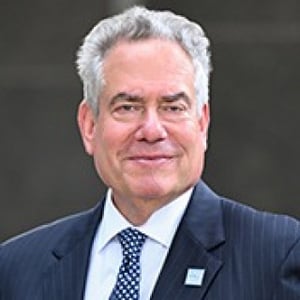
Dean & Professor of Law, Seton Hall University
Ronald Weich became dean of Seton Hall University School of Law on July 1, 2024.
Weich comes to Seton Hall from the University of Baltimore School of Law, where he had served as dean since 2012. While at Baltimore Law, he led a faculty of 45 tenured and tenure-track professors, as well as many adjunct faculty members, teaching fellows, and professors of practice. In addition, he managed the school’s annual budget and led the development of a strategic plan that emphasizes admissions standards, academic excellence, faculty scholarships, and career development.
Prior to his time in academia, Weich was appointed by President Obama and confirmed by the U.S. Senate to serve as Assistant Attorney General for Legislative Affairs in the Department of Justice, a post he held from 2009 to 2012. His work in Washington, D.C., included several other prominent positions, including Chief Counsel to U.S. Senators Edward M. Kennedy and Harry Reid. Weich also served as a partner in the firm of Zuckerman Spaeder LLP.
Weich began his career in the Manhattan District Attorney’s Office as an Assistant District Attorney. He is a graduate of Yale Law School, which he attended after undergraduate studies at Columbia University and the London School of Economics.

Senior Vice President for Legal Studies, Cato Institute
Clark Neily is senior vice president for legal studies at the Cato Institute. His areas of interest include constitutional law, overcriminalization, civil forfeiture, police accountability, and gun rights. Neily is the author of Terms of Engagement: How Our Courts Should Enforce the Constitution’s Promise of Limited Government. His writing has appeared in the Wall Street Journal, Forbes, and National Review Online, as well as various law reviews, including the Harvard Journal of Law and Public Policy, George Mason Law Review, Georgetown Journal of Law and Public Policy, NYU Journal of Law and Liberty, and Texas Review of Law and Politics. Neily is a frequent guest speaker and lecturer for the Federalist Society, Institute for Humane Studies, and American Constitution Society.
Before joining Cato in 2017, Neily was a senior attorney and constitutional litigator at the Institute for Justice and director of the Institute’s Center for Judicial Engagement. He is also an adjunct professor at the University of Texas School of Law, where he teaches constitutional litigation and public-interest law.
Neily served as co-counsel in District of Columbia v. Heller, the historic case in which the Supreme Court held for the first time that the Second Amendment protects an individual right to own a gun for self-defense.
Neily began his legal career as a law clerk to Judge Royce Lamberth on the U.S. District Court for the District of Columbia. After that he spent four years in the trial department of the Dallas-based firm Thompson & Knight. Neily received his undergraduate and law degrees from the University of Texas, where he was Chief Articles Editor of the Texas Law Review.
Professor of Law, Seton Hall University School of Law
Professor Opderbeck's work focuses on the regulation of access to scientific and technological information. His published work has employed the tools of game theory, classical microeconomics, and statistical analysis to address issues such as intellectual property restrictions on essential medicines in developing countries, open source biotechnology, patent damages reform, and the interaction of law and social norms concerning music file sharing.
In addition to his traditional legal scholarship, Professor Opderbeck is interested in the philosophical and moral foundations of information policy and other aspects of the law. He has written on a virtue ethics approach to biotechnology law, and most recently has explored the philosophical aspects of information policy in a groundbreaking essay that seeks to apply a critical realist approach to the ontology of information. He is a principal organizer of a conference on "Religious Legal Theory: State of the Art" that will be held at the Law School in 2009.
Professor Opderbeck graduated cum laude from Seton Hall Law School in 1991 and earned an LL.M. in Trade Regulation from New York University Law School in 1998. He previously was a Partner in the Intellectual Property / Trade Regulation group at McCarter & English, LLP, where he represented clients in the life sciences, consumer products, telecommunications, computer software, and other industries. Representative litigated cases include Wedeco UV Technologies, Inc. v. Calgon Corp, 2006 WL 1867201 (D.N.J. 2006); Bamberger v. Rohm & Hass Corp., 1998 WL 684263, 40 Fed.R.Serv.3d 667 (D.N.J. 1998); McCall v. Metropolitan Life Ins. Co., 956 F. Supp. 1172 (D.N.J. 1996).
Associate Dean for Academic Advancement and Director, Center for, Seton Hall University School of Law
Professor Kathleen Boozang went to Seton Hall in 1990 as the founder of the Law School’s now top-ranked health law program. Professor Boozang teaches a variety of health law courses in person and on-line including the survey health law course, a course on health care fraud in the life sciences industry, and death and dying. In her scholarship, Professor Boozang has dedicated much of her career to nonprofit governance issues with a special focus on religiously sponsored hospitals. In the last several years, however, she has expanded her research and teaching to explore the legal and policy issues related to the global pharmaceutical and medtech industries, many of which make New Jersey their headquarters.
Professor Boozang is a Fellow of The Hastings Center, an independent nonprofit bioethics research institute, as well as a Fellow of the American Bar Foundation, an honorary organization of legal practitioners. She is also a member of the American Law Institute and participates on the consultant group for the Principles of Nonprofit Law. She serves on the Editorial Board of the Journal of Health and Life Sciences Law and is a past editor-in-chief of the Journal of Law, Medicine & Ethics. She is past president of the American Society of Law, Medicine & Ethics and also previously sat on the Advisory Board of the Journal of Health Law. Professor Boozang served for many years on the serves on the Board of Directors of the American Health Lawyers Association, and remains involved in many AHLA projects.
Throughout her legal career, Professor Boozang has been active in public service. She has served on numerous advisory boards and committees for healthcare providers and for the states of New Jersey and New York, including serving as an advisor to the New Jersey Attorney General Task Force on Physician Compensation by Pharmaceutical Companies, which resulted in the promulgation of proposed regulation. She is a former member of the New York State Task Force on Life and the Law, an interdisciplinary commission with a mandate to develop public policy on bioethical issues.
Professor Boozang currently serves on the Board of Trustees of the St. Joseph Healthcare System in New Jersey and the Crisis Standards Committee of the New Jersey Department of Health. Professor Boozang currently serves as the Law School’s Associate Dean for Academic Advancement with responsibility for the Division of Corporate and Foundations, the Center for Health & Pharmaceutical Law & Policy, and the Division of Online Learning. Professor Boozang served as the Vice Provost of Seton Hall University in South Orange, New Jersey in 2010 and 2011. Prior to moving to the university’s main campus, Professor Boozang served for eight years as the Law School’s Associate Dean, and then for two years as the Associate Dean for Academic Advancement, with oversight of two of the Law School’s Centers of Excellence: the Gibbons Institute of Law Science and Technology, and the Center for Health & Pharmaceutical Law & Policy.
In 2013, ASLME conferred upon Professor Boozang the Jay Healy Health Law Teacher Award. Professor Boozang was named the Seton Hall University Woman of the Year in 2006 and the Washington University Law School’s Young Alum of the Year in 2004. She graduated from Washington University School of Law in St. Louis, Missouri, where she was inducted into the Order of the Coif and served as the managing editor of LAW QUARTERLY. She received her LL.M. from Yale Law School in 1990.
Partner, Keller & Heckman LLP
Sheila Millar joined Keller and Heckman in 1980. Ms. Millar counsels corporate and association clients on advertising, privacy, product safety, and other public policy and regulatory compliance issues.
Ms. Millar counsels clients on advertising issues, working on policy questions, as well as claims and advertising challenges. She helps clients develop privacy policies, data security and access procedures, manage trans-border data flows and create training programs. She also works with clients to navigate the array of federal and state requirements related to contests and sweepstakes. Ms. Millar has special expertise in all issues related to the sale, advertising and marketing of children's products, and has appeared at Federal Trade Commission (FTC) workshops on advertising literacy and children's privacy.
Ms. Millar counsels clients on risk management and product safety strategies, as well as on compliance with Consumer Product Safety Commission (CPSC) requirements, including new requirements under the Consumer Product Safety Improvements Act (CPSIA), green chemistry and other product safety laws. Ms. Millar's environmental regulatory expertise includes ozone depletion, global warming, clean air matters, energy use and green claims.
Ms. Millar chairs the International Chamber of Commerce (ICC) Marketing and Advertising Commission Working Group on Sustainability and has represented the ICC at international intergovernmental meetings on environmental marketing. She is a frequent speaker at conferences on product safety, advertising law and environmental regulation, and has authored many articles. Ms. Millar is AV® PreeminentTM Rated by Martindale-Hubbell.

Senior Fellow and Director of Constitutional Studies, Manhattan Institute
Ilya Shapiro is a senior fellow and director of constitutional studies at the Manhattan Institute and a contributing editor of City Journal. Previously he was executive director and senior lecturer at the Georgetown Center for the Constitution, and before that a vice president of the Cato Institute.
Shapiro is the author of Lawless: The Miseducation of America’s Elites (2025) and Supreme Disorder: Judicial Nominations and the Politics of America’s Highest Court (2020), coauthor of Religious Liberties for Corporations? (2014), and editor of 11 volumes of the Cato Supreme Court Review (2008-18). He has contributed to a variety of academic, popular, and professional publications, including the Wall Street Journal, Harvard Journal of Law & Public Policy, Washington Post, Los Angeles Times, USA Today, National Review, and Newsweek. He also regularly provides commentary for various media outlets, writes the Shapiro’s Gavel newsletter on Substack, and once appeared on the Colbert Report.
Shapiro has testified many times before Congress and state legislatures and has filed more than 500 amicus curiae “friend of the court” briefs in the Supreme Court. He lectures regularly on behalf of the Federalist Society, is a member of the board of fellows of the Jewish Policy Center, was an inaugural Washington Fellow at the National Review Institute, and has been an adjunct law professor at the George Washington University and University of Mississippi. He is also the chairman of the board of advisers of the Mississippi Justice Institute, a barrister in the Edward Coke Appellate Inn of Court, and a former member of the Virginia Advisory Committee to the U.S. Commission on Civil Rights.
Earlier in his career, Shapiro was a special assistant/adviser to the Multi-National Force in Iraq on rule-of-law issues and practiced at Patton Boggs and Cleary Gottlieb. Before entering private practice, he clerked for Judge E. Grady Jolly of the U.S. Court of Appeals for the Fifth Circuit. He holds an AB from Princeton University, an MSc from the London School of Economics, and a JD from the University of Chicago Law School.
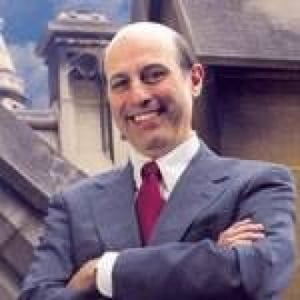
Garwood Visiting Professor and Visiting Fellow, James Madison Pr, Cleveland-Marshall College of Law
David F. Forte is Professor of Law at Cleveland State University, where he was the inaugural holder of the Charles R. Emrick, Jr.- Calfee Halter & Griswold Endowed Chair. This fall, Professor Forte will be the Garwood Visiting Professor at Princeton University in the Department of Politics, and Visiting Fellow at the James Madison Program in American Ideals and Institutions. He holds degrees from Harvard College, Manchester University, England, the University of Toronto and Columbia University.
During the Reagan administration, Professor Forte served as chief counsel to the United States delegation to the United Nations and alternate delegate to the Security Council. He has authored a number of briefs before the United States Supreme Court, and has frequently testified before the United States Congress and consulted with the Department of State on human rights and international affairs issues. His advice was specifically sought on the approval of the Genocide Convention, on world-wide religious persecution, and Islamic extremism. He has appeared and spoken frequently on radio and television, both nationally and internationally. In 2002, the Department of State sponsored a speaking tour for Professor Forte in Amman, Jordan, and he was also a featured speaker to the Meeting of Peoples in Rimini, Italy, a meeting which gathers over 500,000 people from all over Europe. He has also been called to testify before the state legislatures of Ohio, Kansas, and Idaho as well as the New York City Council. He has assisted in drafting a number of pieces of legislation for the Ohio General Assembly dealing with abortion, international trade, and federalism. He has sat as acting judge on the municipal court of Lakewood Ohio and was chairman of Professional Ethics Committee of the Cleveland Bar Association. He has received a number of awards for his public service, including the Cleveland Bar Association’s President’s Award, the Cleveland State University Award for Distinguished Service, the Cleveland State University Distinguished Teaching Award, and the Cleveland-Marshall College of Law Alumni Award for Faculty Excellence. He served as Consultor to the Pontifical Council for the Family under Pope St. John Paul II and Pope Benedict XVI. In 2003, Dr. Forte was a Distinguished Fulbright Chair at the University of Trento and returned there in 2004 as a Visiting Professor. For the academic year, 2008-2009, Professor Forte was Senior Visiting Scholar at the Center for the Study of Religion and the Constitution in at the Witherspoon Institute in Princeton, New Jersey. He was the Robert E. Henderson Constitution Day Lecturer at the Ashbrook Center at Ashland University, and he has given over 300 invited addresses and papers at more than 100 academic institutions. His work has been cited by the U.S. Supreme Court.
Professor Forte was a Bradley Scholar at the Heritage Foundation, and Visiting Scholar at the Liberty Fund. He has been President of the Ohio Association of Scholars, was on the Board of Directors of the Philadelphia Society, and is also adjunct Scholar at the Ashbrook Center. He has been appointed to the Ohio State Advisory Committee to the U.S. Commission on Civil Rights. He has also been a Civil War re-enactor and a Merit Badge Counselor for the Boy Scouts.
He writes and speaks nationally on topics such as constitutional law, religious liberty, Islamic law, the rights of families, and international affairs. He served as book review editor for the American Journal of Jurisprudence and has edited a volume entitled, Natural Law and Contemporary Public Policy, published by Georgetown University Press. His book, Islamic Law Studies: Classical and Contemporary Applications, has been published by Austin & Winfield. He is Senior Editor of The Heritage Guide to the Constitution (2006), 2d edition (2014), published by Regnery & Co, a clause by clause analysis of the Constitution of the United States.
His teaching competencies include Constitutional Law, the First Amendment, Islamic Law, Jurisprudence, Natural Law, International Law, International Human Rights, the Presidency, and Constitutional History.
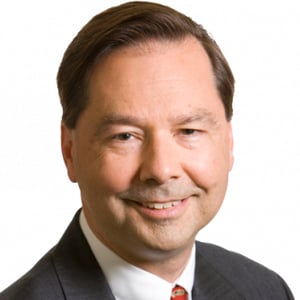
Senior Legal Fellow, Edwin Meese III Institute for the Rule of Law, Advancing American Freedom
Senior Fellow and Director of Constitutional Studies, Manhattan Institute
Ilya Shapiro is a senior fellow and director of constitutional studies at the Manhattan Institute and a contributing editor of City Journal. Previously he was executive director and senior lecturer at the Georgetown Center for the Constitution, and before that a vice president of the Cato Institute.
Shapiro is the author of Lawless: The Miseducation of America’s Elites (2025) and Supreme Disorder: Judicial Nominations and the Politics of America’s Highest Court (2020), coauthor of Religious Liberties for Corporations? (2014), and editor of 11 volumes of the Cato Supreme Court Review (2008-18). He has contributed to a variety of academic, popular, and professional publications, including the Wall Street Journal, Harvard Journal of Law & Public Policy, Washington Post, Los Angeles Times, USA Today, National Review, and Newsweek. He also regularly provides commentary for various media outlets, writes the Shapiro’s Gavel newsletter on Substack, and once appeared on the Colbert Report.
Shapiro has testified many times before Congress and state legislatures and has filed more than 500 amicus curiae “friend of the court” briefs in the Supreme Court. He lectures regularly on behalf of the Federalist Society, is a member of the board of fellows of the Jewish Policy Center, was an inaugural Washington Fellow at the National Review Institute, and has been an adjunct law professor at the George Washington University and University of Mississippi. He is also the chairman of the board of advisers of the Mississippi Justice Institute, a barrister in the Edward Coke Appellate Inn of Court, and a former member of the Virginia Advisory Committee to the U.S. Commission on Civil Rights.
Earlier in his career, Shapiro was a special assistant/adviser to the Multi-National Force in Iraq on rule-of-law issues and practiced at Patton Boggs and Cleary Gottlieb. Before entering private practice, he clerked for Judge E. Grady Jolly of the U.S. Court of Appeals for the Fifth Circuit. He holds an AB from Princeton University, an MSc from the London School of Economics, and a JD from the University of Chicago Law School.
Justice, Supreme Court of Alabama (Retired); Professor of Law, Belmont University College of Law?
William Gardiner Hammond Professor of Law, Washington University Law
Professor Brian Z. Tamanaha is a renowned jurisprudence scholar and the author of eight books and numerous scholarly articles, including his groundbreaking book, Beyond the Formalist–Realist Divide: The Role of Politics in Judging. His articles have appeared in a variety of leading journals, and his publications have been translated into eight languages. Also an expert in law and society, he has delivered lectures in Brazil, Indonesia, Japan, France, the Netherlands, Colombia, Singapore, Australia, Canada, and the United Kingdom. He spent a year in residence as a Member of the Institute for Advanced Study in Princeton. Professor Tamanaha is the recipient of several book prizes and awards, including Professor of the Year, and a frequent speaker and lecturer at legal conferences throughout the United States and abroad. His professional affiliations include serving as a past member of the Board of Trustees of the Law and Society Association. Before becoming a law professor, he clerked for the Hon. Walter E. Hoffman, U.S. District Court for the Eastern District of Virginia. He also practiced law in Hawaii and Micronesia, where he served as legal counsel for the Micronesian Constitutional Convention, Assistant Attorney General for the Yap State, and Assistant Federal Public Defender for the District of Hawaii. He then earned a doctorate of juridical science at Harvard Law School.?
His latest book, Failing Law Schools, is available at http://www.amazon.com/Failing-Schools-Chicago-Series-Society/dp/0226923614. ?
Associate, Targowski & Grow, PLLC
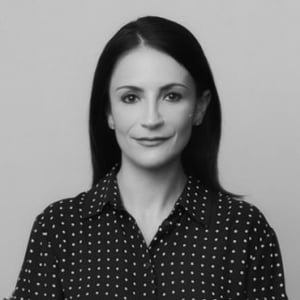
A graduate of Seton Hall Law, Shyler Engel is an associate at Targowski & Grow, PLLC, a criminal defense firm in Kalamazoo, Michigan, specializing in state and federal drug charges, with an emphasis on the recently-enacted Michigan Medical Marihuana Act.

Views From the Inside: The Federal Nomination and Confirmation Process
New Jersey Lawyers Chapter
Newark, NJTaking Stock of the Second Amendment
Are American Law Schools Failing?: An Exchange Between Brian Tamanaha & Harold See
Harold F. See, Brian Z. Tamanaha
The Collapsing Economics of Legal Education Brian Z. Tamanaha* Introduction Many law schools around the...
The Responsible Corporate Officer Doctrine and Regulatory Crimes
TeleforumNew Jersey Demands More from Eyewitnesses: State v. Henderson
Shyler Engel
On November 2, 2011, the Supreme Court of the United States heard arguments in Perry...
The Health Care Reform Law (Affordable Care Act): What Are its Constitutional Implications?
Lexington, KentuckyIslam
Arizona's Controversial Immigration Enforcement Law
The Senate’s Role in the Nomination and Confirmation Process: Whose Burden?
Orlando, FloridaIndiana State Police Pension Trust v. Chrysler LLC