
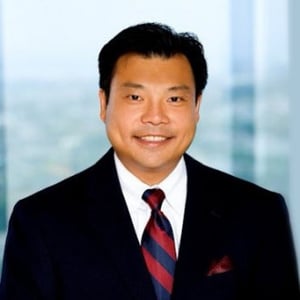
Attorney and Legal Commentator
John Shu is an attorney and legal commentator. His focus areas include constitutional law, securities & corporate law, antitrust law, administrative law, politics, and international affairs. Mr. Shu has lectured and published on a wide variety of issues.
Mr. Shu served President George H.W. Bush and President George W. Bush. He also served Judge Stanley Sporkin, U.S. District Court for the District of Columbia, who was Director of Enforcement at the U.S. Securities & Exchange Commission and General Counsel at the Central Intelligence Agency, and Judge Paul Roney, U.S. Court of Appeals for the Eleventh Circuit, who was Presiding Judge of the Foreign Intelligence Surveillance Court of Review.
Mr. Shu is a member of the National Committee on U.S. - China Relations, the Pacific Council on International Policy, and the Foreign Policy Association.
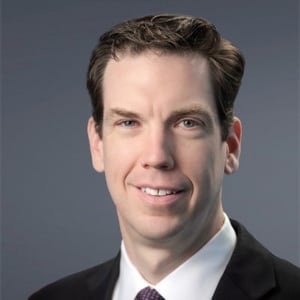
Partner, Fusion Law, PLLC
Paul is the founding partner of Fusion Law, PLLC. He has extensive experience with state, federal, and global regulators building coalitions and implementing policies to promote innovation in financial services. He is responsible for designing and implementing the first state (Arizona) and federal (CFPB) FinTech sandboxes in the United States. He also designed the CFPB no-action letter and trial disclosure policies. He helped found the first global regulatory innovation coalition (Global Financial Innovation Network) and led the founding of the first U.S. regulatory innovation coalition (American Consumer Financial Innovation Network). He served on the Financial Stability Oversight Council subcommittee on digital assets. He also has drafted state-level laws on blockchain and utility tokens.
Paul also has significant enforcement and litigation experience. He led many multi-state consumer protection enforcement matters as Civil Litigation Division Chief at the Arizona Attorney General’s Office.
Prior to his government service, Paul practiced law in the areas of securities litigation and transactional work for approximately six years at two well-known law firms. He also clerked on the U.S. Court of Appeals for the Fourth Circuit.

Legal Counsel, Alliance Defending Freedom
Kathleen Barceleau serves as legal counsel for Allied Legal Affairs and Advocacy Strategy at Alliance Defending Freedom. In that role, she works to coordinate and deploy network attorneys to further ADF’s mission and conducts research in support of ADF’s strategic plans.
Before joining ADF, Barceleau was Of Counsel at Fusion Law, where she focused on financial regulation and policy issues. Previously, she served as an Assistant Attorney General for the State of Kansas, where she represented Kansas and its officials in civil rights and constitutional litigation in both state and federal courts. She also served as a law clerk to the Hon. Robert H. Cleland on the U.S. District Court for the Eastern District of Michigan.
Barceleau received her J.D. summa cum laude from Ave Maria School of Law. She is a 2016 Blackstone Fellow. Before law school, Barceleau graduated summa cum laude from Ave Maria University with a Bachelor of Arts in Classics and Early Christian Literature and Economics. Barceleau is admitted to the state bar of Michigan.

Vice President for Legal Affairs, Goldwater Institute
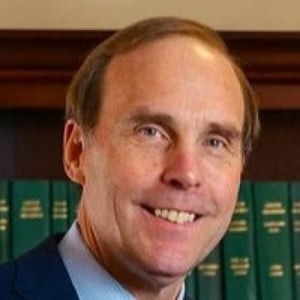
Distinguished Research Professor, Center for Citizenship and Constitutional Government, University of Notre Dame
Donald L. Drakeman is Distinguished Research Professor in the Center for Citizenship and Constitutional Government at the University of Notre Dame, and a Fellow of the Centre for Health Leadership and Enterprise at the University of Cambridge. His writings have been cited by the Supreme Courts of the United States and the Philippines. He has published seven books, including The Hollow Core of Constitutional Theory (Cambridge University Press, 2021), Why We Need the Humanities (Palgrave, 2016), and Church, State, and Original Intent (Cambridge University Press, 2010). He received an A.B. magna cum laude from Dartmouth College; a J.D. from Columbia Law School, where he was a Harlan Fiske Stone Scholar; and a Ph.D. from Princeton University. He is a Fellow of the Royal Historical Society, and he was the founding chair of the Advisory Council for the James Madison Program on American Ideals and Institutions at Princeton University.

Senior Attorney, National Taxpayers Union Foundation
Tyler Martinez is a Senior Attorney at the Taxpayer Defense Center, the strategic litigation arm of National Taxpayers Union Foundation. He has experience setting up nonprofit public interest arms for multiple organizations in the Washington, DC area and thus has experience in First Amendment, Tax, and Administrative Law. He has practiced strategic litigation against government overreach since 2011, handling federal and state cases across the country.
Tyler’s interest in strategic public interest work and in tax law comes down to the simple principle: getting the government out of people’s business. Transparency is for the government, but privacy is for the people. He finds and focuses on examples of government overreach particularly those involving use of private information, dragnet data collection, and other attacks on privacy of association.
Tyler earned his Juris Doctor from the University of Colorado Law School, while winning accolades for his advocacy skills and serving as Executive Editor of the Journal on Telecommunications and High Technology Law. He is licensed to practice law in Colorado and the District of Columbia. He is further admitted to the bars of the following federal courts: Supreme Court of the United States, D.C. Circuit, First Circuit, Second Circuit, Third Circuit, Fourth Circuit, Fifth Circuit, Eighth Circuit, Tenth Circuit, and various federal district courts across the country.
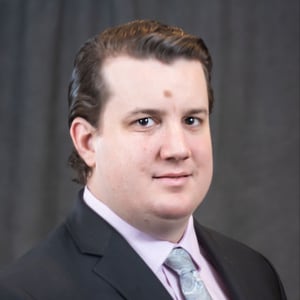
Counsel, Liberty Justice Center
Reilly Stephens is Counsel at Liberty Justice Center, a national nonprofit public-interest litigation firm that brings cases around the country to protect economic liberty, educational freedom, property rights, free speech, and other fundamental rights..
Prior to joining LJC, Reilly was a legal associate in the Cato Institute’s Center for Constitutional Studies. During law school, he served as a law clerk at the Institute for Justice and for the Competitive Enterprise Institute’s Center for Class Action Fairness.
A native of Baltimore, Reilly holds a J.D. from the Georgetown University Law Center, where he served as Senior Articles Editor of the Georgetown Journal of Law & Public Policy, and an M.A. in International Relations from the University of St. Andrews, Scotland.

California Supreme Court Holds That State Law Preempts County Anti-Fracking Ordinance
John Shu
The issue in Chevron U.S.A., Inc. v. County of Monterey, Calif. was whether California Public Resources Code § 3106 preempts a...
The 30-Year History of Diluting ERISA’s Fiduciary Duty
Paul N. Watkins, Kathleen Barceleau
Under the Employee Retirement Income Security Act of 1974 (ERISA), fiduciaries have a strict duty...
Topics
2023 National Lawyers Convention: Insurrection & the 14th Amendment
Editor's Note: On December 19th, 2023 the Colorado Supreme Court ruled that Former President Donald Trump...
Dram-Shop Liability and the State Constitution at the Arizona Supreme Court
Timothy Sandefur
The Arizona Supreme Court made surprisingly quick work of what at first appeared to be...
Establishing an Agreement to Disagree About Church and State
Donald L. Drakeman
A review of Nathan Chapman & Michael McConnell, Agreeing to Disagree: How the Establishment Clause...
Topics
2023 National Lawyers Convention: Insurrection & the 14th Amendment
Editor's Note: On December 19th, 2023 the Colorado Supreme Court ruled that Former President Donald...
Topics
Two Quirky Appellate Decisions on Section 2 of the Voting Rights Act
Two federal circuit courts of appeal recently handed down a pair of quirky opinions regarding...
Topics
The Supreme Court’s Property Rights Doubleheader
The Supreme Court will hear back-to-back two major property rights cases this term. On January...
Pennsylvania Supreme Court Grapples With Corporate Income Tax and the Attorney General's Independence
Tyler Martinez
With more than $2 million dollars of tax revenue and important separation of powers questions...
Constitutional Bar on Retrospective Laws Limits Claims Under Colorado's Child Sex Abuse Statute
Reilly Stephens
The Colorado Supreme Court recently issued a decision in Aurora Public Schools v. A.S. finding...