
Managing Director, BGR Group
Sean Cooksey, a former senior official in the Trump administration and on Capitol Hill, works as a Managing Director with BGR Group’s Commerce and Infrastructure Practice. He brings a wealth of executive branch, legislative, and private sector experience to his work with clients on issues ranging from congressional oversight and investigations, competition and antitrust matters, intellectual property and technology policy, and litigation support.
Prior to joining the BGR team, Sean was Counsel to Vice President JD Vance. In this role, he served as the Vice President’s chief legal adviser and a senior policy staffer within the White House. As part of the Trump-Vance administration, he regularly advised the Vice President and senior White House staff on constitutional law, domestic policy, ethics, and executive and judicial nominations.
Previously, Sean was a member of the Federal Election Commission, after being nominated by President Trump in 2020. Sean served on the FEC for four years and was elected Chairman for the 2024 presidential election year, overseeing an agency of 300 staff to administer federal campaign-finance law.
Sean began his political career in the United States Senate, where he served as General Counsel for Senator Josh Hawley (R-MO) and Deputy Chief Counsel for Senator Ted Cruz (R-TX). During his tenure in both offices, Sean worked on the Senate’s Committee on the Judiciary on some of the Senate’s most high-stakes matters, including major legislation and two Supreme Court confirmations.
Prior to his Senate service, Sean worked at an international law firm in Washington, D.C., where his practice focused on appeals and constitutional law. He also served as a law clerk for Judge Jerry E. Smith of the United States Court of Appeals for the Fifth Circuit in Houston, Texas.
Sean has appeared on television, on radio, and in print in outlets such as The Ingraham Angle, Varney & Co., Morning Edition, The New York Times, The Wall Street Journal, The Washington Post, Axios, and Politico. He speaks regularly at major conferences, including the Republican National Lawyers Association and the National Association of Business PACs.

Founder and Executive Director, National Security Institute; Assistant Professor of Law, Antonin Scalia Law School, George Mason University
Jamil N. Jaffer is the Founder and Executive Director of the National Security Institute at the Antonin Scalia Law School at George Mason University where he also serves as an Assistant Professor of Law, Director of the National Security Law and Policy Program, and Director of the Cyber, Intelligence, and National Security LLM Program. Jamil also teaches classes on counterterrorism, intelligence, surveillance, cybersecurity, and other national security matters, as well as a summer course held abroad with U.S. Supreme Court Justice Neil M. Gorsuch. Jamil is also affiliated with Stanford University’s Center for International Security and Cooperation and previously served as a Visiting Fellow at the Hoover Institution from 2016 to 2019.
Jamil is also a Venture Partner with Paladin Capital Group, where he assists the firm with investments across the full range of its themes and theses, including a focus on dual-use national security technologies. Jamil also serves on the board of directors of RangeForce, a cybersecurity training and readiness platform startup and Tozny, a digital identity startup, and on the advisory boards of U.S. Strategic Metals, North America’s largest primary producer of cobalt, a critical mineral used in EV batteries, aerospace, and other national security applications; and Constella Intelligence, a deep and dark web intelligence startup. Jamil also serves as an advisor to Beacon Global Strategies, a strategic advisory firm and Duco, a technology platform startup that connects corporations with geopolitical and international business experts. Jamil is also the managing director of Trigraph Caveat Capital, a private investment vehicle.
Among other things, Jamil currently serves on the Board of Directors for the Greater Washington Board of Trade, the Board of Advisors for the Global Cyber Alliance, and the Advisory Board of the Foundation for the Defense of Democracies’ Center on Cyber and Tech Innovation, the Executive Committee of the Reagan Institute Strategy Group. Jamil is also a Fellow at the Academy for Judaic, Christian, and Islamic Studies, an advisor to the Concordia Summit, and is a member of the Board of Directors for the Center for Intelligence Policy, the Board of Directors of Speech First, and the Executive Committee of the International Law and National Security Practice Group of the Federalist Society.
Immediately prior to his current positions, from 2015-2021, Jamil served as a senior business leader at IronNet Cybersecurity, helping take the company from a bootstrapped first-year technology products startup through two rounds of venture capital fundraising, growing from 40 employees to over 300, and through its listing on New York Stock Exchange. In his role as IronNet's Senior Vice President for Strategy, Partnerships & Corporate Development, Jamil worked directly for the co-CEOs of the company, Gen (ret.) Keith B. Alexander, the former Director of the National Security Agency and Founding Commander of U.S. Cyber Command, and Bill Welch, the former COO of Zscaler and Duo; in that role, Jamil led all of the company’s strategic and technology partnership efforts, including developing go-to-market and technology integration plans with some of the largest cloud platforms and cybersecurity companies in the market, evaluating potential acquisition targets, and developing overall corporate strategy and thought leadership around collective security and collaborative defense in the cyber arena.
Prior to his time at IronNet, Jamil served on the leadership team of the Senate Foreign Relations Committee as Chief Counsel and Senior Advisor under Chairman Bob Corker (R-TN), where he worked on key national security and foreign policy issues, including leading the drafting of the proposed Authorization for the Use of Military Force against ISIS in 2014 and 2015, the AUMF against Syria in 2013, and revisions to the 9/11 AUMF against al Qaeda. Jamil was also the lead architect of the Iran Nuclear Agreement Review Act and two sanctions laws against Russia for its first intervention in Ukraine.
Prior to joining SFRC, Jamil served as Senior Counsel to the House Permanent Select Committee on Intelligence under Chairman Mike Rogers (R-MI) where he led the committee’s oversight of NSA surveillance, NRO intelligence issues, and NGA analytic and collection matters, as well as intelligence community-wide counterterrorism issues. Jamil was also the lead architect of the Cyber Intelligence Sharing and Protection Act, the nation’s first cyber threat intelligence sharing legislation that was signed into law in 2015.
In the Bush Administration, Jamil served in the White House as an Associate Counsel to the President, handling Defense Department, State Department, and intelligence community matters, and serving as one of the White House Counsel’s primary representatives to the National Security Council Deputies Committee.
Prior to the White House, Jamil served on the leadership team of the Justice Department’s National Security Division as Counsel to the Assistant Attorney General for National Security, where he focused on counterterrorism and intelligence matters. At NSD, Jamil helped lead the division’s work on In re: Directives, the first ever two-party litigated matter in the FISA Court and the second case before the FISA Court of Review in its 30-year history. Jamil also led NSD’s efforts on the President’s Comprehensive National Cybersecurity Initiative (CNCI), including the drafting of NSPD-54/HSPD-23, and related classified matters, and advised the National Security Agency (NSA) and U.S. Cyber Command’s predecessor organization, the Joint Function Component Command for Network Warfare (JFCC-NW), on matters related to cyber intelligence collection and offensive cyber activities. For his work on these matters, Jamil was awarded the Assistant Attorney General’s Award for Special Initiative and was among the group of lawyers awarded the Director of National Intelligence’s 2008 Legal Award (Team of the Year – Cyber Legal).
Jamil also served in other positions in the Justice Department, including in the Office of Legal Policy, where he worked on the confirmations of Chief Justice John G. Roberts, Jr. and Justice Samuel A. Alito, Jr. to the United States Supreme Court.
Jamil also served as a lawyer in private practice at Kellogg Huber, a Washington, DC-based litigation boutique, as a policy advisor to Congressman Bob Goodlatte (R-VA), and as a staff member or senior advisor on a number of political campaigns, including two presidential campaigns and a presidential transition team. While in law school, Jamil was a member of the University of Chicago Law Review, managing editor of the Chicago Journal of International Law, and National Symposium Editor of the Harvard Journal of Law & Public Policy. Following law school, Jamil served as a law clerk to Judge Edith H. Jones of the United States Court of Appeals for the Fifth Circuit and, later in his career, as a law clerk to then-Judge Neil M. Gorsuch when he first joined the United States Court of Appeals for the Tenth Circuit as well as a law clerk to Justice Neil Gorsuch when he joined the U.S. Supreme Court.
Jamil has published multiple op-eds and academic articles on national security, foreign policy, cybersecurity, counterterrorism, encryption, and intelligence matters, and is the co-author of a book chapter with former NSA Director Gen. (Ret.) Keith B. Alexander on national security and the press in National Security, Leaks, and the Freedom of the Press: The Pentagon Papers Fifty Years On (2021) and a book chapter with former CIA Director Gen. (ret.) Mike Hayden on ISIS, al Qaeda, and other international terrorist groups in Choosing to Lead: American Foreign Policy for a Disordered World (2015). Jamil has also written book chapters on cybersecurity and surveillance, as well as op-eds and policy papers with former Attorney General Michael B. Mukasey, former National Counterterrorism Center Director Matt Olsen, and Congressman Mike Waltz (R-FL), among others.
Jamil has previously taught graduate-level courses in intelligence law and policy at George Washington University’s Elliott School of International Affairs and the National Intelligence University, served an outside advisor to the Cyberspace Solarium Commission, and has recently testified before committees of the U.S. Senate and House of Representatives on China, cybersecurity, counterterrorism, and other national security matters. Jamil has also recently appeared on a range of national television and radio outlets including CNN, Fox News, Fox Business, MSNBC, Bloomberg, PBS, Voice of America, and National Public Radio, and in various print and online publications, including the Wall Street Journal, New York Times, and the Washington Post on a range of national security matters including cybersecurity, counterterrorism, surveillance, encryption, privacy, and foreign policy issues.
Jamil holds degrees from UCLA (BA, cum laude), the University of Chicago Law School (JD, with honors), and the United States Naval War College (MA, with distinction).
Professor of Cyber Security and Policy, Tufts University
Susan Landau is Professor of Cyber Security and Policy in the Department of Computer Science, Tufts University. Earlier, as Bridge Professor of Cyber Security and Policy at the Fletcher School and School of Engineering, she founded Tufts's innovative MS degree in Cybersecurity and Public Policy. Prior to Tufts, Landau was Senior Staff Privacy Analyst at Google, Distinguished Engineer at Sun Microsystems, and faculty member at Worcester Polytechnic Institute, the University of Massachusetts Amherst, and Wesleyan University.
An interdisciplinary scholar, Landau works at the intersection of privacy, surveillance, cybersecurity, and the law. She has testified before Congress and briefed US and European policymakers on encryption, Landau and Whitfield Diffie won the McGannon Book Award for Social and Ethical Relevance in Communication Policy Research for Privacy on the Line: The Politics of Wiretapping and Encryption. She received the Surveillance Studies Book Prize for Surveillance or Security? The Risks Posed by New Wiretapping Technologies, the USENIX Lifetime Achievement Award, shared with Steven Bellovin and Matt Blaze, and the American Mathematical Society's Bertrand Russell Prize. Landau has served on committees of the National Academies of Sciences, Engineering, and Medicine, on the National Science Foundation Computer and Information Science Engineering Advisory Board, the National Institute of Standards and Technology Information Security and Privacy Advisory Board, and on mathematics and computer science journal editorial boards. Landau received her BA from Princeton, MS from Cornell, and PhD from MIT.

Strategic Council, Silverado Policy Accelerator; former Republican Deputy Staff Director, U.S. Senate Select Committee on Intelligence
Tara Caroselli McFeely is a senior national security executive with expertise spanning defense, intelligence, and technology policy, political, and budgetary domains. She serves on the Strategic Council at Silverado Policy Accelerator, advising on innovative, data-driven national security policy initiatives, and is an Adjunct Professor in the Master of Science in Foreign Service program at Georgetown University’s Edmund A. Walsh School of Foreign Service.
In government, she most recently served as the Republican Deputy Staff Director on the U.S. Senate Select Committee on Intelligence (SSCI) driving the national security and intelligence policy and Executive Branch oversight strategic direction. She also co-led the professional staff oversight functions of the policies and programs of the U.S. intelligence enterprise spanning six Departments: Defense, Energy, Homeland Security, Justice, Treasury, State; and two independent agencies: the Central Intelligence Agency and the Office of the Director of National Intelligence. Prior to this role she served as the SSCI Budget Director, leading the staff oversight of the Intelligence Community (IC) and Defense Intelligence Enterprise annual $100.0+ billion budget and programs. Formerly, she was the SSCI Chairman’s Senior Advisor for Counterterrorism and the Federal Bureau of Investigation’s intelligence programs.
In the research domain, Ms. McFeely was the Deputy Director of the Intelligence Analyses Division at the Institute for Defense Analyses. In this role she led a large team of senior social sciences and STEM researchers on complex multidisciplinary research and analysis projects.
At Booz Allen Hamilton, she was a senior advisor for multiple IC and Department of Defense clients. She also led numerous multifaceted contracts across the U.S. Government landscape globally, including multilateral counter-Biological Weapons (BW) program initiatives.
Ms. McFeely began her career serving globally in the U.S. Navy, initially as a Surface Warfare Officer conducting U.S. 2nd Fleet and NATO operations across the Atlantic, and subsequently as a Naval Intelligence Officer supporting operations in the Balkans and the Global War on Terror.
Ms. McFeely has a Bachelor of Science in Political Science from the U.S. Naval Academy where she was a letterwoman on the Women’s Varsity Basketball Team. She also has a Master of Arts in Law and Diplomacy (MALD) from The Fletcher School of Law and Diplomacy, Tufts University.
Managing Director, BGR Group
Sean Cooksey, a former senior official in the Trump administration and on Capitol Hill, works as a Managing Director with BGR Group’s Commerce and Infrastructure Practice. He brings a wealth of executive branch, legislative, and private sector experience to his work with clients on issues ranging from congressional oversight and investigations, competition and antitrust matters, intellectual property and technology policy, and litigation support.
Prior to joining the BGR team, Sean was Counsel to Vice President JD Vance. In this role, he served as the Vice President’s chief legal adviser and a senior policy staffer within the White House. As part of the Trump-Vance administration, he regularly advised the Vice President and senior White House staff on constitutional law, domestic policy, ethics, and executive and judicial nominations.
Previously, Sean was a member of the Federal Election Commission, after being nominated by President Trump in 2020. Sean served on the FEC for four years and was elected Chairman for the 2024 presidential election year, overseeing an agency of 300 staff to administer federal campaign-finance law.
Sean began his political career in the United States Senate, where he served as General Counsel for Senator Josh Hawley (R-MO) and Deputy Chief Counsel for Senator Ted Cruz (R-TX). During his tenure in both offices, Sean worked on the Senate’s Committee on the Judiciary on some of the Senate’s most high-stakes matters, including major legislation and two Supreme Court confirmations.
Prior to his Senate service, Sean worked at an international law firm in Washington, D.C., where his practice focused on appeals and constitutional law. He also served as a law clerk for Judge Jerry E. Smith of the United States Court of Appeals for the Fifth Circuit in Houston, Texas.
Sean has appeared on television, on radio, and in print in outlets such as The Ingraham Angle, Varney & Co., Morning Edition, The New York Times, The Wall Street Journal, The Washington Post, Axios, and Politico. He speaks regularly at major conferences, including the Republican National Lawyers Association and the National Association of Business PACs.
Founder and Executive Director, National Security Institute; Assistant Professor of Law, Antonin Scalia Law School, George Mason University
Jamil N. Jaffer is the Founder and Executive Director of the National Security Institute at the Antonin Scalia Law School at George Mason University where he also serves as an Assistant Professor of Law, Director of the National Security Law and Policy Program, and Director of the Cyber, Intelligence, and National Security LLM Program. Jamil also teaches classes on counterterrorism, intelligence, surveillance, cybersecurity, and other national security matters, as well as a summer course held abroad with U.S. Supreme Court Justice Neil M. Gorsuch. Jamil is also affiliated with Stanford University’s Center for International Security and Cooperation and previously served as a Visiting Fellow at the Hoover Institution from 2016 to 2019.
Jamil is also a Venture Partner with Paladin Capital Group, where he assists the firm with investments across the full range of its themes and theses, including a focus on dual-use national security technologies. Jamil also serves on the board of directors of RangeForce, a cybersecurity training and readiness platform startup and Tozny, a digital identity startup, and on the advisory boards of U.S. Strategic Metals, North America’s largest primary producer of cobalt, a critical mineral used in EV batteries, aerospace, and other national security applications; and Constella Intelligence, a deep and dark web intelligence startup. Jamil also serves as an advisor to Beacon Global Strategies, a strategic advisory firm and Duco, a technology platform startup that connects corporations with geopolitical and international business experts. Jamil is also the managing director of Trigraph Caveat Capital, a private investment vehicle.
Among other things, Jamil currently serves on the Board of Directors for the Greater Washington Board of Trade, the Board of Advisors for the Global Cyber Alliance, and the Advisory Board of the Foundation for the Defense of Democracies’ Center on Cyber and Tech Innovation, the Executive Committee of the Reagan Institute Strategy Group. Jamil is also a Fellow at the Academy for Judaic, Christian, and Islamic Studies, an advisor to the Concordia Summit, and is a member of the Board of Directors for the Center for Intelligence Policy, the Board of Directors of Speech First, and the Executive Committee of the International Law and National Security Practice Group of the Federalist Society.
Immediately prior to his current positions, from 2015-2021, Jamil served as a senior business leader at IronNet Cybersecurity, helping take the company from a bootstrapped first-year technology products startup through two rounds of venture capital fundraising, growing from 40 employees to over 300, and through its listing on New York Stock Exchange. In his role as IronNet's Senior Vice President for Strategy, Partnerships & Corporate Development, Jamil worked directly for the co-CEOs of the company, Gen (ret.) Keith B. Alexander, the former Director of the National Security Agency and Founding Commander of U.S. Cyber Command, and Bill Welch, the former COO of Zscaler and Duo; in that role, Jamil led all of the company’s strategic and technology partnership efforts, including developing go-to-market and technology integration plans with some of the largest cloud platforms and cybersecurity companies in the market, evaluating potential acquisition targets, and developing overall corporate strategy and thought leadership around collective security and collaborative defense in the cyber arena.
Prior to his time at IronNet, Jamil served on the leadership team of the Senate Foreign Relations Committee as Chief Counsel and Senior Advisor under Chairman Bob Corker (R-TN), where he worked on key national security and foreign policy issues, including leading the drafting of the proposed Authorization for the Use of Military Force against ISIS in 2014 and 2015, the AUMF against Syria in 2013, and revisions to the 9/11 AUMF against al Qaeda. Jamil was also the lead architect of the Iran Nuclear Agreement Review Act and two sanctions laws against Russia for its first intervention in Ukraine.
Prior to joining SFRC, Jamil served as Senior Counsel to the House Permanent Select Committee on Intelligence under Chairman Mike Rogers (R-MI) where he led the committee’s oversight of NSA surveillance, NRO intelligence issues, and NGA analytic and collection matters, as well as intelligence community-wide counterterrorism issues. Jamil was also the lead architect of the Cyber Intelligence Sharing and Protection Act, the nation’s first cyber threat intelligence sharing legislation that was signed into law in 2015.
In the Bush Administration, Jamil served in the White House as an Associate Counsel to the President, handling Defense Department, State Department, and intelligence community matters, and serving as one of the White House Counsel’s primary representatives to the National Security Council Deputies Committee.
Prior to the White House, Jamil served on the leadership team of the Justice Department’s National Security Division as Counsel to the Assistant Attorney General for National Security, where he focused on counterterrorism and intelligence matters. At NSD, Jamil helped lead the division’s work on In re: Directives, the first ever two-party litigated matter in the FISA Court and the second case before the FISA Court of Review in its 30-year history. Jamil also led NSD’s efforts on the President’s Comprehensive National Cybersecurity Initiative (CNCI), including the drafting of NSPD-54/HSPD-23, and related classified matters, and advised the National Security Agency (NSA) and U.S. Cyber Command’s predecessor organization, the Joint Function Component Command for Network Warfare (JFCC-NW), on matters related to cyber intelligence collection and offensive cyber activities. For his work on these matters, Jamil was awarded the Assistant Attorney General’s Award for Special Initiative and was among the group of lawyers awarded the Director of National Intelligence’s 2008 Legal Award (Team of the Year – Cyber Legal).
Jamil also served in other positions in the Justice Department, including in the Office of Legal Policy, where he worked on the confirmations of Chief Justice John G. Roberts, Jr. and Justice Samuel A. Alito, Jr. to the United States Supreme Court.
Jamil also served as a lawyer in private practice at Kellogg Huber, a Washington, DC-based litigation boutique, as a policy advisor to Congressman Bob Goodlatte (R-VA), and as a staff member or senior advisor on a number of political campaigns, including two presidential campaigns and a presidential transition team. While in law school, Jamil was a member of the University of Chicago Law Review, managing editor of the Chicago Journal of International Law, and National Symposium Editor of the Harvard Journal of Law & Public Policy. Following law school, Jamil served as a law clerk to Judge Edith H. Jones of the United States Court of Appeals for the Fifth Circuit and, later in his career, as a law clerk to then-Judge Neil M. Gorsuch when he first joined the United States Court of Appeals for the Tenth Circuit as well as a law clerk to Justice Neil Gorsuch when he joined the U.S. Supreme Court.
Jamil has published multiple op-eds and academic articles on national security, foreign policy, cybersecurity, counterterrorism, encryption, and intelligence matters, and is the co-author of a book chapter with former NSA Director Gen. (Ret.) Keith B. Alexander on national security and the press in National Security, Leaks, and the Freedom of the Press: The Pentagon Papers Fifty Years On (2021) and a book chapter with former CIA Director Gen. (ret.) Mike Hayden on ISIS, al Qaeda, and other international terrorist groups in Choosing to Lead: American Foreign Policy for a Disordered World (2015). Jamil has also written book chapters on cybersecurity and surveillance, as well as op-eds and policy papers with former Attorney General Michael B. Mukasey, former National Counterterrorism Center Director Matt Olsen, and Congressman Mike Waltz (R-FL), among others.
Jamil has previously taught graduate-level courses in intelligence law and policy at George Washington University’s Elliott School of International Affairs and the National Intelligence University, served an outside advisor to the Cyberspace Solarium Commission, and has recently testified before committees of the U.S. Senate and House of Representatives on China, cybersecurity, counterterrorism, and other national security matters. Jamil has also recently appeared on a range of national television and radio outlets including CNN, Fox News, Fox Business, MSNBC, Bloomberg, PBS, Voice of America, and National Public Radio, and in various print and online publications, including the Wall Street Journal, New York Times, and the Washington Post on a range of national security matters including cybersecurity, counterterrorism, surveillance, encryption, privacy, and foreign policy issues.
Jamil holds degrees from UCLA (BA, cum laude), the University of Chicago Law School (JD, with honors), and the United States Naval War College (MA, with distinction).
Professor of Cyber Security and Policy, Tufts University
Susan Landau is Professor of Cyber Security and Policy in the Department of Computer Science, Tufts University. Earlier, as Bridge Professor of Cyber Security and Policy at the Fletcher School and School of Engineering, she founded Tufts's innovative MS degree in Cybersecurity and Public Policy. Prior to Tufts, Landau was Senior Staff Privacy Analyst at Google, Distinguished Engineer at Sun Microsystems, and faculty member at Worcester Polytechnic Institute, the University of Massachusetts Amherst, and Wesleyan University.
An interdisciplinary scholar, Landau works at the intersection of privacy, surveillance, cybersecurity, and the law. She has testified before Congress and briefed US and European policymakers on encryption, Landau and Whitfield Diffie won the McGannon Book Award for Social and Ethical Relevance in Communication Policy Research for Privacy on the Line: The Politics of Wiretapping and Encryption. She received the Surveillance Studies Book Prize for Surveillance or Security? The Risks Posed by New Wiretapping Technologies, the USENIX Lifetime Achievement Award, shared with Steven Bellovin and Matt Blaze, and the American Mathematical Society's Bertrand Russell Prize. Landau has served on committees of the National Academies of Sciences, Engineering, and Medicine, on the National Science Foundation Computer and Information Science Engineering Advisory Board, the National Institute of Standards and Technology Information Security and Privacy Advisory Board, and on mathematics and computer science journal editorial boards. Landau received her BA from Princeton, MS from Cornell, and PhD from MIT.
Strategic Council, Silverado Policy Accelerator; former Republican Deputy Staff Director, U.S. Senate Select Committee on Intelligence
Tara Caroselli McFeely is a senior national security executive with expertise spanning defense, intelligence, and technology policy, political, and budgetary domains. She serves on the Strategic Council at Silverado Policy Accelerator, advising on innovative, data-driven national security policy initiatives, and is an Adjunct Professor in the Master of Science in Foreign Service program at Georgetown University’s Edmund A. Walsh School of Foreign Service.
In government, she most recently served as the Republican Deputy Staff Director on the U.S. Senate Select Committee on Intelligence (SSCI) driving the national security and intelligence policy and Executive Branch oversight strategic direction. She also co-led the professional staff oversight functions of the policies and programs of the U.S. intelligence enterprise spanning six Departments: Defense, Energy, Homeland Security, Justice, Treasury, State; and two independent agencies: the Central Intelligence Agency and the Office of the Director of National Intelligence. Prior to this role she served as the SSCI Budget Director, leading the staff oversight of the Intelligence Community (IC) and Defense Intelligence Enterprise annual $100.0+ billion budget and programs. Formerly, she was the SSCI Chairman’s Senior Advisor for Counterterrorism and the Federal Bureau of Investigation’s intelligence programs.
In the research domain, Ms. McFeely was the Deputy Director of the Intelligence Analyses Division at the Institute for Defense Analyses. In this role she led a large team of senior social sciences and STEM researchers on complex multidisciplinary research and analysis projects.
At Booz Allen Hamilton, she was a senior advisor for multiple IC and Department of Defense clients. She also led numerous multifaceted contracts across the U.S. Government landscape globally, including multilateral counter-Biological Weapons (BW) program initiatives.
Ms. McFeely began her career serving globally in the U.S. Navy, initially as a Surface Warfare Officer conducting U.S. 2nd Fleet and NATO operations across the Atlantic, and subsequently as a Naval Intelligence Officer supporting operations in the Balkans and the Global War on Terror.
Ms. McFeely has a Bachelor of Science in Political Science from the U.S. Naval Academy where she was a letterwoman on the Women’s Varsity Basketball Team. She also has a Master of Arts in Law and Diplomacy (MALD) from The Fletcher School of Law and Diplomacy, Tufts University.

Professor of Law, Michigan State University (currently serving as FCC General Counsel)
Professor Candeub joined the MSU Law faculty in fall 2004. He is also a Fellow with MSU's Institute of Public Utilities. Prior to joining MSU, he served as an advisor at the Federal Communications Commission (FCC). From 1998 to 2000, Professor Candeub was a litigation associate for the Washington D.C. firm of Jones, Day, Reavis & Pogue and also has served as a corporate associate with Cleary, Gottlieb, Steen & Hamilton, also in Washington, D.C. Immediately following law school, he clerked for Chief Judge J. Clifford Wallace, U.S. Court of Appeals for the Ninth Circuit. While in law school, Professor Candeub was an articles editor for the University of Pennsylvania Law Review.
Professor Candeub's scholarly interests focus on the law and regulation of communications, internet, technology. His numerous law review articles and scholarly papers have placed him at the center of legal and policy controversies, and he often writes for popular outlets such as the Wall Street Journal and US News. Federal courts, including the U.S. Supreme Court, have cited and relied upon his work.
He joined the Trump administration in 2019 as Deputy Assistant Secretary of Commerce for Telecommunications and Information and assumed the role of Acting Assistant Secretary. He later joined the Department of Justice as Deputy Associate Attorney General.
Professor Candeub is a senior fellow at the D.C.-based Center of Renewing America.
Shareholder, Reinhart Boerner Van Deuren s.c.
Robert Driscoll is a shareholder in Reinhart's Labor and Employment Practice. He is an experienced, accomplished attorney who works to understand his clients' goals and provide them with effective legal and business solutions.
Rob counsels employers to help them avoid disputes with an emphasis on discrimination (including disability discrimination), wage and hour issues and employment contracts of all kinds. Rob's practice also includes all areas of traditional labor law, such as collective bargaining, labor arbitrations, proceedings before the National Labor Relations Board, and advising employers of their rights under the National Labor Relations Act.
He understands that trials can be costly and time-consuming, and clients appreciate that he offers creative options to resolve disputes without litigation. However, when litigation is unavoidable, he's a confident and diligent legal partner, devising effective strategies for prevailing. Rob's litigation experience includes wage and hour claims (both individual and class actions), employment and fair housing discrimination and noncompetition agreements. He also represents clients in appeals.
Prior to joining the firm, Rob was a law clerk for the Hon. Diane S. Sykes, U.S. Court of Appeals for the Seventh Circuit in Milwaukee.
Rob proudly serves on the Board of Directors for GPS Education Partners, an organization that works to validate technical career paths and provide students and their communities pathways to prosperity.

President, Harned Strategies LLC
Karen Harned is President at Harned Strategies LLC. Previously, she served as Executive Director of the National Federation of Independent Business Small Business Legal Center, a post she held from 2002-2022. Prior to joining the Legal Center, Ms. Harned was an attorney at a Washington, D.C. law firm specializing in food and drug law, where she represented several small and large businesses and their respective trade associations before Congress and federal agencies. She also served as Assistant Press Secretary to U.S. Senator Don Nickles of Oklahoma from August of 1989 to March of 1993. Ms. Harned received her B.A. from the University of Oklahoma in 1989 and her J.D. from The George Washington University National Law Center in 1995. She is admitted to practice in the District of Columbia.
As Executive Director of the NFIB Small Business Legal Center, Ms. Harned commented regularly on small business cases before federal and state courts, as well as the U.S. Supreme Court. She has appeared on Fox News, Fox Business, NBC Nightly News, CNN, CNBC and MSNBC, as well as National Public Radio, CBS Radio, and radio outlets across the country. Her opinion editorials and articles regarding healthcare, lawsuit abuse, regulation, and other issues important to small business have been published in newspapers and other publications nationwide.
Ms. Harned has testified before Congress on the small business impact of regulation and the civil justice system. Additionally, she has conducted numerous webinars and legal compliance seminars for small business owners across the country on issues relating to employment law, including unionization and immigration.

Partner, King & Spalding
John Richter is a trial and investigations partner in the Special Matters and Investigations Practice Group, and represents and defends companies, Boards of Directors, Board committees, and individuals facing a variety of white-collar criminal and regulatory enforcement matters, parallel civil litigation, and internal corporate investigations. John previously served as the Acting Assistant Attorney General in charge of the Criminal Division at the U.S. Department of Justice and as the U.S. Attorney for the Western District of Oklahoma, having been nominated by President George W. Bush and confirmed by unanimous consent of the U.S. Senate.
Associate Professor of Law, Brigham Young University J. Reuben Clark Law School
Eric Talbot Jensen teaches and writes in the areas of Public International Law, Criminal Law, The Law of Armed Conflict, International Criminal Law, and National Security Law. His recent scholarship has appeared in the Texas, Temple, Houston, and Israel Law Reviews, as well as the Stanford Law and Policy Review, Virginia Journal of International Law, Vanderbilt Journal of Transnational Law, and Stanford Journal of International Law. Professor Jensen is a co-author on an Oxford University text analyzing application of the laws of war to the war on terror and is also co-authoring a law school casebook on the Law of Armed Conflict for Aspen Publishing.
Prior to joining the BYU law faculty in 2011, Professor Jensen spent 2 years teaching at Fordham Law School in New York City and 20 years in the United States Army as both a Cavalry Officer and as a Judge Advocate. During his time as a Judge Advocate, Professor Jensen served in various positions including as the Chief of the Army’s International Law Branch; Deputy Legal Advisor for Task Force Baghdad; Professor of International and Operational Law at The Judge Advocate General’s Legal Center and School; legal advisor to the US contingent of UN Forces deployed to Skopje, Macedonia as part of UNPREDEP; and legal advisor in Bosnia in support of Operation Joint Endeavor/Guard.
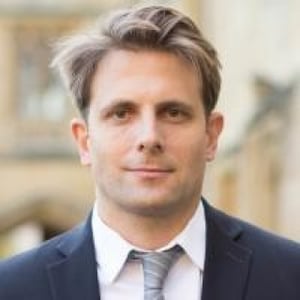
Associate Professor of International Relations, Oxford University
Lucas Kello is Associate Professor of International Relations at Oxford University. He serves as Senior Lecturer in the Department of Politics and International Relations and as co-Director of the interdisciplinary Centre for Doctoral Training in Cyber Security in the Department of Computer Science. His publications include The Virtual Weapon and International Order (Yale University Press), “The Meaning of the Cyber Revolution: Perils to Theory and Statecraft” in International Security, and “Security” in The Oxford Companion to International Relations (Oxford University Press).

Fellow, National Security Institute, Antonin Scalia Law School, George Mason University
Vince Vitkowsky chaired the Executive Committee of the Federalist Society’s International and National Security Law and Policy Practice Group for over a decade. He is also a Fellow at the National Security Institute of George Mason University Law School. Vince spent 45 years in private practice, primarily in AmLaw 100/200 firms and their spin-offs. His practice included domestic and international commercial arbitration and litigation, as well as cyber risks and liabilities. Vince's current focus is on national security policy, artificial intelligence, cybersecurity, and counterterrorism. He has often written and spoken on national security and other public policy issues. Among other affiliations, Vince has been an Adjunct Fellow at the Center for Law and Counterterrorism of the Foundation for the Defense of Democracies, a member of the Executive Committee of the American Branch of the International Law Association, and Co-Chair of the Committee on Interventions and Trial Observations of the International Bar Association’s Human Rights Institute. He received his B.A. from Northwestern University and his J.D. from Cornell Law School.
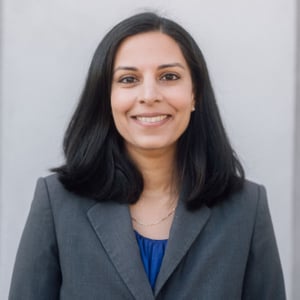
Associate Director of Criminal Justice Policy, R Street Institute
Nila previously served as an assistant public defender in Baltimore, Maryland. In addition to handling more than 1,000 cases in her tenure, she also helped lead a bail reform project to address problems in the city’s money bail system. Earlier in her career, Nila clerked for Judge Keith P. Ellison of the U.S. District Court for the Southern District of Texas. She also was a recipient of the Yale Public Interest Law Fellowship. As part of that program, she assisted juveniles with sealing their records, particularly those with sex offenses, while serving the Public Defender Office of Santa Clara County, California.
Nila received her bachelor’s degree in human biology from Stanford University, graduating with distinction. She completed her juris doctor at Yale Law School.
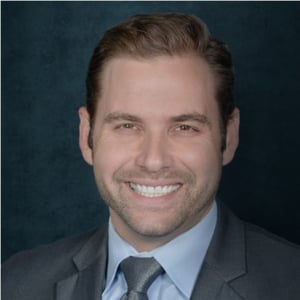
Vice President for the Program on Technology, Criminal Justice and Civil Liberties, Lincoln Network
Arthur Rizer is the Vice President for the Program on Technology, Criminal Justice and Civil Liberties at Lincoln Network. In addition to his work at Lincoln, Arthur is a visiting lecturer at University College London, and an adjunct professor at George Mason University’s Antonin Scalia Law School. Arthur is also a member of Columbia University Justice Lab’s Executive Session for the Future of Justice Policy, the Federalist Society’s Executive Committee of the Criminal Law Practice Group, the Virginia Advisory Committee to the U.S. Commission on Civil Rights, and other advisory bodies.
Before joining Lincoln, Arthur was founding director of the R Street Institute’s program on criminal justice and civil liberties. Prior to that, Arthur taught at West Virginia University’s College of Law, and was a visiting professor at Georgetown University Law Center. He also served as a trial attorney with the U.S. Justice Department, primarily as a federal prosecutor in the Criminal Division, where he targeted command-and-control drug cartel leaders and narco-terrorists. He also served as a prosecutor in the U.S. Attorney’s Office for the Southern District of California and in the civil division. Earlier in his career, Arthur served in the U.S. Army, originally enlisting as a private before later receiving a commission. He served as an armor officer, later becoming the commander of a military police company and a Reserve Officers’ Training Corps assistant professor. He deployed to Fallujah, Iraq, with the mission to train the Iraqi Infantry and served as an MP acting battalion commander and executive officer. He retired as a lieutenant colonel from the U.S. Army (WVNG). During his Army career, Arthur received the Bronze Star, Purple Heart, Meritorious Service and Iraq Campaign medals.
Arthur is the author of three books: Lincoln’s Counsel (2010); The National Security Implications of Immigration Law (2013); and Jefferson’s Pen: The Art of Persuasion (2016).
Arthur earned his bachelor’s degree in political science from Pacific Lutheran University; a master of laws, with distinction, from Georgetown University’s Law Center; and his JD, magna cum laude, from Gonzaga University School of Law. He is also a graduate of the U.S. Marine Corps’ Command Staff College. He is in the final stages of a doctorate at the University of Oxford, Faculty of Law, Centre of Criminology that focuses on policing.
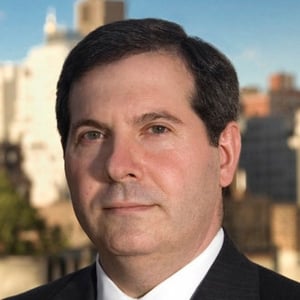
Partner, DeMarco Law, PLLC
Joseph V. DeMarco is a partner at DeMarco Law, PLLC where he focuses on counseling clients on complex issues involving information privacy and security, theft of intellectual property, computer intrusions, on-line fraud, and the lawful use of new technology. His years of experience in private practice and in government handling the most difficult cybercrime investigations handled by the United States Attorney’s Office have made him one of the nation’s most sought-after lawyers on Internet crime and the law relating to emerging technologies. In addition to his counsel practice, Mr. DeMarco serves as an Arbitrator, resolving complex commercial and high-technology disputes between businesses. He is on the National Panel of Neutrals of the American Arbitration Association (AAA) and Federal Arbitration, Inc. (FedArb).
From 1997 to 2007, Mr. DeMarco served an Assistant United States Attorney for the Southern District of New York, where he founded and headed the Computer Hacking and Intellectual Property (CHIPs) Program, a group of five prosecutors dedicated to investigating and prosecuting violations of federal cybercrime laws and intellectual property offenses. Under his leadership, CHIPs prosecutions grew from a trickle in 1997 to a top priority of the United States Attorney’s Office, encompassing all forms of criminal activity affecting e-commerce and critical infrastructures including computer hacking crimes; transmission of Internet worms and viruses; electronic theft of trade secrets; illegal use of “spyware”; web-based frauds; unlawful Internet gambling; and criminal copyright and trademark infringement offenses. As a recognized thought leader in the field, Mr. DeMarco was frequently asked to counsel prosecutors and law enforcement agents regarding novel investigative and surveillance techniques and methodologies, and regularly provided advice to the United States Attorney concerning the Office’s most sensitive computer-related investigations. In 2001, Mr. DeMarco also served as a visiting Trial Attorney at the Department of Justice Computer Crimes and Intellectual Property Section in Washington, D.C., where he focused his work on Internet privacy, gaming, and theft of intellectual property.
Since 2002, Mr. DeMarco has served as an Adjunct Professor at Columbia Law School, where he teaches the upper-class Internet and Computer Crimes seminar. He has been invited to speak throughout the world on cybercrime, e-commerce, and IP enforcement. He has lectured on the subject of cybercrime at Harvard Law School, the Practicing Law Institute, the National Advocacy Center, and at the FBI Academy in Quantico, Virginia, and has served as an instructor on cybercrime to judges attending the New York State Judicial Institute.
Prior to joining the United States Attorney’s Office, Mr. DeMarco was a litigation associate at Cravath, Swaine & Moore in New York City, where he concentrated his work on intellectual property, antitrust, and securities law issues for various high-technology clients. Prior to that, Mr. DeMarco served as law clerk to the Honorable J. Daniel Mahoney, United States Circuit Judge for the Second Circuit Court of Appeals.
Mr. DeMarco holds a J.D. magna cum laude from New York University School of Law. At NYU he was a member of the NYU Law Review. He received his B.S.F.S. summa cum laude from the Edmund A. Walsh School of Foreign Service at Georgetown University.
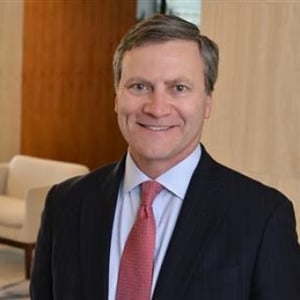
Shareholder, Brownstein, Hyatt, Farber, Shreck
With more than 20 years of experience both as a first-chair litigator and in public service, Greg Brower’s practice focuses on civil and criminal litigation, as well as regulatory and enforcement actions, corporate investigations, cybersecurity matters and federal and state government relations.
Most recently, Greg served as the assistant director for the Office of Congressional Affairs at the Federal Bureau of Investigation (FBI), serving as the FBI’s chief liaison to Congress on a wide range of critical oversight and investigative matters. He previously served as the FBI’s Deputy General Counsel, managing a diverse portfolio of legal matters, including litigation, privacy, procurement, compliance and ethics. During his time as a senior FBI executive, spanning two administrations, he worked closely with high-ranking officials in the U.S. Department of Justice (DOJ), the U.S. intelligence community and with key leaders on Capitol Hill. Greg is a regular commentator and contributor on national security, legal and cybersecurity issues, regularly appearing on CNN and MSNBC, and he is the featured contributor on white collar crime and corporate compliance for the Washington Legal Foundation’s Legal Pulse blog.
Greg has a long history of public service. At the federal level, he previously served as the U.S. Attorney for the District of Nevada, and as both General Counsel and Inspector General at the U.S. Government Publishing Office. Greg also served at DOJ as Legislative Counsel in the Executive Office for U.S. Attorneys. At the state level, he has served in a variety of public policy roles, including five terms in the Nevada Legislature, where he was chairman of the Senate Judiciary Committee. He has also served on the Nevada Gaming Policy Committee, the Nevada Advisory Commission on the Administration of Justice, the Nevada Sentencing Commission and the Nevada Juvenile Justice Commission.
Throughout his career, Greg has served the Nevada legal community as an adjunct professor of law at the William S. Boyd School of Law at the University of Nevada, Las Vegas, where he has taught courses in national security law and trial advocacy. Before attending law school, Greg served in the U.S. Navy as a Surface Warfare Officer.
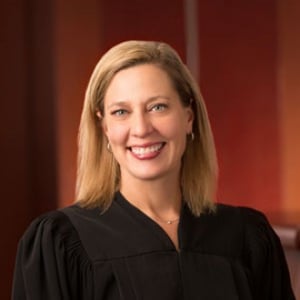
Associate Presiding Judge, Utah Court of Appeals Judges
Judge Michele M. Christiansen Forster was appointed to the Utah Court of Appeals in June 2010 by Gov. Gary Herbert. Prior to her appointment, Judge Christiansen Forster had been serving as a Third District Court Judge since May 2007. Judge Christiansen Forster received her law degree from the University of Utah College of Law in 1995. She then served as a judicial law clerk for one year with the Honorable Tena Campbell, United States District Court Judge for the District of Utah, following which she joined the Salt Lake law firm of Parsons Behle & Latimer. In March 1998, Judge Christiansen Forster joined the United State Attorney's Office, District of Utah, as an Assistant United States Attorney. In January 2005, she was appointed executive director of the Utah Commission on Criminal and Juvenile Justice and in July of 2006, Judge Christiansen Forster became general counsel to Gov. Jon M. Huntsman, Jr. During her tenure in the Governor's Office, Judge Christiansen Forster co-chaired the Utah Methamphetamine Joint Task Force and chaired the Utah Sexual Violence Council. She served as a member of the Guardian Ad Litem Oversight Panel, the Utah Sentencing Commission Executive Committee, the Utah Substance Abuse and Anti-Violence Coordinating Council, the Governor's Violence Against Women and Families Cabinet Council, the Initiative on Utah Children in Foster Care, and the Access to Justice Council. Judge Christiansen Forster is an adjunct professor at the University of Utah S. J. Quinney College of Law, currently serves as Co-chair of the Utah State Bar's Pro Bono Commission, on the Executive Board of Women Lawyers of Utah, on the Salt Lake County Bar Association Executive Committee, as a member of the Utah Sentencing Commission, the Judicial Council's Ethics Advisory Committee, and is chair of the Judicial Council's Commissioner Conduct Committee. 8-18
Founder and Executive Director, National Security Institute; Assistant Professor of Law, Antonin Scalia Law School, George Mason University
Jamil N. Jaffer is the Founder and Executive Director of the National Security Institute at the Antonin Scalia Law School at George Mason University where he also serves as an Assistant Professor of Law, Director of the National Security Law and Policy Program, and Director of the Cyber, Intelligence, and National Security LLM Program. Jamil also teaches classes on counterterrorism, intelligence, surveillance, cybersecurity, and other national security matters, as well as a summer course held abroad with U.S. Supreme Court Justice Neil M. Gorsuch. Jamil is also affiliated with Stanford University’s Center for International Security and Cooperation and previously served as a Visiting Fellow at the Hoover Institution from 2016 to 2019.
Jamil is also a Venture Partner with Paladin Capital Group, where he assists the firm with investments across the full range of its themes and theses, including a focus on dual-use national security technologies. Jamil also serves on the board of directors of RangeForce, a cybersecurity training and readiness platform startup and Tozny, a digital identity startup, and on the advisory boards of U.S. Strategic Metals, North America’s largest primary producer of cobalt, a critical mineral used in EV batteries, aerospace, and other national security applications; and Constella Intelligence, a deep and dark web intelligence startup. Jamil also serves as an advisor to Beacon Global Strategies, a strategic advisory firm and Duco, a technology platform startup that connects corporations with geopolitical and international business experts. Jamil is also the managing director of Trigraph Caveat Capital, a private investment vehicle.
Among other things, Jamil currently serves on the Board of Directors for the Greater Washington Board of Trade, the Board of Advisors for the Global Cyber Alliance, and the Advisory Board of the Foundation for the Defense of Democracies’ Center on Cyber and Tech Innovation, the Executive Committee of the Reagan Institute Strategy Group. Jamil is also a Fellow at the Academy for Judaic, Christian, and Islamic Studies, an advisor to the Concordia Summit, and is a member of the Board of Directors for the Center for Intelligence Policy, the Board of Directors of Speech First, and the Executive Committee of the International Law and National Security Practice Group of the Federalist Society.
Immediately prior to his current positions, from 2015-2021, Jamil served as a senior business leader at IronNet Cybersecurity, helping take the company from a bootstrapped first-year technology products startup through two rounds of venture capital fundraising, growing from 40 employees to over 300, and through its listing on New York Stock Exchange. In his role as IronNet's Senior Vice President for Strategy, Partnerships & Corporate Development, Jamil worked directly for the co-CEOs of the company, Gen (ret.) Keith B. Alexander, the former Director of the National Security Agency and Founding Commander of U.S. Cyber Command, and Bill Welch, the former COO of Zscaler and Duo; in that role, Jamil led all of the company’s strategic and technology partnership efforts, including developing go-to-market and technology integration plans with some of the largest cloud platforms and cybersecurity companies in the market, evaluating potential acquisition targets, and developing overall corporate strategy and thought leadership around collective security and collaborative defense in the cyber arena.
Prior to his time at IronNet, Jamil served on the leadership team of the Senate Foreign Relations Committee as Chief Counsel and Senior Advisor under Chairman Bob Corker (R-TN), where he worked on key national security and foreign policy issues, including leading the drafting of the proposed Authorization for the Use of Military Force against ISIS in 2014 and 2015, the AUMF against Syria in 2013, and revisions to the 9/11 AUMF against al Qaeda. Jamil was also the lead architect of the Iran Nuclear Agreement Review Act and two sanctions laws against Russia for its first intervention in Ukraine.
Prior to joining SFRC, Jamil served as Senior Counsel to the House Permanent Select Committee on Intelligence under Chairman Mike Rogers (R-MI) where he led the committee’s oversight of NSA surveillance, NRO intelligence issues, and NGA analytic and collection matters, as well as intelligence community-wide counterterrorism issues. Jamil was also the lead architect of the Cyber Intelligence Sharing and Protection Act, the nation’s first cyber threat intelligence sharing legislation that was signed into law in 2015.
In the Bush Administration, Jamil served in the White House as an Associate Counsel to the President, handling Defense Department, State Department, and intelligence community matters, and serving as one of the White House Counsel’s primary representatives to the National Security Council Deputies Committee.
Prior to the White House, Jamil served on the leadership team of the Justice Department’s National Security Division as Counsel to the Assistant Attorney General for National Security, where he focused on counterterrorism and intelligence matters. At NSD, Jamil helped lead the division’s work on In re: Directives, the first ever two-party litigated matter in the FISA Court and the second case before the FISA Court of Review in its 30-year history. Jamil also led NSD’s efforts on the President’s Comprehensive National Cybersecurity Initiative (CNCI), including the drafting of NSPD-54/HSPD-23, and related classified matters, and advised the National Security Agency (NSA) and U.S. Cyber Command’s predecessor organization, the Joint Function Component Command for Network Warfare (JFCC-NW), on matters related to cyber intelligence collection and offensive cyber activities. For his work on these matters, Jamil was awarded the Assistant Attorney General’s Award for Special Initiative and was among the group of lawyers awarded the Director of National Intelligence’s 2008 Legal Award (Team of the Year – Cyber Legal).
Jamil also served in other positions in the Justice Department, including in the Office of Legal Policy, where he worked on the confirmations of Chief Justice John G. Roberts, Jr. and Justice Samuel A. Alito, Jr. to the United States Supreme Court.
Jamil also served as a lawyer in private practice at Kellogg Huber, a Washington, DC-based litigation boutique, as a policy advisor to Congressman Bob Goodlatte (R-VA), and as a staff member or senior advisor on a number of political campaigns, including two presidential campaigns and a presidential transition team. While in law school, Jamil was a member of the University of Chicago Law Review, managing editor of the Chicago Journal of International Law, and National Symposium Editor of the Harvard Journal of Law & Public Policy. Following law school, Jamil served as a law clerk to Judge Edith H. Jones of the United States Court of Appeals for the Fifth Circuit and, later in his career, as a law clerk to then-Judge Neil M. Gorsuch when he first joined the United States Court of Appeals for the Tenth Circuit as well as a law clerk to Justice Neil Gorsuch when he joined the U.S. Supreme Court.
Jamil has published multiple op-eds and academic articles on national security, foreign policy, cybersecurity, counterterrorism, encryption, and intelligence matters, and is the co-author of a book chapter with former NSA Director Gen. (Ret.) Keith B. Alexander on national security and the press in National Security, Leaks, and the Freedom of the Press: The Pentagon Papers Fifty Years On (2021) and a book chapter with former CIA Director Gen. (ret.) Mike Hayden on ISIS, al Qaeda, and other international terrorist groups in Choosing to Lead: American Foreign Policy for a Disordered World (2015). Jamil has also written book chapters on cybersecurity and surveillance, as well as op-eds and policy papers with former Attorney General Michael B. Mukasey, former National Counterterrorism Center Director Matt Olsen, and Congressman Mike Waltz (R-FL), among others.
Jamil has previously taught graduate-level courses in intelligence law and policy at George Washington University’s Elliott School of International Affairs and the National Intelligence University, served an outside advisor to the Cyberspace Solarium Commission, and has recently testified before committees of the U.S. Senate and House of Representatives on China, cybersecurity, counterterrorism, and other national security matters. Jamil has also recently appeared on a range of national television and radio outlets including CNN, Fox News, Fox Business, MSNBC, Bloomberg, PBS, Voice of America, and National Public Radio, and in various print and online publications, including the Wall Street Journal, New York Times, and the Washington Post on a range of national security matters including cybersecurity, counterterrorism, surveillance, encryption, privacy, and foreign policy issues.
Jamil holds degrees from UCLA (BA, cum laude), the University of Chicago Law School (JD, with honors), and the United States Naval War College (MA, with distinction).
Assistant District Attorney, New York County District Attorneys Office
Kenn Kern is the Chief Information Officer and the Special Assistant for International Relations at the New York County District Attorney’s Office. Kenn joined the Office in 2004 and initially served in the Trial Division before transferring to the Major Economic Crimes Bureau in 2009. There, he coprosecuted Lawrence Salander and Leigh Morse, an art gallery owner and director, respectively, for their decade-long, $120 million Ponzi scheme involving the consigned artwork of thirty victims. Salander and Morse were both convicted, by plea and trial, respectively, and the case is regarded as the one of the largest art fraud schemes in the State’s history.
In 2011, Kenn was appointed Deputy Chief of the Cybercrime and Identity Theft Bureau, prosecuting and supervising a wide variety of complex financial, identity theft, and cyber frauds. In 2012, Kenn was part of a team that prosecuted an individual for stalking and extorting a high-profile public figure as well as committing housing fraud. Following a 2015 jury trial, the defendant was convicted of all nine fraud charges against her. In his current role, Kenn serves point person in assessing technological needs, developing and maintaining the Office’s technological environment, managing network and application servers, coordinating our cybersecurity framework and protocols, and partnering with state, national, and international agencies and offices on technology and cybersecurity matters. Further, Kenn is the Office liaison to multiple international law enforcement agencies and cybersecurity organizations, including the City of London Police, the Paris Parquet du Tribual de Grande Instance, the Singapore Attorney General’s Chambers, Europol, Global Cyber Alliance, FS-ISAC, the Financial Services Sector Coordinating Council, and the Center for Internet Security. For the last eight years, Kenn has coordinated DANY’s Financial Crimes and Cybersecurity Symposium. Kenn is an honors graduate of the University of Texas School of Law, where he served as an Assistant to Admiral Bobby I. Inman, former Director of the National Security Agency. Kenn served as law clerk to the Honorable Chief Judge Thad Heartfield of the United States District Court for the Eastern District of Texas and earned a Master’s degree in Government from Georgetown University. Prior to joining the Office, Kenn served at the International Criminal Tribunal for the Former Yugoslavia and worked on the Slobodan Milošević trial.
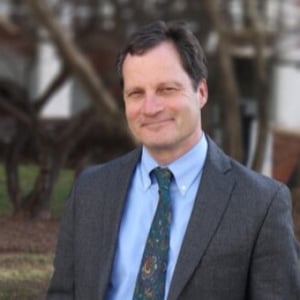
Vice President, Legal & Chief Counsel, Legal, Brady
Jonathan E. Lowy is the Vice President, Legal and Chief Counsel at Brady. Since 1997 Jon has argued in courts across the country to reduce gun violence, providing pro bono legal representation to victims of gun violence in lawsuits to reform dangerous gun industry practices, and assisting governments and public officials in defense of reasonable gun laws. Jon has litigated in over 40 states, successfully arguing several precedent-setting cases in appellate and trial courts establishing gun industry liability and Second Amendment law, obtaining several multi-million dollar settlements, and reforming gun industry practices. Jon has been named one of the 500 Leading Lawyers in America by Lawdragon magazine for the past 10 years, and has published numerous articles on gun litigation and policy including, The Right Not To Be Shot: Public Safety, Private Guns, and the Constellation of Constitutional Liberties in the Georgetown Journal of Law and Policy. He graduated from Harvard College and the University of Virginia School of Law.

Executive Vice President, The Federalist Society
Dean Reuter is Executive Vice President at the Federalist Society for Law and Public Policy Studies. He has served in two federal government agency Offices of the Inspector General, as Counsel to the Inspector General and Deputy Inspector General, responsible for policing the use of federal funds granted and contracted through those agencies. As such, he helped conduct and oversee criminal investigations across the country. He is the principal author of the non-fiction book, The Hidden Nazi: The Untold Story of America's Deal with the Devil, and editor of Liberty’s Nemesis: The Unchecked Expansion of the State and Confronting Terror: 9/11 and the Future of American National Security. He was appointed by the President and served as Vice-Chairman of the Board of Directors of the Corporation for National and Community Service, and recently served as an appointee on the U.S. Commission on Presidential Scholars. He is a graduate of Hood College (BA with Honors) and the University of Maryland School of Law.
Senior Fellow, Ave Maria School of Law and Host of the Four Boxes Diner Second Amendment Channel
Mark W. Smith is a visiting member of the Senior Common Room, New College, Oxford University and a Visiting Fellow in Pharmaceutical Public Policy and Law in the Department of Pharmacology, Oxford University. Mark is also a Distinguished Scholar and Senior Fellow of Law and Public Policy at the Ave Maria School of Law. He hosts the Four Boxes Diner YouTube Channel (youtube.com/TheFourBoxesDiner), which addresses Second Amendment scholarship, cases, history and related issues, and whose videos have received almost 90 million views. Mark's scholarship has been cited by federal courts and by parties before the United States Supreme Court in Viramontes v. Cook County, New York State Rifle & Pistol Ass’n v. Bruen and in United States v. Rahimi. He is a graduate of the NYU School of Law. Mark is also a New York Times bestselling author who appears frequently in the national media including on the Fox News Channel.
Partner, DeMarco Law, PLLC
Joseph V. DeMarco is a partner at DeMarco Law, PLLC where he focuses on counseling clients on complex issues involving information privacy and security, theft of intellectual property, computer intrusions, on-line fraud, and the lawful use of new technology. His years of experience in private practice and in government handling the most difficult cybercrime investigations handled by the United States Attorney’s Office have made him one of the nation’s most sought-after lawyers on Internet crime and the law relating to emerging technologies. In addition to his counsel practice, Mr. DeMarco serves as an Arbitrator, resolving complex commercial and high-technology disputes between businesses. He is on the National Panel of Neutrals of the American Arbitration Association (AAA) and Federal Arbitration, Inc. (FedArb).
From 1997 to 2007, Mr. DeMarco served an Assistant United States Attorney for the Southern District of New York, where he founded and headed the Computer Hacking and Intellectual Property (CHIPs) Program, a group of five prosecutors dedicated to investigating and prosecuting violations of federal cybercrime laws and intellectual property offenses. Under his leadership, CHIPs prosecutions grew from a trickle in 1997 to a top priority of the United States Attorney’s Office, encompassing all forms of criminal activity affecting e-commerce and critical infrastructures including computer hacking crimes; transmission of Internet worms and viruses; electronic theft of trade secrets; illegal use of “spyware”; web-based frauds; unlawful Internet gambling; and criminal copyright and trademark infringement offenses. As a recognized thought leader in the field, Mr. DeMarco was frequently asked to counsel prosecutors and law enforcement agents regarding novel investigative and surveillance techniques and methodologies, and regularly provided advice to the United States Attorney concerning the Office’s most sensitive computer-related investigations. In 2001, Mr. DeMarco also served as a visiting Trial Attorney at the Department of Justice Computer Crimes and Intellectual Property Section in Washington, D.C., where he focused his work on Internet privacy, gaming, and theft of intellectual property.
Since 2002, Mr. DeMarco has served as an Adjunct Professor at Columbia Law School, where he teaches the upper-class Internet and Computer Crimes seminar. He has been invited to speak throughout the world on cybercrime, e-commerce, and IP enforcement. He has lectured on the subject of cybercrime at Harvard Law School, the Practicing Law Institute, the National Advocacy Center, and at the FBI Academy in Quantico, Virginia, and has served as an instructor on cybercrime to judges attending the New York State Judicial Institute.
Prior to joining the United States Attorney’s Office, Mr. DeMarco was a litigation associate at Cravath, Swaine & Moore in New York City, where he concentrated his work on intellectual property, antitrust, and securities law issues for various high-technology clients. Prior to that, Mr. DeMarco served as law clerk to the Honorable J. Daniel Mahoney, United States Circuit Judge for the Second Circuit Court of Appeals.
Mr. DeMarco holds a J.D. magna cum laude from New York University School of Law. At NYU he was a member of the NYU Law Review. He received his B.S.F.S. summa cum laude from the Edmund A. Walsh School of Foreign Service at Georgetown University.

Foreign State Actors, Security, and Privacy: What is the Future of End-to-End Encryption?
Sean Cooksey, Jamil N. Jaffer, Susan Landau, Tara C. McFeely
The 2015 terrorist attack in San Bernardino, California kicked off a debate over whether U.S....
Foreign State Actors, Security, and Privacy: What is the Future of End-to-End Encryption?
Sean Cooksey, Jamil N. Jaffer, Susan Landau, Tara C. McFeely
The 2015 terrorist attack in San Bernardino, California kicked off a debate over whether U.S....
A Seat at the Sitting - February 2023
Adam Candeub, Robert S. Driscoll, Karen Harned, John C. Richter
Each month, a panel of constitutional experts convenes to discuss the Court’s upcoming docket...
Topics
Gonzalez, Google, and Section 230: All on the same side?
After avoiding Section 230 for thirty years, the Supreme Court will finally hear oral arguments...
The 2022 Mike Lewis Memorial Teleforum: Peace in Cyberspace: How it was Lost and How to Restore It
Eric Jensen, Lucas Kello, Vincent Vitkowsky
Faced with relentless cyberattacks and intrusions that could imperil democracy, how should Western nations respond?...
Rights and Wrongs: The Golden State Killer and Genetic Investigations
Nila Bala, Arthur Rizer
After 87 victims, 53 separate crime scenes, and multiple investigations spanning over four decades, the...
Litigation Update: The Government, Apple, and the Encryption Debate
Joseph V. DeMarco
In 2016 the United States Department of Justice and Apple twice went to federal court...
Litigation Update: The Government, Apple, and the Encryption Debate
TeleforumGoing Dark Phenomenon
Greg Brower, Michele Christiansen Forster, Jamil N. Jaffer, Kenn Kern
What is the effect of encryption on government/law enforcement access to digital evidence? Default device...
Panel 2: Are Semiautomatic Rifles, aka “Assault Weapons,” Protected by the Second Amendment?
Jonathan Lowy, Dean Reuter, Mark W. Smith
On January 15, 2019, the Federalist Society's Civil Rights and Criminal Law & Procedure Practice...