

Chief Policy Counsel, Council on Criminal Justice and Senior Advisor, Right on Crime
Marc A. Levin is the Chief Policy Counsel for the Council on Criminal Justice (counciloncj.org) and Senior Advisor for Right on Crime.
An attorney and accomplished author on legal and public policy issues, Marc began the Foundation’s criminal justice program in 2005. This work contributed to nationally praised policy changes that have been followed by dramatic declines in crime and incarceration in Texas. Building on this success, in 2010, Levin developed the concept for the Right on Crime initiative, a TPPF project in partnership with Prison Fellowship and the American Conservative Union Foundation. Right on Crime has become the national clearinghouse for conservative criminal justice reforms and has contributed to the adoption of policies in dozens of states that fight crime, support victims, and protect taxpayers.
In 2014, Levin was named one of the “Politico 50” in the magazine’s annual “list of thinkers, doers, and dreamers who really matter in this age of gridlock and dysfunction.”
Marc has testified on criminal justice policy on four occasions before Congress and has testified before legislatures in states including Texas, Nevada, Kansas, Wisconsin, and California. He also has met personally with leaders such as U.S. Presidents, Speakers of the House, and the Justice Commtitee of the United Kingdom Parliament to share his ideas on criminal justice reform. In 2007, he was honored in a resolution unanimously passed by the Texas House of Representatives that stated, “Mr. Levin’s intellect is unparalleled and his research is impeccable.”
Since 2005, Marc has published dozens of policy papers on topics such as sentencing, probation, parole, reentry, and overcriminalization which are available on the TPPF website. Levin’s articles on law and public policy have been featured in publications such as the Wall Street Journal, USA Today, Texas Review of Law & Politics, National Law Journal, New York Daily News, Jerusalem Post, Toronto Star, Atlanta Journal-Constitution, Philadelphia Inquirer, San Francisco Chronicle, Washington Times, Los Angeles Daily Journal, Charlotte Observer, Dallas Morning News, Houston Chronicle, Austin American-Statesman, San Antonio Express-News and Reason Magazine.
In 1999, Marc graduated with honors from the University of Texas with a B.A. in Plan II Honors and Government. In 2002, Marc received his J.D. with honors from the University of Texas School of Law. Marc was a Charles G. Koch Summer Fellow in 1996. He served as a law clerk to Judge Will Garwood on the U.S. Court of Appeals for the Fifth Circuit and Staff Attorney at the Texas Supreme Court.

Senior Attorney, Financial Industry Regulatory Authority
John-Michael Seibler is a senior attorney at the Financial Industry Regulatory Authority (FINRA).
Prior to joining FINRA, he directed The Heritage Foundation’s project to counter abuse of the criminal law, particularly at the federal level, and was a legal fellow in Heritage's Institute for Constitutional Government. Seibler started at Heritage as a visiting fellow through the Charles Koch Institute’s Koch Associate program.
He previously clerked for the House Judiciary Committee’s Crime Subcommittee, the Goldwater Institute’s Scharf-Norton Center for Constitutional Litigation, and the National Right to Work Legal Defense Foundation. He received his law degree from Washington & Lee University School of Law.
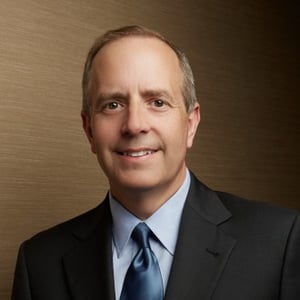
Former CEO, Vascular Solutions
Howard Root is the recently-retired Chief Executive Officer of Vascular Solutions, Inc., a company he founded in 1997, took public in 2000, and grew into a worldwide medical device company that he sold to Teleflex for $1 billion in February 2017. Over the company’s 20 years, Howard led Vascular Solutions in inventing, developing and launching over 100 new medical devices that are used daily to improve the lives of patients suffering from cardiovascular disease. In 2014, Vascular Solutions and Howard were indicted on felony charges alleging the company’s salespeople had promoted off-label an FDA-cleared medical device that made up only 0.1% of the company’s sales and never harmed a single patient. After surviving an arduous legal process, with 121 attorneys charging $25 million in legal fees, in February 2016 the jury returned a verdict of not guilty on all charges, even though the defense didn’t call a single witness to testify in the four-week trial.
Principal, The Chertoff Group, Former NSA and CIA Director
As Director of the Central Intelligence Agency, General Michael V. Hayden was responsible for overseeing the collection of information concerning the plans, intentions and capabilities of America’s adversaries; producing timely analysis for decision makers; and conducting covert operations to thwart terrorists and other enemies of the US.
At Chertoff Group, General Hayden will uses his broad geographic and political knowledge to brief clients on intelligence matters worldwide – including developments in cybersecurity – that may affect their businesses.
Before becoming Director of the CIA, General Hayden served as the country’s first Principal Deputy Director of National Intelligence and was the highest-ranking intelligence officer in the armed forces. Earlier, he served as Commander of the Air Intelligence Agency, Director of the Joint Command and Control Warfare Center, Director of the National Security Agency and Chief of the Central Security Service.
General Hayden graduated from Duquesne University with a bachelor’s degree in history in 1967 and a master’s degree in modern American history in 1969. He also did postgraduate work at the Defense Intelligence School conducted by the Defense Intelligence Agency. He is currently a Distinguished Visiting Professor at George Mason University.

Founder and Executive Director, National Security Institute; Assistant Professor of Law, Antonin Scalia Law School, George Mason University
Jamil N. Jaffer is the Founder and Executive Director of the National Security Institute at the Antonin Scalia Law School at George Mason University where he also serves as an Assistant Professor of Law, Director of the National Security Law and Policy Program, and Director of the Cyber, Intelligence, and National Security LLM Program. Jamil also teaches classes on counterterrorism, intelligence, surveillance, cybersecurity, and other national security matters, as well as a summer course held abroad with U.S. Supreme Court Justice Neil M. Gorsuch. Jamil is also affiliated with Stanford University’s Center for International Security and Cooperation and previously served as a Visiting Fellow at the Hoover Institution from 2016 to 2019.
Jamil is also a Venture Partner with Paladin Capital Group, where he assists the firm with investments across the full range of its themes and theses, including a focus on dual-use national security technologies. Jamil also serves on the board of directors of RangeForce, a cybersecurity training and readiness platform startup and Tozny, a digital identity startup, and on the advisory boards of U.S. Strategic Metals, North America’s largest primary producer of cobalt, a critical mineral used in EV batteries, aerospace, and other national security applications; and Constella Intelligence, a deep and dark web intelligence startup. Jamil also serves as an advisor to Beacon Global Strategies, a strategic advisory firm and Duco, a technology platform startup that connects corporations with geopolitical and international business experts. Jamil is also the managing director of Trigraph Caveat Capital, a private investment vehicle.
Among other things, Jamil currently serves on the Board of Directors for the Greater Washington Board of Trade, the Board of Advisors for the Global Cyber Alliance, and the Advisory Board of the Foundation for the Defense of Democracies’ Center on Cyber and Tech Innovation, the Executive Committee of the Reagan Institute Strategy Group. Jamil is also a Fellow at the Academy for Judaic, Christian, and Islamic Studies, an advisor to the Concordia Summit, and is a member of the Board of Directors for the Center for Intelligence Policy, the Board of Directors of Speech First, and the Executive Committee of the International Law and National Security Practice Group of the Federalist Society.
Immediately prior to his current positions, from 2015-2021, Jamil served as a senior business leader at IronNet Cybersecurity, helping take the company from a bootstrapped first-year technology products startup through two rounds of venture capital fundraising, growing from 40 employees to over 300, and through its listing on New York Stock Exchange. In his role as IronNet's Senior Vice President for Strategy, Partnerships & Corporate Development, Jamil worked directly for the co-CEOs of the company, Gen (ret.) Keith B. Alexander, the former Director of the National Security Agency and Founding Commander of U.S. Cyber Command, and Bill Welch, the former COO of Zscaler and Duo; in that role, Jamil led all of the company’s strategic and technology partnership efforts, including developing go-to-market and technology integration plans with some of the largest cloud platforms and cybersecurity companies in the market, evaluating potential acquisition targets, and developing overall corporate strategy and thought leadership around collective security and collaborative defense in the cyber arena.
Prior to his time at IronNet, Jamil served on the leadership team of the Senate Foreign Relations Committee as Chief Counsel and Senior Advisor under Chairman Bob Corker (R-TN), where he worked on key national security and foreign policy issues, including leading the drafting of the proposed Authorization for the Use of Military Force against ISIS in 2014 and 2015, the AUMF against Syria in 2013, and revisions to the 9/11 AUMF against al Qaeda. Jamil was also the lead architect of the Iran Nuclear Agreement Review Act and two sanctions laws against Russia for its first intervention in Ukraine.
Prior to joining SFRC, Jamil served as Senior Counsel to the House Permanent Select Committee on Intelligence under Chairman Mike Rogers (R-MI) where he led the committee’s oversight of NSA surveillance, NRO intelligence issues, and NGA analytic and collection matters, as well as intelligence community-wide counterterrorism issues. Jamil was also the lead architect of the Cyber Intelligence Sharing and Protection Act, the nation’s first cyber threat intelligence sharing legislation that was signed into law in 2015.
In the Bush Administration, Jamil served in the White House as an Associate Counsel to the President, handling Defense Department, State Department, and intelligence community matters, and serving as one of the White House Counsel’s primary representatives to the National Security Council Deputies Committee.
Prior to the White House, Jamil served on the leadership team of the Justice Department’s National Security Division as Counsel to the Assistant Attorney General for National Security, where he focused on counterterrorism and intelligence matters. At NSD, Jamil helped lead the division’s work on In re: Directives, the first ever two-party litigated matter in the FISA Court and the second case before the FISA Court of Review in its 30-year history. Jamil also led NSD’s efforts on the President’s Comprehensive National Cybersecurity Initiative (CNCI), including the drafting of NSPD-54/HSPD-23, and related classified matters, and advised the National Security Agency (NSA) and U.S. Cyber Command’s predecessor organization, the Joint Function Component Command for Network Warfare (JFCC-NW), on matters related to cyber intelligence collection and offensive cyber activities. For his work on these matters, Jamil was awarded the Assistant Attorney General’s Award for Special Initiative and was among the group of lawyers awarded the Director of National Intelligence’s 2008 Legal Award (Team of the Year – Cyber Legal).
Jamil also served in other positions in the Justice Department, including in the Office of Legal Policy, where he worked on the confirmations of Chief Justice John G. Roberts, Jr. and Justice Samuel A. Alito, Jr. to the United States Supreme Court.
Jamil also served as a lawyer in private practice at Kellogg Huber, a Washington, DC-based litigation boutique, as a policy advisor to Congressman Bob Goodlatte (R-VA), and as a staff member or senior advisor on a number of political campaigns, including two presidential campaigns and a presidential transition team. While in law school, Jamil was a member of the University of Chicago Law Review, managing editor of the Chicago Journal of International Law, and National Symposium Editor of the Harvard Journal of Law & Public Policy. Following law school, Jamil served as a law clerk to Judge Edith H. Jones of the United States Court of Appeals for the Fifth Circuit and, later in his career, as a law clerk to then-Judge Neil M. Gorsuch when he first joined the United States Court of Appeals for the Tenth Circuit as well as a law clerk to Justice Neil Gorsuch when he joined the U.S. Supreme Court.
Jamil has published multiple op-eds and academic articles on national security, foreign policy, cybersecurity, counterterrorism, encryption, and intelligence matters, and is the co-author of a book chapter with former NSA Director Gen. (Ret.) Keith B. Alexander on national security and the press in National Security, Leaks, and the Freedom of the Press: The Pentagon Papers Fifty Years On (2021) and a book chapter with former CIA Director Gen. (ret.) Mike Hayden on ISIS, al Qaeda, and other international terrorist groups in Choosing to Lead: American Foreign Policy for a Disordered World (2015). Jamil has also written book chapters on cybersecurity and surveillance, as well as op-eds and policy papers with former Attorney General Michael B. Mukasey, former National Counterterrorism Center Director Matt Olsen, and Congressman Mike Waltz (R-FL), among others.
Jamil has previously taught graduate-level courses in intelligence law and policy at George Washington University’s Elliott School of International Affairs and the National Intelligence University, served an outside advisor to the Cyberspace Solarium Commission, and has recently testified before committees of the U.S. Senate and House of Representatives on China, cybersecurity, counterterrorism, and other national security matters. Jamil has also recently appeared on a range of national television and radio outlets including CNN, Fox News, Fox Business, MSNBC, Bloomberg, PBS, Voice of America, and National Public Radio, and in various print and online publications, including the Wall Street Journal, New York Times, and the Washington Post on a range of national security matters including cybersecurity, counterterrorism, surveillance, encryption, privacy, and foreign policy issues.
Jamil holds degrees from UCLA (BA, cum laude), the University of Chicago Law School (JD, with honors), and the United States Naval War College (MA, with distinction).

Professor of Law, South Texas College of Law Houston
Josh Blackman is a national thought leader on constitutional law and the United States Supreme Court. Josh’s work was quoted during two presidential impeachment trials. He has testified before Congress and advises federal and state lawmakers. Josh regularly appears on TV, including NBC, CBS, ABC, Fox, and the BBC. Josh is also a frequent guest on NPR and other syndicated radio programs. He has published commentaries in the New York Times, Wall Street Journal, Washington Post, and leading national publications.
Since 2012, Josh has served as a professor at the South Texas College of Law Houston. He holds the Centennial Chair of Constitutional Law. Josh is an Adjunct Fellow at the Manhattan Institute. Josh has written more than seven dozen law review articles that have been cited more than a thousand times. Josh was selected as the Jurist of the Year by the Texas Journal of Law & Public Policy, received the inaugural Meese III Originalism Award, and was awarded the Inaugural Joseph Story Award. Josh was selected by Forbes Magazine for the “30 Under 30” in Law and Policy. Josh is the President of the Harlan Institute, and founded FantasySCOTUS, the Internet’s Premier Supreme Court Fantasy League. He blogs at the Volokh Conspiracyand posts@JoshMBlackman.

Dr. John Eastman is the former Henry Salvatori Professor of Law & Community Service and former Dean at Chapman University's Dale E. Fowler School of Law, where he had been a member of the faculty since 1999, specializing in Constitutional Law, Legal History, and Property. He is a founding director of the Center for Constitutional Jurisprudence, a public interest law firm affiliated with the Claremont Institute that he founded in 1999. He has a Ph.D. in Government from the Claremont Graduate School and a J.D. from the University of Chicago Law School, and a B.A. in Politics and Economics from the University of Dallas. He serves as the Chairman of the Board of the National Organization for Marriage.
Prior to joining the Chapman law faculty, Dr. Eastman served as a law clerk to the Honorable Clarence Thomas, Associate Justice, Supreme Court of the United States, and to the Honorable J. Michael Luttig, Judge, United States Court of Appeals for the Fourth Circuit and practiced law with the national law firm of Kirkland & Ellis. Dr. Eastman has also represented numerous clients in important constitutional law matters and has argued before the Supreme Court. On behalf of the Claremont Institute Center for Constitutional Jurisprudence, he has participated as amicus curiae before the Supreme Court of the United States, U.S. Courts of Appeals, and State Supreme Courts in more than one hundred cases of constitutional significance, including Boy Scouts of America v. Dale, Zelman v. Simmons-Harris (the school vouchers case), Kelo v. New London, Ct. (eminent domain), and Van Orden v. Perry (the 10 Commandments case). He has also appeared as an expert legal commentator on numerous television and radio programs, including C-SPAN, Fox News, PBS, NewsHour, and The O'Reilly Factor.

Counsel to Sen. Ted Cruz, U.S. Senate Judiciary Committee
Kathleen Hunker is a senior policy analyst with the Center for Economic Freedom at the Texas Public Policy Foundation. She is also a managing editor of the Foundation’s research and publications.
During her time at the Foundation, Ms. Hunker has testified nearly two-dozen times before the Texas Legislature and has become a respected expert on the law surrounding consumer protection, property rights, and the Texas civil court system.
A Texan by choice, not birth, Ms. Hunker previously worked as a legal associate at the Cato Institute’s Center for Constitutional Studies, where she conducted rigorous research and writing on a wide-range of federal and state cases in order to advance the Center’s mission of a constitutionally limited government.
The Claremont Institute selected her in 2014 for their prestigious John Marshall Fellowship on American political thought and jurisprudence.
Ms. Hunker graduated from Columbia University School of Law and the University College London with a Juris Doctor (J.D.) and Masters of Law (LL.M) respectively. She received her Bachelor of Arts (B.A.) from Hofstra University.
A former editor for the Columbia Journal of European Law, Ms. Hunker has written for such publications as Forbes, Townhall.com, Austin American-Statesman, and Ethika Politika, among others. Her legal research also has appeared in the Harvard Journal of Law and Public Policy and the Cornell International Law Journal Online. Ms. Hunker specializes in comparative constitutional law and natural rights.

Thomas M. Siebel Senior Fellow, The Hoover Institution, Stanford University; Gary T. Schwartz Distinguished Professor of Law Emeritus, UCLA School of Law
Eugene Volokh is the Thomas M. Siebel Senior Fellow at the Hoover Institution (Stanford), as well as the Gary T. Schwartz Distinguished Professor of Law Emeritus and Distinguished Research Professor at UCLA School of Law. He recently retired from teaching at UCLA, after 30 years there, and is now focusing on research.
Volokh is the author of the textbooks The First Amendment and Related Statutes (8th ed. 2023), and Academic Legal Writing (5th ed. 2016), as well as over 100 academic law journal articles, mostly on First Amendment law. He is a member of The American Law Institute; the editor-in-chief of the Journal of Free Speech Law; and the creator and coauthor of The Volokh Conspiracy, a leading legal blog founded in 2002 (hosted at the Washington Post from 2014 to 2017 and now at Reason Magazine).
Partner, The Gardner Law Firm
David F. Barton has extensive experience in environmental, government and government contract, and corporate law. He joined The Gardner Law Firm in 1996 after serving as a United States Air Force JAG officer as well as having six years of private practice with firms in Texas. Mr. Barton counsels clients in environmental matters, government contracts, regulatory compliance, commercial law, and litigation related to those areas. He represents industries, businesses and government units on matters involving water, air, solid and hazardous waste, toxins, wetlands, endangered species, historic preservation, NEPA, Superfund, and federal and state court litigation in those areas. He has taught courses in criminal law, litigation, administration of justice and environmental crimes at several universities throughout the United States, and he has been a guest speaker at environmental law and government contract seminars. Mr. Barton has been licensed to practice in Texas since 1991, and is also licensed in Arkansas. He is admitted to practice before the United States Supreme Court, the United States Court of Federal Claims, the United States Court of Military Appeals, and several United States Circuit Courts of Appeals and United States District Courts. He is a member of the State Bar of Texas (Environmental & Natural Resources Section, among others); College of the State Bar of Texas, the Arkansas Bar Association, the Arkansas Bar Foundation (Fellow), the Association of Trial Lawyers of America, and the San Antonio Bar Association (Environmental Section). He is also an active participant in the San Antonio Manufacturers Association, the Alamo Area Chapter - Air & Waste Management Association, and Citizens Advisory Panel of the San Antonio Water System.
University of Arkansas, J.D., 1975; Central Methodist College; University of Missouri at Columbia, B.A., 1967

Board Member, Center for Equal Opportunity
Roger Clegg is a Board Member at and former President and General Counsel of the Center for Equal Opportunity. He focuses on legal issues arising from civil rights laws--including the regulatory impact on business and the problems in higher education created by affirmative action. A former Deputy Assistant Attorney General in the Reagan and Bush administrations, Clegg held the second highest positions in both the Civil Rights Division (1987-91) and in the Environment and Natural Resources Division (1991-93). He has held several other positions at the U.S. Justice Department, including Assistant to the Solicitor General (1985-87), Associate Deputy Attorney General (1984-85), and Acting Assistant Attorney General in the Office of Legal Policy (1984). Clegg is a graduate of Yale University Law School (1981).

Professor of Law, Antonin Scalia Law School, George Mason University
Professor of Law Michael S. Greve joined the faculty of the Antonin Scalia Law School, George Mason University in fall 2012 after having served as John G. Searle Scholar at the American Enterprise Institute (AEI), where he specialized in constitutional law, courts, and business regulation and served as chairman of the Competitive Enterprise Institute. Prior to joining AEI, Greve was founder and co-director of the Center for Individual Rights, a public interest law firm specializing in constitutional litigation.
Greve has served previously as an adjunct professor at a number of universities, including Cornell and Johns Hopkins Universities, and has been a visiting professor at Boston College since 2004. He was awarded a PhD and an MA in government by Cornell University. Greve also earned a Diploma from the University of Hamburg in Germany.
A prolific writer, Greve is the author of nine books and a multitude of articles appearing in scholarly publications, as well as numerous editorials, short articles, and book reviews. He is a frequent speaker for professional and scholarly organizations and has made many appearances on radio and television.
In addition Greve has provided congressional and state legislative testimony, has lobbied and consulted in federal agency proceedings, and has provided litigation services and management in over 30 cases, including matters before the U.S. Supreme Court.
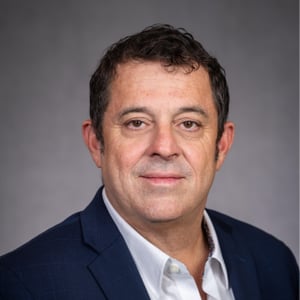
Senior Fellow for Law, Economics, and Technology, The Heritage Foundation; Professor, Florida International University
Mario Loyola is a Senior Fellow for Law, Economics, and Technology at The Heritage Foundation.
Loyola served in the Trump Administration as Associate Director for Regulatory Reform at the White House Council on Environmental Quality. In that role, he was one of the principal drafters of the One Federal Decision policy, which helped to streamline the permitting and environmental review of large infrastructure projects. While at CEQ, he was a member of the U.S. delegation to the USMCA free trade negotiations with Mexico and Canada, as well as the United Nations conference on biodiversity on the high seas. Loyola initially joined the White House in February 2017 as a Presidential Speechwriter, employing his expertise in many areas of foreign and domestic policy.
After beginning his career in M&A and corporate finance law, Loyola served in the Bush 43 Administration as a special assistant to the Undersecretary of Defense for Policy. He left that position to start writing on national defense issues in magazines such as National Review and The Weekly Standard, reporting from the front lines of the war on terrorism in Lebanon, Israel, and Iraq. He finished the Bush Administration as Foreign and Defense Counsel to the U.S. Senate Republican Policy Committee, then under the chairmanship of Senator Kay Bailey Hutchison of Texas. He subsequently moved to Texas and joined the Texas Public Policy Foundation, where he specialized in energy, environment, and federalism.
Loyola is a frequent contributor to The Wall Street Journal, National Review, and The Atlantic, among others. He teaches environmental and administrative law at Florida International University, where he is Founding Director of the Environmental Finance and Risk Management program in FIU’s prestigious Institute of Environment. He received a bachelor’s degree in European history from the University of Wisconsin–Madison and a J.D. from Washington University School of Law.
Chairman, Texas Commission on Environmental Quality
Dr. Bryan W. Shaw is Chairman of the Texas Commission on Environmental Quality, the second largest environmental regulatory agency in the world. He is an associate professor in the Biological and Agricultural Engineering Department of Texas A&M University (TAMU). Dr. Shaw was formerly associate director of the Center for Agricultural Air Quality Engineering and Science, and served as Acting Lead Scientist for Air Quality and Special Assistant to the Chief of the U.S. Department of Agriculture Natural Resources Conservation Service. Dr. Shaw also served as a member of the U.S. Environmental Protection Agency (EPA) Science Advisory Board (SAB) Committee on Integrated Nitrogen, the EPA SAB Environmental Engineering Committee, and the Ad Hoc Panel for review of EPA's Risk and Technology Review Assessment Plan. Additionally, he is a member of the U.S. Department of Agriculture–Agricultural Air Quality Task Force. Since his appointment to the TCEQ, Dr. Shaw has served on the Texas Environmental Flows Advisory Group and as chair of the Texas Advisory Panel on Federal Environmental Regulations. Shaw also is a member of the Environmental Council of the States, serving on the Executive Committee as the Region 6 representative.
Former CEO, Vascular Solutions
Howard Root is the recently-retired Chief Executive Officer of Vascular Solutions, Inc., a company he founded in 1997, took public in 2000, and grew into a worldwide medical device company that he sold to Teleflex for $1 billion in February 2017. Over the company’s 20 years, Howard led Vascular Solutions in inventing, developing and launching over 100 new medical devices that are used daily to improve the lives of patients suffering from cardiovascular disease. In 2014, Vascular Solutions and Howard were indicted on felony charges alleging the company’s salespeople had promoted off-label an FDA-cleared medical device that made up only 0.1% of the company’s sales and never harmed a single patient. After surviving an arduous legal process, with 121 attorneys charging $25 million in legal fees, in February 2016 the jury returned a verdict of not guilty on all charges, even though the defense didn’t call a single witness to testify in the four-week trial.
Professor of Law, South Texas College of Law Houston
Josh Blackman is a national thought leader on constitutional law and the United States Supreme Court. Josh’s work was quoted during two presidential impeachment trials. He has testified before Congress and advises federal and state lawmakers. Josh regularly appears on TV, including NBC, CBS, ABC, Fox, and the BBC. Josh is also a frequent guest on NPR and other syndicated radio programs. He has published commentaries in the New York Times, Wall Street Journal, Washington Post, and leading national publications.
Since 2012, Josh has served as a professor at the South Texas College of Law Houston. He holds the Centennial Chair of Constitutional Law. Josh is an Adjunct Fellow at the Manhattan Institute. Josh has written more than seven dozen law review articles that have been cited more than a thousand times. Josh was selected as the Jurist of the Year by the Texas Journal of Law & Public Policy, received the inaugural Meese III Originalism Award, and was awarded the Inaugural Joseph Story Award. Josh was selected by Forbes Magazine for the “30 Under 30” in Law and Policy. Josh is the President of the Harlan Institute, and founded FantasySCOTUS, the Internet’s Premier Supreme Court Fantasy League. He blogs at the Volokh Conspiracyand posts@JoshMBlackman.
Dr. John Eastman is the former Henry Salvatori Professor of Law & Community Service and former Dean at Chapman University's Dale E. Fowler School of Law, where he had been a member of the faculty since 1999, specializing in Constitutional Law, Legal History, and Property. He is a founding director of the Center for Constitutional Jurisprudence, a public interest law firm affiliated with the Claremont Institute that he founded in 1999. He has a Ph.D. in Government from the Claremont Graduate School and a J.D. from the University of Chicago Law School, and a B.A. in Politics and Economics from the University of Dallas. He serves as the Chairman of the Board of the National Organization for Marriage.
Prior to joining the Chapman law faculty, Dr. Eastman served as a law clerk to the Honorable Clarence Thomas, Associate Justice, Supreme Court of the United States, and to the Honorable J. Michael Luttig, Judge, United States Court of Appeals for the Fourth Circuit and practiced law with the national law firm of Kirkland & Ellis. Dr. Eastman has also represented numerous clients in important constitutional law matters and has argued before the Supreme Court. On behalf of the Claremont Institute Center for Constitutional Jurisprudence, he has participated as amicus curiae before the Supreme Court of the United States, U.S. Courts of Appeals, and State Supreme Courts in more than one hundred cases of constitutional significance, including Boy Scouts of America v. Dale, Zelman v. Simmons-Harris (the school vouchers case), Kelo v. New London, Ct. (eminent domain), and Van Orden v. Perry (the 10 Commandments case). He has also appeared as an expert legal commentator on numerous television and radio programs, including C-SPAN, Fox News, PBS, NewsHour, and The O'Reilly Factor.
Counsel to Sen. Ted Cruz, U.S. Senate Judiciary Committee
Kathleen Hunker is a senior policy analyst with the Center for Economic Freedom at the Texas Public Policy Foundation. She is also a managing editor of the Foundation’s research and publications.
During her time at the Foundation, Ms. Hunker has testified nearly two-dozen times before the Texas Legislature and has become a respected expert on the law surrounding consumer protection, property rights, and the Texas civil court system.
A Texan by choice, not birth, Ms. Hunker previously worked as a legal associate at the Cato Institute’s Center for Constitutional Studies, where she conducted rigorous research and writing on a wide-range of federal and state cases in order to advance the Center’s mission of a constitutionally limited government.
The Claremont Institute selected her in 2014 for their prestigious John Marshall Fellowship on American political thought and jurisprudence.
Ms. Hunker graduated from Columbia University School of Law and the University College London with a Juris Doctor (J.D.) and Masters of Law (LL.M) respectively. She received her Bachelor of Arts (B.A.) from Hofstra University.
A former editor for the Columbia Journal of European Law, Ms. Hunker has written for such publications as Forbes, Townhall.com, Austin American-Statesman, and Ethika Politika, among others. Her legal research also has appeared in the Harvard Journal of Law and Public Policy and the Cornell International Law Journal Online. Ms. Hunker specializes in comparative constitutional law and natural rights.
Thomas M. Siebel Senior Fellow, The Hoover Institution, Stanford University; Gary T. Schwartz Distinguished Professor of Law Emeritus, UCLA School of Law
Eugene Volokh is the Thomas M. Siebel Senior Fellow at the Hoover Institution (Stanford), as well as the Gary T. Schwartz Distinguished Professor of Law Emeritus and Distinguished Research Professor at UCLA School of Law. He recently retired from teaching at UCLA, after 30 years there, and is now focusing on research.
Volokh is the author of the textbooks The First Amendment and Related Statutes (8th ed. 2023), and Academic Legal Writing (5th ed. 2016), as well as over 100 academic law journal articles, mostly on First Amendment law. He is a member of The American Law Institute; the editor-in-chief of the Journal of Free Speech Law; and the creator and coauthor of The Volokh Conspiracy, a leading legal blog founded in 2002 (hosted at the Washington Post from 2014 to 2017 and now at Reason Magazine).

Money Bail and Pretrial Detention
Marc Levin, John-Michael Seibler
Pretrial justice policies have recently emerged as a high profile issue and have a broad...
Cardiac Arrest: A Cautionary Tale
Howard Root
Howard Root started Vascular Solutions, a medical device company, from scratch. Fifteen years later, his...
Deep Dive Episode 8 – Cardiac Arrest: A Cautionary Tale
Regulatory Transparency Project Teleforum
TeleforumFormer NSA and CIA Director General Michael V. Hayden - Podcast
Michael V. Hayden, Jamil N. Jaffer
General Michael V. Hayden, former Director of the National Security Agency and the Central Intelligence...
Don't Thread on Me
A landmark decision against bureaucratic browbeating has advocates for limited government, free markets, and shapely...
Texas RFRA and the Houston "HERO" LGBT Referendum - Podcast
Josh Blackman, John C. Eastman, Kathleen Hunker, Eugene Volokh
The Houston Equal Rights Ordinance (HERO) ballot initiative, which extends to housing & employment, has...
Texas RFRA and the Houston "HERO" LGBT Referendum
TeleforumChallenging Racial Preferences in Government Contracts - Podcast
David F. Barton, Roger B. Clegg
While the Supreme Court in City of Richmond v. J.A. Croson Co. (1989) and Adarand...
REPORT FROM ABA ANNUAL MEETING IN BOSTON
Chief Justice John Roberts Chief Justice John Roberts addressed the House of Delegates to commemorate...
Cooperation or Coercion on Climate: Is the EPA Trying to Deputize the States? - Podcast
Michael S. Greve, Mario Loyola, Bryan W. Shaw
It has been argued that EPA's recently announced carbon emissions rule is just the latest...