
Justice, Supreme Court of Pennsylvania
David N. Wecht is a Pennsylvania Supreme Court justice. Wecht is one of three Democrats elected to the Pennsylvania Supreme Court in November 2015. He was sworn in to office on January 7, 2016, for a term that expires on January 4, 2026.

AI Innovation and Law Fellow, University of Texas School of Law
Kevin Frazier is an AI Innovation and Law Fellow with University of Texas School of Law.
Associate Professor, School of Media and Public Affairs, George Washington University
David Karpf is an associate professor in the School of Media and Public Affairs at the George Washington University. His work focuses on strategic communication practices of political associations in America, with a particular interest in Internet-related strategies.
Dr. Karpf is the award-winning author of The MoveOn Effect: The Unexpected Transformation of American Political Advocacy (2012, Oxford University Press) and Analytic Activism: Digital Listening and the New Political Strategy (2016, Oxford University Press). Both books discuss how digital media is transforming the work of political advocacy and activist organizations. His writing about digital media and politics has been published in a wide range of academic and journalistic outlets, including Wired, The Nation, Nonprofit Quarterly, and The Chronicle of Higher Education.
Prior to entering academia, Dr. Karpf was an environmental organizer with the Sierra Club. He served as National Director of the Sierra Student Coalition in 1999, National Trainings Director from 1998-2000, and National Roadless Campaign Coordinator in 2000. He also served six years on the Sierra Club's Board of Directors (2004-2010). Karpf weaves this practical campaign perspective into much of his research and teaching.
Dr. Karpf previously served as an assistant professor in the School of Communication and Information at Rutgers University. He was a resident fellow at the University of Virginia's Miller Center for Public Affairs in 2008-09, a postdoctoral fellow at Brown University's Taubman Center for Public Policy in 2009-2010, and a visiting fellow at Yale University's Information Society Project from 2010–2011.
AI Innovation and Law Fellow, University of Texas School of Law
Kevin Frazier is an AI Innovation and Law Fellow with University of Texas School of Law.
Chief Economist, Foundation of American Innovation
Samuel Hammond is Chief Economist at the Foundation for American Innovation, where his research focuses on artificial intelligence and the institutional impact of emerging technologies. He previously worked as the director of social policy for the Niskanen Center, where he remains a senior fellow; as an economist for the Government of Canada specializing in regional economic development; and as a graduate research fellow for the Mercatus Center at George Mason University.
Sam received a BA in Economics from Saint Mary’s University and MA in Economics from George Mason University and Carleton University.
AI Innovation and Law Fellow, University of Texas School of Law
Kevin Frazier is an AI Innovation and Law Fellow with University of Texas School of Law.
Senior Fellow, Foundation for American Innovation
Dean Woodley Ball is a senior fellow at FAI. He most recently served as Senior Policy Advisor for Artificial Intelligence and Emerging Technology at the White House Office of Science and Technology Policy and Strategic Advisor for AI at the National Science Foundation. Previously he was a Research Fellow in the Artificial Intelligence & Progress Project at George Mason University's Mercatus Center and a Policy Fellow at Fathom.
Dean is author of Hyperdimensional. His work focuses on emerging technologies and the future of governance, spanning artificial intelligence, manufacturing innovation, neural technology, bioengineering, technology policy, political theory, public finance, urban infrastructure, and criminal justice reform. Outside of FAI, his scholarship has been published by the Mercatus Center, the Hoover Institution, the Carnegie Endowment for International Peace, the Federation of American Scientists, the Manhattan Institute, and American Compass.
His writing has appeared in National Affairs, The New Atlantis, Pirate Wires, Lawfare, The Dispatch, The Hill, Tech Policy Press, the Washington Post, the Orange County Register, the Coolidge Quarterly, and National Review. His academic work includes "Neither Harbour nor Floor: Contemplating the Singularity with Michael Oakeshott" in the forthcoming Liberalism Revisited (Palgrave) and "Ideas of Another Order: Michael Oakeshott and Confucius in Conversation" in Collingwood and British Idealism Studies.
Prior to his government service, Dean held senior positions at Stanford's Hoover Institution, the Calvin Coolidge Presidential Foundation, and the Manhattan Institute, where he oversaw the Hayek Book Prize. He also consults on passion projects, including on-the-ground policing reform in Argentina and Chile and the restoration of the Florentine guild system for sacred liturgical art.
Dean serves on the Board of Directors of the Alexander Hamilton Institute and was selected as an Aspen Ideas Fellow. He graduated magna cum laude from Hamilton College with a B.A. in History and lives in Washington, D.C. with his wife, Abigail, and their two cats, Io and Ganymede.
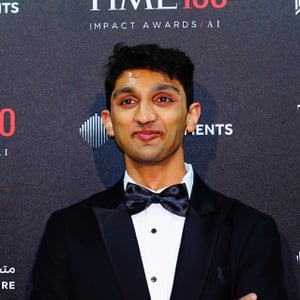
Vice President of Political Affairs, Encode
As Vice President of Political Affairs, Sunny led Encode’s co-sponsorship of California’s SB 1047, a landmark AI safety bill that would have required testing of advanced AI systems and created whistleblower protections. The bill passed both chambers of the state legislature with strong bipartisan margins, drawing support from an unlikely coalition including Nobel Laurate Geoffrey Hinton, Elon Musk, and Mark Ruffalo.
He also spearheaded efforts leading to the first U.S. law establishing guardrails for AI use in nuclear weapons systems, ensuring human control while enabling security benefits. At Encode, he has coordinated campaigns to authorize and fund a U.S. AI Safety Institute and advance legislation targeting AI-generated exploitation.
His technical work includes pioneering a benchmark for testing AI legal reasoning capabilities (presented at NeurIPS) and developing systems for rapid cloud deployment of AI services. He has also published research on cross-platform information analysis at AAAI. Before Encode, he served in technical roles at NASA, Deloitte, and a nuclear energy company.
AI Innovation and Law Fellow, University of Texas School of Law
Kevin Frazier is an AI Innovation and Law Fellow with University of Texas School of Law.
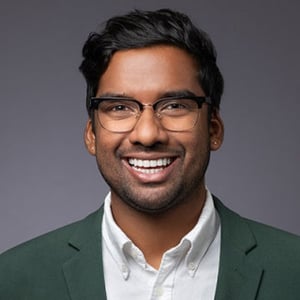
Associate Attorney - Investment Funds, Kirkland & Ellis LLP
Dhruva Krishna is an investment funds associate in the Los Angeles office of Kirkland & Ellis LLP. Dhruva's practice largely focuses on the formation, structuring, marketing, management and regulatory compliance of investment funds, including operational, legal and regulatory issues, with various sponsors ranging up to $15 billion. He also assists with related fund documentation and processes, including transfers, secondaries, co-investments and more. As an avid musician and writer, Dhruva is especially interested in the intersection of technology, regulation and innovation.

Research Fellow and Assistant Director, Stanford Program in Law, Science, and Technology and the Stanford Center for Legal Informatics (CodeX)
Dr. Megan Ma is a Research Fellow and the Associate Director of the Stanford Program in Law, Science, and Technology and the Stanford Center for Legal Informatics (CodeX). Her research focuses on the use and integration of generative AI in legal applications and the translation of legal knowledge to code, considering their implications in contexts of human-machine collaboration. She also teaches courses in computational law and insurance tech at the Law School.
Dr. Ma is also currently an Advisor to the PearX for AI program, Editor-in-Chief for the Cambridge Forum on AI, Law, and Governance, and the Managing Editor of the MIT Computational Law Report and a Research Affiliate at Singapore Management University in their Centre for Computational Law. Megan received her PhD in Law at Sciences Po and was a lecturer there, having taught courses in Artificial Intelligence and Legal Reasoning, Legal Semantics, and Public Health Law and Policy. She has previously been a Visiting PhD at the University of Cambridge and Harvard Law School respectively.

Head of AI Policy, Abundance Institute
Neil Chilson is the Head of AI Policy at the Abundance Institute. Prior to this position, he served as a Senior Research Fellow at the Center for Growth and Opportunity. Chilson is a lawyer, computer scientist, and author of the book “Getting Out of Control: Emergent Leadership in a Complex World.”
Chilson was previously the senior research fellow for Technology and Innovation at Stand Together, where he guided efforts to understand and promote the legal and cultural paradigms that best enable people to discover, innovate, and improve all our lives.
Before Stand Together, Chilson was the Chief Technologist at the Federal Trade Commission, where he focused on the economics of privacy and blockchain-related issues. Previously, he was an attorney advisor to Acting FTC Chairman Maureen K. Ohlhausen. In both roles he advised Chairman Ohlhausen and worked with staff on nearly every major technology-related case, report, workshop, or other FTC proceeding since January 2014. Neil joined the FTC from telecom firm Wilkinson Barker Knauer. Neil is frequently quoted by the press and his work has appeared in numerous news outlets, including The Wall Street Journal, The Washington Post, USAToday, and Newsweek. Neil has a J.D. from The George Washington Law School, a M.S. in computer science from University of Illinois, Urbana-Champaign, and a B.S. in computer science from Harding University.
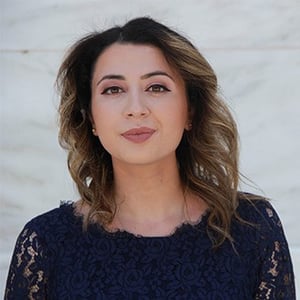
Senior Legal Fellow, The Future of Free Speech, Vanderbilt University
Ashkhen Kazaryan is a renowned expert in First Amendment law and technology policy, specializing in digital free speech, artificial intelligence, and the intersection of constitutional rights with emerging technologies. As a Senior Legal Fellow at the Future of Free Speech at Vanderbilt University, she leads initiatives to protect free expression and shape policies that uphold the First Amendment in the digital age.
Previously, Ashkhen was the lead for North and Latin America on the content regulation team at Meta, where she also served as the company’s policy lead on Section 230. She has also been a Senior Fellow at Stand Together and the Director of Civil Liberties at TechFreedom, where she worked extensively on platform liability, free speech, and internet governance. She is currently Fellow for the First Amendment at the Freedom Forum.
Ashkhen earned her specialist in law degree summa cum laude from Lomonosov Moscow State University in 2012 and later received a master of law degree from Yale Law School in 2016. During her time at Yale, she contributed as an articles editor for the Yale Journal of Law and Feminism, a senior editor for the Yale Law and Policy Review, and an editor for the Yale Journal of Law and Technology, while also serving as co-chair of the Public Interest Fellowship.
Nonresident Senior Fellow, Brookings Institute, Professor of Electrical Engineering and Law, UCLA
John Villasenor is a professor of electrical engineering, law, public policy, and management at UCLA, and is the faculty co-director of the UCLA Institute for Technology, Law, and Policy. He is also a nonresident senior fellow at the Brookings Institution and a member of the Council on Foreign Relations.
Professor Villasenor’s work addresses the intersection of technology, law, and policy, with a focus on topics including digital communications, artificial intelligence, cybersecurity, and privacy. He has published in many academic journals as well as in the Atlantic, Billboard, the Chronicle of Higher Education, Fast Company, Forbes, the Los Angeles Times, the New York Times, Scientific American, Slate, the Washington Post.
He has also provided congressional testimony on multiple occasions. Prior to joining the faculty at UCLA, Professor Villasenor was with the NASA Jet Propulsion Laboratory, where he developed methods of imaging the earth from space. He holds a B.S. degree from the University of Virginia, and an M.S. and Ph.D. from Stanford University.
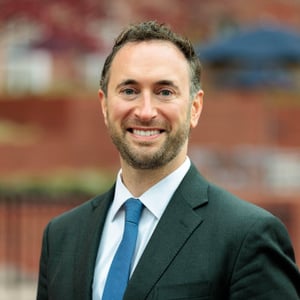
Associate Dean for Academic Affairs, The George Washington University Law School
Aram A. Gavoor is the Associate Dean for Academic Affairs and an internationally recognized scholar in American administrative law, national security, and federal courts. His co-authored work was cited by the U.S. Supreme Court in Department of Commerce v. New York (2019). His scholarship has earned placement in the Florida Law Review, Indiana Law Journal, Ohio State Law Journal, and other law journals. He has briefed and argued over a dozen high-profile public law cases before a majority of the U.S. Courts of Appeals and numerous cases before almost a third of the 94 U.S. District Courts. Associate Dean Gavoor frequently shares his national security, artificial intelligence policy, and federal courts expertise with international news media, including CNN, BBC World News, Wall Street Journal, NBC News, and ABC (Australia) World News. In 2021, the National Law Journal named Associate Dean Gavoor a Rising Star (top 40 under 40) honoree.
Earlier in his career, Associate Dean Gavoor served as Senior Counsel for National Security in the Civil Division of the U.S. Department of Justice, as third-in-rank Counselor to the Administrator of the Office of Information and Regulatory Affairs in the White House Office of Management and Budget, and in private practice. He received the Attorney General's Award for Distinguished Service in 2019, the Civil Division Special Commendation Award in 2020, 2019, and 2018, and a Commendation from the Human Rights and Special Prosecutions Section of the Criminal Division in 2018.
Associate Dean Gavoor previously served on the law school’s part-time faculty from 2008-2017 before accepting a term-limited position as Visiting Associate Professor from 2017-2019. He received GW Law’s Distinguished Adjunct Faculty Teaching Award from the 2020 and 2017 graduating classes. He currently teaches Constitutional Law II, Administrative Law, National Security Law, and Federal Courts.

Associate, Covington & Burling LLP
Eli Nachmany is an associate at Covington & Burling LLP in the Washington, DC, office. He clerked for Judge Steven J. Menashi of the U.S. Court of Appeals for the Second Circuit. Eli graduated magna cum laude from Harvard Law School, where he was Editor-in-Chief of the Harvard Journal of Law & Public Policy. Prior to law school, Eli served as the speechwriter to the U.S. Secretary of the Interior and as a domestic policy aide in the White House Office of American Innovation. He graduated summa cum laude from New York University with a B.S. in Sports Management. Eli’s scholarship on administrative law and executive power has appeared in the BYU Law Review, George Mason Law Review, Wake Forest Law Review, and Yale Law Journal Forum.

Associate Attorney, Gibson, Dunn & Crutcher LLP
Laura Stanley is an associate in the Washington, D.C. office of Gibson, Dunn & Crutcher. She practices in the firm’s Litigation Department and is a member of the Environmental Litigation and Mass Tort Practice Group. Laura previously served as an economist at the U.S. Environmental Protection Agency where she developed regulations under the Resource Conservation and Recovery Act and the Comprehensive Environmental Response, Compensation, and Liability Act.
Laura graduated with high honors from The George Washington University Law School and was awarded Order of the Coif. Laura served as an Articles Editor of the George Washington Law Review, and she was awarded the ABA Gellhorn-Sargentich Award for the best student essay in administrative law. Laura received a Master of Arts degree in Economics from George Mason University and a Bachelor of Arts degree in Economics from James Madison University.
She previously served as a law clerk to the Honorable Ryan D. Nelson of the United States Court of Appeals for the Ninth Circuit and the Honorable Stephen S. Schwartz of the United States Court of Federal Claims.
She is admitted to practice law in the District of Columbia and before the United States Court of Appeals for the Ninth Circuit.
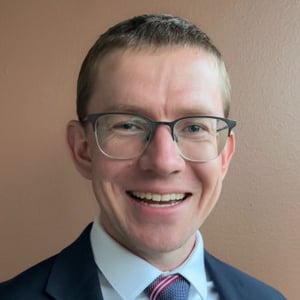
Law Clerk to Hon. Gregory Katsas, U.S. D.C. Circuit Court of Appeals
After growing up in Bozeman, Montana, Seanhenry attended Oklahoma Christian University and graduated with a B.S. in Computer Engineering in 2018. He earned a J.D. from Harvard Law School in 2021. During law school, he served as supervising editor for the Harvard Law Review and senior articles editor for the Harvard Journal of Law & Public Policy. He also served on the board of the Harvard Federalist Society and worked as a summer associate for Cooper & Kirk and Latham & Watkins.
Seanhenry clerked for Judge Andy Oldham of the U.S. Fifth Circuit Court of Appeals in the 2021 – 2022 Term. He is currently clerking for Judge Greg Katsas of the D.C. Circuit Court of Appeals.

Panel 4: Going Nuclear: European Decline and American Revival?
CLE credit for this event is available at On-Demand CLE. The contrast between American and European...
Pennsylvania's Constitution on its 250th Birthday: Assessing the Importance of our Commonwealth's Foundational Charter
Pittsburgh Lawyer Chapter
Pittsburgh, PALaw for Little Tech: Part 5 - The Influence of Sand Hill Road on the Little Tech Agenda
Kevin Frazier, Dave Karpf
Over the past 30 years, the United States has experienced rapid technological change. Yet in...
Law for Little Tech: Part 4 - What are the Gaps in the Little Tech Agenda?
Kevin Frazier, Sam Hammond
“Starting small, but aspiring to grow” defines the little tech agenda. Big Tech companies often...
Tech Roundup Episode 25 - How are the States Approaching AI?
Kevin Frazier, Dean W. Ball, Sunny Gandhi
As the second Trump administration kicks off an ambitious AI agenda, individual states have been...
Tech Roundup Episode 24 - DOGEing Barriers? Legal Challenges to AI in Government
Kevin Frazier, Dhruva Krishna, Megan Ma
Artificial Intelligence has been rapidly brought to the forefront of the public conversation in recent...
Stargate and DeepSeek: The International and Technological Implications of the AI “Arms Race”
Neil Chilson, Ashkhen Kazaryan, John Villasenor
On January 22, 2025, newly-elected President Trump announced a widespread project to invest $500 billion...
Topics
Biden's EO on AI Regulation Could Birth Monopolists
In the wake of President Biden’s October 30, 2023, Executive Order on “Safe, Secure, and...
New Voices in Administrative Law: The Emerging Debates on AI Regulation
Aram A. Gavoor, Eli Nachmany, Laura Stanley, Seanhenry VanDyke
Artificial intelligence is a remarkable, disruptive force. AI services like ChatGPT already perform tasks once...
Topics
The Problem with AI Licensing & an “FDA for Algorithms”
Last year, we released a study for the Federalist Society predicting “The Coming Onslaught of...