
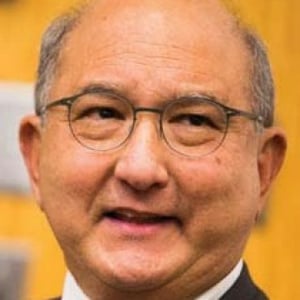
Beton Michael Kaneb Professor of National Security and Military Affairs, Harvard University
In addition to his roles at Harvard, where he has also served as Harvard College Professor, head of Winthrop House, and Director of the John M. Olin Institute for Strategic Studies, Professor Rosen has also served as the civilian assistant to the director, Net Assessment in the Office of the Secretary of Defense, the Director of Political-Military Affairs on the staff of the National Security Council, and a professor in the Strategic Department at the Naval War College. He participated in the President's Commission on Integrated Long Term Strategy, and in the Gulf War Air Power Survey sponsored by the Secretary of the Air Force. He currently serves as Senior Counsellor at the Long Term Strategy Group. He has published articles on ballistic missile defense, the American theory of limited war, and the strategic implications of the AIDS epidemic. His books include Winning the Next War: Innovation and the Modern Military, Societies and Military Power: India and its Armies, and War and Human Nature.

Managing Director, SCF Partners
Daniel G. West invests in energy services, equipment, and technology companies at SCF Partners in Houston, Texas. He provides equity capital and strategic growth assistance to entrepreneurs and leaders of both start-up ventures and established, growing businesses.
Prior to joining the private sector, Mr. West served as an infantry officer in the United States Marine Corps. As a platoon commander with the 22nd Marine Expeditionary Unit aboard the USS Mesa Verde, he led the Tactical Recovery of Aircraft and Personnel force in support of the NATO aerial campaign over Libya. He then served as executive officer of India Company, 3rd Battalion, 9th Marines as it mentored Afghan forces to assume lead security responsibility and executed counter-narcotics missions in Marjah, Helmand Province, Afghanistan. He also served as a clerk for Judge Laurence H. Silberman on the U.S. Court of Appeals for the D.C. Circuit.
Mr. West holds degrees in law, business administration, and economics from Harvard University, where he served as an editor of the Harvard Law Review and taught undergraduate courses in economics and government. He is a member of the Executive Committee of the International & National Security Law Practice Group of the Federalist Society and a term member of the Council on Foreign Relations.

Founder and Executive Director, National Security Institute; Assistant Professor of Law, Antonin Scalia Law School, George Mason University
Jamil N. Jaffer is the Founder and Executive Director of the National Security Institute at the Antonin Scalia Law School at George Mason University where he also serves as an Assistant Professor of Law, Director of the National Security Law and Policy Program, and Director of the Cyber, Intelligence, and National Security LLM Program. Jamil also teaches classes on counterterrorism, intelligence, surveillance, cybersecurity, and other national security matters, as well as a summer course held abroad with U.S. Supreme Court Justice Neil M. Gorsuch. Jamil is also affiliated with Stanford University’s Center for International Security and Cooperation and previously served as a Visiting Fellow at the Hoover Institution from 2016 to 2019.
Jamil is also a Venture Partner with Paladin Capital Group, where he assists the firm with investments across the full range of its themes and theses, including a focus on dual-use national security technologies. Jamil also serves on the board of directors of RangeForce, a cybersecurity training and readiness platform startup and Tozny, a digital identity startup, and on the advisory boards of U.S. Strategic Metals, North America’s largest primary producer of cobalt, a critical mineral used in EV batteries, aerospace, and other national security applications; and Constella Intelligence, a deep and dark web intelligence startup. Jamil also serves as an advisor to Beacon Global Strategies, a strategic advisory firm and Duco, a technology platform startup that connects corporations with geopolitical and international business experts. Jamil is also the managing director of Trigraph Caveat Capital, a private investment vehicle.
Among other things, Jamil currently serves on the Board of Directors for the Greater Washington Board of Trade, the Board of Advisors for the Global Cyber Alliance, and the Advisory Board of the Foundation for the Defense of Democracies’ Center on Cyber and Tech Innovation, the Executive Committee of the Reagan Institute Strategy Group. Jamil is also a Fellow at the Academy for Judaic, Christian, and Islamic Studies, an advisor to the Concordia Summit, and is a member of the Board of Directors for the Center for Intelligence Policy, the Board of Directors of Speech First, and the Executive Committee of the International Law and National Security Practice Group of the Federalist Society.
Immediately prior to his current positions, from 2015-2021, Jamil served as a senior business leader at IronNet Cybersecurity, helping take the company from a bootstrapped first-year technology products startup through two rounds of venture capital fundraising, growing from 40 employees to over 300, and through its listing on New York Stock Exchange. In his role as IronNet's Senior Vice President for Strategy, Partnerships & Corporate Development, Jamil worked directly for the co-CEOs of the company, Gen (ret.) Keith B. Alexander, the former Director of the National Security Agency and Founding Commander of U.S. Cyber Command, and Bill Welch, the former COO of Zscaler and Duo; in that role, Jamil led all of the company’s strategic and technology partnership efforts, including developing go-to-market and technology integration plans with some of the largest cloud platforms and cybersecurity companies in the market, evaluating potential acquisition targets, and developing overall corporate strategy and thought leadership around collective security and collaborative defense in the cyber arena.
Prior to his time at IronNet, Jamil served on the leadership team of the Senate Foreign Relations Committee as Chief Counsel and Senior Advisor under Chairman Bob Corker (R-TN), where he worked on key national security and foreign policy issues, including leading the drafting of the proposed Authorization for the Use of Military Force against ISIS in 2014 and 2015, the AUMF against Syria in 2013, and revisions to the 9/11 AUMF against al Qaeda. Jamil was also the lead architect of the Iran Nuclear Agreement Review Act and two sanctions laws against Russia for its first intervention in Ukraine.
Prior to joining SFRC, Jamil served as Senior Counsel to the House Permanent Select Committee on Intelligence under Chairman Mike Rogers (R-MI) where he led the committee’s oversight of NSA surveillance, NRO intelligence issues, and NGA analytic and collection matters, as well as intelligence community-wide counterterrorism issues. Jamil was also the lead architect of the Cyber Intelligence Sharing and Protection Act, the nation’s first cyber threat intelligence sharing legislation that was signed into law in 2015.
In the Bush Administration, Jamil served in the White House as an Associate Counsel to the President, handling Defense Department, State Department, and intelligence community matters, and serving as one of the White House Counsel’s primary representatives to the National Security Council Deputies Committee.
Prior to the White House, Jamil served on the leadership team of the Justice Department’s National Security Division as Counsel to the Assistant Attorney General for National Security, where he focused on counterterrorism and intelligence matters. At NSD, Jamil helped lead the division’s work on In re: Directives, the first ever two-party litigated matter in the FISA Court and the second case before the FISA Court of Review in its 30-year history. Jamil also led NSD’s efforts on the President’s Comprehensive National Cybersecurity Initiative (CNCI), including the drafting of NSPD-54/HSPD-23, and related classified matters, and advised the National Security Agency (NSA) and U.S. Cyber Command’s predecessor organization, the Joint Function Component Command for Network Warfare (JFCC-NW), on matters related to cyber intelligence collection and offensive cyber activities. For his work on these matters, Jamil was awarded the Assistant Attorney General’s Award for Special Initiative and was among the group of lawyers awarded the Director of National Intelligence’s 2008 Legal Award (Team of the Year – Cyber Legal).
Jamil also served in other positions in the Justice Department, including in the Office of Legal Policy, where he worked on the confirmations of Chief Justice John G. Roberts, Jr. and Justice Samuel A. Alito, Jr. to the United States Supreme Court.
Jamil also served as a lawyer in private practice at Kellogg Huber, a Washington, DC-based litigation boutique, as a policy advisor to Congressman Bob Goodlatte (R-VA), and as a staff member or senior advisor on a number of political campaigns, including two presidential campaigns and a presidential transition team. While in law school, Jamil was a member of the University of Chicago Law Review, managing editor of the Chicago Journal of International Law, and National Symposium Editor of the Harvard Journal of Law & Public Policy. Following law school, Jamil served as a law clerk to Judge Edith H. Jones of the United States Court of Appeals for the Fifth Circuit and, later in his career, as a law clerk to then-Judge Neil M. Gorsuch when he first joined the United States Court of Appeals for the Tenth Circuit as well as a law clerk to Justice Neil Gorsuch when he joined the U.S. Supreme Court.
Jamil has published multiple op-eds and academic articles on national security, foreign policy, cybersecurity, counterterrorism, encryption, and intelligence matters, and is the co-author of a book chapter with former NSA Director Gen. (Ret.) Keith B. Alexander on national security and the press in National Security, Leaks, and the Freedom of the Press: The Pentagon Papers Fifty Years On (2021) and a book chapter with former CIA Director Gen. (ret.) Mike Hayden on ISIS, al Qaeda, and other international terrorist groups in Choosing to Lead: American Foreign Policy for a Disordered World (2015). Jamil has also written book chapters on cybersecurity and surveillance, as well as op-eds and policy papers with former Attorney General Michael B. Mukasey, former National Counterterrorism Center Director Matt Olsen, and Congressman Mike Waltz (R-FL), among others.
Jamil has previously taught graduate-level courses in intelligence law and policy at George Washington University’s Elliott School of International Affairs and the National Intelligence University, served an outside advisor to the Cyberspace Solarium Commission, and has recently testified before committees of the U.S. Senate and House of Representatives on China, cybersecurity, counterterrorism, and other national security matters. Jamil has also recently appeared on a range of national television and radio outlets including CNN, Fox News, Fox Business, MSNBC, Bloomberg, PBS, Voice of America, and National Public Radio, and in various print and online publications, including the Wall Street Journal, New York Times, and the Washington Post on a range of national security matters including cybersecurity, counterterrorism, surveillance, encryption, privacy, and foreign policy issues.
Jamil holds degrees from UCLA (BA, cum laude), the University of Chicago Law School (JD, with honors), and the United States Naval War College (MA, with distinction).
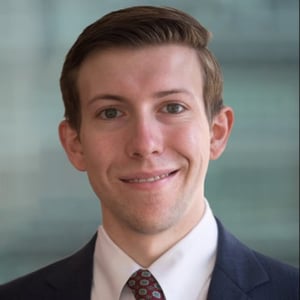
Policy Analyst, Cato Institute
Will Duffield is a policy analyst in the Cato Institute’s Center for Representative Government, where he studies speech and internet governance. His research focuses on the web of government regulation and private rules that govern Americans’ speech online.
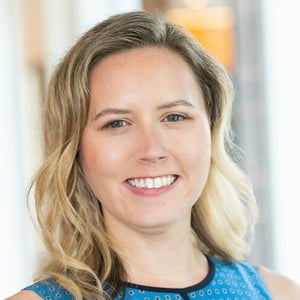
Senior Fellow, Technology Policy, Cato Institute
Jennifer’s research focuses on the intersection of emerging technology and law with a particular interest in the interactions between technology and the administrative state. Her work covers topics including judicial deference, liability protection for Internet platforms, autonomous vehicles and other disruptive transportation technologies, the regulation of data privacy, and the benefits of technology and innovation. Her work has appeared in USA Today, the Chicago Tribune, the New York Daily News, the Sacramento Bee, the Washington Times, Real Clear Policy, and U.S. News and World Report. Jennifer has a JD from the University of Alabama School of Law and a BA in political science at Wellesley College.
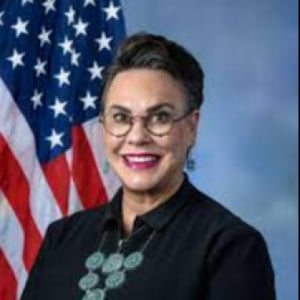
U.S. Representative, Wyoming
Congresswoman Harriet Hageman represents the state of Wyoming in the U.S. House of Representatives. She grew up on a ranch, attended Casper College on a livestock judging scholarship and earned both her bachelor's degree and law degree from the University of Wyoming. A litigator for 34 years, Harriet is nationally known for challenging federal overreach, for protecting water and property rights, for exposing federal land and wildlife mismanagement, and for fighting back against the unconstitutional and unlawful acts of unelected bureaucrats. Harriet has extensive experience engaging in complex trials against federal agencies and has been admitted to practice in several states as well as the United States Supreme Court.
In her freshman term in the 118th Congress, Harriet has been selected to serve on the House Natural Resources committee where she is Chair of the Subcommittee on Indian and Insular Affairs, and also serves on the Subcommittee on Water, Wildlife, and Fisheries. Representative Hageman also serves on the Judiciary Committee and Subcommittees on the Constitution and Limited Government; the Subcommittee on the Administrative State, Regulatory Reform, and Antitrust; and the Select Committee on the Weaponization of the Federal Government. She has shown her support for American energy independence by serving as Co-Chair of the Congressional Coal Caucus.
Legislation sponsored by Representative Hageman has been focused on reining in the regulatory state, ending the weaponization of our federal government and its proxies against American citizens, and ending the de facto moratorium on American energy production.
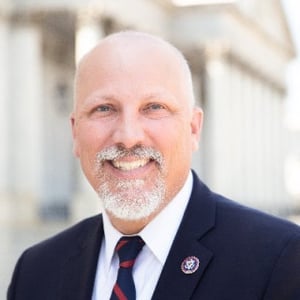
U.S. Representative, 21st District of Texas
Rep. Chip Roy is a devoted husband and father of two currently serving his third term in Congress representing Texas's 21st Congressional District—which includes South Austin, North San Antonio, and the Texas Hill Country.
Previously, Rep. Roy served as First Assistant Attorney General of Texas under Ken Paxton, Chief of Staff to Sen. Ted Cruz, senior advisor to Texas Governor Rick Perry, Senate Judiciary Committee staff director under Sen. John Cornyn, and as a federal prosecutor. Prior to the public sector, he worked for nearly three years as an investment banking analyst.
Rep. Roy holds a B.A. and M.A from the University of Virginia and a J.D. from the University of Texas. He serves on the House Judiciary, Rules, and Budget Committees and is the Policy Chair of the House Freedom Caucus.
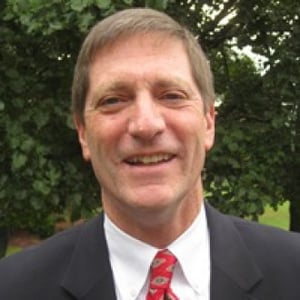
President, Hoppe Strategies
After serving 29 years on Capitol Hill, Dave Hoppe returned to the private sector as president of Hoppe Strategies, a strategic planning, lobbying and political consulting firm.
Hoppe brings a wealth of experience to this job, having dealt with legislative development and strategy at the highest levels on Capitol Hill. He directed Whip offices in both the House and Senate, and led the Senate Majority Leader’s office during the Clinton and Bush 43 administrations. Both positions oversaw and coordinated the flow of legislation through Congress, and both required working with political personalities on both sides of the aisle as well as the White House, to achieve passage for each bill. Hoppe recently reprised this role for Sen. Jon Kyl in the Senate Whip Office.
Additionally, Hoppe was the lead staff member on such historic Constitutional and structural events as the power shift in the Senate (when one Senator changed his party affiliation, throwing into chaos the entire Senate committee structure and requiring extensive negotiations between both parties), and the Senate impeachment trial of President Clinton. These events give him a unique perspective on the interaction of political agendas with legislative outcomes.
Other Hill positions held by Hoppe include Chief of Staff to Rep. Jack Kemp during his presidential bid, and Chief of Staff to Sen. Dan Coats who was appointed to replace former Senator Dan Quayle. Sen. Coats was required to conduct two statewide campaigns in a 4-year period in order to confirm his Senate appointment and then to retain the seat, unusual demands which impacted the work of his Senate office. Early in his Hill career, Hoppe served as energy and environmental policy analyst for the Republican Study Committee.
Among the highlights of Hoppe’s years on House leadership staff were the passage of the Economic Recovery Tax Act of 1981 and the Omnibus Budget Reconciliation Act of 1981, both key elements of the first Reagan administration. During his tenure with Rep. Jack Kemp, the Tax Reform Act of 1986 was passed and signed into law. He was also involved with the Balanced Budget Act of 1997, the Economic Growth and Tax Relief Reconciliation Act of 2001, the Individuals with Disabilities Education Act of 1997, and numerous other issues including welfare reform, tax policies and education reform.
In 2003, Hoppe left the Hill to work for the public affairs firm Quinn Gillespie & Associates, serving as President of QGA 2007-2011, when he returned briefly to the Senate to direct the Whip office for Sen. Kyl. Currently Hoppe is a Senior Policy Advisor at Squire Patton Boggs, he also serves as a Senior Advisor to the Bipartisan Policy Center, and is an advisor to the Jack Kemp Foundation. He is an emeritus member of the Board for Easter Seals of DC, Maryland and Northern Virginia, was Chairman of the Government Affairs Committee for the National Down Syndrome Society, and serves on the national board of SourceAmerica and of the Coalition to Promote Self Determination, a group of organizations working to empower disabled individuals to achieve greater independence.
He holds a B.A. in Government from the University of Notre Dame, and an M.A. in International Relations from Johns Hopkins School of Advanced International Studies. He is married and has three children.
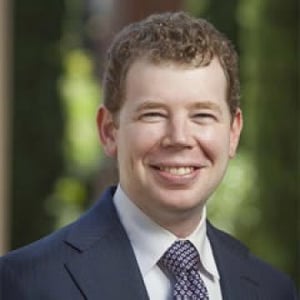
Assistant Professor of Law, Willamette University College of Law
Professor Simowitz teaches international business transactions, debtor and creditor law, negotiation, and a seminar on resolving business disputes. His research focuses on cross-border business transactions, litigation, and arbitration.
Before joining Willamette University College of Law, Simowitz was a research fellow at New York University’s (NYU) Center for Transnational Litigation, Arbitration, and Commercial Law and a fellow at the Classical Liberal Institute at NYU. He taught International Litigation & Arbitration with Professor Linda Silberman and before that was an acting assistant professor in the Lawyering Program at NYU. He also taught International Business Transactions at Columbia Law School.
Simowitz received the 2014 Young Scholar’s Award from the American Society of International Law’s Private International Law Interest Group for his work on judgment and award enforcement against intangible assets. He practiced at the New York office of Gibson, Dunn & Crutcher, and clerked for Judge D. Brooks Smith of the U.S. Court of Appeals for the Third Circuit.

Head of AI Policy, Abundance Institute
Neil Chilson is the Head of AI Policy at the Abundance Institute. Prior to this position, he served as a Senior Research Fellow at the Center for Growth and Opportunity. Chilson is a lawyer, computer scientist, and author of the book “Getting Out of Control: Emergent Leadership in a Complex World.”
Chilson was previously the senior research fellow for Technology and Innovation at Stand Together, where he guided efforts to understand and promote the legal and cultural paradigms that best enable people to discover, innovate, and improve all our lives.
Before Stand Together, Chilson was the Chief Technologist at the Federal Trade Commission, where he focused on the economics of privacy and blockchain-related issues. Previously, he was an attorney advisor to Acting FTC Chairman Maureen K. Ohlhausen. In both roles he advised Chairman Ohlhausen and worked with staff on nearly every major technology-related case, report, workshop, or other FTC proceeding since January 2014. Neil joined the FTC from telecom firm Wilkinson Barker Knauer. Neil is frequently quoted by the press and his work has appeared in numerous news outlets, including The Wall Street Journal, The Washington Post, USAToday, and Newsweek. Neil has a J.D. from The George Washington Law School, a M.S. in computer science from University of Illinois, Urbana-Champaign, and a B.S. in computer science from Harding University.

Senior Fellow, R Street Institute
Prior to R Street, Adam spent 12 years as a senior fellow at the Mercatus Center at George Mason University. Before the Mercatus Center, he served as the president of the Progress and Freedom Foundation. Adam has also worked for the Adam Smith Institute, the Heritage Foundation and the Cato Institute.
Adam has published 10 books on a wide range of topics, including online child safety, internet governance, intellectual property, telecommunications policy, media regulation and federalism.
In 2008, Adam received the Family Online Safety Institute’s “Award for Outstanding Achievement.”
Policy Analyst, Cato Institute
Will Duffield is a policy analyst in the Cato Institute’s Center for Representative Government, where he studies speech and internet governance. His research focuses on the web of government regulation and private rules that govern Americans’ speech online.

Partner, BakerHostetler, Adjunct Fellow, The Manhattan Institute
Andrew Grossman leads BakerHostetler’s Appellate and Major Motion team. He has appeared before the U.S. Supreme Court, nearly all the federal courts of appeals, as well as some state appellate courts, litigating high-profile and complex commercial, administrative and constitutional issues.
Andrew works with practice groups across BakerHostetler to identify and tackle complex issues, advise on administrative law and strategy, tee up issues for appeal and tackle appeals. He has developed and implemented litigation and administrative strategies for clients in several fields and industries.
In addition to his practice, Andrew advises members of Congress on matters of constitutional and administrative law, having testified more than a dozen times before the House and Senate Judiciary Committees. He has been a frequent legal commentator on radio and television, having appeared on Fox News, CNN, MSNBC, CNBC, NPR and its affiliates, CBN and elsewhere. His legal commentary has also appeared in dozens of magazines and newspapers, including The Wall Street Journal, USA Today, The Washington Post, The Washington Times and many others.
Andrew is a Senior Legal Fellow at the Buckeye Institute, an Adjunct Fellow the Manhattan Institute and a member of the leadership of the Federalist Society. He previously served as an adjunct scholar at the Cato Institute’s Robert A. Levy Center for Constitutional Studies and a legal fellow at the Heritage Foundation’s Meese Center for Legal and Judicial Studies. He clerked for Judge Edith H. Jones on the U.S. Court of Appeals for the Fifth Circuit.
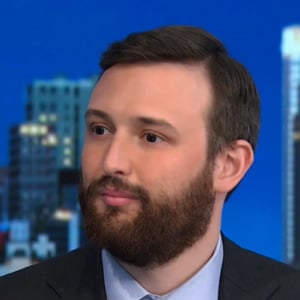
Senior Staff Attorney, Speech, Privacy & Technology Project, ACLU
Brian Hauss is a senior staff attorney with the ACLU’s Speech, Privacy & Technology Project, where he focuses on free expression issues. Since joining the ACLU in 2012, he has litigated cases defending the First Amendment rights of writers, journalists, media organizations, activists, advocacy groups, labor unions and private citizens. He has authored or co-authored numerous Supreme Court amicus curiae briefs on behalf of the ACLU and other groups. He also regularly discusses First Amendment issues in the media and at law schools throughout the country. Brian was a 2021-22 Wasserstein Public Interest Fellow at Harvard Law School. He is a graduate of Yale University and Harvard Law School and served as a law clerk to the Hon. Marsha S. Berzon of the U.S. Court of Appeals for the Ninth Circuit.
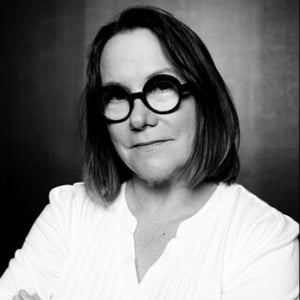
Independent Analyst, None
Allison Hayward most recently served as the Head of Case Selection at the Oversight Board. Previously, she was a Commissioner at the California Fair Political Practices Commission, a Board Member at the Office of Congressional Ethics, and an Assistant Professor of Law at George Mason University School of Law. She also previously worked as Chief of Staff and Counsel in the office of Federal Election Commission Commissioner Bradley A. Smith and practiced election law in California and in Washington DC.
In 1994-1995, Professor Hayward was a judicial clerk for the Honorable Danny J. Boggs, United States Court of Appeal for the Sixth Circuit.
She is a member of the State Bar of California and the District of Columbia Bar.

Partner, Schaerr | Jaffe LLP
Erik Jaffe has been involved in appeals on a broad range of legal issues, including First Amendment challenges to campaign finance reform, Commerce Clause challenges to Health Care Reform and other federal legislation, Equal Protection Clause challenges to affirmative action in education, First Amendment challenges to school vouchers, Fifth Amendment challenges to takings of property, Second Amendment challenges to restrictions on gun ownership, and a wide variety of cases involving patents, copyrights, ERISA, securities fraud, federal preemption, environmental regulation, and other state and federal constitutional and statutory matters. He has represented businesses and non-profit groups, Judges, Senators, former government officials, Nobel Prize winners, and a broad cross-section of private individuals. Mr. Jaffe has been involved in over 120 Supreme Court matters, including filing over 30 cert. petitions, representing half-a-dozen parties on the merits, and filing over 70 amicus briefs at both the cert. and merits stages.
A 1990 graduate of the Columbia University School of Law, Mr. Jaffe was a law clerk to Judge Douglas H. Ginsburg of the United States Court of Appeals for the District of Columbia Circuit from 1990 to 1991. Following that clerkship he spent five years in litigation practice with the Washington, D.C. law firm of Williams & Connolly. In the summer of 1996 he left Williams & Connolly to clerk for Supreme Court Justice Clarence Thomas. At the end of that clerkship he started his own practice, and he was a sole practitioner from 1997 to 2018. He joined the firm of Schaerr | Jaffe LLP in 2018.

Judge, United States Court of Appeals, District of Columbia Circuit
Judge Katsas was appointed to the D.C. Circuit in December 2017. He graduated from Princeton University and Harvard Law School, where he was an executive editor on the Harvard Law Review. Between 1989 and 1992, he served as a law clerk to Judge Edward Becker on the Third Circuit, to then-Judge Clarence Thomas on the D.C. Circuit, and to Justice Thomas on the Supreme Court. Between 1992 and 2001, he was an associate and then partner in the Washington office of Jones Day, where he specialized in appellate and complex civil litigation. Between 2001 and 2009, he served in many senior positions in the Department of Justice, including as Assistant Attorney General for the Civil Division and as Acting Associate Attorney General. In 2009, he returned to Jones Day. From January to December 2017, he served as Deputy Assistant to the President and Deputy Counsel to the President.
Before joining the bench, Judge Katsas argued more than 75 appeals, including three cases in the Supreme Court, 13 cases in the D.C. Circuit, and cases in every other federal court of appeals. By appointment of the Chief Justice, he served on the Advisory Committee on Appellate Rules from 2013 to 2017. In 2016, he was elected to membership in the American Academy of Appellate Lawyers.
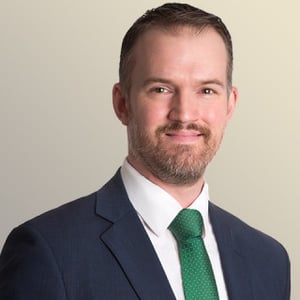
Partner, King & Spalding
Jamieson Greer is a partner in King & Spalding's International Trade practice group where he specializes in trade remedy litigation, export / import compliance, and international trade policy and negotiations. Prior to joining King & Spalding, he served as the Chief of Staff to the U.S. Trade Representative, Ambassador Robert Lighthizer. At USTR, he oversaw the development and implementation of U.S. trade policy for the executive branch. He also was deeply involved in the negotiations of the Phase One trade deal with China and the United-States-Mexico-Canada Agreement. Before working at USTR, Jamieson spent several years in private practice working on trade-related matters and served in the U.S. Air Force Judge Advocate General's Corps.
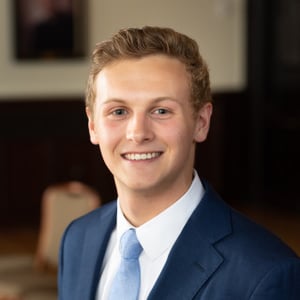
JD Candidate, Harvard Law School
Trevor is a second-year law student at Harvard Law School. Prior to starting law school, he lived in Taiwan as a Fulbright Scholar studying Taiwanese industrial policy, and he worked as a research assistant at a Washington think tank focused on strategic trade controls where he investigated companies involved in the Chinese defense industry.
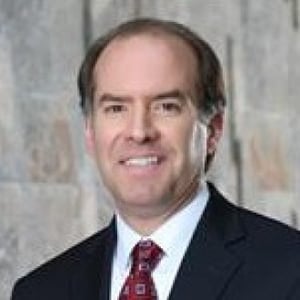
Founder & CEO, Strategic Policy Counsel, PLLC
Alex Dahl has nearly three decades of experience in law and advocacy, having served in all three branches of the federal government as counsel to the Senate Judiciary Committee, a federal prosecutor, and a law clerk to a federal district court judge, as well as working in private practice as a lobbyist and civil litigator.
Alex serves as outside General Counsel to Lawyers for Civil Justice, a national coalition of corporations, law firms and defense lawyer organizations, promoting excellence and fairness in the civil justice system. LCJ is the corporate and defense bar voice for reforms aimed at securing the just, speedy and inexpensive determination of civil cases, notably including the 2015 Amendments to the Federal Rules of Civil Procedure which established “proportionality” in the scope of discovery and created a uniform standard for judicial handling of the loss of electronically stored information (ESI). Alex works with LCJ’s member experts to: (1) promote balance and fairness in the civil justice system; (2) reduce costs and burdens associated with litigation; and (3) promote more predictability and efficiency in litigation.
Prior to founding the firm, Alex was a shareholder at Brownstein Hyatt Farber Schreck, the second largest lobbying firm in Washington, D.C., for over 11 years. Alex represented companies and associations before Congress and the Executive Branch on a variety of policy issues.
Alex served as the Deputy Staff Director and Senior Counsel to the Senate Judiciary Committee, where he spent five years working for then-Chairman Orrin G. Hatch (R-UT) on legislative strategy concerning a wide variety of bills and constitutional amendments within the Committee's jurisdiction, which includes legal reform, antitrust, intellectual property, immigration policy and criminal law.
Alex also worked as an Assistant U.S. Attorney in the District of Columbia, where he prosecuted felony drug distribution and firearms cases in DC Superior Court. He was specially assigned to handle criminal intellectual property cases involving illegal sales of pirated DVD movies and music CDs.
Prior to his government service, Alex was a commercial litigator at Parsons Behle & Latimer in Salt Lake City, Utah, where he handled a variety of civil matters relating to electric utilities, securities and contract disputes.
Alex began his legal career as a law clerk for the Honorable Dee V. Benson, U.S. District Court Judge for the District of Utah.
Alex currently serves on the Board of Trustees of the University of Utah’s S.J. Quinney College of Law.

Director of Litigation and Senior Attorney, Hamilton Lincoln Law Institute
Theodore H. Frank is director at the Hamilton Lincoln Law Institute and the Center for Class Action Fairness. Frank founded and ran CCAF as a non-profit, public interest law firm in 2009.
Frank has won several landmark appeals and tens of millions of dollars for consumers and other plaintiffs through his class action work. Adam Liptak of The New York Times calls Frank “the leading critic of abusive class action settlements” and the American Lawyer Litigation Daily referred to him as “the indefatigable scourge of underwhelming class action settlements.”
Previously, Frank clerked for the Honorable Frank H. Easterbrook on the Seventh Circuit Court of Appeals, and was a litigator at firms in Washington and Los Angeles and a resident fellow at the American Enterprise Institute. Frank is a frequent public speaker and has testified before Congress multiple times on legal issues. He has been profiled by The Wall Street Journal, Forbes, GQ, and the ABA Journal, among other publications.
In 2008, Frank was elected to membership in the American Law Institute. He also serves on the Executive Committee of the Federalist Society Litigation Practice Group. Frank graduated from The University of Chicago Law School in 1994 with high honors and as a member of the Order of the Coif and the Law Review. He is a member of the District of Columbia Bar and the state bars of California and Illinois.
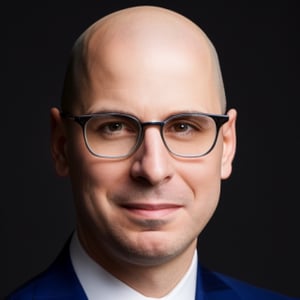
Partner and Lecturer
Adam Mortara graduated from the University of Chicago in 1996 with a B.Sc. in chemistry. He then attended Magdalene College, Cambridge, where he received a masters degree in astrophysics on a British Marshall Scholarship.
Mr. Mortara graduated from the University of Chicago Law School with highest honors in 2001. Following graduation, he clerked for Judge Patrick Higginbotham of the U.S. Court of Appeals for the Fifth Circuit and then for Justice Clarence Thomas of the Supreme Court of the United States. After his clerkships, he was a Temple Bar Scholar of the American Inns of Court.
From 2003 to 2020, Mr. Mortara was with Bartlit Beck LLP where he tried high stakes intellectual property cases and, more notably, Students For Fair Admissions v. Harvard. He retired from Bartlit Beck and founded Lawfair LLC, a civil and voting rights firm. He has been a Lecturer in Law at the University of Chicago Law School since 2007, where he teaches Federal Habeas Corpus, Federal Jurisdiction, Criminal Procedure, and Writing for the Judiciary.
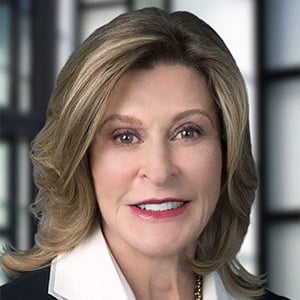
Managing Partner - Washington, D.C., Lewis Brisbois Bisgaard & Smith LLP
Jane Luxton is the Managing Partner of Lewis Brisbois’ Washington, D.C. office, co-chair of the Government Investigations & White Collar Defense Practice, co-chair of the Government Relations Group Leadership, co-chair of the Environmental and Administrative Law Practice, and vice-chair of the Consumer Financial Services Practice. Jane has extensive experience in environmental as well as other federal regulatory, policy, and litigation matters. She advises businesses, associations, and coalitions in navigating all levels of the federal regulatory process, including appellate advocacy.
Recent matters include:
Jane’s knowledge of environmental and administrative law gained key insights from her experience serving in several prominent positions in the U.S. government. From 2007-2009, she served as general counsel of the National Oceanic and Atmospheric Administration, advising the Undersecretary of Commerce for Oceans and Atmosphere on legal and policy issues related to natural resource damages, coastal zone and fisheries management, endangered species and marine mammal protection, and weather and climate change science. In this role, in which she held a top secret/SCI security clearance, Jane was appointed by the President to head the U.S. delegation to the 2008 Western and Central Pacific Fisheries Commission. She also received the U.S. Department of Commerce Gold Medal Award in 2008 and 2009.
Jane’s experience includes “first chair” prosecution of antitrust and other criminal cases at the U.S. Department of Justice and U.S. Attorneys office, Eastern District of Virginia. In private practice, Jane has represented clients in grand jury and other government investigations.

Of Counsel, Covington & Burling LLP
The Honorable Paul J. Ray is currently Of Counsel at Covington & Burling LLP where he advises clients on regulatory opportunities and challenges and helps them formulate and execute advocacy strategies for their regulatory policy priorities before the executive branch and Congress.
During the first Trump Administration, Paul held various senior positions at the Office of Information and Regulatory Affairs (OIRA) within the White House’s Office of Management and Budget, including as acting, and then Senate-confirmed, head of the office. As OIRA Administrator (the "regulations czar"), Paul supervised the review of hundreds of regulations from across the government, drafted numerous executive orders governing the regulatory process, and led the Administration’s regulatory reform effort. As a result of this experience, Paul is well-positioned to help clients understand and achieve regulatory policy priorities in the context of the government’s regulatory agenda and ongoing reform efforts.
Most recently, Paul was also the Director of the Roe Institute for Economic Policy Studies at The Heritage Foundation. In that role, he supervised the formulation of the Foundation’s economic and regulatory policy recommendations and provided technical assistance to congressional committees and staff regarding legislative changes to the regulatory process. In addition to his role at The Heritage Foundation, Paul also served as a Senior Advisor at a strategic advisory firm. Before his time in government, Paul practiced law at a law firm in Washington, specializing in administrative law matters.
Prior to his role at the White House, Paul was Counselor to the Secretary at the U.S. Department of Labor. There he led departmental efforts in high-profile rulemakings and helped formulate the Department’s legal positions and strategy.
Paul served as a law clerk to Supreme Court Justice Samuel Alito and as a law clerk to the Honorable Debra Livingston of the U.S. Court of Appeals for the Second Circuit.
Paul is a thought leader in the conservative legal movement and is a frequent commentator and speaker on regulatory policy and reform matters, including at law schools, professional gatherings, and other venues. He is the Chairman of Innovations in Peacebuilding International and the Regulatory Process Working Group of the Federalist Society’s Regulatory Transparency Project and a public member of the Administrative Conference of the United States. Paul is also an adjunct lecturer at the Hillsdale College School of Government.
Beton Michael Kaneb Professor of National Security and Military Affairs, Harvard University
In addition to his roles at Harvard, where he has also served as Harvard College Professor, head of Winthrop House, and Director of the John M. Olin Institute for Strategic Studies, Professor Rosen has also served as the civilian assistant to the director, Net Assessment in the Office of the Secretary of Defense, the Director of Political-Military Affairs on the staff of the National Security Council, and a professor in the Strategic Department at the Naval War College. He participated in the President's Commission on Integrated Long Term Strategy, and in the Gulf War Air Power Survey sponsored by the Secretary of the Air Force. He currently serves as Senior Counsellor at the Long Term Strategy Group. He has published articles on ballistic missile defense, the American theory of limited war, and the strategic implications of the AIDS epidemic. His books include Winning the Next War: Innovation and the Modern Military, Societies and Military Power: India and its Armies, and War and Human Nature.
Managing Director, SCF Partners
Daniel G. West invests in energy services, equipment, and technology companies at SCF Partners in Houston, Texas. He provides equity capital and strategic growth assistance to entrepreneurs and leaders of both start-up ventures and established, growing businesses.
Prior to joining the private sector, Mr. West served as an infantry officer in the United States Marine Corps. As a platoon commander with the 22nd Marine Expeditionary Unit aboard the USS Mesa Verde, he led the Tactical Recovery of Aircraft and Personnel force in support of the NATO aerial campaign over Libya. He then served as executive officer of India Company, 3rd Battalion, 9th Marines as it mentored Afghan forces to assume lead security responsibility and executed counter-narcotics missions in Marjah, Helmand Province, Afghanistan. He also served as a clerk for Judge Laurence H. Silberman on the U.S. Court of Appeals for the D.C. Circuit.
Mr. West holds degrees in law, business administration, and economics from Harvard University, where he served as an editor of the Harvard Law Review and taught undergraduate courses in economics and government. He is a member of the Executive Committee of the International & National Security Law Practice Group of the Federalist Society and a term member of the Council on Foreign Relations.

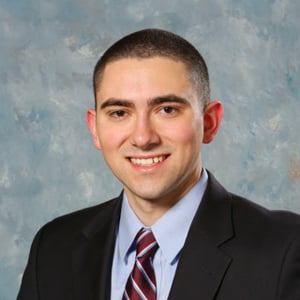
New START, Nuclear Weapons, and the New Landscape: Arms Control and Deterrence Post-Ukraine
Stephen P. Rosen, Daniel G. West
In February 2023, Russian President Vladimir Putin announced that Russia would withdraw from the New...
Tech Roundup Episode 19 - Should TikTok Be Banned? A Conversation on Free Speech, National Security, State Actors, and State Actions
Jamil N. Jaffer, Will Duffield, Jennifer Huddleston
Following concerns about the information collected by and influence of the immensely popular Chinese-owned social...
Necessary & Proper Episode 85: Holding Congress Accountable to the Constitution
Harriet Hageman, Chip Roy, David Hoppe
On March 28, 2023, Representatives Harriet Hageman and Chip Roy joined the Georgetown University Chapter...
New START, Nuclear Weapons, and the New Landscape: Arms Control and Deterrence Post-Ukraine
TeleforumYegiazaryan v. Smagin - Post-Argument SCOTUScast
Aaron D. Simowitz
On April 25, the Supreme Court heard oral argument in Yegiazaryan v. Smagin. At issue is...
Tech Roundup Episode 18 – The Future of AI Regulation: Examining Risks and Rewards
Neil Chilson, Adam Thierer
In this Tech Roundup episode, we delve into the discussions raised by the U.S. Senate...
Censorship by Proxy?
Will Duffield, Andrew Grossman, Brian Hauss, Allison R. Hayward, Erik S. Jaffe, Gregory G. Katsas
The First Amendment forbids public officials from censoring disfavored speech and speakers. But what happens...
American Trade Law in a Post-WTO Appellate Body World
Jamieson Greer, Trevor R. Jones, David J. Ross
For decades, the WTO Appellate Body regularly ruled that American laws violated the various WTO...
Does Litigation Finance Disclosure Threaten National Security? A Debate from the Right
Alexander R. Dahl, Theodore "Ted" Frank, Adam K. Mortara
Arguments over third-party litigation funding are nothing new. Opponents have argued the funding promotes frivolous...
The SEC’s ESG Reporting Rule: Understanding the Debate over Climate-Risk Disclosure Requirements
Jane Luxton, Paul J. Ray
In March 2022, the Securities and Exchange Commission proposed a new rule that would establish...