

Tammy McCutchen is a leading authority on federal and state wage-hour laws and prevailing wage laws. She counsels businesses on wage-hour compliance, including conducting internal audits on independent contractor status, overtime exemptions, and other pay practices. She also represents employers during investigations by the U.S. Department of Labor and serves as an expert witness in wage-hour class actions. She was a founding officer of ComplianceHR, a law and technology company, where she created AI-based applications to evaluate independent contractor and overtime exempt status.
Ms. McCutchen served as Administrator of the U.S. Department of Labor’s Wage and Hour Division, appointed by President Bush and confirmed by the Senate in 2001. She was the primary architect of the 2004 revisions to the overtime exemption regulations, the first major changes to the regulations in 55 years.
Before joining DOL, she was senior counsel for the Hershey Company in Hershey, Pennsylvania.
Ms. McCutchen has been a volunteer leader of the Federalist Society since 1989. She served in leadership roles for the Northwestern Student Chapter and Chicago Lawyers Chapter. She currently serves in leadership for the Labor & Employment Practice Group, the Regulatory Transparency Project, and the Knoxville, TN Lawyers Chapter. She served on the Editorial Advisory Board of Law360, the Labor Committee of the U.S. Chamber of Commerce, the Small Business Legal Advisory Board of the National Federation of Independent Business, and a Policy Fellow at the ACU Foundation.
Ms. McCutchen is a graduate of Western Illinois University and Northwestern University School of Law. She clerked for the Hon. Daniel Manion on the U.S. Court of Appeals for the Seventh Circuit.
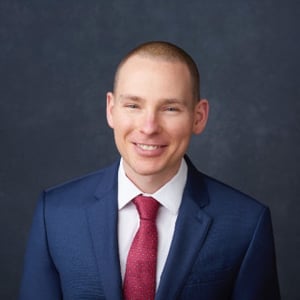
Shareholder & Co-Chair of the Workplace Policy Institute, Littler Mendelson P.C.
Alexander T. MacDonald advises employers on all aspects of the employment and labor landscape, focusing on emerging legislation and regulation. He has extensive experience advising businesses on worker classification, arbitration, the administrative and regulatory process, and the future of work. He frequently writes, publishes, and speaks on these subjects. His work has been cited by scholars and appellate courts. He is a recognized voice for the management perspective.
Alexander is a co-chair of the Workplace Policy Institute (WPI) team. With WPI, he advises employers on legislative, administrative, and regulatory developments at the state and federal level. He advocates for employers in the regulatory and administrative process. He also helps employers protect their businesses by understanding and anticipating cutting-edge legal developments.
Alexander also has extensive experience in traditional labor law. He represents management in all aspects of labor-management relations, including unfair labor practice charges, grievance arbitrations, representation elections, contract negotiations, and related litigation, including litigation in the U.S. courts of appeals.
Before joining Littler, Alexander served as the director, future of work, for a major technology company. He also worked in a national labor and employment law firm and a major public-sector general counsel’s office. He was a law clerk to the senior judges in the District of Columbia Court of Appeals.
He is also a veteran of the U.S. Air Force. He served in Operations Enduring Freedom and Iraqi Freedom. In law school, he graduated first in his class

Prof. Sheley joined the College of Law in 2018. Before coming to OU she was an Assistant Professor at the University of Calgary Faculty of Law. She has also served as a Visiting Associate Professor at the George Washington University Law School and an Olin-Searle Fellow at Georgetown University Law Center. Prior to academia she practiced for several years in the litigation group of the Washington, D.C. offices of Gibson, Dunn & Crutcher LLP. While in practice she was commended by the Humane Society of the United States for her pro bono work in the prosecution of dog fighting sponsors. She is proud to have served on the Board of Directors of the Alberta Animal Rescue Crew Society.

Director, Robert A. Levy Center for Constitutional Studies, Cato Institute
Thomas Berry is the director in the Cato Institute’s Robert A. Levy Center for Constitutional Studies and editor in chief of the Cato Supreme Court Review. Before joining Cato, he was an attorney at Pacific Legal Foundation and clerked for Judge E. Grady Jolly of the U.S. Court of Appeals for the Fifth Circuit. His academic work has appeared in NYU Journal of Law and Liberty, Washington and Lee Law Review Online, and Federalist Society Review. His popular writing has appeared in The Wall Street Journal, National Law Journal, Investor’s Business Daily, National Review Online, and The Hill Online. He has testified before the U.S. Senate, and his work has been cited by the U.S. District Court for the District of Columbia.
Berry holds a J.D. from Stanford Law School, where he was a senior editor on the Stanford Law and Policy Review and a Bradley Student Fellow in the Stanford Constitutional Law Center. He graduated with a B.A. in Liberal Arts from St. John’s College, Santa Fe.
Assistant Solicitor General, Office of the Texas Attorney General
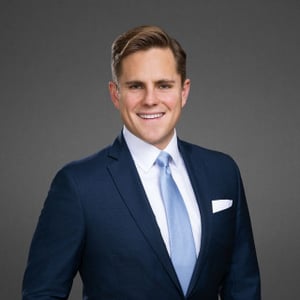
Environmental Law Attorney, DLA Piper
Garrett Kral is an attorney in DLA Piper’s Washington, DC, office, and a member of the Regulatory and Government Affairs Practice Group. His practice includes regulatory counseling, enforcement defense, and complex civil litigation on matters arising under major federal environmental statutes.
Garrett builds on a strong background in environmental science, a familiarity with technical processes involved in industrial operations, and valuable insights gained by serving in each branch of the federal government. With this experience, he advances the business objectives of Fortune 500 companies while limiting exposure and risk. Garrett is regarded as a strategic advisor to such clients on matters of environmental law and policy.

Topics
A Brief Guide to the 2023 Amendments to the Federal Rules of Evidence
Amendments to Federal Rules of Evidence 702, 106, and 615 took effect on December 1,...
Topics
Third Circuit Court of Appeals Rejects Challenge to Pennsylvania Rule 8.4(g)
In Greenberg v. Lehocky, issued on August 29, 2023, and due to be published, the...
The War on Independent Work: Why Some Regulators Want to Abolish Independent Contracting, Why They Keep Failing, & Why We Should Declare Peace
Tammy Dee McCutchen, Alexander T. MacDonald
There is a war on independent contracting. Martial metaphors are often overworked in the law....
Pennsylvania Supreme Court holds GPS Data is not Hearsay
Erin Sheley
In Pennsylvania v. Wallace, the Supreme Court of Pennsylvania held that GPS data collected from...
Tennessee Supreme Court Clarifies Which Policy Statements Must Undergo Notice and Comment
Thomas Berry
While the federal Administrative Procedure Act (APA)[1] may receive the most attention from students of...
Topics
Religious Liberty Update on Executive Branch Actions
The Executive Branch OPPORTUNITIES FOR PUBLIC COMMENT 1. On December 29, 2022, HHS...
Topics
Nine Agencies Propose Regulations for Partnerships with Faith-Based and Neighborhood Organizations
On January 13, 2023, nine agencies issued a notice of proposed rulemaking (NPRM) titled “Partnerships...
Idaho Supreme Court rejects controversial ethics rule 8.4(g)
Daniel Ortner
The Idaho Supreme Court recently took the extraordinary step of unanimously rejecting a proposal by...
Topics
Federal Judiciary’s Standing Committee Approves Changes to Federal Rules of Evidence, Including Rule 702 Governing Expert Testimony
On June 7, the Judicial Conference Committee on Rules of Practice and Procedure (Standing Committee)...
Environmental Law in the Supreme Court: Highlights from the October 2020 Term
Garrett Kral
The Supreme Court decided nine important environmental law cases during its October 2020 term. This...