
Eric Criss is an independent scholar who recently published The Boss of New Orleans: Martin Behrman and Machine Politics in the Crescent City with the LSU Press. He taught advanced public policy at Florida State University, where he earned his PhD in history. Eric earned his MA in Government at John's Hopkins University and BA in Political Science at the University of Florida. Eric began his career with U.S. Senators Don Nickles of Oklahoma and Phil Gramm of Texas at the National Republican Senatorial Committee in Washington, D.C. He later served as staff member or consultant to Fortune 500 corporations, political parties, and presidential, congressional, and gubernatorial campaigns.
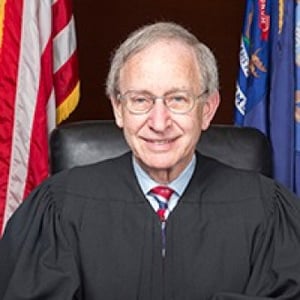
Justice, Michigan Supreme Court
Stephen Markman was appointed Justice of the Michigan Supreme Court on October 1, 1999. He served as the Chief Justice from 2017-2019. Before his appointment, he served as Judge on the Michigan Court of Appeals from 1995-1999. Prior to this, he practiced law with the firm of Miller, Canfield, Paddock & Stone in Detroit.
From 1989-1993, Justice Markman served as United States Attorney, or federal prosecutor, in Michigan, after having been nominated by President George H. W. Bush and confirmed by the United States Senate. From 1985-1989, he served as Assistant Attorney General of the United States, after having been nominated by President Ronald Reagan and confirmed by the United States Senate. In that position, he headed the Department of Justice’s Office of Legal Policy, which served as the principal policy development office within the Department, and which coordinated the federal judicial selection process. Prior to this, he served for seven years as Chief Counsel of the United States Senate Subcommittee on the Constitution, and as Deputy Chief Counsel of the United States Senate Judiciary Committee.
Justice Markman has authored articles for such publications as the University of Michigan Journal of Law Reform, the Detroit College of Law Review, the Stanford Law Review, the University of Chicago Law Review, the American Criminal Justice Law Review, the Barrister’s Law Journal, the Harvard Journal of Law & Public Policy, and the American University Law Review. He has also served as a contributing editor of National Review magazine, and has authored chapters in such books as “In the Name of Justice: The Aims of the Criminal Law,” “Still the Law of the Land,” and “Originalism: A Quarter Century of Debate.”
Justice Markman has taught constitutional law at Hillsdale College since 1993. He has served on the Board of Directors of the Western Michigan University Thomas M. Cooley Law School. He traveled to Ukraine on two occasions on behalf of the State Department, to provide assistance in the development of that nation’s post-Soviet constitution. He is a Fellow of the Michigan Bar Foundation, a Master of the Bench of the Inns of Court, and a member of the One Hundred Club. He has spoken before hundreds of youth, civic, charitable, and legal groups throughout Michigan and nationally, and has coached Little League baseball and basketball. He lives with his wife Mary Kathleen in Mason, and has two sons, James and Charles.
Justice Markman was re-elected to the Supreme Court in 2000, 2004, and 2012. His present term expires January 1, 2021.
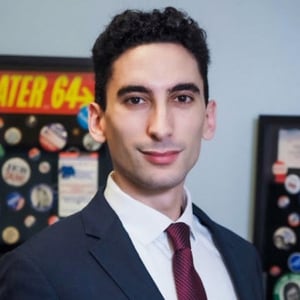
Andrew Pardue is an associate at Holtzman Vogel Baran Torchinsky Josefiak PLLC specializing in election and campaign finance law.
Prior to joining the firm, Andrew served as a law clerk for the D.C. Criminal Code Reform Commission and the Office of the Virginia Attorney General’s Civil Litigation Division, Consumer Protection Section. He also interned in the chambers of Magistrate Judge Lawrence Leonard of the United States District Court for the Eastern District of Virginia.
Andrew graduated from Harvard University with a B.A. in Government and a secondary concentration in Economics. He earned his J.D. from William & Mary Law School. While in law school, he served as Senior Notes Editor on the William & Mary Law Review and authored a published student note on congressional investigations of the executive branch. He also served as a graduate research fellow with the Center for the Study of Law and Markets. Andrew is a member of the Virginia Bar, the Federalist Society, and the Republican National Lawyers Association.
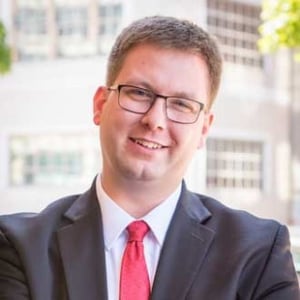
Senior Associate, Holtzman Vogel Josefiak Torchinsky PLLC
Drew Watkins is a senior associate with Holtzman Vogel Josefiak Torchinsky PLLC, providing counsel in the areas of campaign finance and election law, lobbying and ethics compliance, and tax-exempt organizations.
Prior to joining the firm, Drew served as a law clerk to the Honorable Joseph R. Goeke, Senior Judge of the United States Tax Court in Washington, D.C., and worked in the Office of General Counsel for the Governor of Kentucky, Matthew G. Bevin. While in law school, Drew served as a law clerk for the Kentucky Executive Branch Ethics Commission and interned for Senate Majority Leader Mitch McConnell in his office in Washington, D.C.
Drew graduated from the University of Louisville with a B.S. in Justice Administration. He earned his Juris Doctor, magna cum laude, from the University of Kentucky College of Law and was a member of the Order of the Coif. During law school, he served as a senior staff editor on the Kentucky Law Journal and authored a published student note on the Justice Against Sponsors of Terrorism Act. He is a member of the Kentucky, D.C. and Virginia bars and the Federalist Society.
Andrew Pardue is an associate at Holtzman Vogel Baran Torchinsky Josefiak PLLC specializing in election and campaign finance law.
Prior to joining the firm, Andrew served as a law clerk for the D.C. Criminal Code Reform Commission and the Office of the Virginia Attorney General’s Civil Litigation Division, Consumer Protection Section. He also interned in the chambers of Magistrate Judge Lawrence Leonard of the United States District Court for the Eastern District of Virginia.
Andrew graduated from Harvard University with a B.A. in Government and a secondary concentration in Economics. He earned his J.D. from William & Mary Law School. While in law school, he served as Senior Notes Editor on the William & Mary Law Review and authored a published student note on congressional investigations of the executive branch. He also served as a graduate research fellow with the Center for the Study of Law and Markets. Andrew is a member of the Virginia Bar, the Federalist Society, and the Republican National Lawyers Association.
Senior Associate, Holtzman Vogel Josefiak Torchinsky PLLC
Drew Watkins is a senior associate with Holtzman Vogel Josefiak Torchinsky PLLC, providing counsel in the areas of campaign finance and election law, lobbying and ethics compliance, and tax-exempt organizations.
Prior to joining the firm, Drew served as a law clerk to the Honorable Joseph R. Goeke, Senior Judge of the United States Tax Court in Washington, D.C., and worked in the Office of General Counsel for the Governor of Kentucky, Matthew G. Bevin. While in law school, Drew served as a law clerk for the Kentucky Executive Branch Ethics Commission and interned for Senate Majority Leader Mitch McConnell in his office in Washington, D.C.
Drew graduated from the University of Louisville with a B.S. in Justice Administration. He earned his Juris Doctor, magna cum laude, from the University of Kentucky College of Law and was a member of the Order of the Coif. During law school, he served as a senior staff editor on the Kentucky Law Journal and authored a published student note on the Justice Against Sponsors of Terrorism Act. He is a member of the Kentucky, D.C. and Virginia bars and the Federalist Society.
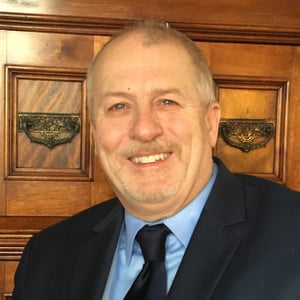
Founder, President, and General Counsel, Wisconsin Institute for Law & Liberty
Rick Esenberg is the founder and current President and General Counsel of the Wisconsin Institute for Law & Liberty, a rapidly expanding law and policy organization headquartered in Milwaukee. Under Rick’s leadership, WILL has grown into one of the more active state-based think tanks and litigation centers in the country. Rick is a frequent litigator in state and federal courts and nationally recognized scholar and commentator on constitutional law, particularly the First Amendment’s guarantees of freedom of speech and religion. He is one of the leading experts on the Wisconsin Constitution and a frequent advocate before the Wisconsin Supreme Court. Rick’s work seeks to advance the rule of law and individual liberty, formed by a robust civil society that forms individual and community character, preserving the wisdom of the past and an openness to the future.
Rick’s commentary has been featured in such outlets as the Wall Street Journal, National Review, Weekly Standard, Real Clear Politics, Milwaukee Journal Sentinel and Washington Examiner. Formerly on the faculty of Marquette University Law School, his scholarship has appeared in such publications as the Harvard Law Review, Harvard Journal of Law & Public Policy, Wake Forest Law Review and William & Mary Bill of Rights Journal. Back when they were a thing, he operated a blog called Shark and Shepherd where he tried to suggest something about the duality of man – “the Jungian thing.”
Rick holds a J.D., magna cum laude, from Harvard Law School, where he was an editor of the Harvard Law Review, and a B.A., summa cum laude, in political science from the University of Wisconsin-Milwaukee. In addition to service on the Marquette Faculty, he was formerly a litigation partner at Foley & Lardner and General Counsel of an international manufacturing firm headquartered in Wisconsin. He lives in Mequon Wisconsin with his wife Karen, golden retrievers Cooper and Riley and more books than he can find places for.
Senior Partner, Pines Bach LLP
Lester Pines is a Senior Partner in the firm.
A Fellow of the American College of Trial Lawyers, he is a respected civil and criminal litigator and appellate advocate. In his over 40 years of practice, he has appeared in trial and appellate courts throughout Wisconsin, in numerous federal district courts, and before the federal 7th Circuit Court of Appeals. After a recent trial, one of Lester’s clients wrote:
"Seeing you in action was like watching an artist create a classic painting from a blank canvas but instead of paint you used facts, figures and, most importantly, words to achieve a masterpiece in the courtroom."
His wide-ranging civil trial practice encompasses commercial claims, employment disputes, constitutional and civil rights matters, personal injury and intellectual property cases. His criminal defense work has involved many high profile cases, especially involving teachers, police officers and other public employees. He is counsel to Madison Teachers Inc., which represents the employees of the Madison Metropolitan School District.
Recently, Lester was featured in a cover story in Isthmus, a Madison weekly newspaper, " Activist Attorney – Lester Pines draws on faith and family in his practice and beyond."
Recent challenges to the constitutionality of newly enacted laws that Lester brought on behalf of his clients include:
Previously, in cases in which he was appointed by former Wisconsin Governor Jim Doyle, Lester defended Wisconsin’s law creating domestic partnerships for same sex couples and stopped an attempt by then Attorney General J.B. Van Hollen to suppress voting in the 2008 Presidential election.
Among the many cases Lester has argued before the Wisconsin Supreme Court, two in particular have shaped Wisconsin law. In 2010 he represented the Zurich American Insurance Company inMiller v. Hanover Insurance, securing the reversal of a $2,000,000 default judgment against his client and achieving a significant change in Wisconsin law regarding relief from such judgments. In an original action in 1996, he successfully argued the case of Thompson v. Craney, which delineated the constitutionally vested powers of the State Superintendent of Public Instruction and protected them from being altered by the Legislature, which the Wisconsin Supreme Court reaffirmed in 2016 in Coyne v. Walker.
Partner, Eimer Stahl LLP
Ryan is a partner at Eimer Stahl LLP and is based in the firm’s Madison office. He focuses his practice on appellate and complex litigation in a wide variety of areas, including antitrust, constitutional law, corporate law, environmental, ERISA, products liability, and white collar. As part of his practice, Ryan devotes significant time to matters of legal strategy and the art of written and oral advocacy.
Ryan previously served as Chief Deputy Solicitor General of Wisconsin, securing numerous wins in the Supreme Court of the United States, in three federal courts of appeal, and in the state supreme court. Ryan built national, bipartisan coalitions of attorneys general and agencies in support of several lawsuits and briefing efforts, including a Wisconsin-led, 12-state coalition whose suit against the Federal Communications Commission prompted that agency to reverse a major new rule. When he left government, Ryan had a perfect win record in all of his cases to have reached final judgment.
Earlier in his career, Ryan worked in Washington D.C. as an associate in the appellate group of one of the world’s largest law firms.
Ryan also served as a law clerk on the U.S. Supreme Court for the Honorable Antonin Scalia and on the U.S. Court of Appeals for the Ninth Circuit for the Honorable Diarmuid F. O’Scannlain.
Ryan was named to Forbes’ “30 Under 30: Law and Policy” list in 2017. His briefing has won awards from the National Association of Attorneys General and the International Municipal Lawyers Association. He has also won a “best brief” accolade from the State Bar of Wisconsin in the civil category for his written work defending Wisconsin’s right-to-work law.
Partner, Clement & Murphy, PLLC
Paul served as the 43rd Solicitor General of the United States from June 2005 until June 2008. Before his confirmation as Solicitor General, he served as Acting Solicitor General for nearly a year and as Principal Deputy Solicitor General for over three years.
Paul has argued over 100 cases before the United States Supreme Court, including McConnell v. FEC, Tennessee v. Lane, United States v. Booker, MGM v. Grokster, Hobby Lobby v. Burwell, Epic Systems Corp. v. Lewis, Rucho v. Common Cause, Facebook v. Duguid, and TransUnion v. Ramirez. Paul has argued more Supreme Court cases since 2000 than any lawyer in or out of government. He has also argued many important cases in the lower courts, including Walker v. Cheney, United States v. Moussaoui and NFL v. Brady.
Paul’s practice focuses on appellate matters, constitutional litigation and strategic counseling. He represents a broad array of clients in the Supreme Court and in federal and state appellate courts. Last year, for example, he successfully argued Supreme Court cases involving significant issues of energy regulation, statutory interpretation, state sovereign immunity and Article III standing, and successfully argued a trademark appeal in the Fourth Circuit, and a constitutional appeal before the en banc Eleventh Circuit.
Paul focuses on high-stakes appeals. In recent years, he successfully defended a $1.2 billion jury verdict for clients in a Tenth Circuit case, while securing the reversal of an over $2 billion jury verdict for another client in the Seventh Circuit and the approval of a nearly $1 billion dollar class action settlement in the Third Circuit. He has initiated major administrative law challenges and constitutional litigation against the federal government, such as the successful challenge to the HHS drug-pricing rule and threatened challenges that led to the withdrawal of the Treasury Department’s proposed cryptocurrency regulations. He also counsels clients on a variety of strategic legal questions, whether arising from pending legislation, government inquiries or ongoing litigation.
Paul has undertaken substantial pro bono engagements in the Supreme Court, such as twice successfully representing the defendant in Bond v. United States and successfully representing the Omaha Tribe in Nebraska v. Parker, the guardian ad litem in Adoptive Couple v. Baby Girl, the defendant in Sekhar v. United States, a high school football coach in Kennedy v. Bremerton, and the Little Sisters of the Poor. Paul’s pro bono representation also precipitated the federal government’s confession of error in United States v. Rojas.
Following law school, Paul clerked for Judge Laurence H. Silberman of the U.S. Court of Appeals for the D.C. Circuit and for Associate Justice Antonin Scalia of the U.S. Supreme Court. After his clerkships, he went on to serve as Chief Counsel of the U.S. Senate Subcommittee on the Constitution, Federalism and Property Rights.
Paul is a Distinguished Lecturer in Law at the Georgetown University Law Center, where he has taught in various capacities since 1998. He also serves as a Senior Fellow of the Law Center’s Supreme Court Institute. He is the Justice Joseph Story Distinguished Practitioner in Residence at the Gray Center at Scalia Law School.
Former U.S. Representative, Illinois's 10th Congressional District
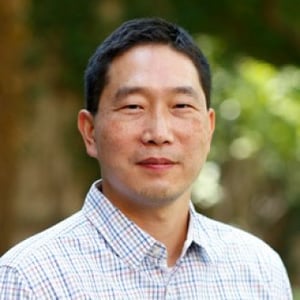
William G. and Virginia K. Karnes Research Professor of Law, Northwestern Pritzker School of Law
Michael S. Kang is the William G. and Virginia K. Karnes Research Professor at Northwestern Pritzker School of Law and a nationally recognized expert on campaign finance, voting rights, redistricting, judicial elections, and corporate governance. His research has been published widely in leading law journals and featured in the New York Times, Washington Post, and Forbes, among others. His recent work focuses on partisan gerrymandering; the influence of party and campaign finance on elected judges; the de-regulation of campaign finance after Citizens United; and so-called “sore loser laws” that restrict losing primary candidates from running in the general election. The American Constitution Society profiled Professor Kang’s empirical work (with Joanna Shepherd) on judicial campaign ads and judges’ criminal law decisions in Skewed Justice. Their findings were published in the Michigan Law Review and cited by Justice Ginsburg in Williams-Yulee v. Fla. Bar.
Professor Kang received his BA and JD from the University of Chicago, where he served as technical editor of the Law Review and graduated Order of the Coif. He also received a PhD in government from Harvard University and an MA from the University of Illinois. At the University of Chicago, Professor Kang studied constitutional law with then-lecturer Barack Obama, and after law school, he clerked for Judge Kanne on the U.S. Court of Appeals for the Seventh Circuit and worked in private practice at Ropes & Gray in Boston.
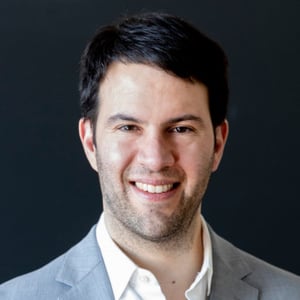
Professor of Law, Harvard Law School
Nicholas Stephanopoulos’s research and teaching interests include election law, constitutional law, administrative law, legislation, and comparative law. His work is particularly focused on the intersection of democratic theory, empirical political science, and the American electoral system. His academic articles have appeared in, among others, the Columbia Law Review, Duke Law Journal, Harvard Law Review, Northwestern University Law Review, New York University Law Review, Stanford Law Review, University of Chicago Law Review, University of Pennsylvania Law Review, Virginia Law Review, and Yale Law Journal. He has also written for popular publications including the New York Times, Los Angeles Times, Chicago Tribune, Atlantic, New Republic, Slate, and Vox. He has been involved in several litigation efforts as well, including two partisan gerrymandering cases based on his scholarship and decided by the Supreme Court.
Before joining the Harvard Law School faculty, Stephanopoulos was a Professor of Law at the University of Chicago Law School. He was previously an Associate-in-Law at Columbia Law School and an Associate in the Washington, DC office of Jenner & Block LLP. Before entering private practice, he clerked for Judge Raymond C. Fisher of the Ninth Circuit Court of Appeals.
A graduate of Yale Law School, Stephanopoulos also holds an M.Phil. in European Studies from Cambridge University and an A.B. in Government from Harvard College, graduating summa cum laude. While at Yale, he served as Editor-in-Chief of the Yale Journal of International Law, received the Jewell Prize for best second-year student contribution to a law journal, and was a finalist in both the moot court and mock trial competitions.
Stephanopoulos is a frequent television and radio commentator on legal issues. He is a co-founder of PlanScore, a website evaluating past, present, and proposed district plans. He is a member of policy reform initiatives including the Campaign Legal Center’s Litigation Strategy Council and the Committee for the Study of Digital Platforms. He has been named to The Politico 50 list as well as the National Law Journal’s “Chicago’s 40 Under 40.”
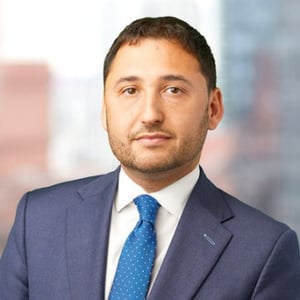
Partner, Troutman Pepper Hamilton Sanders LLP
Misha leads Troutman Peppers' national appellate and Supreme Court practice. Most recently, he successfully obtained orders from the Supreme Court blocking an unconstitutional restriction on places of worship, as well as overturning a lower court order that had blocked several state election laws. He has also argued and prevailed before the Supreme Court in Gill v. Whitford, one of the most significant redistricting cases in decades, as well as Murr v. Wisconsin, a high-stakes regulatory taking case.
Before joining Troutman, Misha served as Solicitor General of the State of Wisconsin. Misha previously served as a law clerk for the Honorable Anthony M. Kennedy of the Supreme Court, Janice Rogers Brown of the D.C. Circuit, and Alex Kozinski of the 9th Circuit. He graduated from Georgetown University Law Center, where he was President of the Federalist Society Chapter.

Integrity or Interference?: Evaluating the Constitutionality of Georgia's Election Integrity Act
Eric Criss
Recent political earthquakes such as the assassination attempt against former president Donald Trump and President...
Topics
Alexander v. South Carolina State Conference of the NAACP: New Rules for Partisan Gerrymanders, But Possibly Limited Effect
How do you separate race and political preference when establishing new congressional districts? The federal...
Toward a More Confident State Constitutionalism
Steve J. Markman
This article is adapted from a speech Justice Markman delivered to the Florida Annual Education...
North Carolina Supreme Court Reverses Itself In Two Election Law Cases Decided Months Prior
Andrew Pardue, Andrew Watkins
In December 2022, the North Carolina Supreme Court issued opinions in two cases—one striking down...
Supreme Court Roundup: The 2021-22 Term
Milwaukee Lawyers Chapter
Milwaukee, WIState Court Docket Watch: Harper v. Hall
Andrew Pardue, Andrew Watkins
In its 2019 decision in Rucho v. Common Cause, the U.S. Supreme Court closed the...
Topics
Book Review: Who Decides?
Judge Jeffrey Sutton (who I must disclose at the outset is a good friend despite...
The Future of Redistricting
Chicago Lawyers Chapter - Online Event
Topics
Wisconsin Presidential Election Litigation: DNC et al. v. Bostelmann et al.
Ahead of the 2020 presidential election, and in the midst of the COVID-19 pandemic, election-related...
Wisconsin Election Law Panel
Rick M. Esenberg, Lester A. Pines, Ryan J. Walsh
On September 1, 2020, the Federalist Society's Wisconsin lawyers chapters hosted their annual conference via...