
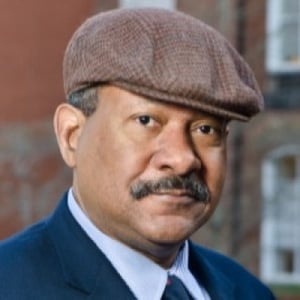
Harold Paul Green Research Professor of Law, George Washington University School of Law
Robert J. Cottrol joined the law school faculty in 1995 as a visiting professor of law of legal history. Previously, he taught at Rutgers University and Boston College, and had visited at the University of Virginia. As well as specializing in American legal history, Professor Cottrol has also taught torts and criminal law. His writings on law and history have appeared in the Yale Law Journal, Georgetown Law Journal, American Journal of Legal History, Law and Society Review, Slavery and Abolition: A Journal of Slave and Post-Slave Studies and American Quarterly, among others.
He is the author of The Afro-Yankees: Providence’s Black Community in the Antebellum Era (selected by Choice as an outstanding academic book for 1983), editor of Gun Control and the Constitution: Sources and Explorations on the Second Amendment (Book of the Month selection by the History Book Club), and From African to Yankee: Narratives of Slavery and Freedom in Antebellum New England (1998). Professor Cottrol’s book Brown v. Board of Education: Caste, Culture and the Constitution (2003) won the Langum Project Prize for Historical Literature in 2003 and was a “Book-of-the-Month” selection of the History Book Club. Most recently, he has authored The Long, Lingering Shadow: Slavery, Race, and Law in the American Hemisphere (2013).
He is currently doing research contrasting the role of law in the development of systems of slavery and racial hierarchy in the United States and Latin America. He has lectured on American law at the Federal Universities of Santa Catarina and Rio Grande do Sul in Brazil and the University of Buenos Aires and La Universidad del Museo Social in Argentina.
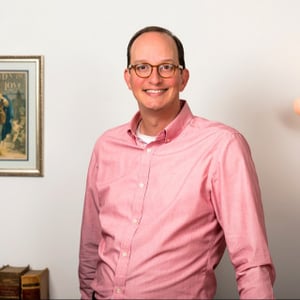
Jonathan Goldstein brings decades of experience as an entrepreneur and business owner to his law practice. Mr. Goldstein’s practice focuses on firearms law and election law as well as entrepreneurial business advising.
Mr. Goldstein is an NRA certified pistol instructor and a volunteer attorney for several firearms organizations including the National Rifle Association. He actively lectures on firearms law and firearms safety across Pennsylvania and is a frequent presenter for continuing legal education providers such as CAPE, NACLE and the Pennsylvania Bar Institute.
In May 2011, Mr. Goldstein was awarded the Defender of Justice Award by the National Rifle Association’s Institute of Legislative Action for his “tireless service to the Constitution and with particular emphasis on the protection and furtherance of the Second Amendment.”
Mr. Goldstein served for several years as a non-director member of the NRA board’s Legal Affairs Committee and was a member of the NRA’s 2016 Nominating Committee. In April 2025, he was elected to the NRA’s board and to the board’s Audit Committee. He currently chairs the NRA’s Finance Committee and serves as a member of the NRA’s Legal Affairs Committee as well as a trustee of the NRA’s Civil Rights Defense Fund.
A brief prepared by Mr. Goldstein on behalf of Black Guns Matter was cited favorably by Justice Alito in his Bruen concurrence.
Mr. Goldstein received his undergraduate degree from the University of Pennsylvania in 1993. He returned to the University of Pennsylvania for law school, earning his J.D. in 2005.
Mr. Goldstein is admitted to practice law in state and federal courts in Pennsylvania and New Jersey as well as Washington, D.C., several Circuit courts and the United States Supreme Court, where his firm argued a case in the 2023–2024 term.
In September 2025, Mr. Goldstein began teaching a course on Second Amendment law as an adjunct at the University of Pennsylvania Carey Law School. He regularly publishes scholarship on the 2nd Amendment:
https://hq.ssrn.com/
In addition to nearly a dozen scholarly articles on 2nd Amendment topics, he is the author of several books:
Essential Questions in Firearms Law: Why the Firearms Laws Are What They Are
https://www.amazon.com/
Pennsylvania Firearms Law: A Complete Overview
https://www.amazon.com/
Pennsylvania Hunting Law: A Complete Overview
https://www.amazon.com/dp/
In addition to practicing law, Mr. Goldstein is an active private equity investor purchasing and turning around small American manufacturing companies. Mr. Goldstein is also a licensed commercial pilot.
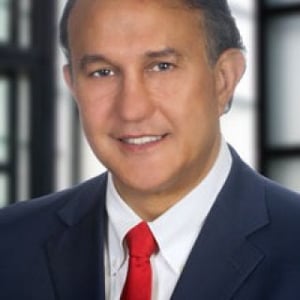
Francis Pileggi is the managing partner of the Wilmington office of Lewis Brisbois and is chair of the Directors & Officers Litigation Practice and a member of the Complex Business & Commercial Litigation Practice. His litigation practice emphasizes representation in high-stakes disputes of corporations, stockholders, members of boards of directors, members and managers of LLCs, and those with managerial or ownership interests in other forms of entities. He has extensive experience in matters involving fiduciary duties and corporate governance as well as summary proceedings under the Delaware General Corporation Law in the Delaware Court of Chancery. Francis has also been certified as a mediator.
He has been asked to testify as an expert witness on Delaware Corporate Law and Delaware LLC Law.
One of his law review articles on corporate law has been cited by both the Delaware Supreme Court and the Delaware Court of Chancery. The Delaware Superior Court also cited one of his articles. He has published over 1,000 articles in multiple publications on topics including corporate and commercial law as well as legal ethics and constitutional law. He also often speaks at seminars on those topics.
Francis created and maintains the Delaware Corporate and Commercial Litigation Blog at www.delawarelitigation.com, which was named one of LexisNexis’ Top 25 Business Law Blogs and was selected for inclusion in the ABA Journal’s Blog 100 in 2011 and 2012. In turn, he has been described as “a brand name in Delaware corporate litigation.”
He also has enjoyed success in litigating, in both federal and state appellate courts, groundbreaking Second Amendment cases and related constitutional issues on behalf of civil rights organizations. In 2015 and 2019, he was honored with The Chief Justice William Killen Award for Distinguished Second Amendment Appellate Advocacy.
Francis published a book entitled, American Legal Ethics: A Retrospective from 1997 to 2018 (Outskirts Press, 2018), available on Amazon.com.
Francis has represented townships in Delaware County and Chester County, Pennsylvania, as special counsel on litigation matters. He has also represented a school district in Delaware County and educational and nonprofit institutions in Pennsylvania and elsewhere on corporate governance, litigation, and related issues. He has represented governmental entities and private parties in connection with the Pennsylvania Right to Know Law, and he is the coeditor of a blog that provides commentary and insights on that law.
Harold Paul Green Research Professor of Law, George Washington University School of Law
Robert J. Cottrol joined the law school faculty in 1995 as a visiting professor of law of legal history. Previously, he taught at Rutgers University and Boston College, and had visited at the University of Virginia. As well as specializing in American legal history, Professor Cottrol has also taught torts and criminal law. His writings on law and history have appeared in the Yale Law Journal, Georgetown Law Journal, American Journal of Legal History, Law and Society Review, Slavery and Abolition: A Journal of Slave and Post-Slave Studies and American Quarterly, among others.
He is the author of The Afro-Yankees: Providence’s Black Community in the Antebellum Era (selected by Choice as an outstanding academic book for 1983), editor of Gun Control and the Constitution: Sources and Explorations on the Second Amendment (Book of the Month selection by the History Book Club), and From African to Yankee: Narratives of Slavery and Freedom in Antebellum New England (1998). Professor Cottrol’s book Brown v. Board of Education: Caste, Culture and the Constitution (2003) won the Langum Project Prize for Historical Literature in 2003 and was a “Book-of-the-Month” selection of the History Book Club. Most recently, he has authored The Long, Lingering Shadow: Slavery, Race, and Law in the American Hemisphere (2013).
He is currently doing research contrasting the role of law in the development of systems of slavery and racial hierarchy in the United States and Latin America. He has lectured on American law at the Federal Universities of Santa Catarina and Rio Grande do Sul in Brazil and the University of Buenos Aires and La Universidad del Museo Social in Argentina.
Francis Pileggi is the managing partner of the Wilmington office of Lewis Brisbois and is chair of the Directors & Officers Litigation Practice and a member of the Complex Business & Commercial Litigation Practice. His litigation practice emphasizes representation in high-stakes disputes of corporations, stockholders, members of boards of directors, members and managers of LLCs, and those with managerial or ownership interests in other forms of entities. He has extensive experience in matters involving fiduciary duties and corporate governance as well as summary proceedings under the Delaware General Corporation Law in the Delaware Court of Chancery. Francis has also been certified as a mediator.
He has been asked to testify as an expert witness on Delaware Corporate Law and Delaware LLC Law.
One of his law review articles on corporate law has been cited by both the Delaware Supreme Court and the Delaware Court of Chancery. The Delaware Superior Court also cited one of his articles. He has published over 1,000 articles in multiple publications on topics including corporate and commercial law as well as legal ethics and constitutional law. He also often speaks at seminars on those topics.
Francis created and maintains the Delaware Corporate and Commercial Litigation Blog at www.delawarelitigation.com, which was named one of LexisNexis’ Top 25 Business Law Blogs and was selected for inclusion in the ABA Journal’s Blog 100 in 2011 and 2012. In turn, he has been described as “a brand name in Delaware corporate litigation.”
He also has enjoyed success in litigating, in both federal and state appellate courts, groundbreaking Second Amendment cases and related constitutional issues on behalf of civil rights organizations. In 2015 and 2019, he was honored with The Chief Justice William Killen Award for Distinguished Second Amendment Appellate Advocacy.
Francis published a book entitled, American Legal Ethics: A Retrospective from 1997 to 2018 (Outskirts Press, 2018), available on Amazon.com.
Francis has represented townships in Delaware County and Chester County, Pennsylvania, as special counsel on litigation matters. He has also represented a school district in Delaware County and educational and nonprofit institutions in Pennsylvania and elsewhere on corporate governance, litigation, and related issues. He has represented governmental entities and private parties in connection with the Pennsylvania Right to Know Law, and he is the coeditor of a blog that provides commentary and insights on that law.
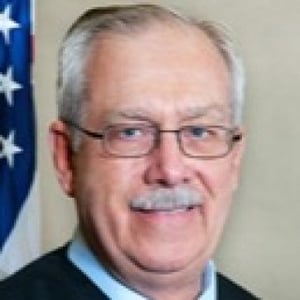
The Honorable William L. Witham Jr. became an Associate Judge of the Superior Court of Delaware on February 18, 1999; he was appointed Kent County Resident Judge on January 19, 2005.
He received his B.A. from the University of Delaware in 1970, and his J.D. from the University of Maryland in 1973. He was admitted to the Pennsylvania Bar in 1975 and the Delaware Bar in 1976. Resident Judge Witham graduated from the United States Army War College in 1998. Prior to joining the Superior Court, Judge Witham was a partner with Prickett, Jones, Elliott & Kristol in Dover, Delaware. He also served as the Kent County Levy Court Attorney in 1999.
Judge Witham oversaw the implementation of the State of Delaware's Veterans Court, and since its inception in 2011, he has been the Veterans Court Judge.
During his career, Resident Judge Witham has served on the Criminal Justice Council of the Judiciary, as a member of the Judicial Ethics Advisory Committee, as a member of the Board of Bar Examiners, the United States Third Circuit Merit Selection Screening Committee, the Governor's Magistrate Screening Committee, as a trustee of Delaware Technical and Community College, as president of the Central Delaware Committee on Alcohol and Drug Abuse, Inc., as a director of the Board of Managers of the Central Delaware YMCA, and as president of the Dover Kiwanis Club. He served as president of the Kent County Bar Association and as the vice-president of the Delaware State Bar Association. He is also a retired Delaware Army National Guard Colonel.
Resident Judge Witham is currently a member of the Delaware State and American Bar Associations, Terry-Carey Inn of Court, and the National Association of Drug Court Professionals. He also is an adjunct professor at Wilmington University.
Resident Judge Witham retired on May 14th, 2021 (original term ended in March 2029). Judge Withham will be assisting Superior Court with Veteran Court related matters.
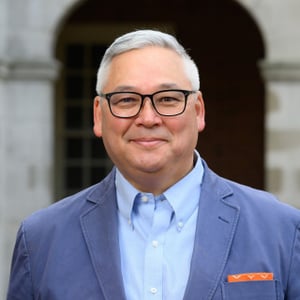
David Yamane is a professor of sociology at Wake Forest University in Winston-Salem, North Carolina. He earned his BA (’91) in sociology from the University of California at Berkeley and his MS (’94) and PhD (’98) in sociology from the University of Wisconsin at Madison. After teaching at the University of Notre Dame and holding a post-doc at the University of Virginia’s Center on Religion and Democracy, he joined the faculty at Wake Forest in 2005.
For the first 20 years of his academic career, Professor Yamane specialized in the sociology of religion, a field in which he authored, co-authored, or edited 6 books and 2 major scholarly journals.
Since 2011, Professor Yamane has become an internationally recognized scholarly authority on guns and a calming voice in our divisive national argument on the issue. An Asian American and lifelong liberal from the San Francisco Bay Area, Yamane became a first-time gun owner as a 42-year-old and began a 12-year journey into the complex world of firearms in America. Having one foot outside and one inside gun culture allows him to speak with compassion across our paralyzing differences. Yamane’s timely and original book, Gun Curious: A Liberal Professor’s Surprising Journey Inside America’s Gun Culture, will be published by Exposit Books in June 2024.
Other recent publications include “Gun Culture 2.0: Evolution and Contours of Defensive Gun Ownership in America,” “Understanding and Misunderstanding American Gun Culture and Violence,” and Concealed Carry Revolution: Liberalizing the Right to Bear Arms in America.
Committed to informing public debate and enriching everyday conversations about guns, Professor Yamane shares his thoughts on his blog, gunculture2point0.com and on Twitter at @davidyamane. In 2022, he launched a YouTube channel, “Light Over Heat with Professor David Yamane,” on which he posts weekly short videos about issues related to his scholarship.
Harold Paul Green Research Professor of Law, George Washington University School of Law
Robert J. Cottrol joined the law school faculty in 1995 as a visiting professor of law of legal history. Previously, he taught at Rutgers University and Boston College, and had visited at the University of Virginia. As well as specializing in American legal history, Professor Cottrol has also taught torts and criminal law. His writings on law and history have appeared in the Yale Law Journal, Georgetown Law Journal, American Journal of Legal History, Law and Society Review, Slavery and Abolition: A Journal of Slave and Post-Slave Studies and American Quarterly, among others.
He is the author of The Afro-Yankees: Providence’s Black Community in the Antebellum Era (selected by Choice as an outstanding academic book for 1983), editor of Gun Control and the Constitution: Sources and Explorations on the Second Amendment (Book of the Month selection by the History Book Club), and From African to Yankee: Narratives of Slavery and Freedom in Antebellum New England (1998). Professor Cottrol’s book Brown v. Board of Education: Caste, Culture and the Constitution (2003) won the Langum Project Prize for Historical Literature in 2003 and was a “Book-of-the-Month” selection of the History Book Club. Most recently, he has authored The Long, Lingering Shadow: Slavery, Race, and Law in the American Hemisphere (2013).
He is currently doing research contrasting the role of law in the development of systems of slavery and racial hierarchy in the United States and Latin America. He has lectured on American law at the Federal Universities of Santa Catarina and Rio Grande do Sul in Brazil and the University of Buenos Aires and La Universidad del Museo Social in Argentina.
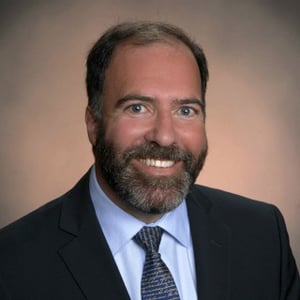
Professor of Law, Widener University Commonwealth Law School
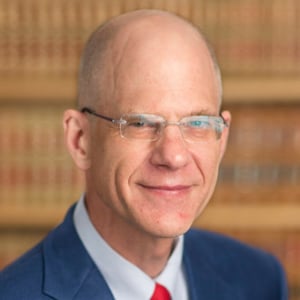
Charles W. Ebersold and Florence Whitcomb Ebersold Chair in Constitutional Law; Director, Election Law @ Moritz, Ohio State University Moritz College of Law
Professor Foley (known as “Ned”) directs Election Law @ Moritz at Ohio State’s law school, where he also holds the Ebersold Chair in Constitutional Law.
His book Ballot Battles: The History of Disputed Elections in the United States (Oxford University Press, 2016) was named Finalist for the David J. Langum, Sr. Prize in American Legal History and listed as one of 100 “must-read books about law and social justice”.
He has completed a new book manuscript, Presidential Elections and Majority Rule (to be published by Oxford University Press), which employs historical analysis to offer a feasible reform of state laws that would enable the Electoral College to operate as intended and thereby avoid the election of presidents who lack majority support among the voters in the states responsible for their Electoral College victories.
As Reporter for the American Law Institute’s Project on Election Administration (with his Mortiz colleague Steven Huefner, who served as Associate Reporter), Professor Foley drafted Principles of Law: Non-Precinct Voting and Resolution of Ballot-Counting Disputes, which provides nonpartisan guidance for the resolution of election disputes.
During his fellowship at Stanford University’s Center on Democracy, Development, and the Rule of Law, Foley wrote Due Process, Fair Play and Excessive Partisanship: A New Principle of Judicial Review of Election Law, 84 U. Chicago Law Review 655-758 (2017), which was cited in briefs in Gill v. Whitford and Benisek v. Lamone (the Supreme Court gerrymandering cases). His extensive online commentary about gerrymandering includes: Wechsler, History, and Gerrymandering, Scotusblog, and Constitutional Preservation, the Marbury Duty & Congressional Gerrymanders, Election Law Blog.
While Professor Foley has special expertise on recounts and other procedures for fairly and accurately identifying which candidate is the winner in close elections, he has written widely on all aspects of election law, including the need for nonpartisan institutions in election administration. He has also co-authored Election Law and Litigation: The Judicial Regulation of Politics (Wolters Kluwer 2014).
Professor Foley has taught at Ohio State since 1991. Previously, he clerked for Chief Judge Patricia M. Wald of the U.S. Court of Appeals and Justice Harry Blackmun of the United States Supreme Court. In 1999, he took a leave from the faculty to serve as the state solicitor in the office of Ohio’s Attorney General. In that capacity, he was responsible for the state’s appellate and constitutional cases.
Professor Foley is a graduate of Columbia University School of Law and Yale College.
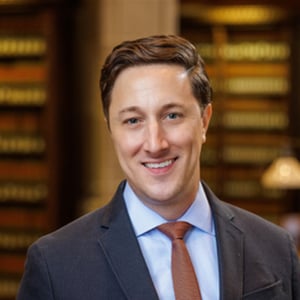
Professor of Law, Notre Dame Law School
Professor Derek Muller is a nationally-recognized scholar in the field of election law. His research focuses on the role of states in the administration of federal elections, the constitutional contours of voting rights and election administration, the limits of judicial power in the domain of elections, and the Electoral College.
He has published more than two dozen academic works, and his op-eds have appeared in the New York Times, the Los Angeles Times, and the Wall Street Journal. He has testified before Congress, and he is a contributor at the Election Law Blog. He is a co-author on a Federal Courts casebook published by Carolina Academic Press. He is also the co-reporter on a new Restatement of the Law, Election Litigation, an effort led by the American Law Institute.
Professor Muller teaches Election Law, Civil Procedure, and Evidence.
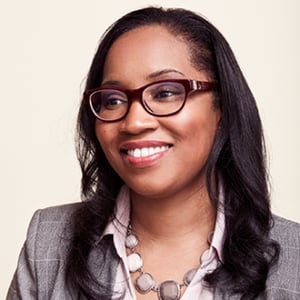
George T. and Harriet E. Pfleger Chair in Law, USC Gould School of Law
Franita Tolson is the George T. and Harriet E. Pfleger Chair in Law at the University of Southern California Gould School of Law. She also holds a courtesy faculty appointment in the Political Science and International Relations Department at the USC Dornsife College of Letter, Arts and Sciences.
Her scholarship and teaching focus on the areas of election law, constitutional law, legal history, and employment discrimination. She has written on a wide range of topics including partisan gerrymandering, political parties, the Elections Clause, the Voting Rights Act of 1965, and the Fourteenth and Fifteenth Amendments.
Her research has appeared or will appear in leading law reviews including the Yale Law Journal, Harvard Law Review, Stanford Law Review, California Law Review, University of Pennsylvania Law Review, and Vanderbilt Law Review. Tolson is one of the coauthors of the leading election law casebook, The Law of Democracy (Foundation Press, 6th ed., forthcoming 2022). Her forthcoming book, In Congress We Trust?: Enforcing Voting Rights from the Founding to the Jim Crow Era, will be published in 2023 by Cambridge University Press.
As a nationally recognized expert in election law, Tolson has written for or appeared as a commentator for various mass media outlets including The New York Times, The Los Angeles Times, the Wall Street Journal, Reuters and Bloomberg Law. She has testified before Congress numerous times on voting rights issues. She has also authored a legal analysis for an amendment to the U.S. Constitution, introduced by Senator Elizabeth Warren and Senator Richard Durbin, that would explicitly protect the right to vote. During the fall of 2020, Tolson worked as an election law analyst for CNN. She currently co-hosts an election themed podcast, Free and Fair with Franita and Foley, with Ned Foley of The Ohio State University Moritz College of Law.
Prior to joining USC, Tolson was the Betty T. Ferguson Professor of Voting Rights at Florida State University College of Law and a visiting assistant professor at Northwestern University School of Law. Before entering academia, she clerked for the Honorable Ann Claire Williams of the United States Court of Appeals for the Seventh Circuit and the Honorable Ruben Castillo of the Northern District of Illinois.
Tolson is a graduate of the University of Chicago Law School, where she was the Walter V. Schaefer Visiting Professor of Law during the Spring 2021 academic quarter.
Harold Paul Green Research Professor of Law, George Washington University School of Law
Robert J. Cottrol joined the law school faculty in 1995 as a visiting professor of law of legal history. Previously, he taught at Rutgers University and Boston College, and had visited at the University of Virginia. As well as specializing in American legal history, Professor Cottrol has also taught torts and criminal law. His writings on law and history have appeared in the Yale Law Journal, Georgetown Law Journal, American Journal of Legal History, Law and Society Review, Slavery and Abolition: A Journal of Slave and Post-Slave Studies and American Quarterly, among others.
He is the author of The Afro-Yankees: Providence’s Black Community in the Antebellum Era (selected by Choice as an outstanding academic book for 1983), editor of Gun Control and the Constitution: Sources and Explorations on the Second Amendment (Book of the Month selection by the History Book Club), and From African to Yankee: Narratives of Slavery and Freedom in Antebellum New England (1998). Professor Cottrol’s book Brown v. Board of Education: Caste, Culture and the Constitution (2003) won the Langum Project Prize for Historical Literature in 2003 and was a “Book-of-the-Month” selection of the History Book Club. Most recently, he has authored The Long, Lingering Shadow: Slavery, Race, and Law in the American Hemisphere (2013).
He is currently doing research contrasting the role of law in the development of systems of slavery and racial hierarchy in the United States and Latin America. He has lectured on American law at the Federal Universities of Santa Catarina and Rio Grande do Sul in Brazil and the University of Buenos Aires and La Universidad del Museo Social in Argentina.
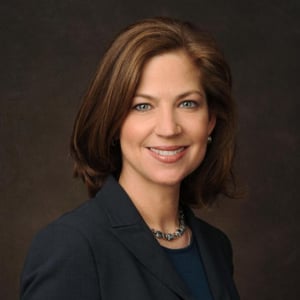
Chief Legal Correspondent, CBS News
Jan Crawford is CBS News' chief legal correspondent and contributes regularly to the "CBS Evening News," "CBS This Morning," and "Face the Nation," as well as CBS News Radio and CBSNews.com.
Crawford joined CBS News in October 2009. She had been a regular contributor to CBS News in 2005 to 2006.
Crawford is a recognized authority on the Supreme Court whose 2007 book, "Supreme Conflict: The Inside Story of the Struggle for the Control of the United States Supreme Court" (Penguin Press), gained critical acclaim and became an instant New York Times Bestseller. She began covering the Court in 1994 for the Chicago Tribune and went on to become a law and political correspondent for all ABC News programs, a Supreme Court analyst for The NewsHour With Jim Lehrer on PBS and a legal analyst for CBS News' "CBS Evening News" and "Face the Nation." She has reported on most of the major judicial appointments and confirmation hearings of the past 15 years and amassed crucial sources in the White House, the Justice Department and Congress along the way.
Chief Justice John Roberts granted his first network television interview to Crawford, just one of the rare interviews she was able to obtain with a total of five of the Court's current members, as well as retired Justice Sandra Day O'Connor. Crawford also sat down with then-86-year-old Justice John Paul Stevens in his first television interview, as well as Justices Clarence Thomas, Antonin Scalia and Stephen Breyer.
Crawford's in-depth reports on the Bush Administration's legal war on terror and her exclusive reports on controversial interrogation techniques used for terror suspects have received wide acclaim and been credited with being a catalyst for congressional hearings. Washingtonian Magazine named her one of Washington's top journalists.
Crawford began her journalistic career at the Tribune in 1987, joining the legal affairs beat in 1993, after her graduation from the University of Chicago Law School. The newspaper awarded Crawford its highest award in 2001, for her role on a team of reporters covering the presidential election of 2000, and the legal battles over the White House. She won the same prize for her 13-part series on the post-civil rights South, a project that brought her back to her native Alabama.
Crawford graduated from the University of Alabama in 1987. She has taught journalism at American University and frequently speaks about the Court to universities, law schools, legal organizations and civic groups across the country. She is a member of the New York Bar. She and her family live in Washington D.C.
Partner, Goldstein & Russell PC
Thomas C. Goldstein has argued 28 cases before the Supreme Court, including matters involving federal patent law, class action practice, labor and employment, and disability law. In addition to practicing law, Tom teaches Supreme Court Litigation at Harvard Law School and taught at Stanford Law School as well from 2004-2012.
In the Supreme Court and elsewhere, Mr. Goldstein litigates and advises clients in a broad range of issues. For example, he regularly litigates and lectures on questions of federal patent law. Mr. Goldstein frequently advises clients, litigates, and consults on legislative matters relating to the First Amendment. And he regularly represents parties in questions relating to the game of poker, including its lawfulness as a matter of federal and state law. Tom's clients include plaintiffs, criminal defendants, and major corporations such as BG Group, Home Depot, Humana, IMS Health, Nike, PokerStars, POM Wonderful, and Pemex.
In addition to practicing law, Tom founded, and is the publisher of, SCOTUSblog, which in 2013 became the only weblog ever to receive the Peabody Award for excellence in electronic media. It also won the 2013 Society of Professional Journalists (Sigma Delta Chi) prize for deadline reporting for its coverage of the Supreme Court’s healthcare ruling. In 2010, it became the first blog to receive the American Bar Association’s Silver Gavel Award for fostering the American public’s understanding of law and the legal system.
Tom has been repeatedly recognized as a leading member of the bar. In 2010, The National Law Journal named him one of the 40 most influential lawyers of the decade; Tom notably was ten years younger than any other law firm partner listed. Legal Times named him one of the “90 Greatest Washington Lawyers of the Last 30 Years” and praised him for “transforming the practice” of law before the Supreme Court. He is also included in both of the National Law Journal’s most recent lists of the nation’s 100 most influential lawyers (2006 and 2013). He has been repeatedly recognized as one of the nation’s top appellate advocates. GQ Magazine named him one of the 50 most powerful people in Washington, D.C.
Tom is an elected Fellow of the American Academy of Appellate Lawyers, and a member of the American Law Institute. He is involved with a number of professional organizations. He serves as the vice chair of the Amicus Committee of the ABA’s Intellectual Property Section and previously served for two years on the ABA’s Standing Committee on Amicus Curiae Briefs. In those capacities, he has authored several Supreme Court amicus briefs for the ABA. In addition, Tom serves on the boards of advisors of the Washington Legal Foundation and the Georgetown University Supreme Court Institute.
Before founding Goldstein & Howe in 1999, Tom practiced law at Boies & Schiller, LLP and at Jones Day Reavis & Pogue. Tom left the firm he founded in 2006 to create the Supreme Court Practice at Akin, Gump, Strauss, Hauer & Feld, where he also was a partner and principal co-chair of the firmwide litigation practice. He returned to what is now Goldstein & Russell in 2011.
Tom clerked for the Honorable Patricia M. Wald of the U.S. Court of Appeals for the D.C. Circuit.
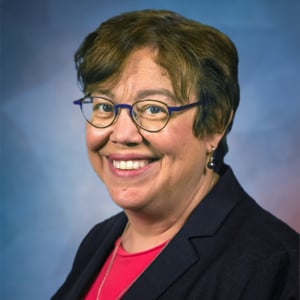
Executive Vice President and Senior Counselor to the President, The Federalist Society for Law and Public Policy Studies
B.A., Yale; J.D., University of Chicago. Lee Liberman Otis is the Executive Vice President and Senior Counselor to the President at the Federalist Society. She also serves as a member of the American Law Institute (ALI), a senior fellow of the Administrative Conference (ACUS), and as the co-chair of the National Constitution Center's Coalition of Freedom Advisory Board. She previously was a special assistant and an Associate Deputy Attorney General at the U.S. Department of Justice, General Counsel of the Department of Energy, an associate in the appellate section of Jones, Day, Reavis & Pogue, an associate counsel to President George H.W. Bush, and a law clerk to Associate Justice Antonin Scalia. She also served as an assistant professor of law at George Mason, where she taught legislation, federal jurisdiction, constitutional law, civil procedure, and appellate advocacy. Ms. Otis has been an important member of the Federalist Society team since the organization’s beginnings. Together with David McIntosh, she led the effort to start what became the Chicago chapter of the Society. She also helped organize the Society’s first conference at Yale, its second conference at Chicago, and its first Lawyers Division chapter in Washington DC, as well as the effort to incorporate the Society, recruit its permanent staff, and obtain its early funding. She was a Founding Director of the Federalist Society.
President, JCN
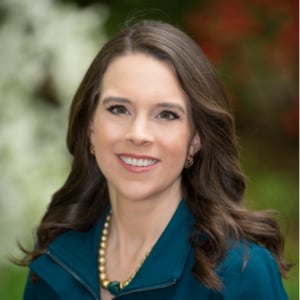
Carrie Campbell Severino is the president of the JCN, and co-author with Mollie Hemingway of the bestselling book Justice on Trial: The Kavanaugh Confirmation and the Future of the Court. As a go-to expert on the confirmation process, Mrs. Severino has been extensively quoted in the media. She regularly appears on television, including FOX, CNN, MSNBC, C-SPAN, and ABC’s This Week.
Severino writes and speaks on a wide range of judicial issues, including the constitutional limits on government, the federal nomination process, and state judicial selection. She has testified before Congress on constitutional questions and briefed Senators on judicial nominations, and regularly files briefs in high-profile Supreme Court cases. She was a law clerk to Supreme Court Justice Clarence Thomas and to Judge David B. Sentelle of the U.S. Court of Appeals for the D.C. Circuit, and is a graduate of Harvard Law School (J.D.), Duke University (B.A., Biology), and Michigan State University (M.A., Linguistics).
Partner, Davis Polk & Wardwell LLP
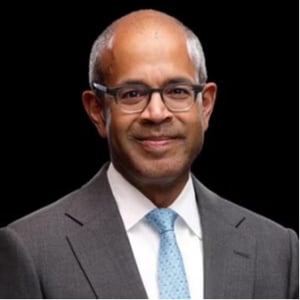
Kannon is the head of our Supreme Court & Appellate practice. He has argued 39 cases before the U.S. Supreme Court and has argued more than 150 appeals in courts across the country, including every federal court of appeals and numerous state courts.
Kannon is ranked as a “Star Individual” in appellate law by Chambers USA, where a client notes, “It’s hard to think of enough superlatives to describe his talent, his judgment, his ability, his experience – he is as good as it gets.” Legal 500 U.S. recognizes Kannon in its Hall of Fame for appellate work. A client shares, “His work is the best in the business, and he is a wonderful human being in addition to being a world-class appellate litigator.”
In 2024 and 2022, Kannon was a finalist for the American Lawyer’s “Litigator of the Year” award. He was named “Appellate Litigator of the Year” by Benchmark Litigation in 2021 and was a 2026 finalist for that recognition.
Before entering private practice, Kannon served as an Assistant to the Solicitor General at the U.S. Department of Justice.

Professor of Law, South Texas College of Law Houston
Josh Blackman is a national thought leader on constitutional law and the United States Supreme Court. Josh’s work was quoted during two presidential impeachment trials. He has testified before Congress and advises federal and state lawmakers. Josh regularly appears on TV, including NBC, CBS, ABC, Fox, and the BBC. Josh is also a frequent guest on NPR and other syndicated radio programs. He has published commentaries in the New York Times, Wall Street Journal, Washington Post, and leading national publications.
Since 2012, Josh has served as a professor at the South Texas College of Law Houston. He holds the Centennial Chair of Constitutional Law. Josh is an Adjunct Fellow at the Manhattan Institute. Josh has written more than seven dozen law review articles that have been cited more than a thousand times. Josh was selected as the Jurist of the Year by the Texas Journal of Law & Public Policy, received the inaugural Meese III Originalism Award, and was awarded the Inaugural Joseph Story Award. Josh was selected by Forbes Magazine for the “30 Under 30” in Law and Policy. Josh is the President of the Harlan Institute, and founded FantasySCOTUS, the Internet’s Premier Supreme Court Fantasy League. He blogs at the Volokh Conspiracyand posts@JoshMBlackman.
Harold Paul Green Research Professor of Law, George Washington University School of Law
Robert J. Cottrol joined the law school faculty in 1995 as a visiting professor of law of legal history. Previously, he taught at Rutgers University and Boston College, and had visited at the University of Virginia. As well as specializing in American legal history, Professor Cottrol has also taught torts and criminal law. His writings on law and history have appeared in the Yale Law Journal, Georgetown Law Journal, American Journal of Legal History, Law and Society Review, Slavery and Abolition: A Journal of Slave and Post-Slave Studies and American Quarterly, among others.
He is the author of The Afro-Yankees: Providence’s Black Community in the Antebellum Era (selected by Choice as an outstanding academic book for 1983), editor of Gun Control and the Constitution: Sources and Explorations on the Second Amendment (Book of the Month selection by the History Book Club), and From African to Yankee: Narratives of Slavery and Freedom in Antebellum New England (1998). Professor Cottrol’s book Brown v. Board of Education: Caste, Culture and the Constitution (2003) won the Langum Project Prize for Historical Literature in 2003 and was a “Book-of-the-Month” selection of the History Book Club. Most recently, he has authored The Long, Lingering Shadow: Slavery, Race, and Law in the American Hemisphere (2013).
He is currently doing research contrasting the role of law in the development of systems of slavery and racial hierarchy in the United States and Latin America. He has lectured on American law at the Federal Universities of Santa Catarina and Rio Grande do Sul in Brazil and the University of Buenos Aires and La Universidad del Museo Social in Argentina.
Harold Paul Green Research Professor of Law, George Washington University School of Law
Robert J. Cottrol joined the law school faculty in 1995 as a visiting professor of law of legal history. Previously, he taught at Rutgers University and Boston College, and had visited at the University of Virginia. As well as specializing in American legal history, Professor Cottrol has also taught torts and criminal law. His writings on law and history have appeared in the Yale Law Journal, Georgetown Law Journal, American Journal of Legal History, Law and Society Review, Slavery and Abolition: A Journal of Slave and Post-Slave Studies and American Quarterly, among others.
He is the author of The Afro-Yankees: Providence’s Black Community in the Antebellum Era (selected by Choice as an outstanding academic book for 1983), editor of Gun Control and the Constitution: Sources and Explorations on the Second Amendment (Book of the Month selection by the History Book Club), and From African to Yankee: Narratives of Slavery and Freedom in Antebellum New England (1998). Professor Cottrol’s book Brown v. Board of Education: Caste, Culture and the Constitution (2003) won the Langum Project Prize for Historical Literature in 2003 and was a “Book-of-the-Month” selection of the History Book Club. Most recently, he has authored The Long, Lingering Shadow: Slavery, Race, and Law in the American Hemisphere (2013).
He is currently doing research contrasting the role of law in the development of systems of slavery and racial hierarchy in the United States and Latin America. He has lectured on American law at the Federal Universities of Santa Catarina and Rio Grande do Sul in Brazil and the University of Buenos Aires and La Universidad del Museo Social in Argentina.
Professor of Law, Widener University Commonwealth Law School
Charles W. Ebersold and Florence Whitcomb Ebersold Chair in Constitutional Law; Director, Election Law @ Moritz, Ohio State University Moritz College of Law
Professor Foley (known as “Ned”) directs Election Law @ Moritz at Ohio State’s law school, where he also holds the Ebersold Chair in Constitutional Law.
His book Ballot Battles: The History of Disputed Elections in the United States (Oxford University Press, 2016) was named Finalist for the David J. Langum, Sr. Prize in American Legal History and listed as one of 100 “must-read books about law and social justice”.
He has completed a new book manuscript, Presidential Elections and Majority Rule (to be published by Oxford University Press), which employs historical analysis to offer a feasible reform of state laws that would enable the Electoral College to operate as intended and thereby avoid the election of presidents who lack majority support among the voters in the states responsible for their Electoral College victories.
As Reporter for the American Law Institute’s Project on Election Administration (with his Mortiz colleague Steven Huefner, who served as Associate Reporter), Professor Foley drafted Principles of Law: Non-Precinct Voting and Resolution of Ballot-Counting Disputes, which provides nonpartisan guidance for the resolution of election disputes.
During his fellowship at Stanford University’s Center on Democracy, Development, and the Rule of Law, Foley wrote Due Process, Fair Play and Excessive Partisanship: A New Principle of Judicial Review of Election Law, 84 U. Chicago Law Review 655-758 (2017), which was cited in briefs in Gill v. Whitford and Benisek v. Lamone (the Supreme Court gerrymandering cases). His extensive online commentary about gerrymandering includes: Wechsler, History, and Gerrymandering, Scotusblog, and Constitutional Preservation, the Marbury Duty & Congressional Gerrymanders, Election Law Blog.
While Professor Foley has special expertise on recounts and other procedures for fairly and accurately identifying which candidate is the winner in close elections, he has written widely on all aspects of election law, including the need for nonpartisan institutions in election administration. He has also co-authored Election Law and Litigation: The Judicial Regulation of Politics (Wolters Kluwer 2014).
Professor Foley has taught at Ohio State since 1991. Previously, he clerked for Chief Judge Patricia M. Wald of the U.S. Court of Appeals and Justice Harry Blackmun of the United States Supreme Court. In 1999, he took a leave from the faculty to serve as the state solicitor in the office of Ohio’s Attorney General. In that capacity, he was responsible for the state’s appellate and constitutional cases.
Professor Foley is a graduate of Columbia University School of Law and Yale College.
Professor of Law, Notre Dame Law School
Professor Derek Muller is a nationally-recognized scholar in the field of election law. His research focuses on the role of states in the administration of federal elections, the constitutional contours of voting rights and election administration, the limits of judicial power in the domain of elections, and the Electoral College.
He has published more than two dozen academic works, and his op-eds have appeared in the New York Times, the Los Angeles Times, and the Wall Street Journal. He has testified before Congress, and he is a contributor at the Election Law Blog. He is a co-author on a Federal Courts casebook published by Carolina Academic Press. He is also the co-reporter on a new Restatement of the Law, Election Litigation, an effort led by the American Law Institute.
Professor Muller teaches Election Law, Civil Procedure, and Evidence.
George T. and Harriet E. Pfleger Chair in Law, USC Gould School of Law
Franita Tolson is the George T. and Harriet E. Pfleger Chair in Law at the University of Southern California Gould School of Law. She also holds a courtesy faculty appointment in the Political Science and International Relations Department at the USC Dornsife College of Letter, Arts and Sciences.
Her scholarship and teaching focus on the areas of election law, constitutional law, legal history, and employment discrimination. She has written on a wide range of topics including partisan gerrymandering, political parties, the Elections Clause, the Voting Rights Act of 1965, and the Fourteenth and Fifteenth Amendments.
Her research has appeared or will appear in leading law reviews including the Yale Law Journal, Harvard Law Review, Stanford Law Review, California Law Review, University of Pennsylvania Law Review, and Vanderbilt Law Review. Tolson is one of the coauthors of the leading election law casebook, The Law of Democracy (Foundation Press, 6th ed., forthcoming 2022). Her forthcoming book, In Congress We Trust?: Enforcing Voting Rights from the Founding to the Jim Crow Era, will be published in 2023 by Cambridge University Press.
As a nationally recognized expert in election law, Tolson has written for or appeared as a commentator for various mass media outlets including The New York Times, The Los Angeles Times, the Wall Street Journal, Reuters and Bloomberg Law. She has testified before Congress numerous times on voting rights issues. She has also authored a legal analysis for an amendment to the U.S. Constitution, introduced by Senator Elizabeth Warren and Senator Richard Durbin, that would explicitly protect the right to vote. During the fall of 2020, Tolson worked as an election law analyst for CNN. She currently co-hosts an election themed podcast, Free and Fair with Franita and Foley, with Ned Foley of The Ohio State University Moritz College of Law.
Prior to joining USC, Tolson was the Betty T. Ferguson Professor of Voting Rights at Florida State University College of Law and a visiting assistant professor at Northwestern University School of Law. Before entering academia, she clerked for the Honorable Ann Claire Williams of the United States Court of Appeals for the Seventh Circuit and the Honorable Ruben Castillo of the Northern District of Illinois.
Tolson is a graduate of the University of Chicago Law School, where she was the Walter V. Schaefer Visiting Professor of Law during the Spring 2021 academic quarter.
Harold Paul Green Research Professor of Law, George Washington University School of Law
Robert J. Cottrol joined the law school faculty in 1995 as a visiting professor of law of legal history. Previously, he taught at Rutgers University and Boston College, and had visited at the University of Virginia. As well as specializing in American legal history, Professor Cottrol has also taught torts and criminal law. His writings on law and history have appeared in the Yale Law Journal, Georgetown Law Journal, American Journal of Legal History, Law and Society Review, Slavery and Abolition: A Journal of Slave and Post-Slave Studies and American Quarterly, among others.
He is the author of The Afro-Yankees: Providence’s Black Community in the Antebellum Era (selected by Choice as an outstanding academic book for 1983), editor of Gun Control and the Constitution: Sources and Explorations on the Second Amendment (Book of the Month selection by the History Book Club), and From African to Yankee: Narratives of Slavery and Freedom in Antebellum New England (1998). Professor Cottrol’s book Brown v. Board of Education: Caste, Culture and the Constitution (2003) won the Langum Project Prize for Historical Literature in 2003 and was a “Book-of-the-Month” selection of the History Book Club. Most recently, he has authored The Long, Lingering Shadow: Slavery, Race, and Law in the American Hemisphere (2013).
He is currently doing research contrasting the role of law in the development of systems of slavery and racial hierarchy in the United States and Latin America. He has lectured on American law at the Federal Universities of Santa Catarina and Rio Grande do Sul in Brazil and the University of Buenos Aires and La Universidad del Museo Social in Argentina.
Chief Legal Correspondent, CBS News
Jan Crawford is CBS News' chief legal correspondent and contributes regularly to the "CBS Evening News," "CBS This Morning," and "Face the Nation," as well as CBS News Radio and CBSNews.com.
Crawford joined CBS News in October 2009. She had been a regular contributor to CBS News in 2005 to 2006.
Crawford is a recognized authority on the Supreme Court whose 2007 book, "Supreme Conflict: The Inside Story of the Struggle for the Control of the United States Supreme Court" (Penguin Press), gained critical acclaim and became an instant New York Times Bestseller. She began covering the Court in 1994 for the Chicago Tribune and went on to become a law and political correspondent for all ABC News programs, a Supreme Court analyst for The NewsHour With Jim Lehrer on PBS and a legal analyst for CBS News' "CBS Evening News" and "Face the Nation." She has reported on most of the major judicial appointments and confirmation hearings of the past 15 years and amassed crucial sources in the White House, the Justice Department and Congress along the way.
Chief Justice John Roberts granted his first network television interview to Crawford, just one of the rare interviews she was able to obtain with a total of five of the Court's current members, as well as retired Justice Sandra Day O'Connor. Crawford also sat down with then-86-year-old Justice John Paul Stevens in his first television interview, as well as Justices Clarence Thomas, Antonin Scalia and Stephen Breyer.
Crawford's in-depth reports on the Bush Administration's legal war on terror and her exclusive reports on controversial interrogation techniques used for terror suspects have received wide acclaim and been credited with being a catalyst for congressional hearings. Washingtonian Magazine named her one of Washington's top journalists.
Crawford began her journalistic career at the Tribune in 1987, joining the legal affairs beat in 1993, after her graduation from the University of Chicago Law School. The newspaper awarded Crawford its highest award in 2001, for her role on a team of reporters covering the presidential election of 2000, and the legal battles over the White House. She won the same prize for her 13-part series on the post-civil rights South, a project that brought her back to her native Alabama.
Crawford graduated from the University of Alabama in 1987. She has taught journalism at American University and frequently speaks about the Court to universities, law schools, legal organizations and civic groups across the country. She is a member of the New York Bar. She and her family live in Washington D.C.
Partner, Goldstein & Russell PC
Thomas C. Goldstein has argued 28 cases before the Supreme Court, including matters involving federal patent law, class action practice, labor and employment, and disability law. In addition to practicing law, Tom teaches Supreme Court Litigation at Harvard Law School and taught at Stanford Law School as well from 2004-2012.
In the Supreme Court and elsewhere, Mr. Goldstein litigates and advises clients in a broad range of issues. For example, he regularly litigates and lectures on questions of federal patent law. Mr. Goldstein frequently advises clients, litigates, and consults on legislative matters relating to the First Amendment. And he regularly represents parties in questions relating to the game of poker, including its lawfulness as a matter of federal and state law. Tom's clients include plaintiffs, criminal defendants, and major corporations such as BG Group, Home Depot, Humana, IMS Health, Nike, PokerStars, POM Wonderful, and Pemex.
In addition to practicing law, Tom founded, and is the publisher of, SCOTUSblog, which in 2013 became the only weblog ever to receive the Peabody Award for excellence in electronic media. It also won the 2013 Society of Professional Journalists (Sigma Delta Chi) prize for deadline reporting for its coverage of the Supreme Court’s healthcare ruling. In 2010, it became the first blog to receive the American Bar Association’s Silver Gavel Award for fostering the American public’s understanding of law and the legal system.
Tom has been repeatedly recognized as a leading member of the bar. In 2010, The National Law Journal named him one of the 40 most influential lawyers of the decade; Tom notably was ten years younger than any other law firm partner listed. Legal Times named him one of the “90 Greatest Washington Lawyers of the Last 30 Years” and praised him for “transforming the practice” of law before the Supreme Court. He is also included in both of the National Law Journal’s most recent lists of the nation’s 100 most influential lawyers (2006 and 2013). He has been repeatedly recognized as one of the nation’s top appellate advocates. GQ Magazine named him one of the 50 most powerful people in Washington, D.C.
Tom is an elected Fellow of the American Academy of Appellate Lawyers, and a member of the American Law Institute. He is involved with a number of professional organizations. He serves as the vice chair of the Amicus Committee of the ABA’s Intellectual Property Section and previously served for two years on the ABA’s Standing Committee on Amicus Curiae Briefs. In those capacities, he has authored several Supreme Court amicus briefs for the ABA. In addition, Tom serves on the boards of advisors of the Washington Legal Foundation and the Georgetown University Supreme Court Institute.
Before founding Goldstein & Howe in 1999, Tom practiced law at Boies & Schiller, LLP and at Jones Day Reavis & Pogue. Tom left the firm he founded in 2006 to create the Supreme Court Practice at Akin, Gump, Strauss, Hauer & Feld, where he also was a partner and principal co-chair of the firmwide litigation practice. He returned to what is now Goldstein & Russell in 2011.
Tom clerked for the Honorable Patricia M. Wald of the U.S. Court of Appeals for the D.C. Circuit.
Executive Vice President and Senior Counselor to the President, The Federalist Society for Law and Public Policy Studies
B.A., Yale; J.D., University of Chicago. Lee Liberman Otis is the Executive Vice President and Senior Counselor to the President at the Federalist Society. She also serves as a member of the American Law Institute (ALI), a senior fellow of the Administrative Conference (ACUS), and as the co-chair of the National Constitution Center's Coalition of Freedom Advisory Board. She previously was a special assistant and an Associate Deputy Attorney General at the U.S. Department of Justice, General Counsel of the Department of Energy, an associate in the appellate section of Jones, Day, Reavis & Pogue, an associate counsel to President George H.W. Bush, and a law clerk to Associate Justice Antonin Scalia. She also served as an assistant professor of law at George Mason, where she taught legislation, federal jurisdiction, constitutional law, civil procedure, and appellate advocacy. Ms. Otis has been an important member of the Federalist Society team since the organization’s beginnings. Together with David McIntosh, she led the effort to start what became the Chicago chapter of the Society. She also helped organize the Society’s first conference at Yale, its second conference at Chicago, and its first Lawyers Division chapter in Washington DC, as well as the effort to incorporate the Society, recruit its permanent staff, and obtain its early funding. She was a Founding Director of the Federalist Society.
President, JCN
Carrie Campbell Severino is the president of the JCN, and co-author with Mollie Hemingway of the bestselling book Justice on Trial: The Kavanaugh Confirmation and the Future of the Court. As a go-to expert on the confirmation process, Mrs. Severino has been extensively quoted in the media. She regularly appears on television, including FOX, CNN, MSNBC, C-SPAN, and ABC’s This Week.
Severino writes and speaks on a wide range of judicial issues, including the constitutional limits on government, the federal nomination process, and state judicial selection. She has testified before Congress on constitutional questions and briefed Senators on judicial nominations, and regularly files briefs in high-profile Supreme Court cases. She was a law clerk to Supreme Court Justice Clarence Thomas and to Judge David B. Sentelle of the U.S. Court of Appeals for the D.C. Circuit, and is a graduate of Harvard Law School (J.D.), Duke University (B.A., Biology), and Michigan State University (M.A., Linguistics).
Partner, Davis Polk & Wardwell LLP
Kannon is the head of our Supreme Court & Appellate practice. He has argued 39 cases before the U.S. Supreme Court and has argued more than 150 appeals in courts across the country, including every federal court of appeals and numerous state courts.
Kannon is ranked as a “Star Individual” in appellate law by Chambers USA, where a client notes, “It’s hard to think of enough superlatives to describe his talent, his judgment, his ability, his experience – he is as good as it gets.” Legal 500 U.S. recognizes Kannon in its Hall of Fame for appellate work. A client shares, “His work is the best in the business, and he is a wonderful human being in addition to being a world-class appellate litigator.”
In 2024 and 2022, Kannon was a finalist for the American Lawyer’s “Litigator of the Year” award. He was named “Appellate Litigator of the Year” by Benchmark Litigation in 2021 and was a 2026 finalist for that recognition.
Before entering private practice, Kannon served as an Assistant to the Solicitor General at the U.S. Department of Justice.

Thirteenth Annual Delaware Firearms Law Seminar
Delaware Lawyer Chapter
WIlmington, DEDelaware Firearms Law Seminar
Wilmington, DEPanel: Election Law in Flux
Robert J. Cottrol, Michael R. Dimino, Edward B. Foley, Derek T. Muller, Franita Tolson
Election law has attracted increasing academic and judicial scrutiny in recent years, with topics of...
Panel: Election Law in Flux
24th Annual Federalist Society Faculty Conference
San Diego, CA24th Annual Federalist Society Faculty Conference
San Diego, CASupreme Court Preview: What Is in Store for October Term 2021?
Robert J. Cottrol, Jan Crawford, Thomas C. Goldstein, Lee Liberman Otis, Carrie Campbell Severino, Kannon K. Shanmugam
On September 22, 2021, the Federalist Society's Faculty Division and Practice Groups hosted a panel at the Mayflower...
Supreme Court Preview: What Is in Store for October Term 2021?
Co-Sponsored by the Faculty Division and Practice Groups
Washington, DCSupreme Court Preview: What Is in Store for October Term 2019?
Co-Sponsored by the Faculty Division and Practice Groups
Washington, DCFirst & Second Amendment Challenges to Bans on 3-D Printed Guns