
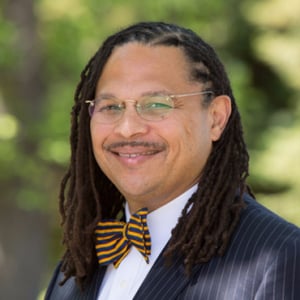
William F. Baxter-Visa International Professor of Law, Stanford Law School
Marcus Cole is a leading scholar of the empirical law and economics of commerce and finance, and teaches courses in the areas of Bankruptcy, Banking, Contracts, and Venture Capital. Professor Cole’s writings have explored questions such as why corporate bankruptcies are increasingly filed in Delaware, and what drives the financial structure of firms backed by venture capital. His current research interests involve the ways in which the world’s poor are using technology to solve their own problems, often in the face of government restrictions hindering such solutions. Professor Cole has served as a National Fellow at the Hoover Institution, and is a Fellow at the University of Amsterdam Center for Law and Economics. He has been a Visiting Professor at a number of institutions around the world, including the University of Amsterdam, the University of Vienna, the University of Leiden, Bucerius University in Hamburg, Germany, Northwestern University, Korea University, and Peking University School of Transnational Law in Shenzhen. Professor Cole has also served on the boards of several civic and charitable organizations, including that of the Central Pacific Region of the Anti-Defamation League of B’nai B’rith, and Businesses United in Lending and Development (“BUILD”). He currently serves on the Editorial Board of the Cato Supreme Court Review, the Academic Advisory Board of Bar-Bri, the Advisory Board of the Independent Institute’s Center on Culture and Civil Society, and is President of the Board of Directors of Rocketship Education, a national, non-profit charter school network, operating California’s most successful charter schools for low-income children. Before joining the Stanford Law faculty in 1997, Professor Cole was an associate with the Chicago law firm of Mayer Brown, and he clerked for Judge Morris Sheppard Arnold of the United States Court of Appeals for the Eighth Circuit.

Laurence A. Tisch Professor of Law and Director, Classical Liberal Institute, New York University School of Law; Director, Classical Liberal Institute, Civitas Institute University of Texas at Austin
Richard A. Epstein is the Laurence A. Tisch Professor of Law, at New York University, a senior research fellow at the Civitas Institute at the University of Texas Austin, and a senior Lecturer, the University of Chicago. He received an LL.D., h.c . from the University of Ghent, 2003 , and an LLD h.c . from the University of Siegen in 2018 and the Bradley Prize in 2011. He has been a member of the American Academy of Arts and Sciences since 1985. He has edited both the Journal of Legal Studies (1981-1991) and the Journal of Law and Economics (1991-2001). He is also a founder and director of the Classical Liberal Institute at NYU Law School. His most recent book is The Classical Liberal Constitution: The Uncertain Quest for Limited Government (2014). His other books include Takings: Private Property and the Power of Eminent Domain ( 1985); Bargaining with the State (1993); Simple Rules for a Complex World (1995); Principles for a Free Society: Reconciling Individual Liberty and the Common Good (1998); Skepticism and Freedom: A Modern Theory of Classical Liberalism (2003); Design for Liberty: Private Property, Public Administration and the Rule of Law (2011), and most recently, The Myth of Birthright citizenship—and Beyond (2026). He has taught courses in , administrative law, antitrust, constitutional, contracts, environmental law, land use planning; real property, torts and water law. He has written and spoken extensively on a wide range of topics, and is writes a regular column for Defining Ideas.
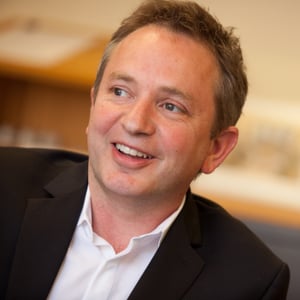
U.S. Court of Appeals, First Circuit
David Barron was appointed to the United States Court of Appeals for the First Circuit in May 2014. He graduated from Harvard College in 1989 and Harvard Law School in 1994. From 1989 to 1991, he worked as a newspaper reporter. After graduating from law school, he clerked for Judge Stephen R. Reinhardt of the United States Court of Appeals for the Ninth Circuit, from 1994 to 1995, and for Justice John Paul Stevens of the United States Supreme Court, from 1995 to 1996. He then worked as an attorney advisor for the Office of Legal Counsel of the United States Department of Justice, from 1996 to 1999. In 1999, Barron became an Assistant Professor at Harvard Law School. He became a full Professor at Harvard Law School in 2004, where he worked until he rejoined the Justice Department as Acting Assistant Attorney General for the Office of Legal Counsel, from 2009 to 2010. He then returned to the Harvard Law School faculty in 2010, where he was named the S. William Green Professor of Public Law in 2011, and worked until his appointment to the federal bench in 2014. Currently, Barron is the Honorable S. William Green Visiting Professor of Public Law at Harvard Law School. Barron has published articles in the Harvard Law Review, the Stanford Law Review, and the Yale Law Journal. His book, Waging War, won the 2017 William E. Colby Award.

Employment Discrimination
Stanford, CAThe Case for Local Constitutional Enforcement