
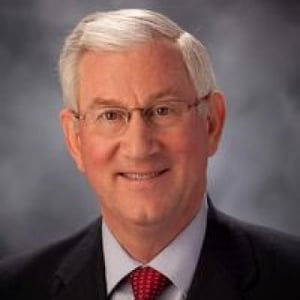
Of Counsel, Erickson & Sederstrom
Professional Positions
Former Member of National Association of Attorneys General Executive Committee (2002)
Member, Society of Attorneys General Emeritus (SAGE)
Washington Legal Foundation, Policy Advisory Board
Federalist Society, Member of the Federalism Subcommittee for Federalism and Separation of Powers
Former Member, TRANSLink Transmission Co., Board of Directors
Former Member, U.S. Chamber of Commerce Federalism Working Group
Former Chair, Nebraska Crime Commission
Honors and Accomplishments
Argued cases in the United States Supreme Court
Phi Beta Kappa
Republican Nominee for U.S. Senate in Nebraska (2000)
Founding Member of the Republican Attorneys General Association
Nebraska Fertilizer and Ag Chemical Institute's Government Official of the Year (2000)
Nebraska Coalition for Victims of Crime's Public Policy Award (1999)
Lincoln Independent Business Association's Business Champion Award (1997)
Lincoln Jaycees Outstanding Young Individual Award (1981)
Prior to Becoming of Counsel to Erickson & Sederstrom, P.C.
Attorney General of Nebraska (1991-2003)
Legal Counsel to the Governor of Nebraska (1979-1983)
University of Nebraska, Lincoln, B.A. (1970)
Harvard Business School, M.B.A. (1974)
Harvard Law School, J.D. (cum laude) (1974)
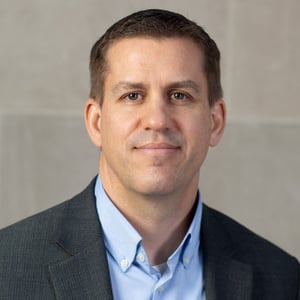
Clinical Professor, University of Texas at Austin School of Law
Steven T. Collis researches and teaches on religion and law and other First Amendment topics. He is the founding faculty director of the Bech-Loughlin First Amendment Center and of Texas's Law & Religion Clinic. On the topic of religious freedom law, he is a sought-after speaker to academic and lay audiences across the United States, including foreign diplomats from countries in Europe, the Middle East, Asia, and South America on behalf of the United States State Department. He has been interviewed by and quoted in various news and media outlets, including The Deseret News, Bloomberg, The Washington Times, Law360, The Salt Lake Tribune, PBS, The Denver Business Journal, Law Week Colorado, CBN News, and numerous podcasts and television shows. His scholarly work has appeared in The Michigan Law Review, The Nebraska Law Review, The University of Denver Law Review Online, and in his book Deep Conviction, which brings to life the history of free exercise law in the United States for lay audiences.
Prior to joining Texas, Steven was the Olin-Darling Research Fellow in the Constitutional Law Center at Stanford Law School.
Earlier in his career, he was an equity partner at Holland & Hart LLP, where he chaired the firm’s nationwide religious institutions and First Amendment practice group and was a member of the firm's complex civil litigation and employment practice groups. He also taught religious liberty law at the University of Denver Sturm College of Law and clerked for Chief Judge Timothy M. Tymkovich of the United States Court of Appeals for the Tenth Circuit.
Steven graduated magna cum laude from the University of Michigan Law School, where he was elected to the Order of the Coif and served as an editor on The Michigan Law Review and The Michigan Journal of Race and Law. He also holds an M.F.A. in creative writing from Virginia Commonwealth University, where he served as the associate editor of the literary journal Blackbird. He completed his undergraduate studies, with university honors, at Brigham Young University.
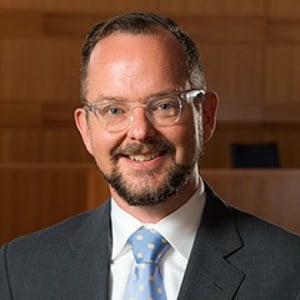
T.J. Maloney Chair in Business Law, Fordham University School of Law
Professor Griffith is an expert in corporate and financial regulatory law. He writes and speaks on corporate law, political economy, and the constitutional rights of corporations and other business associations. In addition to his academic writing, he has authored or contributed to many amicus briefs, including: Iowa v SEC, NCPPR v SEC, AFBR v SEC, and In re Tesla.
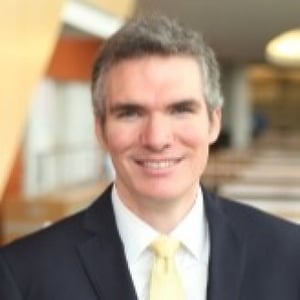
Associate Professor of Law, University of Florida Levin College of Law
Professor Ben Johnson is an Associate Professor of Law at the University of Florida Levin College of Law. He researches and writes on governance by committees. Sometimes, the governing committee is a board of directors. Other times, it is a committee of justices at the Supreme Court. His research has won awards from national organizations in law (AALS) and political science (APSA) and can be found in law reviews and peer reviewed outlets. His recent work on the Supreme Court has been published in the Columbia Law Review and Alabama Law Review. Earlier work on district judges with financial conflicts (published in the North Carolina Law Review) led to a large exposé in the Wall Street Journal. His game theoretic model of corporate fiduciary duties is forthcoming at the BYU Law Review. He has ongoing projects on the Supreme Court’s Shadow Docket, corporate fiduciary duties, shareholder voting, and machine learning.
Professor Johnson teaches Corporations (the only course in the curriculum where students learn to build and maintain institutions that can make the world a better place long after they are gone), Empirical Methods for Lawyers, and topics on the federal judiciary.
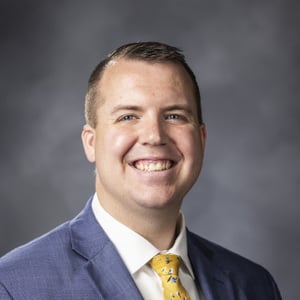
Associate Professor of Law, J. Reuben Clark Law School at Brigham Young University
Tyler Lindley joined BYU Law School in 2024 as an Associate Professor of Law. His research centers on the judicial role and the historical evolution of the judiciary in America. He has extensively examined and published on judicial remedies, federal courts, constitutional law, and administrative law. His scholarly contributions have been or will be featured in the Alabama Law Review, BYU Law Review, Georgia Law Review, Virginia Law Review, and Wake Forest Law Review.
Professor Lindley holds a bachelor's degree in economics from Brigham Young University (2018) and a Juris Doctor from The University of Chicago Law School (2021). During his legal studies, he served as a judicial extern for Judge Ryan Nelson on the US Court of Appeals for the Ninth Circuit. Prior to joining the faculty at BYU Law, he clerked for Chief Judge William Pryor on the US Court of Appeals for the Eleventh Circuit and Judge Gregory Katsas on the US Court of Appeals for the D.C. Circuit. He also served as a Research Fellow at BYU Law between his clerkships.
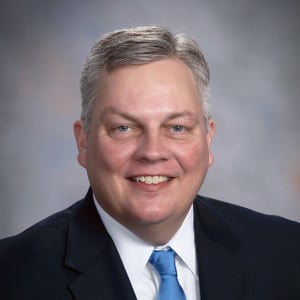
University Professor of Law and Religion and Director of the Eleanor H. McCullen Center for Law, Religion and Public Policy, Villanova University Charles Widger School of Law
Michael P. Moreland was appointed University Professor of Law and Religion and Director of the Eleanor H. McCullen Center for Law, Religion and Public Policy at Villanova University in 2017. Professor Moreland joined the Villanova faculty in 2006 and served as Vice Dean from 2012 to 2015. His research is primarily in the areas of torts, law and religion, constitutional law, and Catholic social thought, and he regularly teaches Torts, First Amendment, seminars in law and religion, and undergraduate courses in ethics.
Professor Moreland is the co-editor of Christianity and Private Law (Routledge, 2021), and his most recent publications include: “The Authority of Tradition: John Henry Newman and Legal Theory” in Christianity and the Making of Irish Law (Routledge, 2025); “Christianity and Torts” in The Oxford Handbook on Christianity and Law, (Oxford University Press, 2023); “Germaneness and Religious Liberty” in the Notre Dame Law Review (2023); “Contingency and Contestation in Christianity and Liberalism” in the Notre Dame Law Review (2023); “Friendship as the Primary Purpose of Law” in The American Journal of Jurisprudence 279 (2022); and “The Moral of Torts” (with Jeffrey Pojanowski) in Christianity and Private Law (Routledge, 2021).
Professor Moreland was a Visiting Professor of Law at the University of Notre Dame and the Mary Ann Remick Senior Visiting Fellow at the Notre Dame Center for Ethics and Culture from 2015 to 2017. He was the Forbes Visiting Fellow at Princeton University in the James Madison Program during academic year 2010-11. He has served as the project leader for grants from the John Templeton Foundation and the Charles Koch Foundation. He serves as the Chair of the Federalist Society’s Religious Liberties Practice Group Executive Committee and the Chair of the Board of Trustees of the Institute for Advanced Catholic Studies at the University of Southern California.
Professor Moreland received his BA in philosophy from the University of Notre Dame, his MA and PhD in theological ethics from Boston College, and his JD from the University of Michigan Law School. Following law school, Professor Moreland clerked for the Honorable Paul J. Kelly Jr., of the United States Court of Appeals for the Tenth Circuit and was an associate at Williams & Connolly LLP in Washington, DC, where he represented clients in First Amendment, professional liability, and products liability matters. Before coming to Villanova, he served as Associate Director for Domestic Policy at the White House under President George W. Bush, where he worked on a range of legal policy issues, including criminal justice, immigration, civil rights, and liability reform.
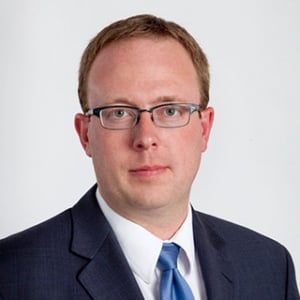
Professor, Canada Research Chair in Indigenous Rights in Constitutional and International Law, University of Saskatchewan College of Law
Dwight Newman, B.A. in Economics (Regina), J.D. (Saskatchewan), B.C.L., M.Phil., D.Phil. in Legal Philosophy (Oxford), is a Professor of Law and Canada Research Chair in Indigenous Rights in Constitutional and International Law at the University of Saskatchewan, where he started in a faculty position in 2005 and has also served a three-year term as Associate Dean. He has been a Canada Research Chair since 2013.
Dr. Newman has also taught during visiting terms at Alberta, McGill, Osgoode Hall (PD), and Oxford. During the 2015-16 year, he was a James Madison Visiting Fellow at Princeton University, and during the second half of the 2016-17 year he was a Professeur invité at the Université de Montréal Faculté de Droit and a Herbert Smith Freehills Visitor at Cambridge University. In 2017 he became a member of the College of the Royal Society of Canada.
Dr. Newman has published close to a hundred articles or book chapters and ten books. His books include: The Duty to Consult: New Relationships with Aboriginal Peoples (Purich/UBC, 2009), Community and Collective Rights: A Theoretical Framework for Rights Held by Groups (Hart/Bloomsbury, 2011), Natural Resource Jurisdiction in Canada (LexisNexis, 2013), Revisiting the Duty to Consult Aboriginal Peoples (Purich/UBC, 2014) and both the Charter of Rights volume of Halsbury’s Laws of Canada and The Law of the Canadian Constitution (with co-author Guy Régimbald) (LexisNexis, 2013, 2nd edn 2017). His forthcoming books include Mining Law of Canada (LexisNexis), an edited collection on Business Implications of Aboriginal Law (LexisNexis), and the Edward Elgar Research Handbook on the International Law of Indigenous Rights (Edward Elgar). His writing has been cited by all levels of Canadian courts, including a number of times by the Supreme Court of Canada, and in argument before the United States Supreme Court.
Dr. Newman is a Munk Senior Fellow of the Macdonald-Laurier Institute and has contributed to policy discussions by publishing a number of think tank reports. He also serves as an expert member of the International Law Association (ILA) Committee on Implementation of the Rights of Indigenous Peoples and contributes to ongoing discussion on international norms on related issues. He has delivered dozens of presentations to a variety of audiences on six continents and has published many op eds in leading Canadian and American newspapers.
Prior to entering a faculty role, Dr. Newman clerked for Chief Justice Lamer and Justice LeBel at the Supreme Court of Canada, worked for NGOs in South Africa and Hong Kong and for the Canadian Department of Justice, and completed his graduate studies at Oxford University, where he studied as a Rhodes Scholar. He has lived in half a dozen countries and has travelled to over seventy countries.
Dr. Newman is a member of the Ontario and Saskatchewan bars and he does selective legal work for industry, government, and Indigenous communities focused mainly on constitutional issues associated with resource development as well as consulting work on related issues for international investment entities.
Some of his publications are available on his Google Scholar page and his SSRN page.
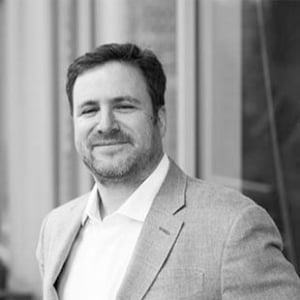
Founder & CEO, Edelson PC
Jay Edelson is the founder of Edelson PC. He is considered one of the nation’s leading plaintiff’s lawyers, with his firm having helped secure over $45 billion in settlements and verdicts on behalf of classes, individuals, and governmental entities. Law360 described Jay as a “Titan of the Plaintiff’s Bar.” Jay has been recognized as one of “America’s top trial lawyers” in the mass action arena. LawDragon named him one of the top Plaintiff Financial Lawyers in the country. He has been called “probably the best known, and most innovative, consumer privacy lawyer on the planet,” with he and his firm holding records for the largest trial verdict in a consumer privacy case ($925m), the largest consumer privacy settlement ($650m) and the largest TCPA settlement ($76m).
Jay has been appointed to represent state and local regulators on some of the largest issues of the day, ranging from opioids suits against pharmaceutical companies, to environmental actions against polluters, to breaches of trust against energy companies and for-profit hospitals, to privacy suits against Google, Facebook, and others.

Richard and Frances Mallery Professor of Law and Faculty Director, Constitutional Law Center, Stanford Law School
Michael W. McConnell is the Richard and Frances Mallery Professor and Faculty Director of the Constitutional Law Center at Stanford Law School, and a Senior Fellow at the Hoover Institution. From 2002 to 2009, he served as a Circuit Judge on the United States Court of Appeals for the Tenth Circuit. He was nominated by President George W. Bush, a Republican, and confirmed by a Democratic Senate by unanimous consent. McConnell has previously held chaired professorships at the University of Chicago and the University of Utah, and visiting professorships at Harvard and NYU. He teaches courses on constitutional law, constitutional history, First Amendment, and interpretive theory. He has published widely in the fields of constitutional law and theory, especially church and state, equal protection, and separation of powers. His book, “The President Who Would Not Be King: Executive Power Under the Constitution,” was published by Princeton University Press in 2020, based on the Tanner Lectures in Human Values, which he delivered at Princeton in 2019. His latest book, co-authored with Nathan Chapman, “Agreeing to Disagree: How the Establishment Clause Protects Religious Diversity and Freedom of Conscience,” was published by Oxford University Press in mid-2023. McConnell has argued sixteen cases in the United States Supreme Court, most recently Carney v. Adams (2020). defending a provision of the Delaware Constitution requiring political balance on that state’s courts. More recently, he was co-counsel in Gonzalez v. Google. He earned his B.A. from Michigan State University and his J.D. from the University of Chicago, and has received honorary degrees from Notre Dame University and Michigan State. He served as law clerk to Supreme Court Justice William J. Brennan, Jr. and D.C. Circuit Chief Judge J. Skelly Wright. He has been Assistant General Counsel of the Office of Management & Budget, Assistant to the Solicitor General of the Department of Justice, and a member of the President’s Intelligence Oversight Board. He is Senior of Counsel to the law firm Wilson, Sonsini, Goodrich & Rosati, and is co-chair of Meta’s Oversight Review Board.
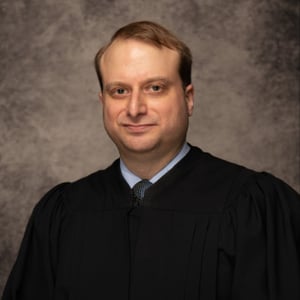
Judge, United States Court of Appeals, Second Circuit
Judge Menashi was appointed to the U.S. Court of Appeals for the Second Circuit on November 14, 2019. Previously, he served as special assistant and associate counsel to the President in the White House and as acting general counsel at the U.S. Department of Education. He was assistant professor of law at Scalia Law School, George Mason University, where he taught administrative law and civil procedure, and a research fellow at New York University School of Law and Georgetown University Law Center. He was also a partner at Kirkland & Ellis LLP in New York, where he practiced appellate and commercial litigation, and served as a law clerk to Justice Samuel Alito on the Supreme Court of the United States and to Judge Douglas Ginsburg on the U.S. Court of Appeals for the District of Columbia Circuit. He graduated from Stanford Law School, where he was elected to Order of the Coif and served as senior articles editor of the Stanford Law Review, and from Dartmouth College, where he was elected to Phi Beta Kappa.
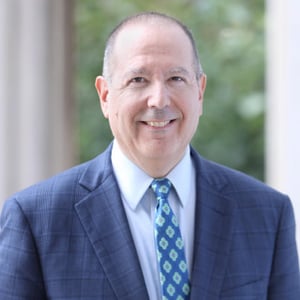
Dean Emeritus and Harvey R. Miller Professor of Law & Economics, Columbia Law School
David Schizer is Dean Emeritus and Harvey R. Miller Professor of Law & Economics at Columbia Law School. He served as Dean from 2004 to 2014, and as CEO of the American Jewish Joint Distribution Committee, a global Jewish humanitarian organization, from 2017 to 2019. He is the author of How to Save the World in Six (Not So Easy) Steps: Bringing Out the Best in Nonprofits. Schizer serves on the Board of Visitors of the Federalist Society. He is Second Vice Chair of the Tax Section of the New York State Bar Association, a co-founder and co-chair of the Richman Center for Law, Business, and Public Policy at Columbia University, and a co-founder and co-chair of the Center for Israeli Legal Studies at Columbia Law School. Schizer served as a law clerk to Justice Ruth Bader Ginsburg on the U.S. Supreme Court and Judge Alex Kozinski on the U.S. Court of Appeals for the Ninth Circuit.
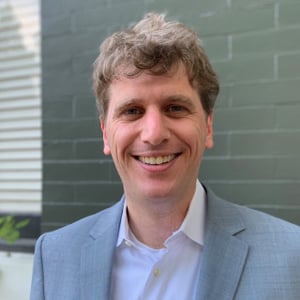
Director of Research, American Economic Liberties Project
Matt Stoller is a public intellectual who writes about the American anti-monopoly
tradition. He is the author of the Simon and Schuster book Goliath: The Hundred Year
War Between Monopoly Power and Democracy. Stoller is the Director of Research at
the American Economic Liberties Project. He publishes an email newsletter called BIG.
Stoller is a former policy advisor to the Senate Budget Committee, and worked in the House of Representatives on the Dodd–Frank Wall Street Reform Act.
He has lectured on competition policy and media at Columbia University, Harvard Law, Duke Law, Bertelsmann Foundation, Vrije Universiteit Brussel, West Point and the National Communications Commission of Taiwan. His writing has appeared in the Washington Post, the New York Times, Fast Company, Foreign Policy, the Guardian, Vice, The American Conservative, and the Baffler.
He has also produced for MSNBC and starred in a short-lived television show on FX called Brand X with Russell Brand.
Founder & CEO, Edelson PC
Jay Edelson is the founder of Edelson PC. He is considered one of the nation’s leading plaintiff’s lawyers, with his firm having helped secure over $45 billion in settlements and verdicts on behalf of classes, individuals, and governmental entities. Law360 described Jay as a “Titan of the Plaintiff’s Bar.” Jay has been recognized as one of “America’s top trial lawyers” in the mass action arena. LawDragon named him one of the top Plaintiff Financial Lawyers in the country. He has been called “probably the best known, and most innovative, consumer privacy lawyer on the planet,” with he and his firm holding records for the largest trial verdict in a consumer privacy case ($925m), the largest consumer privacy settlement ($650m) and the largest TCPA settlement ($76m).
Jay has been appointed to represent state and local regulators on some of the largest issues of the day, ranging from opioids suits against pharmaceutical companies, to environmental actions against polluters, to breaches of trust against energy companies and for-profit hospitals, to privacy suits against Google, Facebook, and others.
Richard and Frances Mallery Professor of Law and Faculty Director, Constitutional Law Center, Stanford Law School
Michael W. McConnell is the Richard and Frances Mallery Professor and Faculty Director of the Constitutional Law Center at Stanford Law School, and a Senior Fellow at the Hoover Institution. From 2002 to 2009, he served as a Circuit Judge on the United States Court of Appeals for the Tenth Circuit. He was nominated by President George W. Bush, a Republican, and confirmed by a Democratic Senate by unanimous consent. McConnell has previously held chaired professorships at the University of Chicago and the University of Utah, and visiting professorships at Harvard and NYU. He teaches courses on constitutional law, constitutional history, First Amendment, and interpretive theory. He has published widely in the fields of constitutional law and theory, especially church and state, equal protection, and separation of powers. His book, “The President Who Would Not Be King: Executive Power Under the Constitution,” was published by Princeton University Press in 2020, based on the Tanner Lectures in Human Values, which he delivered at Princeton in 2019. His latest book, co-authored with Nathan Chapman, “Agreeing to Disagree: How the Establishment Clause Protects Religious Diversity and Freedom of Conscience,” was published by Oxford University Press in mid-2023. McConnell has argued sixteen cases in the United States Supreme Court, most recently Carney v. Adams (2020). defending a provision of the Delaware Constitution requiring political balance on that state’s courts. More recently, he was co-counsel in Gonzalez v. Google. He earned his B.A. from Michigan State University and his J.D. from the University of Chicago, and has received honorary degrees from Notre Dame University and Michigan State. He served as law clerk to Supreme Court Justice William J. Brennan, Jr. and D.C. Circuit Chief Judge J. Skelly Wright. He has been Assistant General Counsel of the Office of Management & Budget, Assistant to the Solicitor General of the Department of Justice, and a member of the President’s Intelligence Oversight Board. He is Senior of Counsel to the law firm Wilson, Sonsini, Goodrich & Rosati, and is co-chair of Meta’s Oversight Review Board.
Judge, United States Court of Appeals, Second Circuit
Judge Menashi was appointed to the U.S. Court of Appeals for the Second Circuit on November 14, 2019. Previously, he served as special assistant and associate counsel to the President in the White House and as acting general counsel at the U.S. Department of Education. He was assistant professor of law at Scalia Law School, George Mason University, where he taught administrative law and civil procedure, and a research fellow at New York University School of Law and Georgetown University Law Center. He was also a partner at Kirkland & Ellis LLP in New York, where he practiced appellate and commercial litigation, and served as a law clerk to Justice Samuel Alito on the Supreme Court of the United States and to Judge Douglas Ginsburg on the U.S. Court of Appeals for the District of Columbia Circuit. He graduated from Stanford Law School, where he was elected to Order of the Coif and served as senior articles editor of the Stanford Law Review, and from Dartmouth College, where he was elected to Phi Beta Kappa.
Dean Emeritus and Harvey R. Miller Professor of Law & Economics, Columbia Law School
David Schizer is Dean Emeritus and Harvey R. Miller Professor of Law & Economics at Columbia Law School. He served as Dean from 2004 to 2014, and as CEO of the American Jewish Joint Distribution Committee, a global Jewish humanitarian organization, from 2017 to 2019. He is the author of How to Save the World in Six (Not So Easy) Steps: Bringing Out the Best in Nonprofits. Schizer serves on the Board of Visitors of the Federalist Society. He is Second Vice Chair of the Tax Section of the New York State Bar Association, a co-founder and co-chair of the Richman Center for Law, Business, and Public Policy at Columbia University, and a co-founder and co-chair of the Center for Israeli Legal Studies at Columbia Law School. Schizer served as a law clerk to Justice Ruth Bader Ginsburg on the U.S. Supreme Court and Judge Alex Kozinski on the U.S. Court of Appeals for the Ninth Circuit.
Director of Research, American Economic Liberties Project
Matt Stoller is a public intellectual who writes about the American anti-monopoly
tradition. He is the author of the Simon and Schuster book Goliath: The Hundred Year
War Between Monopoly Power and Democracy. Stoller is the Director of Research at
the American Economic Liberties Project. He publishes an email newsletter called BIG.
Stoller is a former policy advisor to the Senate Budget Committee, and worked in the House of Representatives on the Dodd–Frank Wall Street Reform Act.
He has lectured on competition policy and media at Columbia University, Harvard Law, Duke Law, Bertelsmann Foundation, Vrije Universiteit Brussel, West Point and the National Communications Commission of Taiwan. His writing has appeared in the Washington Post, the New York Times, Fast Company, Foreign Policy, the Guardian, Vice, The American Conservative, and the Baffler.
He has also produced for MSNBC and starred in a short-lived television show on FX called Brand X with Russell Brand.
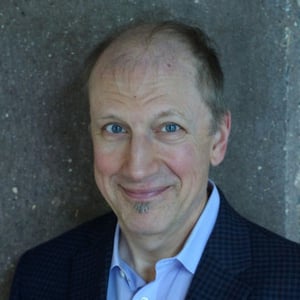
James L. Oberstar Professor of Law and Public Policy, University of St. Thomas School of Law
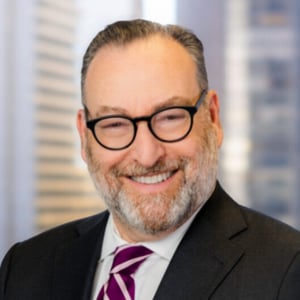
Founder, Chairman, and CEO, Louis D. Brandeis Center for Human Rights Under Law
Hon. Kenneth L. Marcus is an internationally recognized expert in civil and human rights, as well as a leader in the fight against anti-Semitism on and off university campuses. He is the Founder, Chairman, and CEO of The Louis D. Brandeis Center for Human Rights Under Law, the leading civil rights legal organization fighting against anti-Semitism. The New York Times has called him “The Man Who Helped Redefine Campus Anti-Semitism.” He been described, in that paper, as “the single most effective and respected force” to combat anti-Semitism.
During his public service career, Marcus served as Assistant U.S. Secretary of Education for Civil Rights; Staff Director at the U.S. Commission on Civil Rights; and General Deputy Assistant U.S. Secretary of Housing and Urban Development for Fair Housing and Equal Opportunity.
In academia, he serves as Professorial Lecturer in Law at George Washington University. He formerly held the Lillie and Nathan Ackerman Chair in Equality and Justice in America at the City University of New York’s Bernard M. Baruch College, served as Visiting Research Professor of Political Science at Yeshiva University, and was a Board of Visitors member George Mason University and Distinguished Senior Fellow at that university’s law school. He is a member of the editorial board of the Journal of Contemporary Antisemitism and previously served as Associate Editor of the Journal for the Study of Anti-Semitism.
Marcus is also author of The Definition of Anti-Semitism (Oxford University Press) and Jewish Identity and Civil Rights in America (Cambridge University Press). He has published widely in academic journals as well as in more popular venues such as The Wall Street Journal, Washington Post, Newsweek, USA Today, and Politico. He is a graduate of Williams College and the University of California at Berkeley School of Law.
Earlier in his career, he was a litigation partner in two major law firms, where he conducted complex commercial and constitutional litigation. He also serves as Chairman emeritus of the Executive Committee of the Federalist Society for Law & Public Policy Civil Rights Practice Group.

The Declaration of Independence, Religion and the Law
Nebraska Lawyer Chapter
Lincoln, NETopics
Using Public Accommodations Laws to Protect Religious Groups From Private Cancellation
A pioneering case charts how religious groups can harness the power of public accommodations laws...
Topics
Supreme Court Justices Concerned about Religious Discrimination in Oklahoma’s Charter School Program
On Wednesday, April 30, 2025, the U.S. Supreme Court heard oral arguments in Oklahoma Statewide...
Showcase Panel II: How Should the Law Discourage Tribalism, Polarization, Racism, Religious Enmity, and Antisemitism in the United States?
Jay Edelson, Michael W. McConnell, Steven J. Menashi, David M. Schizer, Matt Stoller
Most would agree that all of these [tribalism, polarization, racism, religious enmity, and antisemitism] are...
Showcase Panel II: How Should the Law Discourage Tribalism, Polarization, Racism, Religious Enmity, and Antisemitism in the United States?
Jay Edelson, Michael W. McConnell, Steven J. Menashi, David M. Schizer, Matt Stoller
Most would agree that all of these [tribalism, polarization, racism, religious enmity, and antisemitism] are...
Your Guide to the 2024 National Lawyers Convention: Connect, Engage, and Explore Group Identity in the Law
Get ready for one of the biggest legal gatherings of the year! The 2024 National...
Topics
May Nonprofits Endorse or Oppose Candidates?
For 70 years, the IRS has contended that the so-called Johnson Amendment proscribes any not-for-profit...
Religious Liberty Apologetics
Thomas C. Berg
Nick Reaves and Matthew Krauter have written a fine review, in this journal,[1] of my...
The Landmark Case Of Shaare Tefila v. Cobb
Kenneth L. Marcus
A review of Annalise E. Glauz-Todrank, Judging Jewish Identity in the United States (Lexington Books 2023)...
7 Minute Presentations of Works in Progress Panel 1-A
Washington, DC