

Constitutional Scholarship Director and Senior Legal Analyst, Pacific Legal Foundation
Anastasia Boden is Director of Constitutional Scholarship at Pacific Legal Foundation, where she leads the organization’s Supreme Court commentary and directs scholarly analysis in support of the firm’s litigation. She has represented entrepreneurs and small businesses nationwide in challenges to onerous licensing regimes, anti-competitive titling restrictions, Certificate of Need (“competitor’s veto”) laws, and other forms of unnecessary red tape that block economic opportunity.
Prior to this role, Anastasia developed nearly a dozen constitutional challenges to Certificate of Need laws across the country, helping spur legislative reform in Montana, Pennsylvania, and West Virginia. Her victories include a ruling invalidating Houston’s busking restrictions, multiple appellate decisions expanding access to the courts for civil rights plaintiffs, and the legislative repeal of Virginia’s happy-hour advertising ban.
Her writings on law and liberty have been featured in USA Today, The Washington Post, The Wall Street Journal, the Los Angeles Times, the Chicago Tribune, Forbes, and more, and she has appeared on Headline News, CBS News, Fox News, ReasonTV, Newsmax, and John Stossel. In 2020, she was featured on Libertarian Party presidential candidate Jo Jorgensen’s Supreme Court shortlist.
Anastasia earned her BA with dean’s honors from the University of California, Santa Barbara, and her JD from Georgetown University Law Center, where she was research assistant to Professor Randy E. Barnett—the “intellectual godfather” of the constitutional challenge to Obamacare. She is the co-creator of the podcast Dissed, about infamous Supreme Court dissents. She authors the biweekly newsletter SCOTUS Scoop and the column, “In Dissent” for SCOTUSblog.

Policy Director, Fulcrum Foundation
Reeve T. Bull is the Policy Director of the Fulcrum Foundation. In this role, he promotes executive and legislative reforms designed to update and streamline the regulatory system. These reforms draw upon the work Mr. Bull undertook in his previous role as the Director of the Virginia Office of Regulatory Management (ORM). During his time at ORM, he led the Commonwealth's efforts related to regulatory streamlining and permitting transparency and the development and implementation of artificial intelligence policy.
Previously, Mr. Bull served as the Research Director of the Administrative Conference of the United States (ACUS). At ACUS, he worked on projects related to international regulatory cooperation, the use of science by administrative agencies, presidential review of agency rulemaking, cost-benefit analysis, government contractor ethics, and e-rulemaking, among other things. Mr. Bull has also served as an Adjunct Professor at the Antonin Scalia Law School and the George Washington University, teaching courses on Administrative Law. Mr. Bull has published numerous articles in highly regarded law journals, including the Administrative Law Review, George Washington Law Review, and Law and Contemporary Problems. Mr. Bull is an Elected Member of the American Law Institute and a Public Member of the Administrative Conference of the United States.
Earlier in his career, Mr. Bull worked in the private sector as an associate with the law firm Gibson, Dunn & Crutcher LLP and in government service as a law clerk to the Honorable Alvin A. Schall of the Federal Circuit Court of Appeals. During his time as an associate with Gibson Dunn, Mr. Bull worked on a variety of litigation and regulatory matters. He participated in cases appearing before the United States Supreme Court, several federal Courts of Appeals, and numerous federal district courts and state trial courts. His experience spanned a variety of practice areas, including administrative, constitutional, intellectual property, antitrust, environmental, securities, and white collar criminal law. During his clerkship for Judge Schall, Mr. Bull assisted with appeals in cases spanning a variety of areas, with particular emphasis on administrative and patent law.
Mr. Bull attended law school at Duke University, where he graduated with highest honors and was inducted into the Order of the Coif. He was one of two recipients of the Willis Smith Award for compiling the most outstanding academic record in the graduating class and the recipient of the James S. Bidlake Memorial Award for achieving the highest grade in his first year legal writing section. Mr. Bull also served as a Note Editor on the Duke Law Journal. Prior to law school, Mr. Bull attended the University of Oklahoma, where he graduated summa cum laude with a Bachelors in Chemistry and was inducted into Phi Beta Kappa.

Assistant Professor of Law, George Mason University Antonin Scalia Law School
Caroline Cecot is an Assistant Professor of Law at Antonin Scalia Law School at George Mason University. She teaches environmental and administrative law and has published articles in peer-reviewed journals and law reviews on cost-benefit analysis, regulatory reform, and environmental regulation.
Professor Cecot holds a JD from Vanderbilt Law School, where she received the Robert F. Jackson and Archie B. Martin Memorial Prizes for her grades; was elected to Order of the Coif; and served as Senior Articles Editor for the Vanderbilt Law Review and Articles Editor for the Environmental Law and Policy Annual Review. Professor Cecot also holds a PhD in law and economics from Vanderbilt University. Following her graduate studies, Professor Cecot was the Postdoctoral Research Scholar in Law and Economics at Vanderbilt Law School and clerked for the Honorable Raymond J. Lohier, Jr., of the United States Court of Appeals for the Second Circuit. She was also Legal Fellow at the Institute for Policy Integrity at New York University School of Law, where she authored amicus curiae briefs and submitted comments on environmental and regulatory issues. Professor Cecot graduated from Harvard College magna cum laude with an AB degree in economics.
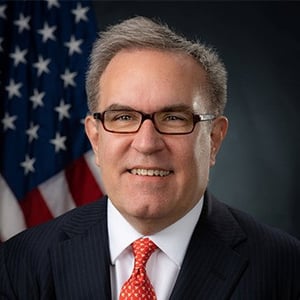
Holland & Hart, Partner
On February 28, 2019, the U.S. Senate confirmed Andrew Wheeler as the fifteenth Administrator of the Environmental Protection Agency. President Donald J. Trump had announced his appointment as the Acting EPA Administrator on July 5, 2018. Mr. Wheeler had previously been confirmed by the U.S. Senate as the EPA Deputy Administrator on April 12, 2018.
Mr. Wheeler has dedicated his career to advancing sound environmental policies. He began his career during the George H. W. Bush Administration as a Special Assistant in EPA’s Pollution Prevention and Toxics office.
He was a Principal and the team leader of the Energy and Environment Practice Group at FaegreBD Consulting, as well as Counsel at Faegre Baker Daniels law firm, where he practiced since 2009. He also served as the Co-chair of the Energy and Natural Resources Industry team across the entire firm.
Prior to his work with the firm, Mr. Wheeler served for six years as the Majority Staff Director and Chief Counsel, as well as the Minority Staff Director, of the Senate Committee on Environment and Public Works. Before his time at the full Senate EPW Committee, Mr. Wheeler served in a similar capacity for six years for the Subcommittee on Clean Air, Climate Change, Wetlands and Nuclear Safety.
Mr. Wheeler is the past Chairman of the National Energy Resource Organization (NERO) and a Stennis Fellow. Mr. Wheeler is also an Eagle Scout.
Mr. Wheeler is from Fairfield, Ohio. He completed his law degree at Washington University in St. Louis, his MBA at George Mason University, and his undergraduate work at Case Western Reserve University in English and Biology.

Founder, Original Jurisdiction
David Lat is a lawyer turned writer. He publishes Original Jurisdiction, a newsletter on Substack about law and legal affairs, and he writes for newspapers and magazines, including the New York Times, Washington Post, and Wall Street Journal. Prior to launching Original Jurisdiction, David founded Above the Law, one of the nation's most widely read legal news websites, and Underneath Their Robes, a popular blog about federal judges that he wrote under a pseudonym. He is also the author of a novel set in the world of the federal courts, Supreme Ambitions. Before entering the media world, David worked as a federal prosecutor in Newark, New Jersey; a litigation associate at Wachtell, Lipton, Rosen & Katz, in New York; and a law clerk to Judge Diarmuid F. O’Scannlain of the U.S. Court of Appeals for the Ninth Circuit. David graduated from Harvard College and Yale Law School, where he served as an editor of the Yale Law Journal.
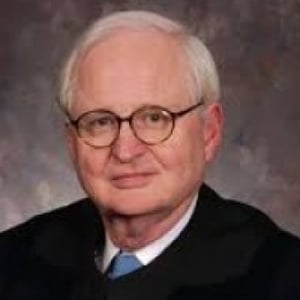
U.S. Court of Appeals, Fifth Circuit
E. Grady Jolly is a federal judge on senior status with the United States Court of Appeals for the Fifth Circuit. He joined the court in 1982 after being nominated by President Ronald Reagan.

Chip Pickering has been CEO of INCOMPAS since January 2014. During that time, INCOMPAS has achieved significant growth with leading internet, backbone, business broadband, wireless, and international companies. Under his leadership, INCOMPAS has led numerous public policy campaigns promoting competition through an open internet and in the business broadband market.
Pickering was a six-term Congressman representing Mississippi’s Third District. During his time in the House, he served on the Energy & Commerce Committee, where he was vice chairman from 2002 to 2006 and a member of the Telecommunications Subcommittee.
He also was co-chairman and founder of the Congressional Wireless Caucus and an assistant minority whip of the House. Previously, Chip worked for Sen. Trent Lott (R-Miss.) and served as a staff member on the Senate Commerce Committee, where he helped shape the Telecommunications Act of 1996.
Because of his role in drafting the 1996 Act, he became well known as a Congressional leader on telecommunications issues. While in Congress, Chip served as chair of the subcommittee overseeing the transition to the commercial internet, the establishment of domain names, registries, and internet governance. He also successfully led a bipartisan legislative effort to codify net neutrality principles through the House in 2006.
Prior to joining INCOMPAS, Chip was a partner with Capitol Resources LLC, a public affairs and government relations firm, where he represented an array of telecom clients, including wireless, cable and competitive broadband providers, as well as non-profits and companies specializing in education, energy, technology and defense.

Virginia’s New Approach to Regulatory Modernization
A Regulatory Transparency Project Webinar
Free Speech, Wokeness, and Cancel Culture in the Legal Profession
How it is impacting our hires, fires and how we choose and represent our clients
Philadelphia, PATopics
Four Things to Watch in Gonzalez v. Google
Many Americans have heard of Section 230 of the Communications Decency Act. Not many know...
Topics
A Section 230 Textual Wind Blows in from the West
Section 230 of the Communications Decency Act stands at the center of technology debates....
March DC Luncheon with Al Regnery
Washington, District of ColumbiaWhy the Future of American Conservatism is Bright
Jackson, Mississippi