
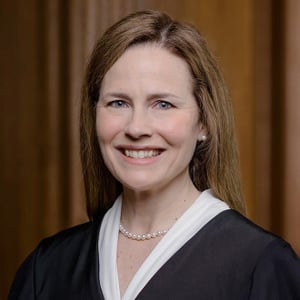
Associate Justice, United States Supreme Court
The Honorable Amy Coney Barrett is an Associate Justice of the Supreme Court of the United States. She was nominated by President Donald Trump and was confirmed on October 27, 2020. She is the fifth woman to serve on the Court.
Justice Barrett earned her J.D., summa cum laude, from Notre Dame, where she was a Kiley Fellow, earned the Hoynes Prize, the Law School’s highest honor, and served as executive editor of the Notre Dame Law Review. She clerked for Judge Laurence H. Silberman of the U.S. Court of Appeals for the D.C. Circuit and for Associate Justice Antonin Scalia of the U.S. Supreme Court. As an associate at Miller, Cassidy, Larroca & Lewin in Washington, D.C., she litigated constitutional, criminal, and commercial cases in both trial and appellate courts.
In 2002, Justice Barrett joined the faculty of Notre Dame Law School. She continued to teach following her appointment to the U.S. Court of Appeals for the Seventh Circuit in November 2017. Justice Barrett also served by appointment of the Chief Justice on the Advisory Committee for the Federal Rules of Appellate Procedure from 2010 to 2016.
Justice Barrett has published widely in the areas of federal courts, constitutional law, and statutory interpretation. Her scholarship in these fields has been published in leading journals, including the Columbia, Virginia, and Texas Law Reviews.
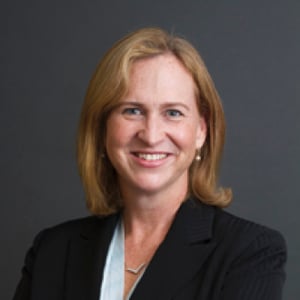
Anne Fleming Research Professor; Professor of Law, Georgetown Law
Laura K. Donohue is a Professor of Law at Georgetown Law, Director of Georgetown's Center on National Security and the Law, and Director of the Center on Privacy and Technology. She writes on constitutional law, legal history, emerging technologies, and national security law. Her most recent book, The Future of Foreign Intelligence: Privacy and Surveillance in a Digital Age (Oxford University Press, 2016), was awarded the 2016 IIT Chicago-Kent College of Law/Roy C. Palmer Civil Liberties Prize. She also has written The Cost of Counterterrorism: Power, Politics, and Liberty (Cambridge University Press, 2008); and Counterterrorist Law and Emergency Law in the United Kingdom 1922-2000 (Irish Academic Press, 2007).
Professor Donohue's articles have been published by California Law Review, University of Chicago Law Review, Stanford Law Review, University of Pennsylvania Law Review, Harvard Journal of Law and Public Policy, and other scholarly journals.
In November 2015, the U.S. Foreign Intelligence Surveillance Court appointed her as one of five amici curiae under the 2015 USA FREEDOM Act.
Professor Donohue is a Life Member of the Council on Foreign Relations; an Advisory Board Member of the Electronic Privacy Information Center; and a Member of the American Bar Association's Standing Committee on Law and National Security. She is a Senior Scholar at Georgetown Law's Center for the Constitution.
Donohue obtained her AB in Philosophy (with Honors) from Dartmouth College; her MA in Peace Studies (with Distinction) from the University of Ulster, Northern Ireland; her JD (with Distinction) from Stanford Law School; and her PhD in History from the University of Cambridge, England.

Professor of Law, Antonin Scalia Law School, George Mason University
Professor of Law Michael S. Greve joined the faculty of the Antonin Scalia Law School, George Mason University in fall 2012 after having served as John G. Searle Scholar at the American Enterprise Institute (AEI), where he specialized in constitutional law, courts, and business regulation and served as chairman of the Competitive Enterprise Institute. Prior to joining AEI, Greve was founder and co-director of the Center for Individual Rights, a public interest law firm specializing in constitutional litigation.
Greve has served previously as an adjunct professor at a number of universities, including Cornell and Johns Hopkins Universities, and has been a visiting professor at Boston College since 2004. He was awarded a PhD and an MA in government by Cornell University. Greve also earned a Diploma from the University of Hamburg in Germany.
A prolific writer, Greve is the author of nine books and a multitude of articles appearing in scholarly publications, as well as numerous editorials, short articles, and book reviews. He is a frequent speaker for professional and scholarly organizations and has made many appearances on radio and television.
In addition Greve has provided congressional and state legislative testimony, has lobbied and consulted in federal agency proceedings, and has provided litigation services and management in over 30 cases, including matters before the U.S. Supreme Court.

George C. Dix Professor in Constitutional Law, Northwestern University Pritzker School of Law
John O. McGinnis is a graduate of Harvard College and Harvard Law School where he was an editor of the Harvard Law Review. He also has an MA degree from Balliol College, Oxford, in philosophy and theology. Professor McGinnis clerked on the U.S. Court of Appeals for the District of Columbia. From 1987 to 1991, he was deputy assistant attorney general in the Office of Legal Counsel at the Department of Justice. He is the author of Accelerating Democracy: Transforming Government Through Technology (Princeton 2013) and Originalism and the Good Constitution (Harvard 2013) (with M. Rappaport). He is a past winner of the Paul Bator award given by the Federalist Society to an outstanding academic under 40. He has been listed by the United States on the roster of panelists who may be called upon to decide World Trade Organization Disputes.
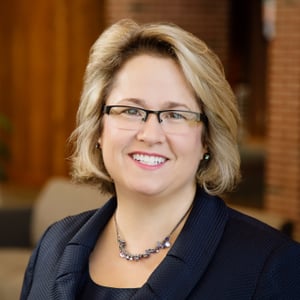
Professor, University of Illinois College of Law
Robin Fretwell Wilson is the Mildred Van Voorhis Jones Chair in Law at the University of Illinois College of Law.
A scholar in family law, bioethics and law and religion, Professor Wilson has worked extensively on behalf of state and federal law reform efforts in each realm.
Across two decades, she has worked to secure laws protecting the autonomy of patients to decide when they will be used to teach intimate exams to medical students, laws now in place in 22 states—sixteen of which have been enacted since 2019.
Professor Wilson is known for bridging differences in the culture war. In 2015, she spent a month in residence with the Utah legislature, helping Utah state lawmakers to pass anti-discrimination legislation that balances religious liberty and LGBT rights. In 2019, Professor Wilson assisted the governor of Utah to craft regulations banning gay conversion therapy. In 2019, she also aided U.S. Representative Chris Stewart with portions of the “Fairness for All” he introduced in Congress. A member of the American Law Institute and a Fulbright Specialist, Professor Wilson has served as a consultant to the United Arab Emirates’ Judicial Department as they sought to create a parallel court system for the adjudication by expatriates of family law matters using the laws of their home country or of their faith traditions.
Professor Wilson is the author of 20 books, including her 2018 book, Religious Freedom, LGBT Rights, and the Prospects for Common Ground, with Yale University Professor William Eskridge, Jr., which is now in paperback at Cambridge University Press. Her other books include: The Contested Place of Religion in Family Law (Cambridge University Press, 2018, ed.), Reconceiving the Family: Critical Reflections on the American Law Institute’s Principles of the Law of Family Dissolution (Cambridge University Press, 2006, ed.); The Handbook of Children, Culture & Violence (Sage Publications, 2006, with Nancy Dowd and Dorothy Singer, eds.); Same-Sex Marriage and Religious Liberty: Emerging Conflicts (Rowman & Littlefield, 2008, with Douglas Laycock and Anthony Picarello, eds.); Health Law and Bioethics: Cases in Context (Aspen, 2008, with Joan Krause, Sandra Johnson, and Richard Saver, eds.); Domestic Relations: Cases and Materials, 8th edition (Foundation Press, 2017, with Walter Wadlington and Raymond C. O’Brien); and Understanding Family Law, 4th edition (LexisNexis, 2013, with John DeWitt Gregory and Peter N. Swisher). Her articles have appeared in the Boston College Law Review, Cornell Law Review, Emory Law Journal, Illinois Law Review, North Carolina Law Review, San Diego Law Review, U.C. Davis Law Review, and Washington and Lee Law Review, as well as in numerous peer-reviewed journals.
In 2010 and again in 2016, Professor Wilson was ranked among the Top Ten Family Law Scholars in the United States for scholarly impact. She ranks among the Top 10% of Authors in all time downloads on the Social Science Research Network. Professor Wilson’s scholarship has been cited by the Fifth, Seventh and Tenth Circuit Court of Appeals, the Minnesota Court of Appeals, lower federal courts, and the Supreme Courts of Delaware, Illinois, Iowa, and Washington.
Professor Wilson’s work has been featured in the New York Times, Wall Street Journal, National Public Radio’s All Things Considered, Washington Post, Los Angeles Times, The Atlantic Monthly, U.S. News and World Report, ABA Journal, Chronicle of Higher Education, Chicago Tribune, CNN Headline News, Good Morning America, ABC News, CBS News, Philadelphia Inquirer, Essence Magazine, The American Prospect, People Magazine, The American Conservative, The Australian, and Al Jazeera, among others. She has presented her research across the world, including the United Nations in Geneva, Switzerland, as well as in Argentina, Brazil, Peru, Chile, China, Israel, Qatar, the Netherlands, Italy, England, Wales, Poland, Spain, Serbia, Japan, Canada, Norway, Denmark, Australia, New Zealand, South Africa, Turkey, and France.
Professor Wilson has seven times been honored for her work on innovative laws that respect all persons. In 2007, she received the Citizen’s Legislative Award for her work on changing Virginia’s informed consent law. In 2018, Professor Wilson received the Thomas L. Kane Religious Freedom Award from the J. Reuben Clark Law Society, which is presented annually to an individual who exemplifies the spirit of religious liberty for all and who has contributed in significant ways to the defense of religious freedom in the public square.
In 2018, Professor Wilson was honored as one of the 150 for 150: Celebrating the Accomplishments of Women at the University of Illinois at Urbana-Champaign for its sesquicentennial celebration. In 2020, Professor Wilson received the 2020 Larine Y. Cowan Make a Difference Award for Advocacy for LGBTQ Affairs, a university-wide honor given by the Office of Diversity, Equity and Inclusion at the University of Illinois at Urbana-Champaign.
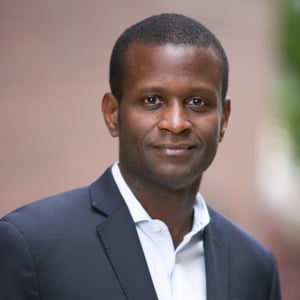
Dwight Professor of Law, Columbia Law School
JAMAL GREENE is the Dwight Professor of Law at Columbia Law School, where he teaches courses in constitutional law, comparative constitutional law, and the law of the political process. He is the author of How Rights Went Wrong: Why Our Obsession With Rights Is Tearing America Apart, as well as numerous articles and book chapters on constitutional law and theory. He is also a co-chair of the Oversight Board, an independent body that reviews content moderation decisions on Facebook and Instagram. He served as a law clerk to the Hon. Guido Calabresi on the U.S. Court of Appeals for the Second Circuit and for the Hon. John Paul Stevens on the U.S. Supreme Court. He earned his J.D. from Yale Law School in 2005 and his A.B. from Harvard College in 1999.
Senior Fellow, Center for American Progress
Kate Martin is a Senior Fellow at American Progress where she works on issues at the intersection of national security, civil liberties, and human rights. The New York Times’ Taking Note blog described her as “an expert on surveillance and detention, and a leading advocate for the rule of law in the so-called ‘war on terror.’” Before coming to American Progress, Ms. Martin served as director of the Center for National Security Studies for more than 20 years. She frequently testifies before Congress on national security and civil liberties issues. She is also a frequent commentator in the national media and has written extensively on these issues for the past 25 years. At the Center for National Security Studies, Martin brought lawsuits that challenged government deprivations of civil liberties. She has taught national security law and served as general counsel to the National Security Archive.
Ms. Martin is a graduate of the University of Virginia School of Law and Pomona College. Before joining the public interest world, she served as a partner at the law firm of Nussbaum, Owen & Webster.
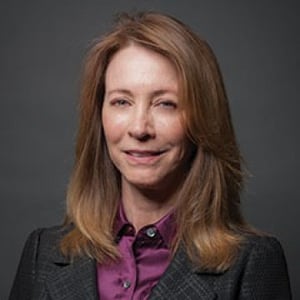
Founder, Libertas-West Project
Karen Lugo is a constitutional law consultant and national security analyst. She was Director of the Center for Tenth Amendment at Texas Public Policy Foundation from 2013 to 2015. When living in California, she was Co-Director of the Center for Constitutional Jurisprudence Center. From 2005 – 2012, she was a clinical visiting and adjunct professor at Chapman University School of Law where she co-taught the advanced Constitutional Law Clinic. Karen has co-authored and written circuit-level and Supreme Court amicus briefs on such issues as FISA Surveillance, Healthcare Reform, Arizona’s Border Security, Gay Marriage, The Ten Commandments, Eminent Domain, Christian Clubs on University Campuses, and Material Support for Terrorists.
Karen is the founder of the Libertas-West Project, a center for study Islamic integration and radicalization issues. In this capacity, she consulted with the Center for Security Policy to write a book on local over-watch of mosque construction and community engagement called: Mosques in America: A Guide to Accountable Permit Hearings and Continuing Citizen Oversight.
Karen writes and speaks for European and American groups on the importance of basing assimilation efforts on principles of Western exceptionalism. She presented a policy brief to the French Conseil d’Etat analyzing the legal implications of banning the burqa. Ms. Lugo has written one of the most comprehensive overviews of sharia law in American courts, American Family Law and Sharia-Compliant Marriages, for the Federalist Society law journal, Engage. She has written several white papers on the American Law for American Courts legislation and sharia tribunals in America.
Ms. Lugo was an appointee to the California Advisory Committee to the U.S. Commission on Civil Rights. She also taught a Human Rights law course on the contrast between French and English Enlightenment theories in Strasbourg, France.
Until moving from California, Ms. Lugo was a member of the David Horowitz Freedom Center Board of Directors. She was also a regular guest on the Orange County PBS local issues debate program, Inside OC, and she is a contributor to Pajamas Media, National Review Online, City Journal, American Spectator, American Greatness, Townhall.com, American Thinker, Daily Caller, and Family Security Matters. She has been interviewed by dozens of radio hosts and has spoken for civic groups on constitutional and cultural concerns.
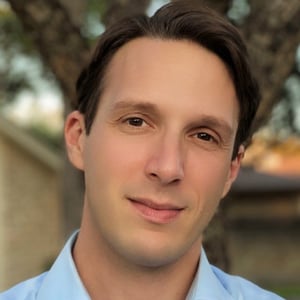
Senior Lecturer; Director, The Robert S. Strauss Center for International Security and Law, The University of Texas at Austin School of Law
Adam Klein is Director of the Strauss Center and Director of Strauss’ Program on Technology, Security, and Global Affairs. Adam also serves as a Senior Lecturer at the School of Law. Before joining the Strauss Center, Adam served as Chairman of the United States Privacy and Civil Liberties Oversight Board, the independent, bipartisan federal agency responsible for overseeing counterterrorism programs at the NSA, FBI, CIA, Department of Homeland Security, and other federal agencies. As the Board’s Senate-confirmed Chairman, he oversaw its oversight and advice engagements with other federal agencies, while also serving as the Board’s chief executive officer.
Before entering government, Adam was the Robert M. Gates Senior Fellow at the Center for a New American Security, a bipartisan national-security research institution in Washington, DC. There, his research focused on government surveillance, intelligence powers, and national security law. Previously, Adam practiced law at Wilmer Cutler Pickering Hale & Dorr, LLP and served as a law clerk to Justice Antonin Scalia of the U.S. Supreme Court and Judge Brett Kavanaugh of the U.S. Court of Appeals for the D.C. Circuit. He has also worked on national-security policy at the RAND Corporation, the 9/11 Public Discourse Project (the non-profit successor to the 9/11 Commission), and in the U.S. Congress. He received his BA from Northwestern University and his JD from Columbia Law School.
Adam is a former Council on Foreign Relations International Affairs Fellow and Robert Bosch Foundation Fellow in Berlin. He speaks German and French.
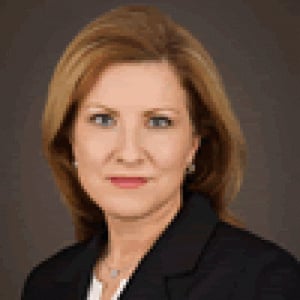
Senior Advisor, Patomak Global Partners, LLC
Kathleen Casey is a senior advisor with Patomak Global Partners. Her Patomak client work spans corporate governance issues; international regulatory developments, including interaction with U.S. policies; and technical market regulations. She has more than two decades of experience in senior government regulatory, legal and policy roles.
Ms. Casey completed her five-year term as a Commissioner with the U.S. Securities and Exchange Commission in August 2011.
During her tenure, Ms. Casey acted as the SEC’s principal representative in various international fora, including multilateral and bilateral regulatory dialogues, the G-20 Financial Stability Board, and the International Organization of Securities Commissions (IOSCO). In this capacity, she also served in several international leadership positions, including as Chairman of the IOSCO Technical Committee and Co-chair of the CPSS/IOSCO Review of Standards, the IOSCO OTC Derivatives Task Force, the IOSCO Task Force on Supervisory Cooperation, and the FSB Working Group on Provisioning.
Prior to being appointed Commissioner, Ms. Casey served in various legal and policy roles in the United States Senate. From 2003 to 2006, she served as Staff Director and Counsel of the U.S. Senate Banking, Housing, and Urban Affairs Committee. Before serving as Staff Director for the Senate Banking Committee, Ms. Casey served in a series of senior advisory roles to U.S. Senator Richard Shelby (R-AL), including Chief of Staff from 2002 to 2003 and Legislative Director from 1996 to 2002. From 1994 to 1996, Ms. Casey served as the Staff Director of the Subcommittee on Financial Institutions and Regulatory Relief on the U.S. Senate Banking Committee; and from 1993 to 1994, she served as a Legislative Assistant for tax, budget, and finance matters for Senator Richard Shelby.
Currently, Ms. Casey serves as a non-executive director on the Board of HSBC Holdings plc, and is a member of the Board of Trustees of The Pennsylvania State University and Chairman of the Board of Penn State Health. She is also a member of the Library of Congress Trust Fund Board, the Board of Trustees of the International Valuation Standards Council, and the Public Company Accounting Oversight Board Advisory Council.
Previous roles include serving as a member and Non-Executive Chairman of the Council of the Alternative Investment Management Association, a group of over 1,300 hedge fund managers, fund of hedge funds managers, prime brokers, legal and accounting firms, investors, fund administrators, and independent fund directors based in more than 50 countries worldwide; as a distinguished policy fellow with the Georgetown Center for Financial Markets and Policy at Georgetown University's McDonough School of Business; an adjunct lecturer at George Mason University School of Law; a non-executive director of FX Alliance Inc., an independent electronic foreign exchange trading platform; Vice Chairman of the Board of Trustees of the Pennsylvania State University and a member of the Board of the Milton S. Hershey Medical Center.
Ms. Casey received her J.D. from George Mason University Antonin Scalia Law School, and her B.A. in International Politics from Pennsylvania State University.
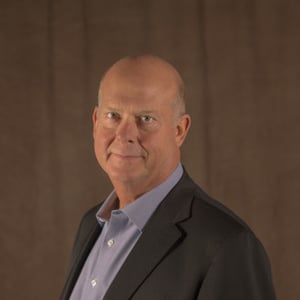
Managing Member, Aviation Perspectives LLC
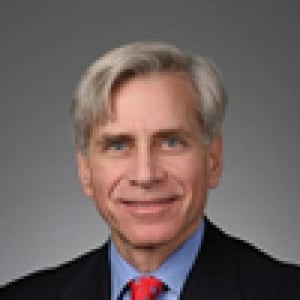
Partner, Sidley Austin LLP
Alan Raul is the founder and leader of Sidley’s highly ranked Privacy, Data Security and Information Law practice. He represents companies on federal, state and international privacy and cybersecurity issues, including global data protection and compliance programs, data breaches, consumer protection issues and Internet law. Mr. Raul advises companies regarding their cybersecurity and information governance and preparedness, and helps them address crisis management for data security incidents. Mr. Raul’s practice involves litigation and counseling regarding consumer class actions and investigations, enforcement actions and policy development by the FTC, State Attorneys General, SEC, Department of Justice and other government agencies.
Mr. Raul provides clients with perspective gained from extensive government service. He previously served as Vice Chairman of the White House Privacy and Civil Liberties Oversight Board, General Counsel of the Office of Management and Budget, General Counsel of the U.S. Department of Agriculture, and Associate Counsel to the President.
Mr. Raul serves as a member of the Data Security, Privacy, and Intellectual Property Litigation Advisory Committee of the U.S. Chamber Litigation Center (affiliated with the U.S. Chamber of Commerce). He also serves ex officio on the American Bar Association’s Cybersecurity Legal Task Force by past appointment of the ABA President, and as a member of the Practicing Law Institute’s (PLI) Privacy Law Advisors Group.
Mr. Raul has represented a Special Cybersecurity Review Committee of the Board of Directors of a major tech company in connection with its independent investigation of the company’s handling of major data breaches.
In addition to leading a “Privacy and Data Security” practice nationally rated by Chambers Global and Chambers USA, Mr. Raul is ranked by Chambers in its top tier of Privacy and Data Security practitioners. Chambers USA has described Mr. Raul as a “true ‘ambassador’ for the privacy sector” who “attracts praise for his deep knowledge of the field. Interviewees stress that ‘he gives invaluable advice’ and is known to be a strong litigator. He also earns plaudits for his regulatory compliance and data protection policy expertise.” He has been named as a leading international Internet and E-Commerce Lawyer in Who’s Who Legal. Mr. Raul was also named to Ethisphere Institute’s “Attorneys Who Matter” in Data Privacy/Security, which recognizes lawyers with the highest commitment to public service, legal community engagement and academic involvement. In 2016, the Washingtonian named Mr. Raul one of Washington, DC’s Best Lawyers: Cybersecurity.
In 1991, Mr. Raul co-founded the “Lawyers Have Heart” 10K run and walk, to benefit the American Heart Association. He continues his active involvement with the event.
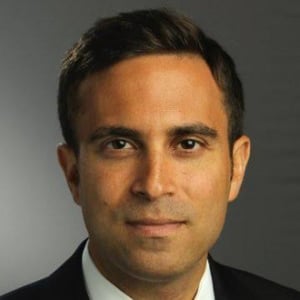
Staff Director & Chief Counsel for Ranking Member Gary Peters, S, United States Senate
Zachary Schram serves as Staff Director and Chief Counsel for Ranking Member Gary Peters on the Subcommittee on Federal Spending Oversight and Emergency Management in the United States Senate. From October 2015 until February 2017, Mr. Schram served as Senior Advisor and Investigations Counsel at the Department of State. Previously, he led complex bipartisan investigations as Senior Counsel to Senator Carl Levin on the Permanent Subcommittee on Investigations. Mr. Schram also spent two years as Counsel at WilmerHale representing a wide variety of clients in congressional investigations.

Milton R. Underwood Chair in Free Enterprise, Vanderbilt University Law School
Brian Fitzpatrick is the Milton R. Underwood Chair in Free Enterprise and Professor of Law at Vanderbilt Law School, where his research focuses on class action litigation, federal courts, judicial selection, and constitutional law. He is best known for his empirical studies of class action settlements as well as his book The Conservative Case for Class Actions (University of Chicago Press, 2019). Professor Fitzpatrick joined Vanderbilt's law faculty in 2007 after serving as the John M. Olin Fellow at New York University School of Law. He graduated first in his class from Harvard Law School and went on to clerk for Judge Diarmuid O'Scannlain on the U.S. Court of Appeals for the Ninth Circuit and Justice Antonin Scalia on the U.S. Supreme Court. After his clerkships, Professor Fitzpatrick practiced commercial and appellate litigation for several years at Sidley Austin in Washington, D.C., and served as Special Counsel for Supreme Court Nominations to U.S. Senator John Cornyn. Before earning his law degree, Fitzpatrick graduated summa cum laude with a bachelor's of science in chemical engineering from the University of Notre Dame. He has received the Hall-Hartman Outstanding Professor Award, which recognizes excellence in classroom teaching, for his Civil Procedure and Federal Courts courses.

Judge, United States Court of Appeals, Sixth Circuit
The Honorable Joan L. Larsen is a judge of the United States Court of Appeals for the Sixth Circuit. She was nominated by the President on May 8, 2017 and confirmed by the Senate on November 1, 2017. Before her appointment to the federal bench, Judge Larsen served two terms as a Justice of the Michigan Supreme Court, where she was the court’s liaison to Michigan’s drug, sobriety, mental health and veteran’s courts.
Before becoming a judge, Judge Larsen was a faculty member at the University of Michigan Law School, where she was also Special Counsel to the Dean and received the L. Hart Wright Award for Excellence in Teaching. Judge Larsen's research and teaching interests included constitutional law, criminal procedure, statutory interpretation, and presidential power. Judge Larsen continues to assist the law school as the adviser to the Henry M. Campbell Moot Court Competition.
Judge Larsen began her legal career as a law clerk to the Hon. David B. Sentelle of the United States Court of Appeals for the D.C. Circuit and to Justice Antonin Scalia of the Supreme Court of the United States. Following her clerkships, she joined the law firm of Sidley Austin, where she was a member of the Constitutional, Criminal, and Civil Litigation Section. She later served as Deputy Assistant Attorney General in the United States Department of Justice, Office of Legal Counsel.
Judge Larsen graduated first in her class from Northwestern University School of Law, where she served as articles editor of the Northwestern University Law Review and earned the John Paul Stevens Award for Academic Excellence. She received her B.A., with highest honors, from the University of Northern Iowa.
Regents' Professor, Milton O. Riepe Chair in Constitutional Law,, The University of Arizona James E. Rogers College of Law
Professor Toni Massaro received her B.S. degree, with highest distinction, from Northwestern University. She obtained her law degree from the College of William and Mary, where she served as Editor-in-Chief of the William and Mary Law Review. Massaro was in private practice in Chicago with Vedder, Price, Kaufman and Kammholz. She also has taught at Washington and Lee University, Stanford University, UNC-Chapel Hill, and the University of Florida.
Prof. Massaro joined the faculty at the University of Arizona College of Law in 1989. Since 1997, she has been the Milton O. Riepe Chair in Constitutional Law. In 2006, she was named a Regent's Professor by the Arizona Board of Regents. From 1999 - 2009, she served as Dean of the College of Law, the first woman to hold that post.
Prof. Massaro is the author of The Arc of Due Process in American Constitutional Law (with E. Thomas Sullivan), Constitutional Literacy: A Core Curriculum for a Multicultural Nation, and Civil Procedure: Cases and Problems (with Barbara Allen Babcock and Norman Spaulding). She also is the author of dozens of law review articles on constitutional law, shame penalties, and law and emotion. She currently teaches Constitutional Law I, First Amendment, and Equal Protection. Prof. Massaro is an eight time recipient of the Teacher of the Year Award.
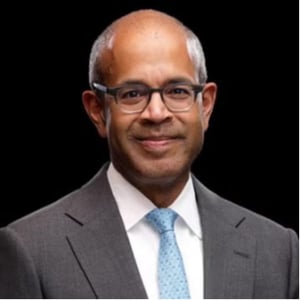
Partner, Davis Polk & Wardwell LLP
Kannon is the head of our Supreme Court & Appellate practice. He has argued 41 cases before the U.S. Supreme Court and has argued more than 150 appeals in courts across the country, including every federal court of appeals and numerous state courts.
Kannon is ranked as a “Star Individual” in appellate law by Chambers USA, where a client notes, “It’s hard to think of enough superlatives to describe his talent, his judgment, his ability, his experience – he is as good as it gets.” Legal 500 U.S. recognizes Kannon in its Hall of Fame for appellate work. A client shares, “His work is the best in the business, and he is a wonderful human being in addition to being a world-class appellate litigator.”
In 2024 and 2022, Kannon was a finalist for the American Lawyer’s “Litigator of the Year” award. He was named “Appellate Litigator of the Year” by Benchmark Litigation in 2021 and was a 2026 finalist for that recognition.
Before entering private practice, Kannon served as an Assistant to the Solicitor General at the U.S. Department of Justice.

Chief Judge, United States Court of Appeals, Sixth Circuit
JEFFREY S. SUTTON is the Chief Judge of the United States Court of Appeals for the Sixth Circuit. He has served as Chair of the Federal Judicial Conference Committee on Rules of Practice and Procedure, Chair of the Advisory Committee on Appellate Rules, and Chair of the Supreme Court Fellows Commission. He currently serves as Chair of the Executive Committee of the Judicial Conference of the United States. Since 1993, Chief Judge Sutton has been an adjunct professor at The Ohio State University College of Law, where he teaches seminars on State Constitutional Law, the United States Supreme Court, and Appellate Advocacy. He also teaches a class on State Constitutional Law at Harvard Law School. Among other publications, he is the author of Who Decides? States as Laboratories of Constitutional Experimentation and 51 Imperfect Solutions: States and the Making of American Constitutional Law. He is the co-author of a casebook, State Constitutional Law: The Modern Experience, as well as The Law of Judicial Precedent. He is also the co-editor of The Essential Scalia: On the Constitution, the Courts, and the Rule of Law. In 2006, Chief Judge Sutton was elected to the American Law Institute, and in 2017 he was elected to its Council.
Milton R. Underwood Chair in Free Enterprise, Vanderbilt University Law School
Brian Fitzpatrick is the Milton R. Underwood Chair in Free Enterprise and Professor of Law at Vanderbilt Law School, where his research focuses on class action litigation, federal courts, judicial selection, and constitutional law. He is best known for his empirical studies of class action settlements as well as his book The Conservative Case for Class Actions (University of Chicago Press, 2019). Professor Fitzpatrick joined Vanderbilt's law faculty in 2007 after serving as the John M. Olin Fellow at New York University School of Law. He graduated first in his class from Harvard Law School and went on to clerk for Judge Diarmuid O'Scannlain on the U.S. Court of Appeals for the Ninth Circuit and Justice Antonin Scalia on the U.S. Supreme Court. After his clerkships, Professor Fitzpatrick practiced commercial and appellate litigation for several years at Sidley Austin in Washington, D.C., and served as Special Counsel for Supreme Court Nominations to U.S. Senator John Cornyn. Before earning his law degree, Fitzpatrick graduated summa cum laude with a bachelor's of science in chemical engineering from the University of Notre Dame. He has received the Hall-Hartman Outstanding Professor Award, which recognizes excellence in classroom teaching, for his Civil Procedure and Federal Courts courses.
Judge, United States Court of Appeals, Sixth Circuit
The Honorable Joan L. Larsen is a judge of the United States Court of Appeals for the Sixth Circuit. She was nominated by the President on May 8, 2017 and confirmed by the Senate on November 1, 2017. Before her appointment to the federal bench, Judge Larsen served two terms as a Justice of the Michigan Supreme Court, where she was the court’s liaison to Michigan’s drug, sobriety, mental health and veteran’s courts.
Before becoming a judge, Judge Larsen was a faculty member at the University of Michigan Law School, where she was also Special Counsel to the Dean and received the L. Hart Wright Award for Excellence in Teaching. Judge Larsen's research and teaching interests included constitutional law, criminal procedure, statutory interpretation, and presidential power. Judge Larsen continues to assist the law school as the adviser to the Henry M. Campbell Moot Court Competition.
Judge Larsen began her legal career as a law clerk to the Hon. David B. Sentelle of the United States Court of Appeals for the D.C. Circuit and to Justice Antonin Scalia of the Supreme Court of the United States. Following her clerkships, she joined the law firm of Sidley Austin, where she was a member of the Constitutional, Criminal, and Civil Litigation Section. She later served as Deputy Assistant Attorney General in the United States Department of Justice, Office of Legal Counsel.
Judge Larsen graduated first in her class from Northwestern University School of Law, where she served as articles editor of the Northwestern University Law Review and earned the John Paul Stevens Award for Academic Excellence. She received her B.A., with highest honors, from the University of Northern Iowa.
Regents' Professor, Milton O. Riepe Chair in Constitutional Law,, The University of Arizona James E. Rogers College of Law
Professor Toni Massaro received her B.S. degree, with highest distinction, from Northwestern University. She obtained her law degree from the College of William and Mary, where she served as Editor-in-Chief of the William and Mary Law Review. Massaro was in private practice in Chicago with Vedder, Price, Kaufman and Kammholz. She also has taught at Washington and Lee University, Stanford University, UNC-Chapel Hill, and the University of Florida.
Prof. Massaro joined the faculty at the University of Arizona College of Law in 1989. Since 1997, she has been the Milton O. Riepe Chair in Constitutional Law. In 2006, she was named a Regent's Professor by the Arizona Board of Regents. From 1999 - 2009, she served as Dean of the College of Law, the first woman to hold that post.
Prof. Massaro is the author of The Arc of Due Process in American Constitutional Law (with E. Thomas Sullivan), Constitutional Literacy: A Core Curriculum for a Multicultural Nation, and Civil Procedure: Cases and Problems (with Barbara Allen Babcock and Norman Spaulding). She also is the author of dozens of law review articles on constitutional law, shame penalties, and law and emotion. She currently teaches Constitutional Law I, First Amendment, and Equal Protection. Prof. Massaro is an eight time recipient of the Teacher of the Year Award.
Partner, Davis Polk & Wardwell LLP
Kannon is the head of our Supreme Court & Appellate practice. He has argued 41 cases before the U.S. Supreme Court and has argued more than 150 appeals in courts across the country, including every federal court of appeals and numerous state courts.
Kannon is ranked as a “Star Individual” in appellate law by Chambers USA, where a client notes, “It’s hard to think of enough superlatives to describe his talent, his judgment, his ability, his experience – he is as good as it gets.” Legal 500 U.S. recognizes Kannon in its Hall of Fame for appellate work. A client shares, “His work is the best in the business, and he is a wonderful human being in addition to being a world-class appellate litigator.”
In 2024 and 2022, Kannon was a finalist for the American Lawyer’s “Litigator of the Year” award. He was named “Appellate Litigator of the Year” by Benchmark Litigation in 2021 and was a 2026 finalist for that recognition.
Before entering private practice, Kannon served as an Assistant to the Solicitor General at the U.S. Department of Justice.
Chief Judge, United States Court of Appeals, Sixth Circuit
JEFFREY S. SUTTON is the Chief Judge of the United States Court of Appeals for the Sixth Circuit. He has served as Chair of the Federal Judicial Conference Committee on Rules of Practice and Procedure, Chair of the Advisory Committee on Appellate Rules, and Chair of the Supreme Court Fellows Commission. He currently serves as Chair of the Executive Committee of the Judicial Conference of the United States. Since 1993, Chief Judge Sutton has been an adjunct professor at The Ohio State University College of Law, where he teaches seminars on State Constitutional Law, the United States Supreme Court, and Appellate Advocacy. He also teaches a class on State Constitutional Law at Harvard Law School. Among other publications, he is the author of Who Decides? States as Laboratories of Constitutional Experimentation and 51 Imperfect Solutions: States and the Making of American Constitutional Law. He is the co-author of a casebook, State Constitutional Law: The Modern Experience, as well as The Law of Judicial Precedent. He is also the co-editor of The Essential Scalia: On the Constitution, the Courts, and the Rule of Law. In 2006, Chief Judge Sutton was elected to the American Law Institute, and in 2017 he was elected to its Council.

Executive Vice President of Global Governance, Chief Legal Officer and Corporate Secretary, Walmart Inc.
Rachel Brand is Walmart’s executive vice president of global governance, chief legal officer, and corporate secretary. She oversees the company’s global legal, compliance, ethics, corporate governance, digital citizenship, aviation, investigative, and corporate security functions, including Walmart’s Emergency Operations Center.
Immediately before joining Walmart, Rachel served as the United States Associate Attorney General and holds the distinction of being the first woman to serve in this role. She had previously served in the U.S. Department of Justice as the Assistant Attorney General for the Office of Legal Policy during President George W. Bush’s administration. Her other government service includes an appointment by President Obama to serve as a Member of the U.S. Privacy and Civil Liberties Oversight Board, service as an Associate Counsel to the President at the White House, and judicial clerkships with Justice Charles Fried of the Supreme Judicial Court of Massachusetts and Justice Anthony Kennedy at the Supreme Court of the United States. In the private sector, Rachel was a lawyer in private practice at two law firms in Washington, D.C. and served as the Vice President and Chief Counsel for Regulatory Litigation at the U.S. Chamber of Commerce Litigation Center.
Rachel serves on the board of directors for the Walmart Foundation and is the executive sponsor for Walmart’s Tribal Voices Associate Resource Group. Outside of Walmart, she serves on the board of directors for the International Justice Mission and is a member of The American Law Institute.
Rachel earned her Bachelor of Arts degree from the University of Minnesota-Morris and her J.D. from Harvard Law School.
Milton R. Underwood Chair in Free Enterprise, Vanderbilt University Law School
Brian Fitzpatrick is the Milton R. Underwood Chair in Free Enterprise and Professor of Law at Vanderbilt Law School, where his research focuses on class action litigation, federal courts, judicial selection, and constitutional law. He is best known for his empirical studies of class action settlements as well as his book The Conservative Case for Class Actions (University of Chicago Press, 2019). Professor Fitzpatrick joined Vanderbilt's law faculty in 2007 after serving as the John M. Olin Fellow at New York University School of Law. He graduated first in his class from Harvard Law School and went on to clerk for Judge Diarmuid O'Scannlain on the U.S. Court of Appeals for the Ninth Circuit and Justice Antonin Scalia on the U.S. Supreme Court. After his clerkships, Professor Fitzpatrick practiced commercial and appellate litigation for several years at Sidley Austin in Washington, D.C., and served as Special Counsel for Supreme Court Nominations to U.S. Senator John Cornyn. Before earning his law degree, Fitzpatrick graduated summa cum laude with a bachelor's of science in chemical engineering from the University of Notre Dame. He has received the Hall-Hartman Outstanding Professor Award, which recognizes excellence in classroom teaching, for his Civil Procedure and Federal Courts courses.
Judge, United States Court of Appeals, Sixth Circuit
The Honorable Joan L. Larsen is a judge of the United States Court of Appeals for the Sixth Circuit. She was nominated by the President on May 8, 2017 and confirmed by the Senate on November 1, 2017. Before her appointment to the federal bench, Judge Larsen served two terms as a Justice of the Michigan Supreme Court, where she was the court’s liaison to Michigan’s drug, sobriety, mental health and veteran’s courts.
Before becoming a judge, Judge Larsen was a faculty member at the University of Michigan Law School, where she was also Special Counsel to the Dean and received the L. Hart Wright Award for Excellence in Teaching. Judge Larsen's research and teaching interests included constitutional law, criminal procedure, statutory interpretation, and presidential power. Judge Larsen continues to assist the law school as the adviser to the Henry M. Campbell Moot Court Competition.
Judge Larsen began her legal career as a law clerk to the Hon. David B. Sentelle of the United States Court of Appeals for the D.C. Circuit and to Justice Antonin Scalia of the Supreme Court of the United States. Following her clerkships, she joined the law firm of Sidley Austin, where she was a member of the Constitutional, Criminal, and Civil Litigation Section. She later served as Deputy Assistant Attorney General in the United States Department of Justice, Office of Legal Counsel.
Judge Larsen graduated first in her class from Northwestern University School of Law, where she served as articles editor of the Northwestern University Law Review and earned the John Paul Stevens Award for Academic Excellence. She received her B.A., with highest honors, from the University of Northern Iowa.
Regents' Professor, Milton O. Riepe Chair in Constitutional Law,, The University of Arizona James E. Rogers College of Law
Professor Toni Massaro received her B.S. degree, with highest distinction, from Northwestern University. She obtained her law degree from the College of William and Mary, where she served as Editor-in-Chief of the William and Mary Law Review. Massaro was in private practice in Chicago with Vedder, Price, Kaufman and Kammholz. She also has taught at Washington and Lee University, Stanford University, UNC-Chapel Hill, and the University of Florida.
Prof. Massaro joined the faculty at the University of Arizona College of Law in 1989. Since 1997, she has been the Milton O. Riepe Chair in Constitutional Law. In 2006, she was named a Regent's Professor by the Arizona Board of Regents. From 1999 - 2009, she served as Dean of the College of Law, the first woman to hold that post.
Prof. Massaro is the author of The Arc of Due Process in American Constitutional Law (with E. Thomas Sullivan), Constitutional Literacy: A Core Curriculum for a Multicultural Nation, and Civil Procedure: Cases and Problems (with Barbara Allen Babcock and Norman Spaulding). She also is the author of dozens of law review articles on constitutional law, shame penalties, and law and emotion. She currently teaches Constitutional Law I, First Amendment, and Equal Protection. Prof. Massaro is an eight time recipient of the Teacher of the Year Award.
Partner, Davis Polk & Wardwell LLP
Kannon is the head of our Supreme Court & Appellate practice. He has argued 41 cases before the U.S. Supreme Court and has argued more than 150 appeals in courts across the country, including every federal court of appeals and numerous state courts.
Kannon is ranked as a “Star Individual” in appellate law by Chambers USA, where a client notes, “It’s hard to think of enough superlatives to describe his talent, his judgment, his ability, his experience – he is as good as it gets.” Legal 500 U.S. recognizes Kannon in its Hall of Fame for appellate work. A client shares, “His work is the best in the business, and he is a wonderful human being in addition to being a world-class appellate litigator.”
In 2024 and 2022, Kannon was a finalist for the American Lawyer’s “Litigator of the Year” award. He was named “Appellate Litigator of the Year” by Benchmark Litigation in 2021 and was a 2026 finalist for that recognition.
Before entering private practice, Kannon served as an Assistant to the Solicitor General at the U.S. Department of Justice.
Chief Judge, United States Court of Appeals, Sixth Circuit
JEFFREY S. SUTTON is the Chief Judge of the United States Court of Appeals for the Sixth Circuit. He has served as Chair of the Federal Judicial Conference Committee on Rules of Practice and Procedure, Chair of the Advisory Committee on Appellate Rules, and Chair of the Supreme Court Fellows Commission. He currently serves as Chair of the Executive Committee of the Judicial Conference of the United States. Since 1993, Chief Judge Sutton has been an adjunct professor at The Ohio State University College of Law, where he teaches seminars on State Constitutional Law, the United States Supreme Court, and Appellate Advocacy. He also teaches a class on State Constitutional Law at Harvard Law School. Among other publications, he is the author of Who Decides? States as Laboratories of Constitutional Experimentation and 51 Imperfect Solutions: States and the Making of American Constitutional Law. He is the co-author of a casebook, State Constitutional Law: The Modern Experience, as well as The Law of Judicial Precedent. He is also the co-editor of The Essential Scalia: On the Constitution, the Courts, and the Rule of Law. In 2006, Chief Judge Sutton was elected to the American Law Institute, and in 2017 he was elected to its Council.
Executive Vice President of Global Governance, Chief Legal Officer and Corporate Secretary, Walmart Inc.
Rachel Brand is Walmart’s executive vice president of global governance, chief legal officer, and corporate secretary. She oversees the company’s global legal, compliance, ethics, corporate governance, digital citizenship, aviation, investigative, and corporate security functions, including Walmart’s Emergency Operations Center.
Immediately before joining Walmart, Rachel served as the United States Associate Attorney General and holds the distinction of being the first woman to serve in this role. She had previously served in the U.S. Department of Justice as the Assistant Attorney General for the Office of Legal Policy during President George W. Bush’s administration. Her other government service includes an appointment by President Obama to serve as a Member of the U.S. Privacy and Civil Liberties Oversight Board, service as an Associate Counsel to the President at the White House, and judicial clerkships with Justice Charles Fried of the Supreme Judicial Court of Massachusetts and Justice Anthony Kennedy at the Supreme Court of the United States. In the private sector, Rachel was a lawyer in private practice at two law firms in Washington, D.C. and served as the Vice President and Chief Counsel for Regulatory Litigation at the U.S. Chamber of Commerce Litigation Center.
Rachel serves on the board of directors for the Walmart Foundation and is the executive sponsor for Walmart’s Tribal Voices Associate Resource Group. Outside of Walmart, she serves on the board of directors for the International Justice Mission and is a member of The American Law Institute.
Rachel earned her Bachelor of Arts degree from the University of Minnesota-Morris and her J.D. from Harvard Law School.

Perfecting the Constitution - a Roundtable: Visions for the 28th Amendment
Amy Coney Barrett, Laura Donohue, Michael S. Greve, John O. McGinnis, Robin Fretwell Wilson, Jamal Greene
Article V of the Constitution provides a process for amending the Constitution. However, this process...
Lunch with Associate Attorney General Rachel Brand
Louisville, KYReauthorization of Section 702 - Podcast
Kate Martin, Karen J. Lugo, Adam I. Klein
Section 702 of the Foreign Intelligence Surveillance Act (FISA) is up for reauthorization in 2017....
Influence of Individual Members of Congress on Agencies
Kathleen Casey, James T. Miller, Alan C. Raul, Zachary Schram
The Fifth Annual Executive Branch Review Conference will examine the changing and often convoluted relationship...
Harvard Alumni Symposium
Cambridge, MassachusettsLitigation: How Justice Scalia's Writing Style Affected American Jurisprudence
Brian T. Fitzpatrick, Joan Larsen, Toni Massaro, Kannon K. Shanmugam, Jeffrey S. Sutton
In addition to being a brilliant legal thinker, Justice Scalia was widely regarded as a...
Litigation: How Justice Scalia's Writing Style Affected American Jurisprudence
Brian T. Fitzpatrick, Joan Larsen, Toni Massaro, Kannon K. Shanmugam, Jeffrey S. Sutton
In addition to being a brilliant legal thinker, Justice Scalia was widely regarded as a...
Litigation: How Justice Scalia's Writing Style Affected American Jurisprudence
2016 National Lawyers Convention
Washington, DCPrivacy and National Security: Balancing the Discussion
Charlotte, North CarolinaPCLOB: Preserving Privacy and Civil Liberties