

Professor Emeritus, Paul M. Hebert Law Center, Louisiana State University
In memoriam
Dr. John Baker is Professor Emeritus of Law, and previously the Dale E. Bennett Professor of Law, at Louisiana State University Law School. He is currently Visiting Professor at Peking University School of Transnational Law (via Zoom) and has been Visiting Professor at The Center for the Constitution, Georgetown Law School (2013-2020). He has also been a Visiting Fellow at Oriel College, the University of Oxford (2012-2014) and taught at Blackfriars Hall, Oxford in 2014. Dr. Baker has also been an adjunct Fellow at the Heritage Foundation (Spring, 2008) and a Distinguished Scholar at the Catholic University of America Law School (2011-12). He has taught at Tulane Law School, George Mason Law School, Pepperdine Law School, New York Law School, Hong Kong University, and the University of Dallas, School of Management and also taught and/or lectured in 17 foreign countries. Notable among his foreign visits are the
following: Visiting Professor at the University of Lyon III (France) (1999-2011); Visiting Professor at the Universidad de los Andes, Chile (2012), as a Fulbright Specialist (2006); and a Fulbright Scholar at various universities in the Philippines. Dr. Baker received his J.D., with honors, from the University of Michigan Law School and his B.A., magna cum laude, from the University of Dallas. He also earned a Ph.D. in Political Thought from the University of London. Baker has taught over a dozen different subjects, mostly courses in public law. His main areas of interest are Constitutional Law (particularly federalism and separation of powers), Criminal Law, Anti-Terrorism Law, International Law, Health Care Law, Mediation, and Comparative Law.
In addition to law review articles and book chapters, Dr. Baker’s academic publications include Hall's Criminal Law: Cases and Materials (with Benson, Force and George; 5th ed. Michie, 1993); An Introduction to the Law of the United States (ed. with Levasseur; University Press of America, 1992). He has also published on Forbes.com, FoxNews.com, in The Washington Times, and a number of times in The Wall Street Journal. He argues in federal court, including two oral arguments in the U.S. Supreme Court. For many years, he co-taught courses for the Federalist Society on separation of powers with the late Supreme Court Justice Antonin Scalia. In September 2016, he co-taught a Supreme Court seminar in China with Justice Samuel Alito. Following law school, he served as a law clerk in federal district court and as an assistant district attorney in New Orleans before joining LSU in 1975. While a professor, he has been as a consultant to USAID, USIA (since rolled into the State Department), the Justice Department, the U.S. Senate Judiciary Subcommittee on Separation of Powers, and the Office of Planning in the White House. He served on an ABA Task Force which issued the report, The Federalization of Crime (1998) and later as a consultant to the “Bi-Partisan Task Force on the Over- federalization of Crime” (2012-2014) created by the U.S. House Judiciary Subcommittee on Crime. Dr. Baker was a co-founder of the first iteration (1995) of Stratfor Inc., a global intelligence agency. He co-authored its first book: The Intelligence Edge (with Friedman, Friedman and Chapman; Crown Books/Random House 1997). In 2022, he began a short, weekly video podcast available on YouTube and Rumble, The Baker Brief.

Sterling Professor of Law and Political Science, Yale Law School
Akhil Reed Amar is Sterling Professor of Law and Political Science at Yale University, where he teaches constitutional law in both Yale College and Yale Law School. After graduating from Yale College, summa cum laude, in 1980 and from Yale Law School in 1984, and clerking for Judge (later Justice) Stephen Breyer, Amar joined the Yale faculty in 1985 at the age of 26. He is Yale’s only living professor to have won the University’s unofficial triple crown — the Sterling Chair for scholarship, the DeVane Medal for teaching, and the Lamar Award for alumni service.
Amar’s work has won awards from both the American Bar Association and the Federalist Society, and he has been cited by Supreme Court justices across the spectrum in more than 50 cases — tops among scholars under age 70. According to both Fred Shapiro’s landmark 2021 study of lifetime scholarly citations and Heinonline’s most recent tabulation of lifetime law-review citations, Amar is America’s second most-cited legal scholar still under age 70. He is a member of the American Academy of Arts and Sciences and has written widely for popular publications, including The New York Times, The Washington Post, The Wall Street Journal, Time, and The Atlantic. He was an informal consultant to the popular TV show The West Wing and his scholarship has been showcased on many broadcasts, including The Colbert Report, Morning Joe, AC360, Velshi, Fox News @ Night with Shannon Bream, Fareed Zakaria GPS, Erin Burnett Outfront, and Constitution USA with Peter Sagal.
He is the author of more than a hundred law review articles and several books, including The Bill of Rights (1998 — winner of the Yale University Press Governors’ Award), America’s Constitution (2005 — winner of the ABA’s Silver Gavel Award), America’s Unwritten Constitution (2012 — named one of the year’s 100 best nonfiction books by The Washington Post), and The Constitution Today (2016 — named one of the year’s top ten nonfiction books by Time magazine). The first volume of his ambitious trilogy on American constitutional history from the Founding to the present, The Words That Made Us: America’s Constitutional Conversation, 1760-1840, came out in May 2021. The second volume, Born Equal: Remaking America’s Constitution, 1840-1920, will be published in September 2025 and is already available for pre-order. All together, his nonfiction books have won two starred reviews from Publishers Weekly and three starred reviews from Kirkus—tops, it is believed, among legal scholars under age 70. Together with Vikram David Amar (YLS ’88), he has a bi-weekly column on the Supreme Court on the distinguished website SCOTUSblog. Along with Andy Lipka, he co-hosts a popular and free weekly podcast, Amarica’s Constitution, whose listeners are eligible for CLE credit in most American jurisdictions. A wide assortment of his articles and op-eds and video links to many of his public lectures and free online courses may be found at akhilamar.com.

U.S. Court of Appeals, Seventh Circuit
Frank H. Easterbrook is a judge of the United States Court of Appeals for the Seventh Circuit and a Senior Lecturer at the Law School of the University of Chicago. He was Chief Judge from 2006–2013. Before joining the court in 1985, he was the Lee andBrena Freeman Professor of Law at the University of Chicago, where he taught and wrote in antitrust, securities, corporate law, jurisprudence, and criminal procedure. He has published The Economic Structure of Corporate Law (with Daniel R. Fischel) and about 100 scholarly articles. He served as Co-Editor of the Journal of Law and Economics from 1982 to 1991 and as a member of the Judicial Conference’s Standing Committee on Rules of Practice and Procedure from 1991 to 1997. Before joining the faculty of the Law School in 1979, Judge Easterbrook was Deputy Solicitor General of the United States. He holds degrees from Swarthmore College (B.A. with high honors, 1970) and the University of Chicago (J.D. cum laude, 1973), and is a member of the American Academy of Arts and Sciences, the American Law Institute, the Mont Pelerin Society, Phi Beta Kappa, and the Order of the Coif.

Justice, Michigan Supreme Court
Stephen Markman was appointed Justice of the Michigan Supreme Court on October 1, 1999. He served as the Chief Justice from 2017-2019. Before his appointment, he served as Judge on the Michigan Court of Appeals from 1995-1999. Prior to this, he practiced law with the firm of Miller, Canfield, Paddock & Stone in Detroit.
From 1989-1993, Justice Markman served as United States Attorney, or federal prosecutor, in Michigan, after having been nominated by President George H. W. Bush and confirmed by the United States Senate. From 1985-1989, he served as Assistant Attorney General of the United States, after having been nominated by President Ronald Reagan and confirmed by the United States Senate. In that position, he headed the Department of Justice’s Office of Legal Policy, which served as the principal policy development office within the Department, and which coordinated the federal judicial selection process. Prior to this, he served for seven years as Chief Counsel of the United States Senate Subcommittee on the Constitution, and as Deputy Chief Counsel of the United States Senate Judiciary Committee.
Justice Markman has authored articles for such publications as the University of Michigan Journal of Law Reform, the Detroit College of Law Review, the Stanford Law Review, the University of Chicago Law Review, the American Criminal Justice Law Review, the Barrister’s Law Journal, the Harvard Journal of Law & Public Policy, and the American University Law Review. He has also served as a contributing editor of National Review magazine, and has authored chapters in such books as “In the Name of Justice: The Aims of the Criminal Law,” “Still the Law of the Land,” and “Originalism: A Quarter Century of Debate.”
Justice Markman has taught constitutional law at Hillsdale College since 1993. He has served on the Board of Directors of the Western Michigan University Thomas M. Cooley Law School. He traveled to Ukraine on two occasions on behalf of the State Department, to provide assistance in the development of that nation’s post-Soviet constitution. He is a Fellow of the Michigan Bar Foundation, a Master of the Bench of the Inns of Court, and a member of the One Hundred Club. He has spoken before hundreds of youth, civic, charitable, and legal groups throughout Michigan and nationally, and has coached Little League baseball and basketball. He lives with his wife Mary Kathleen in Mason, and has two sons, James and Charles.
Justice Markman was re-elected to the Supreme Court in 2000, 2004, and 2012. His present term expires January 1, 2021.
Herbert W. Armstrong Professor of Constitutional Law, Emeritus, University of San Diego Gould School of Law
Larry Simon joined the USC Law faculty in 1975. Specializing in constitutional law and theory, he taught Constitutional Law, Legal Profession and Insurance.
Simon is the author of “The Supreme Court’s Independence: Accountability, Majoritarianism, and Justification; Comments on Seidman” (Symposium: Judicial Election, Selection, and Accountability, Southern California Law Review, 1988), “The New Republicanism: Generosity of Spirit in Search of Something to Say” (William and Mary Law Review, 1987) and “Access to Higher Education and the Law” in Access Policy and Procedures and the Law in U.S. Higher Education (Interbook, Inc., 1978).
A summa cum laude graduate of Hobart College, Simon earned his LLB from Yale Law School, where he was an editor of the Yale Law Journal. His graduate study was at University of Rochester. Simon clerked for Judge Edward Weinfeld, U.S. District Judge, Southern District, New York, and Chief Justice Earl Warren, U.S. Supreme Court. He taught at Yale Law School, where he was associate dean from 1990-95, prior to joining USC Gould.
Grosscurth Professor of Law, University of Louisville
John Cross joined the Louisville faculty in 1987 after several years in private practice in Minneapolis. Since coming to Louisville, he has taught and published in a wide variety of areas, ranging from the first-year course in Civil Procedure to Animal Law. In recent years, however, he has increasingly focused his efforts in two broad areas: intellectual property law (both domestic and international), and the law governing court systems (Civil Procedure, Conflicts, Federal Jurisdiction, and Comparative Systems). Because of his exemplary work in the intellectual property field, Cross was named the Grosscurth Chair in Law in 2005.
His teaching interests reflect this same focus. He currently oversees the intellectual property curriculum at Louisville, and teaches many of the courses in that curriculum, including the Intellectual Property Survey, Trademark Law, Intellectual Property and Competition, Authors' and Performers' Rights, International Intellectual Property Law, Law and Computers, and Design Protection Law. He also continues to teach courses in court law, especially the first-year Civil Procedure Course and the capstone course in Federal Jurisdiction.
Cross' recent research parallels his teaching. This work has delved into various issues - both historic and contemporary - in intellectual property. For example, a recent article argues for the abolition of the current dual system of federal and state trademark law, proposing a unitary system in its place. Another article, published in a South African journal and reprinted in a German publication, argues that it is feasible to use an intellectual property model to protect folklore and traditional scientific knowledge. John is also a co-author of a casebook for the first year Civil Procedure course, along with Les Abramson at Louisville and Ellen Deason at Ohio State.
Because of the broad scope of Cross' research, his work has been recognized both in the United States and abroad. Most significantly, in 2006 he was awarded the degree of Doctor of Laws H.C. from the University of Turku in Finland, in recognition of his significant contributions to legal scholarship. He has also received two Fulbright awards (the maximum allowable), one in Finland (1995), the other in Ireland (2000). John has been invited to teach classes and/or give lectures in a number of foreign locales, including institutions in Argentina, Canada, Germany, England, Finland, Japan, the Netherlands, Norway, South Africa, and Sweden. In January of 2008, he was a visiting professor at the University of Western Ontario.
Pravel, Hewitt, Kimball and Kreiger Professorial Lecturer in Intellectual Property and Patent Law, George Washington University Law School
Ralph Oman practices and teaches copyright law at The George Washington University Law School as the Pravel Professorial Lecturer in Intellectual Property and Patent law. He also serves as a Fellow on the faculty of the law school’s Creative and Innovative Economy Center. He has taught at The George Washington University Law School since 1993. From 1994 to 2008, he was counsel to the international law firm, Dechert LLP. He has more than 36 years of experience in intellectual property law and legislation.
Before entering private practice in 1994, Mr. Oman was the register of copyrights of the United States (1985-93), the chief government official charged with administering the national copyright law. During his tenure as register, he helped move the United States into the Berne Convention for the Protection of Literary and Artistic Works, the oldest and most prestigious international copyright treaty, a goal sought by U.S. Registers for 100 years.
Prior to his appointment as register, Mr. Oman served as chief counsel for the Senate Subcommittee on Patents, Copyrights, and Trademarks of the U.S. Senate Judiciary Committee. In his total of 10 years on Capitol Hill working for Senator Hugh Scott of Pennsylvania and Senator Charles McCurdy Mathias of Maryland, he participated directly in many legislative enactments, most notably the 1976 revision of the copyright law. In 2002 he received the Jefferson Medal in recognition of his lifelong contribution to strong intellectual property protection.
Mr. Oman continues to promote intellectual property protection. He often serves in judicial proceedings as an expert witness, and he lectures frequently at venues around the world.
At Georgetown University Law Center, Mr. Oman served as executive editor of the Journal of International Law. After law school, he clerked for the Honorable C. Stanley Blair of the U.S. District Court for the District of Maryland. Prior to law school, Mr. Oman was a Naval Flight Officer, and he spent two tours of duty in Vietnam with his squadron. He was also a Foreign Service Officer and served as the U.S. Vice Consul in the Eastern Province of Saudi Arabia.
CoFounder, RightsClick
Steven’s extensive background in IP law and policy began as an attorney for the U.S. Senate Judiciary Committee, after which, he served as senior counsel for Policy and International Affairs at the U.S. Copyright Office and then as Chief Intellectual Property Counsel for the Global Intellectual Property Center of the U.S. Chamber of Commerce. Before co-founding RightsClick, he started the IP consultancy Sentinel Worldwide, and teaches copyright law at George Washington University Law School.
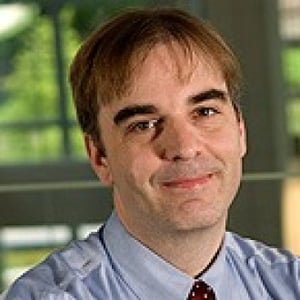
Alston & Bird Professor of Law, Duke University School of Law
Professor Young teaches constitutional law, federal courts, and foreign relations law. He is one of the nation's leading authorities on the constitutional law of federalism, having written extensively on the Rehnquist Court's "Federalist Revival" and the difficulties confronting courts as they seek to draw lines between national and state authority. He also is an active commentator on foreign relations law, where he focuses on the interaction between domestic and supranational courts and the application of international law by domestic courts. Professor Young also writes on constitutional interpretation and constitutional theory. He has been known to dabble in maritime law and comparative constitutional law.
A native of Abilene, Texas, Professor Young joined the Duke Law faculty in 2008, after serving as the Charles Alan Wright Chair in Federal Courts at the University of Texas at Austin School of Law, where he had taught since 1999. He graduated from Dartmouth College in 1990 and Harvard Law School in 1993. After law school, he served as a law clerk to Judge Michael Boudin of the 1st U.S. Circuit Court of Appeals (1993-94) and to Justice David Souter of the U.S. Supreme Court (1995-96). Professor Young practiced law at Cohan, Simpson, Cowlishaw, & Wulff in Dallas, Texas (1994-95) and at Covington & Burling in Washington, D.C. (1996-98), where he specialized in appellate litigation. He has also been a visiting professor at Harvard Law School (2004-05) and Villanova University School of Law (1998-99), as well as an adjunct professor at Georgetown University Law Center (1997).
Elected to the American Law Institute in 2006, Professor Young is an active participant in both public and private litigation in his areas of interest. He has been the principal author of amicus briefs on behalf of leading constitutional scholars in several recent Supreme Court cases, including Medellin v. Texas(concerning presidential power and the authority of the International Court of Justice over domestic courts) and Gonzales v. Raich (concerning federal power to regulate medical marijuana).
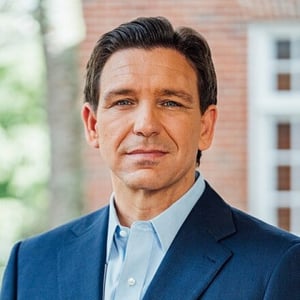
Governor, Florida
Ron DeSantis is the 46th Governor of the State of Florida. Since taking office in January 2019, he has worked hard to expand education opportunities, improve Florida’s water resources and Everglades, champion vocational training, bolster public safety, foster innovation in health care, assist with hurricane recovery, promote infrastructure development and support veterans – all while lowering taxes and being fiscally responsible.
A native Floridian, Governor DeSantis worked his way through Yale University, where he captained the university baseball team and graduated magna cum laude. He also gradated with honors from Harvard Law School. While at Harvard, he earned a commission in the U.S. Navy as a JAG Officer. During his active duty service, then- Lieutenant DeSantis deployed to Iraq as an advisor to a U.S. Navy SEAL Commander in support of the SEAL mission in Iraq. His military decorations include the Iraq Campaign Medal of the Bronze Star Medal (meritorious service).
Prior to serving as Governor, DeSantis served as the U.S. Congressman for Florida’s 6th District. As Chairman of the National Security Subcommittee, DeSantis spearheaded efforts to reform the UA, combat terrorism, identify government waste and relocate the American Embassy in Israel to Jerusalem. As a Congressman, DeSantis championed term limits, fiscal responsibility with a strong national defense.
Governor DeSantis is married to First Lady Casey DeSantis, a former Emmy Award winning television host. They are the proud parents of two children, Madison and Mason. They are the youngest family living in the Florida Governor’s Mansion in nearly fifty years.

Judge, United States Court of Appeals, District of Columbia Circuit
Judge Katsas was appointed to the D.C. Circuit in December 2017. He graduated from Princeton University and Harvard Law School, where he was an executive editor on the Harvard Law Review. Between 1989 and 1992, he served as a law clerk to Judge Edward Becker on the Third Circuit, to then-Judge Clarence Thomas on the D.C. Circuit, and to Justice Thomas on the Supreme Court. Between 1992 and 2001, he was an associate and then partner in the Washington office of Jones Day, where he specialized in appellate and complex civil litigation. Between 2001 and 2009, he served in many senior positions in the Department of Justice, including as Assistant Attorney General for the Civil Division and as Acting Associate Attorney General. In 2009, he returned to Jones Day. From January to December 2017, he served as Deputy Assistant to the President and Deputy Counsel to the President.
Before joining the bench, Judge Katsas argued more than 75 appeals, including three cases in the Supreme Court, 13 cases in the D.C. Circuit, and cases in every other federal court of appeals. By appointment of the Chief Justice, he served on the Advisory Committee on Appellate Rules from 2013 to 2017. In 2016, he was elected to membership in the American Academy of Appellate Lawyers.
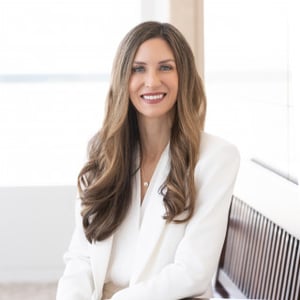
United States District Judge, United States District Court for the Middle District of Florida
In November 2020, the Senate confirmed Kathryn Kimball Mizelle as a United States District Judge for the Middle District of Florida. At age 33, she became the youngest Article III judge in the country. Prior to her confirmation, Judge Mizelle was in private practice at Jones Day, where she focused on complex civil and criminal litigation and appeals. Judge Mizelle previously served at the United States Department of Justice in the Office of the Associate Attorney General, in the Southern Criminal Enforcement Section of the Tax Division, and in the United States Attorney’s Office for the Eastern District of Virginia. Judge Mizelle has also taught as an adjunct professor of law at the University of Florida Levin College of Law and at George Mason University’s Antonin Scalia Law School.
Judge Mizelle earned her B.A., summa cum laude, from Covenant College, and her J.D., summa cum laude, from the University of Florida Levin College of Law. After graduation, Judge Mizelle served as a law clerk at every level of the federal judiciary: at the Supreme Court for Justice Clarence Thomas, at the D.C. Circuit for Judge Gregory G. Katsas, at the Eleventh Circuit for Chief Judge William H. Pryor Jr., and at the Middle District of Florida for Judge James S. Moody Jr.
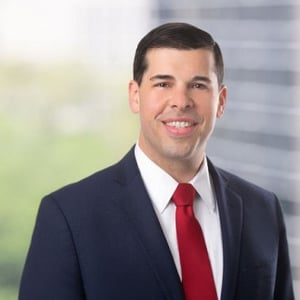
Partner, Boies Schiller Flexner LLP
Jesse, the former third-ranking official at the U.S. Department of Justice, helps clients with their most difficult litigation and regulatory issues─whether that means defending against an enforcement action, pursuing high-stakes litigation and appeals, navigating regulatory thickets at federal and state agencies, or crafting a comprehensive strategy to manage a crisis. He approaches these problems with the knowledge gained both from his broad private-practice experience and from having served at the highest levels of federal and state government.
Jesse has experience across a range of substantive and regulatory areas. He has sued the federal government and has also been one of its top law-enforcement officials; he has represented states and has also navigated their regulatory agencies on behalf of clients; and he has represented companies in business disputes, both as defendants and plaintiffs.
Before joining the firm, Jesse was the Acting Associate Attorney General at the United States Department of Justice. In that role, he oversaw the civil and criminal work of the Antitrust, Civil, Civil Rights, Environment and Natural Resources, and Tax Divisions. During Jesse’s tenure, the Associate’s office closely managed the Department’s most significant litigation, including matters involving large financial institutions, healthcare companies, automakers, energy companies, and state and local governments. In addition, Jesse served as Chair of DOJ’s Regulatory Reform Task Force and Vice Chair of DOJ’s Task Force on Market Integrity and Consumer Fraud. Jesse regularly provided legal and strategic advice to the highest-level decision makers in the federal government, including the Attorney General and Deputy Attorney General, general counsels across the spectrum of federal agencies, and White House officials.
Jesse served for three years as the secretary of Florida’s labor, economic-development, and land-use agency, the Florida Department of Economic Opportunity. Before that, he served as Governor (now Senator) Rick Scott’s general counsel.
Jesse maintains offices in both Washington D.C. and Florida. From Washington, he focuses on federal litigation and crisis management. In Florida, in addition to federal litigation, Jesse employs his knowledge of state government and regulation to help clients in courts across the state, from trial through the Florida Supreme Court.
Jesse currently serves on the Florida Supreme Court Judicial Nominating Commission, the body that provides the governor with nominees for appointment to the Florida Supreme Court. Jesse is also a fellow at the Center for the Study of the Administrative State at the Scalia Law School at George Mason University, where he writes and speaks about administrative law.
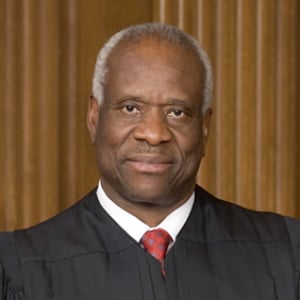
Associate Justice, Supreme Court of the United States
Clarence Thomas, Associate Justice, was born in the Pinpoint community near Savannah, Georgia on June 23, 1948. He attended Conception Seminary from 1967-1968 and received an A.B., cum laude, from Holy Cross College in 1971 and a J.D. from Yale Law School in 1974. He was admitted to law practice in Missouri in 1974, and served as an Assistant Attorney General of Missouri, 1974-1977; an attorney with the Monsanto Company, 1977-1979; and Legislative Assistant to Senator John Danforth, 1979-1981. From 1981–1982 he served as Assistant Secretary for Civil Rights, U.S. Department of Education, and as Chairman of the U.S. Equal Employment Opportunity Commission, 1982-1990. From 1990–1991, he served as a Judge on the United States Court of Appeals for the District of Columbia Circuit. President Bush nominated him as an Associate Justice of the Supreme Court and he took his seat October 23, 1991. He married Virginia Lamp on May 30, 1987 and has one child, Jamal Adeen by a previous marriage.
Professor Emeritus, Paul M. Hebert Law Center, Louisiana State University
In memoriam
Dr. John Baker is Professor Emeritus of Law, and previously the Dale E. Bennett Professor of Law, at Louisiana State University Law School. He is currently Visiting Professor at Peking University School of Transnational Law (via Zoom) and has been Visiting Professor at The Center for the Constitution, Georgetown Law School (2013-2020). He has also been a Visiting Fellow at Oriel College, the University of Oxford (2012-2014) and taught at Blackfriars Hall, Oxford in 2014. Dr. Baker has also been an adjunct Fellow at the Heritage Foundation (Spring, 2008) and a Distinguished Scholar at the Catholic University of America Law School (2011-12). He has taught at Tulane Law School, George Mason Law School, Pepperdine Law School, New York Law School, Hong Kong University, and the University of Dallas, School of Management and also taught and/or lectured in 17 foreign countries. Notable among his foreign visits are the
following: Visiting Professor at the University of Lyon III (France) (1999-2011); Visiting Professor at the Universidad de los Andes, Chile (2012), as a Fulbright Specialist (2006); and a Fulbright Scholar at various universities in the Philippines. Dr. Baker received his J.D., with honors, from the University of Michigan Law School and his B.A., magna cum laude, from the University of Dallas. He also earned a Ph.D. in Political Thought from the University of London. Baker has taught over a dozen different subjects, mostly courses in public law. His main areas of interest are Constitutional Law (particularly federalism and separation of powers), Criminal Law, Anti-Terrorism Law, International Law, Health Care Law, Mediation, and Comparative Law.
In addition to law review articles and book chapters, Dr. Baker’s academic publications include Hall's Criminal Law: Cases and Materials (with Benson, Force and George; 5th ed. Michie, 1993); An Introduction to the Law of the United States (ed. with Levasseur; University Press of America, 1992). He has also published on Forbes.com, FoxNews.com, in The Washington Times, and a number of times in The Wall Street Journal. He argues in federal court, including two oral arguments in the U.S. Supreme Court. For many years, he co-taught courses for the Federalist Society on separation of powers with the late Supreme Court Justice Antonin Scalia. In September 2016, he co-taught a Supreme Court seminar in China with Justice Samuel Alito. Following law school, he served as a law clerk in federal district court and as an assistant district attorney in New Orleans before joining LSU in 1975. While a professor, he has been as a consultant to USAID, USIA (since rolled into the State Department), the Justice Department, the U.S. Senate Judiciary Subcommittee on Separation of Powers, and the Office of Planning in the White House. He served on an ABA Task Force which issued the report, The Federalization of Crime (1998) and later as a consultant to the “Bi-Partisan Task Force on the Over- federalization of Crime” (2012-2014) created by the U.S. House Judiciary Subcommittee on Crime. Dr. Baker was a co-founder of the first iteration (1995) of Stratfor Inc., a global intelligence agency. He co-authored its first book: The Intelligence Edge (with Friedman, Friedman and Chapman; Crown Books/Random House 1997). In 2022, he began a short, weekly video podcast available on YouTube and Rumble, The Baker Brief.
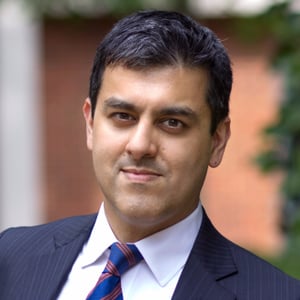
Professor of Law, University of Virginia School of Law
Aditya Bamzai is a professor of law at the University of Virginia. He teaches administrative law, civil procedure, computer crime and conflicts of law, and he has written about these and related subjects. He has argued cases relating to the separation of powers and national security in the U.S. Supreme Court, Foreign Intelligence Surveillance Court of Review, D.C. Circuit and other federal courts of appeals. From 2019 to 2021, he served as a Member of the Privacy and Civil Liberties Oversight Board, a federal agency charged with ensuring that the government’s national security efforts are balanced with the need to protect privacy and civil liberties. Before entering the academy, Bamzai was an attorney-adviser in the Office of Legal Counsel of the U.S. Department of Justice, and an appellate attorney in both private practice and for the National Security Division of the Department of Justice. Earlier in his career, he was a law clerk to Justice Antonin Scalia of the Supreme Court of the United States and to Judge Jeffrey Sutton of the Sixth Circuit Court of Appeals.
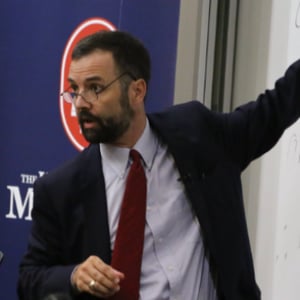
Professor of Law and Jamie L. Whitten Chair in Law and Government, University of Mississippi School of Law
Christopher Green (https://law.olemiss.edu/faculty-directory/christopher-green/) is Professor of Law and Jamie L. Whitten Chair in Law and Government at the University of Mississippi, where he has taught since 2006. He is a graduate of Princeton University and Yale Law School, and has a PhD in philosophy from the University of Notre Dame. He clerked for Judge Rhesa H. Barksdale on the Fifth Circuit and is the author of Equal Citizenship, Civil Rights, and the Constitution: The Original Sense of the Privileges or Immunities Clause (2015) and a large number of articles and essays on constitutional theory and the Fourteenth Amendment, including the two-part Original Sense of the (Equal) Protection Clause and Clarity and Reasonable Doubt in Early State-Constitutional Judicial Review. He is an affiliated scholar with the University of San Diego Center for the Study of Constitutional Originalism.
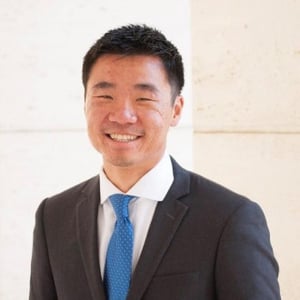
Associate, Payne & Fears
Ray represents clients in a wide range of employment and labor law matters in state and federal courts, and before administrative agencies. Ray also counsels employers on various labor and employment issues—including complying with federal and state laws.
Ray earned his J.D. from the University of Southern California, Gould School of Law in 2015 and B.A. in Political Science from U.C. Santa Barbara in 2012. In law school, Ray was a Senior Editor on the Southern California Review of Law and Social Justice, co-President of USC’s Federalist Society student chapter, and participated in the Iraqi Refugee Assistance Project. Ray served as a judicial law clerk at the United States District Court: Central District of California.
Ray has been a die-hard Lakers, Dodgers, and Rams fan his entire life. In 2015, Ray parlayed his esoteric sports knowledge into fulfilling his childhood dream of becoming a two-time Sports Jeopardy! Champion (even though the show did not exist when Ray was a lad).

Judge, United States Court of Appeals, Sixth Circuit
Amul R. Thapar serves as a judge on the United States Court of Appeals for the Sixth Circuit. His judicial career began in 2007 when President George W. Bush nominated him to serve on the Eastern District of Kentucky, making him the first South Asian Article III judge in American history. In 2017, he became President Donald J. Trump’s first appellate court nominee.
Before joining the bench, Judge Thapar served as the United States Attorney for the Eastern District of Kentucky. While United States Attorney, Judge Thapar worked on the Attorney General’s Advisory Committee (“AGAC”) and chaired the AGAC’s Controlled Substances and Asset Forfeiture subcommittee. He also served on the Terrorism and National Security subcommittee, the Violent Crime subcommittee, and the Child Exploitation working group.
Judge Thapar has worked in private practice, at Williams & Connolly in Washington, D.C., and Squire, Sanders & Dempsey in Cincinnati, Ohio. He also served as an Assistant United States Attorney in both the Southern District of Ohio and the District of Columbia.
Judge Thapar received his undergraduate degree from Boston College and his law degree from the University of California, Berkeley. After graduating, Judge Thapar worked as a law clerk to the Honorable S. Arthur Spiegel of the United States District Court for the Southern District of Ohio, and the Honorable Nathaniel R. Jones of the United States Court of Appeals for the Sixth Circuit.
Judge Thapar has also published in the Yale Law Journal, Michigan Law Review, and Catholic University Law Review. He teaches courses on originalism, the Federalists and Anti-Federalists, and legal writing at Notre Dame Law School, the University of Virginia School of Law, and Vanderbilt Law School.

Anne Fleming Research Professor and Professor of Law, Georgetown University Law Center; Faculty Director, Georgetown Center for the Constitution
Stephanie Barclay is a Professor of Law at Georgetown Law School, and the Faculty Director of the Georgetown Center for the Constitution. Her research focuses on the role our different democratic institutions play in protecting minority rights, particularly at the intersection of free speech and religious exercise. Barclay‘s work is published or is forthcoming in leading journals such as the Harvard Law Review, the Chicago Law Review, the University of Pennsylvania Law Review, and the Yale Law Journal Forum. One of her articles was also selected for the 2020 Stanford/Harvard/Yale Junior Faculty Forum. Her work has been featured in many media outlets, including The New York Times, The Wall Street Journal, The Washington Post, USA Today, Bloomberg BNA, The Hill, and Law 360. And her work has also been cited by the U.S. Supreme Court.
Prior to joining Georgetown, Barclay was twice voted Professor of the Year. Barclay has also litigated constitutional cases at both the trial and appellate level, including before the U.S. Supreme Court. Barclay served as a law clerk to Judge N. Randy Smith on the U.S. Court of Appeals for the Ninth Circuit, and to Justice Neil M. Gorsuch of the U.S. Supreme Court.
Barclay is a Faculty Affiliate at the Constitutional Law Center at Stanford Law School; and she is a Nootbaar Fellow at the Nootbaar Institute on Law, Religion, and Ethics at Pepperdine University. She currently serves as the Chair for the AALS Law and Religion Section and as a Member of the Executive Committee for the AALS Constitutional Law Section. She graduated summa cum laude from BYU Law School, where she was elected to the Order of the Coif. She is completing a Ph.D. in Law at Oxford University as a Clarendon Scholar and a Tang Scholar.

Patrick Hotung Professor of Constitutional Law, Georgetown University Law Center; Faculty Director, Georgetown Center for the Constitution
Randy E. Barnett is the Patrick Hotung Professor of Constitutional Law at the Georgetown University Law Center and is the Faculty Director of the Georgetown Center for the Constitution. After graduating from Northwestern University and Harvard Law School, he tried many felony cases as a prosecutor in the Cook County States’ Attorney’s Office in Chicago. A recipient of a Guggenheim Fellowship in Constitutional Studies and the Bradley Prize, Professor Barnett has been a visiting professor at Penn, Northwestern and Harvard Law School.
Professor Barnett’s publications includes thirteen books, more than one hundred articles and reviews, as well as numerous op-eds. His most recent book is Felony Review: Tales of True Crime and Corruption in Chicago (2026). His other books on the Constitution include: A Life for Liberty: The Making of an American Originalist (2024); The Original Meaning of the Fourteenth Amendment: Its Letter and Spirit (2021) (with Evan Bernick); An Introduction to Constitutional Law: 100 Supreme Court Cases Everyone Should Know (2019) (with Josh Blackman); Restoring the Lost Constitution: The Presumption of Liberty (2nd ed. 2013); Our Republican Constitution: Securing the Liberty and Sovereignty of We the People (2016); and Constitutional Law: Cases in Context (5th ed. forthcoming 2027) (with Josh Blackman). His books on contracts are The Oxford Introductions to U.S. Law: Contracts (2010) and Contracts: Cases and Doctrine (7th ed. 2021) (with Nate Oman). And he is the author of The Structure of Liberty: Justice and the Rule of Law (2nd ed. 2014).
In 2004, he argued the medical marijuana case of Gonzalez v. Raich before the U.S. Supreme Court. In 2012, he was one of the lawyers representing the National Federation of Independent Business in its constitutional challenge to the Affordable Care Act in NFIB v. Sebelius. He’s appeared in numerous documentaries and portrayed a prosecutor in the 2010 science-fiction feature film, InAlienable: The Movie. On X he is @RandyEBarnett

Levin, Mabie & Levin Professor of Law, University of Florida Levin College of Law
Professor Gary Lawson joined the University of Florida Levin College of Law faculty on July 1, 2024, after twenty-four years at Boston University School of Law and eleven years at Northwestern University School of Law. While at Boston University, he was named a William Fairfield Warren Distinguished Professor in 2022 – the highest faculty honor within the university. He has authored or co-authored nine editions of a textbook on administrative law, a textbook on constitutional law, five university press books, one popular press book, and more than one hundred scholarly articles on topics ranging from aspects of constitutional theory and history to the proof of legal propositions. His works have been cited in more than twenty opinions of United States Supreme Court justices. He is a founding member, and serves on the Board of Directors, of the Federalist Society for Law and Public Policy Studies and is on the Editorial Advisory Board of the Heritage Guide to the Constitution.

Richard and Frances Mallery Professor of Law and Faculty Director, Constitutional Law Center, Stanford Law School
Michael W. McConnell is the Richard and Frances Mallery Professor and Faculty Director of the Constitutional Law Center at Stanford Law School, and a Senior Fellow at the Hoover Institution. From 2002 to 2009, he served as a Circuit Judge on the United States Court of Appeals for the Tenth Circuit. He was nominated by President George W. Bush, a Republican, and confirmed by a Democratic Senate by unanimous consent. McConnell has previously held chaired professorships at the University of Chicago and the University of Utah, and visiting professorships at Harvard and NYU. He teaches courses on constitutional law, constitutional history, First Amendment, and interpretive theory. He has published widely in the fields of constitutional law and theory, especially church and state, equal protection, and separation of powers. His book, “The President Who Would Not Be King: Executive Power Under the Constitution,” was published by Princeton University Press in 2020, based on the Tanner Lectures in Human Values, which he delivered at Princeton in 2019. His latest book, co-authored with Nathan Chapman, “Agreeing to Disagree: How the Establishment Clause Protects Religious Diversity and Freedom of Conscience,” was published by Oxford University Press in mid-2023. McConnell has argued sixteen cases in the United States Supreme Court, most recently Carney v. Adams (2020). defending a provision of the Delaware Constitution requiring political balance on that state’s courts. More recently, he was co-counsel in Gonzalez v. Google. He earned his B.A. from Michigan State University and his J.D. from the University of Chicago, and has received honorary degrees from Notre Dame University and Michigan State. He served as law clerk to Supreme Court Justice William J. Brennan, Jr. and D.C. Circuit Chief Judge J. Skelly Wright. He has been Assistant General Counsel of the Office of Management & Budget, Assistant to the Solicitor General of the Department of Justice, and a member of the President’s Intelligence Oversight Board. He is Senior of Counsel to the law firm Wilson, Sonsini, Goodrich & Rosati, and is co-chair of Meta’s Oversight Review Board.
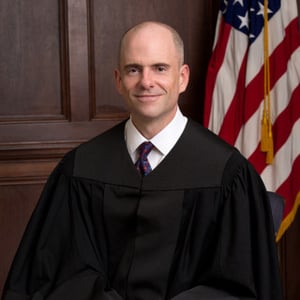
Judge, United States Court of Appeals, Eleventh Circuit
Judge Kevin C. Newsom is a member of the United States Court of Appeals for the Eleventh Circuit. He sits in Birmingham, Alabama.
Before his appointment to the bench, Judge Newsom was the head of the appellate practice group at Bradley Arant Boult Cummings LLP and, before that, the Solicitor General of Alabama. As a practicing lawyer, Judge Newsom argued four cases in the Supreme Court of the United States, and nearly 40 more in the United States Courts of Appeals and state supreme and appellate courts.
Judge Newsom graduated summa cum laude from Samford University and magna cum laude from Harvard Law School, where he was an articles editor on the Harvard Law Review. Following law school, Judge Newsom clerked for Judge Diarmuid F. O’Scannlain of the United States Court of Appeals for the Ninth Circuit and Justice David H. Souter of the Supreme Court of the United States.
Judge Newsom teaches at Harvard Law School, Yale Law School, Stanford Law School, and the University of Chicago Law School. His published work has appeared in the Yale Law Journal and the Harvard Law Review.

Executive Vice President, The Federalist Society
Dean Reuter is Executive Vice President at the Federalist Society for Law and Public Policy Studies. He has served in two federal government agency Offices of the Inspector General, as Counsel to the Inspector General and Deputy Inspector General, responsible for policing the use of federal funds granted and contracted through those agencies. As such, he helped conduct and oversee criminal investigations across the country. He is the principal author of the non-fiction book, The Hidden Nazi: The Untold Story of America's Deal with the Devil, and editor of Liberty’s Nemesis: The Unchecked Expansion of the State and Confronting Terror: 9/11 and the Future of American National Security. He was appointed by the President and served as Vice-Chairman of the Board of Directors of the Corporation for National and Community Service, and recently served as an appointee on the U.S. Commission on Presidential Scholars. He is a graduate of Hood College (BA with Honors) and the University of Maryland School of Law.
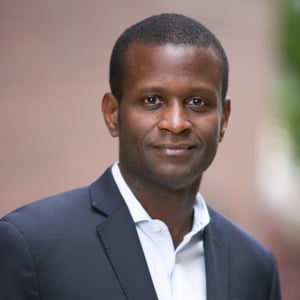
Dwight Professor of Law, Columbia Law School
JAMAL GREENE is the Dwight Professor of Law at Columbia Law School, where he teaches courses in constitutional law, comparative constitutional law, and the law of the political process. He is the author of How Rights Went Wrong: Why Our Obsession With Rights Is Tearing America Apart, as well as numerous articles and book chapters on constitutional law and theory. He is also a co-chair of the Oversight Board, an independent body that reviews content moderation decisions on Facebook and Instagram. He served as a law clerk to the Hon. Guido Calabresi on the U.S. Court of Appeals for the Second Circuit and for the Hon. John Paul Stevens on the U.S. Supreme Court. He earned his J.D. from Yale Law School in 2005 and his A.B. from Harvard College in 1999.

Senior Fellow and Director of Constitutional Studies, Manhattan Institute
Ilya Shapiro is a senior fellow and director of constitutional studies at the Manhattan Institute and a contributing editor of City Journal. Previously he was executive director and senior lecturer at the Georgetown Center for the Constitution, and before that a vice president of the Cato Institute.
Shapiro is the author of Lawless: The Miseducation of America’s Elites (2025) and Supreme Disorder: Judicial Nominations and the Politics of America’s Highest Court (2020), coauthor of Religious Liberties for Corporations? (2014), and editor of 11 volumes of the Cato Supreme Court Review (2008-18). He has contributed to a variety of academic, popular, and professional publications, including the Wall Street Journal, Harvard Journal of Law & Public Policy, Washington Post, Los Angeles Times, USA Today, National Review, and Newsweek. He also regularly provides commentary for various media outlets, writes the Shapiro’s Gavel newsletter on Substack, and once appeared on the Colbert Report.
Shapiro has testified many times before Congress and state legislatures and has filed more than 500 amicus curiae “friend of the court” briefs in the Supreme Court. He lectures regularly on behalf of the Federalist Society, is a member of the board of fellows of the Jewish Policy Center, was an inaugural Washington Fellow at the National Review Institute, and has been an adjunct law professor at the George Washington University and University of Mississippi. He is also the chairman of the board of advisers of the Mississippi Justice Institute, a barrister in the Edward Coke Appellate Inn of Court, and a former member of the Virginia Advisory Committee to the U.S. Commission on Civil Rights.
Earlier in his career, Shapiro was a special assistant/adviser to the Multi-National Force in Iraq on rule-of-law issues and practiced at Patton Boggs and Cleary Gottlieb. Before entering private practice, he clerked for Judge E. Grady Jolly of the U.S. Court of Appeals for the Fifth Circuit. He holds an AB from Princeton University, an MSc from the London School of Economics, and a JD from the University of Chicago Law School.
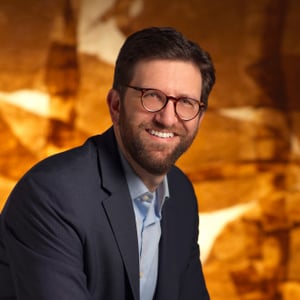
Joseph Tartakovsky, Author of The Lives of the Constitution: Ten Exceptional Minds that Shaped America's Supreme Law.
Joseph Tartakovsky is author of The Lives of the Constitution: Ten Exceptional Minds that Shaped America’s Supreme Law (2018) and the former Deputy Solicitor General of Nevada. His writing has appeared in the New York Times, Wall Street Journal, and Los Angeles Times.

Tazewell Taylor Professor of Law and William H. Cabell Research Professor, William & Mary Law School
Jonathan H. Adler joined the William & Mary law faculty as the Tazwell Taylor Professor of Law and William H. Cabell Research Professor in 2025. Prior to joining the faculty, he was the inaugural Johan Verheij Memorial Professor of Law and the founding Director of the Coleman P. Burke Center for Environmental Law at the Case Western Reserve University School of Law.
Professor Adler is the author or editor of seven books, including Climate Liberalism: Perspectives on Liberty, Property and Pollution (Palgrave, 2023), Marijuana Federalism: Uncle Sam and Mary Jane (Brookings Institution Press, 2020), Business and the Roberts Court (Oxford University Press, 2016) and Rebuilding the Ark: New Perspectives on Endangered Species Act Reform (AEI Press, 2011).
His articles have appeared in publications ranging from the Harvard Environmental Law Review and Yale Journal on Regulation to the Wall Street Journal, New York Times, and Washington Post. He has testified before Congress a dozen times, and his work has been cited in the U.S. Supreme Court. A 2024 study identified Professor Adler as the seventh most cited legal academic in administrative and environmental law from 2019 to 2023.
Professor Adler is a contributing editor to Civitas Outlook and a regular contributor to the popular legal blog, The Volokh Conspiracy. A regular commentator on constitutional and regulatory issues, he has appeared on numerous radio and television programs, ranging from the PBS Newshour and National Public Radio to the Fox News Channel and Entertainment Tonight.
Professor Adler is a senior fellow at the Property & Environment Research Center in Bozeman, Montana. In 2018, Professor Adler was elected to membership in the American Law Institute and helped co-found the organization Checks and Balances. In 2024, Professor Adler was appointed a public member of the Administrative Conference of the United States.
Professor Adler clerked for the Honorable David B. Sentelle on the U.S. Court of Appeals for the District of Columbia Circuit.
Judge, United States Court of Appeals, District of Columbia Circuit
Judge Katsas was appointed to the D.C. Circuit in December 2017. He graduated from Princeton University and Harvard Law School, where he was an executive editor on the Harvard Law Review. Between 1989 and 1992, he served as a law clerk to Judge Edward Becker on the Third Circuit, to then-Judge Clarence Thomas on the D.C. Circuit, and to Justice Thomas on the Supreme Court. Between 1992 and 2001, he was an associate and then partner in the Washington office of Jones Day, where he specialized in appellate and complex civil litigation. Between 2001 and 2009, he served in many senior positions in the Department of Justice, including as Assistant Attorney General for the Civil Division and as Acting Associate Attorney General. In 2009, he returned to Jones Day. From January to December 2017, he served as Deputy Assistant to the President and Deputy Counsel to the President.
Before joining the bench, Judge Katsas argued more than 75 appeals, including three cases in the Supreme Court, 13 cases in the D.C. Circuit, and cases in every other federal court of appeals. By appointment of the Chief Justice, he served on the Advisory Committee on Appellate Rules from 2013 to 2017. In 2016, he was elected to membership in the American Academy of Appellate Lawyers.
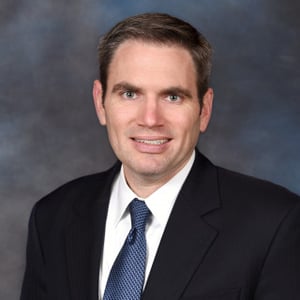
Judge, United States Court of Appeals, Sixth Circuit
Eric Murphy has been a Judge on the United States Court of Appeals for the Sixth Circuit since March 2019. He previously served as the ninth State Solicitor of Ohio. In that role, Eric briefed and argued appellate cases on behalf of Ohio and its state agencies and officers in the U.S. Supreme Court, the U.S. Court of Appeals for the Sixth Circuit, and the Ohio Supreme Court. Before his appointment as State Solicitor, Eric practiced appellate litigation at Jones Day. After graduation from law school, he served as a law clerk for Justice Anthony M. Kennedy of the Supreme Court of the United States, and Judge J. Harvie Wilkinson III of the United States Court of Appeals for the Fourth Circuit. He received his law degree from the University of Chicago and his undergraduate degree from Miami University.
Jacob E. Davis and Jacob E. Davis II Chair in Law, Moritz Colleg, The Ohio State University
Professor Shane came to Ohio State in 2003 from Carnegie Mellon University's H. John Heinz III School of Public Policy and Management. He is an internationally recognized scholar in administrative law, with a specialty in separation of powers law, and has co-authored leading casebooks on each subject. He has served on the faculty at the University of Iowa College of Law and was dean at the University of Pittsburgh School of Law.
In addition to his outstanding law teaching and scholarship, Professor Shane has received a National Science Foundation grant for interdisciplinary study related to cyberspace and democracy. At Ohio State, he provides strong leadership in interdisciplinary scholarship and teaching.

Federalist Papers Book Club: The Federalist [Session 2]
John S. Baker
Slide deck 1 Federalist Papers Book Club will run weekly on Tuesday evenings for 10...
Necessary & Proper Episode 59: Presidential Power: A Historical Perspective on Today
On November 2, 2020, the Federalist Society's Illinois Student Chapter hosted Logan Beirne for a...
Panel V: The Role and Relevance of the Amendment Process [Archive Collection]
Akhil Reed Amar, Frank H. Easterbrook, Steve J. Markman, Larry Simon
On March 4-5, 1988, The Federalist Society's University of Virginia student chapter hosted the National...
Courthouse Steps Decision Teleforum: Allen v. Cooper
John T. Cross, Ralph Oman, Steven M. Tepp, Ernest Young
Of Federalism, Copyright, and Blackbeard’s Revenge: The recent Supreme Court ruling in Allen v. Cooper is the...
Banquet and Discussion with Justice Clarence Thomas
Ron DeSantis, Gregory G. Katsas, Kathryn Kimball Mizelle, Jesse Panuccio, Clarence Thomas
This fireside chat between Honorable Gregory G. Katsas and Justice Clarence Thomas was given on...
Panel 2: The Anti-Federalists and Theories of Originalism
John S. Baker, Aditya Bamzai, Christopher R. Green, Raymond J. Nhan, Amul R. Thapar
On January 25, 2020, the Federalist Society hosted its annual Western Chapters Conference at the...
Showcase Panel III: Does Originalism Protect Unenumerated Rights?
Stephanie Barclay, Randy E. Barnett, Gary Lawson, Michael W. McConnell, Kevin C. Newsom, Dean Reuter, Jamal Greene
On November 16, 2019, the Federalist Society hosted the third showcase panel of the 2019...
Topics
Liberty Month Revisited: America’s Great Charter
This month we are sharing a selection of paired pieces from The Federalist Society's Liberty...
The Lives of the Constitution
Ilya Shapiro, Joseph Tartakovsky
The Lives of the Constitution: Ten Exceptional Minds that Shaped America’s Supreme Law is a...
Introduction to Originalism and Federalism: Where Are the Courts Heading?
Jonathan H. Adler, Gregory G. Katsas, Eric E. Murphy, Peter M. Shane
Since the 1980s, the originalist approach to constitutional interpretation has gained greater and greater acceptance...