
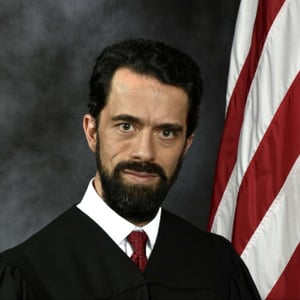
Judge, United States Court of Appeals, Third Circuit
Stephanos Bibas is a judge on the U.S. Court of Appeals for the Third Circuit. Judge Bibas was previously a professor of law and criminology at the University of Pennsylvania Law School. As director of the Penn Law Supreme Court Clinic, he argued six cases before the Supreme Court of the United States and filed briefs in dozens of others. He graduated summa cum laude and Phi Beta Kappa from Columbia University in 1989 with a B.A. in political theory and from Oxford University in 1991 with a B.A. in jurisprudence. He then earned his J.D. from Yale Law School in 1994.
After graduating from Yale Law, Judge Bibas clerked for Judge Patrick Higginbotham of the U.S. Court of Appeals for the Fifth Circuit and Justice Anthony Kennedy on the Supreme Court and was a litigation associate at Covington & Burling LLP in Washington, D.C. Thereafter, Judge Bibas served as an Assistant U.S. Attorney in the Southern District of New York, where he successfully prosecuted the world’s leading expert in Tiffany stained glass for hiring a grave robber to steal priceless Tiffany windows from cemeteries. Before his tenure at Penn Law, Judge Bibas taught at the University of Chicago Law School and the University of Iowa College of Law and was a research fellow at Yale Law School. He has published two books and seventy scholarly articles.

Laurence A. Tisch Professor of Law and Director, Classical Liberal Institute, New York University School of Law; Director, Classical Liberal Institute, Civitas Institute University of Texas at Austin
Richard A. Epstein is the Laurence A. Tisch Professor of Law, at New York University, a senior research fellow at the Civitas Institute at the University of Texas Austin, and a senior Lecturer, the University of Chicago. He received an LL.D., h.c . from the University of Ghent, 2003 , and an LLD h.c . from the University of Siegen in 2018 and the Bradley Prize in 2011. He has been a member of the American Academy of Arts and Sciences since 1985. He has edited both the Journal of Legal Studies (1981-1991) and the Journal of Law and Economics (1991-2001). He is also a founder and director of the Classical Liberal Institute at NYU Law School. His most recent book is The Classical Liberal Constitution: The Uncertain Quest for Limited Government (2014). His other books include Takings: Private Property and the Power of Eminent Domain ( 1985); Bargaining with the State (1993); Simple Rules for a Complex World (1995); Principles for a Free Society: Reconciling Individual Liberty and the Common Good (1998); Skepticism and Freedom: A Modern Theory of Classical Liberalism (2003); Design for Liberty: Private Property, Public Administration and the Rule of Law (2011), and most recently, The Myth of Birthright citizenship—and Beyond (2026). He has taught courses in , administrative law, antitrust, constitutional, contracts, environmental law, land use planning; real property, torts and water law. He has written and spoken extensively on a wide range of topics, and is writes a regular column for Defining Ideas.
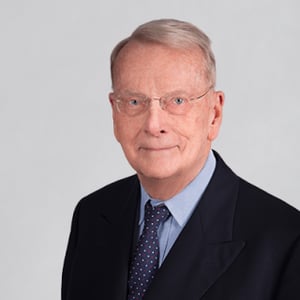
Judge, Iran-United States Claims Tribunal and Arbitrator Member, Twenty Essex Chambers
Charles’s 55-year career in the law has combined extensive practice at the bar with distinguished public service, both national and international. For nearly 40 years he has focused on public international law and international dispute resolution.
As counsel or arbitrator he has handled cases on all six continents, principally under the rules of the ICC, UNCITRAL, LCIA, AAA, United Nations Compensation Commission, ICSID, Stockholm Chamber of Commerce, Insurance and Reinsurance Arbitration Society and LMAA. These cases have involved a wide variety of commercial disputes as well as issues of public international law, particularly involving the oil and gas sector, major infrastructural projects, expropriations, and other investment disputes, including ones arising under both bilateral and multilateral investment treaties.
Charles started his career with White & Case LLP in New York, before serving for four years in the United States Department of State in Washington, DC, concluding as its Acting Legal Adviser. He then rejoined White & Case LLP, co-founding its Washington, DC office, where his practice came to be comprised almost exclusively of substantial international arbitrations.
He has served continuously since 1983 as a judge of the Iran-United States Claims Tribunal in The Hague, The Netherlands. That service was interrupted for some months in 1987 by White House service as Deputy Special Counsellor to President Reagan. Charles resumed partnership in White & Case LLP from 1988 until joining 20 Essex Street in 2001. Since 2014 he has also served as a Judge ad hoc at the International Court of Justice.
In 2015 Charles was only the fourth ever recipient of the Global Arbitration Review Lifetime Achievement Award.
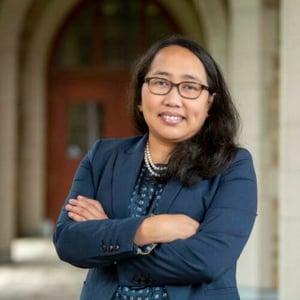
Professor of Law and Global Affairs Faculty Director, LL.M. in International Human Rights Law; Global Director, Notre Dame Law School Global Human Rights Clinic, Notre Dame Law School
Diane A. Desierto joined the Law School in January 2021 as Professor of Law and LL.M. Faculty Director, with a joint appointment at the Keough School of Global Affairs. Desierto teaches, publishes, and practices in the areas of international law and human rights, international economic law and development, international arbitration, maritime security, Association of Southeast Asian Nations (ASEAN) Law, and comparative public law. At Notre Dame, Desierto is a Faculty Fellow at the Klau Institute for Civil Human Rights, Kellogg Institute of International Studies, Liu Institute for Asia and Asian Studies, Pulte Institute for Global Development, and Nanovic Institute of European Studies. She is also Co-Principal Investigator of the Notre Dame Reparations Design and Compliance Lab.
Desierto is a Member and former Chair-Rapporteur of the Expert Group of the United Nations Working Group on the Right to Development, Resource Expert for the Association of Southeast Asian Nations (ASEAN), former Director of Studies and Faculty of the Hague Academy of International Law, President of the Friends of the Hague Academy Foundation, and the Philippines Focal Point for the International Criminal Court Bar Association. She is active as international counsel at matters successfully litigated at the Permanent Court of Arbitration, the UN Human Rights Committee, the Philippine Supreme Court and Southeast Asian agencies, and was appointed by the Philippine Supreme Court as Professor of International Law and Human Rights at the Philippines Judicial Academy. Desierto is a Member of the Editorial Boards of the European Journal of International Law (and Editor of its leading international law blog EJIL:Talk!), Journal of World Investment and Trade, and the Global Community Yearbook of International Law and Jurisprudence, and the Kluwer Law monograph series on Human Society and International Law, and also serves on the Scientific Advisory Boards of international journals such as International Law Studies, the Revista Chilena de Derecho, and the Indonesian Journal of International and Comparative Law. Desierto previously taught as tenure-track/tenured law faculty at the University of the Philippines, Peking University School of Transnational Law in China, and the University of Hawaii Richardson School of Law. She is a recipient of faculty fellowships awarded by Stanford University's Center for Advanced Studies in the Behavioral Sciences (CASBS) and the Stanford Center for Human Rights and International Justice, the Max Planck Institute for Comparative Public Law and International Law in Heidelberg, the Humboldt-Potsdam-Berlin Senior Fellowship, the East-West Center in Honolulu, the Grotius Fellowship at University of Michigan Law School, and the National University of Singapore's Asian Law Institute Fellowship. Desierto has served Visiting Professor appointments at the University of Paris-Nanterre X Faculty of Law, University of the Philippines College of Law Graduate Program at Bonifacio Global City, the University of Navarre Faculty of Law in Spain, and Universidad Panamericana Faculty of Law in Mexico City.
Desierto holds JSD and LLM degrees from Yale Law School, as well as JD cum laude class salutatorian and BSc Economics summa cum laude class valedictorian degrees from the University of the Philippines, and was a former Yale Law clerk at the International Court of Justice for H.E. Judges Bruno Simma and Bernardo Sepulveda-Amor. She authored and/or edited several books, such as Necessity and National Emergency Clauses: Sovereignty in Modern Treaty Interpretation (Martinus Nijhoff, 2012, recipient of the Ambrose Gherini Prize in International Law at Yale Law), Public Policy in International Economic Law: The ICESCR in Trade, Investment and Finance (Oxford University Press, 2015), ASEAN Law and Regional Integration: Governance and the Rule of Law in Southeast Asia's Single Market (with D. Cohen, Routledge, 2020), The International Legal System: Cases and Materials (8th Edition, with M.E. O'Connell, N. Roht-Arriaza, and D. Bradlow, 2022), as well as, to date, around 180 law review articles, book chapters, essays, and book reviews with leading international law journals and publishers in the United States, Europe, and Asia. She is a member of the Institute of Transnational Arbitration Academic Council, the UNCITRAL Academic Forum on Investor-State Dispute Settlement Reform, the 2019 Hague Rules on Business and Human Rights Arbitration Drafting Team, Co-Chair of the Oxford Investment Claims Summer Academy, and has been recognized repeatedly by Who's Who Legal as one of the Future Leaders in Arbitration. The 2020 ND Women Lead featured Desierto here.
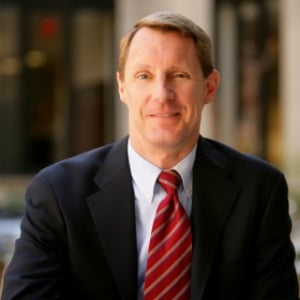
Director, International Legal Studies Program, Vanderbilt Law School
Michael Newton is an expert on terrorism, accountability, transnational justice, and conduct of hostilities issues. Over the course of his career, he has published more than 90 books, articles, op-eds and book chapters. He has been an expert witness in terrorism related trials and is admitted to the counsel list of the International Criminal Court, where, in 2018, he helped prepare the appeal of Jean-Pierre Bemba and participated in oral arguments in the Appeals Chamber. At Vanderbilt, he developed and teaches the innovative International Law Practice Lab, which provides expert assistance to judges, lawyers, legislatures, governments, and policy makers around the world. Professor Newton is most recently the editor of The United States Department of Defense Law of War Manual: Commentary and Critique, forthcoming from Cambridge University Press.
An authority on the law of armed conflict, Professor Newton served as the senior adviser to the Ambassador-at-Large for War Crimes Issues in the U.S. State Department from January 1999 to August 2002, during which he implemented a wide range of policy positions, including U.S. support to accountability mechanisms worldwide. He negotiated the “Elements of Crimes” for the International Criminal Court, and was the senior member of the team teaching international law to the first group of Iraqis who began to think about accountability mechanisms and a constitutional structure in November 2000. He shuttled to Baghdad repeatedly to aid international and Iraqi lawyers and jurists in drafting the Statute of the Iraqi High Tribunal while serving as the International Law Adviser to the Judicial Chambers from 2006 to 2008. He began assisting Iraqi officials, victims and civil society groups on legal issues associated with documentation and investigation of crimes committed by Da’esh on Iraqi soil days after Yazidi victims fled towards Mount Sinjar. He was the U.S. representative on the U.N. Planning Mission for the Sierra Leone Special Court and a founding member of its academic consortium. He is an elected member of the International Institute of Humanitarian Law and on the expert roster of Justice Rapid Response. In addition to teaching the Practice Lab, he develops and coordinates externships and educational opportunities for students interested in international legal issues, having supervised more than 150 such opportunities.
Professor Newton has served on the executive council of the American Society of International Law and as an invited expert for the Genocide Prevention Task Force established by the U.S. Holocaust Memorial Museum and the U.S. Institute of Peace. He is currently on the Advisory Board of the ABA International Criminal Court Project.
Professor Newton served in the U.S. Army more than 21 years, beginning with his commission from the U.S. Military Academy in May 1984 as an armor officer in the 4th Battalion, 68th Armor at Fort Carson, Colorado. After his selection for the Funded Legal Education Program, Newton served as chief of operational law with the Army Special Forces Command (Airborne) during Operation Desert Storm, and as the group judge advocate for the 7th Special Forces Group (Airborne). His deployments include Northern Iraq on Operation Provide Comfort to assist Kurdish civilians, and Haiti with 194th Armored Brigade (Separate), where he organized and led human rights and rules of engagement education for multinational forces, including police. He has taught international and operational law at the Judge Advocate General's School and Center in Charlottesville, Virginia, and taught international law at the United States Military Academy at West Point.
Judge, United States Court of Appeals, Third Circuit
Stephanos Bibas is a judge on the U.S. Court of Appeals for the Third Circuit. Judge Bibas was previously a professor of law and criminology at the University of Pennsylvania Law School. As director of the Penn Law Supreme Court Clinic, he argued six cases before the Supreme Court of the United States and filed briefs in dozens of others. He graduated summa cum laude and Phi Beta Kappa from Columbia University in 1989 with a B.A. in political theory and from Oxford University in 1991 with a B.A. in jurisprudence. He then earned his J.D. from Yale Law School in 1994.
After graduating from Yale Law, Judge Bibas clerked for Judge Patrick Higginbotham of the U.S. Court of Appeals for the Fifth Circuit and Justice Anthony Kennedy on the Supreme Court and was a litigation associate at Covington & Burling LLP in Washington, D.C. Thereafter, Judge Bibas served as an Assistant U.S. Attorney in the Southern District of New York, where he successfully prosecuted the world’s leading expert in Tiffany stained glass for hiring a grave robber to steal priceless Tiffany windows from cemeteries. Before his tenure at Penn Law, Judge Bibas taught at the University of Chicago Law School and the University of Iowa College of Law and was a research fellow at Yale Law School. He has published two books and seventy scholarly articles.
Judge, Iran-United States Claims Tribunal and Arbitrator Member, Twenty Essex Chambers
Charles’s 55-year career in the law has combined extensive practice at the bar with distinguished public service, both national and international. For nearly 40 years he has focused on public international law and international dispute resolution.
As counsel or arbitrator he has handled cases on all six continents, principally under the rules of the ICC, UNCITRAL, LCIA, AAA, United Nations Compensation Commission, ICSID, Stockholm Chamber of Commerce, Insurance and Reinsurance Arbitration Society and LMAA. These cases have involved a wide variety of commercial disputes as well as issues of public international law, particularly involving the oil and gas sector, major infrastructural projects, expropriations, and other investment disputes, including ones arising under both bilateral and multilateral investment treaties.
Charles started his career with White & Case LLP in New York, before serving for four years in the United States Department of State in Washington, DC, concluding as its Acting Legal Adviser. He then rejoined White & Case LLP, co-founding its Washington, DC office, where his practice came to be comprised almost exclusively of substantial international arbitrations.
He has served continuously since 1983 as a judge of the Iran-United States Claims Tribunal in The Hague, The Netherlands. That service was interrupted for some months in 1987 by White House service as Deputy Special Counsellor to President Reagan. Charles resumed partnership in White & Case LLP from 1988 until joining 20 Essex Street in 2001. Since 2014 he has also served as a Judge ad hoc at the International Court of Justice.
In 2015 Charles was only the fourth ever recipient of the Global Arbitration Review Lifetime Achievement Award.
Professor of Law and Global Affairs Faculty Director, LL.M. in International Human Rights Law; Global Director, Notre Dame Law School Global Human Rights Clinic, Notre Dame Law School
Diane A. Desierto joined the Law School in January 2021 as Professor of Law and LL.M. Faculty Director, with a joint appointment at the Keough School of Global Affairs. Desierto teaches, publishes, and practices in the areas of international law and human rights, international economic law and development, international arbitration, maritime security, Association of Southeast Asian Nations (ASEAN) Law, and comparative public law. At Notre Dame, Desierto is a Faculty Fellow at the Klau Institute for Civil Human Rights, Kellogg Institute of International Studies, Liu Institute for Asia and Asian Studies, Pulte Institute for Global Development, and Nanovic Institute of European Studies. She is also Co-Principal Investigator of the Notre Dame Reparations Design and Compliance Lab.
Desierto is a Member and former Chair-Rapporteur of the Expert Group of the United Nations Working Group on the Right to Development, Resource Expert for the Association of Southeast Asian Nations (ASEAN), former Director of Studies and Faculty of the Hague Academy of International Law, President of the Friends of the Hague Academy Foundation, and the Philippines Focal Point for the International Criminal Court Bar Association. She is active as international counsel at matters successfully litigated at the Permanent Court of Arbitration, the UN Human Rights Committee, the Philippine Supreme Court and Southeast Asian agencies, and was appointed by the Philippine Supreme Court as Professor of International Law and Human Rights at the Philippines Judicial Academy. Desierto is a Member of the Editorial Boards of the European Journal of International Law (and Editor of its leading international law blog EJIL:Talk!), Journal of World Investment and Trade, and the Global Community Yearbook of International Law and Jurisprudence, and the Kluwer Law monograph series on Human Society and International Law, and also serves on the Scientific Advisory Boards of international journals such as International Law Studies, the Revista Chilena de Derecho, and the Indonesian Journal of International and Comparative Law. Desierto previously taught as tenure-track/tenured law faculty at the University of the Philippines, Peking University School of Transnational Law in China, and the University of Hawaii Richardson School of Law. She is a recipient of faculty fellowships awarded by Stanford University's Center for Advanced Studies in the Behavioral Sciences (CASBS) and the Stanford Center for Human Rights and International Justice, the Max Planck Institute for Comparative Public Law and International Law in Heidelberg, the Humboldt-Potsdam-Berlin Senior Fellowship, the East-West Center in Honolulu, the Grotius Fellowship at University of Michigan Law School, and the National University of Singapore's Asian Law Institute Fellowship. Desierto has served Visiting Professor appointments at the University of Paris-Nanterre X Faculty of Law, University of the Philippines College of Law Graduate Program at Bonifacio Global City, the University of Navarre Faculty of Law in Spain, and Universidad Panamericana Faculty of Law in Mexico City.
Desierto holds JSD and LLM degrees from Yale Law School, as well as JD cum laude class salutatorian and BSc Economics summa cum laude class valedictorian degrees from the University of the Philippines, and was a former Yale Law clerk at the International Court of Justice for H.E. Judges Bruno Simma and Bernardo Sepulveda-Amor. She authored and/or edited several books, such as Necessity and National Emergency Clauses: Sovereignty in Modern Treaty Interpretation (Martinus Nijhoff, 2012, recipient of the Ambrose Gherini Prize in International Law at Yale Law), Public Policy in International Economic Law: The ICESCR in Trade, Investment and Finance (Oxford University Press, 2015), ASEAN Law and Regional Integration: Governance and the Rule of Law in Southeast Asia's Single Market (with D. Cohen, Routledge, 2020), The International Legal System: Cases and Materials (8th Edition, with M.E. O'Connell, N. Roht-Arriaza, and D. Bradlow, 2022), as well as, to date, around 180 law review articles, book chapters, essays, and book reviews with leading international law journals and publishers in the United States, Europe, and Asia. She is a member of the Institute of Transnational Arbitration Academic Council, the UNCITRAL Academic Forum on Investor-State Dispute Settlement Reform, the 2019 Hague Rules on Business and Human Rights Arbitration Drafting Team, Co-Chair of the Oxford Investment Claims Summer Academy, and has been recognized repeatedly by Who's Who Legal as one of the Future Leaders in Arbitration. The 2020 ND Women Lead featured Desierto here.
Laurence A. Tisch Professor of Law and Director, Classical Liberal Institute, New York University School of Law; Director, Classical Liberal Institute, Civitas Institute University of Texas at Austin
Richard A. Epstein is the Laurence A. Tisch Professor of Law, at New York University, a senior research fellow at the Civitas Institute at the University of Texas Austin, and a senior Lecturer, the University of Chicago. He received an LL.D., h.c . from the University of Ghent, 2003 , and an LLD h.c . from the University of Siegen in 2018 and the Bradley Prize in 2011. He has been a member of the American Academy of Arts and Sciences since 1985. He has edited both the Journal of Legal Studies (1981-1991) and the Journal of Law and Economics (1991-2001). He is also a founder and director of the Classical Liberal Institute at NYU Law School. His most recent book is The Classical Liberal Constitution: The Uncertain Quest for Limited Government (2014). His other books include Takings: Private Property and the Power of Eminent Domain ( 1985); Bargaining with the State (1993); Simple Rules for a Complex World (1995); Principles for a Free Society: Reconciling Individual Liberty and the Common Good (1998); Skepticism and Freedom: A Modern Theory of Classical Liberalism (2003); Design for Liberty: Private Property, Public Administration and the Rule of Law (2011), and most recently, The Myth of Birthright citizenship—and Beyond (2026). He has taught courses in , administrative law, antitrust, constitutional, contracts, environmental law, land use planning; real property, torts and water law. He has written and spoken extensively on a wide range of topics, and is writes a regular column for Defining Ideas.
Director, International Legal Studies Program, Vanderbilt Law School
Michael Newton is an expert on terrorism, accountability, transnational justice, and conduct of hostilities issues. Over the course of his career, he has published more than 90 books, articles, op-eds and book chapters. He has been an expert witness in terrorism related trials and is admitted to the counsel list of the International Criminal Court, where, in 2018, he helped prepare the appeal of Jean-Pierre Bemba and participated in oral arguments in the Appeals Chamber. At Vanderbilt, he developed and teaches the innovative International Law Practice Lab, which provides expert assistance to judges, lawyers, legislatures, governments, and policy makers around the world. Professor Newton is most recently the editor of The United States Department of Defense Law of War Manual: Commentary and Critique, forthcoming from Cambridge University Press.
An authority on the law of armed conflict, Professor Newton served as the senior adviser to the Ambassador-at-Large for War Crimes Issues in the U.S. State Department from January 1999 to August 2002, during which he implemented a wide range of policy positions, including U.S. support to accountability mechanisms worldwide. He negotiated the “Elements of Crimes” for the International Criminal Court, and was the senior member of the team teaching international law to the first group of Iraqis who began to think about accountability mechanisms and a constitutional structure in November 2000. He shuttled to Baghdad repeatedly to aid international and Iraqi lawyers and jurists in drafting the Statute of the Iraqi High Tribunal while serving as the International Law Adviser to the Judicial Chambers from 2006 to 2008. He began assisting Iraqi officials, victims and civil society groups on legal issues associated with documentation and investigation of crimes committed by Da’esh on Iraqi soil days after Yazidi victims fled towards Mount Sinjar. He was the U.S. representative on the U.N. Planning Mission for the Sierra Leone Special Court and a founding member of its academic consortium. He is an elected member of the International Institute of Humanitarian Law and on the expert roster of Justice Rapid Response. In addition to teaching the Practice Lab, he develops and coordinates externships and educational opportunities for students interested in international legal issues, having supervised more than 150 such opportunities.
Professor Newton has served on the executive council of the American Society of International Law and as an invited expert for the Genocide Prevention Task Force established by the U.S. Holocaust Memorial Museum and the U.S. Institute of Peace. He is currently on the Advisory Board of the ABA International Criminal Court Project.
Professor Newton served in the U.S. Army more than 21 years, beginning with his commission from the U.S. Military Academy in May 1984 as an armor officer in the 4th Battalion, 68th Armor at Fort Carson, Colorado. After his selection for the Funded Legal Education Program, Newton served as chief of operational law with the Army Special Forces Command (Airborne) during Operation Desert Storm, and as the group judge advocate for the 7th Special Forces Group (Airborne). His deployments include Northern Iraq on Operation Provide Comfort to assist Kurdish civilians, and Haiti with 194th Armored Brigade (Separate), where he organized and led human rights and rules of engagement education for multinational forces, including police. He has taught international and operational law at the Judge Advocate General's School and Center in Charlottesville, Virginia, and taught international law at the United States Military Academy at West Point.
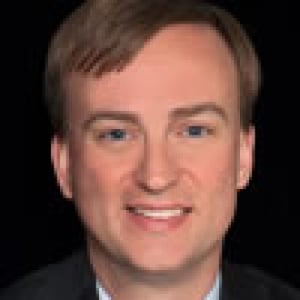
Managing Director, Beacon Global Strategies LLC
From 2011-2013, Mr. Allen served as the Majority Staff Director of the House Permanent Select Committee on Intelligence (HPSCI). Under Chairman Mike Rogers’ (R-MI) direction, the HPSCI restored the process of an annual intelligence authorization bill to fund and give direction to the seventeen elements of the intelligence community, enacting measures for fiscal years 2011, 2012, and 2013. The HPSCI also led the House of Representatives’ consideration of cyber security legislation, passing the Cyber Information Sharing Protection Act (CISPA) with bipartisan majorities in 2012 and 2013.
Prior to joining the HPSCI, he was director for the Bipartisan Policy Center’s successor to the 9/11 Commission, the National Security Preparedness Group, co-chaired by former Congressman Lee Hamilton and former Governor Tom Kean.
Previously, Mr. Allen served in the White House for seven years in a variety of national security policy and legislative roles. At the National Security Council (NSC), he served as Special Assistant to the President and Senior Director for Counter-proliferation Strategy from June 2007 to January 2009 under National Security Advisor Steve Hadley. As Senior Director, he contributed to the development of the U.S. government’s policy on counter-proliferation issues, including on the Iranian, Syrian, and North Korean nuclear files; missile defense; civilian nuclear cooperation including the U.S.-India Civilian Nuclear Cooperation Agreement; U.S. exports controls; bio-defense; and WMD and terrorism.
As the Special Assistant to the President and Senior Director for Legislative Affairs from March 2005 to June 2007, Mr. Allen was the NSC’s chief liaison with the national security committees of Congress and led the confirmation teams of DNI nominees Negroponte and McConnell and CIA Director General Michael Hayden.
From December 2001 to February 2005, Mr. Allen worked in the legislative affairs office of the White House’s Homeland Security Council. As Special Assistant to the President for Legislative Affairs, Mr. Allen was part of team that managed the White House effort to enact the Intelligence Reform and Terrorism Prevention Act of 2004, which created the Office of the Director of National Intelligence.
At the beginning of the Bush Administration, Mr. Allen worked in the Bureau of Legislative Affairs at the Department of State. Mr. Allen received his L.L.M. with distinction in International Law from the Georgetown University Law Center, his J.D. from the University of Alabama (cum laude), and his B.A. from Vanderbilt University.
In addition to his work at the Bipartisan Policy Center, in 2009, Mr. Allen taught National Security Policymaking at the George Washington University Elliott School of International Affairs and served as an advisor for the congressionally-created Commission on WMD and Terrorism co-chaired by Senators Bob Graham and Jim Talent. Mr. Allen was the Intelligence Team Lead for the Romney for President Transition Team.
Mr. Allen is the author of Blinking Red: Crisis and Compromise in American Intelligence After 9/11. (Potomac Books, September 2013).
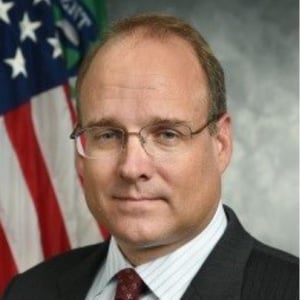
Senior Fellow, Hudson Institute
Former President Trump appointed Marshall S. Billingslea as Special Presidential Envoy for Arms Control on April 10, 2020 and accorded him the personal rank of Ambassador from May 18, 2020 to November 17, 2020. Billingslea leads arms control negotiations on behalf of the U.S. Government.
Billingslea most recently served as the Assistant Secretary for Terrorist Financing at the U.S. Department of Treasury since June 2017. In that role he built international coalitions and led U.S. efforts to counter illicit financial activities. In 2018 he was selected unanimously by the 37 member countries of the Financial Action Task Force (FATF) — the global anti-money laundering and counter-terrorist financing body — to serve as its President. He also co-chaired the global Counter-ISIS Finance Group and multiple bilateral negotiating fora with friendly and allied nations.
A former senior Pentagon official, Billingslea has deep expertise in arms control and broad experience in foreign policy and national security, having previously served in the Pentagon as the Deputy Under Secretary of the Navy, the Principal Deputy Assistant Secretary of Defense for Special Operations and Low-Intensity Conflict, and as the Deputy Assistant Secretary of Defense for Negotiations Policy. Billingslea has also worked as NATO’s Assistant Secretary General for Defense Investment, and as a Senior Professional Staff Member of the United States Senate Committee on Foreign Relations.
Billingslea holds a Bachelor of Arts from Dartmouth College and a Master of Arts in Law and Diplomacy from Tufts University. He has been decorated with numerous awards internationally including the Cross of Terra Mariana by the President of Estonia; the Knight’s Cross by the President of Poland; and the Cross of the Order of Merit of the Czech Republic. Throughout his years of public service, he has been awarded the Defense Medal for Distinguished Public Service by the U.S. Secretary of Defense; decorated by the U.S. Secretary of the Navy with the Distinguished Public Service medal; he was most recently awarded the Treasury Medal by the U.S. Secretary of the Treasury.
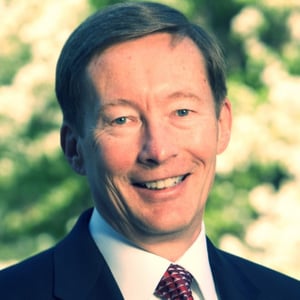
Professor of the Practice of Law and Executive Director, Center on Law, Ethics and National Security, Duke University Law School
Charles J. Dunlap Jr. joined the Duke Law faculty in July 2010 where he is currently a professor of the practice of law and Executive Director of the Center on Law, Ethics and National Security. His teaching and scholarly writing focus on national security, law of armed conflict, the use of force under international law, civil-military relations, cyberwar, airpower, military justice, and ethical issues related to the practice of national security law.
Dunlap retired from the Air Force in June 2010, having attained the rank of major general during a 34-year career in the Judge Advocate General Corps. In his capacity as Deputy Judge Advocate General spanning from May 2006 to March 2010, he assisted the Judge Advocate General in the professional supervision of more than 2,200 judge advocates, 350 civilian lawyers, 1,400 enlisted paralegals, and 500 civilians around the world. In addition to overseeing an array of military justice, operational, international, and civil law functions, he provided legal advice to commanders and civilian leaders at all levels.
In the course of his career, Dunlap has been involved in various high-profile interagency and policy matters, including his testimony before the U.S. House of Representatives concerning the Military Commissions Act of 2006.
Dunlap previously served as the senior lawyer (staff judge advocate) at Air Combat Command Headquarters at Langley Air Force Base in Virginia, at Air Education and Training Command Headquarters at Randolph Air Force Base in Texas, and at U.S. Strategic Command, Omaha, Nebraska, among other leadership posts. Additionally, he served on the faculty of the Air Force Judge Advocate General School where he taught various civil and criminal law topics. An experienced trial lawyer, he also spent two years as a military trial judge for a 22-state circuit. He served tours in the United Kingdom and Korea, and deployed for operations in the Middle East and Africa. He also led military-to-military delegations to Colombia, Uruguay, South Africa, and the Czech Republic.
A prolific author and accomplished public speaker, Dunlap’s commentary on a wide variety of national security topics has been published in leading newspapers and military journals. His 2001 essay written for Harvard University’s Carr Center on “lawfare,” a concept he defines as “the use or misuse of law as a substitute for traditional military means to accomplish an operational objective,” has been highly influential among military scholars and in the broader legal academy.
Dunlap is also the author of the prize-winning essay, “The Origins of the Military Coup of 2012”, originally published in 1992, which was selected for the 40th Anniversary Edition of Parameters (Winter 2010-2011).
Dunlap’s legal scholarship has been published in the Stanford Law Review, the Yale Journal of International Affairs, the Harvard Law’s National Security Journal, the Wake Forest Law Review, the Fletcher Forum of World Affairs, the University of Nebraska Law Review, the Texas Tech Law Review, Temple Law’s Journal of International & Comparative Law, the University of North Carolina’s Journal of International Law, the Connecticut Law Review, the Tennessee Law Review, and the Vanderbilt Journal of Transnational Law, among others.
He’s also authored numerous articles and opinion pieces in a range of publications including The Atlantic, the New York Times, the Washington Post, the Washington Times, the Air Force Times, Strategic Studies Quarterly, the Georgetown Journal of International Affairs, Business Insider, the Journal of Genocide Research, The Hill, Small Wars Journal, and the blogs, Lawfare and Just Security.
Maj Gen Dunlap founded his blog Lawfire in 2015 and has since written over 300 posts on a wide variety of subjects.
Dunlap's wife, Joy, was a vice president of the National Association of Broadcasters, and later a deputy director of Government Relations for the Military Officers Association of America. She served as the elected president of Duke Campus Club, and is a recipient of the prestigious Order of the Emerald by Kappa Delta sorority. Her blog, Speaking Joyfully, won 3rd place in the blog category at the 2021 Blue Ridge Mountains Christian Writers Conference. They reside in Durham.
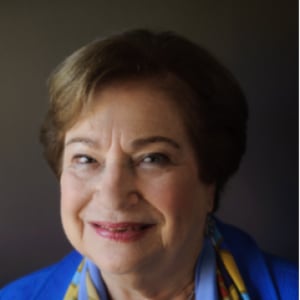
Director of the Center for Eurasian, Russian and East European Studies and Professor of Government and Foreign Service, Georgetown University
Angela Stent is Director of the Center for Eurasian, Russian and East European Studies and Professor of Government and Foreign Service at Georgetown University. She is also a Senior Fellow (non-resident) at the Brookings Institution and co-chairs its Hewett Forum on Post-Soviet Affairs. During the academic year 2015-2016 she is a fellow at the Transatlantic Academy of the German Marshall Fund. From 2004-2006 she served as National Intelligence Officer for Russia and Eurasia at the National Intelligence Council. From 1999 to 2001, she served in the Office of Policy Planning at the U.S. Department of State. Stent’s academic work focuses on the triangular political and economic relationship between the United Sates, Russia and Europe. Her publications include: Russia and Germany Reborn: Unification, The Soviet Collapse and The New Europe (Princeton University Pres, 1999); From Embargo to Ostpolitik: The Political Economy of West German-Soviet Relations, 1955-1980 (Cambridge University Press, 1981); “Repairing US-Russian Relations: A Long Road Ahead” (2009) “Restoration and Revolution in Putin’s Foreign Policy,” (2008), “An Energy Superpower? Russia and Europe” (2008) and “Reluctant Europeans: Three Centuries of Russian Ambivalence Toward the West,” (2007), “Putin’s World” (2014). Her latest book is The Limits of Partnership: US-Russian Relations in the Twenty-First Century (Princeton University Press, 2014), for which she won the American Academy of Diplomacy’s Douglas Dillon prize for the best book on the practice of American Diplomacy. She is a member of the senior advisory panel for NATO’s Supreme Allied Commander in Europe. She is a member of the Council on Foreign Relations. She is a contributing editor to Survival and is on the editorial boards of the Journal of Cold War Studies, World Policy Journal, Internationale Politik and Mirovaia Ekonomika i Mezhdunarodnie Otnosheniie. She has served on the World Economic Forum’s Global Agenda Council for Russia and Central Asia. She is a Trustee of the Eurasia Foundation and of Supporters of Civil Society in Russia. Dr. Stent received her B.A. from Cambridge University, her MSc. with distinction from the London School of Economics and Political Science and her M.A. and PhD. from Harvard University.

Judge, United States Court of Appeals, Sixth Circuit
Judge Readler earned his undergraduate and law degrees from the University of Michigan. After graduating, he served as a law clerk to Judge Alan Norris of the United States Court of Appeals for the Sixth Circuit. Judge Readler then began practicing law in the Columbus office of the international law firm Jones Day, eventually spending ten years as a partner in the firm’s Issues and Appeals Practice Group. While at Jones Day, Judge Readler appeared in state and federal trial and appellate courts around the country, most frequently the Supreme Court of Ohio and the Sixth Circuit. Judge Readler also successfully argued before the United States Supreme Court in McQuiggin v. Perkins on behalf of an inmate claiming actual innocence. His other pro bono representations include representing capital defendants before the Tenth Circuit and the Supreme Court of Ohio, as well as representing defendants sentenced to life in prison before the Sixth Circuit. While at Jones Day, Judge Readler traveled to Nairobi with Lawyers Without Borders to train Kenyan lawyers in prosecuting domestic violence cases, and he was also a recipient of the American Marshall Memorial Fellowship awarded by the German Marshall Fund of the United States. Following his career in private practice, Judge Readler served as Acting Assistant Attorney General for the Civil Division of the United States Department of Justice from 2017 to 2019. In that role, Judge Readler led and supervised over 1,000 lawyers in the Department’s largest litigating division, briefing and arguing several cases on behalf of the United States in federal courts across the country, including high-profile cases significant to the Administration and the Department. In March 2019, Judge Readler was confirmed to serve as a Circuit Judge on the Sixth Circuit. He resides in Columbus.
Managing Director, Beacon Global Strategies LLC
From 2011-2013, Mr. Allen served as the Majority Staff Director of the House Permanent Select Committee on Intelligence (HPSCI). Under Chairman Mike Rogers’ (R-MI) direction, the HPSCI restored the process of an annual intelligence authorization bill to fund and give direction to the seventeen elements of the intelligence community, enacting measures for fiscal years 2011, 2012, and 2013. The HPSCI also led the House of Representatives’ consideration of cyber security legislation, passing the Cyber Information Sharing Protection Act (CISPA) with bipartisan majorities in 2012 and 2013.
Prior to joining the HPSCI, he was director for the Bipartisan Policy Center’s successor to the 9/11 Commission, the National Security Preparedness Group, co-chaired by former Congressman Lee Hamilton and former Governor Tom Kean.
Previously, Mr. Allen served in the White House for seven years in a variety of national security policy and legislative roles. At the National Security Council (NSC), he served as Special Assistant to the President and Senior Director for Counter-proliferation Strategy from June 2007 to January 2009 under National Security Advisor Steve Hadley. As Senior Director, he contributed to the development of the U.S. government’s policy on counter-proliferation issues, including on the Iranian, Syrian, and North Korean nuclear files; missile defense; civilian nuclear cooperation including the U.S.-India Civilian Nuclear Cooperation Agreement; U.S. exports controls; bio-defense; and WMD and terrorism.
As the Special Assistant to the President and Senior Director for Legislative Affairs from March 2005 to June 2007, Mr. Allen was the NSC’s chief liaison with the national security committees of Congress and led the confirmation teams of DNI nominees Negroponte and McConnell and CIA Director General Michael Hayden.
From December 2001 to February 2005, Mr. Allen worked in the legislative affairs office of the White House’s Homeland Security Council. As Special Assistant to the President for Legislative Affairs, Mr. Allen was part of team that managed the White House effort to enact the Intelligence Reform and Terrorism Prevention Act of 2004, which created the Office of the Director of National Intelligence.
At the beginning of the Bush Administration, Mr. Allen worked in the Bureau of Legislative Affairs at the Department of State. Mr. Allen received his L.L.M. with distinction in International Law from the Georgetown University Law Center, his J.D. from the University of Alabama (cum laude), and his B.A. from Vanderbilt University.
In addition to his work at the Bipartisan Policy Center, in 2009, Mr. Allen taught National Security Policymaking at the George Washington University Elliott School of International Affairs and served as an advisor for the congressionally-created Commission on WMD and Terrorism co-chaired by Senators Bob Graham and Jim Talent. Mr. Allen was the Intelligence Team Lead for the Romney for President Transition Team.
Mr. Allen is the author of Blinking Red: Crisis and Compromise in American Intelligence After 9/11. (Potomac Books, September 2013).
Senior Fellow, Hudson Institute
Former President Trump appointed Marshall S. Billingslea as Special Presidential Envoy for Arms Control on April 10, 2020 and accorded him the personal rank of Ambassador from May 18, 2020 to November 17, 2020. Billingslea leads arms control negotiations on behalf of the U.S. Government.
Billingslea most recently served as the Assistant Secretary for Terrorist Financing at the U.S. Department of Treasury since June 2017. In that role he built international coalitions and led U.S. efforts to counter illicit financial activities. In 2018 he was selected unanimously by the 37 member countries of the Financial Action Task Force (FATF) — the global anti-money laundering and counter-terrorist financing body — to serve as its President. He also co-chaired the global Counter-ISIS Finance Group and multiple bilateral negotiating fora with friendly and allied nations.
A former senior Pentagon official, Billingslea has deep expertise in arms control and broad experience in foreign policy and national security, having previously served in the Pentagon as the Deputy Under Secretary of the Navy, the Principal Deputy Assistant Secretary of Defense for Special Operations and Low-Intensity Conflict, and as the Deputy Assistant Secretary of Defense for Negotiations Policy. Billingslea has also worked as NATO’s Assistant Secretary General for Defense Investment, and as a Senior Professional Staff Member of the United States Senate Committee on Foreign Relations.
Billingslea holds a Bachelor of Arts from Dartmouth College and a Master of Arts in Law and Diplomacy from Tufts University. He has been decorated with numerous awards internationally including the Cross of Terra Mariana by the President of Estonia; the Knight’s Cross by the President of Poland; and the Cross of the Order of Merit of the Czech Republic. Throughout his years of public service, he has been awarded the Defense Medal for Distinguished Public Service by the U.S. Secretary of Defense; decorated by the U.S. Secretary of the Navy with the Distinguished Public Service medal; he was most recently awarded the Treasury Medal by the U.S. Secretary of the Treasury.
Professor of the Practice of Law and Executive Director, Center on Law, Ethics and National Security, Duke University Law School
Charles J. Dunlap Jr. joined the Duke Law faculty in July 2010 where he is currently a professor of the practice of law and Executive Director of the Center on Law, Ethics and National Security. His teaching and scholarly writing focus on national security, law of armed conflict, the use of force under international law, civil-military relations, cyberwar, airpower, military justice, and ethical issues related to the practice of national security law.
Dunlap retired from the Air Force in June 2010, having attained the rank of major general during a 34-year career in the Judge Advocate General Corps. In his capacity as Deputy Judge Advocate General spanning from May 2006 to March 2010, he assisted the Judge Advocate General in the professional supervision of more than 2,200 judge advocates, 350 civilian lawyers, 1,400 enlisted paralegals, and 500 civilians around the world. In addition to overseeing an array of military justice, operational, international, and civil law functions, he provided legal advice to commanders and civilian leaders at all levels.
In the course of his career, Dunlap has been involved in various high-profile interagency and policy matters, including his testimony before the U.S. House of Representatives concerning the Military Commissions Act of 2006.
Dunlap previously served as the senior lawyer (staff judge advocate) at Air Combat Command Headquarters at Langley Air Force Base in Virginia, at Air Education and Training Command Headquarters at Randolph Air Force Base in Texas, and at U.S. Strategic Command, Omaha, Nebraska, among other leadership posts. Additionally, he served on the faculty of the Air Force Judge Advocate General School where he taught various civil and criminal law topics. An experienced trial lawyer, he also spent two years as a military trial judge for a 22-state circuit. He served tours in the United Kingdom and Korea, and deployed for operations in the Middle East and Africa. He also led military-to-military delegations to Colombia, Uruguay, South Africa, and the Czech Republic.
A prolific author and accomplished public speaker, Dunlap’s commentary on a wide variety of national security topics has been published in leading newspapers and military journals. His 2001 essay written for Harvard University’s Carr Center on “lawfare,” a concept he defines as “the use or misuse of law as a substitute for traditional military means to accomplish an operational objective,” has been highly influential among military scholars and in the broader legal academy.
Dunlap is also the author of the prize-winning essay, “The Origins of the Military Coup of 2012”, originally published in 1992, which was selected for the 40th Anniversary Edition of Parameters (Winter 2010-2011).
Dunlap’s legal scholarship has been published in the Stanford Law Review, the Yale Journal of International Affairs, the Harvard Law’s National Security Journal, the Wake Forest Law Review, the Fletcher Forum of World Affairs, the University of Nebraska Law Review, the Texas Tech Law Review, Temple Law’s Journal of International & Comparative Law, the University of North Carolina’s Journal of International Law, the Connecticut Law Review, the Tennessee Law Review, and the Vanderbilt Journal of Transnational Law, among others.
He’s also authored numerous articles and opinion pieces in a range of publications including The Atlantic, the New York Times, the Washington Post, the Washington Times, the Air Force Times, Strategic Studies Quarterly, the Georgetown Journal of International Affairs, Business Insider, the Journal of Genocide Research, The Hill, Small Wars Journal, and the blogs, Lawfare and Just Security.
Maj Gen Dunlap founded his blog Lawfire in 2015 and has since written over 300 posts on a wide variety of subjects.
Dunlap's wife, Joy, was a vice president of the National Association of Broadcasters, and later a deputy director of Government Relations for the Military Officers Association of America. She served as the elected president of Duke Campus Club, and is a recipient of the prestigious Order of the Emerald by Kappa Delta sorority. Her blog, Speaking Joyfully, won 3rd place in the blog category at the 2021 Blue Ridge Mountains Christian Writers Conference. They reside in Durham.
Judge, United States Court of Appeals, Sixth Circuit
Judge Readler earned his undergraduate and law degrees from the University of Michigan. After graduating, he served as a law clerk to Judge Alan Norris of the United States Court of Appeals for the Sixth Circuit. Judge Readler then began practicing law in the Columbus office of the international law firm Jones Day, eventually spending ten years as a partner in the firm’s Issues and Appeals Practice Group. While at Jones Day, Judge Readler appeared in state and federal trial and appellate courts around the country, most frequently the Supreme Court of Ohio and the Sixth Circuit. Judge Readler also successfully argued before the United States Supreme Court in McQuiggin v. Perkins on behalf of an inmate claiming actual innocence. His other pro bono representations include representing capital defendants before the Tenth Circuit and the Supreme Court of Ohio, as well as representing defendants sentenced to life in prison before the Sixth Circuit. While at Jones Day, Judge Readler traveled to Nairobi with Lawyers Without Borders to train Kenyan lawyers in prosecuting domestic violence cases, and he was also a recipient of the American Marshall Memorial Fellowship awarded by the German Marshall Fund of the United States. Following his career in private practice, Judge Readler served as Acting Assistant Attorney General for the Civil Division of the United States Department of Justice from 2017 to 2019. In that role, Judge Readler led and supervised over 1,000 lawyers in the Department’s largest litigating division, briefing and arguing several cases on behalf of the United States in federal courts across the country, including high-profile cases significant to the Administration and the Department. In March 2019, Judge Readler was confirmed to serve as a Circuit Judge on the Sixth Circuit. He resides in Columbus.
Director of the Center for Eurasian, Russian and East European Studies and Professor of Government and Foreign Service, Georgetown University
Angela Stent is Director of the Center for Eurasian, Russian and East European Studies and Professor of Government and Foreign Service at Georgetown University. She is also a Senior Fellow (non-resident) at the Brookings Institution and co-chairs its Hewett Forum on Post-Soviet Affairs. During the academic year 2015-2016 she is a fellow at the Transatlantic Academy of the German Marshall Fund. From 2004-2006 she served as National Intelligence Officer for Russia and Eurasia at the National Intelligence Council. From 1999 to 2001, she served in the Office of Policy Planning at the U.S. Department of State. Stent’s academic work focuses on the triangular political and economic relationship between the United Sates, Russia and Europe. Her publications include: Russia and Germany Reborn: Unification, The Soviet Collapse and The New Europe (Princeton University Pres, 1999); From Embargo to Ostpolitik: The Political Economy of West German-Soviet Relations, 1955-1980 (Cambridge University Press, 1981); “Repairing US-Russian Relations: A Long Road Ahead” (2009) “Restoration and Revolution in Putin’s Foreign Policy,” (2008), “An Energy Superpower? Russia and Europe” (2008) and “Reluctant Europeans: Three Centuries of Russian Ambivalence Toward the West,” (2007), “Putin’s World” (2014). Her latest book is The Limits of Partnership: US-Russian Relations in the Twenty-First Century (Princeton University Press, 2014), for which she won the American Academy of Diplomacy’s Douglas Dillon prize for the best book on the practice of American Diplomacy. She is a member of the senior advisory panel for NATO’s Supreme Allied Commander in Europe. She is a member of the Council on Foreign Relations. She is a contributing editor to Survival and is on the editorial boards of the Journal of Cold War Studies, World Policy Journal, Internationale Politik and Mirovaia Ekonomika i Mezhdunarodnie Otnosheniie. She has served on the World Economic Forum’s Global Agenda Council for Russia and Central Asia. She is a Trustee of the Eurasia Foundation and of Supporters of Civil Society in Russia. Dr. Stent received her B.A. from Cambridge University, her MSc. with distinction from the London School of Economics and Political Science and her M.A. and PhD. from Harvard University.
Laurence A. Tisch Professor of Law and Director, Classical Liberal Institute, New York University School of Law; Director, Classical Liberal Institute, Civitas Institute University of Texas at Austin
Richard A. Epstein is the Laurence A. Tisch Professor of Law, at New York University, a senior research fellow at the Civitas Institute at the University of Texas Austin, and a senior Lecturer, the University of Chicago. He received an LL.D., h.c . from the University of Ghent, 2003 , and an LLD h.c . from the University of Siegen in 2018 and the Bradley Prize in 2011. He has been a member of the American Academy of Arts and Sciences since 1985. He has edited both the Journal of Legal Studies (1981-1991) and the Journal of Law and Economics (1991-2001). He is also a founder and director of the Classical Liberal Institute at NYU Law School. His most recent book is The Classical Liberal Constitution: The Uncertain Quest for Limited Government (2014). His other books include Takings: Private Property and the Power of Eminent Domain ( 1985); Bargaining with the State (1993); Simple Rules for a Complex World (1995); Principles for a Free Society: Reconciling Individual Liberty and the Common Good (1998); Skepticism and Freedom: A Modern Theory of Classical Liberalism (2003); Design for Liberty: Private Property, Public Administration and the Rule of Law (2011), and most recently, The Myth of Birthright citizenship—and Beyond (2026). He has taught courses in , administrative law, antitrust, constitutional, contracts, environmental law, land use planning; real property, torts and water law. He has written and spoken extensively on a wide range of topics, and is writes a regular column for Defining Ideas.
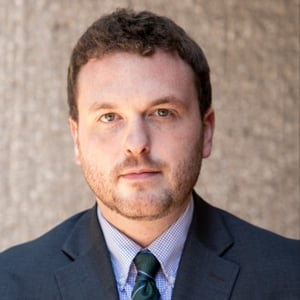
Assistant Professor of Law, USC Gould School of Law
Erik Hovenkamp’s research focuses on antitrust; IP and innovation policy; law and economics; and industrial organization. His work has been published in a range of leading law reviews and economics journals, including the Yale Law Journal; the Journal of Industrial Economics; and the University of Chicago Law Review, among many others.
Hovenkamp earned a PhD in economics and a JD, both from Northwestern University. Prior to joining the USC faculty in 2019, he was a postdoctoral fellow at Harvard Law School in the Project on the Foundations of Private Law and a Visiting Fellow at Yale Law School in the Information Society Project. In 2018 he was a Visiting Lecturer at Boston University School of Law.
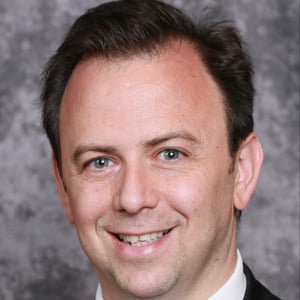
Stevenson Bernard Professor, George Washington University Law School
The Honorable F. Scott Kieff is the Stevenson Bernard Professor at George Washington University Law School and a Visiting Fellow at Stanford University’s Hoover Institution.
He served as Commissioner of the U.S. International Trade Commission from 2013-2017. He also served during the Bush, Obama, and Trump Administrations in the part-time leadership of the national security defense-intelligence community.
He was previously a professor of law and medicine at Washington University in Saint Louis and a Senior Fellow at Hoover. A former law clerk to U.S. Circuit Judge Giles S. Rich, he is a graduate of Penn Law School and MIT, where he studied molecular biology and microeconomics. He was elected to the European Academy of Sciences and Arts in 2012 and the Academia Europaea in 2024.
His private sector work through Kieff Strategies LLC (www.kieffstrategies.com) provides neutral services including mediation and compliance, and expert services including crisis management, advising, and testimony.
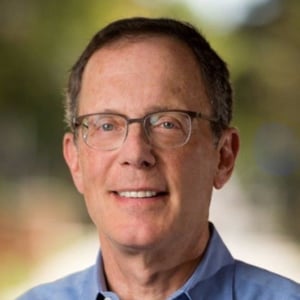
Professor of the Practice of Law, Stanford Law School
Doug Melamed practiced law for 43 years before spending the 2014-15 academic year at the Law School as the Herman Phleger Visiting Professor of Law. He was appointed Professor of the Practice of Law in 2015.
From 2009 until 2014, Professor Melamed was Senior Vice President and General Counsel of Intel Corporation and was responsible for overseeing Intel’s legal, government affairs and corporate affairs departments. Prior to joining Intel in 2009, he was a partner in the Washington, D.C., office of WilmerHale, a global law firm in which he served as a chair of the Antitrust and Competition Practice Group. His practice included appellate and trial court litigation, counseling, and representing clients in matters before government law enforcement and regulatory agencies. He joined WilmerHale’s predecessor in 1971. From 1996 to 2001, Professor Melamed served in the U.S. Department of Justice as Acting Assistant Attorney General in charge of the Antitrust Division and, before that, as Principal Deputy Assistant Attorney General.
Professor Melamed has received numerous professional awards and honors. He has been the Distinguished Visitor from Practice and an adjunct professor at the Georgetown University Law Center, and he has authored numerous articles on antitrust and on law and economics. He is a member of the boards of directors of the Nasdaq exchanges and the American Law Institute and a Contributing Editor of the Antitrust Law Journal. He was for many years a member of the Yale University Council and a member of the board of trustees of Sidwell Friends School in Washington, D.C. After graduating from law school, he clerked for Judge Charles M. Merrill of the U.S. Court of Appeals for the Ninth Circuit.

Executive Vice President, The Federalist Society
Dean Reuter is Executive Vice President at the Federalist Society for Law and Public Policy Studies. He has served in two federal government agency Offices of the Inspector General, as Counsel to the Inspector General and Deputy Inspector General, responsible for policing the use of federal funds granted and contracted through those agencies. As such, he helped conduct and oversee criminal investigations across the country. He is the principal author of the non-fiction book, The Hidden Nazi: The Untold Story of America's Deal with the Devil, and editor of Liberty’s Nemesis: The Unchecked Expansion of the State and Confronting Terror: 9/11 and the Future of American National Security. He was appointed by the President and served as Vice-Chairman of the Board of Directors of the Corporation for National and Community Service, and recently served as an appointee on the U.S. Commission on Presidential Scholars. He is a graduate of Hood College (BA with Honors) and the University of Maryland School of Law.
Laurence A. Tisch Professor of Law and Director, Classical Liberal Institute, New York University School of Law; Director, Classical Liberal Institute, Civitas Institute University of Texas at Austin
Richard A. Epstein is the Laurence A. Tisch Professor of Law, at New York University, a senior research fellow at the Civitas Institute at the University of Texas Austin, and a senior Lecturer, the University of Chicago. He received an LL.D., h.c . from the University of Ghent, 2003 , and an LLD h.c . from the University of Siegen in 2018 and the Bradley Prize in 2011. He has been a member of the American Academy of Arts and Sciences since 1985. He has edited both the Journal of Legal Studies (1981-1991) and the Journal of Law and Economics (1991-2001). He is also a founder and director of the Classical Liberal Institute at NYU Law School. His most recent book is The Classical Liberal Constitution: The Uncertain Quest for Limited Government (2014). His other books include Takings: Private Property and the Power of Eminent Domain ( 1985); Bargaining with the State (1993); Simple Rules for a Complex World (1995); Principles for a Free Society: Reconciling Individual Liberty and the Common Good (1998); Skepticism and Freedom: A Modern Theory of Classical Liberalism (2003); Design for Liberty: Private Property, Public Administration and the Rule of Law (2011), and most recently, The Myth of Birthright citizenship—and Beyond (2026). He has taught courses in , administrative law, antitrust, constitutional, contracts, environmental law, land use planning; real property, torts and water law. He has written and spoken extensively on a wide range of topics, and is writes a regular column for Defining Ideas.
Assistant Professor of Law, USC Gould School of Law
Erik Hovenkamp’s research focuses on antitrust; IP and innovation policy; law and economics; and industrial organization. His work has been published in a range of leading law reviews and economics journals, including the Yale Law Journal; the Journal of Industrial Economics; and the University of Chicago Law Review, among many others.
Hovenkamp earned a PhD in economics and a JD, both from Northwestern University. Prior to joining the USC faculty in 2019, he was a postdoctoral fellow at Harvard Law School in the Project on the Foundations of Private Law and a Visiting Fellow at Yale Law School in the Information Society Project. In 2018 he was a Visiting Lecturer at Boston University School of Law.
Stevenson Bernard Professor, George Washington University Law School
The Honorable F. Scott Kieff is the Stevenson Bernard Professor at George Washington University Law School and a Visiting Fellow at Stanford University’s Hoover Institution.
He served as Commissioner of the U.S. International Trade Commission from 2013-2017. He also served during the Bush, Obama, and Trump Administrations in the part-time leadership of the national security defense-intelligence community.
He was previously a professor of law and medicine at Washington University in Saint Louis and a Senior Fellow at Hoover. A former law clerk to U.S. Circuit Judge Giles S. Rich, he is a graduate of Penn Law School and MIT, where he studied molecular biology and microeconomics. He was elected to the European Academy of Sciences and Arts in 2012 and the Academia Europaea in 2024.
His private sector work through Kieff Strategies LLC (www.kieffstrategies.com) provides neutral services including mediation and compliance, and expert services including crisis management, advising, and testimony.
Professor of the Practice of Law, Stanford Law School
Doug Melamed practiced law for 43 years before spending the 2014-15 academic year at the Law School as the Herman Phleger Visiting Professor of Law. He was appointed Professor of the Practice of Law in 2015.
From 2009 until 2014, Professor Melamed was Senior Vice President and General Counsel of Intel Corporation and was responsible for overseeing Intel’s legal, government affairs and corporate affairs departments. Prior to joining Intel in 2009, he was a partner in the Washington, D.C., office of WilmerHale, a global law firm in which he served as a chair of the Antitrust and Competition Practice Group. His practice included appellate and trial court litigation, counseling, and representing clients in matters before government law enforcement and regulatory agencies. He joined WilmerHale’s predecessor in 1971. From 1996 to 2001, Professor Melamed served in the U.S. Department of Justice as Acting Assistant Attorney General in charge of the Antitrust Division and, before that, as Principal Deputy Assistant Attorney General.
Professor Melamed has received numerous professional awards and honors. He has been the Distinguished Visitor from Practice and an adjunct professor at the Georgetown University Law Center, and he has authored numerous articles on antitrust and on law and economics. He is a member of the boards of directors of the Nasdaq exchanges and the American Law Institute and a Contributing Editor of the Antitrust Law Journal. He was for many years a member of the Yale University Council and a member of the board of trustees of Sidwell Friends School in Washington, D.C. After graduating from law school, he clerked for Judge Charles M. Merrill of the U.S. Court of Appeals for the Ninth Circuit.
Executive Vice President, The Federalist Society
Dean Reuter is Executive Vice President at the Federalist Society for Law and Public Policy Studies. He has served in two federal government agency Offices of the Inspector General, as Counsel to the Inspector General and Deputy Inspector General, responsible for policing the use of federal funds granted and contracted through those agencies. As such, he helped conduct and oversee criminal investigations across the country. He is the principal author of the non-fiction book, The Hidden Nazi: The Untold Story of America's Deal with the Devil, and editor of Liberty’s Nemesis: The Unchecked Expansion of the State and Confronting Terror: 9/11 and the Future of American National Security. He was appointed by the President and served as Vice-Chairman of the Board of Directors of the Corporation for National and Community Service, and recently served as an appointee on the U.S. Commission on Presidential Scholars. He is a graduate of Hood College (BA with Honors) and the University of Maryland School of Law.
Judge, United States Court of Appeals, Third Circuit
Stephanos Bibas is a judge on the U.S. Court of Appeals for the Third Circuit. Judge Bibas was previously a professor of law and criminology at the University of Pennsylvania Law School. As director of the Penn Law Supreme Court Clinic, he argued six cases before the Supreme Court of the United States and filed briefs in dozens of others. He graduated summa cum laude and Phi Beta Kappa from Columbia University in 1989 with a B.A. in political theory and from Oxford University in 1991 with a B.A. in jurisprudence. He then earned his J.D. from Yale Law School in 1994.
After graduating from Yale Law, Judge Bibas clerked for Judge Patrick Higginbotham of the U.S. Court of Appeals for the Fifth Circuit and Justice Anthony Kennedy on the Supreme Court and was a litigation associate at Covington & Burling LLP in Washington, D.C. Thereafter, Judge Bibas served as an Assistant U.S. Attorney in the Southern District of New York, where he successfully prosecuted the world’s leading expert in Tiffany stained glass for hiring a grave robber to steal priceless Tiffany windows from cemeteries. Before his tenure at Penn Law, Judge Bibas taught at the University of Chicago Law School and the University of Iowa College of Law and was a research fellow at Yale Law School. He has published two books and seventy scholarly articles.
Judge, Iran-United States Claims Tribunal and Arbitrator Member, Twenty Essex Chambers
Charles’s 55-year career in the law has combined extensive practice at the bar with distinguished public service, both national and international. For nearly 40 years he has focused on public international law and international dispute resolution.
As counsel or arbitrator he has handled cases on all six continents, principally under the rules of the ICC, UNCITRAL, LCIA, AAA, United Nations Compensation Commission, ICSID, Stockholm Chamber of Commerce, Insurance and Reinsurance Arbitration Society and LMAA. These cases have involved a wide variety of commercial disputes as well as issues of public international law, particularly involving the oil and gas sector, major infrastructural projects, expropriations, and other investment disputes, including ones arising under both bilateral and multilateral investment treaties.
Charles started his career with White & Case LLP in New York, before serving for four years in the United States Department of State in Washington, DC, concluding as its Acting Legal Adviser. He then rejoined White & Case LLP, co-founding its Washington, DC office, where his practice came to be comprised almost exclusively of substantial international arbitrations.
He has served continuously since 1983 as a judge of the Iran-United States Claims Tribunal in The Hague, The Netherlands. That service was interrupted for some months in 1987 by White House service as Deputy Special Counsellor to President Reagan. Charles resumed partnership in White & Case LLP from 1988 until joining 20 Essex Street in 2001. Since 2014 he has also served as a Judge ad hoc at the International Court of Justice.
In 2015 Charles was only the fourth ever recipient of the Global Arbitration Review Lifetime Achievement Award.
Professor of Law and Global Affairs Faculty Director, LL.M. in International Human Rights Law; Global Director, Notre Dame Law School Global Human Rights Clinic, Notre Dame Law School
Diane A. Desierto joined the Law School in January 2021 as Professor of Law and LL.M. Faculty Director, with a joint appointment at the Keough School of Global Affairs. Desierto teaches, publishes, and practices in the areas of international law and human rights, international economic law and development, international arbitration, maritime security, Association of Southeast Asian Nations (ASEAN) Law, and comparative public law. At Notre Dame, Desierto is a Faculty Fellow at the Klau Institute for Civil Human Rights, Kellogg Institute of International Studies, Liu Institute for Asia and Asian Studies, Pulte Institute for Global Development, and Nanovic Institute of European Studies. She is also Co-Principal Investigator of the Notre Dame Reparations Design and Compliance Lab.
Desierto is a Member and former Chair-Rapporteur of the Expert Group of the United Nations Working Group on the Right to Development, Resource Expert for the Association of Southeast Asian Nations (ASEAN), former Director of Studies and Faculty of the Hague Academy of International Law, President of the Friends of the Hague Academy Foundation, and the Philippines Focal Point for the International Criminal Court Bar Association. She is active as international counsel at matters successfully litigated at the Permanent Court of Arbitration, the UN Human Rights Committee, the Philippine Supreme Court and Southeast Asian agencies, and was appointed by the Philippine Supreme Court as Professor of International Law and Human Rights at the Philippines Judicial Academy. Desierto is a Member of the Editorial Boards of the European Journal of International Law (and Editor of its leading international law blog EJIL:Talk!), Journal of World Investment and Trade, and the Global Community Yearbook of International Law and Jurisprudence, and the Kluwer Law monograph series on Human Society and International Law, and also serves on the Scientific Advisory Boards of international journals such as International Law Studies, the Revista Chilena de Derecho, and the Indonesian Journal of International and Comparative Law. Desierto previously taught as tenure-track/tenured law faculty at the University of the Philippines, Peking University School of Transnational Law in China, and the University of Hawaii Richardson School of Law. She is a recipient of faculty fellowships awarded by Stanford University's Center for Advanced Studies in the Behavioral Sciences (CASBS) and the Stanford Center for Human Rights and International Justice, the Max Planck Institute for Comparative Public Law and International Law in Heidelberg, the Humboldt-Potsdam-Berlin Senior Fellowship, the East-West Center in Honolulu, the Grotius Fellowship at University of Michigan Law School, and the National University of Singapore's Asian Law Institute Fellowship. Desierto has served Visiting Professor appointments at the University of Paris-Nanterre X Faculty of Law, University of the Philippines College of Law Graduate Program at Bonifacio Global City, the University of Navarre Faculty of Law in Spain, and Universidad Panamericana Faculty of Law in Mexico City.
Desierto holds JSD and LLM degrees from Yale Law School, as well as JD cum laude class salutatorian and BSc Economics summa cum laude class valedictorian degrees from the University of the Philippines, and was a former Yale Law clerk at the International Court of Justice for H.E. Judges Bruno Simma and Bernardo Sepulveda-Amor. She authored and/or edited several books, such as Necessity and National Emergency Clauses: Sovereignty in Modern Treaty Interpretation (Martinus Nijhoff, 2012, recipient of the Ambrose Gherini Prize in International Law at Yale Law), Public Policy in International Economic Law: The ICESCR in Trade, Investment and Finance (Oxford University Press, 2015), ASEAN Law and Regional Integration: Governance and the Rule of Law in Southeast Asia's Single Market (with D. Cohen, Routledge, 2020), The International Legal System: Cases and Materials (8th Edition, with M.E. O'Connell, N. Roht-Arriaza, and D. Bradlow, 2022), as well as, to date, around 180 law review articles, book chapters, essays, and book reviews with leading international law journals and publishers in the United States, Europe, and Asia. She is a member of the Institute of Transnational Arbitration Academic Council, the UNCITRAL Academic Forum on Investor-State Dispute Settlement Reform, the 2019 Hague Rules on Business and Human Rights Arbitration Drafting Team, Co-Chair of the Oxford Investment Claims Summer Academy, and has been recognized repeatedly by Who's Who Legal as one of the Future Leaders in Arbitration. The 2020 ND Women Lead featured Desierto here.
Laurence A. Tisch Professor of Law and Director, Classical Liberal Institute, New York University School of Law; Director, Classical Liberal Institute, Civitas Institute University of Texas at Austin
Richard A. Epstein is the Laurence A. Tisch Professor of Law, at New York University, a senior research fellow at the Civitas Institute at the University of Texas Austin, and a senior Lecturer, the University of Chicago. He received an LL.D., h.c . from the University of Ghent, 2003 , and an LLD h.c . from the University of Siegen in 2018 and the Bradley Prize in 2011. He has been a member of the American Academy of Arts and Sciences since 1985. He has edited both the Journal of Legal Studies (1981-1991) and the Journal of Law and Economics (1991-2001). He is also a founder and director of the Classical Liberal Institute at NYU Law School. His most recent book is The Classical Liberal Constitution: The Uncertain Quest for Limited Government (2014). His other books include Takings: Private Property and the Power of Eminent Domain ( 1985); Bargaining with the State (1993); Simple Rules for a Complex World (1995); Principles for a Free Society: Reconciling Individual Liberty and the Common Good (1998); Skepticism and Freedom: A Modern Theory of Classical Liberalism (2003); Design for Liberty: Private Property, Public Administration and the Rule of Law (2011), and most recently, The Myth of Birthright citizenship—and Beyond (2026). He has taught courses in , administrative law, antitrust, constitutional, contracts, environmental law, land use planning; real property, torts and water law. He has written and spoken extensively on a wide range of topics, and is writes a regular column for Defining Ideas.
Director, International Legal Studies Program, Vanderbilt Law School
Michael Newton is an expert on terrorism, accountability, transnational justice, and conduct of hostilities issues. Over the course of his career, he has published more than 90 books, articles, op-eds and book chapters. He has been an expert witness in terrorism related trials and is admitted to the counsel list of the International Criminal Court, where, in 2018, he helped prepare the appeal of Jean-Pierre Bemba and participated in oral arguments in the Appeals Chamber. At Vanderbilt, he developed and teaches the innovative International Law Practice Lab, which provides expert assistance to judges, lawyers, legislatures, governments, and policy makers around the world. Professor Newton is most recently the editor of The United States Department of Defense Law of War Manual: Commentary and Critique, forthcoming from Cambridge University Press.
An authority on the law of armed conflict, Professor Newton served as the senior adviser to the Ambassador-at-Large for War Crimes Issues in the U.S. State Department from January 1999 to August 2002, during which he implemented a wide range of policy positions, including U.S. support to accountability mechanisms worldwide. He negotiated the “Elements of Crimes” for the International Criminal Court, and was the senior member of the team teaching international law to the first group of Iraqis who began to think about accountability mechanisms and a constitutional structure in November 2000. He shuttled to Baghdad repeatedly to aid international and Iraqi lawyers and jurists in drafting the Statute of the Iraqi High Tribunal while serving as the International Law Adviser to the Judicial Chambers from 2006 to 2008. He began assisting Iraqi officials, victims and civil society groups on legal issues associated with documentation and investigation of crimes committed by Da’esh on Iraqi soil days after Yazidi victims fled towards Mount Sinjar. He was the U.S. representative on the U.N. Planning Mission for the Sierra Leone Special Court and a founding member of its academic consortium. He is an elected member of the International Institute of Humanitarian Law and on the expert roster of Justice Rapid Response. In addition to teaching the Practice Lab, he develops and coordinates externships and educational opportunities for students interested in international legal issues, having supervised more than 150 such opportunities.
Professor Newton has served on the executive council of the American Society of International Law and as an invited expert for the Genocide Prevention Task Force established by the U.S. Holocaust Memorial Museum and the U.S. Institute of Peace. He is currently on the Advisory Board of the ABA International Criminal Court Project.
Professor Newton served in the U.S. Army more than 21 years, beginning with his commission from the U.S. Military Academy in May 1984 as an armor officer in the 4th Battalion, 68th Armor at Fort Carson, Colorado. After his selection for the Funded Legal Education Program, Newton served as chief of operational law with the Army Special Forces Command (Airborne) during Operation Desert Storm, and as the group judge advocate for the 7th Special Forces Group (Airborne). His deployments include Northern Iraq on Operation Provide Comfort to assist Kurdish civilians, and Haiti with 194th Armored Brigade (Separate), where he organized and led human rights and rules of engagement education for multinational forces, including police. He has taught international and operational law at the Judge Advocate General's School and Center in Charlottesville, Virginia, and taught international law at the United States Military Academy at West Point.
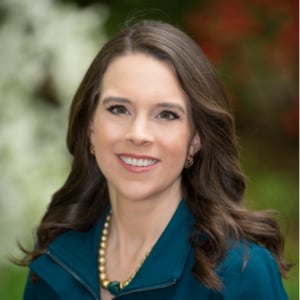
President, JCN
Carrie Campbell Severino is the president of the JCN, and co-author with Mollie Hemingway of the bestselling book Justice on Trial: The Kavanaugh Confirmation and the Future of the Court. As a go-to expert on the confirmation process, Mrs. Severino has been extensively quoted in the media. She regularly appears on television, including FOX, CNN, MSNBC, C-SPAN, and ABC’s This Week.
Severino writes and speaks on a wide range of judicial issues, including the constitutional limits on government, the federal nomination process, and state judicial selection. She has testified before Congress on constitutional questions and briefed Senators on judicial nominations, and regularly files briefs in high-profile Supreme Court cases. She was a law clerk to Supreme Court Justice Clarence Thomas and to Judge David B. Sentelle of the U.S. Court of Appeals for the D.C. Circuit, and is a graduate of Harvard Law School (J.D.), Duke University (B.A., Biology), and Michigan State University (M.A., Linguistics).
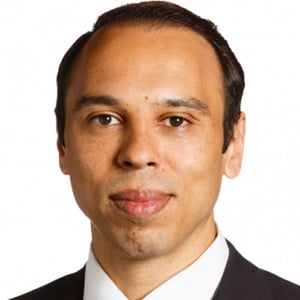
Vice President of Domestic and Economic Policy, The Heritage Foundation
Roger Severino is Vice President of Economic and Domestic Policy, and the Joseph C. and Elizabeth A. Anderlik Fellow at The Heritage Foundation.
Severino is a national authority on civil rights, conscience and religious freedom, the administrative state, and information privacy, particularly as applied to health care law and policy. Find his tweets at @RogerSeverino_.
Severino spearheaded the HHS Accountability Project while a Senior Fellow at EPPC from 2021 to 2023. Previously, Severino was Director of HHS’ Office for Civil Rights, where he led a team of over 250 staff enforcing our nation’s civil rights, conscience and religious freedom, and health information privacy laws. He served from 2017 to 2021 and was the longest-serving OCR director of the past three decades.
Prior to joining HHS, Severino served for two years as Director of the DeVos Center for Religion and Civil Society at Heritage, advocating for life, family, and religious-freedom policies. Before that, he was a trial attorney for seven years at the U.S. Department of Justice’s Civil Rights Division where he enforced the Fair Housing Act and the Civil Rights Act of 1964. Severino started his legal career at the Becket Fund for Religious Liberty, where he was Legal Counsel and Chief Operations Officer and defended the rights of people of all faiths under federal and international law.
Severino has been profiled in The New York Times, The Atlantic, The Wall Street Journal, and The Hill and has appeared on Fox News, CNN, MSNBC, NPR, and PBS, among others. In 2020, The New York Times dubbed him and his wife Carrie, “a conservative power couple” to be reckoned with.
Severino holds a JD from Harvard Law School, a master’s degree in public policy, with highest distinction, from Carnegie Mellon University, and a bachelor’s degree in business from the University of Southern California. He was appointed by President Trump to the Administrative Conference of the United States and is a member of the District of Columbia and the Commonwealth of Virginia bars.
As OCR director, Severino founded the federal government’s first division dedicated exclusively to conscience and religious freedom compliance and enforcement. He enforced the Weldon Amendment for the first time against a state (California) after it coerced families and religious organizations into paying for abortion insurance coverage, leading to a $200 million federal funding disallowance. He also enforced laws protecting pro-life pregnancy resource centers from discrimination by states hostile to their message and enforced laws prohibiting forced participation in abortions by medical professionals.
With respect to civil rights, Severino protected older persons and people with disabilities from being denied life-saving care due to discriminatory “quality of life” judgments, especially during the COVID-19 pandemic. He also achieved a landmark sexual harassment resolution with Michigan State University in the wake of the Larry Nassar sexual assault scandal and protected the rights of non-English speakers to have equal access to health and human services.
In the area of health privacy, he secured the largest HIPAA monetary settlement in history and achieved the largest number of enforcement resolutions both in a single year and across four years. He also facilitated the transformational use of Skype, Zoom, and Facetime for delivery of telehealth during the COVID-19 pandemic and beyond.
His regulatory reform activities resulted in a comprehensive conscience protection regulation and proposed a life-affirming disability rights regulation. He achieved regulatory savings of $3.6 billion in health care industry costs over five years and identified and proposed an additional $3.2 billion in cost savings from the repeal of ineffective and unnecessary regulatory burdens.
Severino is a Spanish speaker who teaches salsa and west coast swing in his spare time.
Managing Director, Beacon Global Strategies LLC
From 2011-2013, Mr. Allen served as the Majority Staff Director of the House Permanent Select Committee on Intelligence (HPSCI). Under Chairman Mike Rogers’ (R-MI) direction, the HPSCI restored the process of an annual intelligence authorization bill to fund and give direction to the seventeen elements of the intelligence community, enacting measures for fiscal years 2011, 2012, and 2013. The HPSCI also led the House of Representatives’ consideration of cyber security legislation, passing the Cyber Information Sharing Protection Act (CISPA) with bipartisan majorities in 2012 and 2013.
Prior to joining the HPSCI, he was director for the Bipartisan Policy Center’s successor to the 9/11 Commission, the National Security Preparedness Group, co-chaired by former Congressman Lee Hamilton and former Governor Tom Kean.
Previously, Mr. Allen served in the White House for seven years in a variety of national security policy and legislative roles. At the National Security Council (NSC), he served as Special Assistant to the President and Senior Director for Counter-proliferation Strategy from June 2007 to January 2009 under National Security Advisor Steve Hadley. As Senior Director, he contributed to the development of the U.S. government’s policy on counter-proliferation issues, including on the Iranian, Syrian, and North Korean nuclear files; missile defense; civilian nuclear cooperation including the U.S.-India Civilian Nuclear Cooperation Agreement; U.S. exports controls; bio-defense; and WMD and terrorism.
As the Special Assistant to the President and Senior Director for Legislative Affairs from March 2005 to June 2007, Mr. Allen was the NSC’s chief liaison with the national security committees of Congress and led the confirmation teams of DNI nominees Negroponte and McConnell and CIA Director General Michael Hayden.
From December 2001 to February 2005, Mr. Allen worked in the legislative affairs office of the White House’s Homeland Security Council. As Special Assistant to the President for Legislative Affairs, Mr. Allen was part of team that managed the White House effort to enact the Intelligence Reform and Terrorism Prevention Act of 2004, which created the Office of the Director of National Intelligence.
At the beginning of the Bush Administration, Mr. Allen worked in the Bureau of Legislative Affairs at the Department of State. Mr. Allen received his L.L.M. with distinction in International Law from the Georgetown University Law Center, his J.D. from the University of Alabama (cum laude), and his B.A. from Vanderbilt University.
In addition to his work at the Bipartisan Policy Center, in 2009, Mr. Allen taught National Security Policymaking at the George Washington University Elliott School of International Affairs and served as an advisor for the congressionally-created Commission on WMD and Terrorism co-chaired by Senators Bob Graham and Jim Talent. Mr. Allen was the Intelligence Team Lead for the Romney for President Transition Team.
Mr. Allen is the author of Blinking Red: Crisis and Compromise in American Intelligence After 9/11. (Potomac Books, September 2013).
Senior Fellow, Hudson Institute
Former President Trump appointed Marshall S. Billingslea as Special Presidential Envoy for Arms Control on April 10, 2020 and accorded him the personal rank of Ambassador from May 18, 2020 to November 17, 2020. Billingslea leads arms control negotiations on behalf of the U.S. Government.
Billingslea most recently served as the Assistant Secretary for Terrorist Financing at the U.S. Department of Treasury since June 2017. In that role he built international coalitions and led U.S. efforts to counter illicit financial activities. In 2018 he was selected unanimously by the 37 member countries of the Financial Action Task Force (FATF) — the global anti-money laundering and counter-terrorist financing body — to serve as its President. He also co-chaired the global Counter-ISIS Finance Group and multiple bilateral negotiating fora with friendly and allied nations.
A former senior Pentagon official, Billingslea has deep expertise in arms control and broad experience in foreign policy and national security, having previously served in the Pentagon as the Deputy Under Secretary of the Navy, the Principal Deputy Assistant Secretary of Defense for Special Operations and Low-Intensity Conflict, and as the Deputy Assistant Secretary of Defense for Negotiations Policy. Billingslea has also worked as NATO’s Assistant Secretary General for Defense Investment, and as a Senior Professional Staff Member of the United States Senate Committee on Foreign Relations.
Billingslea holds a Bachelor of Arts from Dartmouth College and a Master of Arts in Law and Diplomacy from Tufts University. He has been decorated with numerous awards internationally including the Cross of Terra Mariana by the President of Estonia; the Knight’s Cross by the President of Poland; and the Cross of the Order of Merit of the Czech Republic. Throughout his years of public service, he has been awarded the Defense Medal for Distinguished Public Service by the U.S. Secretary of Defense; decorated by the U.S. Secretary of the Navy with the Distinguished Public Service medal; he was most recently awarded the Treasury Medal by the U.S. Secretary of the Treasury.
Professor of the Practice of Law and Executive Director, Center on Law, Ethics and National Security, Duke University Law School
Charles J. Dunlap Jr. joined the Duke Law faculty in July 2010 where he is currently a professor of the practice of law and Executive Director of the Center on Law, Ethics and National Security. His teaching and scholarly writing focus on national security, law of armed conflict, the use of force under international law, civil-military relations, cyberwar, airpower, military justice, and ethical issues related to the practice of national security law.
Dunlap retired from the Air Force in June 2010, having attained the rank of major general during a 34-year career in the Judge Advocate General Corps. In his capacity as Deputy Judge Advocate General spanning from May 2006 to March 2010, he assisted the Judge Advocate General in the professional supervision of more than 2,200 judge advocates, 350 civilian lawyers, 1,400 enlisted paralegals, and 500 civilians around the world. In addition to overseeing an array of military justice, operational, international, and civil law functions, he provided legal advice to commanders and civilian leaders at all levels.
In the course of his career, Dunlap has been involved in various high-profile interagency and policy matters, including his testimony before the U.S. House of Representatives concerning the Military Commissions Act of 2006.
Dunlap previously served as the senior lawyer (staff judge advocate) at Air Combat Command Headquarters at Langley Air Force Base in Virginia, at Air Education and Training Command Headquarters at Randolph Air Force Base in Texas, and at U.S. Strategic Command, Omaha, Nebraska, among other leadership posts. Additionally, he served on the faculty of the Air Force Judge Advocate General School where he taught various civil and criminal law topics. An experienced trial lawyer, he also spent two years as a military trial judge for a 22-state circuit. He served tours in the United Kingdom and Korea, and deployed for operations in the Middle East and Africa. He also led military-to-military delegations to Colombia, Uruguay, South Africa, and the Czech Republic.
A prolific author and accomplished public speaker, Dunlap’s commentary on a wide variety of national security topics has been published in leading newspapers and military journals. His 2001 essay written for Harvard University’s Carr Center on “lawfare,” a concept he defines as “the use or misuse of law as a substitute for traditional military means to accomplish an operational objective,” has been highly influential among military scholars and in the broader legal academy.
Dunlap is also the author of the prize-winning essay, “The Origins of the Military Coup of 2012”, originally published in 1992, which was selected for the 40th Anniversary Edition of Parameters (Winter 2010-2011).
Dunlap’s legal scholarship has been published in the Stanford Law Review, the Yale Journal of International Affairs, the Harvard Law’s National Security Journal, the Wake Forest Law Review, the Fletcher Forum of World Affairs, the University of Nebraska Law Review, the Texas Tech Law Review, Temple Law’s Journal of International & Comparative Law, the University of North Carolina’s Journal of International Law, the Connecticut Law Review, the Tennessee Law Review, and the Vanderbilt Journal of Transnational Law, among others.
He’s also authored numerous articles and opinion pieces in a range of publications including The Atlantic, the New York Times, the Washington Post, the Washington Times, the Air Force Times, Strategic Studies Quarterly, the Georgetown Journal of International Affairs, Business Insider, the Journal of Genocide Research, The Hill, Small Wars Journal, and the blogs, Lawfare and Just Security.
Maj Gen Dunlap founded his blog Lawfire in 2015 and has since written over 300 posts on a wide variety of subjects.
Dunlap's wife, Joy, was a vice president of the National Association of Broadcasters, and later a deputy director of Government Relations for the Military Officers Association of America. She served as the elected president of Duke Campus Club, and is a recipient of the prestigious Order of the Emerald by Kappa Delta sorority. Her blog, Speaking Joyfully, won 3rd place in the blog category at the 2021 Blue Ridge Mountains Christian Writers Conference. They reside in Durham.
Judge, United States Court of Appeals, Sixth Circuit
Judge Readler earned his undergraduate and law degrees from the University of Michigan. After graduating, he served as a law clerk to Judge Alan Norris of the United States Court of Appeals for the Sixth Circuit. Judge Readler then began practicing law in the Columbus office of the international law firm Jones Day, eventually spending ten years as a partner in the firm’s Issues and Appeals Practice Group. While at Jones Day, Judge Readler appeared in state and federal trial and appellate courts around the country, most frequently the Supreme Court of Ohio and the Sixth Circuit. Judge Readler also successfully argued before the United States Supreme Court in McQuiggin v. Perkins on behalf of an inmate claiming actual innocence. His other pro bono representations include representing capital defendants before the Tenth Circuit and the Supreme Court of Ohio, as well as representing defendants sentenced to life in prison before the Sixth Circuit. While at Jones Day, Judge Readler traveled to Nairobi with Lawyers Without Borders to train Kenyan lawyers in prosecuting domestic violence cases, and he was also a recipient of the American Marshall Memorial Fellowship awarded by the German Marshall Fund of the United States. Following his career in private practice, Judge Readler served as Acting Assistant Attorney General for the Civil Division of the United States Department of Justice from 2017 to 2019. In that role, Judge Readler led and supervised over 1,000 lawyers in the Department’s largest litigating division, briefing and arguing several cases on behalf of the United States in federal courts across the country, including high-profile cases significant to the Administration and the Department. In March 2019, Judge Readler was confirmed to serve as a Circuit Judge on the Sixth Circuit. He resides in Columbus.
Director of the Center for Eurasian, Russian and East European Studies and Professor of Government and Foreign Service, Georgetown University
Angela Stent is Director of the Center for Eurasian, Russian and East European Studies and Professor of Government and Foreign Service at Georgetown University. She is also a Senior Fellow (non-resident) at the Brookings Institution and co-chairs its Hewett Forum on Post-Soviet Affairs. During the academic year 2015-2016 she is a fellow at the Transatlantic Academy of the German Marshall Fund. From 2004-2006 she served as National Intelligence Officer for Russia and Eurasia at the National Intelligence Council. From 1999 to 2001, she served in the Office of Policy Planning at the U.S. Department of State. Stent’s academic work focuses on the triangular political and economic relationship between the United Sates, Russia and Europe. Her publications include: Russia and Germany Reborn: Unification, The Soviet Collapse and The New Europe (Princeton University Pres, 1999); From Embargo to Ostpolitik: The Political Economy of West German-Soviet Relations, 1955-1980 (Cambridge University Press, 1981); “Repairing US-Russian Relations: A Long Road Ahead” (2009) “Restoration and Revolution in Putin’s Foreign Policy,” (2008), “An Energy Superpower? Russia and Europe” (2008) and “Reluctant Europeans: Three Centuries of Russian Ambivalence Toward the West,” (2007), “Putin’s World” (2014). Her latest book is The Limits of Partnership: US-Russian Relations in the Twenty-First Century (Princeton University Press, 2014), for which she won the American Academy of Diplomacy’s Douglas Dillon prize for the best book on the practice of American Diplomacy. She is a member of the senior advisory panel for NATO’s Supreme Allied Commander in Europe. She is a member of the Council on Foreign Relations. She is a contributing editor to Survival and is on the editorial boards of the Journal of Cold War Studies, World Policy Journal, Internationale Politik and Mirovaia Ekonomika i Mezhdunarodnie Otnosheniie. She has served on the World Economic Forum’s Global Agenda Council for Russia and Central Asia. She is a Trustee of the Eurasia Foundation and of Supporters of Civil Society in Russia. Dr. Stent received her B.A. from Cambridge University, her MSc. with distinction from the London School of Economics and Political Science and her M.A. and PhD. from Harvard University.

International and National Security Law: Engage or Disengage: How Should the Next United States Administration Interact with the International Criminal Court and International Court of Justice?
Stephanos Bibas, Richard A. Epstein, Charles Nelson Brower, Diane A. Desierto, Michael A. Newton
As international courts have addressed issues arising from the Ukraine-Russia and Israel-Hamas wars, we will...
International and National Security Law: Engage or Disengage: How Should the Next United States Administration Interact with the International Criminal Court and International Court of Justice?
Stephanos Bibas, Charles Nelson Brower, Diane A. Desierto, Richard A. Epstein, Michael A. Newton
As international courts have addressed issues arising from the Ukraine-Russia and Israel-Hamas wars, we will...
International and National Security Law: Engage or Disengage: How Should the Next United States Administration Interact with the International Criminal Court and International Court of Justice?
2024 National Lawyers Convention
Washington, DCFaith, Family and the Practice of Law
George Mason Student Chapter
Arlington , VAThe Russian Invasion of Ukraine and International Law, Order, and Security
Michael Allen, Marshall S. Billingslea, Charles J. Dunlap, Angela Stent, Chad A. Readler
In February, Russia began a full-scale military action against Ukraine. This war in Ukraine constitutes...
The Russian Invasion of Ukraine and International Law, Order, and Security
Michael Allen, Marshall S. Billingslea, Charles J. Dunlap, Chad A. Readler, Angela Stent
In February, Russia began a full-scale military action against Ukraine. This war in Ukraine constitutes...
The Russian Invasion of Ukraine and International Law, Order, and Security
National Lawyers Convention 2022
Washington, DC2022 National Lawyers Convention (closed, do not touch)
The Current State of the Legal Profession
Washington, DCSecuring Innovation: How Patent Law Shapes U.S. National and Economic Security
Richard A. Epstein, Erik Hovenkamp, F. Scott Kieff, A. Douglas Melamed, Dean Reuter
Intellectual property (IP) leadership is critical to U.S. economic and national security. Patent leadership in...
Securing Innovation: How Patent Law Shapes U.S. National and Economic Security
Richard A. Epstein, Erik Hovenkamp, F. Scott Kieff, A. Douglas Melamed, Dean Reuter
Intellectual property (IP) leadership is critical to U.S. economic and national security. Patent leadership in...