
Professor of Political Science, Northeastern University
Professor of Law Emeritus, Brooklyn Law
Henry Mark Holzer received his B.A. degree from New York University where he studied Russian and political science. After graduation in 1954 he served in South Korea with United States Army intelligence, holding top secret clearance as chief order of battle analyst (Chinese Communist Forces) at Eighth Army Headquarters in Seoul. Following Professor Holzer’s military service he earned his Juris Doctor degree at New York University School of Law. After his admission to the New York bar in December 1959 he practiced constitutional and appellate law.
From 1972 to 1993 he taught full time at Brooklyn Law School, and for two years was an associate dean. His courses included Constitutional Law, Administrative Law, Civil Liberties, First Amendment and Appellate Advocacy. In the fall of 1993, he taught as a visiting professor at the University of New Mexico School of Law in Albuquerque.
He is author of approximately 300 articles, essays, and reviews. He has published legal and political commentary on current issues in print and electronic media, and has often been interviewed on radio and television.
Several of his out-of-print books are The Gold Clause: Government’s Money Monopoly; Sweet Land of Liberty? The Supreme Court and Individual Rights; Speaking Freely: The Case Against Speech Codes; Why Not Call it Treason? Korea, Vietnam, Afghanistan and Today. With his wife, Erika Holzer, he is co-author of “Aid and Comfort”: Jane Fonda in North Vietnam; and Fake Warriors: Identifying, Exposing, and Punishing Those Who Falsify Their Military Service.
His book The Supreme Court Opinions of Clarence Thomas, 1919-2006, was published in 2007. The second edition, covering the years 1991-2011 was published in 2012. Also published in 2012, in a print edition and eBook, was Professor Holzer’s book The American Constitution and Ayn Rand’s “Inner Contradiction.”

Richard and Frances Mallery Professor of Law and Faculty Director, Constitutional Law Center, Stanford Law School
Michael W. McConnell is the Richard and Frances Mallery Professor and Faculty Director of the Constitutional Law Center at Stanford Law School, and a Senior Fellow at the Hoover Institution. From 2002 to 2009, he served as a Circuit Judge on the United States Court of Appeals for the Tenth Circuit. He was nominated by President George W. Bush, a Republican, and confirmed by a Democratic Senate by unanimous consent. McConnell has previously held chaired professorships at the University of Chicago and the University of Utah, and visiting professorships at Harvard and NYU. He teaches courses on constitutional law, constitutional history, First Amendment, and interpretive theory. He has published widely in the fields of constitutional law and theory, especially church and state, equal protection, and separation of powers. His book, “The President Who Would Not Be King: Executive Power Under the Constitution,” was published by Princeton University Press in 2020, based on the Tanner Lectures in Human Values, which he delivered at Princeton in 2019. His latest book, co-authored with Nathan Chapman, “Agreeing to Disagree: How the Establishment Clause Protects Religious Diversity and Freedom of Conscience,” was published by Oxford University Press in mid-2023. McConnell has argued sixteen cases in the United States Supreme Court, most recently Carney v. Adams (2020). defending a provision of the Delaware Constitution requiring political balance on that state’s courts. More recently, he was co-counsel in Gonzalez v. Google. He earned his B.A. from Michigan State University and his J.D. from the University of Chicago, and has received honorary degrees from Notre Dame University and Michigan State. He served as law clerk to Supreme Court Justice William J. Brennan, Jr. and D.C. Circuit Chief Judge J. Skelly Wright. He has been Assistant General Counsel of the Office of Management & Budget, Assistant to the Solicitor General of the Department of Justice, and a member of the President’s Intelligence Oversight Board. He is Senior of Counsel to the law firm Wilson, Sonsini, Goodrich & Rosati, and is co-chair of Meta’s Oversight Review Board.
Senior Judge, United States Court of Appeals, Ninth Circuit
John T. Noonan, Jr. was a federal judge on senior status with the United States Court of Appeals for the 9th Circuit. He joined the court in 1985 after being nominated by President Ronald Reagan. He assumed senior status on December 27, 1996, and served as a senior judge until his death on April 17, 2017.
Senior Counsel, American Civil Liberties Union
Arthur B. Spitzer was the Legal Director of the ACLU of the District of Columbia from April Fool’s Day, 1980 until April 2020, when he became Senior Counsel. His work has spanned the range of ACLU issues, including freedom of speech and religion, police misconduct, national security, due process, privacy, prisoners’ rights, the rights of government employees, freedom of information, discrimination based on race, sex, religion, sexual orientation and gender preference, and more.
He has represented such varied clients as Mohamedou Ould Slahi (a Guantánamo detainee held without charge for 14 years), Louis Farrakhan (when he was barred from attending then-D.C. Mayor Marion Barry’s criminal trial), the Ku Klux Klan (when it was denied a permit to march in D.C.), the National Black Police Association (challenging ultra-low D.C. election campaign contribution limits), the White House Vigil for the Equal Rights Amendment (challenging restrictive regulations for demonstrating near the White House), People for the Ethical Treatment of Animals (when its design for an abused circus elephant was rejected from a public art display), Milo Yiannopoulos (whose advertisement for his new book was denied advertising by the D.C. transit authority), and both John and Jane Doe.
In Abbate v. Ramsey, Art represented some of the nearly 400 protestors arrested at an anti-World Bank demonstration in Pershing Park in 2002, challenging their illegal arrest and inhumane detention, and resulting in a settlement that included major changes in D.C. police practices in demonstration situations. He also had a major hand in crafting the legislation that created the D.C. police civilian review board (now known as the Office of Police Complaints) and the First Amendment Rights and Police Practices Act, a model statute governing D.C. police conduct during the peaceful exercise of free speech rights.
Other cases include Harmon v. Thornburgh (challenging random drug testing of Justice Department employees), Walsh v. Montrose Christian School (representing longtime school secretaries and a cafeteria worker at a Christian School who were fired because they were not members of the church), Schroer v. Billington (representing a trans woman who was fired by the Library of Congress when she disclosed her status), Center for National Security Studies v. U.S. Department of Justice (challenging the secret detention of immigrants after 9/11), Wimberly v. D.C. Board of Elections and Ethics (blocking a proposed ballot initiative to permit organized group prayer in D.C. public schools), and LaShawn A. v. Bowser (a still-ongoing class action filed in 1989 to reform D.C.’s dysfunctional foster care system).
In the Supreme Court, Art successfully argued Ake v. Oklahoma, which ruled that poor criminal defendants are entitled to free expert witnesses when needed for their defense, just as they’re entitled to free lawyers.
Art was born in Brooklyn (yay!), raised in Queens, and educated at Cornell University and Yale Law School. Before ascending to the ACLU, he practiced for several years at the law firm now known as WilmerHale. He has taught a course in “Demonstration Law” at the University of the District of Columbia School of Law.
His dog is Taxi; his cats are Tigris and Euphrates. He is not and has never been related to former New York governor Elliot Spitzer.
Director, Independent Women's Law Center, Independent Women's
Jennifer C. Braceras, a member of the Federalist Society Board of Visitors, is the director of Independent Women’s Law Center and a former member of the U.S. Commission on Civil Rights.
Ms. Braceras is a graduate of the Harvard Law School, where she served as an editor of the Law Review. After law school, she clerked for two federal judges and practiced labor and employment law with the Boston law firm Ropes & Gray.
A long time political columnist and editor, Ms. Braceras's writing has appeared in a variety of publications, including the Wall Street Journal, the Boston Globe, the Hill, and National Review Online. She co-hosts At the Bar, a bimonthly virtual happy hour discussion about issues at the intersection of law, politics, and culture.
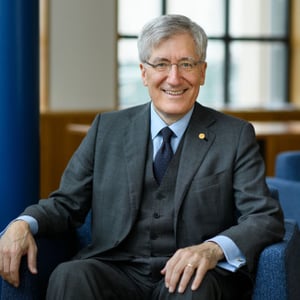
McCormick Professor of Jurisprudence; Director, James Madison Program, Princeton University
Robert P. George is McCormick Professor of Jurisprudence and Director of the James Madison Program in American Ideals and Institutions at Princeton University. He has several times been a Visiting Professor at Harvard Law School. He has served as Chairman of the U.S. Commission on International Religious Freedom and on the U.S. Commission on Civil Rights and the President’s Council on Bioethics. He has also served as the U.S. member of UNESCO’s World Commission on the Ethics of Scientific Knowledge and Technology. He was a Judicial Fellow at the Supreme Court of the United States, where he received the Justice Tom C. Clark Award. A Phi Beta Kappa graduate of Swarthmore, he holds the degrees of J.D. and M.T.S. from Harvard University and the degrees of D.Phil., B.C.L., D.C.L., and D.Litt. from Oxford University, in addition to twenty-one honorary doctorates. He is a recipient of the U.S. Presidential Citizens Medal, the Honorific Medal for the Defense of Human Rights of the Republic of Poland, the Canterbury Medal of the Becket Fund for Religious Liberty, the Bradley Prize, the Irving Kristol Award of the American Enterprise Institute, and Princeton University’s President’s Award for Distinguished Teaching. His books include Making Men Moral: Civil Liberties and Public Morality and In Defense of Natural Law (both published by Oxford University Press), as well as The Clash of Orthodoxies and Conscience and Its Enemies (both published by ISI Books).

Executive Vice President, The Federalist Society
Dean Reuter is Executive Vice President at the Federalist Society for Law and Public Policy Studies. He has served in two federal government agency Offices of the Inspector General, as Counsel to the Inspector General and Deputy Inspector General, responsible for policing the use of federal funds granted and contracted through those agencies. As such, he helped conduct and oversee criminal investigations across the country. He is the principal author of the non-fiction book, The Hidden Nazi: The Untold Story of America's Deal with the Devil, and editor of Liberty’s Nemesis: The Unchecked Expansion of the State and Confronting Terror: 9/11 and the Future of American National Security. He was appointed by the President and served as Vice-Chairman of the Board of Directors of the Corporation for National and Community Service, and recently served as an appointee on the U.S. Commission on Presidential Scholars. He is a graduate of Hood College (BA with Honors) and the University of Maryland School of Law.
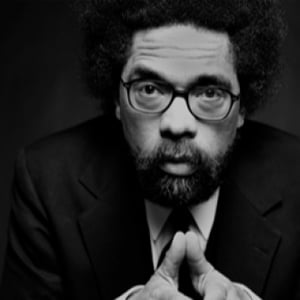
Professor of the Practice of Public Philosophy, Harvard University
Cornel West is a prominent and provocative democratic intellectual. He is Professor of the Practice of Public Philosophy at Harvard University and holds the title of Professor Emeritus at Princeton University. He has also taught at Union Theological Seminary, Yale, Harvard, Dartmouth College, and the University of Paris. Cornel West graduated Magna Cum Laude from Harvard in three years and obtained his M.A. and Ph.D. in Philosophy at Princeton. He has written 20 books and has edited 13. He is best known for his classics -- Democracy Matters and Race Matters -- which recently celebrated the 25th Anniversary of its debut with a new edition. His memoir Brother West: Living and Loving Out Loud, and Black Prophetic Fire have also received much critical acclaim. Dr. West is a frequent guest on the Bill Maher Show, Colbert Report, CNN, C-Span and Democracy Now.
He made his film debut in the Matrix – and was the commentator (with Ken Wilbur) on the official trilogy released in 2004. He also has appeared in over 25 documentaries and films including Examined Life, Call & Response, Sidewalk and Stand.
Last, he has made three spoken word albums including Never Forget, collaborating with Prince, Jill Scott, Andre 3000, Talib Kweli, KRS-One and the late Gerald Levert. His spoken word interludes were featured on Terence Blanchard’s Choices (which won the Grand Prix in France for the best Jazz Album of the year of 2009), The Cornel West Theory’s Second Rome, Raheem DeVaughn’s Grammy-nominated Love & War: Masterpeace, and most recently on Bootsy Collins’ The Funk Capital of the World. In short, Cornel West has a passion to communicate to a vast variety of publics in order to keep alive the legacy of Martin Luther King, Jr. – a legacy of telling the truth and bearing witness to love and justice.
He currently co-hosts a podcast – “The Tight Rope” with Professor Tricia Rose.

Professor Emeritus, Paul M. Hebert Law Center, Louisiana State University
In memoriam
Dr. John Baker is Professor Emeritus of Law, and previously the Dale E. Bennett Professor of Law, at Louisiana State University Law School. He is currently Visiting Professor at Peking University School of Transnational Law (via Zoom) and has been Visiting Professor at The Center for the Constitution, Georgetown Law School (2013-2020). He has also been a Visiting Fellow at Oriel College, the University of Oxford (2012-2014) and taught at Blackfriars Hall, Oxford in 2014. Dr. Baker has also been an adjunct Fellow at the Heritage Foundation (Spring, 2008) and a Distinguished Scholar at the Catholic University of America Law School (2011-12). He has taught at Tulane Law School, George Mason Law School, Pepperdine Law School, New York Law School, Hong Kong University, and the University of Dallas, School of Management and also taught and/or lectured in 17 foreign countries. Notable among his foreign visits are the
following: Visiting Professor at the University of Lyon III (France) (1999-2011); Visiting Professor at the Universidad de los Andes, Chile (2012), as a Fulbright Specialist (2006); and a Fulbright Scholar at various universities in the Philippines. Dr. Baker received his J.D., with honors, from the University of Michigan Law School and his B.A., magna cum laude, from the University of Dallas. He also earned a Ph.D. in Political Thought from the University of London. Baker has taught over a dozen different subjects, mostly courses in public law. His main areas of interest are Constitutional Law (particularly federalism and separation of powers), Criminal Law, Anti-Terrorism Law, International Law, Health Care Law, Mediation, and Comparative Law.
In addition to law review articles and book chapters, Dr. Baker’s academic publications include Hall's Criminal Law: Cases and Materials (with Benson, Force and George; 5th ed. Michie, 1993); An Introduction to the Law of the United States (ed. with Levasseur; University Press of America, 1992). He has also published on Forbes.com, FoxNews.com, in The Washington Times, and a number of times in The Wall Street Journal. He argues in federal court, including two oral arguments in the U.S. Supreme Court. For many years, he co-taught courses for the Federalist Society on separation of powers with the late Supreme Court Justice Antonin Scalia. In September 2016, he co-taught a Supreme Court seminar in China with Justice Samuel Alito. Following law school, he served as a law clerk in federal district court and as an assistant district attorney in New Orleans before joining LSU in 1975. While a professor, he has been as a consultant to USAID, USIA (since rolled into the State Department), the Justice Department, the U.S. Senate Judiciary Subcommittee on Separation of Powers, and the Office of Planning in the White House. He served on an ABA Task Force which issued the report, The Federalization of Crime (1998) and later as a consultant to the “Bi-Partisan Task Force on the Over- federalization of Crime” (2012-2014) created by the U.S. House Judiciary Subcommittee on Crime. Dr. Baker was a co-founder of the first iteration (1995) of Stratfor Inc., a global intelligence agency. He co-authored its first book: The Intelligence Edge (with Friedman, Friedman and Chapman; Crown Books/Random House 1997). In 2022, he began a short, weekly video podcast available on YouTube and Rumble, The Baker Brief.

Judge, United States Court of Appeals, Fifth Circuit
Andrew Oldham is a Circuit Judge on the United States Court of Appeals for the Fifth Circuit. Before ascending to the bench, Judge Oldham served as General Counsel to Texas Governor Greg Abbott, where he advised the Governor on a range of issues under federal and state law and managed litigation in which the Governor was an interested party. Before that he served as Deputy Solicitor General for the State of Texas, where he represented Texas in federal courts across the country, including twice before the United States Supreme Court. Before moving to Texas, Judge Oldham was an attorney at Kellogg Hansen Todd Figel & Frederick in Washington, D.C. His practice focused on appellate litigation in federal courts of appeals throughout the country. Before entering private practice, Judge Oldham served as a law clerk to Justice Samuel A. Alito, Jr., at the Supreme Court of the United States and to Judge David B. Sentelle of the U.S. Court of Appeals for the District of Columbia Circuit. He also worked as an attorney-adviser in the Office of Legal Counsel at the U.S. Department of Justice from 2006 to 2008. Judge Oldham earned a B.A. from the University of Virginia with highest honors, a Truman Scholarship for graduate school, an M. Phil., first class (with distinction), from Cambridge University, and a J.D., magna cum laude, from Harvard Law School.
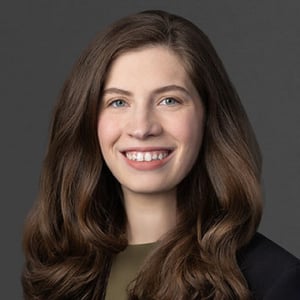
Associate, Kirkland & Ellis LLP
Rachel Daley is a litigation associate at Kirkland & Ellis LLP. Her practice focuses on drafting dispositive motions and appellate briefs in federal courts around the country. Rachel previously served as a law clerk to Justice Neil M. Gorsuch on the Supreme Court of the United States, Judge Amul R. Thapar on the U.S. Court of Appeals for the Sixth Circuit, and Judge Andrew S. Oldham on the U.S. Court of Appeals for the Fifth Circuit. Rachel is a graduate of the University of Virginia School of Law. She served as president of the law school's Federalist Society chapter in 2021, when UVA received the Federalist Society's award for Chapter of the Year. She lives in Austin, Texas with her husband, Kevin, and their two daughters.
McCormick Professor of Jurisprudence; Director, James Madison Program, Princeton University
Robert P. George is McCormick Professor of Jurisprudence and Director of the James Madison Program in American Ideals and Institutions at Princeton University. He has several times been a Visiting Professor at Harvard Law School. He has served as Chairman of the U.S. Commission on International Religious Freedom and on the U.S. Commission on Civil Rights and the President’s Council on Bioethics. He has also served as the U.S. member of UNESCO’s World Commission on the Ethics of Scientific Knowledge and Technology. He was a Judicial Fellow at the Supreme Court of the United States, where he received the Justice Tom C. Clark Award. A Phi Beta Kappa graduate of Swarthmore, he holds the degrees of J.D. and M.T.S. from Harvard University and the degrees of D.Phil., B.C.L., D.C.L., and D.Litt. from Oxford University, in addition to twenty-one honorary doctorates. He is a recipient of the U.S. Presidential Citizens Medal, the Honorific Medal for the Defense of Human Rights of the Republic of Poland, the Canterbury Medal of the Becket Fund for Religious Liberty, the Bradley Prize, the Irving Kristol Award of the American Enterprise Institute, and Princeton University’s President’s Award for Distinguished Teaching. His books include Making Men Moral: Civil Liberties and Public Morality and In Defense of Natural Law (both published by Oxford University Press), as well as The Clash of Orthodoxies and Conscience and Its Enemies (both published by ISI Books).

Former President & CEO, The Federalist Society for Law and Public Policy Studies
Eugene B. Meyer, former President and CEO of the Federalist Society, has served as Executive Director, CEO, and/or President of the organization for more than 40 years. He is responsible for shepherding the organization from a small group of law students to a community of 90,000 lawyers, law students, academics, judges, and others interested in the rule of law. The Society now includes a Student Chapter at nearly every ABA-accredited law school in the country and Lawyers Chapters in 220 major cities across the nation. Gene earned his B.A. in history at Yale in 1975 and his M.A. in political science from the London School of Economics in 1976. Gene currently serves on the boards of the U.S. Chess Center, the Holman Foundation, the Sarah Scaife Foundation, and the advisory board of the Adam Smith Society. He holds the title of International Chess Master.
Professor of the Practice of Public Philosophy, Harvard University
Cornel West is a prominent and provocative democratic intellectual. He is Professor of the Practice of Public Philosophy at Harvard University and holds the title of Professor Emeritus at Princeton University. He has also taught at Union Theological Seminary, Yale, Harvard, Dartmouth College, and the University of Paris. Cornel West graduated Magna Cum Laude from Harvard in three years and obtained his M.A. and Ph.D. in Philosophy at Princeton. He has written 20 books and has edited 13. He is best known for his classics -- Democracy Matters and Race Matters -- which recently celebrated the 25th Anniversary of its debut with a new edition. His memoir Brother West: Living and Loving Out Loud, and Black Prophetic Fire have also received much critical acclaim. Dr. West is a frequent guest on the Bill Maher Show, Colbert Report, CNN, C-Span and Democracy Now.
He made his film debut in the Matrix – and was the commentator (with Ken Wilbur) on the official trilogy released in 2004. He also has appeared in over 25 documentaries and films including Examined Life, Call & Response, Sidewalk and Stand.
Last, he has made three spoken word albums including Never Forget, collaborating with Prince, Jill Scott, Andre 3000, Talib Kweli, KRS-One and the late Gerald Levert. His spoken word interludes were featured on Terence Blanchard’s Choices (which won the Grand Prix in France for the best Jazz Album of the year of 2009), The Cornel West Theory’s Second Rome, Raheem DeVaughn’s Grammy-nominated Love & War: Masterpeace, and most recently on Bootsy Collins’ The Funk Capital of the World. In short, Cornel West has a passion to communicate to a vast variety of publics in order to keep alive the legacy of Martin Luther King, Jr. – a legacy of telling the truth and bearing witness to love and justice.
He currently co-hosts a podcast – “The Tight Rope” with Professor Tricia Rose.
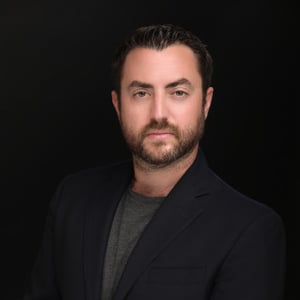
Newsweek Senior Editor-at-Large, Syndicated Columnist, Host of "The Josh Hammer Show," Article III Project Senior Counsel, Newsweek, Salem Media, Article III Project, David Horowitz Freedom Center
Josh Hammer is the senior editor-at-large of Newsweek and host of "The Josh Hammer Show," a podcast, a syndicated radio show, and TV program on Salem News Channel. A syndicated columnist through Creators Syndicate, Josh is a frequent pundit and essayist on political, legal, and cultural issues. He is also senior counsel for the Article III Project and Internet Accountability Project, as well as a Shillman Fellow with the David Horowitz Freedom Center and a fellow with the Palm Beach Freedom Institute.
An outspoken conservative, Josh opines on conservative intellectual trends, contemporary domestic and foreign policy debates, constitutional and legal issues, and the intersection of law, politics and culture. He has been published by many leading outlets, including the Los Angeles Times, the New York Post, Daily Mail, Newsweek, the Claremont Review of Books, National Affairs, American Affairs, The New Criterion, The National Interest, National Review, RealClearPolitics, First Things, City Journal, Public Discourse, Law & Liberty, Tablet Magazine, Deseret Magazine, Compact Magazine, Chronicles Magazine, The Spectator, The American Mind, The American Conservative, The European Conservative, American Greatness, American Compass, The Federalist, Blaze Media, TomKlingenstein.com, Townhall, The Daily Wire, The Daily Signal, The Daily Caller, The Epoch Times, Anchoring Truths, Fortune, Fox Business, The Jerusalem Post, The Times of Israel, The Forward, Jewish Telegraphic Agency and the Jewish Journal. He has also had legal scholarship published by the Harvard Journal of Law & Public Policy and the University of St. Thomas Law Journal.
Josh is a college campus speaker through Young America's Foundation and the Intercollegiate Studies Institute, and a law school campus speaker through the Federalist Society. Prior to Newsweek and The Daily Wire, where he was an editor, Josh worked at Kirkland & Ellis LLP and clerked for the Hon. James C. Ho on the U.S. Court of Appeals for the Fifth Circuit. Josh has also served as a John Marshall Fellow with the Claremont Institute and as a Fellow with the James Wilson Institute. He is the former host of "America on Trial with Josh Hammer," a one-season daily podcast with The First that covered the unique legal issues surrounding the 2024 presidential election.
Josh graduated from Duke University, where he majored in economics, and from the University of Chicago Law School. He lives in Florida, but remains an active member of the State Bar of Texas.
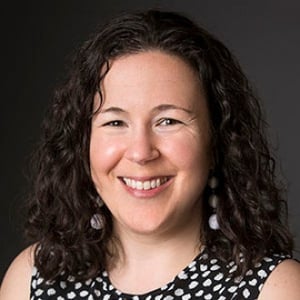
Attorney, Allen Harris Law
Samantha Harris is a nationally recognized attorney advising students and faculty on issues of campus due process, Title IX, free speech, and academic freedom. Drawing on more than 15 years at the Foundation for Individual Rights in Education (FIRE), where she served as Vice President for Policy Research, she guides students, faculty, administrators, and attorneys through complex disciplinary and constitutional issues involving free speech, fair hearings, and faculty-student rights.
A graduate of Princeton University and the University of Pennsylvania Law School (Articles Editor, Journal of Constitutional Law), Samantha clerked for the Hon. Jay C. Waldman in the U.S. District Court for the Eastern District of Pennsylvania and began her legal career at Pepper Hamilton LLP. At FIRE, she led efforts to reform campus policies and defended individuals in high-profile Title IX and free speech disputes.
Now at Allen Harris PLLC, a firm focused on Title IX and campus defense, Samantha represents students and professors in investigations, hearings, appeals, and related litigation. Samantha’s practice emphasizes strategic advocacy in campus disciplinary systems and litigation-ready defense in federal court. Her blend of policy experience, legal skill, and media visibility positions her as a leading resource for issues at the intersection of education law and constitutional rights.
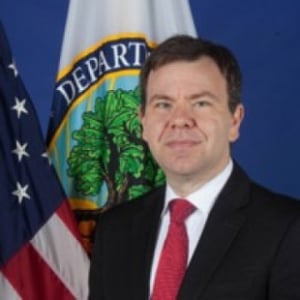
General Counsel, Mountain States Legal Foundation
William E. Trachman is General Counsel for Mountain States Legal Foundation, where he protects the rights of individuals to live freely and securely under the U.S. Constitution. Previously, he was appointed to serve in the Department of Education as Deputy Assistant Secretary in the Office for Civil Rights. Prior to his appointment, he served as General Counsel to the Douglas County School District, where he helped litigate the fight for school choice in the school district. Presently, Mr. Trachman serves as Chair of the Colorado Federalist Society and the Vice Chair of the U.S. Commission on Civil Rights’ Colorado Advisory Board. He previously taught as an Adjunct Professor at the University of Denver, Sturm College of Law. He attended U.C. Berkeley for both undergraduate and law school, and then clerked for the Honorable Harris Hartz on the 10th Circuit Court of Appeals. Mr. Trachman is licensed in Colorado, California, and Washington, D.C.
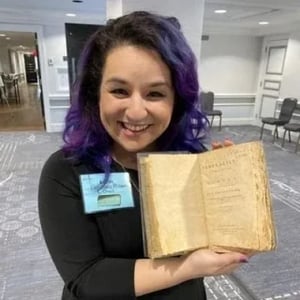
Director, Digital Media, Communications and Fellow, R Street Institute
Shoshana Weissmann manages R Street’s social media, email marketing and other digital assets. She also works on occupational licensing reform, social media regulatory policy, Section 230 and other issues, and has written for various publications, including The Wall Street Journal and USA Today.
Shoshana most recently managed digital communications for Opportunity Lives, a group that highlighted positive stories and policy solutions. Before that, she managed social media and wrote for The Weekly Standard. Earlier in her career, she managed digital communications for the America Rising PAC, where her strategy was highlighted in a piece that appeared in The New York Times.
She is on the board of The Conservation Coalition and a member of the Federalist Society’s Regulatory Transparency Project’s state and local and emerging technology working groups.
She lives in Washington, D.C. and has a stuffed sloth named James Madisloth, and she enjoys the Snapchat hot dog.
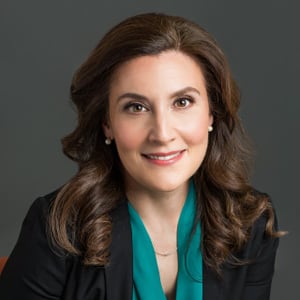
Board Member, U.S. Privacy and Civil Liberties Oversight Board
Beth A. Williams is a Board Member of the United States Privacy and Civil Liberties Oversight Board, an agency whose mission is to ensure that the federal government's efforts to prevent terrorism are balanced with the need to protect privacy and civil liberties.
Prior to her Board service, Ms. Williams was the Assistant Attorney General for the Office of Legal Policy at the United States Department of Justice from August 2017 to December 2020. In that role, she served as the primary policy advisor to the Attorney General and the Deputy Attorney General, and as the Chief Regulatory Officer for the Department. Ms. Williams also led the judicial nomination process for the Department, assisting in the selection and confirmation of more than 230 Article III judges to the bench.
Prior to becoming Assistant Attorney General, Ms. Williams was a litigation and appellate partner at a national law firm, where her practice focused on complex commercial, securities, appellate, and First Amendment litigation. From 2005-2006, Ms. Williams served as Special Counsel to the United States Senate Committee on the Judiciary, where she assisted with the confirmation of Chief Justice John G. Roberts, Jr. and Associate Justice Samuel A. Alito, Jr. to the United States Supreme Court.
Ms. Williams clerked for the Hon. Richard C. Wesley on the United State Court of Appeals for the Second Circuit. She graduated from Harvard College magna cum laude, with a degree in History and Literature, and she earned her law degree from Harvard Law School, where she served as Executive Editor of the Harvard Journal of Law and Public Policy.
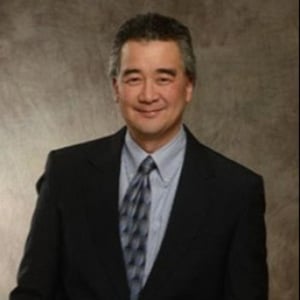
Professor, University of Denver, Sturm College of Law
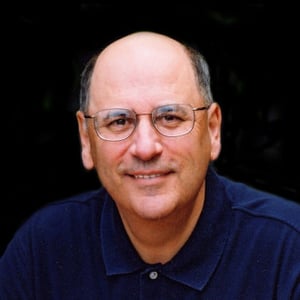
Frank Buckley is a Foundation Professor at George Mason University School of Law, where he has taught since 1989. Before then, he was a visiting Olin Fellow at the University of Chicago Law School. He has also taught at McGill Law School in Montreal, the Sorbonne (Paris II),and Sciences Po in Paris. His most recent books are The American Illness (Yale 2013), Fair Governance (Oxford 2009), Just Exchange (Routledge 2005) and The Morality of Laughter (Michigan 2003). His The Once and Future King will be published by Encounter Books in Spring 2014. He is a senior editor of The American Spectator. He lives in Alexandria VA with his wife, Esther.
Newsweek Senior Editor-at-Large, Syndicated Columnist, Host of "The Josh Hammer Show," Article III Project Senior Counsel, Newsweek, Salem Media, Article III Project, David Horowitz Freedom Center
Josh Hammer is the senior editor-at-large of Newsweek and host of "The Josh Hammer Show," a podcast, a syndicated radio show, and TV program on Salem News Channel. A syndicated columnist through Creators Syndicate, Josh is a frequent pundit and essayist on political, legal, and cultural issues. He is also senior counsel for the Article III Project and Internet Accountability Project, as well as a Shillman Fellow with the David Horowitz Freedom Center and a fellow with the Palm Beach Freedom Institute.
An outspoken conservative, Josh opines on conservative intellectual trends, contemporary domestic and foreign policy debates, constitutional and legal issues, and the intersection of law, politics and culture. He has been published by many leading outlets, including the Los Angeles Times, the New York Post, Daily Mail, Newsweek, the Claremont Review of Books, National Affairs, American Affairs, The New Criterion, The National Interest, National Review, RealClearPolitics, First Things, City Journal, Public Discourse, Law & Liberty, Tablet Magazine, Deseret Magazine, Compact Magazine, Chronicles Magazine, The Spectator, The American Mind, The American Conservative, The European Conservative, American Greatness, American Compass, The Federalist, Blaze Media, TomKlingenstein.com, Townhall, The Daily Wire, The Daily Signal, The Daily Caller, The Epoch Times, Anchoring Truths, Fortune, Fox Business, The Jerusalem Post, The Times of Israel, The Forward, Jewish Telegraphic Agency and the Jewish Journal. He has also had legal scholarship published by the Harvard Journal of Law & Public Policy and the University of St. Thomas Law Journal.
Josh is a college campus speaker through Young America's Foundation and the Intercollegiate Studies Institute, and a law school campus speaker through the Federalist Society. Prior to Newsweek and The Daily Wire, where he was an editor, Josh worked at Kirkland & Ellis LLP and clerked for the Hon. James C. Ho on the U.S. Court of Appeals for the Fifth Circuit. Josh has also served as a John Marshall Fellow with the Claremont Institute and as a Fellow with the James Wilson Institute. He is the former host of "America on Trial with Josh Hammer," a one-season daily podcast with The First that covered the unique legal issues surrounding the 2024 presidential election.
Josh graduated from Duke University, where he majored in economics, and from the University of Chicago Law School. He lives in Florida, but remains an active member of the State Bar of Texas.
Judge, United States Court of Appeals, Fifth Circuit
Andrew Oldham is a Circuit Judge on the United States Court of Appeals for the Fifth Circuit. Before ascending to the bench, Judge Oldham served as General Counsel to Texas Governor Greg Abbott, where he advised the Governor on a range of issues under federal and state law and managed litigation in which the Governor was an interested party. Before that he served as Deputy Solicitor General for the State of Texas, where he represented Texas in federal courts across the country, including twice before the United States Supreme Court. Before moving to Texas, Judge Oldham was an attorney at Kellogg Hansen Todd Figel & Frederick in Washington, D.C. His practice focused on appellate litigation in federal courts of appeals throughout the country. Before entering private practice, Judge Oldham served as a law clerk to Justice Samuel A. Alito, Jr., at the Supreme Court of the United States and to Judge David B. Sentelle of the U.S. Court of Appeals for the District of Columbia Circuit. He also worked as an attorney-adviser in the Office of Legal Counsel at the U.S. Department of Justice from 2006 to 2008. Judge Oldham earned a B.A. from the University of Virginia with highest honors, a Truman Scholarship for graduate school, an M. Phil., first class (with distinction), from Cambridge University, and a J.D., magna cum laude, from Harvard Law School.

Julius E. Davis Professor of Law, University of Minnesota Law School
Ilan Wurman is the Julius E. Davis Professor of Law at the University of Minnesota, where he teaches administrative law and constitutional law. He previously taught at Arizona State University. He writes primarily on the Fourteenth Amendment, administrative law, separation of powers, and constitutionalism. His academic writing has appeared in the Yale Law Journal, the Stanford Law Review, the University of Chicago Law Review, the University of Pennsylvania Law Review, the Virginia Law Review, the Duke Law Journal, the Minnesota Law Review, the Notre Dame Law Review, and the Texas Law Review among other journals.
Professor Wurman is the author of the new book The Constitution of 1789: A New Introduction (Cambridge 2026). His previous books include A Debt Against the Living: An Introduction to Originalism (Cambridge 2017), and The Second Founding: An Introduction to the Fourteenth Amendment (Cambridge 2020). He is also the author of the casebook, Administrative Law Theory and Fundamentals: An Integrated Approach (Foundation Press 3d ed. 2025).
Professor Wurman practices law with the firm Tully Bailey. He has litigated a variety of administrative law and constitutional law cases, including cases involving COVID-19 restrictions, transmission lines, and Appointments Clause challenges. He also devised winning public nuisance theories to force city governments to address the increasingly challenging public camping crises throughout the country.
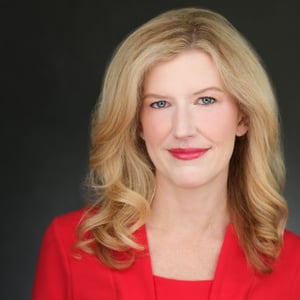
Justice, Texas Fifteenth District Court of Appeals
April Farris was appointed to the Fifteenth Court of Appeals on September 1 of 2024. April previously served on the First Court of Appeals after being appointed in 2021 and elected in 2022.
Before joining the Court, April was a partner at Yetter Coleman LLP, where she handled complex appellate litigation for energy, technology, and government clients. While in private practice, she was recognized in appellate law by Law360, Best Lawyers in America, and Thompson Reuters' Super Lawyers. In 2020, she was one of five attorneys in the nation to be named a Law360 appellate Rising Star, an honor reserved for lawyers under 40.
April previously served as an Assistant Solicitor General for the State of Texas, handling appeals for various Texas agencies. She is a former councilmember for the Texas State Bar's Appellate Section and a current councilmember for the Civil Rights & Civil Liberties Section. She serves as a trustee for the Texas Supreme Court Historical Association, and she is on the board of the Garland R. Walker Inn of Court in Houston. She is a member of the State Bar of Texas Pattern Jury Charge Oversight Committee, and she is on the editorial board of The Advocate. In 2022 and 2023, she was a guest instructor for Harvard Law School's Introduction to Trial Advocacy Program. She taught Origins of the Federal Constitution with Judge Charles Eskridge at the University of Texas School of Law in 2025, and she previously taught First Amendment at South Texas College of Law.
April clerked for Judge Jennifer Walker Elrod on the U.S. Court of Appeals for the Fifth Circuit. She graduated from Harvard Law School cum laude in 2009, and she earned her bachelor's degree summa cum laude from Abilene Christian University in 2006. She was named ACU's Young Alumnus of the Year for 2025. She enjoys spending time with her husband and children, tennis, and theology.
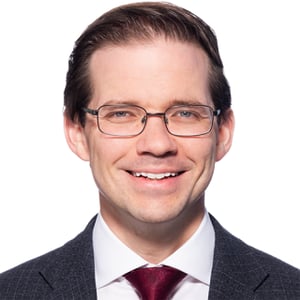
Of Counsel, Covington & Burling LLP
The Honorable Paul J. Ray is currently Of Counsel at Covington & Burling LLP where he advises clients on regulatory opportunities and challenges and helps them formulate and execute advocacy strategies for their regulatory policy priorities before the executive branch and Congress.
During the first Trump Administration, Paul held various senior positions at the Office of Information and Regulatory Affairs (OIRA) within the White House’s Office of Management and Budget, including as acting, and then Senate-confirmed, head of the office. As OIRA Administrator (the "regulations czar"), Paul supervised the review of hundreds of regulations from across the government, drafted numerous executive orders governing the regulatory process, and led the Administration’s regulatory reform effort. As a result of this experience, Paul is well-positioned to help clients understand and achieve regulatory policy priorities in the context of the government’s regulatory agenda and ongoing reform efforts.
Most recently, Paul was also the Director of the Roe Institute for Economic Policy Studies at The Heritage Foundation. In that role, he supervised the formulation of the Foundation’s economic and regulatory policy recommendations and provided technical assistance to congressional committees and staff regarding legislative changes to the regulatory process. In addition to his role at The Heritage Foundation, Paul also served as a Senior Advisor at a strategic advisory firm. Before his time in government, Paul practiced law at a law firm in Washington, specializing in administrative law matters.
Prior to his role at the White House, Paul was Counselor to the Secretary at the U.S. Department of Labor. There he led departmental efforts in high-profile rulemakings and helped formulate the Department’s legal positions and strategy.
Paul served as a law clerk to Supreme Court Justice Samuel Alito and as a law clerk to the Honorable Debra Livingston of the U.S. Court of Appeals for the Second Circuit.
Paul is a thought leader in the conservative legal movement and is a frequent commentator and speaker on regulatory policy and reform matters, including at law schools, professional gatherings, and other venues. He is the Chairman of Innovations in Peacebuilding International and the Regulatory Process Working Group of the Federalist Society’s Regulatory Transparency Project and a public member of the Administrative Conference of the United States. Paul is also an adjunct lecturer at the Hillsdale College School of Government.
Professor Emeritus, Paul M. Hebert Law Center, Louisiana State University
In memoriam
Dr. John Baker is Professor Emeritus of Law, and previously the Dale E. Bennett Professor of Law, at Louisiana State University Law School. He is currently Visiting Professor at Peking University School of Transnational Law (via Zoom) and has been Visiting Professor at The Center for the Constitution, Georgetown Law School (2013-2020). He has also been a Visiting Fellow at Oriel College, the University of Oxford (2012-2014) and taught at Blackfriars Hall, Oxford in 2014. Dr. Baker has also been an adjunct Fellow at the Heritage Foundation (Spring, 2008) and a Distinguished Scholar at the Catholic University of America Law School (2011-12). He has taught at Tulane Law School, George Mason Law School, Pepperdine Law School, New York Law School, Hong Kong University, and the University of Dallas, School of Management and also taught and/or lectured in 17 foreign countries. Notable among his foreign visits are the
following: Visiting Professor at the University of Lyon III (France) (1999-2011); Visiting Professor at the Universidad de los Andes, Chile (2012), as a Fulbright Specialist (2006); and a Fulbright Scholar at various universities in the Philippines. Dr. Baker received his J.D., with honors, from the University of Michigan Law School and his B.A., magna cum laude, from the University of Dallas. He also earned a Ph.D. in Political Thought from the University of London. Baker has taught over a dozen different subjects, mostly courses in public law. His main areas of interest are Constitutional Law (particularly federalism and separation of powers), Criminal Law, Anti-Terrorism Law, International Law, Health Care Law, Mediation, and Comparative Law.
In addition to law review articles and book chapters, Dr. Baker’s academic publications include Hall's Criminal Law: Cases and Materials (with Benson, Force and George; 5th ed. Michie, 1993); An Introduction to the Law of the United States (ed. with Levasseur; University Press of America, 1992). He has also published on Forbes.com, FoxNews.com, in The Washington Times, and a number of times in The Wall Street Journal. He argues in federal court, including two oral arguments in the U.S. Supreme Court. For many years, he co-taught courses for the Federalist Society on separation of powers with the late Supreme Court Justice Antonin Scalia. In September 2016, he co-taught a Supreme Court seminar in China with Justice Samuel Alito. Following law school, he served as a law clerk in federal district court and as an assistant district attorney in New Orleans before joining LSU in 1975. While a professor, he has been as a consultant to USAID, USIA (since rolled into the State Department), the Justice Department, the U.S. Senate Judiciary Subcommittee on Separation of Powers, and the Office of Planning in the White House. He served on an ABA Task Force which issued the report, The Federalization of Crime (1998) and later as a consultant to the “Bi-Partisan Task Force on the Over- federalization of Crime” (2012-2014) created by the U.S. House Judiciary Subcommittee on Crime. Dr. Baker was a co-founder of the first iteration (1995) of Stratfor Inc., a global intelligence agency. He co-authored its first book: The Intelligence Edge (with Friedman, Friedman and Chapman; Crown Books/Random House 1997). In 2022, he began a short, weekly video podcast available on YouTube and Rumble, The Baker Brief.
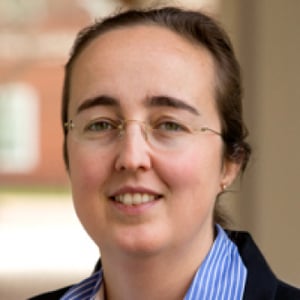
Assistant Professor of Political Science, Old Dominion University
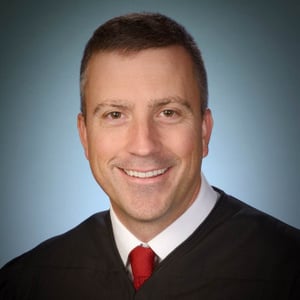
Judge, United States District Court, District of Columbia
Judge Trevor N. McFadden was appointed to the United States District Court for the District of Columbia in 2017. He received his B.A. in 2001 from Wheaton College, IL, magna cum laude. In 2006, he received his J.D. from the University of Virginia School of Law, where he graduated Order of the Coif and was an editor for the Virginia Law Review.
Following graduation from law school, Judge McFadden clerked for Judge Steven Colloton, U.S. Court of Appeals for the Eighth Circuit. He then joined the U.S. Department of Justice, where he served as Counsel to the Deputy Attorney General and as Assistant U.S. Attorney in the District of Columbia. Judge McFadden subsequently became a partner at Baker & McKenzie LLP in Washington, DC, where he focused on white collar investigations. He is also co-author of a treatise, Corporate Settlement Tools: DPAs, NPAs, and Cooperation Agreements.
After four years in private practice, Judge McFadden returned to the U.S. Department of Justice, where he was Deputy Assistant Attorney General and acted as the second-in-command of the Department's Criminal Division. As Deputy Assistant Attorney General, he managed the Division's Fraud and Appellate Sections.
Judge McFadden also has extensive experience in law enforcement. He served as an officer with the Fairfax County, VA, Police Department and as a deputy sheriff in Madison County, VA.
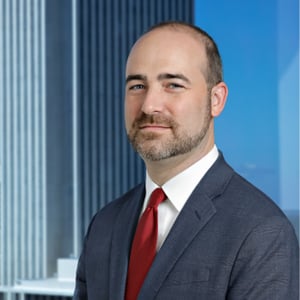
Partner, Shutts & Bowen LLP
Daniel Nordby is a partner in the Tallahassee office of Shutts & Bowen LLP, where he is a member of the Appellate Practice Group. His practice focuses on high-profile, high stakes matters of law and public policy, particularly in the areas of constitutional, appellate and administrative law.
Over the course of his career, Daniel has developed extensive experience in the area of government and administrative law. He is a Past Chair of the Florida Bar’s Administrative Law Section and has served on the Section’s Executive Council for more than a decade. Daniel has represented clients in some of Florida’s largest competitive procurements and has served as counsel of record in a variety of administrative and judicial proceedings involving the application of constitutional and administrative law principles. He has personally presented oral argument on multiple occasions before the Florida Supreme Court, Florida’s First District Court of Appeal, and the Federal Court of Appeals for the Eleventh Circuit on high-profile matters of constitutional law. A representative list of Daniel’s reported opinions in the state and federal courts is available here.
Daniel draws on his prior service in the public sector when representing businesses, individuals and governmental clients on their most challenging legal issues. As General Counsel to then-Governor Rick Scott from 2017-2019, Daniel provided oversight and strategic direction for all major litigation involving Florida’s executive branch agencies and advised Governor Scott on the appointment of more than 100 judges to Florida’s trial and appellate courts. Daniel’s career also includes service as General Counsel to the Florida House of Representatives, General Counsel to Florida’s Secretary of State, Assistant General Counsel to the Florida Department of Education, and Staff Attorney to the Florida Legislature’s Joint Administrative Procedures Committee.
Daniel continues his public service as a gubernatorial appointee to the Florida Supreme Court Judicial Nominating Commission. After serving on the Commission from 2012-2018 as a direct appointee of Governor Scott, Daniel was appointed by Governor DeSantis in July 2019 to a third term. He currently serves as Chair of the Florida Supreme Court Judicial Nominating Commission.
Daniel is also involved with several non-profit and community groups. He is a graduate of Leadership Florida (Connect VI), a member of Florida Blue Key, a member of the American Enterprise Institute’s Leaders Network, and a member of the James Madison Institute’s Inaugural Class of Leaders Fellows. Daniel is on the Steering Committee of the Tallahassee Lawyers Chapter of the Federalist Society for Law and Public Policy Studies and is a Past President of both its Tallahassee Lawyers Chapter and University of Florida Student Chapter. Daniel is an Eagle Scout and attends St. Peter’s Anglican Cathedral in Tallahassee.
Daniel is a “triple-Gator” with three degrees from the University of Florida: a J.D. (with high honors), a B.S. in Microbiology and Cell Science, and a B.A. in Classical Studies. He has been recognized as a Florida Super Lawyers “Rising Star” and has been named to the roster of Florida Legal Elite by Florida Trend magazine in the categories of “Government & Administrative Law,” “Best Government & Non-Profit Attorneys,” and ”Best Up & Coming Attorneys.”
Judge, United States Court of Appeals, Fifth Circuit
Andrew Oldham is a Circuit Judge on the United States Court of Appeals for the Fifth Circuit. Before ascending to the bench, Judge Oldham served as General Counsel to Texas Governor Greg Abbott, where he advised the Governor on a range of issues under federal and state law and managed litigation in which the Governor was an interested party. Before that he served as Deputy Solicitor General for the State of Texas, where he represented Texas in federal courts across the country, including twice before the United States Supreme Court. Before moving to Texas, Judge Oldham was an attorney at Kellogg Hansen Todd Figel & Frederick in Washington, D.C. His practice focused on appellate litigation in federal courts of appeals throughout the country. Before entering private practice, Judge Oldham served as a law clerk to Justice Samuel A. Alito, Jr., at the Supreme Court of the United States and to Judge David B. Sentelle of the U.S. Court of Appeals for the District of Columbia Circuit. He also worked as an attorney-adviser in the Office of Legal Counsel at the U.S. Department of Justice from 2006 to 2008. Judge Oldham earned a B.A. from the University of Virginia with highest honors, a Truman Scholarship for graduate school, an M. Phil., first class (with distinction), from Cambridge University, and a J.D., magna cum laude, from Harvard Law School.
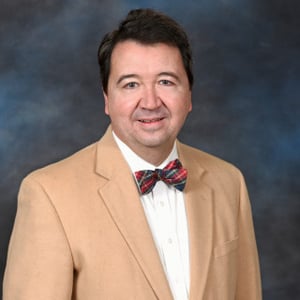
Judge, United States Court of Appeals, Sixth Circuit
John K. Bush is a Circuit Judge on the United States Court of Appeals for the Sixth Circuit.
His chambers are in Louisville, Kentucky. Prior to joining the court, Judge Bush was a partner in the
Louisville office of the firm Bingham Greenebaum Doll (now Dentons Bingham Greenebaum),
where he also was co-chair of the firm’s litigation department. He began his legal practice in the
Washington, D.C. office of Gibson Dunn & Crutcher.
Judge Bush served as a law clerk for Judge J. Smith Henley of the United States Court of
Appeals for the Eighth Circuit. He was graduated summa cum laude from Vanderbilt University,
and cum laude from Harvard Law School. He is an adjunct lecturer at The George Washington
University Law School and the Brandeis School of Law at the University of Louisville.
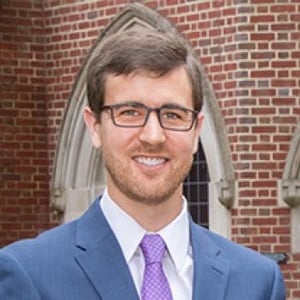
Professor of Law & Helen L. Crocker Faculty Scholar, Stanford Law School
Jud Campbell joined the faculty of Stanford Law School in 2023. He previously served as a professor of law at the University of Richmond School of Law and as a visiting professor of law at the University of Chicago Law School and at Harvard Law School. His academic focus is constitutional history and First Amendment law. His publications include articles in the Stanford Law Review, Yale Law Journal, Harvard Law Review, Texas Law Review, Constitutional Commentary, and Law and History Review. After completing his J.D. at Stanford Law School, he clerked for Judge Diane S. Sykes on the U.S. Court of Appeals for the Seventh Circuit, and for Judge José A. Cabranes on the U.S. Court of Appeals for the Second Circuit. He then served as the Executive Director of the Stanford Constitutional Law Center. He holds a bachelor’s degree from the University of North Carolina at Chapel Hill and two master’s degrees from the London School of Economics, where he studied as a Marshall Scholar.
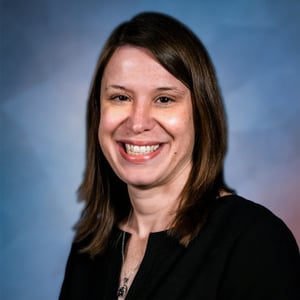
Senior Director of Strategic Partnerships, First Liberty Institute
Lisa Budzynski Ezell is the former Vice President and Director of the Federalist Society’s Lawyers Chapters. In this role, she managed a growing network of over 90 lawyers chapters nationwide, including oversight of leadership recruitment, chapter programming, state conferences, civics education outreach, and young lawyers activities. She holds a Bachelor of Arts degree from Saint Mary’s College in Political Science and History and a Master of Public Policy from George Mason University.
Assistant Professor of Political Science, Old Dominion University
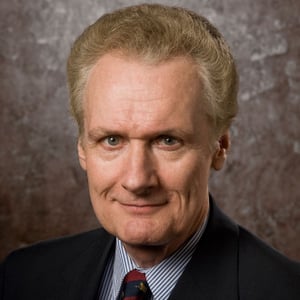
Vice President for Legal Affairs, Cato Institute
Roger Pilon is the Cato’s Institute’s vice president for legal affairs, the founding director of Cato’s Robert A. Levy Center for Constitutional Studies, the inaugural holder of Cato’s B. Kenneth Simon Chair in Constitutional Studies, and the founding publisher of the Cato Supreme Court Review.
Prior to joining Cato, Pilon held five senior posts in the Reagan administration, including at State and Justice, and was a national fellow at Stanford’s Hoover Institution. In 1989 the Bicentennial Commission presented him with its Benjamin Franklin Award for excellence in writing on the U.S. Constitution. In 2001 Columbia University’s School of General Studies awarded him its Alumni Medal of Distinction. Pilon lectures and debates at universities and law schools across the country and testifies often before Congress.
His writing has appeared in the Wall Street Journal, the Washington Post, the New York Times, the Los Angeles Times, Legal Times, National Law Journal, Harvard Journal of Law and Public Policy, Stanford Law and Policy Review, and elsewhere. He has appeared on ABC’s Nightline, CBS’s 60 Minutes II, Fox News Channel, NPR, CNN, MSNBC, CNBC, C-SPAN, and other media.
Pilon holds a BA from Columbia University, an MA and a PhD from the University of Chicago, and a JD from the George Washington University School of Law.
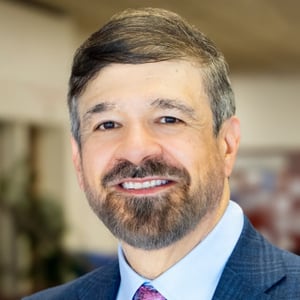
Hugh and Hazel Darling Foundation Professor of Law; Director, Center for the Study of Constitutional Originalism, University of San Diego School of Law
Assistant United States Attorney, United States Attorney’s Office

Panel II: The Freedom of Religion [Archive Collection]
Robert L. Cord, Mitchell L. Edwards, Henry Mark Holzer, Michael W. McConnell, John T. Noonan, Arthur B. Spitzer
On March 7-8, 1986, The Federalist Society hosted its annual National Student Symposium at Stanford...
Showcase Discussion: A Discussion with Professors Robert George and Cornel West on Freedom of Speech, Freedom of Thought, the Black Lives Matter Movement, and the Cancel Culture
Jennifer C. Braceras, Robert P. George, Dean Reuter, Cornel West
On November 12, 2020, The Federalist Society hosted an online showcase discussion for the 2020...
Feddie Night Fights: The Federalist/Anti-Federalist Debate
John S. Baker, Andrew Oldham, Rachel L. Daley
On September 25, 2020, the Federalist Society's University of Virginia Student Chapter hosted the first...
Necessary & Proper Episode 57: Constitution Day Lecture: Inside the Mind of James Madison
Colleen Sheehan
To celebrate Constitution Day, the Rutgers Law School chapter of the Federalist Society hosted Dr....
A Discussion with Professors Robert George and Cornel West
Robert P. George, Eugene B. Meyer, Cornel West
A discussion about freedom of speech, freedom of thought, the Black Lives Matter movement, and...
Reviewing The Supreme Court’s 2019/20 Term: A Panel Discussion
Josh Hammer, Samantha Harris, William E. Trachman, Shoshana Weissmann, Beth A. Williams, Alan Chen
The Colorado Lawyers Chapter held a virtual review of the 2019-20 Supreme Court term on...
The Future of Originalism: A Federalist Society Zoom Dialogue
Frank H. Buckley, Josh Hammer, Andrew Oldham, Ilan Wurman, April Farris
On May 27, 2020, the Federalist Society's Houston and Austin lawyers chapters co-hosted a Zoom...
Address by OIRA Administrator Hon. Paul J. Ray
Paul J. Ray
The Paperwork Reduction Act of 1980 created the Office of Information and Regulatory Affair (OIRA)...
Session I: Revisiting the Antifederalists
John S. Baker, Michelle Kundmueller, Trevor N. McFadden, Daniel E. Nordby, Andrew Oldham
On January 31-February 1, 2020, The Federalist Society's Florida lawyers chapters hosted their annual Florida...
Panel 1: The Anti-Federalists at the Founding
John K. Bush, Jud Campbell, Lisa Ezell, Michelle Kundmueller, Roger Pilon, Michael B. Rappaport, Justin James Gilio
On January 25, 2020, the Federalist Society hosted its annual Western Chapters Conference at the...