
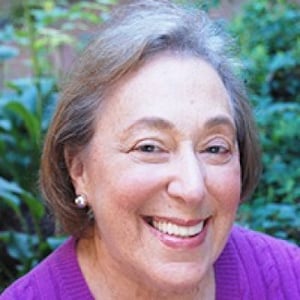
Founder and Co-President Emerita, National Women's Law Center
Described as "guiding the battles of the women's rights movement" by the New York Times, Marcia Greenberger is the founder and Co-President of the National Women's Law Center. The creation of the Center forty years ago established her as the first full-time women's rights legal advocate in Washington, D.C.
A recognized expert on women and the law, particularly in the areas of education and employment, health and reproductive rights, and family economic security, Ms. Greenberger has been a leader in securing the passage of major legislation, counsel in landmark litigation establishing new legal protections for women, and the author of numerous published articles. Examples include the Lilly Ledbetter Fair Pay Act, the Pregnancy Discrimination Act, the Civil Rights Act of 1991 providing critical protections against sexual harassment on the job, and Supreme Court victories strengthening protections for students and teachers against sex discrimination in schools.
Her leadership and contributions are reflected in the professional honors she has received and the numerous boards on which she has served. She has been given the James Wilson Award and the Alumni Award of Merit from the University of Pennsylvania Law School and the Trustees’ Council of Penn Women "Beacon" Leadership Award, the American Bar Association Margaret Brent Award for 2012, the National Association of Women Lawyers' Arabella Babb Mansfield Award, and an honorary Doctor of Laws degree from Lafayette College as well as the Woman Lawyer of the Year Award by the D.C. Women's Bar Association and the William J. Brennan, Jr. Award by the District of Columbia Bar. Additionally, she has been recognized by Working Woman Magazine as one of the 25 heroines whose activities over 25 years have helped women in the workplace, by Washingtonian Magazine as one of Washington, D.C.'s most powerful women, by Legal Times as a "Top Lawyer" and one of its "30 Champions", and by Legal Times and The National Law Journal as one of "Washington's Most Influential Women Lawyers." She has received the Dr. Jane Evans Pursuit of Justice Award from Women of Reform Judaism, A Woman of Genius Award from Trinity College, the "21 Leaders of the 21st Century" Award from Womens eNews, and the Woman of Distinction Award from Soroptimist International of the Americas. She was elected to the Court of Honor of the Philadelphia High School for Girls, received the Hope Award from Calvary Women's Shelter and awards from the National Family Planning and Reproductive Health Association and the Center for Law and Social Policy. She received a Presidential appointment to the National Skill Standards Board, and currently serves as a member of the Executive Committee of the Leadership Conference on Civil Rights.
Ms. Greenberger received her B.A. with honors and J.D. cum laude from the University of Pennsylvania. She practiced law with the Washington, D.C., firm of Caplin and Drysdale before she started and became Director of the Women's Rights Project of the Center for Law and Social Policy, which became the National Women's Law Center in 1981.

Distinguished Senior Fellow and Antonin Scalia Chair in Constitutional Studies, Ethics and Public Policy Center
Edward Whelan is a Distinguished Senior Fellow of the Ethics and Public Policy Center and holds EPPC’s Antonin Scalia Chair in Constitutional Studies. He is the longest-serving President in EPPC’s history, having held that position from March 2004 through January 2021.
Mr. Whelan directs EPPC’s program on The Constitution, the Courts, and the Culture. His areas of expertise include constitutional law and the judicial confirmation process. As a contributor to National Review Online’s Bench Memos blog, he has been a leading commentator on nominations to the Supreme Court and the lower courts and on issues of constitutional law. He has written essays and op-eds for leading newspapers—including the Wall Street Journal, the New York Times, and the Washington Post—opinion journals, and academic symposia and law reviews. The National Law Journal has named Mr. Whelan among its “Champions and Visionaries” in the practice of law in D.C.
Mr. Whelan is co-editor of three volumes of Supreme Court Justice Antonin Scalia’s work: Scalia Speaks: Reflections on Law, Faith, and Life Well Lived (Crown Forum, 2017), a New York Times bestselling collection of speeches by Justice Scalia; On Faith: Lessons from an American Believer (Crown Forum, 2019), a collection of Justice Scalia’s writings on faith and religion; and The Essential Scalia: On the Constitution, the Courts, and the Rule of Law (Crown Forum, 2020), a collection of Justice Scalia’s views on legal issues.
Mr. Whelan, a lawyer and a former law clerk to Justice Scalia, has served in positions of responsibility in all three branches of the federal government. From just before the terrorist attacks of September 11, 2001, until joining EPPC in 2004, Mr. Whelan was the Principal Deputy Assistant Attorney General for the Office of Legal Counsel in the U.S. Department of Justice. In that capacity, he advised the White House Counsel’s Office, the Attorney General and other senior DOJ officials, and departments and agencies throughout the executive branch on difficult and sensitive legal questions. Mr. Whelan previously served on Capitol Hill as General Counsel to the U.S. Senate Committee on the Judiciary. In addition to clerking for Justice Scalia, he was a law clerk to Judge J. Clifford Wallace of the U.S. Court of Appeals for the Ninth Circuit.
In 1981 Mr. Whelan graduated with honors from Harvard College and was inducted into Phi Beta Kappa. He received his J.D. magna cum laude in 1985 from Harvard Law School, where he was a member of the Board of Editors of the Harvard Law Review.
For more on Mr. Whelan’s background, see this interview.
Founder and Co-President Emerita, National Women's Law Center
Described as "guiding the battles of the women's rights movement" by the New York Times, Marcia Greenberger is the founder and Co-President of the National Women's Law Center. The creation of the Center forty years ago established her as the first full-time women's rights legal advocate in Washington, D.C.
A recognized expert on women and the law, particularly in the areas of education and employment, health and reproductive rights, and family economic security, Ms. Greenberger has been a leader in securing the passage of major legislation, counsel in landmark litigation establishing new legal protections for women, and the author of numerous published articles. Examples include the Lilly Ledbetter Fair Pay Act, the Pregnancy Discrimination Act, the Civil Rights Act of 1991 providing critical protections against sexual harassment on the job, and Supreme Court victories strengthening protections for students and teachers against sex discrimination in schools.
Her leadership and contributions are reflected in the professional honors she has received and the numerous boards on which she has served. She has been given the James Wilson Award and the Alumni Award of Merit from the University of Pennsylvania Law School and the Trustees’ Council of Penn Women "Beacon" Leadership Award, the American Bar Association Margaret Brent Award for 2012, the National Association of Women Lawyers' Arabella Babb Mansfield Award, and an honorary Doctor of Laws degree from Lafayette College as well as the Woman Lawyer of the Year Award by the D.C. Women's Bar Association and the William J. Brennan, Jr. Award by the District of Columbia Bar. Additionally, she has been recognized by Working Woman Magazine as one of the 25 heroines whose activities over 25 years have helped women in the workplace, by Washingtonian Magazine as one of Washington, D.C.'s most powerful women, by Legal Times as a "Top Lawyer" and one of its "30 Champions", and by Legal Times and The National Law Journal as one of "Washington's Most Influential Women Lawyers." She has received the Dr. Jane Evans Pursuit of Justice Award from Women of Reform Judaism, A Woman of Genius Award from Trinity College, the "21 Leaders of the 21st Century" Award from Womens eNews, and the Woman of Distinction Award from Soroptimist International of the Americas. She was elected to the Court of Honor of the Philadelphia High School for Girls, received the Hope Award from Calvary Women's Shelter and awards from the National Family Planning and Reproductive Health Association and the Center for Law and Social Policy. She received a Presidential appointment to the National Skill Standards Board, and currently serves as a member of the Executive Committee of the Leadership Conference on Civil Rights.
Ms. Greenberger received her B.A. with honors and J.D. cum laude from the University of Pennsylvania. She practiced law with the Washington, D.C., firm of Caplin and Drysdale before she started and became Director of the Women's Rights Project of the Center for Law and Social Policy, which became the National Women's Law Center in 1981.
Distinguished Senior Fellow and Antonin Scalia Chair in Constitutional Studies, Ethics and Public Policy Center
Edward Whelan is a Distinguished Senior Fellow of the Ethics and Public Policy Center and holds EPPC’s Antonin Scalia Chair in Constitutional Studies. He is the longest-serving President in EPPC’s history, having held that position from March 2004 through January 2021.
Mr. Whelan directs EPPC’s program on The Constitution, the Courts, and the Culture. His areas of expertise include constitutional law and the judicial confirmation process. As a contributor to National Review Online’s Bench Memos blog, he has been a leading commentator on nominations to the Supreme Court and the lower courts and on issues of constitutional law. He has written essays and op-eds for leading newspapers—including the Wall Street Journal, the New York Times, and the Washington Post—opinion journals, and academic symposia and law reviews. The National Law Journal has named Mr. Whelan among its “Champions and Visionaries” in the practice of law in D.C.
Mr. Whelan is co-editor of three volumes of Supreme Court Justice Antonin Scalia’s work: Scalia Speaks: Reflections on Law, Faith, and Life Well Lived (Crown Forum, 2017), a New York Times bestselling collection of speeches by Justice Scalia; On Faith: Lessons from an American Believer (Crown Forum, 2019), a collection of Justice Scalia’s writings on faith and religion; and The Essential Scalia: On the Constitution, the Courts, and the Rule of Law (Crown Forum, 2020), a collection of Justice Scalia’s views on legal issues.
Mr. Whelan, a lawyer and a former law clerk to Justice Scalia, has served in positions of responsibility in all three branches of the federal government. From just before the terrorist attacks of September 11, 2001, until joining EPPC in 2004, Mr. Whelan was the Principal Deputy Assistant Attorney General for the Office of Legal Counsel in the U.S. Department of Justice. In that capacity, he advised the White House Counsel’s Office, the Attorney General and other senior DOJ officials, and departments and agencies throughout the executive branch on difficult and sensitive legal questions. Mr. Whelan previously served on Capitol Hill as General Counsel to the U.S. Senate Committee on the Judiciary. In addition to clerking for Justice Scalia, he was a law clerk to Judge J. Clifford Wallace of the U.S. Court of Appeals for the Ninth Circuit.
In 1981 Mr. Whelan graduated with honors from Harvard College and was inducted into Phi Beta Kappa. He received his J.D. magna cum laude in 1985 from Harvard Law School, where he was a member of the Board of Editors of the Harvard Law Review.
For more on Mr. Whelan’s background, see this interview.

Dr. John Eastman is the former Henry Salvatori Professor of Law & Community Service and former Dean at Chapman University's Dale E. Fowler School of Law, where he had been a member of the faculty since 1999, specializing in Constitutional Law, Legal History, and Property. He is a founding director of the Center for Constitutional Jurisprudence, a public interest law firm affiliated with the Claremont Institute that he founded in 1999. He has a Ph.D. in Government from the Claremont Graduate School and a J.D. from the University of Chicago Law School, and a B.A. in Politics and Economics from the University of Dallas. He serves as the Chairman of the Board of the National Organization for Marriage.
Prior to joining the Chapman law faculty, Dr. Eastman served as a law clerk to the Honorable Clarence Thomas, Associate Justice, Supreme Court of the United States, and to the Honorable J. Michael Luttig, Judge, United States Court of Appeals for the Fourth Circuit and practiced law with the national law firm of Kirkland & Ellis. Dr. Eastman has also represented numerous clients in important constitutional law matters and has argued before the Supreme Court. On behalf of the Claremont Institute Center for Constitutional Jurisprudence, he has participated as amicus curiae before the Supreme Court of the United States, U.S. Courts of Appeals, and State Supreme Courts in more than one hundred cases of constitutional significance, including Boy Scouts of America v. Dale, Zelman v. Simmons-Harris (the school vouchers case), Kelo v. New London, Ct. (eminent domain), and Van Orden v. Perry (the 10 Commandments case). He has also appeared as an expert legal commentator on numerous television and radio programs, including C-SPAN, Fox News, PBS, NewsHour, and The O'Reilly Factor.
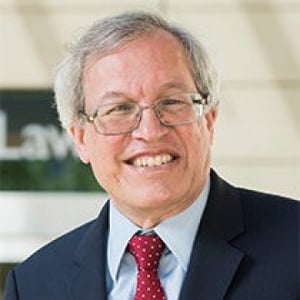
Dean and Jesse H. Choper Distinguished Professor of Law, UC Berkeley School of Law
Erwin Chemerinsky became the 13th Dean of Berkeley Law on July 1, 2017, when he joined the faculty as the Jesse H. Choper Distinguished Professor of Law.
Prior to assuming this position, from 2008-2017, he was the founding Dean and Distinguished Professor of Law, and Raymond Pryke Professor of First Amendment Law, at University of California, Irvine School of Law, with a joint appointment in Political Science. Before that he was the Alston and Bird Professor of Law and Political Science at Duke University from 2004-2008, and from 1983-2004 was a professor at the University of Southern California Law School, including as the Sydney M. Irmas Professor of Public Interest Law, Legal Ethics, and Political Science. He also has taught at DePaul College of Law and UCLA Law School.
He is the author of eleven books, including leading casebooks and treatises about constitutional law, criminal procedure, and federal jurisdiction. His most recent books are, We the People: A Progressive Reading of the Constitution for the Twenty-First Century (Picador Macmillan) published in November 2018, and two books published by Yale University Press in 2017, Closing the Courthouse Doors: How Your Constitutional Rights Became Unenforceable and Free Speech on Campus (with Howard Gillman).
He also is the author of more than 200 law review articles. He writes a regular column for the Sacramento Bee, monthly columns for the ABA Journal and the Daily Journal, and frequent op-eds in newspapers across the country. He frequently argues appellate cases, including in the United States Supreme Court.
In 2016, he was named a fellow of the American Academy of Arts and Sciences. In 2017, National Jurist magazine again named Dean Chemerinsky as the most influential person in legal education in the United States.
Counsel, The Judicial Confirmation Network
Wendy Long is legal counsel to the Judicial Confirmation Network. Until March 2005, she was a litigation partner in the New York office of Kirkland & Ellis LLP. Wendy was a law clerk to U.S. Supreme Court Justice Clarence Thomas and to Judge Ralph Winter of the U.S. Court of Appeals for the Second Circuit in New York. She is a graduate of Northwestern University School of Law, cum laude and Order of the Coif, where she was articles editor of the Northwestern University Law Review, and of Dartmouth College. She previously served as a press secretary in the U.S. Senate, for former U.S. Senator Bill Armstrong (R-Colo.) and former U.S. Senator Gordon Humphrey (R-N.H.).
Vice President and Legal Director, Legal Momentum
Dr. John Eastman is the former Henry Salvatori Professor of Law & Community Service and former Dean at Chapman University's Dale E. Fowler School of Law, where he had been a member of the faculty since 1999, specializing in Constitutional Law, Legal History, and Property. He is a founding director of the Center for Constitutional Jurisprudence, a public interest law firm affiliated with the Claremont Institute that he founded in 1999. He has a Ph.D. in Government from the Claremont Graduate School and a J.D. from the University of Chicago Law School, and a B.A. in Politics and Economics from the University of Dallas. He serves as the Chairman of the Board of the National Organization for Marriage.
Prior to joining the Chapman law faculty, Dr. Eastman served as a law clerk to the Honorable Clarence Thomas, Associate Justice, Supreme Court of the United States, and to the Honorable J. Michael Luttig, Judge, United States Court of Appeals for the Fourth Circuit and practiced law with the national law firm of Kirkland & Ellis. Dr. Eastman has also represented numerous clients in important constitutional law matters and has argued before the Supreme Court. On behalf of the Claremont Institute Center for Constitutional Jurisprudence, he has participated as amicus curiae before the Supreme Court of the United States, U.S. Courts of Appeals, and State Supreme Courts in more than one hundred cases of constitutional significance, including Boy Scouts of America v. Dale, Zelman v. Simmons-Harris (the school vouchers case), Kelo v. New London, Ct. (eminent domain), and Van Orden v. Perry (the 10 Commandments case). He has also appeared as an expert legal commentator on numerous television and radio programs, including C-SPAN, Fox News, PBS, NewsHour, and The O'Reilly Factor.

Executive Vice President, The Federalist Society
Dean Reuter is Executive Vice President at the Federalist Society for Law and Public Policy Studies. He has served in two federal government agency Offices of the Inspector General, as Counsel to the Inspector General and Deputy Inspector General, responsible for policing the use of federal funds granted and contracted through those agencies. As such, he helped conduct and oversee criminal investigations across the country. He is the principal author of the non-fiction book, The Hidden Nazi: The Untold Story of America's Deal with the Devil, and editor of Liberty’s Nemesis: The Unchecked Expansion of the State and Confronting Terror: 9/11 and the Future of American National Security. He was appointed by the President and served as Vice-Chairman of the Board of Directors of the Corporation for National and Community Service, and recently served as an appointee on the U.S. Commission on Presidential Scholars. He is a graduate of Hood College (BA with Honors) and the University of Maryland School of Law.
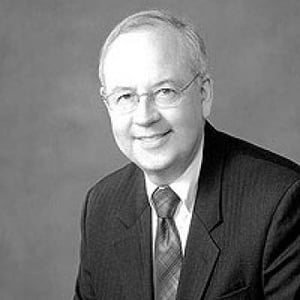
U.S. Court of Appeals, District of Columbia Circuit (1983-1989); U.S. Solicitor General (1989-1993)
Kenneth Starr is a former United States Federal Court of Appeals Judge, U.S. Solicitor General, and Independent Counsel. He is the former President and Chancellor of Baylor University where he held the Louise L. Morrison Chair of Constitutional Law at Baylor University Law School.
Legal Director, National Center for LGBTQ Rights

Former President & CEO, The Federalist Society for Law and Public Policy Studies
Eugene B. Meyer, former President and CEO of the Federalist Society, has served as Executive Director, CEO, and/or President of the organization for more than 40 years. He is responsible for shepherding the organization from a small group of law students to a community of 90,000 lawyers, law students, academics, judges, and others interested in the rule of law. The Society now includes a Student Chapter at nearly every ABA-accredited law school in the country and Lawyers Chapters in 220 major cities across the nation. Gene earned his B.A. in history at Yale in 1975 and his M.A. in political science from the London School of Economics in 1976. Gene currently serves on the boards of the U.S. Chess Center, the Holman Foundation, the Sarah Scaife Foundation, and the advisory board of the Adam Smith Society. He holds the title of International Chess Master.

Judge, United States Court of Appeals, D.C. Circuit
Judge Randolph was confirmed by the Senate and appointed to the United States Court of Appeals for the District of Columbia Circuit by President George H. W. Bush in July 1990.
Judge Randolph received his B.S. degree in 1966 from Drexel University, majoring in economics and basic engineering. At Drexel, he was president of the debate society, vice president of the Student Senate, and a member of the varsity wrestling squad. In 1969, he received his J.D. from the University of Pennsylvania, summa cum laude. Judge Randolph ranked first in his law school class all three years and was managing editor of the Law Review.
After graduation, Judge Randolph served as a law clerk to Judge Henry J. Friendly of the United States Court of Appeals for the Second Circuit in New York.
Admitted to the California Bar in 1970 (and to the District of Columbia bar in 1973), Judge Randolph worked as Assistant to the Solicitor General, U.S. Department of Justice, in Washington, D.C., 1970-1973.
After two years in private practice, Judge Randolph was named Deputy Solicitor General of the United States, a position he held from 1975-1977.
In 1979, Judge Randolph was appointed Special Counsel to the Committee on Standards of Official Conduct (the Ethics Committee) of the United States House of Representatives, remaining in this position until 1980.
In the 1980s, Judge Randolph held a number of positions while in private practice, including Special Assistant Attorney General for the states of New Mexico (1985 90), Utah (1986-1990) and Montana (1983-1990). He also served as a Member of the Advisory Panel of the Federal Courts Study Committee.
From 1971-1990, Judge Randolph argued 23 times in the United States Supreme Court, winning 20 of his cases.
As an Adjunct Professor of Law at Georgetown University Law Center from 1974-1978 he taught courses in civil procedure and injunctions. In 1992 he taught a course in constitutional law. He is a Distinguished Adjunct Professor of Law at George Mason School of Law and for the past ten years has been teaching First Amendment law. He also serves on the Judicial Advisory Board of the George Mason University Law and Economics Center.
From 1993 through 1995 Judge Randolph was a member of the Committee on Codes of Conduct of the Judicial Conference of the United States, and from 1995 to 1998 served as the Committee's chairman. He also served as the judicial liaison to the American Bar Association’s Administrative Law Section.
Judge Randolph is a member of the Board of Visitors at Drexel University Law School and was named to the “Drexel One Hundred” as a leading alumnus. In 2002 he was presented the James Wilson Award by the University of Pennsylvania Law School. In November 2005 he delivered the Fifth Annual Barbara K. Olson Memorial Lecture at the Annual Lawyers Convention of the Federalist Society. He has published numerous articles, the most recent of which is in the June 2006 issue of the Harvard Journal of Law and Public Policy.
Judge Randolph is married to the Honorable Eileen J. O’Connor, formerly Assistant Attorney General, Tax Division, U.S. Department of Justice. His son John Trevor Randolph is an investment banker in New York. His daughter Cynthia Lee Randolph is an artist living in San Francisco.
Former President & CEO, The Federalist Society for Law and Public Policy Studies
Eugene B. Meyer, former President and CEO of the Federalist Society, has served as Executive Director, CEO, and/or President of the organization for more than 40 years. He is responsible for shepherding the organization from a small group of law students to a community of 90,000 lawyers, law students, academics, judges, and others interested in the rule of law. The Society now includes a Student Chapter at nearly every ABA-accredited law school in the country and Lawyers Chapters in 220 major cities across the nation. Gene earned his B.A. in history at Yale in 1975 and his M.A. in political science from the London School of Economics in 1976. Gene currently serves on the boards of the U.S. Chess Center, the Holman Foundation, the Sarah Scaife Foundation, and the advisory board of the Adam Smith Society. He holds the title of International Chess Master.
Former Judge, U.S. Court of Appeals, DC Circuit
Robert Heron Bork served as Solicitor General, acting Attorney General, and judge for the United States Court of Appeals for the District of Columbia Circuit. Judge Bork passed away in December 2012.
Tribute to Judge Robert Bork by John McGinnis - Event Audio/Video
Celebration of the Life of Robert Heron Bork 1927-2012
Judge Robert H. Bork: His Life and Legacy - Practice Group Podcast
A Conference Discussing the Contributions of Judge Robert H. Bork - June 26, 2007
Former Inspector General of the Corporation for National and Community Service
Gerald Walpin, the new Inspector General of the Corporation for National and Community Service, has vowed a vigorous effort to investigate and prosecute all persons who betray the public’s trust by defrauding the Corporation and its programs.
A prominent New York attorney, Walpin was nominated by President George W. Bush, confirmed by the U.S. Senate and sworn into office on January 8, 2007. He leads the Office of Inspector General (OIG), an independent Federal agency charged with oversight over the taxpayer-supported Corporation and its service programs, including AmeriCorps, Volunteers in Service to America (VISTA)and Senior Corps.
“My major objective is to expand upon the good work of this office by preventing, detecting and prosecuting all thefts and frauds,” said Walpin. “The reality is that such misconduct takes precious resources away from deserving people, the same way the theft of a welfare check hurts a single mother who needs that money to buy milk for her children. For that reason, this office will seek out and ensure sanctions for all wrongdoing involving Corporation funds.”
Walpin said his other major goal is to “assist the Corporation in making its services efficient and accessible for all national service stakeholders.”
A New York City native, Walpin graduated from College of the City of New York in 1952. He earnedhis law degree, cum laude, in 1955 from Yale Law School, where he was managing editor of the Yale Law Journal. From 1957-60, he served as a lieutenant in the United States Air Force Judge Advocate General.
His career included a five-year stint as Chief of Prosecutions for the United States Attorney for the Southern District of New York, where he successfully prosecuted a number of high-profile cases. He spent more than 40 years as senior partner and, more recently, of counsel to New York-based Katten Muchin Rosenman LLP.
Mr. Walpin has represented a wide range of clients, including large public corporations, securities brokerage firms, accounting firms, law firms, banks in lender liability claims, and individuals, both American and foreign, in securities litigations, employment litigations, criminal prosecutions, and investigations by the United States Securities and Exchange Commission. Both as an Assistant U.S. Attorney and in his law firm, he was frequently called upon to investigate fraudulent conduct.
Included in the published compilation “The Best Lawyers in America,” Mr. Walpin served from 2002-2004 as president of the Federal Bar Council, the association of attorneys practicing in the Second Circuit Federal courts. In 2003, he was honored with the American Inns of Court Professionalism Award for outstanding professionalism as an attorney and for mentoring younger lawyers.
Walpin and his wife Sheila, married for almost 50 years, have three children and six grandchildren.
Inspector General of the Corporation for National and Community Service
Chief of Prosecutions in the New York U.S. Attorney's Office.
President of the Federal Bar council
Senior Partner of and Council to Katten Muchin Rosenman LLP
Chief of Prosectutions for the US Attornery for the Southern District of New York
Lieutenant in the US Air Force Judge Advocate General
B.A., College of the City of New York, 1952
J.D., Yale Law School
Founder and Co-President Emerita, National Women's Law Center
Described as "guiding the battles of the women's rights movement" by the New York Times, Marcia Greenberger is the founder and Co-President of the National Women's Law Center. The creation of the Center forty years ago established her as the first full-time women's rights legal advocate in Washington, D.C.
A recognized expert on women and the law, particularly in the areas of education and employment, health and reproductive rights, and family economic security, Ms. Greenberger has been a leader in securing the passage of major legislation, counsel in landmark litigation establishing new legal protections for women, and the author of numerous published articles. Examples include the Lilly Ledbetter Fair Pay Act, the Pregnancy Discrimination Act, the Civil Rights Act of 1991 providing critical protections against sexual harassment on the job, and Supreme Court victories strengthening protections for students and teachers against sex discrimination in schools.
Her leadership and contributions are reflected in the professional honors she has received and the numerous boards on which she has served. She has been given the James Wilson Award and the Alumni Award of Merit from the University of Pennsylvania Law School and the Trustees’ Council of Penn Women "Beacon" Leadership Award, the American Bar Association Margaret Brent Award for 2012, the National Association of Women Lawyers' Arabella Babb Mansfield Award, and an honorary Doctor of Laws degree from Lafayette College as well as the Woman Lawyer of the Year Award by the D.C. Women's Bar Association and the William J. Brennan, Jr. Award by the District of Columbia Bar. Additionally, she has been recognized by Working Woman Magazine as one of the 25 heroines whose activities over 25 years have helped women in the workplace, by Washingtonian Magazine as one of Washington, D.C.'s most powerful women, by Legal Times as a "Top Lawyer" and one of its "30 Champions", and by Legal Times and The National Law Journal as one of "Washington's Most Influential Women Lawyers." She has received the Dr. Jane Evans Pursuit of Justice Award from Women of Reform Judaism, A Woman of Genius Award from Trinity College, the "21 Leaders of the 21st Century" Award from Womens eNews, and the Woman of Distinction Award from Soroptimist International of the Americas. She was elected to the Court of Honor of the Philadelphia High School for Girls, received the Hope Award from Calvary Women's Shelter and awards from the National Family Planning and Reproductive Health Association and the Center for Law and Social Policy. She received a Presidential appointment to the National Skill Standards Board, and currently serves as a member of the Executive Committee of the Leadership Conference on Civil Rights.
Ms. Greenberger received her B.A. with honors and J.D. cum laude from the University of Pennsylvania. She practiced law with the Washington, D.C., firm of Caplin and Drysdale before she started and became Director of the Women's Rights Project of the Center for Law and Social Policy, which became the National Women's Law Center in 1981.
Distinguished Senior Fellow and Antonin Scalia Chair in Constitutional Studies, Ethics and Public Policy Center
Edward Whelan is a Distinguished Senior Fellow of the Ethics and Public Policy Center and holds EPPC’s Antonin Scalia Chair in Constitutional Studies. He is the longest-serving President in EPPC’s history, having held that position from March 2004 through January 2021.
Mr. Whelan directs EPPC’s program on The Constitution, the Courts, and the Culture. His areas of expertise include constitutional law and the judicial confirmation process. As a contributor to National Review Online’s Bench Memos blog, he has been a leading commentator on nominations to the Supreme Court and the lower courts and on issues of constitutional law. He has written essays and op-eds for leading newspapers—including the Wall Street Journal, the New York Times, and the Washington Post—opinion journals, and academic symposia and law reviews. The National Law Journal has named Mr. Whelan among its “Champions and Visionaries” in the practice of law in D.C.
Mr. Whelan is co-editor of three volumes of Supreme Court Justice Antonin Scalia’s work: Scalia Speaks: Reflections on Law, Faith, and Life Well Lived (Crown Forum, 2017), a New York Times bestselling collection of speeches by Justice Scalia; On Faith: Lessons from an American Believer (Crown Forum, 2019), a collection of Justice Scalia’s writings on faith and religion; and The Essential Scalia: On the Constitution, the Courts, and the Rule of Law (Crown Forum, 2020), a collection of Justice Scalia’s views on legal issues.
Mr. Whelan, a lawyer and a former law clerk to Justice Scalia, has served in positions of responsibility in all three branches of the federal government. From just before the terrorist attacks of September 11, 2001, until joining EPPC in 2004, Mr. Whelan was the Principal Deputy Assistant Attorney General for the Office of Legal Counsel in the U.S. Department of Justice. In that capacity, he advised the White House Counsel’s Office, the Attorney General and other senior DOJ officials, and departments and agencies throughout the executive branch on difficult and sensitive legal questions. Mr. Whelan previously served on Capitol Hill as General Counsel to the U.S. Senate Committee on the Judiciary. In addition to clerking for Justice Scalia, he was a law clerk to Judge J. Clifford Wallace of the U.S. Court of Appeals for the Ninth Circuit.
In 1981 Mr. Whelan graduated with honors from Harvard College and was inducted into Phi Beta Kappa. He received his J.D. magna cum laude in 1985 from Harvard Law School, where he was a member of the Board of Editors of the Harvard Law Review.
For more on Mr. Whelan’s background, see this interview.

Gonzales v. Carhart: Its Aftermath and Implications for Abortion Regulation and Jurisprudence
Judith C. Applebaum, Eve C. Gartner, Marcia D. Greenberger, Cathleen Cleaver Ruse, Edward Whelan
On April 18, 2007, the Supreme Court ruled that the Federal Partial-Birth Abortion Ban Act...
Gonzales v. Carhart: Its Aftermath and Implications for Abortion Regulation and Jurisprudence
Judith C. Applebaum, Eve C. Gartner, Marcia D. Greenberger, Cathleen Cleaver Ruse, Edward Whelan
On April 18, 2007, the Supreme Court ruled that the Federal Partial-Birth Abortion Ban Act...
Gonzales v. Carhart: Its Aftermath and Implications for Abortion Regulation and Jurisprudence
Religous Liberties Practice Group, The American Constitution Society, and The Pew Forum on Religion & Public Life
Washington, DCSCOTUScast 4-20-07 featuring John Eastman and Erwin Chemerinsky
John C. Eastman, Erwin Chemerinsky
On Wednesday, April 18, 2007, the United States Supreme Court issued its decision in a...
Abortion and the Courts
Wendy Long, Jennifer G. Brown
The Supreme Court has upheld the constitutionality of the Partial-Birth Abortion Ban Act, passed by...
Gay Marriage in California: Legal and Political Prospects
David C. Codell, John C. Eastman, Dean Reuter, Kenneth W. Starr, Shannon Minter
In 1977, the California legislature amended its family code, Section 300, to read that marriage...
5th Annual Barbara K. Olson Memorial Lecture
Eugene B. Meyer, A. Raymond Randolph
On September 11, 2001, at the age of 45 and at the height of her...
Bar Watch Bulletin August 6, 2004
Controversy About Recommendation Concerning Catholic HospitalsA recommendation offered by the Section of Individual Rights &...
2003 Barbara K. Olson Memorial Lecture - Transcript
Eugene B. Meyer, Robert H. Bork
Address by Robert H. Bork, Senior Fellow, American Enterprise Instituteand Co-Chairman, Federalist Society Board of...
A Scholarly and Courageous Treaty on the Victory of Obscenity over Morality
Gerald Walpin
Only the proverbial "hear-no-evil, see-no-evil" crowd could disagree with Rochelle Gurstein's description of contemporary America...