

Partner, Murtha Cullina LLP
Proloy K. Das is the chair of the Appellate Practice Group. He has argued over sixty appeals before the Connecticut Supreme Court, Connecticut Appellate Court, and U.S. Court of Appeals for the Second Circuit. Attorney Das has advanced legal doctrines in cases of first impression in several areas including election law, tort liability, municipal law, contract law, insurance coverage, and felony prosecutions.
He has been named as one of the Connecticut Law Tribune’s New Leaders of the Law (2005), the Hartford Business Journal’s “40 Under Forty” (2007); the National Asian Pacific American Bar Association’s (NAPABA) Best Under 40 (2011); the “Super Lawyers Rising Stars” list of Connecticut appellate lawyers (2008-2012); and the “Super Lawyers” list of top appellate lawyers in New England from 2013-2017. In 2015, the Connecticut Law Tribune named the appellate department chaired by Attorney Das at his prior law firm as its “2015 Appellate Litigation Department of the Year.” In 2017, 2018, 2019 and 2020 the publication named Murtha Cullina’s appellate practice group as its “Litigation Department of the Year.”
The U. S. Court of Appeals for the Second Circuit has appointed Attorney Das to its pro bono panel of appellate advocates for indigent appellants. Prior to private practice, Attorney Das served as Assistant State’s Attorney in the Appellate Bureau of the Chief State’s Attorney’s Office. He earned his undergraduate degree from Boston College and his law degree from the Indiana University Maurer School of Law.
Attorney Das is the Connecticut State Chair of the Republican National Lawyers Association.
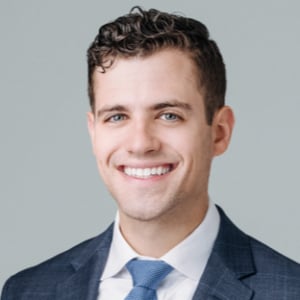
Attorney, Paul, Weiss
An associate in the Restructuring Department, Joshua advises debtors, creditors, sponsors and shareholders, and distressed investment funds in chapter 11 cases, out-of-court restructurings, cross-border insolvency matters, and in bankruptcy litigation at both the trial and appellate courts. He also has significant experience representing the Financial Oversight & Management Board for Puerto Rico, as representative of the Commonwealth of Puerto Rico and certain of its instrumentalities, in their proceedings under Title III of the Puerto Rico Oversight, Management, and Economic Stability Act (PROMESA).
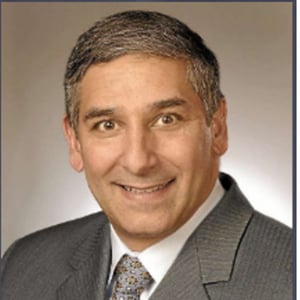
Republican Minority Leader (34th District) and Partner, Fasano, Ippolito, Lee & Florentine, LLC
State Senator Len Fasano has represented the 34th Senate District communities of Durham, East Haven, North Haven and Wallingford since 2003.
In the General Assembly, Len Fasano has served as leader of the Senate Republican Caucus since 2014. He has championed bipartisan policies to benefit taxpayers, promote fiscal stability, and protect core services for the most vulnerable. Recent legislative accomplishments include developing first-in-the-nation legislation to make prescription drugs more affordable and bring transparency to health care, passing historic bipartisan state budgets with spending caps and bonding caps, and developing proposals to reform criminal justice, education funding, and bring more opportunities to Connecticut cities.
As leader of the Senate Republican Caucus, Senator Fasano is committed to making state government more cost-effective and efficient. He rallied bipartisan support to implement a spending cap, after decades of attempts by lawmakers to define the cap approved over 25 years ago. He also championed a bonding cap and volatility cap to reduce state debt and create more stability in state finances.
Senator Fasano established an urban affairs initiative within the Senate Republican Caucus in 2014 to start a dialogue between Republican lawmakers and Connecticut cities to enhance educational and economic opportunities. He has also proposed plans to reform the state’s justice system, to reduce recidivism and help people access the tools they need to succeed in all aspects of life.
As an advocate for the most vulnerable, Sen. Fasano has been named a “Children’s Champion” by the Connecticut Early Childhood Alliance and has proposed legislation to reform the state’s child welfare agency to better protect, monitor and support the children in its care. Senator Fasano has also worked closely with advocates for individuals with disabilities, passing legislation to address the growing needs of individuals on the state’s waitlist for services and legislation to better protect children with disabilities who are suspected or documented victims of abuse and neglect.
Senator Fasano is the co-creator of the Bipartisan Round Table on Hospitals and Health Care, established in 2014 in partnership with Senate President Martin Looney to help ensure continued access to affordable quality care in Connecticut. Senator Fasano, whose father was a doctor in New Haven, has advocated for legislation that seeks to remedy the problems caused by the rapid consolidation of physician practices in Connecticut and the resulting impacts on health care costs and patient choice. He was also successful in passing bipartisan legislation to bring more transparency to medical expenses and to ban “gag clauses” that prevented pharmacists from telling consumers if cheaper prescription drug alternatives were available.
Senator Fasano is the President and Founder of Fasano, Ippolito, Lee, & Florentine, a law firm with offices in New Haven and Branford. He is also an East Haven business owner. Fasano earned his Bachelor of Science Degree from Yale University in 1981, a Juris Doctorate from Quinnipiac Law School in 1984, and an L.L.M. Degree in Taxation from Boston University Law School in 1985. He played football at Yale under legendary coach, Carm Cozza.
Senator Fasano has spent all of his life in New Haven and surrounding communities. He has three adult children and two grandchildren. He currently resides in North Haven with his wife, Jill.
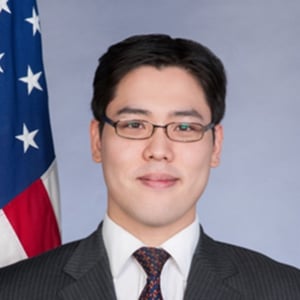
Managing Director, Chief US Economist and Head of Macro Strategy, BNP Paribas
Dr. Daniel P. Ahn is a Managing Director, the Chief U.S. Economist, and Head of Markets 360 – North America at BNP Paribas in New York. He is also a non-residential Global Fellow at the Woodrow Wilson International Center for Scholars.
Until 2018, he was the chief economist at the U.S. Department of State, where he advised the Secretary of State and senior principals on a wide range of international economic and security topics relevant to U.S. foreign policy, including global macroeconomic growth, financial stability, economic sanctions, international trade, and energy and environmental issues.
Prior to entering public service in 2014, Dr. Ahn was the chief economist for energy and commodities at Citigroup in New York and also held senior positions at Citadel, Barclays Capital, and Lehman Brothers. He has held research and teaching positions at Harvard University, the National Bureau of Economic Research, Columbia University, the Council on Foreign Relations, the International Monetary Fund, Johns Hopkins School of Advanced International Studies, Georgetown University, and the U.S. Federal Reserve Board of Governors.
He is the author of multiple research articles, Congressional testimony, and a textbook, Principles of Commodity Economics and Finance with MIT Press.
Dr. Ahn has extensive experience using state-of-the-art econometrics, data science, geospatial imagery, and machine-learning for economic forecasting, data analysis, financial risk management, project financing, commercial strategy, public policy, and operational solutions.
He was featured in Forbes Magazine as one of 30 under 30 in Finance. He is the recipient of both the Superior Honor Award and the Meritorious Honor Award from the U.S. Department of State.
He completed his A.B. in economics and finance with honors from Princeton University, and his Ph.D. in economics from Harvard University.
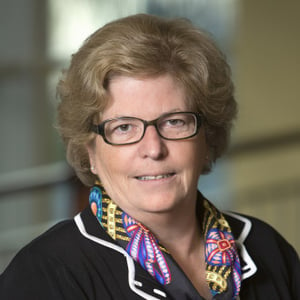
Former Managing Director, BlackRock Inc.
Joanne Medero was until July 2020 a Managing Director at BlackRock where she was member of their Global Public Policy Group and a Senior Advisor to the Vice Chairman on the intersection of public policy and corporate governance. In June 2021, Ms. Medero was appointed a director/trustee of the Nuveen Funds.
Ms. Medero's service with BlackRock dates back to 1996, including her years with Barclays Global Investors (BGI), which merged with BlackRock in 2009. She joined BGI as its Global General Counsel in 1996 and after more than ten years in that role, became the global head of Government Relations and Public Policy for Barclays’ investment banking and investment management businesses. Prior to joining BGI, Ms. Medero was a partner with Orrick, Herrington and Sutcliffe specializing in derivatives and market regulation issues. Ms. Medero also served as general counsel of the Commodity Futures Trading Commission (1989-1993) and as an associate director for legal and financial affairs at the Office of Presidential Personnel, The White House (1986-1989).
Ms. Medero is a graduate of St. Lawrence University and received her JD from George Washington University.
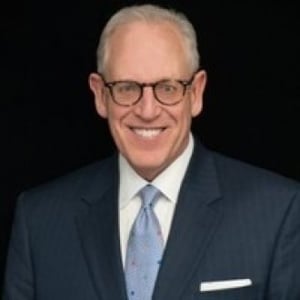
Senior Fellow, George Mason University National Security Institute
Bryan Smith is a Senior Fellow at the George Mason University National Security Institute.

Tammy McCutchen is a leading authority on federal and state wage-hour laws and prevailing wage laws. She counsels businesses on wage-hour compliance, including conducting internal audits on independent contractor status, overtime exemptions, and other pay practices. She also represents employers during investigations by the U.S. Department of Labor and serves as an expert witness in wage-hour class actions. She was a founding officer of ComplianceHR, a law and technology company, where she created AI-based applications to evaluate independent contractor and overtime exempt status.
Ms. McCutchen served as Administrator of the U.S. Department of Labor’s Wage and Hour Division, appointed by President Bush and confirmed by the Senate in 2001. She was the primary architect of the 2004 revisions to the overtime exemption regulations, the first major changes to the regulations in 55 years.
Before joining DOL, she was senior counsel for the Hershey Company in Hershey, Pennsylvania.
Ms. McCutchen has been a volunteer leader of the Federalist Society since 1989. She served in leadership roles for the Northwestern Student Chapter and Chicago Lawyers Chapter. She currently serves in leadership for the Labor & Employment Practice Group, the Regulatory Transparency Project, and the Knoxville, TN Lawyers Chapter. She served on the Editorial Advisory Board of Law360, the Labor Committee of the U.S. Chamber of Commerce, the Small Business Legal Advisory Board of the National Federation of Independent Business, and a Policy Fellow at the ACU Foundation.
Ms. McCutchen is a graduate of Western Illinois University and Northwestern University School of Law. She clerked for the Hon. Daniel Manion on the U.S. Court of Appeals for the Seventh Circuit.
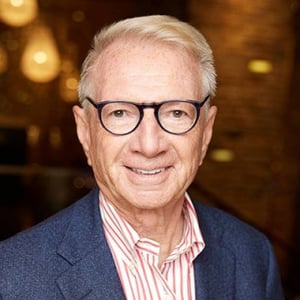
Senior Labor and Employment Counsel, CHRO Association
Roger King is a highly regarded labor relations attorney, whose career spans more than 40 years. Roger recently retired as a partner with Jones Day law firm. He now serves as Senior Labor and Employment counsel for the Association.
Roger specializes in labor and employment, healthcare, collective bargaining, contract administration and representation campaigns. Roger represented the winning side as co-counsel in the landmark U.S. Supreme Court case known as Noel Canning, which successfully challenged President Obama’s authority to make recess appointments to the National Labor Relations Board.
After graduating from Cornell University Law School, he was a Captain and Legal Services Officer in the United States Air Force, on the Staff of United States Senator Robert Taft, Jr. and, subsequently, was appointed as Professional Staff Counsel to the United States Senate Labor Committee.
Roger has testified before both the U.S. Senate and House Labor Committees, is a fellow of the College of Labor and Employment Lawyers, and serves on the Advocacy Committee of the American Society for Healthcare Human Resources Association (ASHHRA) and on the Executive Committee of the Ohio State Bar Association Labor and Employment Law Section Council.
He is a nationally recognized author/speaker on employment matters and has represented employers regarding labor and employment issues both before administrative agencies and in federal and state courts. He has represented the U.S. Chamber of Commerce, the Society for Human Resource Management (SHRM), the HR Policy Association (HRPA), the National Manufactures Association (NAM), the American Hospital Association (AHA), and the Coalition for a Democratic Workplace (CDW) in federal courts regarding numerous labor law issues.
Other clients Roger has represented include the Cleveland Clinic Foundation, Catholic Health Partners, MedStar Health, HCA, Texas Health Resources, Unity Point Health, UHS, Trinity Health, National Beef, General Cable, Orlando Health, ProMedica, Premier Health, Cedars-Sinai, Yale New Haven Health System, McLaren Health Care Corporation, Ohio, California and American Hospital Associations, Bon Secoure Health System, Kaleida Health, Sisters of Levenworth Health System, Lakeland Regional Medical Center, Clarion Clinic, Fisher-Titus Medical Center, Saint Joseph Health System, Benefis Healthcare, Community Health Systems, American Water Works, Macy’s Inc., Verizon and General Motors.

Associate, Jones Day
Katie Roholt Lane represents clients at critical stages of high-stakes regulatory and constitutional litigation. Her practice also consists of developing case strategy at the trial and appellate levels, briefing legal issues, and conducting motions practice. Katie currently represents clients in litigation arising under the Administrative Procedure Act (APA), the Telephone Consumer Protection Act (TCPA), and the Medicare Act.
In addition to her litigation practice, Katie provides strategic planning and regulatory compliance advice to companies seeking to navigate the complex U.S. regulations that impact domestic and international industries. She has represented clients in rulemakings and consultations before regulatory authorities, including the Federal Communications Commission (FCC) and the Federal Trade Commission (FTC) often seeking to eliminate the regulatory barriers to industry innovation.
Katie also maintains an active pro bono practice that focuses on briefing constitutional and statutory issues before the U.S. Supreme Court and federal appellate courts. She was part of the team that represented The American Legion in its landmark victory at the U.S. Supreme Court in The American Legion v. American Humanist Association, 139 S. Ct. 2067 (2019).
Katie is president of the Federalist Society's D.C. Young Lawyers Chapter.
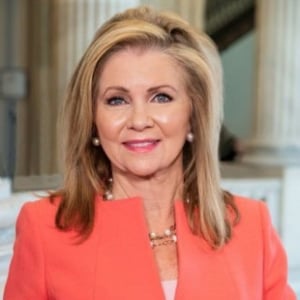
United States Senator, Tennessee
U.S. Senator Marsha Blackburn was sworn in to the Senate in January 2019. Marsha Blackburn was elected to the U.S. Senate in 2018, and is currently serving her first term representing the state of Tennessee. Before her election to the Senate, Marsha represented Tennessee’s 7th Congressional District.
Marsha’s public service is dedicated to promoting opportunities for women and making America a more prosperous place to live. Marsha’s leadership philosophy is based on her experiences in the private sector as a small business woman and author, as well as being a mother and grandmother.
Marsha went to college on a 4-H scholarship and worked her way through school selling books for the Southwestern Company as one of their first female sales associates, and later as one of their first female sales managers.
She then became Director of Retail Fashion and Special Events for the Castner Knott Company, which was a Nashville-based regional department store. Later, Marsha founded her own business, Marketing Strategies, which focused on the retail marketplace, as well as electronic and print media.
Marsha began her career in public service in 1995 when she was named executive director of the Tennessee Film, Entertainment, and Music Commission. In 1998, she was elected to the Tennessee State Senate. In the state legislature, she earned a reputation for fiscal responsibility and government accountability by identifying waste and offering realistic solutions to Tennessee’s budget challenges.
While serving in the Tennessee Senate, Marsha led a statewide grassroots campaign to defeat a proposed state income tax. The tax was defeated, and Marsha’s leadership earned her a reputation as an anti-tax champion. In 2014, the people of Tennessee passed an amendment to the state constitution to expressly prohibit a state income tax – a fitting cap to a 14-year battle.
In 2002, Marsha was elected to represent the people of Tennessee’s 7th Congressional District based on her record in the state legislature. She brought her Tennessee values to Washington, DC, and became a leader in the fight for small, efficient federal government that is accountable to its citizens. As a Congressman, Marsha was often selected by her colleagues to lead the charge for principled conservativism. Her congressional career was also noted for her Chairmanship of the Energy and Commerce Committee’s Subcommittee on Communications and Technology, as well as bipartisan expertise in defending songwriters’ and performers’ rights.
Marsha is a member of numerous charitable organizations and is an active member of her church, Christ Presbyterian.
Marsha and her husband Chuck live in Williamson County, Tennessee. They have two children, Mary Morgan (Paul) Ketchel and Chad (Hillary) Blackburn, and two grandsons. Originally from Laurel, Mississippi, Marsha is a graduate of Mississippi State University.
Senior Labor and Employment Counsel, CHRO Association
Roger King is a highly regarded labor relations attorney, whose career spans more than 40 years. Roger recently retired as a partner with Jones Day law firm. He now serves as Senior Labor and Employment counsel for the Association.
Roger specializes in labor and employment, healthcare, collective bargaining, contract administration and representation campaigns. Roger represented the winning side as co-counsel in the landmark U.S. Supreme Court case known as Noel Canning, which successfully challenged President Obama’s authority to make recess appointments to the National Labor Relations Board.
After graduating from Cornell University Law School, he was a Captain and Legal Services Officer in the United States Air Force, on the Staff of United States Senator Robert Taft, Jr. and, subsequently, was appointed as Professional Staff Counsel to the United States Senate Labor Committee.
Roger has testified before both the U.S. Senate and House Labor Committees, is a fellow of the College of Labor and Employment Lawyers, and serves on the Advocacy Committee of the American Society for Healthcare Human Resources Association (ASHHRA) and on the Executive Committee of the Ohio State Bar Association Labor and Employment Law Section Council.
He is a nationally recognized author/speaker on employment matters and has represented employers regarding labor and employment issues both before administrative agencies and in federal and state courts. He has represented the U.S. Chamber of Commerce, the Society for Human Resource Management (SHRM), the HR Policy Association (HRPA), the National Manufactures Association (NAM), the American Hospital Association (AHA), and the Coalition for a Democratic Workplace (CDW) in federal courts regarding numerous labor law issues.
Other clients Roger has represented include the Cleveland Clinic Foundation, Catholic Health Partners, MedStar Health, HCA, Texas Health Resources, Unity Point Health, UHS, Trinity Health, National Beef, General Cable, Orlando Health, ProMedica, Premier Health, Cedars-Sinai, Yale New Haven Health System, McLaren Health Care Corporation, Ohio, California and American Hospital Associations, Bon Secoure Health System, Kaleida Health, Sisters of Levenworth Health System, Lakeland Regional Medical Center, Clarion Clinic, Fisher-Titus Medical Center, Saint Joseph Health System, Benefis Healthcare, Community Health Systems, American Water Works, Macy’s Inc., Verizon and General Motors.
Tammy McCutchen is a leading authority on federal and state wage-hour laws and prevailing wage laws. She counsels businesses on wage-hour compliance, including conducting internal audits on independent contractor status, overtime exemptions, and other pay practices. She also represents employers during investigations by the U.S. Department of Labor and serves as an expert witness in wage-hour class actions. She was a founding officer of ComplianceHR, a law and technology company, where she created AI-based applications to evaluate independent contractor and overtime exempt status.
Ms. McCutchen served as Administrator of the U.S. Department of Labor’s Wage and Hour Division, appointed by President Bush and confirmed by the Senate in 2001. She was the primary architect of the 2004 revisions to the overtime exemption regulations, the first major changes to the regulations in 55 years.
Before joining DOL, she was senior counsel for the Hershey Company in Hershey, Pennsylvania.
Ms. McCutchen has been a volunteer leader of the Federalist Society since 1989. She served in leadership roles for the Northwestern Student Chapter and Chicago Lawyers Chapter. She currently serves in leadership for the Labor & Employment Practice Group, the Regulatory Transparency Project, and the Knoxville, TN Lawyers Chapter. She served on the Editorial Advisory Board of Law360, the Labor Committee of the U.S. Chamber of Commerce, the Small Business Legal Advisory Board of the National Federation of Independent Business, and a Policy Fellow at the ACU Foundation.
Ms. McCutchen is a graduate of Western Illinois University and Northwestern University School of Law. She clerked for the Hon. Daniel Manion on the U.S. Court of Appeals for the Seventh Circuit.
Chief Counsel, U.S. Food and Drug Administration; Deputy General Counsel, Department of Health and Human Services
Stacy Cline Amin serves as Chief Counsel of the Food and Drug Administration and Deputy General Counsel of the Department of Health and Human Services. Stacy serves as the senior legal advisor to the Commissioner, FDA leadership, the HHS General Counsel and Departmental leadership on FDA regulatory and litigation matters. Stacy leads an office of 165 lawyers and support staff that provide counseling and litigation support to the agency.
Stacy previously served as Special Assistant to the President and Senior Associate Counsel to the President, serving as the senior legal advisor on matters relating to the Department of Health and Human Services. In that role, Stacy advised on critical matters arising under the Food Drug and Cosmetic Act, helped lead the Administration's efforts to combat the opioid crisis, led multi-agency teams in the evaluation of high profile administrative actions, and successfully coordinated litigation strategy with the Department of Justice.
Prior to joining the White House, Stacy served as the Chief Counsel of the Senate Health, Education, Labor and Pensions Committee and as a Counsel for the House Energy & Commerce Committee. In Congress, Stacy frequently advised on Food Drug and Cosmetic Act issues and led bipartisan and bicameral investigations to promote patient safety and global public health. These efforts supported a number of legislative accomplishments, including passage of the Drug Quality and Security Act of 2013 and the 21st Century Cures Act of 2016.
Earlier in her career, she served as an Associate at Sullivan & Cromwell LLP and as a law clerk to the Hon. John R. Gibson on the U.S. Court of Appeals for the Eighth Circuit. She graduated cum laude from Harvard Law School and summa cum laude from The George Washington University.
Attorney General, Alaska
Stephen J. Cox serves as the 28th Attorney General of the State of Alaska, where he oversees the state’s legal affairs and serves as the chief prosecutor with oversight of all district attorneys, general counsel to the Governor and executive branch, and represents the State in all civil and criminal cases in federal and state court. He brings to the role a proven record of public service at the highest levels of the U.S. Department of Justice, combined with deep experience in Alaska’s private sector and community life.
Before his appointment, he was Senior Vice President, Chief Legal and Strategy Officer of Bristol Bay Industrial—an investment platform of the Bristol Bay Native Corporation—acting as the chief legal officer for the industrial services portfolio on behalf of the Alaska Native shareholders in the Bristol Bay region. In that role, he led legal, compliance, and strategic planning for major energy, infrastructure, and utility projects across the State and in the Lower 48.
Earlier in his career, beginning in 2011, Cox served as in-house counsel for Apache Corporation, where he was the principal attorney for Apache Alaska and focused on new ventures and exploratory work in Cook Inlet, including seismic initiatives and ongoing regulatory coordination with state agencies.
Cox is deeply rooted in Anchorage’s community and faith life. He and his family attend Holy Family Old Cathedral in downtown Anchorage and support Mission Alaska, the Dominican friars’ outreach ministry under the Western Dominican Province. He was the founding board president and chairman of a new classical school in South Anchorage.
On the national stage, Cox held senior leadership roles in the U.S. Department of Justice under the Trump Administration. As Deputy Associate Attorney General, he co-chaired the DOJ’s Regulatory Reform Task Force and the Working Group on Corporate Enforcement and Accountability, and helped implement landmark policies aimed at curbing regulatory overreach and aligning enforcement with fairness and oversight. Later, as U.S. Attorney for the Eastern District of Texas, he oversaw prosecutions and civil litigation spanning 43 counties, prioritizing healthcare fraud, elder fraud, and violent crime while ensuring enforcement remained transparent and fair.
Earlier in his career, Cox practiced complex litigation at a major international law firm, served as counselor to the Director of U.S. Immigration and Customs Enforcement, and helped lead the William H. Webster Commission, which reviewed FBI counterterrorism intelligence and operations following the Fort Hood tragedy.
He began his legal career with a clerkship for Judge J. L. Edmondson of the U.S. Court of Appeals for the Eleventh Circuit. Cox earned a B.S. in Computer Science from Texas A&M University and a J.D., summa cum laude, from the University of Houston Law Center. He and his wife, Cristina, are raising their three children in Anchorage, and have made Alaska their home.
Operating Advisor, Clayton, Dubilier & Rice
Anand Shah, MD, is an Operating Advisor at private equity firm Clayton, Dubilier & Rice. Dr. Shah develops and identifies potential investment opportunities in the healthcare industry with a focus on health care services, including the provider, payer, and HCIT sectors. He also serves as an advisor to the firm’s portfolio companies.
A nationally recognized physician leader and health policy expert, Dr. Shah has extensive healthcare experience in the senior-most levels of the U.S. government, private sector, and as a physician. He was previously the Deputy Commissioner for Medical and Scientific Affairs at the U.S. Food and Drug Administration (FDA). Dr. Shah led consensus policy development for fit-for-purpose programs including Advanced Manufacturing, the Coronavirus Treatment Acceleration Program, Covid vaccine development, digital health, consumer protection, and decentralized clinical trials. During the Covid pandemic, he led FDA’s policy development for preparedness and recovery efforts. Dr. Shah represented FDA with top-level policy makers of the White House and Cabinet, Governors and local governments, and regularly led briefings with Congressional leadership.
He previously served in two senior leadership roles at the Centers for Medicare & Medicaid Services (CMS). As Senior Medical Advisor, he was the primary counselor for agency-wide policy related to medical and scientific innovation. Dr. Shah established consensus on several critical policy initiatives including aligning payment and prevention to increase Medicare beneficiaries’ access to novel antimicrobials, expanding patients’ access to cell and gene therapies, and streamlining Medicare access to breakthrough technologies. As the Chief Medical Officer of the Center for Medicare & Medicaid Innovation (CMMI), Dr. Shah led the clinical design of novel value-based payment and service delivery models including those for primary and specialty care.
Dr. Shah specializes in the early detection, surveillance, and treatment of prostate cancer, and previously developed and led a survivorship clinic for patients on cancer clinical trials at the National Institutes of Health. His scientific track record includes publications in the New England Journal of Medicine, JAMA, Health Affairs, Cancer, and Nature Reviews Drug Discovery. Dr. Shah is an Adjunct Professor with the Department of Medical Ethics and Health Policy and an Adjunct Senior Fellow at the Leonard Davis Institute of Health Economics at the University of Pennsylvania.
Dr. Shah was chief resident during his radiation oncology residency at Columbia University. He concurrently earned his MD from the University of Pennsylvania and an MPH in health care management and policy from the Harvard School of Public Health. Dr. Shah graduated with honors from Duke University with a degree in economics. He also served as a Canada-U.S. Fulbright Scholar.
Senior Labor and Employment Counsel, CHRO Association
Roger King is a highly regarded labor relations attorney, whose career spans more than 40 years. Roger recently retired as a partner with Jones Day law firm. He now serves as Senior Labor and Employment counsel for the Association.
Roger specializes in labor and employment, healthcare, collective bargaining, contract administration and representation campaigns. Roger represented the winning side as co-counsel in the landmark U.S. Supreme Court case known as Noel Canning, which successfully challenged President Obama’s authority to make recess appointments to the National Labor Relations Board.
After graduating from Cornell University Law School, he was a Captain and Legal Services Officer in the United States Air Force, on the Staff of United States Senator Robert Taft, Jr. and, subsequently, was appointed as Professional Staff Counsel to the United States Senate Labor Committee.
Roger has testified before both the U.S. Senate and House Labor Committees, is a fellow of the College of Labor and Employment Lawyers, and serves on the Advocacy Committee of the American Society for Healthcare Human Resources Association (ASHHRA) and on the Executive Committee of the Ohio State Bar Association Labor and Employment Law Section Council.
He is a nationally recognized author/speaker on employment matters and has represented employers regarding labor and employment issues both before administrative agencies and in federal and state courts. He has represented the U.S. Chamber of Commerce, the Society for Human Resource Management (SHRM), the HR Policy Association (HRPA), the National Manufactures Association (NAM), the American Hospital Association (AHA), and the Coalition for a Democratic Workplace (CDW) in federal courts regarding numerous labor law issues.
Other clients Roger has represented include the Cleveland Clinic Foundation, Catholic Health Partners, MedStar Health, HCA, Texas Health Resources, Unity Point Health, UHS, Trinity Health, National Beef, General Cable, Orlando Health, ProMedica, Premier Health, Cedars-Sinai, Yale New Haven Health System, McLaren Health Care Corporation, Ohio, California and American Hospital Associations, Bon Secoure Health System, Kaleida Health, Sisters of Levenworth Health System, Lakeland Regional Medical Center, Clarion Clinic, Fisher-Titus Medical Center, Saint Joseph Health System, Benefis Healthcare, Community Health Systems, American Water Works, Macy’s Inc., Verizon and General Motors.

Professor of Law and Centennial Chair, South Texas College of Law Houston
Josh Blackman is a national thought leader on constitutional law and the United States Supreme Court. Josh’s work was quoted during two presidential impeachment trials. He has testified before Congress and advises federal and state lawmakers. Josh regularly appears on TV, including NBC, CBS, ABC, Fox, and the BBC. Josh is also a frequent guest on NPR and other syndicated radio programs. He has published commentaries in the New York Times, Wall Street Journal, Washington Post, and leading national publications.
Since 2012, Josh has served as a professor at the South Texas College of Law Houston. He holds the Centennial Chair of Constitutional Law. Josh is an Adjunct Fellow at the Manhattan Institute. Josh has written more than seven dozen law review articles that have been cited more than a thousand times. Josh was selected as the Jurist of the Year by the Texas Journal of Law & Public Policy, received the inaugural Meese III Originalism Award, and was awarded the Inaugural Joseph Story Award. Josh was selected by Forbes Magazine for the “30 Under 30” in Law and Policy. Josh is the President of the Harlan Institute, and founded FantasySCOTUS, the Internet’s Premier Supreme Court Fantasy League. He blogs at the Volokh Conspiracyand posts@JoshMBlackman.

Founding Principal, Gupta Wessler PLLC
Deepak Gupta is the founding principal of Gupta Wessler PLLC. He focuses on Supreme Court, appellate, and complex litigation on a wide range of issues, including constitutional law, class actions, and consumers’ and workers’ rights.
Deepak is “known as a skilled appellate lawyer” (New York Times), “one of the emerging giants of the appellate and the Supreme Court bar,” a “heavy hitter,” and a “principled” and “incredibly talented lawyer” (Law 360). He is described in Chambers and Partners USA as “an excellent lawyer” with a “vibrant appellate practice focused on public interest cases and plaintiff-side representations.” Fastcase recently recognized him as “one of the country’s top litigators,” noting that “what sets him apart” is his legal creativity. The National Law Journal has singled out Deepak’s “calm, comfortable manner that conveys confidence” in oral argument.
Deepak regularly appears in the U.S. Supreme Court and appellate courts nationwide. In the 2016-2017 U.S. Supreme Court term, Deepak’s firm was counsel of record for parties in three merits cases; he was lead counsel in two, prevailing in both. Beyond the Supreme Court, Deepak has handled appeals in every federal circuit and seven state supreme courts. He is frequently sought out by trial lawyers to defend their most consequential victories or resurrect worthy claims on appeal—often after years of hard-fought litigation. He also works with co-counsel to design cases from the ground up—focusing on class actions and administrative and constitutional challenges. In one class action, Deepak represented all of the nation’s federal bankruptcy judges, recovering more than $50 million in back pay for the judges over Congress’s violation of the Constitution’s Judicial Compensation Clause. As the American Lawyer observed, “it’s hard to imagine a higher compliment than being hired to represent federal judges.”
Deepak’s clients have included national nonprofits, state and local governments, members of Congress, retail merchants, tech companies, and classes of consumers and workers harmed by corporate wrongdoing. He currently represents the American Association for Justice (on forced arbitration and civil justice issues), Everytown for Gun Safety (in Second Amendment litigation), and Citizens for Responsibility and Ethics in Washington (in litigation over the Emoluments Clauses).
Before founding the firm in 2012, Deepak served as Senior Counsel for Litigation and Senior Counsel for Enforcement Strategy at the Consumer Financial Protection Bureau. As the first appellate litigator hired under Elizabeth Warren’s leadership, he launched the Bureau’s amicus program, defended its regulations, and worked with the Solicitor General’s office on Supreme Court matters. For seven years previously, he was an attorney at Public Citizen Litigation Group, where he founded and directed the Consumer Justice Project and was the Alan Morrison Supreme Court Project Fellow. Before that, he worked on voting rights litigation at the Civil Rights Division of the U.S. Department of Justice, prisoners’ rights litigation at the ACLU, and religion clause litigation at Americans United for Separation of Church and State.
Deepak frequently engages in public advocacy and speaking, has testified multiple times before the U.S. House of Representatives and U.S. Senate, and appears frequently in the national print and broadcast media. He is currently a 2018-2019 Wasserstein Public Interest Fellow at Harvard Law School and has previously taught courses on public interest law and appellate advocacy as an Adjunct Professor of Law at Georgetown and American universities. He served as a law clerk to Judge Lawrence K. Karlton of the U.S. District Court for the Eastern District of California and studied law at Georgetown, Sanskrit at Oxford, and philosophy at Fordham.
Deepak is an elected member of the American Law Institute and sits on the boards of directors of the National Consumer Law Center, The Impact Fund, and the Alliance for Justice, and the advisory boards of the University of California’s Civil Justice Research Initiative, the Biden Institute, and the Institute for Consumer Antitrust Studies.

Director, GW Regulatory Studies Center & Distinguished Professor of Practice, Trachtenberg School of Public Policy & Public Administration, The George Washington University
Susan Dudley is the Founder and Director of the George Washington University Regulatory Studies Center, established in 2009 to raise awareness of regulations’ effects and improve regulatory policy through research, education, and outreach. She is also a distinguished professor of practice in the Trachtenberg School of Public Policy and Public Administration. She is past-president of the Society for Benefit Cost Analysis, a senior fellow of the Administrative Conference of the United States, and on the Regulatory Transparency Project Regulatory Practice Working Group. Her book, Regulation: A Primer, with Jerry Brito, is available on Amazon.com.
From April 2007 through January 2009, Professor Dudley served as the Presidentially-appointed Administrator of the Office of Information and Regulatory Affairs in the U.S. Office of Management and Budget and was responsible for the review of draft executive branch regulations under Executive Order 12866, the collection of federal-government-wide information under the Paperwork Reduction Act, the development and implementation of government-wide policies in the areas of information policy, privacy, and statistical policy, and international regulatory cooperation efforts.
Prior to OIRA, she directed the Regulatory Studies Program at the Mercatus Center at George Mason University, and taught courses on regulation at the George Mason University School of Law. Earlier in her career, Professor Dudley served as an economist at OIRA, as well as the Environmental Protection Agency and the Commodity Futures Trading Commission. She was also a consultant to government and private clients at Economists Incorporated. She holds a Master of Science degree from the Sloan School of Management at MIT and a Bachelor of Science degree (summa cum laude) in Resource Economics from the University of Massachusetts, Amherst.
Professor of Practice and Distinguished Scholar in Residence; Co-Director of the Legislative and Regulatory Process Clinic, New York University School of Law
Sally Katzen served in the Clinton administration as administrator of the Office of Information and Regulatory Affairs in the Office of Management and Budget (OMB), as deputy assistant to the president for economic policy and deputy director of the National Economic Council in the White House, and then as the deputy director for management at OMB. She served as the head of the Agency Review Group for the Obama/Biden transition with responsibility for the Executive Office of the President and all government-wide agencies. She has taught both undergraduates and at various law schools. She is a member of the American Law Institute and the National Academy of Public Administration, has served on multiple panels for the National Academy of Sciences, testified frequently before Congress, and is on the board of several non-profit organizations. Before joining the Clinton administration, Katzen was a partner in the Washington, DC, law firm of Wilmer, Cutler & Pickering, specializing in regulatory and legislative matters, while serving in leadership roles in the American Bar Association (including chair of the Section on Administrative Law and Regulatory Practice and as DC delegate to the ABA’s House of Delegates), as president of the Federal Communications Bar Association and as president of the Women’s Legal Defense Fund. She graduated from Smith College and the University of Michigan Law School, where she was the first woman editor-in-chief of the Law Review. She clerked for Judge J. Skelly Wright of the United States Court of Appeals for the District of Columbia Circuit and served in the Carter administration as the general counsel of the Council on Wage and Price Stability in the Executive Office of the President.
Faculty Fellow, Center for Law, Science & Innovation, Sandra Day O'Connor College of Law, Arizona State University
Dr. Klein is a Faculty Fellow at the Center for Law, Science & Innovation at the Sandra Day O'Connor College of Law at Arizona State University. He is also Principal at Roger D. Klein, MD JD Consulting and Klein & Klein Co., L.P.A. He was formerly Chief Medical Officer at OmniSeq, an oncology focused genomic profiling company that was recently acquired by LabCorp. Previously, Roger was the Medical Director at the Molecular Oncology division at the Cleveland Clinic. He was also the Chair of the Professional Relations Committee at the Association for Molecular Pathology. Prior to joining the Cleveland Clinic, he served as Medical Director of Molecular Oncology at the BloodCenter of Wisconsin where he led the center’s Diagnostic Laboratories’ initiative focused on DNA- and RNA-based testing for evaluation of cancer patients.
Dr. Klein has been an advisor to the Department of Health and Human Services (HHS), the Food and Drug Administration (FDA), the Centers for Medicare and Medicaid Services (CMS), and the Centers for Disease Control and Prevention (CDC). He has participated in and assumed leadership roles in many professional society committees and corporate advisory boards and is a policy advisor to the Heartland Institute.
Dr. Klein is licensed to practice medicine in Ohio, Florida, and Wisconsin. Additionally, he is licensed to practice law in the District of Columbia and Ohio. Roger obtained his Molecular Genetic Pathology certification at Mayo Medical School following completion of his M.D. Yale University School of Medicine. He obtained his J.D. from Yale Law School.
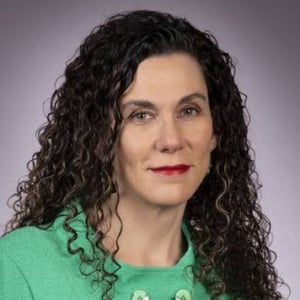
Associate Professor of Law, Center for Intellectual Property and Entrepreneurship, University of Missouri School of Law
Professor Lietzan researches, writes, and teaches primarily in the areas of food and drug regulation, intellectual property, and administrative law. Some of her recent scholarship has focused on the nature and purpose of the new drug approval system, federal regulation of fecal microbiota transplantation, federal regulation of products derived from cannabis, the political economy of the Hatch-Waxman (generic drug) statute, and incentives to study already approved drugs for new uses. She is an award-winning teacher, and she has been an elected member of the American Law Institute since 2006.
Professor Lietzan brings to her scholarship and teaching eighteen years of private practice experience, eight of them as a partner in the food and drug group at Covington & Burling in Washington, DC. In practice, she handled a wide range of complex legal problems and broader legislative and regulatory policy questions affecting FDA-regulated companies. This work included lifecycle management and strategy issues, regulatory strategy and advocacy, white collar defense, congressional investigations, briefing in products liability cases, and international regulatory policy work. She was involved in every major amendment to the Federal Food, Drug, and Cosmetic Act (FDCA) between 1997 and 2014 and was deeply immersed for more than a decade in the development of the Biologics Price Competition and Innovation Act of 2010. She has been consistently identified by her peers in private practice as a “Best Lawyer in America” in the categories of FDA law (since 2013) and Biotechnology Law (since 2007).
Professor Lietzan has held one leadership position or another at the Food and Drug Law Institute (FDLI) since 2004, including a stint on its Board of Directors from 2008 to 2012. She also held leadership positions in the American Bar Association’s Section of Science and Technology Law for fourteen years.
Professor Lietzan received a bachelor’s degree from the University of North Carolina, where she graduated with honors in history. She holds a master’s degree in history from UCLA and a law degree with high honors from Duke Law School.
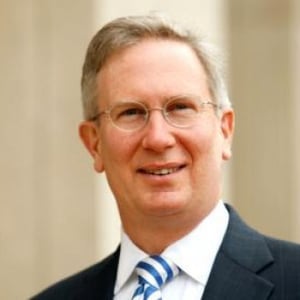
David and Mary Harrison Distinguished Professor of Law, University of Virginia School of Law
Paul G. Mahoney is a David and Mary Harrison Distinguished Professor and served as dean of the Law School from 2008-16. Mahoney's teaching and research areas are securities regulation, law and economic development, corporate finance, financial derivatives and contracts. He has published widely in law reviews and peer-reviewed finance and law and economics journals. His book, “Wasting a Crisis: Why Securities Regulation Fails,” was published by the University of Chicago Press in 2015.
Mahoney joined the Law School faculty in 1990 after practicing law with the New York firm of Sullivan & Cromwell and clerking for Judge Ralph K. Winter, Jr. of the U.S. Court of Appeals for the Second Circuit and Justice Thurgood Marshall of the U.S. Supreme Court. He served as academic associate dean at the Law School from 1999 to 2004 and has held the Albert C. BeVier Research Chair and the Brokaw Chair in Corporate Law. He has been a visiting professor at the University of Chicago Law School, the University of Southern California Law School and the University of Toronto Faculty of Law. He has also worked on legal reform projects in Kazakhstan, Kyrgyzstan, Mongolia and Nepal.
Mahoney is a member of the Council on Foreign Relations and a fellow of the American Academy of Arts and Sciences. In 2018 he joined Securities and Exchange Commission’s Investor Advisory Committee. He served as an associate editor of the Journal of Economic Perspectives from 2004 to 2007 and as a director of the American Law and Economics Association from 2002 to 2004. He is a past recipient of the All-University Outstanding Teacher Award and the Law School's Traynor Award for excellence in faculty scholarship.

Robert Walmsley University Professor, Harvard Law School
Cass R. Sunstein is currently the Robert Walmsley University Professor at Harvard. He is the founder and director of the Program on Behavioral Economics and Public Policy at Harvard Law School. In 2018, he received the Holberg Prize from the government of Norway, sometimes described as the equivalent of the Nobel Prize for law and the humanities. From 2009 to 2012, he was Administrator of the White House Office of Information and Regulatory Affairs, and after that, he served on the President's Review Board on Intelligence and Communications Technologies and on the Pentagon's Defense Innovation Board. Mr. Sunstein has testified before congressional committees on many subjects, and he has advised officials at the United Nations, the European Commission, the World Bank, and many nations on issues of law and public policy. He serves as an adviser to the Behavioural Insights Team in the United Kingdom.
Mr. Sunstein is author of hundreds of articles and dozens of books, including Nudge: Improving Decisions about Health, Wealth, and Happiness (with Richard H. Thaler, 2008), Simpler: The Future of Government (2013), The Ethics of Influence (2015), #Republic (2017), Impeachment: A Citizen's Guide (2017), The Cost-Benefit Revolution (2018), On Freedom (2019), Conformity (2019), How Change Happens (2019), and Too Much Information (2020). He is now working on a variety of projects involving the regulatory state, "sludge" (defined to include paperwork and similar burdens), fake news, and freedom of speech.
Director, GW Regulatory Studies Center & Distinguished Professor of Practice, Trachtenberg School of Public Policy & Public Administration, The George Washington University
Susan Dudley is the Founder and Director of the George Washington University Regulatory Studies Center, established in 2009 to raise awareness of regulations’ effects and improve regulatory policy through research, education, and outreach. She is also a distinguished professor of practice in the Trachtenberg School of Public Policy and Public Administration. She is past-president of the Society for Benefit Cost Analysis, a senior fellow of the Administrative Conference of the United States, and on the Regulatory Transparency Project Regulatory Practice Working Group. Her book, Regulation: A Primer, with Jerry Brito, is available on Amazon.com.
From April 2007 through January 2009, Professor Dudley served as the Presidentially-appointed Administrator of the Office of Information and Regulatory Affairs in the U.S. Office of Management and Budget and was responsible for the review of draft executive branch regulations under Executive Order 12866, the collection of federal-government-wide information under the Paperwork Reduction Act, the development and implementation of government-wide policies in the areas of information policy, privacy, and statistical policy, and international regulatory cooperation efforts.
Prior to OIRA, she directed the Regulatory Studies Program at the Mercatus Center at George Mason University, and taught courses on regulation at the George Mason University School of Law. Earlier in her career, Professor Dudley served as an economist at OIRA, as well as the Environmental Protection Agency and the Commodity Futures Trading Commission. She was also a consultant to government and private clients at Economists Incorporated. She holds a Master of Science degree from the Sloan School of Management at MIT and a Bachelor of Science degree (summa cum laude) in Resource Economics from the University of Massachusetts, Amherst.
Professor of Practice and Distinguished Scholar in Residence; Co-Director of the Legislative and Regulatory Process Clinic, New York University School of Law
Sally Katzen served in the Clinton administration as administrator of the Office of Information and Regulatory Affairs in the Office of Management and Budget (OMB), as deputy assistant to the president for economic policy and deputy director of the National Economic Council in the White House, and then as the deputy director for management at OMB. She served as the head of the Agency Review Group for the Obama/Biden transition with responsibility for the Executive Office of the President and all government-wide agencies. She has taught both undergraduates and at various law schools. She is a member of the American Law Institute and the National Academy of Public Administration, has served on multiple panels for the National Academy of Sciences, testified frequently before Congress, and is on the board of several non-profit organizations. Before joining the Clinton administration, Katzen was a partner in the Washington, DC, law firm of Wilmer, Cutler & Pickering, specializing in regulatory and legislative matters, while serving in leadership roles in the American Bar Association (including chair of the Section on Administrative Law and Regulatory Practice and as DC delegate to the ABA’s House of Delegates), as president of the Federal Communications Bar Association and as president of the Women’s Legal Defense Fund. She graduated from Smith College and the University of Michigan Law School, where she was the first woman editor-in-chief of the Law Review. She clerked for Judge J. Skelly Wright of the United States Court of Appeals for the District of Columbia Circuit and served in the Carter administration as the general counsel of the Council on Wage and Price Stability in the Executive Office of the President.
Faculty Fellow, Center for Law, Science & Innovation, Sandra Day O'Connor College of Law, Arizona State University
Dr. Klein is a Faculty Fellow at the Center for Law, Science & Innovation at the Sandra Day O'Connor College of Law at Arizona State University. He is also Principal at Roger D. Klein, MD JD Consulting and Klein & Klein Co., L.P.A. He was formerly Chief Medical Officer at OmniSeq, an oncology focused genomic profiling company that was recently acquired by LabCorp. Previously, Roger was the Medical Director at the Molecular Oncology division at the Cleveland Clinic. He was also the Chair of the Professional Relations Committee at the Association for Molecular Pathology. Prior to joining the Cleveland Clinic, he served as Medical Director of Molecular Oncology at the BloodCenter of Wisconsin where he led the center’s Diagnostic Laboratories’ initiative focused on DNA- and RNA-based testing for evaluation of cancer patients.
Dr. Klein has been an advisor to the Department of Health and Human Services (HHS), the Food and Drug Administration (FDA), the Centers for Medicare and Medicaid Services (CMS), and the Centers for Disease Control and Prevention (CDC). He has participated in and assumed leadership roles in many professional society committees and corporate advisory boards and is a policy advisor to the Heartland Institute.
Dr. Klein is licensed to practice medicine in Ohio, Florida, and Wisconsin. Additionally, he is licensed to practice law in the District of Columbia and Ohio. Roger obtained his Molecular Genetic Pathology certification at Mayo Medical School following completion of his M.D. Yale University School of Medicine. He obtained his J.D. from Yale Law School.
Associate Professor of Law, Center for Intellectual Property and Entrepreneurship, University of Missouri School of Law
Professor Lietzan researches, writes, and teaches primarily in the areas of food and drug regulation, intellectual property, and administrative law. Some of her recent scholarship has focused on the nature and purpose of the new drug approval system, federal regulation of fecal microbiota transplantation, federal regulation of products derived from cannabis, the political economy of the Hatch-Waxman (generic drug) statute, and incentives to study already approved drugs for new uses. She is an award-winning teacher, and she has been an elected member of the American Law Institute since 2006.
Professor Lietzan brings to her scholarship and teaching eighteen years of private practice experience, eight of them as a partner in the food and drug group at Covington & Burling in Washington, DC. In practice, she handled a wide range of complex legal problems and broader legislative and regulatory policy questions affecting FDA-regulated companies. This work included lifecycle management and strategy issues, regulatory strategy and advocacy, white collar defense, congressional investigations, briefing in products liability cases, and international regulatory policy work. She was involved in every major amendment to the Federal Food, Drug, and Cosmetic Act (FDCA) between 1997 and 2014 and was deeply immersed for more than a decade in the development of the Biologics Price Competition and Innovation Act of 2010. She has been consistently identified by her peers in private practice as a “Best Lawyer in America” in the categories of FDA law (since 2013) and Biotechnology Law (since 2007).
Professor Lietzan has held one leadership position or another at the Food and Drug Law Institute (FDLI) since 2004, including a stint on its Board of Directors from 2008 to 2012. She also held leadership positions in the American Bar Association’s Section of Science and Technology Law for fourteen years.
Professor Lietzan received a bachelor’s degree from the University of North Carolina, where she graduated with honors in history. She holds a master’s degree in history from UCLA and a law degree with high honors from Duke Law School.
David and Mary Harrison Distinguished Professor of Law, University of Virginia School of Law
Paul G. Mahoney is a David and Mary Harrison Distinguished Professor and served as dean of the Law School from 2008-16. Mahoney's teaching and research areas are securities regulation, law and economic development, corporate finance, financial derivatives and contracts. He has published widely in law reviews and peer-reviewed finance and law and economics journals. His book, “Wasting a Crisis: Why Securities Regulation Fails,” was published by the University of Chicago Press in 2015.
Mahoney joined the Law School faculty in 1990 after practicing law with the New York firm of Sullivan & Cromwell and clerking for Judge Ralph K. Winter, Jr. of the U.S. Court of Appeals for the Second Circuit and Justice Thurgood Marshall of the U.S. Supreme Court. He served as academic associate dean at the Law School from 1999 to 2004 and has held the Albert C. BeVier Research Chair and the Brokaw Chair in Corporate Law. He has been a visiting professor at the University of Chicago Law School, the University of Southern California Law School and the University of Toronto Faculty of Law. He has also worked on legal reform projects in Kazakhstan, Kyrgyzstan, Mongolia and Nepal.
Mahoney is a member of the Council on Foreign Relations and a fellow of the American Academy of Arts and Sciences. In 2018 he joined Securities and Exchange Commission’s Investor Advisory Committee. He served as an associate editor of the Journal of Economic Perspectives from 2004 to 2007 and as a director of the American Law and Economics Association from 2002 to 2004. He is a past recipient of the All-University Outstanding Teacher Award and the Law School's Traynor Award for excellence in faculty scholarship.
Robert Walmsley University Professor, Harvard Law School
Cass R. Sunstein is currently the Robert Walmsley University Professor at Harvard. He is the founder and director of the Program on Behavioral Economics and Public Policy at Harvard Law School. In 2018, he received the Holberg Prize from the government of Norway, sometimes described as the equivalent of the Nobel Prize for law and the humanities. From 2009 to 2012, he was Administrator of the White House Office of Information and Regulatory Affairs, and after that, he served on the President's Review Board on Intelligence and Communications Technologies and on the Pentagon's Defense Innovation Board. Mr. Sunstein has testified before congressional committees on many subjects, and he has advised officials at the United Nations, the European Commission, the World Bank, and many nations on issues of law and public policy. He serves as an adviser to the Behavioural Insights Team in the United Kingdom.
Mr. Sunstein is author of hundreds of articles and dozens of books, including Nudge: Improving Decisions about Health, Wealth, and Happiness (with Richard H. Thaler, 2008), Simpler: The Future of Government (2013), The Ethics of Influence (2015), #Republic (2017), Impeachment: A Citizen's Guide (2017), The Cost-Benefit Revolution (2018), On Freedom (2019), Conformity (2019), How Change Happens (2019), and Too Much Information (2020). He is now working on a variety of projects involving the regulatory state, "sludge" (defined to include paperwork and similar burdens), fake news, and freedom of speech.

Absentee Balloting in Connecticut- The Law and Practice of Conducting Fair and Secure Elections this November
Proloy K. Das, Fred DeCaro, Joshua Adam Esses, Leonard A. Fasano
On October 7, 2020, the Federalist Society's Connecticut Lawyers Chapter hosted a webinar panel on...
Supply Chain Security and Global Power Competition: Should the United States Get China Out of its Supply Chain?
Daniel P. Ahn, Joanne Medero, Bryan Smith
Recent events have demonstrated how dependent on China the United States has become for critical...
Deep Dive Episode 124 – Labor Law Compliance Issues Posed by COVID-19
Tammy Dee McCutchen, G. Roger King
COVID-19 has created many challenges for employers, including making it more difficult for them to...
A Conversation with Senator Marsha Blackburn
Kaytlin Roholt Lane, Marsha Blackburn
The DC Young Lawyers Chapter hosted Sen. Marsha Blackburn of Tennessee, a member of the...
COVID-19 Labor and Employment Teleforum Series #2
G. Roger King, Tammy Dee McCutchen
Employers are increasingly being faced with difficult issues with respect to COVID-19, including challenging labor...
Capital Conversations: COVID-19 and FDA; Medical, Legal, and Regulatory Perspectives
Stacy Cline Amin, Stephen Cox, Anand Shah
During the COVID-19 pandemic, the United States Food and Drug Administration (FDA) has sought to...
COVID-19 Labor and Employment Teleforum Series #1
G. Roger King
Employers are increasingly being faced with difficult issues with respect to COVID-19, including challenging labor...
COVID-19 Business Closures, Firearms Dealers, and the Second Amendment
Josh Blackman, Deepak Gupta
As the United States faces the spread of COVID-19, officials in many jurisdictions have ordered the...
Regulation or “Don’t Let a Good Crisis Go to Waste”
Susan E. Dudley, Sally Katzen, Roger D. Klein, Erika Lietzan, Paul G. Mahoney, Cass Sunstein
The fifth panel of the Federalist Society's COVID-19 & the Law Conference discussed "Regulation or...
Regulation or “Don’t Let a Good Crisis Go to Waste”
Susan E. Dudley, Sally Katzen, Roger D. Klein, Erika Lietzan, Paul G. Mahoney, Cass Sunstein
The fifth panel of the Federalist Society's COVID-19 & the Law Conference discussed "Regulation or...