
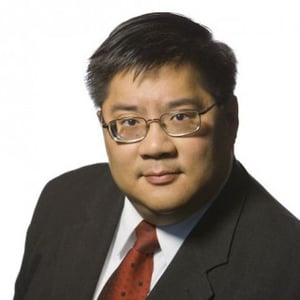
Senior Fellow, Potomac Institute for Policy Studies
Dean Cheng currently a Senior Fellow at the Potomac Institute for Policy Studies, specializing in the US relationship with China. Prior to being with the Potomac institute, he recently retired as the Senior Research Fellow for Chinese Political and Military Affairs at the Heritage Foundation. He is fluent in Chinese, and uses Chinese language materials regularly in his work. Previously, he worked with the China Studies Division (previously, Project Asia) at the Center for Naval Analysis, a Federally Funded Research and Development Center, where he specialized in Chinese military issues, with a focus on Chinese military doctrine and Chinese space capabilities. Before that, he worked for Science Applications International Corporation (SAIC), and as an analyst with the US Congress’ Office of Technology Assessment in the International Security and Space Division.
His published work includes the volume Cyber Dragon: Inside China’s Information Warfare and Cyber Operations (Praeger Publishing, 2016). He has testified before Congress, and spoken at the National Space Symposium, the US National Defense University, the USSTRATCOM Deterrence Symposium, Harvard, and MIT. He has appeared frequently in print and broadcast media to discuss Chinese space and military activities.
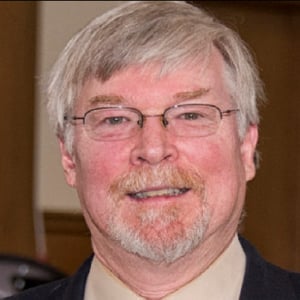
General Counsel, TechFreedom
James Dunstan serves as the General Counsel to TechFreedom. Jim has served as a Senior Adjunct Fellow to TechFreedom since its inception. Jim has more than 37 years of private practice experience in a technology-focused practice, including telecommunications, media, computer game, and outer space law. Jim spent 17 years at the telecom boutique firm Haley Bader & Potts (10 years in management), and headed the Telecommunications and Information Technology Group at Garvey, Schubert & Barer from 2000-2006. Jim founded his own firm, Mobius Legal Group, in 2010; he continues that private practice (on matters not in conflict with TechFreedom’s work) while serving as TechFreedom’s General Counsel.
Jim’s career includes being on the legal team that won the first cellular radio license for MCI in 1984, writing the constitutional challenge to the FCC’s Fairness Doctrine that took down the Doctrine in Syracuse Peace Council v. FCC, 867 F.2d 654 (1989), and helping shape the FCC’s children’s television rules on behalf of a client which produces the majority of educational programming for the major television networks. He litigated the first “virtual property” case and drafted and negotiated the first lease for a manned space station (Mir) as well as writing the first contract that was actually executed in outer space.
At TechFreedom, Jim’s substantive portfolio includes FCC regulation, the Children’s Online Protection and Privacy Act (COPPA), and all things outer space. As General Counsel, he oversees the entire legal team, and participates in TechFreedom’s robust appellate litigation team.
Jim was the 1978 Harry S. Truman Scholar from Arizona, is a graduate of Claremont McKenna College (1980), and the Georgetown University Law Center (1983). He is admitted to practice law in the District of Columbia and the Commonwealth of Virginia. Jim holds multiple patents for innovative computer input devices and has a number of patents pending in the field of computer game devices and methods. Jim is an avid musician, playing French horn in the Fairfax Wind Symphony, and with the Silver 5 Brass Quintet.
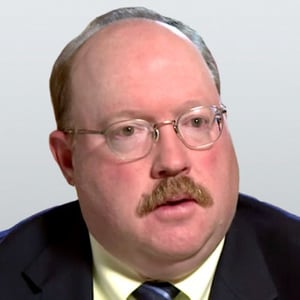
Senior Fellow, Asian Military Affairs, International Assessment and Strategy Center
Mr. Richard D. Fisher, Jr. is a Senior Fellow with the International Assessment and Strategy Center. He has previously worked with the Center for Security Policy, Jamestown Foundation China Brief, U.S. House of Representatives Republican Policy Committee, and The Heritage Foundation. Mr. Fisher has previously testified on aspects of China’s strategic challenge before the United States Senate, the House of Representatives and the U.S.-China Economic and Security Review Commission. He is the author of China’s Military Modernization, Building for Regional and Global Reach (Praeger, 2008, Stanford University Press, 2010, Taiwan Ministry of National Defense translation, 2012). His articles have been published in the Jane’s Intelligence Review, Jane’s Defence Weekly, Aviation Week and Space Technology, Armed Forces Journal, Far Eastern Economic Review, Asian Wall Street Journal, The Washington Times, The Sankei Shimbun, World Airpower Review and Air Forces Monthly. He received a B.A. (Honors) in 1981 from Eisenhower College.
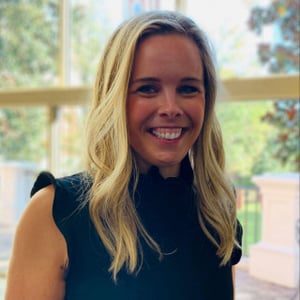
Senior Litigation Counsel, New Civil Liberties Alliance
Margaret Harker litigates for a public interest law firm. She has significant experience in government investigations and litigation, having served in the three branches of our government. Previously, she led complex Congressional investigations for the House Committee on Oversight and Government Reform—including the only government-wide investigation into federal agencies’ strategy (or lack thereof) to counter Chinese Communist Party political warfare against America.
Prior to her time on Capitol Hill, Harker served in the U.S. Department of Justice. She was an Assistant United States Attorney in both the Eastern District of Tennessee and the Eastern District of Virginia. She was a Trial Attorney in the National Security Division, Counterintelligence and Export Control Section, with an emphasis on the administration and enforcement of the Foreign Agents Registration Act.
Harker clerked for the Honorable Henry E. Hudson, U.S. District Court for the Eastern District of Virginia and the Honorable Randolph A. Beales, Court of Appeals of Virginia.
Earlier in her career, she studied in Beijing, China, and worked at the U.S. Chamber of Commerce’s China Center.
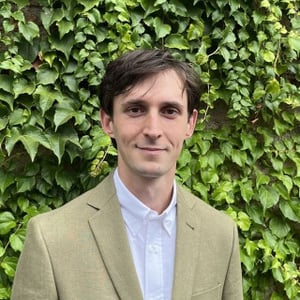
Writer and Editor, Tablet Magazine
Park MacDougald is Editor and Senior Writer at The Scroll, Tablet’s daily afternoon newsletter, a fellow at the Manhattan Institute, and a former recipient of the Novak Fellowship from The Fund for American Studies. His writing has appeared in Tablet, City Journal, New York Magazine, The Washington Examiner, and UnHerd.

Fellow, National Security Institute, Antonin Scalia Law School, George Mason University
Vince Vitkowsky chaired the Executive Committee of the Federalist Society’s International and National Security Law and Policy Practice Group for over a decade. He is also a Fellow at the National Security Institute of George Mason University Law School. Vince spent 45 years in private practice, primarily in AmLaw 100/200 firms and their spin-offs. His practice included domestic and international commercial arbitration and litigation, as well as cyber risks and liabilities. Vince's current focus is on national security policy, artificial intelligence, cybersecurity, and counterterrorism. He has often written and spoken on national security and other public policy issues. Among other affiliations, Vince has been an Adjunct Fellow at the Center for Law and Counterterrorism of the Foundation for the Defense of Democracies, a member of the Executive Committee of the American Branch of the International Law Association, and Co-Chair of the Committee on Interventions and Trial Observations of the International Bar Association’s Human Rights Institute. He received his B.A. from Northwestern University and his J.D. from Cornell Law School.
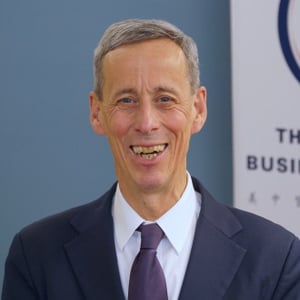
President, US-China Business Council
On July 26, 2018, Craig Allen began his tenure in Washington, DC as the president of the US-China Business Council (USCBC), a private, nonpartisan, nonprofit organization representing over 200 American companies doing business with China. Prior to joining USCBC, Craig had a long, distinguished career in US public service.
Craig began his government career in 1985 at the Department of Commerce’s International Trade Administration (ITA). He entered government as a Presidential Management Intern, rotating through the four branches of ITA. From 1986 to 1988, he was an international economist in ITA’s China Office.
In 1988, Craig transferred to the American Institute in Taiwan, where he served as Director of the American Trade Center in Taipei. He held this position until 1992, when he returned to the Department of Commerce for a three-year posting at the US Embassy in Beijing as Commercial Attaché.
In 1995, Craig was assigned to the US Embassy in Tokyo, where he served as a Commercial Attaché. In 1998, he was promoted to Deputy Senior Commercial Officer. In 1999, Craig became a member of the Senior Foreign Service.
From 2000, Craig served a two-year tour at the National Center for APEC in Seattle. While there, he worked on the APEC Summits in Brunei, China, and Mexico. In 2002, it was back to Beijing, where Craig served as the Senior Commercial Officer. In Beijing, Craig was promoted to the Minister Counselor rank of the Senior Foreign Service.
After a four-year tour in South Africa, Craig became Deputy Assistant Secretary for Asia at the US Department of Commerce’s International Trade Administration. He later became Deputy Assistant Secretary for China. Craig was sworn in as the United States ambassador to Brunei Darussalam on December 19, 2014. He served there until July 2018, when he transitioned to President of the US-China Business Council.
Craig received a B.A. from the University of Michigan in Political Science and Asian Studies in 1979. He received a Master of Science in Foreign Service from Georgetown University in 1985.

Judge, United States Court of Appeals, Ninth Circuit
Judge Carlos Bea serves as a judge on the United States Court of Appeals for the Ninth Circuit. He received his Bachelor's Degree from Stanford University in 1956 and his J.D. from Stanford Law School in 1958. Judge Bea was born in San Sebastian, Spain, and immigrated with his family to Cuba in 1939. In 1952, he represented Cuba on the Cuban National basketball team in the Helsinki Olympics. Judge Bea became a naturalized citizen of the United States in 1958. He engaged in private practice in San Francisco, principally in the area of civil trials (jury and non-jury), from 1959-75 at Dunne, Phelps & Mills and from 1975-90 at Carlos Bea, A Law Corporation. He taught courses in civil litigation advocacy at Hastings College of Law and Stanford Law School. From 1990 to 2003, Judge Bea served as a judge of the San Francisco Superior Court. He was nominated by President George W. Bush to the United States Court of Appeals for the Ninth Circuit and was confirmed in 2003.
Judge Bea and his wife Louise reside in San Francisco, where they raised their four sons, Sebastian, Alexander, Nicholas, and Dominic.
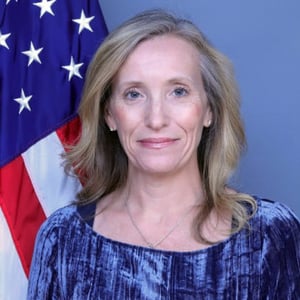
Adjunct Senior Fellow, Indo-Pacific Security Program, Center for New American Security; Senior Advisor, Krach Institute for Tech Diplomacy, Purdue University
Throughout her career in foreign policy, Ambassador Kelley E. Currie has specialized in human rights, political reform, development, and humanitarian issues, with a focus on the Indo-Pacific region. Ambassador Currie is currently an Adjunct Senior Fellow at the Center for a New American Security, a Washington D.C. think tank, and a Senior Advisor to the Krach Institute for Tech Diplomacy at Purdue University. She is a member of the board of directors of the National Endowment for Democray; the board of governors of the East-West Center; and the advisory boards of Spirit of America and the Vandenberg Coalition.
Ambassador Currie was unanimously confirmed in December 2019 as Ambassador-at-Large for Global Women's Issues and the U.S. Representative at the United Nations Commission on the Status of Women and served in that position until January 2021. Prior to that appointment, she served under Ambassador Nikki Haley as the U.S. Representative to the UN Economic and Social Council and Alternative Representative to the UN General Assembly (2017-2018). While awaiting confirmation between ambassadorial appointments, she was appointed interim senior official in the Department of State's Office of Global Criminal Justice. From 2009 until her appointment to the USUN leadership, she was a Senior Fellow with the Project 2049 Institute and the founding Director of the Institute's Burma Transition Initiative. Ambassador Currie also held senior policy positions with the U.S. Congress, international organizatons, and non-governmental organizations.
Ambassador Currie received a Juris Doctor from Georgetown University Law Center with a focus on International Human Rights Law, and an undergraduate degree cum laude in Political Science from the University of Georgia's School of Public and International Affairs.
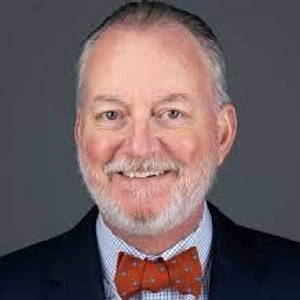
Executive Vice President and General Counsel, TE Connectivity
John S. Jenkins Jr. is the Executive Vice President, General Counsel of TE Connectivity. John is responsible for the company’s global legal, compliance, corporate governance, government affairs, intellectual property, security and risk management, and corporate social responsibility activities. He is also responsible for bringing TE’s industry-leading connectivity solutions, engineering, and operations expertise to the emerging markets with focus on India, China, and South America. He joined TE Connectivity in October 2012.
Prior to joining TE Connectivity, John was with Tyco International for ten years and was the Vice President, Corporate Secretary, and International General Counsel. John was responsible for the Board of Directors activities, securities and capital markets transactions and reporting, mergers and acquisitions, executive compensation, global procurement, real estate, and tax planning. Prior to 2003, John worked as a litigator with McGuireWoods, LLP. John began his career in 1987 as an Officer in the United States Navy, and served as a judge advocate both as Military Prosecutor and Senior Defense Counsel, and finally as Legislative Counsel to the Secretary of the Navy.
John earned his law degree from George Washington University with high honors and his Bachelor’s degree from the University of Virginia.
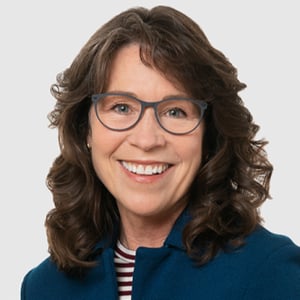
Director of Foreign and Defense Policy Studies, American Enterprise Institute
Kori Schake leads foreign and defense policy studies at the American Enterprise Institute. She is the author of Safe Passage: the Transition from British to American Hegemony, and with Jim Mattis the editor of Warriors and Citizens: American Views on Our Military. Dr. Schake has taught at Stanford, Johns Hopkins SAIS, and West Point. She has also had a distinguished career in government, working at the US State Department, the US Department of Defense, and the National Security Council.
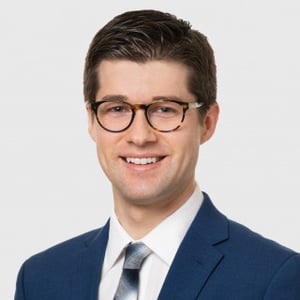
Director, Americas Program, Center for Strategic and International Studies
Ryan C. Berg is director of the Americas Program and head of the Future of Venezuela Initiative at the Center for Strategic and International Studies. He is also an adjunct professor at the Catholic University of America and a course coordinator at the United States Foreign Service Institute. His research focuses on U.S.-Latin America relations, strategic competition and defense policy, authoritarian regimes, armed conflict and transnational organized crime, and trade and development issues. Previously, Dr. Berg was a research fellow at the American Enterprise Institute, where he helped lead its Latin America Studies Program, as well as visiting research fellow at the University of Oxford’s Changing Character of War Programme. Dr. Berg was a Fulbright scholar in Brazil and is a Council on Foreign Relations Term Member. He has been published in a variety of peer-reviewed academic and policy-oriented journals, including The Lancet, Migration and Development, the SAIS Review of International Affairs, and the Georgetown Security Studies Review. His articles have appeared in Foreign Affairs, Foreign Policy, CNN.com, Los Angeles Times, and World Politics Review, among other outlets. He routinely testifies before the Senate Foreign Relations Committee and the House Foreign Affairs Committee. Dr. Berg obtained a PhD and an MPhil in political science and an MSc in global governance and diplomacy from the University of Oxford, where he was a Senior Hulme Fellow. Earlier, he obtained a BA in government and theology from Georgetown University. He is fluent in Spanish and Portuguese and is conversational in Slovenian.
CEO & Chairman of the Board, NeWay Capital and Próspera
Erick started his career in investment banking at Brown Brothers Harriman & Co, before working as an M&A advisor for AG Edwards & Sons (now Wells Fargo). He then joined Ernst & Young’s London advisory practice. After that, he led the creation of multiple business units as CFO of LATAM at the Borealis Group, and as an entrepreneur in the financial services industry. Erick is a member of the Society for International Development, in Washington DC.
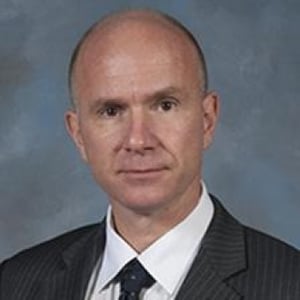
Senior Associate (Non-resident), Americas Program, The Center for Strategic and International Studies
Dr. Evan Ellis is a research professor of Latin American studies at the U.S. Army War College Strategic Studies Institute, with a focus on the region’s relationships with China and other non-Western Hemisphere actors as well as transnational organized crime and populism in the region. Dr. Ellis previously served as on the secretary of state’s policy planning staff with responsibility for Latin America and the Caribbean as well as international narcotics and law enforcement issues. In his academic capacity, Dr. Ellis presented his work in a broad range of business and government forums in 27 countries on four continents. He has given testimony on Latin American security issues to the U.S. Congress on various occasions, has discussed his work regarding China and other external actors in Latin America on a broad range of radio and television programs, and is cited regularly in the print media in both the United States and Latin America for his work in this area. Dr. Ellis has also been awarded the Order of Military Merit José María Córdova by the Colombian government for his scholarship on security issues in the region.

Maurice A. Deane Distinguished Professor of Constitutional Law and Faculty Director of International Programs, Hofstra University School of Law
Professor Ku’s primary research interest is the relationship of international law to constitutional law. He has also conducted academic research on a wide range of topics including international dispute resolution, international criminal law, and China’s relationship with international law. He teaches courses such as U.S. constitutional law, U.S. foreign affairs law, transnational law, and international trade and business law. Since 2014, he has served as the faculty director of international programs, overseeing Hofstra Law’s study abroad, exchange and LL.M. programs. Professor Ku also teaches Constitutional Law in our online degree programs: Master of Laws in American Law and Master of Arts in American Legal Studies. He has also been selected as the John DeWitt Gregory Research Scholar and as a Hofstra Law Research Fellow. He is a member of the American Law Institute.
He is the co-author, with John Yoo, of Taming Globalization: International Law, the U.S. Constitution, and the New World Order (Oxford University Press 2012). He also has published more than 40 law review articles, book chapters and symposia essays. He has given dozens of academic lectures and workshops at major universities and conferences in the United States, Europe and Asia.
He co-founded the leading international law weblog Opinio Juris, which is read daily by thousands worldwide. His essays and op-eds have been published in major news publications such as the Wall Street Journal, the Los Angeles Times, and the NYTimes.com. He has been frequently interviewed for television news programs and quoted in print and electronic media. He has also signed or submitted amicus briefs to national and international courts and served as an expert witness in both domestic and international proceedings.
Before joining the Hofstra Law faculty, Professor Ku served as a law clerk to the Honorable Jerry E. Smith of the U.S. Court of Appeals for the Fifth Circuit and as an Olin Fellow and Lecturer in Law at the University of Virginia Law School. Professor Ku also practiced as an associate at the New York City law firm of Debevoise & Plimpton, specializing in litigation and arbitration arising out of international disputes. He has been a visiting professor at the College of William & Mary Marshall- Wythe School of Law in Williamsburg, Virginia; a Fulbright Distinguished Lecturer in Law at East China University of Political Science and Law in Shanghai, China; and a Taiwan Fellow at National Taiwan University in Taipei, Taiwan. He is a member of the New York Bar and a graduate of Yale College and Yale Law School.

Judge, United States Court of Appeals, Eleventh Circuit
On March 20, 2018, Judge Elizabeth L. Branch (Lisa) was sworn in as a United States Circuit Judge for the Eleventh Circuit.
Judge Branch attended and graduated from Davidson College in North Carolina (B.A., cum laude, 1990), and Emory University School of Law (J.D., with distinction, 1994).
After graduating from law school, Judge Branch served as a federal law clerk to The Honorable J. Owen Forrester of the U.S. District Court for the Northern District of Georgia from 1994 to 1996. Following her clerkship, Judge Branch joined the litigation department of Smith, Gambrell & Russell, LLP in Atlanta as an associate and then a partner.
From 2004 to 2008, Judge Branch was a senior official in the Administration of President George W. Bush in Washington, D.C. She served first as the Associate General Counsel for Rules and Legislation at the U.S. Department of Homeland Security and then as the Counselor to the Administrator of the Office of Information and Regulatory Affairs at the U. S. Office of Management and Budget.
She returned to Smith Gambrell in 2008 as a litigation partner. Judge Branch then was appointed to the Court of Appeals of Georgia by Governor Nathan Deal, taking office on September 4, 2012, where she served until March 19, 2018.
Judge Branch is a member of the Board of Advisors of the Atlanta Lawyers Chapter for the Federalist Society for Law and Public Policy Studies.
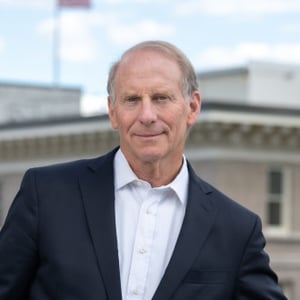
President, Council on Foreign Relations
Dr. Richard Haass is a veteran diplomat, a prominent voice on American foreign policy, and an established leader of nonprofit institutions. He is in his eighteenth year as president of the Council on Foreign Relations, an independent, nonpartisan membership organization, think tank, publisher, and educational institution dedicated to being a resource to help people better understand the world and the foreign policy choices facing the United States and other countries.
In 2013, he served as the chair of the multiparty negotiations in Northern Ireland that provided the foundation for the 2014 Stormont House Agreement. For his efforts to promote peace and conflict resolution, he received the 2013 Tipperary International Peace Award.
From January 2001 to June 2003, Dr. Haass was director of policy planning for the Department of State, where he directed the policy planning staff and was a principal advisor to Secretary of State Colin Powell. Confirmed by the U.S. Senate to hold the rank of ambassador, Dr. Haass also served as U.S. coordinator for policy toward the future of Afghanistan and U.S. envoy to the Northern Ireland peace process.
Dr. Haass has extensive additional government experience. From 1989 to 1993, he was special assistant to President George H.W. Bush and senior director for Near East and South Asian affairs on the staff of the National Security Council. In 1991, Dr. Haass was awarded the Presidential Citizens Medal for his contributions to the development and articulation of U.S. policy during Operations Desert Shield and Desert Storm. Previously, he served in the Departments of State (1981–1985) and Defense (1979–1980), and was a legislative aide in the U.S. Senate.
A Rhodes Scholar, Dr. Haass holds a bachelor’s degree from Oberlin College and master’s and doctorate of philosophy degrees from Oxford University. He has also received numerous honorary degrees and was a member of the faculty of Harvard University’s Kennedy School of Government and Hamilton College.
Dr. Haass is the author or editor of fourteen books on American foreign policy and one book on management. His latest book is The World: A Brief Introduction, published by Penguin Press.
Dr. Haass was born in Brooklyn, New York, and lives in New York City.
Maurice A. Deane Distinguished Professor of Constitutional Law and Faculty Director of International Programs, Hofstra University School of Law
Professor Ku’s primary research interest is the relationship of international law to constitutional law. He has also conducted academic research on a wide range of topics including international dispute resolution, international criminal law, and China’s relationship with international law. He teaches courses such as U.S. constitutional law, U.S. foreign affairs law, transnational law, and international trade and business law. Since 2014, he has served as the faculty director of international programs, overseeing Hofstra Law’s study abroad, exchange and LL.M. programs. Professor Ku also teaches Constitutional Law in our online degree programs: Master of Laws in American Law and Master of Arts in American Legal Studies. He has also been selected as the John DeWitt Gregory Research Scholar and as a Hofstra Law Research Fellow. He is a member of the American Law Institute.
He is the co-author, with John Yoo, of Taming Globalization: International Law, the U.S. Constitution, and the New World Order (Oxford University Press 2012). He also has published more than 40 law review articles, book chapters and symposia essays. He has given dozens of academic lectures and workshops at major universities and conferences in the United States, Europe and Asia.
He co-founded the leading international law weblog Opinio Juris, which is read daily by thousands worldwide. His essays and op-eds have been published in major news publications such as the Wall Street Journal, the Los Angeles Times, and the NYTimes.com. He has been frequently interviewed for television news programs and quoted in print and electronic media. He has also signed or submitted amicus briefs to national and international courts and served as an expert witness in both domestic and international proceedings.
Before joining the Hofstra Law faculty, Professor Ku served as a law clerk to the Honorable Jerry E. Smith of the U.S. Court of Appeals for the Fifth Circuit and as an Olin Fellow and Lecturer in Law at the University of Virginia Law School. Professor Ku also practiced as an associate at the New York City law firm of Debevoise & Plimpton, specializing in litigation and arbitration arising out of international disputes. He has been a visiting professor at the College of William & Mary Marshall- Wythe School of Law in Williamsburg, Virginia; a Fulbright Distinguished Lecturer in Law at East China University of Political Science and Law in Shanghai, China; and a Taiwan Fellow at National Taiwan University in Taipei, Taiwan. He is a member of the New York Bar and a graduate of Yale College and Yale Law School.

Executive Vice President, The Federalist Society
Dean Reuter is Executive Vice President at the Federalist Society for Law and Public Policy Studies. He has served in two federal government agency Offices of the Inspector General, as Counsel to the Inspector General and Deputy Inspector General, responsible for policing the use of federal funds granted and contracted through those agencies. As such, he helped conduct and oversee criminal investigations across the country. He is the principal author of the non-fiction book, The Hidden Nazi: The Untold Story of America's Deal with the Devil, and editor of Liberty’s Nemesis: The Unchecked Expansion of the State and Confronting Terror: 9/11 and the Future of American National Security. He was appointed by the President and served as Vice-Chairman of the Board of Directors of the Corporation for National and Community Service, and recently served as an appointee on the U.S. Commission on Presidential Scholars. He is a graduate of Hood College (BA with Honors) and the University of Maryland School of Law.
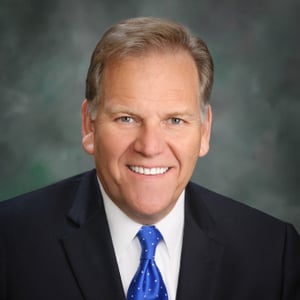
David Abshire Chair, Center for the Study of the Presidency and Congress
Mike Rogers is a former member of Congress representing Michigan's Eighth Congressional District, and previously served as an officer in the U.S. Army and FBI special agent.
While in Congress Mr. Rogers chaired the powerful House Permanent Select Committee on Intelligence (HPSCI) where he authorized and oversaw a budget of $70 billion that funded the nation's 17 intelligence agencies.
He currently serves as the Vice Chairman of the Board at the MITRE Corporation, and as a Director at leading companies including CyberSponse, IAP, and 4IQ. He is currently investing in and helping build companies that are developing solutions for healthcare, energy efficiency and communications challenges.
Mr. Rogers is a Senior Fellow at Harvard University and a member of the Board of Trustees and the David Abshire Chair at the Center for the Study of the Presidency and Congress, where he directs the Center’s national security programs. Mr. Rogers is a regular public speaker on global affairs, cybersecurity, and leadership.
He also serves as a regular national security commentator on CNN and hosted the channel’s documentary-style original series Declassified, which offered viewers insights into America’s spy stories. Mr. Rogers is a 1985 graduate of Adrian College. He is married to Kristi Rogers and has two children.
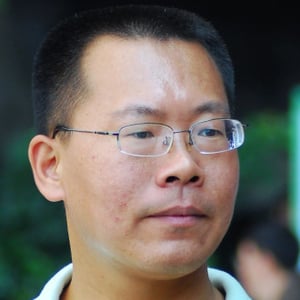
Grove Human Rights Scholar, Hunter College
Dr. Teng Biao is an academic lawyer, currently Grove Human Rights Scholar at Hunter College. He co-founded two human rights NGOs in Beijing –the Open Constitution Initiative, and China Against the Death Penalty. He is one of the earliest promoters of the Rights Defense Movement in China, and the manifesto Charter 08, for which Dr. Liu Xiaobo was awarded the Nobel Peace Prize. His research includes human rights, criminaljustice, social movement and political transition in China. Teng is working on two books, one is on China’s human rights movement, and another on China’s threat to global human rights and freedom.
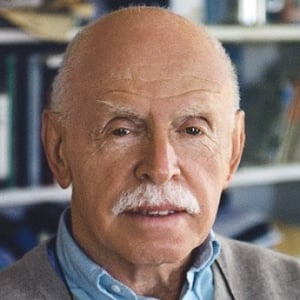
Faculty Director Emeritus, New York University School of Law
Jerome A. Cohen, a professor at NYU School of Law since 1990 and U.S.-Asia Law Institute Faculty Director Emeritus, is a leading American expert on Chinese law and government. A pioneer in the field, Prof. Cohen began studying and teaching about China’s legal system in the early 1960s and from 1964 to 1979 introduced the teaching of Asian law into the curriculum of Harvard Law School, where he served as Jeremiah Smith Professor, Associate Dean and Director of East Asian Legal Studies. Prof. Cohen served for several years as C.V. Starr Senior Fellow and Director of Asia Studies at the Council on Foreign Relations, where he currently is an Adjunct Senior Fellow. In addition, he has published hundreds of scholarly articles on various topics as well as a book, China Today, co-authored with his wife, Joan Lebold Cohen, and a regular series of journalistic opinion pieces for various newspapers. Today, Prof. Cohen continues his research and writing on Asian law, specifically focusing on legal institutions, criminal justice reform, dispute resolution, human rights and the role of international law relating to China and Taiwan.
Jerry has his and his wife's name in the chair professor of Harvard Law School in 2018 and received a honorary doctor degree from Yale University in 2020.
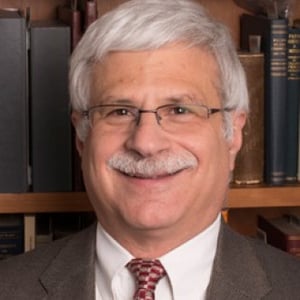
Professor of Law, Catholic University of America
Robert Destro served as Assistant Secretary for the Bureau of Democracy, Human Rights, and Labor (DRL). He has a long history as a human rights advocate and civil rights attorney with expertise in elections, employment, and constitutional law. Destro has served on the faculty at Catholic University’s Columbus School of Law since 1982 and served as its interim dean from 1999 to 2001. He was founding director of the Interdisciplinary Program in Law and Religion and served as the Director of the Institute for Policy Research and Catholic Studies from June 2017 to September 2019. He served as a commissioner on the U.S. Commission on Civil Rights from 1983-1989. His legal work includes collaboration with the Peace Research Institute Oslo in a fifteen-year dialogue among Muslim, Christian, and Jewish leaders in the legal, business, and religious fields in the United States and the Middle East as well as efforts promoting the release of political prisoners and prisoners of conscience in the Middle East. He has served as voting rights counsel for the Ohio Secretary of State and has advocated for the first amendment rights of individuals and organizations.
He earned a B.A. from Miami University, Ohio, and a J.D. from the University of California at Berkeley. He is an active member of the Bar in Ohio and California.
The rest of his bio including his publications are available on the Catholic University Faculty page linked here.

Wayne A. Abernathy, Wild Bells
Wayne A. Abernathy is a former U.S. Treasury Assistant Secretary for Financial Institutions under President George W. Bush, receiving the Alexander Hamilton Award in recognition of his service. In that office he was also a member of the Board of Directors of the Securities Investor Protection Corporation. Prior to his work at the Treasury, Mr. Abernathy served as Staff Director of the Senate Banking Committee, under Chairman Phil Gramm.
Following his service at the Treasury, Mr. Abernathy worked for 15 years on the staff of the American Bankers Association, as Executive Vice President for Financial Institutions Policy and Regulatory Affairs.
Previous experience with the Senate Banking Committee includes serving as Staff Director of the Subcommittee on Securities during 1995-1998. From 1989 until 1994, Mr. Abernathy was a Republican economist for the committee. He previously worked as a senior legislative assistant for Senator Gramm during 1987-1989 and as an economist for the Banking Committee’s Subcommittee on International Finance and Monetary Policy during 1981-1986, under Chairman Jake Garn.
Mr. Abernathy earned his bachelor’s degree in International Studies from The Johns Hopkins University in 1978. In 1980, he received a master’s degree in International Studies from the School of Advanced International Studies of The Johns Hopkins University.
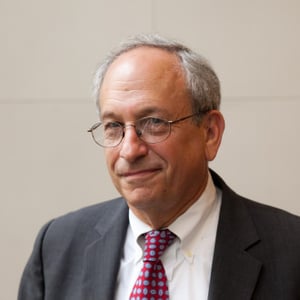
Robert V. Roosa Chair in International Economics; Senior Fellow - Economic Studies, The Brookings Institution
Donald Kohn holds the Robert V. Roosa Chair in International Economics and is a senior fellow in the Economic Studies program at the Brookings Institution. He also currently serves as an external member of the Financial Policy Committee at the Bank of England. Kohn is a 40-year veteran of the Federal Reserve system, serving as member and then vice chair of the Board of Governors from 2002-2010. Kohn is an expert on monetary policy, financial regulation, and macroeconomics and has written extensively on these issues. Prior to taking office as a member of the Board of Governors he served in a number of staff roles at the Board, including secretary of the Federal Open Market Committee (1987-2002) and director of the Division of Monetary Affairs (1987-2001). He has also served as chairman of the Committee on the Global Financial System (CGFS), a central bank panel that monitors and examines broad issues related to financial markets and systems. He advised Federal Reserve Chairman Ben Bernanke throughout the 2008-2009 financial crisis and served as a key adviser to former Fed Chairman Alan Greenspan. He was awarded the Distinguished Achievement Award from The Money Marketeers of New York University (2002), lifetime achievement awards from The Clearing House (2012) and Central Banking magazine (2017), the Distinguished Alumni Award from the College of Wooster (1998), and the Honorary Degree, Doctor of Laws, from the College of Wooster (2006). In 2016, he was made honorary Commander of the British Empire. Kohn was born in November 1942 in Philadelphia. He received a B.A. in economics in 1964 from the College of Wooster and a Ph.D. in economics in 1971 from the University of Michigan. He is married and has two adult children and four grandchildren.
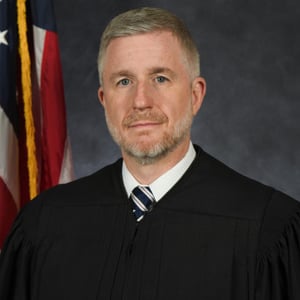
Judge, United States Court of Appeals, Third Circuit
Judge Paul Matey was appointed to the United States Court of Appeals for the Third Circuit in 2019 by President Trump.
Before his judicial service, Judge Matey was a partner at Lowenstein Sandler in New Jersey where he practiced complex commercial litigation and criminal defense. Earlier, Judge Matey was the Senior Vice President, General Counsel and Secretary for University Hospital Newark, an academic medical center and teaching hospital.
He also served as the Deputy Chief Counsel to Governor Chris Christie, and as an Assistant United States Attorney in the District of New Jersey, where he was awarded the Justice Department’s Director’s Award for Superior Performance. He also practiced at the Washington D.C. firm of Kellogg, Hansen, Todd, Figel & Frederick, and served as a law clerk to judges on the United States Court of Appeals for the Third Circuit and the United States District Court for the District of New Jersey.
He earned his bachelor’s degree from the University of Scranton, a Jesuit University, in 1993, and his juris doctorate, summa cum laude, from Seton Hall University School of Law in 2001, where he served as Editor-in-Chief of the Seton Hall Law Review.
In 2019, Judge Matey was elected to membership in the American Law Institute and, since 2020, has lectured on administrative law and the American legal history at Seton Hall.

Senior Fellow, Mises Institute
Alex J. Pollock is a Senior Fellow with the Mises Institute, providing thought and policy leadership on financial issues and the study of financial systems. His work includes cycles of booms and busts, financial crises with their political responses, housing finance, government-sponsored enterprises, risk and uncertainty, central banking, banking and financial regulation, corporate governance, retirement finance, student loans, and the politics of finance.
He previously served as the Principal Deputy Director of the Office of Financial Research in the U.S. Treasury Department 2019-2021. He was a Distinguished Senior Fellow with the R Street Institute 2015-2019 and 2021, and a resident fellow at the American Enterprise Institute, 2004-2015. Among the many aspects of his AEI work, he developed the One Page Mortgage Form to give borrowers in clear form the key information they need in order to know what they are committing themselves to. He was President and CEO of the Federal Home Loan Bank of Chicago from 1991 to 2004. There he invented the Mortgage Partnership Finance program, which successfully created front-end mortgage credit risk sharing beginning in 1997. His decades of banking experience include being a Visiting Scholar at the Federal Reserve Bank of St. Louis, 1991.
Pollock was a director of the CME Group 2004-2019 and of Ascendium Education Group 1989-2019. He is a director and past-chairman of the Great Books Foundation and a past president of the International Union for Housing Finance.
He is the co-author of Surprised Again! - The COVID Crisis and the New Market Bubble (2022), and the author of Finance and Philosophy—Why We’re Always Surprised (2018) and Boom and Bust: Financial Cycles and Human Prosperity (2011), as well as numerous articles and Congressional testimony.
Pollock is a graduate of Williams College, the University of Chicago, and Princeton University.
His work is available on alexjpollock.com.
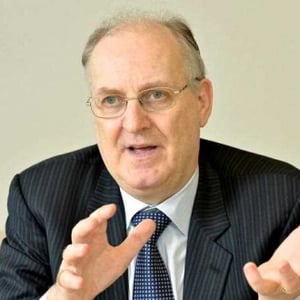
Senior Fellow, Mossavar-Rahmani Center for Business and Government, Harvard Kennedy School
Paul Sheard is Senior Fellow of the Mossavar-Rahmani Center for Business and Government at Harvard Kennedy School. Previously, he was Vice Chairman of S&P Global, after serving as Executive Vice President and Chief Economist. Earlier, he held chief economist positions at Standard & Poor’s Ratings Services, Nomura Securities and Lehman Brothers, and was Head of Japan Equity Investments at Baring Asset Management. Sheard was on the faculty of the Australian National University (ANU) and of Osaka University, and was a visiting assistant professor at Stanford University and foreign visiting scholar at the Bank of Japan.
Sheard is a member of the World Economic Forum’s Global Future Council on the New Economic Agenda (2018-2020) and was a member of the WEF’s Global Agenda Council on the International Monetary System (2010-2012). He was appointed twice, by Prime Minister Hashimoto and by Prime Minister Obuchi, to serve on committees of the Japanese Government’s Economic Deliberation Council. He is on the board of the Foreign Policy Association and is a member of the Bretton Woods Committee, the Council on Foreign Relations, and the Economic Club of New York. Sheard served as a non-executive director of ORIX Corporation (2003-2010). He speaks regularly at conferences around the world, and his views on the global economy and policy are frequently cited in the international press.
Author or editor of several books and numerous academic articles, Sheard’s book in Japanese, Mein Banku Shihon Shugi no Kiki (The Crisis of Main Bank Capitalism), won the Suntory-Gakugei Prize in the Economics–Politics Division. Sheard received a BA (Hons) from Monash University and a Master of Economics and Ph.D. from the ANU. In 2019, he received a Doctor of Laws honoris causa from Monash University.
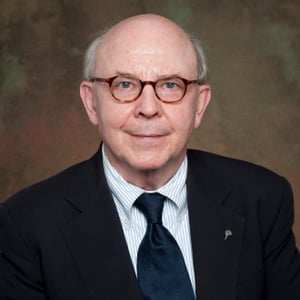
Professor Emeritus of Economics, New York University Stern School of Business
Richard Sylla is Professor Emeritus of Economics at the Stern School of Business, New York University, where from 1990 to 2015 he was Henry Kaufman Professor of the History of Financial Institutions and Markets. Sylla is also a Research Associate of the National Bureau of Economic Research, a Fellow of the Cliometric Society, and a Fellow of the American Academy of Arts & Sciences.
Professor Sylla received the B.A., the M.A., and the Ph.D. from Harvard University, where he was elected to Phi Beta Kappa. His research focus is on the financial history of the United States in comparative contexts. He is the author of Alexander Hamilton: The Illustrated Biography (2016) and The American Capital Market, 1846-1914 (1975); co-author of Alexander Hamilton on Finance, Credit, and Debt (2018), The Evolution of the American Economy (1993; 1st ed., 1980) and A History of Interest Rates, (4th ed., 2005; 3rd ed. Rev., 1996; 3rd ed., 1991); and co-editor of Patterns of European Industrialization—The Nineteenth Century (1991), The State, the Financial System, and Economic Modernization (1999); Founding Choices: American Economic Policy in the 1790s (2011); and Genealogy of American Finance (2015), as well as articles, essays, and reviews in business, economic, and financial history.
Sylla is a former editor of The Journal of Economic History. During 1998-2000, Sylla served as chairman of the board of trustees of the Cliometric Society, an association of quantitative economic historians. In 2000-2001, he was president of the Economic History Association, the professional organization of economic historians in the United States. In 2005-2006, he served as president of the Business History Conference (BHC), the leading professional association of business historians; BHC presented its Lifetime Achievement Award to him in 2011. Currently, Sylla serves as chairman of the board of trustees of the Museum of American Finance, a Smithsonian affiliate museum located at 48 Wall Street in New York.
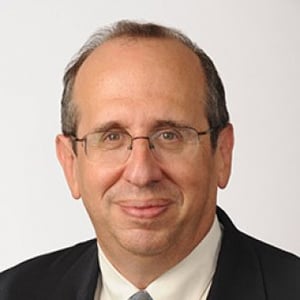
Director and Senior Fellow, Berkeley Center for Law and Technology, University of California at Berkeley
Mark Cohen heads the Asia IP Project at the Berkeley Center for Law and Technology at Berkeley Law School. He is also responsible for teaching international trade law and research and writing on IP issues. Previously, Cohen was Senior Counsel, China in the Office of Policy and International Affairs at the U.S. Patent and Trademark Office, after serving as a visiting professor at Fordham Law School (2011-2012). Prior to that time, he served in such functions as: Director, International Intellectual Property at Microsoft Corporation; Of Counsel to Jones Day’s Beijing office; and Senior Intellectual Property Attaché at the U.S. Embassy in Beijing (2004- 2008). In total, he has over 30 years private, public sector, in-house and academic experience in China and transition economies, with a focus on technology trade and intellectual property.
Cohen was the first IPR Attaché posted by USPTO to handle IPR issues in a foreign country. In addition, he launched the annual “Ambassador’s IPR Roundtable” which he co-chaired for five years, devised IPR “toolkits”, “road shows”, pro-bono programs, internal training programs for the US government and external training programs, and worked with USPTO and other US agencies to engage China and Chinese IP agencies. Cohen led a China team at USPTO consisting of 21 individuals in DC, Beijing, Shanghai and Guangzhou, China on all aspects of USPTO’s activities in China. Among his book-length publications are Antimonopoly Law and Practice in China (Oxford University Press 2011, with Steve Harris et al.). He was also the editor of Chinese Intellectual Property Law and Practice (Kluwer Law International 1999) and has edited or published a number of on-line publications, including the blog www.chinaipr.com.
Mr. Cohen has taught and lectured at numerous universities in the United States, Asia and Europe. Amongst other honors, he was the recipient of the US Chamber of Commerce’s “IP Champion” award in 2014. Mr. Cohen holds a J.D. degree from Columbia University (1984), an M.A. from the University of Wisconsin in Chinese Language and Literature (1979) and a B.A. from the State University of New York at Albany in Chinese Studies (1977).
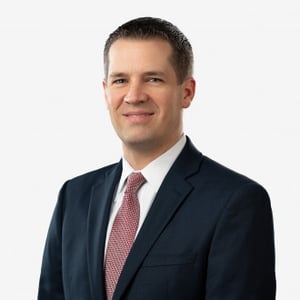
Partner, Arent Fox LLP
Dave Hanke is a go-to national security lawyer for domestic and foreign companies navigating the Committee on Foreign Investment in the United States (CFIUS) and its implementation of the Foreign Investment Risk Review Modernization Act (FIRRMA) – the most sweeping overhaul of CFIUS in 40 years – as well as new export controls on emerging and foundational technologies under the Export Control Reform Act of 2018.
He has assisted large multinational corporations, early-stage technology companies, and venture capital firms on various CFIUS issues, ranging from advising on the CFIUS implications of various transactions to preparing CFIUS filings. In addition, he helps U.S. companies prepare informal submissions to CFIUS to identify problematic foreign investments in their domestic competitors that may raise U.S. national security concerns and that have not already been filed with CFIUS.
Hanke also advises defense contractors and other companies on issues of foreign ownership, control, or influence (FOCI) in accordance with the government’s National Industrial Security Program Operating Manual (NISPOM). He has experience advising clients on security clearance issues, and he helps companies ensure they have in place policies, procedures, training, and systems relevant for access to classified information. Hanke also provides cybersecurity advice and representation to companies that contract with federal agencies.
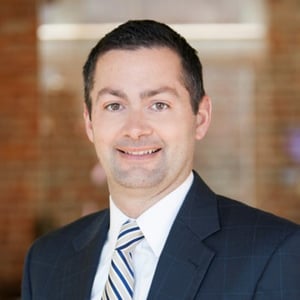
Principal, Navigators Global
Andy Keiser served 14 years on Capitol Hill for former House Intelligence Committee Chairman Mike Rogers - as Senior Advisor to the Committee, Chief of Staff, and Legislative Director handling all national security policy issues.
As Deputy National Security Senior Advisor to the pre-election phase of the Trump for America transition team, Mr. Keiser prepared and advised the transition's policy, personnel and agency action teams on all aspects of the national security portfolio. This included work in the Departments of Defense, State, Justice, Homeland Security, the Intelligence Community, and the National Security Council.
He was also the head writer for a nationally-syndicated radio program and assisted in the production of the CNN series “Declassified.”
Mr. Keiser has written extensively on intelligence, space and cyber policy, missile defense, Afghanistan, China, Iran, ISIS, North Korea, and Russia. He also helped shepherd six Intelligence Authorization Acts into law and managed Chairman Rogers’ cyber threat sharing legislation, which passed the House twice and the core of which was later signed into law by President Obama.
He has a Bachelor of Arts from Michigan State University and a Master of Arts from the United States Naval War College. He is active on various national security-focused policy projects at the Center for the Study of the Presidency and Congress, where he serves as a Senior Advisor, and at the National Security Institute at George Mason University’s Antonin Scalia Law School, where he serves as a Fellow. He also is a member of the OSS Society and serves on the Meridian International Center’s Global Leadership Council.
Mr. Keiser is currently a Principal at Navigators Global, where he focuses on cybersecurity and other national security priorities. Dubbed a “national security expert” by the Washington Post, Andy is a regular media commentator on national security issues.

Professor of Law, Southern Illinois University School of Law
Professor Mark F. Schultz joined the faculty in 2003. He teaches and writes primarily in the area of intellectual property.
Professor Schultz is a frequent author and speaker known for his work on the law and economics of the global intellectual property system. In one of his most influential projects, he worked with the Organization for Economic Cooperation and Development (OECD) to construct a groundbreaking global trade secret protection index (the TSPI). The TSPI is influencing policy discussions on this cutting-edge topic in capitals around the world. Other recent projects have included an empirical study that quantified for the first time the backlogs in patent offices worldwide, a report on how patented innovation is meeting global health challenges, and the construction of a new global index of copyright strength.
Professor Schultz is an influential voice in public policy debates regarding intellectual property. He has testified before the U.S. Congress on copyright law at the invitation of the House Judiciary Committee and has briefed the staff of the U.S. Senate Judiciary Committee on trade secret legislation. He speaks frequently around the world about the connection between secure and effective intellectual property rights and flourishing national economies and individual lives, with invitations from the U.S. Patent and Trademark Office, the U.S. Trade Representative, and the U.S. Copyright Office, as well as numerous academic institutions, think tanks, and industry groups. He served as an NGO delegate to the World Intellectual Property Organization (WIPO) for several years during the WIPO Development Agenda talks. He is also one of the organizers of an ongoing multilateral diplomatic dialogue on best practices in national trade secret laws, and is co-founder of the Center for Protection of Intellectual Property (CPIP) at George Mason University in Washington, D.C.
Among the awards and recognition he has received for his scholarship was the School of Law's Outstanding Scholar of the Year award in 2008. He has been a distinguished visiting scholar at the University of Botswana and a visiting professor at DePaul University College of Law.
Professor Schultz graduated with honors from the George Washington University School of Law. Following law school, he was a judicial clerk for the Hon. Daniel M. Friedman of the United States Court of Appeals for the Federal Circuit in Washington, D.C., and the Hon. Eric G. Bruggink of the United States Court of Federal Claims. Prior to joining academia, he practiced law for a decade, serving as outside general counsel to several tech startups and helping technology companies to expand their businesses and commercialize their intellectual property in dozens of countries. He holds a B.A. in International Economics from George Washington University and has done PhD level coursework in development economics at Southern Illinois University.
He is active in leadership roles in local and national organizations. He has served as chair of the Federalist Society's Intellectual Property Practice Group and the AALS Section on Internet and Computer Law. He is an officer of the American Bar Association's International IP Committee of the International Law Section and the American Intellectual Property Law Association’s Trade Secret Law Committee. He currently is chair of the Academic Advisory Board of the Copyright Alliance.
Professor Schultz teaches Copyright Law, Trade Secret Law, Trademark Law, and a senior seminar on Intellectual Property and Global Development. He established and directs both the Specialization in Intellectual Property Law and the IP Semester in Practice Externship Program. He also co-founded a Legal Globalization Class, offered every other year, that takes students to South Africa and Botswana after spending a semester learning about the legal system, culture, history, and politics of southern Africa. The popular course is a once-in-a-lifetime experience that introduces students to leading lawyers, judges, government officials, and human rights advocates, taking them from Cape Town to Johannesburg to Gaborone as well as many popular destinations including game reserves, national parks, the Cape of Good Hope, and the Cradle of Humankind.
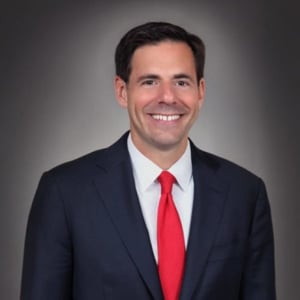
Partner, Morrison & Foerster LLP
John P. Carlin, former Assistant Attorney General for the U.S. Department of Justice’s (DOJ) National Security Division (NSD), chairs Morrison & Foerster’s global risk and crisis management team and advises industry-leading organizations in sensitive cyber and other national security matters, white collar investigations, and government enforcement actions.
Mr. Carlin has served as a top-level official in both Republican and Democratic administrations, most recently as Assistant Attorney General for National Security, the DOJ’s highest-ranking national security lawyer. In this capacity, for which Mr. Carlin was nominated by the President and overwhelmingly confirmed by the Senate on a bipartisan basis, he oversaw nearly 400 employees responsible for protecting the nation against terrorism, espionage, and cyber and other national security threats.
Prior to assuming his role in the NSD, Mr. Carlin served as Chief of Staff and Senior Counsel to Robert S. Mueller, III, former director of the FBI, where he helped lead the FBI’s evolution to meet growing and changing national security threats, including cyber threats. Mr. Carlin also held positions as National Coordinator of the DOJ’s Computer Hacking and Intellectual Property Program and Assistant United States Attorney for the District of Columbia, where he prosecuted cyber, fraud, and public corruption matters, among others, trying more than 40 cases to verdict.
Mr. Carlin is an inaugural Fellow of Harvard Kennedy School’s Belfer Center for Science and International Affairs’ Homeland Security Project, focused on the unique challenges and choices around protecting the American homeland. He also chairs the Aspen Institute’s Cybersecurity and Technology policy program, which provides a cross-disciplinary forum for industry, government, and media to address the rapidly developing landscape of digital threats and craft appropriate policy solutions. Mr. Carlin was recently invited to address the governors of every U.S. state and territory on cybersecurity issues at the National Governors Association’s Winter 2017 meeting, and has been featured or cited as a leading authority on cyber and economic espionage matters by numerous major media outlets, including The New York Times, The Washington Post, The Wall Street Journal, The Los Angeles Times, USA Today, CBS’s 60 Minutes, NBC’s Meet the Press, PBS’s Charlie Rose and Newshour, ABC’s Nightline and Good Morning America, NPR, CNN, and Vanity Fair, among others.
Mr. Carlin, who joined DOJ through the Attorney General’s Honors Program, is a five-time recipient of the Department of Justice Award for Special Achievement, was awarded the National Intelligence Superior Public Service Medal by the Director of National Intelligence, and drew bipartisan praise, with U.S. Attorney General Loretta Lynch calling him “a trusted and tireless leader” and former U.S. Attorney General Michael Mukasey calling him “a superb civil servant.” He earned his Juris Doctorate from Harvard Law School, where he received the Samuel J. Heyman Fellowship for Federal Government Service and served as Articles editor for the Harvard Journal on Legislation, and earned his Bachelor of Arts degree, magna cum laude, from Williams College, where he was elected to Phi Beta Kappa.
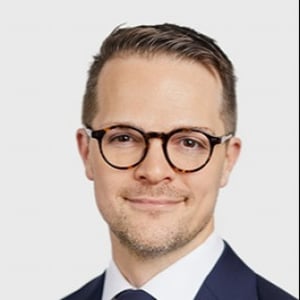
Vice President of Regulatory and Corporate Affairs, Cogeco Inc.
Paul Beaudry is Vice President, Regulatory and Corporate Affairs at Cogeco Inc. He leads Cogeco’s regulatory function in Canada and the United States, and represents the company in proceedings before the CRTC, the Federal Communications Commission and other government departments and regulatory agencies. He also oversees compliance with regulatory requirements imposed on the company at each level of government, in both countries. In addition, Paul leads Cogeco’s Sustainability team and the strategy for public disclosure of ESG matters. He joined Cogeco in November 2020 and has since held progressively larger leadership roles within the organization.
Prior to joining Cogeco, Paul served as Director of Regulatory Affairs at TELUS in Calgary. He also practiced competition and foreign investment law at Stikeman Elliott LLP and Ogilvy Renault LLP (now Norton Rose Fulbright) and served as a senior policy advisor to Canada’s Minister of Industry.
Paul is a graduate of the University of Montreal Faculty of Law and is a member of the Quebec Bar. He serve on the boards of the Institut national de santé publique du Québec, the Cable Public Affairs Channel (CPAC), La Fondation La Rue des Femmes and the Canadian chapter of the International Institute of Communications. He also sits on the Governors Council of Golf Canada.
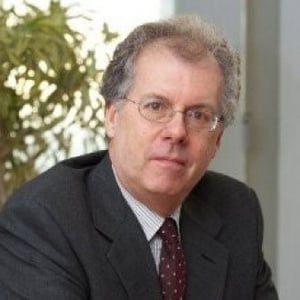
Principal, MHRyan Law
Michael H. Ryan is a lawyer specialising in international telecommunications, Internet and media law and regulation, withexperience in policy analysis and regulatory economics.
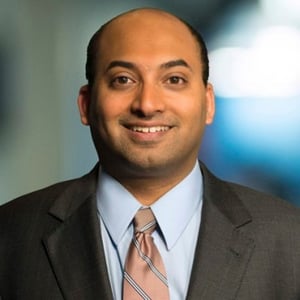
Senior Policy Counsel and Director, Government Affairs, Telecommunications Industry Association (TIA)
Dileep Srihari is Senior Policy Counsel and Director, Government Affairs at the Telecommunications Industry Association (TIA). He represents information and communications technology companies – those that manufacture chips, routers, switches, cell phones, base stations, and more – through policy development and advocacy before Congress and the FCC.
Srihari currently focuses on spectrum and broadband infrastructure deployment issues, including topics ranging from millimeter-wave spectrum for 5G to regulatory reform and funding for broadband deployment. He also provide counsel and supervise others on work spanning across TIA's Government Affairs department, including leading projects on national security issues related to the ICT supply chain as well as Internet of Things issues.
Srihari was previously an associate at law firm WilmerHale where he was a member of the firm’s Communications practice group. His work involved regulatory advocacy and appellate litigation on topics including wireless interference protections, television program access, and process safety management. He also previously worked on Capitol Hill for a somewhat-recognizable U.S. senator.
He holds a J.D. from Georgetown and a B.S. in Electrical Engineering and Computer Science from Cornell.

Race to a Moon Base—And Frontiers Beyond
Dean Cheng, James Dunstan, Richard D. Fisher, Margaret Harker
As Artemis II navigated around the far side of the moon, setting a new human...
Foreign Influence Operations and National Security
Margaret Harker, Park MacDougald, Vincent Vitkowsky
Foreign influence operations have become increasingly important in geopolitical competition and American national security. China...
China, Global Companies, and Human Rights
Craig B. Allen, Carlos T. Bea, Kelley Currie, John S. Jenkins, Kori Schake
The 2021 National Lawyers Convention took place November 11-13, 2021 at the Mayflower Hotel in...
China Fully Engaged in Latin America: What Is the U.S. Plan?
Ryan C. Berg, Erick A. Brimen, Evan Ellis, Julian Ku
China’s Belt and Road Initiative’s (BRI) global ambitions have involved more than seventy countries. For...
International & National Security Law: The Law, China, and the Possible New Cold War
Lisa Branch, Richard N. Haass, Julian Ku, Dean Reuter, Mike J. Rogers
On November 11, 2020, The Federalist Society's International & National Security Law Practice Group hosted...
The Chinese Government's Record of Human Rights: Marking the June 4th Anniversary of Tiananmen Square
Teng Biao, Jerome A. Cohen, Robert A. Destro
On June 4th, 1989, after several weeks of pro-democracy protests, the Chinese Communist Party (CCP)...
Money and the Constitution
Wayne A. Abernathy, Donald Kohn, Paul B. Matey, Alex J. Pollock, Paul Sheard, Richard E. Sylla
On November 15, 2019, the Federalist Society's Financial Services & E-Commerce Practice Group hosted a...
Chinese Misappropriation of U.S. Technology: Assessing the U.S. Response
Mark Cohen, David Hanke, Andy Keiser, Mark F. Schultz
Chinese targeting and misappropriation of U.S. technology has increasingly been identified as a threat to...
Book Review: Dawn of the Code War
John P. Carlin
In Dawn of the Code War, authors John P. Carlin and Garrett M. Graff describe...
Supply-chain Security in a 5G World: What to do about Huawei and ZTE?
Paul Beaudry, Michael H. Ryan, Dileep Srihari
On March 6th, Huawei announced it was suing the United States government over policies banning...