

Judge, United States Court of Appeals, Fifth Circuit
Judge Duncan received his B.A. from Louisiana State University in 1994, his J.D. from the Paul M. Hebert Law Center at Louisiana State University in 1997, and his LL.M. from Columbia Law School in 2004.
After graduating from law school, he clerked for Louisiana-based Circuit Judge John Malcolm Duhé Jr. of the United States Court of Appeals for the Fifth Circuit.
From 2008–2012, Duncan served as Appellate Chief for Louisiana's Attorney General's office. From 2012–2014, he served as general counsel of the Becket Fund for Religious Liberty. From 2004-2008, he was an assistant professor of law at the University of Mississippi School of Law.
Before becoming a judge, Duncan practiced at the Washington, D.C. firm of Schaerr Duncan LLP, where he was a founding partner. He was appointed by President Trump to the United States Court of Appeals for the Fifth Circuit on May 1, 2018.
Publius comes from the pen name Alexander Hamilton, James Madison, and John Jay used when they wrote 85 publicly printed letters now known as the Federalist Papers. Hamilton chose “Publius” as a name that would represent friends of the newly proposed American republic - Publius Valeria Publicola was a Roman general who helped to found the Roman Republic. The Federalist Society continues the tradition of publishing things under the name Publius in celebration of our constitutional roots and recognition that author credit is not always necessary.
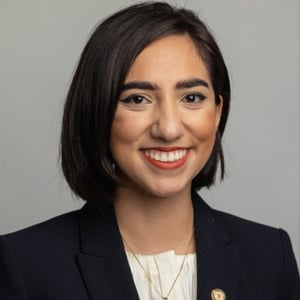
Litigation Fellow, Institute for Justice
Tahmineh Dehbozorgi is a Litigation Fellow at the Institute for Justice. Prior to joining IJ, Tahmineh served as a summer associate at AT&T Global Public Policy, where she focused on cybersecurity and consumer privacy regulatory matters. She also gained valuable legal experience as a law clerk at the Federal Communications Commission, where she worked on communications law and regulatory processes. She also served as a law clerk for the New Civil Liberties Alliance, where she concentrated on administrative law and impact litigation.
Tahmineh earned her J.D. from The George Washington University Law School, with a concentration in National Security and Cybersecurity Law. While at GW Law, she served as a Research Assistant to Professor Robert J. Cottrol and contributed to the book “To Trust the People with Arms: The Supreme Court and the Second Amendment.” Tahmineh also earned the silver medal at the 30th Annual National Telecommunications and Technology Moot Court Competition in 2023. In 2024, she received the President’s Volunteer Service Award from President Joseph R. Biden for her exemplary pro bono work. Tahmineh received her Bachelor of Arts in political science with a concentration in international relations magna cum laude from the University of California, Los Angeles. In 2020, she was awarded UCLA Chancellor’s Service Award.
Tahmineh spent her childhood in Iran. On 4th of July 2015, she left everything behind and came to the United States to seek freedom. Her upbringing ignites an unyielding passion to defend civil liberties and separation of powers.
In addition to her legal career, Tahmineh is a multilingual author with a background in public relations and media. Her writings have appeared in prominent outlets such as Fox News, National Review, RealClear Defense, and the Orange County Register, etc. Outside of her professional endeavors, Tahmineh is a classical musician and has been a member of The George Washington University Chamber Ensemble and UCLA Chorale.

Director, Faculty Relations, The Federalist Society
Katie McClendon is the Director of Faculty Relations at the Federalist Society, where she has worked since 2015.
Katie holds a J.D. from the University of Pennsylvania Law School and a B.A. in Political Science from Biola University, where she was a member of the Torrey Honors Institute. She is a fellow of the John Jay Institute and the Blackstone Legal Fellowship. Katie is originally from Los Angeles, and she now lives with her husband and four children in Atlanta.
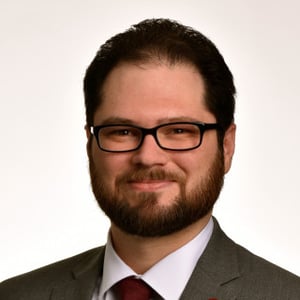
Senior Associate Legal Fellow, The Buckeye Institute
Alex M. Certo is a Senior Associate Legal Fellow at The Buckeye Institute. In this role, Certo advances Buckeye’s public policy efforts by litigating cases that protect individuals’ rights and by contributing to more than 75 amicus briefs filed with the U.S. Supreme Court, as well as dozens of amicus briefs in state and lower federal courts. Additionally, Certo supports Buckeye’s policy work by analyzing the legal implications of proposed and pending legislation and by testifying before Ohio legislative committees.
Certo has been a member of the Federalist Society since 2019 and currently serves on the board of the Columbus Lawyers chapter, where he is vice president.
Certo’s legal experience includes working as a judicial extern for the Supreme Court of Ohio and as a summer extern in the Investigations Division of the Allegheny County District Attorney’s Office. Certo also worked as a law clerk for Agee, Clymer, Mitchell & Portman in Columbus, Ohio, focusing on workers’ compensation litigation.
Certo received his bachelor’s degree from Slippery Rock University and his Juris Doctor (magna cum laude) from Capital University Law School. In law school, Certo served on the associate board of the Capital University Law Review and competed on the Child Welfare and Adoption Law Moot Court team. Certo was the president of Capital’s Federalist Society chapter and vice president of the Labor and Employment Law Association. Certo also served as a teaching assistant for Capital’s Second Amendment course and a research assistant for a pair of faculty-written articles on public safety. Certo was awarded the CALI Excellence for the Future Award in Patent Law and the Ronald I. Friedman Memorial Service Award, and he was inducted into The Order of Barristers.
Before law school, Certo worked as a staff accountant. His work focused on preparing individual and small business tax filings and assisting small business owners with daily accounting needs.
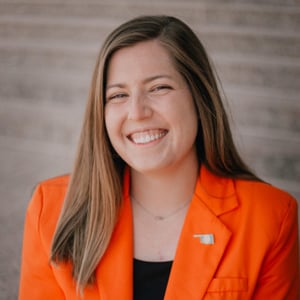
Erin Smith serves as Associate Counsel at First Liberty Institute. Before joining First Liberty, Erin served as Assistant General Counsel for the Oklahoma State Department of Education. She also served as Assistant Attorney General for the Office of the Oklahoma Attorney General in the Criminal Appeals Unit.
Erin graduated summa cum laude from the Oklahoma City University School of Law. During law school, she served as Editor-in-Chief of the Oklahoma City University Law Review, president of the OKC Student Lawyers Chapter of the Federalist Society and vice president of the OCU Christian Legal Society. She externed for the Solicitor General of Oklahoma, and published her note, Almost Only Counts in Horseshoes, Hand Grenades … and Hardison? The 45-year Reign Continues, in the Oklahoma City University Law Review. Erin spent her summers interning at First Liberty Institute and the Office of the Oklahoma Attorney General.
Erin received her bachelor’s degree in Political Science from Oklahoma State University in 2019, graduating summa cum laude.
Erin is licensed to practice law in Oklahoma.

Vice President and Deputy Counsel, Wisconsin Institute for Law and Liberty
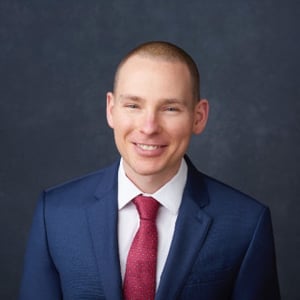
Shareholder & Co-Chair of the Workplace Policy Institute, Littler Mendelson P.C.
Alexander T. MacDonald advises employers on all aspects of the employment and labor landscape, focusing on emerging legislation and regulation. He has extensive experience advising businesses on worker classification, arbitration, the administrative and regulatory process, and the future of work. He frequently writes, publishes, and speaks on these subjects. His work has been cited by scholars and appellate courts. He is a recognized voice for the management perspective.
Alexander is a co-chair of the Workplace Policy Institute (WPI) team. With WPI, he advises employers on legislative, administrative, and regulatory developments at the state and federal level. He advocates for employers in the regulatory and administrative process. He also helps employers protect their businesses by understanding and anticipating cutting-edge legal developments.
Alexander also has extensive experience in traditional labor law. He represents management in all aspects of labor-management relations, including unfair labor practice charges, grievance arbitrations, representation elections, contract negotiations, and related litigation, including litigation in the U.S. courts of appeals.
Before joining Littler, Alexander served as the director, future of work, for a major technology company. He also worked in a national labor and employment law firm and a major public-sector general counsel’s office. He was a law clerk to the senior judges in the District of Columbia Court of Appeals.
He is also a veteran of the U.S. Air Force. He served in Operations Enduring Freedom and Iraqi Freedom. In law school, he graduated first in his class
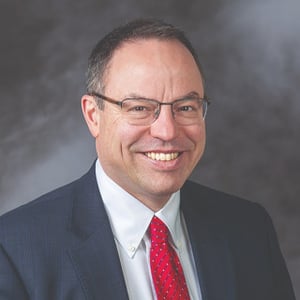
Professor of Law and J. Philip Johnson Faculty Fellow, University of North Dakota School of Law
Michael S. McGinniss is Professor of Law and J. Philip Johnson Faculty Fellow at the University of North Dakota School of Law, where he joined the faculty in 2010 and served as the Dean from 2019 to 2022. He chairs the executive committee for the Federalist Society's Practice Group on Professional Responsibility and Legal Education.
Before entering the legal academy, Professor McGinniss served for twelve years as a Disciplinary Counsel for the Supreme Court of Delaware. He currently teaches courses on Professional Responsibility, Advanced Legal Ethics, Civil Procedure, and Federal Courts. He also serves as Faculty Advisor for the North Dakota Law Review and the UND Law Federalist Society student chapter.
Professor McGinniss’ research and scholarship interests are wide-ranging and include lawyer and judicial ethics, lawyer discipline and regulation of the profession, constitutional law (especially First Amendment, separation of powers, and federalism), and cultural challenges faced by conservatives in the law schools and the legal profession. His most recent law review article, Declaring Independence to Secure Integrity: The Supreme Court Justices' Code of Conduct, was published in the Federalist Society Review. His article Expressing Conscience with Candor: Saint Thomas More and First Freedoms in the Legal Profession, was published in the Harvard Journal of Law & Public Policy.
Professor McGinniss has spoken to Federalist Society lawyer and student chapters across the country about judicial independence and ethics, especially relating to the federal courts and the United States Supreme Court Justices. In addition, he has spoken to several chapters about rising challenges to ideological diversity and targeting of conservative viewpoints in law schools and the legal profession. Although he is very pleased to speak on these and many other topics that may be of interest to lawyer and student chapters, in 2026-2027, he has particular interest in speaking on the topic “Lawyer Discipline as Political ‘Resistance’: Separation of Powers, Federalism, and the Rule of Law,” concerning his work-in-progress on the weaponization of professional disciplinary processes against conservative lawyers for political and ideological purposes.

The Corruption of Law Schools and the Health of Our Democracy
Stuart Kyle Duncan
A review of Ilya Shapiro, Lawless: The Miseducation of America’s Elites (2025) The legal scholar...
Nebraska Supreme Court Upholds Constitutionality of Felon Re-Enfranchisement
Publius
In State ex rel. Spung v. Evnen, the Nebraska Supreme Court rejected a constitutional...
Ohio Supreme Court Rules Police Can Extend Traffic Stops to Verify Driver’s License
Tahmineh Dehbozorgi
The Ohio Supreme Court’s decision in State v. Dunlap arose from a routine traffic stop...
Federalist Society Review, Volume 25
Katie McClendon
The Federalist Society Review is the legal journal of the Federalist Society. The Review is...
Topics
A Guide to Locating and Obtaining Older Federal Court Records
The PACER platform—Public Access to Court Electronic Records—is still a relatively recent invention, completing wide...
Ohio Supreme Court Rules a Bone in “Boneless” Wing Doesn’t Make a Food Supplier Negligent
Alex Certo
In Berkheimer v. REKM, L.L.C.,[1] the Ohio Supreme Court determined that the presence of a...
Church, State, and Charter Schools: The Fight Over Faith-Based Public Education in Oklahoma
Erin Smith
In 1999, Oklahoma enacted the Oklahoma Charter Schools Act (Act).[1] Its purpose was multi-faceted:...
The Twin Commands: Streamlining Equality Litigation Based on Students for Fair Admissions
Daniel Lennington
Each year, government contracting programs dole out tens of billions of dollars to businesses that...
Predistribution, Labor Standards, and Ideological Drift: Why Some Conservatives Are Embracing Labor Unions (and Why They Shouldn't)
Alexander T. MacDonald
Common ground isn’t always a good thing. For example, consider the growing popularity of “predistribution.”...
Declaring Independence to Secure Integrity: The Supreme Court Justices' Code of Conduct
Michael S. McGinniss
[T]he judiciary is beyond comparison the weakest of the three departments of power; that it...