



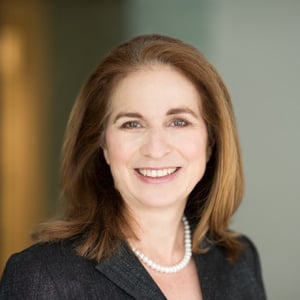



At Stanford Law School, O’Connell teaches Administrative Law, Advanced Administrative Law, and Constitutional Law. The class of 2020 chose her to receive the Hurlbut Award, which is given to one professor “who strives to make teaching an art.” She co-chaired the steering committee for Stanford University’s Faculty Women’s Forum, which works to enable all women faculty to thrive, from August 2022 to January 2024 and jointly conducted two surveys on COVID’s impacts on faculty for FWF. Prior to joining Stanford University in 2018, O’Connell was the George Johnson Professor of Law at the University of California, Berkeley. While there, she received the Distinguished Teaching Award (the campus’s most prestigious honor for teaching) in 2016 and Berkeley Law’s Rutter Award for Teaching Distinction in 2012. From April 2013 to July 2015, she served as associate dean for faculty development and research under three different deans. In 2013-2014, O’Connell was co-president of the Society for Empirical Legal Studies (co-organizing the 2014 Conference on Empirical Legal Studies).
Before joining the Berkeley Law faculty in 2004, O’Connell clerked for Justice Ruth Bader Ginsburg of the U.S. Supreme Court during the October 2003 term. From 2001 to 2003, she was a trial attorney for the Federal Programs Branch of the U.S. Department of Justice’s Civil Division, receiving commendations for her work. She clerked for Judge Stephen F. Williams of the U.S. Court of Appeals for the D.C. Circuit from 2000 to 2001. A Truman Scholar, O’Connell worked for a number of federal agencies in earlier years, including the Department of Defense (Offices of the General Counsel and Inspector General), Federal Trade Commission (Bureau of Competition), Department of Justice (Office of Legal Counsel), and U.S. Army (RDE). She is a member of the New York bar and served as a volunteer for the Biden-Harris Campaign’s policy team.

What Was the Founders' Design for Intellectual Property?
John D. Love, Adam Mossoff, David S. Olson, Zvi Rosen
In this Federalist Society America 250 series, experts analyze modern legal and policy debates through...
USPTO Examination Updates and Evolving Patent Eligibility Standards
Julie Burke, Noel Egnatios, Eli Mazour, Clint Mehall, John M. Rogitz
Join us for a timely webinar examining the latest updates to the United States Patent...
Which Path for Patent Challenges? The USPTO's "One-Challenge" NPRM for Inter Partes Review
Andrei Iancu, David Jones, Joseph Matal, Brian O'Shaughnessy, Robert J. Rando
Join us for a timely webinar examining the United States Patent and Trademark Office’s Notice...
SAP, Motorola, and the Future of PTAB Reform
Arthur Gollwitzer, Philip M. Nelson, Jamie Simpson, Robert P. Taylor
The Patent Trial and Appeal Board (PTAB), created under the America Invents Act (AIA) of...
SAP, Motorola, and the Future of PTAB Reform
Arthur Gollwitzer, Philip M. Nelson, Jamie Simpson, Robert P. Taylor
The Patent Trial and Appeal Board (PTAB), created under the America Invents Act (AIA) of...
SAP, Motorola, and the Future of PTAB Reform
The Patent Eligibility Reform Act: Clarifying Patent Eligibility for the U.S. Patent System?
Earl Bright, David Jones, Joseph Matal, Kathleen M. O'Malley, Jamie Simpson
Join the Federalist Society for a discussion on the Patent Eligibility Restoration Act (PERA), legislation...
Legislative or Executive? The Curious Case of the Library of Congress
Anne Joseph O'Connell, Robert J. Rando, Zvi Rosen, Devin Watkins
The recent dismissal of the Librarian of Congress and the Register of Copyrights by President...
Prosecution Laches: No Good Deed Goes Unpunished!
Jeffrey E. Depp, Joseph Matal, Paul Redmond Michel, Gene Quinn
Prosecution laches is an infrequently used equitable doctrine that bars enforcement of a patent when...
Wisconsin Bell, Inc. v. United States, ex rel. Todd Heath - Post-Decision SCOTUScast
John Masslon
On February 21, 2025, the U.S. Supreme Court issued their 9-0 opinion in Wisconsin Bell, Inc. v....