
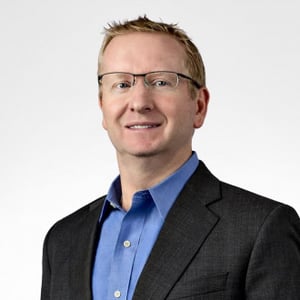
Partner, Jackson Walker
Arthur offers clients a winning combination of trial and appellate experience gained as a federal prosecutor and more than 20 years of experience in handling patent, copyright, trademark, and trade secrets litigation.
While his practice concentrates on intellectual property litigation, Arthur also has significant experience in internal investigations, False Claims Act suits, partnership and breach of fiduciary duty, breach of contract, and employment litigation. Arthur also has represented clients testifying before Congressional committees.
Arthur writes and speaks frequently on topics ranging from the case against Boston bomber Dzhokhar Tsarnaev to patent litigation reform.
Prior to joining Michael Best, Arthur served as an Assistant United States Attorney in the Southern District of New York, where he was the lead prosecutor in criminal trials, including federal intellectual property crimes. He also argued numerous appeals.
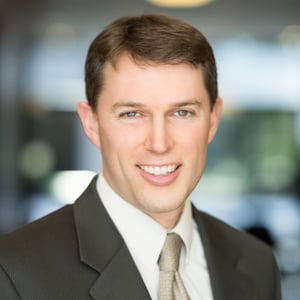
Partner, Knobbe Martens
Philip Nelson counsels clients in all stages of growth, from startups to established public companies. To jump-start young portfolios, Mr. Nelson pioneered use of special programs to cut through red tape for rapid patent allowance. For those wanting to preserve options at minimal cost, he has a tested protocol. He especially enjoys laying sophisticated patent minefields, protecting core assets with an eye to the future concept and product pipeline. No matter when he joins the team, he quickly grasps the technology and points to the best options to support the business.
Mr. Nelson builds value for investment and acquisition by working with company visionaries and scientists to describe and protect their ideas. Although the patent office likes to say “no,” he works through the objections, often speaking to patent examiners in person to negotiate for better claims. Collegial persistence and technical tutorials tend to persuade examiners, getting them to “yes.”
Mr. Nelson drafts and negotiates technology agreements and advises on big-picture strategy. When opposing diligence counsel is just pasting in a pat phrase from a template, he uses his experience from the trenches (prosecuting, negotiating, and litigating) to correct the meaning and serve his clients.
Mr. Nelson advises on contested matters, drafts litigation briefs, and works closely with litigator colleagues. He negotiates with his clients’ adversaries to avoid suit or improve litigation positions. When a competitor claimed to own his client’s invention in chemistry lab instruments, he won two patent office “interferences”—and a Federal Circuit appeal—to preserve his client’s ownership rights. He handles complex patent office trials such as interferences, derivations, and inter-partes reviews. He did reexaminations and inter-partes reexaminations back before they were cool (before the America Invents Act popularized Board proceedings).
His physics background and widely varied experience at a top intellectual property boutique for almost 20 years has created a sophisticated advocate for his clients. Mr. Nelson looks forward to helping you assess the field, build your defenses, close your deal, and rain fire on your IP problems and adversaries.
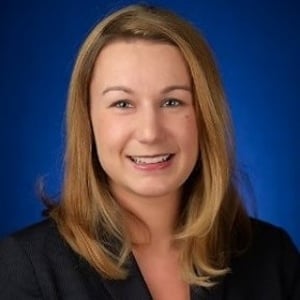
Chief Policy Officer and Counsel, The Council for Innovation Promotion
Jamie Simpson is Chief Policy Officer and Counsel for The Council for Innovation Promotion (c4IP), which is a bipartisan coalition dedicated to promoting strong and effective intellectual property rights that drive innovation, boost economic competitiveness, and improve lives everywhere.
Simpson has almost 20 years of experience in policy and a specific focus on IP-related issues. She previously served as Chief Counsel on the House Judiciary Subcommittee on Courts, IP, and the Internet; Counsel to the Senate Judiciary Committee while on detail from the U.S. Patent and Trademark Office; and Associate Solicitor at the USPTO.
A graduate of Harvard Law School and, previously, a law clerk at the United States Court of Appeals for the Federal Circuit, Simpson has extensive expertise in intellectual property law and policy, as well as an earlier background of working on patent litigation and licensing disputes.
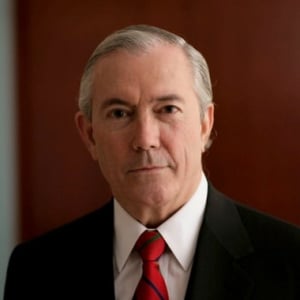
Founder and Owner, RPT Legal Strategies PC
Bob Taylor is the founder and owner of RPT Legal Strategies PC in San Francisco and Palo Alto, providing legal and business advice to companies and investors with respect to all aspects of intellectual property and related fields of endeavor. He also serves as a Venture Advisor to New Enterprise Associates and as a patent law expert for the National Venture Capital Association.
He is a Fellow of the American College of Trial Lawyers, a former chair of the Antitrust Section of American Bar Association, and a Lifetime Member of the American Law Institute.
Bob has written and lectured extensively on the business and legal problems associated with both intellectual property protection and the laws related to competition.
Bob holds a J.D degree from Georgetown University Law Center and was a member of the editorial board of the Georgetown Law Journal. He holds a B.S.E.E degree from the University of Arizona.
Partner, Jackson Walker
Arthur offers clients a winning combination of trial and appellate experience gained as a federal prosecutor and more than 20 years of experience in handling patent, copyright, trademark, and trade secrets litigation.
While his practice concentrates on intellectual property litigation, Arthur also has significant experience in internal investigations, False Claims Act suits, partnership and breach of fiduciary duty, breach of contract, and employment litigation. Arthur also has represented clients testifying before Congressional committees.
Arthur writes and speaks frequently on topics ranging from the case against Boston bomber Dzhokhar Tsarnaev to patent litigation reform.
Prior to joining Michael Best, Arthur served as an Assistant United States Attorney in the Southern District of New York, where he was the lead prosecutor in criminal trials, including federal intellectual property crimes. He also argued numerous appeals.
Partner, Knobbe Martens
Philip Nelson counsels clients in all stages of growth, from startups to established public companies. To jump-start young portfolios, Mr. Nelson pioneered use of special programs to cut through red tape for rapid patent allowance. For those wanting to preserve options at minimal cost, he has a tested protocol. He especially enjoys laying sophisticated patent minefields, protecting core assets with an eye to the future concept and product pipeline. No matter when he joins the team, he quickly grasps the technology and points to the best options to support the business.
Mr. Nelson builds value for investment and acquisition by working with company visionaries and scientists to describe and protect their ideas. Although the patent office likes to say “no,” he works through the objections, often speaking to patent examiners in person to negotiate for better claims. Collegial persistence and technical tutorials tend to persuade examiners, getting them to “yes.”
Mr. Nelson drafts and negotiates technology agreements and advises on big-picture strategy. When opposing diligence counsel is just pasting in a pat phrase from a template, he uses his experience from the trenches (prosecuting, negotiating, and litigating) to correct the meaning and serve his clients.
Mr. Nelson advises on contested matters, drafts litigation briefs, and works closely with litigator colleagues. He negotiates with his clients’ adversaries to avoid suit or improve litigation positions. When a competitor claimed to own his client’s invention in chemistry lab instruments, he won two patent office “interferences”—and a Federal Circuit appeal—to preserve his client’s ownership rights. He handles complex patent office trials such as interferences, derivations, and inter-partes reviews. He did reexaminations and inter-partes reexaminations back before they were cool (before the America Invents Act popularized Board proceedings).
His physics background and widely varied experience at a top intellectual property boutique for almost 20 years has created a sophisticated advocate for his clients. Mr. Nelson looks forward to helping you assess the field, build your defenses, close your deal, and rain fire on your IP problems and adversaries.
Chief Policy Officer and Counsel, The Council for Innovation Promotion
Jamie Simpson is Chief Policy Officer and Counsel for The Council for Innovation Promotion (c4IP), which is a bipartisan coalition dedicated to promoting strong and effective intellectual property rights that drive innovation, boost economic competitiveness, and improve lives everywhere.
Simpson has almost 20 years of experience in policy and a specific focus on IP-related issues. She previously served as Chief Counsel on the House Judiciary Subcommittee on Courts, IP, and the Internet; Counsel to the Senate Judiciary Committee while on detail from the U.S. Patent and Trademark Office; and Associate Solicitor at the USPTO.
A graduate of Harvard Law School and, previously, a law clerk at the United States Court of Appeals for the Federal Circuit, Simpson has extensive expertise in intellectual property law and policy, as well as an earlier background of working on patent litigation and licensing disputes.
Founder and Owner, RPT Legal Strategies PC
Bob Taylor is the founder and owner of RPT Legal Strategies PC in San Francisco and Palo Alto, providing legal and business advice to companies and investors with respect to all aspects of intellectual property and related fields of endeavor. He also serves as a Venture Advisor to New Enterprise Associates and as a patent law expert for the National Venture Capital Association.
He is a Fellow of the American College of Trial Lawyers, a former chair of the Antitrust Section of American Bar Association, and a Lifetime Member of the American Law Institute.
Bob has written and lectured extensively on the business and legal problems associated with both intellectual property protection and the laws related to competition.
Bob holds a J.D degree from Georgetown University Law Center and was a member of the editorial board of the Georgetown Law Journal. He holds a B.S.E.E degree from the University of Arizona.
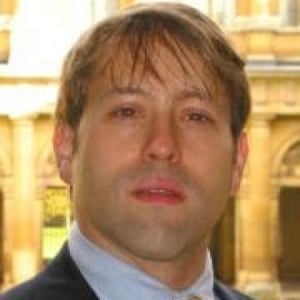
Senior Research Fellow (Wolfson College); Fellow (Lauterpacht Centre for International Law), Faculty of Law, University of Cambridge
Over twenty years' experience as legal adviser, advocate, and strategist in complex multi-jurisdiction matters across several substantive fields, including public international law, international investment protection, trade law, and law of the sea. Academic writings on international arbitration, international organizations, use of force, State immunity, State succession, recognition of States, artificial intelligence, law & technology.
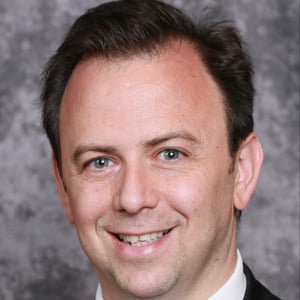
Stevenson Bernard Professor, George Washington University Law School
The Honorable F. Scott Kieff is the Stevenson Bernard Professor at George Washington University Law School and a Visiting Fellow at Stanford University’s Hoover Institution.
He served as Commissioner of the U.S. International Trade Commission from 2013-2017. He also served during the Bush, Obama, and Trump Administrations in the part-time leadership of the national security defense-intelligence community.
He was previously a professor of law and medicine at Washington University in Saint Louis and a Senior Fellow at Hoover. A former law clerk to U.S. Circuit Judge Giles S. Rich, he is a graduate of Penn Law School and MIT, where he studied molecular biology and microeconomics. He was elected to the European Academy of Sciences and Arts in 2012 and the Academia Europaea in 2024.
His private sector work through Kieff Strategies LLC (www.kieffstrategies.com) provides neutral services including mediation and compliance, and expert services including crisis management, advising, and testimony.
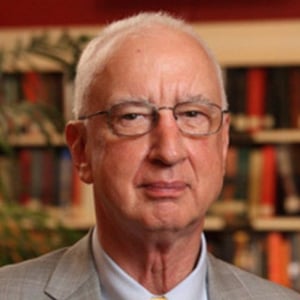
Former Chief Judge, United States Court of Appeals for the Federal Circuit
Judge Michel served for more than 22 years on the Federal Circuit, retiring on May 31, 2010. From December 25, 2004 until his retirement, he also discharged the duties of Chief Judge of this national court, serving simultaneously on the U.S. Judicial Conference -- the Judiciary's governing body -- and by appointment of the Chief Justice on its seven-judge Executive Committee.
He judged several thousand appeals and authored more than 800 opinions, one third concerning intellectual property law. Intellectual Asset Management magazine inducted him into its Hall of Fame and he was designated one of the 50 most influential leaders in intellectual property law in the world. His contributions were also recognized by lifetime achievement and similar awards by the American Intellectual Property Law Association (AIPLA); Intellectual Property Owners Education Foundation (IPO); the American Bar Association's Intellectual Property Section; Managing Intellectual Property magazine; the Sedona Conference; the Patent and Trademark Office Society (PTOS); the New York, Chicago, Philadelphia, and Los Angeles Intellectual Property Law Associations; and the William C. Connor, the Giles S. Rich, and the Richard Linn Intellectual Property American Inns of Court. In 2010 the Los Angeles IP Inn was renamed in his honor as the Paul R. Michel IP Inn.
Judge Michel received the Jefferson Medal, the Eli Whitney Award, and the Katz-Kiley Prize as well as Honorary Doctor of Law degrees from the Catholic University of America and the John Marshall Law School. He is a lifetime Member of Honore of FICPI, the international association of private practitioners of intellectual property law. Williams College granted him the Kellogg Award for "outstanding leadership in law and public service."
Judge Michel has written numerous articles on patent law and advocacy, taught related courses and master classes at George Washington University, the University of Akron, and John Marshall law schools, serving as well on their IP advisory boards and on counterpart boards at the universities of California (Berkley), Washington, and Maryland. He co-authored a casebook, Patent Litigation and Strategy (West, 1999) and an August 2010 editorial in the New York Times on strengthening the patent system to promote prosperity and create new jobs.
A frequent speaker at conferences and law schools during his judicial tenure and since, he retired from a lifetime appointment to be free to speak out on the national need for better patent policy and protection of intellectual property and the vital, unmet resource needs of the courts, the PTO, the International Trade Commission, and other IP-related agencies. He was appointed Distinguished Scholar in Residence by IPO, following his retirement. Judge Michel also consults for law firms and their clients in intellectual property litigations, conducting moot courts, mock trials, case evaluations, editing briefs, advising on strategy and providing mediation and arbitration services.
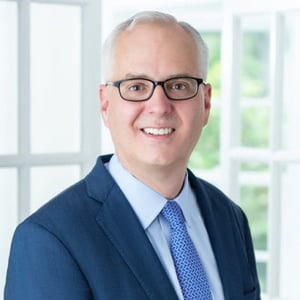
Principal, Clear IP, LLC
Joseph Matal is the Principal at Clear IP, LLC.
Joe has served as both the U.S. Patent and Trademark’s Acting Director and Acting Solicitor. As Acting Solicitor, he defended the agency in intellectual property cases before the U.S. Court of Appeals for the Federal Circuit and U.S. Supreme Court. In his role in the Solicitor’s Office, he participated in briefing almost every major case involving PTAB trials that has come before the Federal Circuit, including cases that have defined the Board’s powers and the evidence that it may consider, the content of final decisions, and the burdens and scope of motions to amend. Recent cases include Uniloc v. Hulu, Thryv v. Click-to-Call, and Aqua Products v. Matal. Previously, Joe served in senior legal roles for more than a decade for the U.S. Senate Judiciary Committee. In that capacity, he negotiated and drafted many of the key provisions of the America Invents Act.
In his roles at the USPTO, Joe briefed and argued numerous appeals of patent and trademark decisions before the Federal Circuit; oversaw the management of the USPTO and its 13,000 employees; and advised the U.S. Solicitor General’s Office in key IP cases before the Supreme Court.
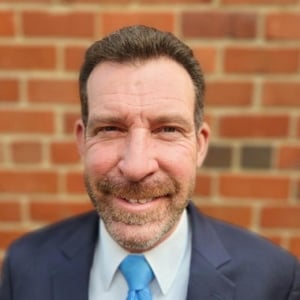
Visiting Fellow, National Security Institute, George Mason University's Antonin Scalia Law School
Mr. Taylor was counsel and chief counsel of the House Subcommittee on the Constitution, Civil Rights, and Civil Liberties, for over 20 years, where he shepherded dozens of bills through committee to be signed into law by presidents of both political parties. He was also counsel to the House Oversight Committee, where he handled constitutional and civil rights issues. He is the author of over a dozen law review articles on legal reform, continuity in government, religious liberty, congressional powers, civil rights, and patent law. He is an elected member of the American Law Institute (the first active congressional staff person elected to that body in its 100-year history), a 1991 graduate of Yale University (BA, summa cum laude), and a 1994 graduate of Harvard Law School (JD, cum laude). He is a Visiting Fellow at the National Security Institute at George Mason University's Antonin Scalia Law School.
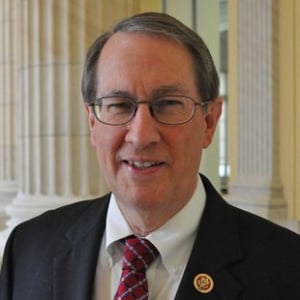
Former Congressman, United States House of Representatives
Bob Goodlatte served in the United States House of Representatives representing Virginia's 6th congressional district for 13 terms.
Goodlatte’s service to the people of the Sixth District began in 1977 when he became District Director for former Congressman Caldwell Butler. He served in this position for two years until 1979, and was responsible for helping folks across the District seeking assistance with or encountering problems from various federal agencies. In 1979, he founded his own private law practice in Roanoke. Later, he was a partner in the law firm of Bird, Kinder and Huffman, working there from 1981 until taking office.
Rep. Goodlatte was first elected to serve as Chairman of the House Judiciary Committee in the 113th Congress. He was the first Judiciary Committee Chairman from Virginia in the last 125 years. Rep. Goodlatte was an active Member of the Judiciary Committee since arriving in Congress, serving in a variety of leadership positions on the Committee including taking the lead on many intellectual property issues. During his time in Congress, Rep. Goodlatte made a name for himself as a leader on Internet and technology issues. He was Co-Chair of the Congressional Internet Caucus and the International Creativity and Theft-Prevention Caucus.
Rep. Goodlatte is a graduate of Washington and Lee University School of Law, and his undergraduate degree in Government was earned at Bates College in Lewiston, Maine.
Principal, Clear IP, LLC
Joseph Matal is the Principal at Clear IP, LLC.
Joe has served as both the U.S. Patent and Trademark’s Acting Director and Acting Solicitor. As Acting Solicitor, he defended the agency in intellectual property cases before the U.S. Court of Appeals for the Federal Circuit and U.S. Supreme Court. In his role in the Solicitor’s Office, he participated in briefing almost every major case involving PTAB trials that has come before the Federal Circuit, including cases that have defined the Board’s powers and the evidence that it may consider, the content of final decisions, and the burdens and scope of motions to amend. Recent cases include Uniloc v. Hulu, Thryv v. Click-to-Call, and Aqua Products v. Matal. Previously, Joe served in senior legal roles for more than a decade for the U.S. Senate Judiciary Committee. In that capacity, he negotiated and drafted many of the key provisions of the America Invents Act.
In his roles at the USPTO, Joe briefed and argued numerous appeals of patent and trademark decisions before the Federal Circuit; oversaw the management of the USPTO and its 13,000 employees; and advised the U.S. Solicitor General’s Office in key IP cases before the Supreme Court.
Visiting Fellow, National Security Institute, George Mason University's Antonin Scalia Law School
Mr. Taylor was counsel and chief counsel of the House Subcommittee on the Constitution, Civil Rights, and Civil Liberties, for over 20 years, where he shepherded dozens of bills through committee to be signed into law by presidents of both political parties. He was also counsel to the House Oversight Committee, where he handled constitutional and civil rights issues. He is the author of over a dozen law review articles on legal reform, continuity in government, religious liberty, congressional powers, civil rights, and patent law. He is an elected member of the American Law Institute (the first active congressional staff person elected to that body in its 100-year history), a 1991 graduate of Yale University (BA, summa cum laude), and a 1994 graduate of Harvard Law School (JD, cum laude). He is a Visiting Fellow at the National Security Institute at George Mason University's Antonin Scalia Law School.
Former Congressman, United States House of Representatives
Bob Goodlatte served in the United States House of Representatives representing Virginia's 6th congressional district for 13 terms.
Goodlatte’s service to the people of the Sixth District began in 1977 when he became District Director for former Congressman Caldwell Butler. He served in this position for two years until 1979, and was responsible for helping folks across the District seeking assistance with or encountering problems from various federal agencies. In 1979, he founded his own private law practice in Roanoke. Later, he was a partner in the law firm of Bird, Kinder and Huffman, working there from 1981 until taking office.
Rep. Goodlatte was first elected to serve as Chairman of the House Judiciary Committee in the 113th Congress. He was the first Judiciary Committee Chairman from Virginia in the last 125 years. Rep. Goodlatte was an active Member of the Judiciary Committee since arriving in Congress, serving in a variety of leadership positions on the Committee including taking the lead on many intellectual property issues. During his time in Congress, Rep. Goodlatte made a name for himself as a leader on Internet and technology issues. He was Co-Chair of the Congressional Internet Caucus and the International Creativity and Theft-Prevention Caucus.
Rep. Goodlatte is a graduate of Washington and Lee University School of Law, and his undergraduate degree in Government was earned at Bates College in Lewiston, Maine.
Partner, Jackson Walker
Arthur offers clients a winning combination of trial and appellate experience gained as a federal prosecutor and more than 20 years of experience in handling patent, copyright, trademark, and trade secrets litigation.
While his practice concentrates on intellectual property litigation, Arthur also has significant experience in internal investigations, False Claims Act suits, partnership and breach of fiduciary duty, breach of contract, and employment litigation. Arthur also has represented clients testifying before Congressional committees.
Arthur writes and speaks frequently on topics ranging from the case against Boston bomber Dzhokhar Tsarnaev to patent litigation reform.
Prior to joining Michael Best, Arthur served as an Assistant United States Attorney in the Southern District of New York, where he was the lead prosecutor in criminal trials, including federal intellectual property crimes. He also argued numerous appeals.
Partner, Knobbe Martens
Philip Nelson counsels clients in all stages of growth, from startups to established public companies. To jump-start young portfolios, Mr. Nelson pioneered use of special programs to cut through red tape for rapid patent allowance. For those wanting to preserve options at minimal cost, he has a tested protocol. He especially enjoys laying sophisticated patent minefields, protecting core assets with an eye to the future concept and product pipeline. No matter when he joins the team, he quickly grasps the technology and points to the best options to support the business.
Mr. Nelson builds value for investment and acquisition by working with company visionaries and scientists to describe and protect their ideas. Although the patent office likes to say “no,” he works through the objections, often speaking to patent examiners in person to negotiate for better claims. Collegial persistence and technical tutorials tend to persuade examiners, getting them to “yes.”
Mr. Nelson drafts and negotiates technology agreements and advises on big-picture strategy. When opposing diligence counsel is just pasting in a pat phrase from a template, he uses his experience from the trenches (prosecuting, negotiating, and litigating) to correct the meaning and serve his clients.
Mr. Nelson advises on contested matters, drafts litigation briefs, and works closely with litigator colleagues. He negotiates with his clients’ adversaries to avoid suit or improve litigation positions. When a competitor claimed to own his client’s invention in chemistry lab instruments, he won two patent office “interferences”—and a Federal Circuit appeal—to preserve his client’s ownership rights. He handles complex patent office trials such as interferences, derivations, and inter-partes reviews. He did reexaminations and inter-partes reexaminations back before they were cool (before the America Invents Act popularized Board proceedings).
His physics background and widely varied experience at a top intellectual property boutique for almost 20 years has created a sophisticated advocate for his clients. Mr. Nelson looks forward to helping you assess the field, build your defenses, close your deal, and rain fire on your IP problems and adversaries.
Chief Policy Officer and Counsel, The Council for Innovation Promotion
Jamie Simpson is Chief Policy Officer and Counsel for The Council for Innovation Promotion (c4IP), which is a bipartisan coalition dedicated to promoting strong and effective intellectual property rights that drive innovation, boost economic competitiveness, and improve lives everywhere.
Simpson has almost 20 years of experience in policy and a specific focus on IP-related issues. She previously served as Chief Counsel on the House Judiciary Subcommittee on Courts, IP, and the Internet; Counsel to the Senate Judiciary Committee while on detail from the U.S. Patent and Trademark Office; and Associate Solicitor at the USPTO.
A graduate of Harvard Law School and, previously, a law clerk at the United States Court of Appeals for the Federal Circuit, Simpson has extensive expertise in intellectual property law and policy, as well as an earlier background of working on patent litigation and licensing disputes.
Founder and Owner, RPT Legal Strategies PC
Bob Taylor is the founder and owner of RPT Legal Strategies PC in San Francisco and Palo Alto, providing legal and business advice to companies and investors with respect to all aspects of intellectual property and related fields of endeavor. He also serves as a Venture Advisor to New Enterprise Associates and as a patent law expert for the National Venture Capital Association.
He is a Fellow of the American College of Trial Lawyers, a former chair of the Antitrust Section of American Bar Association, and a Lifetime Member of the American Law Institute.
Bob has written and lectured extensively on the business and legal problems associated with both intellectual property protection and the laws related to competition.
Bob holds a J.D degree from Georgetown University Law Center and was a member of the editorial board of the Georgetown Law Journal. He holds a B.S.E.E degree from the University of Arizona.
Senior Research Fellow (Wolfson College); Fellow (Lauterpacht Centre for International Law), Faculty of Law, University of Cambridge
Over twenty years' experience as legal adviser, advocate, and strategist in complex multi-jurisdiction matters across several substantive fields, including public international law, international investment protection, trade law, and law of the sea. Academic writings on international arbitration, international organizations, use of force, State immunity, State succession, recognition of States, artificial intelligence, law & technology.
Stevenson Bernard Professor, George Washington University Law School
The Honorable F. Scott Kieff is the Stevenson Bernard Professor at George Washington University Law School and a Visiting Fellow at Stanford University’s Hoover Institution.
He served as Commissioner of the U.S. International Trade Commission from 2013-2017. He also served during the Bush, Obama, and Trump Administrations in the part-time leadership of the national security defense-intelligence community.
He was previously a professor of law and medicine at Washington University in Saint Louis and a Senior Fellow at Hoover. A former law clerk to U.S. Circuit Judge Giles S. Rich, he is a graduate of Penn Law School and MIT, where he studied molecular biology and microeconomics. He was elected to the European Academy of Sciences and Arts in 2012 and the Academia Europaea in 2024.
His private sector work through Kieff Strategies LLC (www.kieffstrategies.com) provides neutral services including mediation and compliance, and expert services including crisis management, advising, and testimony.
Former Chief Judge, United States Court of Appeals for the Federal Circuit
Judge Michel served for more than 22 years on the Federal Circuit, retiring on May 31, 2010. From December 25, 2004 until his retirement, he also discharged the duties of Chief Judge of this national court, serving simultaneously on the U.S. Judicial Conference -- the Judiciary's governing body -- and by appointment of the Chief Justice on its seven-judge Executive Committee.
He judged several thousand appeals and authored more than 800 opinions, one third concerning intellectual property law. Intellectual Asset Management magazine inducted him into its Hall of Fame and he was designated one of the 50 most influential leaders in intellectual property law in the world. His contributions were also recognized by lifetime achievement and similar awards by the American Intellectual Property Law Association (AIPLA); Intellectual Property Owners Education Foundation (IPO); the American Bar Association's Intellectual Property Section; Managing Intellectual Property magazine; the Sedona Conference; the Patent and Trademark Office Society (PTOS); the New York, Chicago, Philadelphia, and Los Angeles Intellectual Property Law Associations; and the William C. Connor, the Giles S. Rich, and the Richard Linn Intellectual Property American Inns of Court. In 2010 the Los Angeles IP Inn was renamed in his honor as the Paul R. Michel IP Inn.
Judge Michel received the Jefferson Medal, the Eli Whitney Award, and the Katz-Kiley Prize as well as Honorary Doctor of Law degrees from the Catholic University of America and the John Marshall Law School. He is a lifetime Member of Honore of FICPI, the international association of private practitioners of intellectual property law. Williams College granted him the Kellogg Award for "outstanding leadership in law and public service."
Judge Michel has written numerous articles on patent law and advocacy, taught related courses and master classes at George Washington University, the University of Akron, and John Marshall law schools, serving as well on their IP advisory boards and on counterpart boards at the universities of California (Berkley), Washington, and Maryland. He co-authored a casebook, Patent Litigation and Strategy (West, 1999) and an August 2010 editorial in the New York Times on strengthening the patent system to promote prosperity and create new jobs.
A frequent speaker at conferences and law schools during his judicial tenure and since, he retired from a lifetime appointment to be free to speak out on the national need for better patent policy and protection of intellectual property and the vital, unmet resource needs of the courts, the PTO, the International Trade Commission, and other IP-related agencies. He was appointed Distinguished Scholar in Residence by IPO, following his retirement. Judge Michel also consults for law firms and their clients in intellectual property litigations, conducting moot courts, mock trials, case evaluations, editing briefs, advising on strategy and providing mediation and arbitration services.

SAP, Motorola, and the Future of PTAB Reform
Arthur Gollwitzer, Philip M. Nelson, Jamie Simpson, Robert P. Taylor
The Patent Trial and Appeal Board (PTAB), created under the America Invents Act (AIA) of...
SAP, Motorola, and the Future of PTAB Reform
Arthur Gollwitzer, Philip M. Nelson, Jamie Simpson, Robert P. Taylor
The Patent Trial and Appeal Board (PTAB), created under the America Invents Act (AIA) of...
SAP, Motorola, and the Future of PTAB Reform
Topics
Why Weak Intellectual Property Rights Threaten Innovation and Competition
Over the past two decades, a largely overlooked revolution in intellectual property law has taken...
Topics
To Promote Smaller Innovators, We May Need Reforms to the PTAB
Almost every civilization since the Renaissance has sought to incentivize individuals to invent technologies that...
Topics
The PREVAIL Act: Reforming Patent Challenges at the USPTO
The America Invents Act of 2011 brought fundamental changes to the U.S. patent system, one...
A Response to: Ten Years On: The America Invents Act and the role of the Patent Trial and Appeal Board in resolving patent disputes
Thomas D. Grant, F. Scott Kieff, Paul Redmond Michel
Join us on July 27 to hear three experts give a response to our April...
A Response to: Ten Years On: The America Invents Act and the role of the Patent Trial and Appeal Board in resolving patent disputes
TeleforumTen Years On: The America Invents Act and the role of the Patent Trial and Appeal Board in resolving patent disputes
Joseph Matal, Paul Brian Taylor, Bob Goodlatte
On September 16, 2011, President Obama signed the American Invents Act (AIA) into law. The...
Ten Years On: The America Invents Act and the role of the Patent Trial and Appeal Board in resolving patent disputes
Joseph Matal, Paul Brian Taylor, Bob Goodlatte
On September 16, 2011, President Obama signed the American Invents Act (AIA) into law. The...