
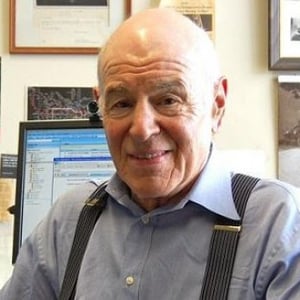
Professor of Law, Elisabeth Haub School of Law at Pace University
Professor Ben Gershman is one of the original faculty members at Pace Law and has taught as a visiting professor at Cornell Law School and Syracuse Law School. While in private practice he specialized in criminal defense litigation. A former prosecutor with the Manhattan District Attorney’s office for six years, he is the author of numerous articles as well as two books on prosecutorial and judicial ethics. He served for four years with the Special State Prosecutor investigating corruption in the judicial system. He is one of the nation’s leading experts on prosecutorial misconduct. He is active on several Bar Association committees, and is a frequent pro bono litigator. Professor Gershman has taught in the London Law Program, and was named James D. Hopkins Professor for the 2007–2009 academic years.
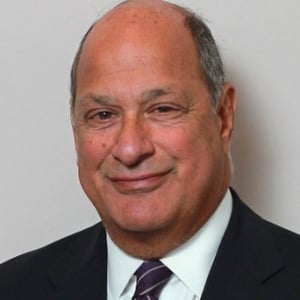
Senior Counsel, Stroock & Stroock & Lavan LLP
Joel Cohen, an experienced white-collar criminal lawyer, joined the firm in 1985 after ten years as a prosecutor, first with the New York State Special Prosecutor’s Office and, second, as an Assistant Attorney-in-Charge with the U.S. Justice Department’s Organized Crime & Racketeering Section (E.D.N.Y.). In those positions, he concentrated in the investigation, prosecution and trial of organized crime figures and corruption cases involving high-ranking public officials in New York, including the top leadership of the Colombo crime family, many members of the elite narcotics division of the New York Police Department, and the first ever prosecution of a sitting FBI agent.
Since arriving at Stroock, Mr. Cohen has represented and actively counseled individuals and corporations that have been investigated and/or prosecuted for alleged federal racketeering, securities violations, tax evasion, bribery, fraud, corruption, obstruction of justice, money laundering, environmental offenses, and customs violations involving alleged international frauds. He has also represented attorneys on ethical issues and in disciplinary proceedings in a number of jurisdictions in the New York area.
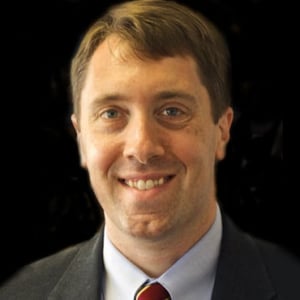
Professor of Law, Antonin Scalia Law School, George Mason University
Eric R. Claeys is Professor of Law at the Antonin Scalia Law School, George Mason University. He has written widely in the fields of property, private law, and constitutional law. Professor Claeys’s current research interests focus on flourishing- and labor-based natural rights justifications for property—in American property theory, in intellectual property, and in contemporary regulation of shale gas exploration and hydraulic fracturing. He is a member of the American Law Institute, he serves on the ALI’s Members’ Consultative Group for the first Restatement of Copyright, and he also serves as an adviser to the Restatement (Fourth) of the Law of Property.
Professor Claeys received his JD from the University of Southern California Gould School of Law. He received his AB from Princeton University, and he is a former visiting fellow and current member of Princeton’s Politics Department’s James Madison Program in American Ideals and Institutions. After law school, Professor Claeys clerked for the Hon. Melvin Brunetti, U.S. Court of Appeals for the Ninth Circuit, and the Hon. William H. Rehnquist, Chief Justice of the United States.
Professor Claeys’s main teaching interests include Property, Torts, Jurisprudence, and Intellectual Property. In recent years, he has also taught Water Law, Remedies, Estates and Trusts, Trade Secrecy, Constitutional Law, Torts, and Oil and Gas law. Spring 2018, he is teaching Torts and Jurisprudence as a Visiting Professor at Harvard Law School.
U.S. Court of Appeals, Eighth Circuit
Steven M. Colloton is a federal judge on the United States Court of Appeals for the Eighth Circuit. He joined the court in 2003 after being nominated by President George W. Bush.
Born in Iowa City, Iowa, Colloton received his bachelor's degree from Princeton University in 1985 and a J.D. from Yale Law School in 1988.
Policy Counsel on Energy, Environment, and Agriculture, U.S. Senate Republican Policy Committee
Matt Leggett serves as Policy Counsel for the U.S. Senate Republican Policy Committee. He provides in-depth analysis on energy, environment, and agriculture issues, policy solutions and alternatives, and strategic guidance for all Republican members of the U.S. Senate. He manages the committee's advancement of Republican energy, environment, and agriculture policies by providing positions on legislation, floor debate, and votes. Senator John Barrasso, an orthopedic surgeon from Wyoming, serves as chairman of the committee and is the fourth ranking member of Republican leadership in the U.S. Senate.
Mr. Leggett formerly served as Legislative Counsel in the U.S. House of Representatives where he managed a Republican Congressman's Energy & Commerce Committee assignment, co-chairmanship of the Congressional Natural Gas Caucus, and co-chairmanship of the Congressional Steel Caucus. Previously, he served as a legislative aide for the U.S. House Committee on Agriculture and for a senior U.S. Senator. He also practiced corporate law in Washington, DC for two years.
Mr. Leggett graduated from the University of Virginia and Vanderbilt University Law School. He is a member of the Virginia State Bar and the District of Columbia Bar. He is also a member of the Energy Bar Association.
University Professor on the Environment, and Kerlin Professor Em, Pace University School of Law
Nicholas A. Robinson is University Professor for the Environment at Pace University and the Gilbert & Sarah Kerlin Distinguished Professor of Environmental Law at Pace Law School, and since 2006 also holds an appointment as Professor Adjunct at the Yale University School of Forestry & Environmental Studies. He served from 1996-2004 as the Legal Advisor of the International Union for the Conservation of Nature and Natural Resources (IUCN), and chaired its Commission on Environmental Law. He served on the President’s Council on Environmental Quality’s Legal Advisory Committee from 1970-72, and pioneered the early practice of environmental law in New York with James Marshall and then David Sive. In 2012, IUCN’s World Conservation Congress conferred upon him IUCN’s Honorary Membership for his contributions to IUCN and its environmental law program. In 1978, he inaugurated Pace Law School’s degree programs in environmental legal studies, taking a leave to serve as the General Counsel of the NY State Department of Environmental Conservation (1983-85). He was an environmental law delegate to the bilateral USA-USSR negotiations on cooperation in the field of environmental protection under five presidents (1974-1996). He currently serves on the Environmental & Social Advisory Council to the European Bank for Reconstruction and Development (EBRD) in London. He has chaired both the Environmental Law and International Environmental Law Committees of the New York City Bar, and served on the Board of the Environmental Law Institute (2005-11). His publications including editing the annotated 5-volume edition of the traveaux préparatoires for the 1992 Rio Earth Summit’s Agenda 21 and the UNCED Proceedings, and two volumes on Capacity Building for Environmental Law in the Asia and Pacific Region for the Asian Development Bank. He co-edited the UN Environment Programme’s Manual on International Environmental Law (2006). He has been a draftsman for the UN World Charter for Nature (UNGA Res. 37/7) and international agreements, for New York’s wetlands legislation and wild birds law, and for environmental impact assessment rules, and other domestic environmental legislation. He is a graduate of Brown University (Phi Beta Kappa, 1967) and Columbia University School of Law (1970).
Trustee Professor of Law, New York Law School
From 1972-79, Schoenbrod served as one of the leaders of the Natural Resources Defense Council, where he campaigned to reduce lead in gasoline, resurrect the then-decrepit New York City subway, and protect the environment of Puerto Rico. Previously, he was Director of Program Development at the community development project that Senator Robert Kennedy established in Bedford Stuyvesant. He has also been a senior fellow at the Cato Institute and the American Enterprise Institute.
His books include
D.C. Confidential: Inside the Five Tricks of Washington (Encounter Books, 2017) with forewords by Governor Howard Dean and Senator Mike Lee;
Breaking the Logjam: Environmental Protection That Will Work (Yale University Press, 2010)(with Richard B. Stewart and Katrina M. Wyman);
Saving Our Environment from Washington: How Congress Grabs Power, Shirks Responsibility, and Shortchanges the People (Yale University Press, 2005);
Democracy by Decree: What Happens When Courts Run Government (Yale University Press, 2003) (with Ross Sandler); and
Power Without Responsibility: How Congress Abuses the People Through Delegation (Yale University Press, 1993).
In addition to writing scholarly articles, he has frequently contributed opinion pieces to the Wall Street Journal, The Hill, the New York Times, and other publications.
He has an undergraduate degree from Yale College, a graduate degree in economics from Oxford University, which he attended as a Marshall Scholar, and a law degree from Yale Law School.
Professor of Law, Antonin Scalia Law School, George Mason University
Eric R. Claeys is Professor of Law at the Antonin Scalia Law School, George Mason University. He has written widely in the fields of property, private law, and constitutional law. Professor Claeys’s current research interests focus on flourishing- and labor-based natural rights justifications for property—in American property theory, in intellectual property, and in contemporary regulation of shale gas exploration and hydraulic fracturing. He is a member of the American Law Institute, he serves on the ALI’s Members’ Consultative Group for the first Restatement of Copyright, and he also serves as an adviser to the Restatement (Fourth) of the Law of Property.
Professor Claeys received his JD from the University of Southern California Gould School of Law. He received his AB from Princeton University, and he is a former visiting fellow and current member of Princeton’s Politics Department’s James Madison Program in American Ideals and Institutions. After law school, Professor Claeys clerked for the Hon. Melvin Brunetti, U.S. Court of Appeals for the Ninth Circuit, and the Hon. William H. Rehnquist, Chief Justice of the United States.
Professor Claeys’s main teaching interests include Property, Torts, Jurisprudence, and Intellectual Property. In recent years, he has also taught Water Law, Remedies, Estates and Trusts, Trade Secrecy, Constitutional Law, Torts, and Oil and Gas law. Spring 2018, he is teaching Torts and Jurisprudence as a Visiting Professor at Harvard Law School.
U.S. Court of Appeals, Eighth Circuit
Steven M. Colloton is a federal judge on the United States Court of Appeals for the Eighth Circuit. He joined the court in 2003 after being nominated by President George W. Bush.
Born in Iowa City, Iowa, Colloton received his bachelor's degree from Princeton University in 1985 and a J.D. from Yale Law School in 1988.
Policy Counsel on Energy, Environment, and Agriculture, U.S. Senate Republican Policy Committee
Matt Leggett serves as Policy Counsel for the U.S. Senate Republican Policy Committee. He provides in-depth analysis on energy, environment, and agriculture issues, policy solutions and alternatives, and strategic guidance for all Republican members of the U.S. Senate. He manages the committee's advancement of Republican energy, environment, and agriculture policies by providing positions on legislation, floor debate, and votes. Senator John Barrasso, an orthopedic surgeon from Wyoming, serves as chairman of the committee and is the fourth ranking member of Republican leadership in the U.S. Senate.
Mr. Leggett formerly served as Legislative Counsel in the U.S. House of Representatives where he managed a Republican Congressman's Energy & Commerce Committee assignment, co-chairmanship of the Congressional Natural Gas Caucus, and co-chairmanship of the Congressional Steel Caucus. Previously, he served as a legislative aide for the U.S. House Committee on Agriculture and for a senior U.S. Senator. He also practiced corporate law in Washington, DC for two years.
Mr. Leggett graduated from the University of Virginia and Vanderbilt University Law School. He is a member of the Virginia State Bar and the District of Columbia Bar. He is also a member of the Energy Bar Association.
University Professor on the Environment, and Kerlin Professor Em, Pace University School of Law
Nicholas A. Robinson is University Professor for the Environment at Pace University and the Gilbert & Sarah Kerlin Distinguished Professor of Environmental Law at Pace Law School, and since 2006 also holds an appointment as Professor Adjunct at the Yale University School of Forestry & Environmental Studies. He served from 1996-2004 as the Legal Advisor of the International Union for the Conservation of Nature and Natural Resources (IUCN), and chaired its Commission on Environmental Law. He served on the President’s Council on Environmental Quality’s Legal Advisory Committee from 1970-72, and pioneered the early practice of environmental law in New York with James Marshall and then David Sive. In 2012, IUCN’s World Conservation Congress conferred upon him IUCN’s Honorary Membership for his contributions to IUCN and its environmental law program. In 1978, he inaugurated Pace Law School’s degree programs in environmental legal studies, taking a leave to serve as the General Counsel of the NY State Department of Environmental Conservation (1983-85). He was an environmental law delegate to the bilateral USA-USSR negotiations on cooperation in the field of environmental protection under five presidents (1974-1996). He currently serves on the Environmental & Social Advisory Council to the European Bank for Reconstruction and Development (EBRD) in London. He has chaired both the Environmental Law and International Environmental Law Committees of the New York City Bar, and served on the Board of the Environmental Law Institute (2005-11). His publications including editing the annotated 5-volume edition of the traveaux préparatoires for the 1992 Rio Earth Summit’s Agenda 21 and the UNCED Proceedings, and two volumes on Capacity Building for Environmental Law in the Asia and Pacific Region for the Asian Development Bank. He co-edited the UN Environment Programme’s Manual on International Environmental Law (2006). He has been a draftsman for the UN World Charter for Nature (UNGA Res. 37/7) and international agreements, for New York’s wetlands legislation and wild birds law, and for environmental impact assessment rules, and other domestic environmental legislation. He is a graduate of Brown University (Phi Beta Kappa, 1967) and Columbia University School of Law (1970).
Trustee Professor of Law, New York Law School
From 1972-79, Schoenbrod served as one of the leaders of the Natural Resources Defense Council, where he campaigned to reduce lead in gasoline, resurrect the then-decrepit New York City subway, and protect the environment of Puerto Rico. Previously, he was Director of Program Development at the community development project that Senator Robert Kennedy established in Bedford Stuyvesant. He has also been a senior fellow at the Cato Institute and the American Enterprise Institute.
His books include
D.C. Confidential: Inside the Five Tricks of Washington (Encounter Books, 2017) with forewords by Governor Howard Dean and Senator Mike Lee;
Breaking the Logjam: Environmental Protection That Will Work (Yale University Press, 2010)(with Richard B. Stewart and Katrina M. Wyman);
Saving Our Environment from Washington: How Congress Grabs Power, Shirks Responsibility, and Shortchanges the People (Yale University Press, 2005);
Democracy by Decree: What Happens When Courts Run Government (Yale University Press, 2003) (with Ross Sandler); and
Power Without Responsibility: How Congress Abuses the People Through Delegation (Yale University Press, 1993).
In addition to writing scholarly articles, he has frequently contributed opinion pieces to the Wall Street Journal, The Hill, the New York Times, and other publications.
He has an undergraduate degree from Yale College, a graduate degree in economics from Oxford University, which he attended as a Marshall Scholar, and a law degree from Yale Law School.
Professor of Law, Elisabeth Haub School of Law at Pace University
Professor Ben Gershman is one of the original faculty members at Pace Law and has taught as a visiting professor at Cornell Law School and Syracuse Law School. While in private practice he specialized in criminal defense litigation. A former prosecutor with the Manhattan District Attorney’s office for six years, he is the author of numerous articles as well as two books on prosecutorial and judicial ethics. He served for four years with the Special State Prosecutor investigating corruption in the judicial system. He is one of the nation’s leading experts on prosecutorial misconduct. He is active on several Bar Association committees, and is a frequent pro bono litigator. Professor Gershman has taught in the London Law Program, and was named James D. Hopkins Professor for the 2007–2009 academic years.

George C. Dix Professor in Constitutional Law, Northwestern University Pritzker School of Law
John O. McGinnis is a graduate of Harvard College and Harvard Law School where he was an editor of the Harvard Law Review. He also has an MA degree from Balliol College, Oxford, in philosophy and theology. Professor McGinnis clerked on the U.S. Court of Appeals for the District of Columbia. From 1987 to 1991, he was deputy assistant attorney general in the Office of Legal Counsel at the Department of Justice. He is the author of Accelerating Democracy: Transforming Government Through Technology (Princeton 2013) and Originalism and the Good Constitution (Harvard 2013) (with M. Rappaport). He is a past winner of the Paul Bator award given by the Federalist Society to an outstanding academic under 40. He has been listed by the United States on the roster of panelists who may be called upon to decide World Trade Organization Disputes.
Director of the National Research Initiative, American Enterprise Institute
Professor of Law, Antonin Scalia Law School, George Mason University
Eric R. Claeys is Professor of Law at the Antonin Scalia Law School, George Mason University. He has written widely in the fields of property, private law, and constitutional law. Professor Claeys’s current research interests focus on flourishing- and labor-based natural rights justifications for property—in American property theory, in intellectual property, and in contemporary regulation of shale gas exploration and hydraulic fracturing. He is a member of the American Law Institute, he serves on the ALI’s Members’ Consultative Group for the first Restatement of Copyright, and he also serves as an adviser to the Restatement (Fourth) of the Law of Property.
Professor Claeys received his JD from the University of Southern California Gould School of Law. He received his AB from Princeton University, and he is a former visiting fellow and current member of Princeton’s Politics Department’s James Madison Program in American Ideals and Institutions. After law school, Professor Claeys clerked for the Hon. Melvin Brunetti, U.S. Court of Appeals for the Ninth Circuit, and the Hon. William H. Rehnquist, Chief Justice of the United States.
Professor Claeys’s main teaching interests include Property, Torts, Jurisprudence, and Intellectual Property. In recent years, he has also taught Water Law, Remedies, Estates and Trusts, Trade Secrecy, Constitutional Law, Torts, and Oil and Gas law. Spring 2018, he is teaching Torts and Jurisprudence as a Visiting Professor at Harvard Law School.
U.S. Court of Appeals, Eighth Circuit
Steven M. Colloton is a federal judge on the United States Court of Appeals for the Eighth Circuit. He joined the court in 2003 after being nominated by President George W. Bush.
Born in Iowa City, Iowa, Colloton received his bachelor's degree from Princeton University in 1985 and a J.D. from Yale Law School in 1988.
Policy Counsel on Energy, Environment, and Agriculture, U.S. Senate Republican Policy Committee
Matt Leggett serves as Policy Counsel for the U.S. Senate Republican Policy Committee. He provides in-depth analysis on energy, environment, and agriculture issues, policy solutions and alternatives, and strategic guidance for all Republican members of the U.S. Senate. He manages the committee's advancement of Republican energy, environment, and agriculture policies by providing positions on legislation, floor debate, and votes. Senator John Barrasso, an orthopedic surgeon from Wyoming, serves as chairman of the committee and is the fourth ranking member of Republican leadership in the U.S. Senate.
Mr. Leggett formerly served as Legislative Counsel in the U.S. House of Representatives where he managed a Republican Congressman's Energy & Commerce Committee assignment, co-chairmanship of the Congressional Natural Gas Caucus, and co-chairmanship of the Congressional Steel Caucus. Previously, he served as a legislative aide for the U.S. House Committee on Agriculture and for a senior U.S. Senator. He also practiced corporate law in Washington, DC for two years.
Mr. Leggett graduated from the University of Virginia and Vanderbilt University Law School. He is a member of the Virginia State Bar and the District of Columbia Bar. He is also a member of the Energy Bar Association.
University Professor on the Environment, and Kerlin Professor Em, Pace University School of Law
Nicholas A. Robinson is University Professor for the Environment at Pace University and the Gilbert & Sarah Kerlin Distinguished Professor of Environmental Law at Pace Law School, and since 2006 also holds an appointment as Professor Adjunct at the Yale University School of Forestry & Environmental Studies. He served from 1996-2004 as the Legal Advisor of the International Union for the Conservation of Nature and Natural Resources (IUCN), and chaired its Commission on Environmental Law. He served on the President’s Council on Environmental Quality’s Legal Advisory Committee from 1970-72, and pioneered the early practice of environmental law in New York with James Marshall and then David Sive. In 2012, IUCN’s World Conservation Congress conferred upon him IUCN’s Honorary Membership for his contributions to IUCN and its environmental law program. In 1978, he inaugurated Pace Law School’s degree programs in environmental legal studies, taking a leave to serve as the General Counsel of the NY State Department of Environmental Conservation (1983-85). He was an environmental law delegate to the bilateral USA-USSR negotiations on cooperation in the field of environmental protection under five presidents (1974-1996). He currently serves on the Environmental & Social Advisory Council to the European Bank for Reconstruction and Development (EBRD) in London. He has chaired both the Environmental Law and International Environmental Law Committees of the New York City Bar, and served on the Board of the Environmental Law Institute (2005-11). His publications including editing the annotated 5-volume edition of the traveaux préparatoires for the 1992 Rio Earth Summit’s Agenda 21 and the UNCED Proceedings, and two volumes on Capacity Building for Environmental Law in the Asia and Pacific Region for the Asian Development Bank. He co-edited the UN Environment Programme’s Manual on International Environmental Law (2006). He has been a draftsman for the UN World Charter for Nature (UNGA Res. 37/7) and international agreements, for New York’s wetlands legislation and wild birds law, and for environmental impact assessment rules, and other domestic environmental legislation. He is a graduate of Brown University (Phi Beta Kappa, 1967) and Columbia University School of Law (1970).
Trustee Professor of Law, New York Law School
From 1972-79, Schoenbrod served as one of the leaders of the Natural Resources Defense Council, where he campaigned to reduce lead in gasoline, resurrect the then-decrepit New York City subway, and protect the environment of Puerto Rico. Previously, he was Director of Program Development at the community development project that Senator Robert Kennedy established in Bedford Stuyvesant. He has also been a senior fellow at the Cato Institute and the American Enterprise Institute.
His books include
D.C. Confidential: Inside the Five Tricks of Washington (Encounter Books, 2017) with forewords by Governor Howard Dean and Senator Mike Lee;
Breaking the Logjam: Environmental Protection That Will Work (Yale University Press, 2010)(with Richard B. Stewart and Katrina M. Wyman);
Saving Our Environment from Washington: How Congress Grabs Power, Shirks Responsibility, and Shortchanges the People (Yale University Press, 2005);
Democracy by Decree: What Happens When Courts Run Government (Yale University Press, 2003) (with Ross Sandler); and
Power Without Responsibility: How Congress Abuses the People Through Delegation (Yale University Press, 1993).
In addition to writing scholarly articles, he has frequently contributed opinion pieces to the Wall Street Journal, The Hill, the New York Times, and other publications.
He has an undergraduate degree from Yale College, a graduate degree in economics from Oxford University, which he attended as a Marshall Scholar, and a law degree from Yale Law School.
Adjunct Professor, Belmont Abbey College

The Grand Jury: A Bulwark Against the State? [POLICYbrief]
Bennett L. Gershman, Joel Cohen
The grand jury has been called a sword and shield for the people, but is...
The Legacy of Justice Scalia
Pace Student Chapter
White Plains, NYA Debate on the New Gender Neutral Bathrooms
Constitutional and Legal Implications of the Potential Election Outcomes
Environmental Law: The Role of Congress in Environmental Law
Eric R. Claeys, Steven Colloton, Matt Leggett, Nicholas A. Robinson, David S. Schoenbrod
Environmental law and policy raise profound questions about Congress's role and responsibilities. Many environmental regulatory...
Environmental Law: The Role of Congress in Environmental Law
Eric R. Claeys, Steven Colloton, Matt Leggett, Nicholas A. Robinson, David S. Schoenbrod
Environmental law and policy raise profound questions about Congress's role and responsibilities. Many environmental regulatory...
Environmental Law: The Role of Congress in Environmental Law
2015 National Lawyers Convention
Washington, DCEnvironmental Law