
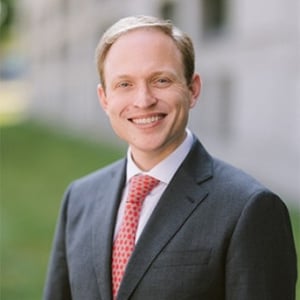
Dean; J. Gilbert Reese Chair in Contract Law, Moritz College of Law, The Ohio State University
Kent Barnett is the 21st dean of the Michael E. Moritz College of Law at The Ohio State University and the J. Gilbert Reese Chair in Contract Law. He is focused on bringing people in—by enriching the College’s inclusive community and increasing financial support for students—and then bringing them up—by focusing on community-building, career development, and rigorous legal training.
As a scholar of separation of powers and administrative law, his scholarship has been published in, among other places, the New York University, Michigan, Duke, Vanderbilt, and Notre Dame Law Reviews. Barnett’s work has been cited by leading administrative law casebooks, federal district and appellate courts, and the U.S. Supreme Court. He has taught contracts and sales, consumer law, legal ethics, and administrative law.
Prior to joining Ohio State, Barnett served as the Associate Dean for Academic Affairs and the J. Alton Hosch Professor at the University of Georgia School of Law. He received the C. Ronald Ellington Award for Excellence in Teaching, the school’s highest teaching honor, and was selected to serve as a faculty marshal by three graduating classes for commencement ceremonies. Barnett also clerked for Judge John Rogers of the U.S. Court of Appeals for the Sixth Circuit and practiced law at Weil, Gotshal & Manges in its complex commercial litigation and appellate groups.
After years as an appointed public member, Barnett is a Senior Fellow of the Administrative Conference of the United States (ACUS) and was the chair of AALS Administrative Law Section.
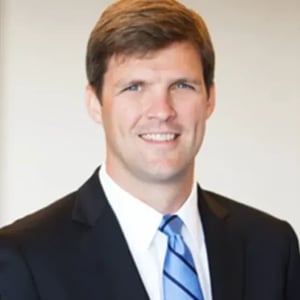
Judge, United States District Court for the Western District of Kentucky
Prior to joining the bench, Judge Beaton was a Partner at Squire Patton Boggs LLP, where he co-chaired the firm’s Appellate & Supreme Court practice group. Judge Beaton’s represented clients engaged in complex commercial litigation in Federal and State courts, and before administrative agencies. Judge Beaton also served as an adjunct professor at the University of Louisville Brandeis School of Law, where he taught constitutional interpretation. Before joining Squire Patton Boggs, Judge Beaton practiced in the Washington, D.C. office of Sidley Austin, LLP, and also served as a legal fellow with the International Justice Mission in Kampala, Uganda. Upon graduation from law school, Judge Beaton served as a law clerk to Justice Ruth Bader Ginsburg of the United States Supreme Court, and to Judge A. Raymond Randolph of the United States Court of Appeals for the D.C. Circuit. Judge Beaton earned his B.A., summa cum laude, from Centre College, and his J.D. from Columbia Law School, where he served as an Articles Editor on the Columbia Law Review.

Dean, University of Louisville School of Law
Dean Melanie B. Jacobs is an internationally and nationally recognized expert in Family Law and has published extensively on the subject. In particular, she has advocated for legal recognition of non-traditional family units and the evolution of parentage law to engage with continuing developments in assisted reproductive technologies. Her most recent research explores the links between procreative autonomy and intentional parenthood. She is a former chair of the Association of American Law Schools’ Family and Juvenile Law Section. Dean Jacobs is also a notable as a feminist voice in legal scholarship and has several pieces in the Feminist Judgements Project series.
Dean Jacobs has entries in three books and published articles in a dozen law reviews. She has presented her scholarship at conferences and universities around the world and has also given many presentations on best legal education pedagogy practices. Dean Jacobs has taught courses in Child, Family & the State; Assisted Reproductive Technologies & the Law; Trusts & Estates; Property; and Law & Gender.
Dean Jacobs received her B.A from Columbia University in New York City, and her J.D. from Boston University, shortly after which she was admitted to the Massachusetts Bar, later gaining her LL.M. from Temple University.
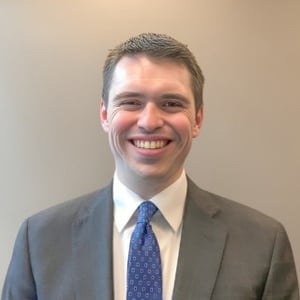
Law Clerk, U.S. District Court, Western District of Kentucky
Benjamin Pontz is a law clerk on the U.S. District Court for the Western District of Kentucky. He previously clerked on the U.S. Court of Appeals for the Sixth Circuit and served as President of the Harvard Federalist Society
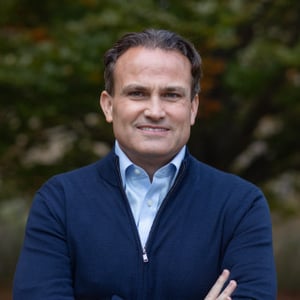
Professor of Law, University of Michigan Law School
Christopher J. Walker is a Professor of Law at the University of Michigan. Prior to joining Michigan law faculty in 2022, he spent a decade teaching at The Ohio State University Moritz College of Law. He previously clerked for Justice Anthony Kennedy of the U.S. Supreme Court, worked on the Civil Appellate Staff at the U.S. Department of Justice, and served on the Senate Judiciary Committee staff for the Gorsuch Supreme Court confirmation. Professor Walker’s research focuses on administrative law, regulation, and law and policy at the agency level. Outside the law school, he chaired the American Bar Association’s Section of Administrative Law and Regulatory Practice in 2020-21 and served as one of forty Public Members of the Administrative Conference of the United States from 2016-2022, and he continues to serve in both organizations in various capacities. He also works of counsel at the U.S. Chamber Litigation Center. In 2022, he received the Federalist Society’s Joseph Story Award.
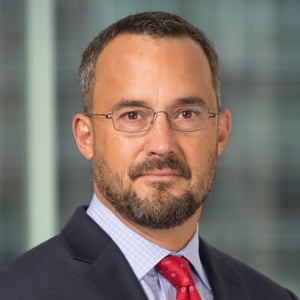
Senior Vice President for Legal Studies, Cato Institute
Clark Neily is senior vice president for legal studies at the Cato Institute. His areas of interest include constitutional law, overcriminalization, civil forfeiture, police accountability, and gun rights. Neily is the author of Terms of Engagement: How Our Courts Should Enforce the Constitution’s Promise of Limited Government. His writing has appeared in the Wall Street Journal, Forbes, and National Review Online, as well as various law reviews, including the Harvard Journal of Law and Public Policy, George Mason Law Review, Georgetown Journal of Law and Public Policy, NYU Journal of Law and Liberty, and Texas Review of Law and Politics. Neily is a frequent guest speaker and lecturer for the Federalist Society, Institute for Humane Studies, and American Constitution Society.
Before joining Cato in 2017, Neily was a senior attorney and constitutional litigator at the Institute for Justice and director of the Institute’s Center for Judicial Engagement. He is also an adjunct professor at the University of Texas School of Law, where he teaches constitutional litigation and public-interest law.
Neily served as co-counsel in District of Columbia v. Heller, the historic case in which the Supreme Court held for the first time that the Second Amendment protects an individual right to own a gun for self-defense.
Neily began his legal career as a law clerk to Judge Royce Lamberth on the U.S. District Court for the District of Columbia. After that he spent four years in the trial department of the Dallas-based firm Thompson & Knight. Neily received his undergraduate and law degrees from the University of Texas, where he was Chief Articles Editor of the Texas Law Review.
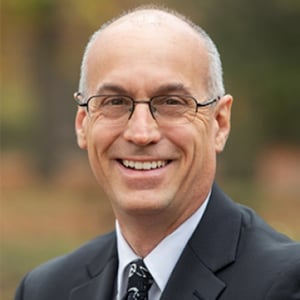
Associate Dean for Faculty and Intellectual Life, Ohio State University Moritz College of Law
Ric Simmons is the Associate Dean for Faculty and Intellectual Life and the Jacob E. Davis and Jacob E. Davis II Chair in Law at Moritz. He teaches Evidence, Criminal Law, Criminal Procedure, and Computer Crime and Surveillance.
An accomplished legal scholar, Professor Simmons’ research focuses on the intersection of the Fourth Amendment and new technology. He has written about the use of big data in the criminal justice system, searches of cell phones and other electronic devices, and hyper-intrusive surveillance devices. He has also written about the privatization of the criminal justice system and the role of the prosecutor. Professor Simmons is the author of Smart Surveillance: How to Interpret the Fourth Amendment in the Twenty-First Century (Cambridge Press 2019), and Private Criminal Justice: How Private Parties are Enforcing Criminal Law and Transforming Our Justice System (2023), and he has co-authored four casebooks and two hornbooks. His scholarship has also appeared in leading legal journals, including the Duke Law Journal, the Boston University Law Review, and the George Washington Law Review.
Before coming to Moritz, Simmons was an acting assistant professor at New York University School of Law. Before that, he clerked for the Honorable Laughlin E. Waters of the Central District of California and then served for four years as an assistant district attorney for New York County.
Professor Simmons is a national expert on the grand jury and served on the Ohio Supreme Court’s Grand Jury Task Force. He has also been a recipient of the Ohio State University Alumni Award for Distinguished Teaching and has won the Morgan E. Shipman Outstanding Professor Award six times.

Associate, Baker & Hostetler LLP
Renee Knudsen is an associate at Baker & Hostetler LLP. She is a member of the Appellate and Major Motions practice group, where she works on high-stakes constitutional and administrative law issues, among other subjects. She has experience working on appeals in nearly every federal court of appeals and regularly drafts briefs to every level of the federal judiciary.
Before joining BakerHostetler, Renee clerked for Judge Leslie Southwick on the U.S. Court of Appeals for the Fifth Circuit and for Judge Claude Hilton on the U.S. District Court for the Eastern District of Virginia.
Renee graduated summa cum laude from Regent University School of Law, where she served as a Managing Editor for law review and was an award-winning moot court advocate.

The State of Legal Education
Louisville Lawyer Chapter
Louisville, KYHappy Hour for Lawyers and Law Students
co-sponsored by the Columbus Lawyers Chapter and the Ohio Young Lawyers Chapter
Columbus, OHState Court Docket Watch: Cleveland Metro. Bar Assn. v. Morton
Renee M. Knudsen
In Cleveland Metropolitan Bar Association v. Morton,[1] the Ohio Supreme Court sanctioned an attorney for...
Happy Hour with the Columbus Lawyers, OSU, and Capital Fed Soc Chapters
Columbus, OHThe Future of the Chevron Doctrine
Chicago, ILFall Happy Hour
Columbus, OhioFixing the Education System: School Choice v. Public Schools
Jury Nullification: The Duty to Disobey
Fall Happy Hour