
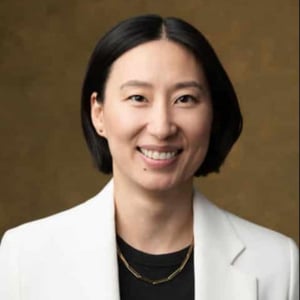
Senior State Policy Counsel, Pacific Legal Foundation
Jaimie Cavanaugh is senior state policy counsel at Pacific Legal Foundation, where she works with legislators around the country to end burdensome laws and create opportunities for individuals to thrive.
Jaimie’s prior work as a litigator led to the recognition of the right to economic liberty by the Georgia Supreme Court and ended New Jersey’s ban on selling cottage food. In Minnesota, she secured a victory for vintners who wanted to make wine with ingredients from other states and eased needlessly restrictive continuing legal education requirements for attorneys.
But there are many ways to advance liberty, and Jaimie has also spent several years assisting legislators in reforming or repealing certificate of need laws, which make it difficult or impossible to open healthcare facilities. She has published reports on certificate of need laws and written extensively about their harms. Her experience has established her as a national policy expert.
Growing up outside of Detroit, Jaimie learned that people, not government, know what’s best for themselves and their families. That’s why her work also promotes protections for private property, equality, and economic opportunity.
Jaimie studied linguistics and German at the University of Michigan before earning her J.D. from the University of Colorado. After law school, she completed a judicial fellowship with Justice Monica Márquez before spending five years as an attorney with Mountain States Legal Foundation and five years as an attorney with Institute for Justice.
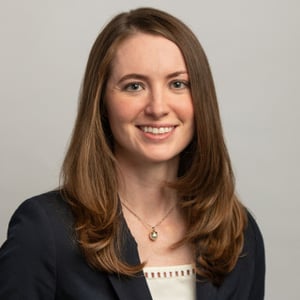
Renée Flaherty is an attorney with the Institute for Justice. She joined the Institute in 2013 and litigates cases to secure property rights, economic liberty and school choice in federal and state courts.
Renée successfully represented families in defense of North Carolina’s Opportunity Scholarship Program, which was upheld by the North Carolina Supreme Court in July 2015.
Renée’s views have been published in USA Today and The Wall Street Journal.
Prior to joining the Institute for Justice, Renée worked in private practice as a tax controversy associate at the Washington, D.C., office of Bingham McCutchen, LLP. She received her law degree from Harvard Law School in 2011, where she was an editor of the Harvard Negotiation Law Review and served on the Executive Board of the Federalist Society. Renée graduated from the University of Texas at Austin with a Bachelor of Arts in Philosophy and a Bachelor of Business Administration. Renée is originally from Odessa, Texas.
Renée Flaherty is a member of the D.C. bar.
Senior State Policy Counsel, Pacific Legal Foundation
Jaimie Cavanaugh is senior state policy counsel at Pacific Legal Foundation, where she works with legislators around the country to end burdensome laws and create opportunities for individuals to thrive.
Jaimie’s prior work as a litigator led to the recognition of the right to economic liberty by the Georgia Supreme Court and ended New Jersey’s ban on selling cottage food. In Minnesota, she secured a victory for vintners who wanted to make wine with ingredients from other states and eased needlessly restrictive continuing legal education requirements for attorneys.
But there are many ways to advance liberty, and Jaimie has also spent several years assisting legislators in reforming or repealing certificate of need laws, which make it difficult or impossible to open healthcare facilities. She has published reports on certificate of need laws and written extensively about their harms. Her experience has established her as a national policy expert.
Growing up outside of Detroit, Jaimie learned that people, not government, know what’s best for themselves and their families. That’s why her work also promotes protections for private property, equality, and economic opportunity.
Jaimie studied linguistics and German at the University of Michigan before earning her J.D. from the University of Colorado. After law school, she completed a judicial fellowship with Justice Monica Márquez before spending five years as an attorney with Mountain States Legal Foundation and five years as an attorney with Institute for Justice.
Renée Flaherty is an attorney with the Institute for Justice. She joined the Institute in 2013 and litigates cases to secure property rights, economic liberty and school choice in federal and state courts.
Renée successfully represented families in defense of North Carolina’s Opportunity Scholarship Program, which was upheld by the North Carolina Supreme Court in July 2015.
Renée’s views have been published in USA Today and The Wall Street Journal.
Prior to joining the Institute for Justice, Renée worked in private practice as a tax controversy associate at the Washington, D.C., office of Bingham McCutchen, LLP. She received her law degree from Harvard Law School in 2011, where she was an editor of the Harvard Negotiation Law Review and served on the Executive Board of the Federalist Society. Renée graduated from the University of Texas at Austin with a Bachelor of Arts in Philosophy and a Bachelor of Business Administration. Renée is originally from Odessa, Texas.
Renée Flaherty is a member of the D.C. bar.
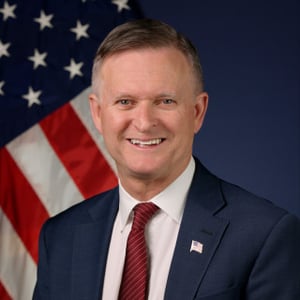
Deputy Secretary of Transportation, US Department of Transportation
Steven G. Bradbury was sworn in as the Deputy Secretary of Transportation on March 13, 2025, following his confirmation by the U.S. Senate on March 11, 2025. In this role, he oversees the Department’s operating administrations and spearheads initiatives to ensure a safe, efficient, and modern transportation system that strengthens economic productivity and global competitiveness. Deputy Secretary Bradbury also assists Secretary Duffy in managing the Department’s activities, including its workforce of over 58,000 employees and an annual budget exceeding $109 billion.
Bradbury previously served as the 23rd General Counsel of the Department of Transportation from 2017 to 2021, as the Acting Deputy Secretary from 2019, and as Acting Secretary of Transportation in 2021. As General Counsel, he was the chief legal officer, advising on all legal matters and ensuring the integrity and compliance of the Department’s policies and programs.
Before rejoining DOT, Bradbury was a Distinguished Fellow at The Heritage Foundation from December 2022 to March 2025. He has extensive experience in the public and private sector, having served as Principal Deputy and Acting Assistant Attorney General at the U.S. Department of Justice and as a partner at Kirkland & Ellis LLP and Dechert LLP. Earlier in his career, he clerked for Justice Clarence Thomas and Judge James L. Buckley.
Bradbury holds a J.D., magna cum laude, from the University of Michigan Law School and a B.A. in English from Stanford University.
Principal, Joel Brenner LLC
Joel F. Brenner specializes in cyber and physical security, data protection, and privacy, intelligence law, and the regulation of sensitive cross-border transactions. He has represented companies and individuals in a wide variety of transactions and proceedings including sensitive foreign acquisitions and overseas operations, the liability of foreign governments, export controls, and internal corporate investigations. He has years of experience inside and outside government involving national and homeland security and enjoys working with companies of all sizes.
Mr. Brenner was Senior Counsel at the National Security Agency, advising Agency leadership on the public-private effort to create better security for the Internet. From 2006 until mid-2009, he was the head of U.S. counterintelligence under the Director of National Intelligence and was responsible for integrating the counterintelligence activities of the 17 departments and agencies with intelligence authorities, including the FBI and CIA and elements of the Departments of Defense, Energy, and Homeland Security. From 2002 – 2006, Mr. Brenner was NSA's Inspector General, responsible for that agency's top-secret internal audits and investigations. He has also served as a prosecutor in the Justice Department's Antitrust Division and has extensive trial and arbitration experience in private practice.
Mr. Brenner holds a JD from the Harvard Law School, a PhD from the London School of Economics, and a BA from the University of Wisconsin – Madison.
He is a member of the American Bar Association's Standing Committee on Law & National Security. He has written about intelligence oversight and Presidential authority to suspend or prohibit foreign takeovers of U.S. firms, and is often quoted in the national media on data security, privacy, and intelligence issues. Mr. Brenner was awarded the Intelligence Community Achievement Medal in July 2009.
Mr. Brenner is the author of America the Vulnerable: Inside the New Threat Matrix of Digital Espionage, Crime and Warfare (Penguin Press, 2011).
Mr. Brenner is admitted to practice in Washington, DC, Virginia, Maryland, and New York and in a variety of federal trial and appellate courts.
?

Legislative Counsel, American Civil Liberties Union
Michelle Richardson is a Legislative Counsel with the American Civil Liberties Union Washington Legislative Office where she focuses on national security and government transparency issues such as the Patriot Act, the Foreign Intelligence Surveillance Act, cybersecurity, state secrets and the Freedom of Information Act. Before coming to the ACLU in 2006, Richardson served as counsel to the House Judiciary Committee where she specialized in national security, civil rights and constitutional issues for Democratic Ranking Member John Conyers (D-Mich.).?
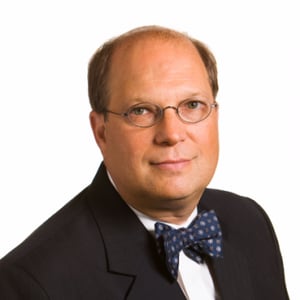
Professorial Lecturer in Law, The George Washington University
Paul Rosenzweig is an accomplished writer and speaker with a national reputation in cyber security and homeland security. He is the founder of Red Branch Consulting PLLC, a homeland security consulting company. He is also a Senior Advisor to The Chertoff Group. Mr. Rosenzweig formerly served as Deputy Assistant Secretary for Policy in the Department of Homeland Security.
He is a Professorial Lecturer in Law at George Washington University, and a Senior Fellow in the Tech, Law & Security Program at the American University, Washington College of Law. He serves as an advisor to and former member of the American Bar Association Standing Committee on Law and National Security, and a Contributing Editor of the Lawfare blog. He is a member of the ABA Cybersecurity Legal Task Force and of the United States Court of Appeals for the District of Columbia Circuit Advisory Committee on Admissions and Grievances. He serves, as well, as a Hearing Committee Member of the District of Columbia Board of Professional Responsibility. In 2011 he was a Carnegie Fellow in National Security Journalism at the Medill School of Journalism, Northwestern University.
Mr. Rosenzweig is a cum laude graduate of the University of Chicago Law School. He has an M.S. in Chemical Oceanography from the Scripps Institution of Oceanography, University of California at San Diego and a B.A from Haverford College. Following graduation from law school he served as a law clerk to the Honorable R. Lanier Anderson, III of the United States Court of Appeals for the Eleventh Circuit.
He is the author of Cyber Warfare: How Conflicts in Cyberspace are Challenging America and Changing the World and of three video lecture series from The Great Courses, Thinking About Cybersecurity: From Cyber Crime to Cyber Warfare; The Surveillance State: Big Data, Freedom, and You; and Investigating American Presidents.
He is the co-author (with James Jay Carafano) of Winning the Long War: Lessons from the Cold War for Defeating Terrorism and Preserving Freedom and co-editor (with Jill D. Rhodes and Robert S. Litt) of the Cybersecurity Handbook (3rd ed.). He is also co-editor (with Timothy McNulty and Ellen Shearer) of two books, Whistleblowers, Leaks and the Media: The First Amendment and National Security, and National Security Law in the News: A Guide for Journalists, Scholars, and Policymakers. Mr. Rosenzweig is a member of the Literary Society of Washington.
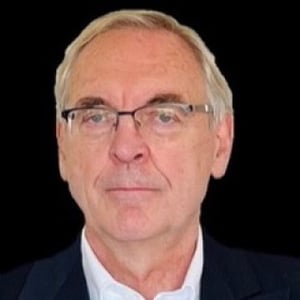
Fellow, National Security Institute, Antonin Scalia Law School, George Mason University
Vince Vitkowsky chaired the Executive Committee of the Federalist Society’s International and National Security Law and Policy Practice Group for over a decade. He is also a Fellow at the National Security Institute of George Mason University Law School. Vince spent 45 years in private practice, primarily in AmLaw 100/200 firms and their spin-offs. His practice included domestic and international commercial arbitration and litigation, as well as cyber risks and liabilities. Vince's current focus is on national security policy, artificial intelligence, cybersecurity, and counterterrorism. He has often written and spoken on national security and other public policy issues. Among other affiliations, Vince has been an Adjunct Fellow at the Center for Law and Counterterrorism of the Foundation for the Defense of Democracies, a member of the Executive Committee of the American Branch of the International Law Association, and Co-Chair of the Committee on Interventions and Trial Observations of the International Bar Association’s Human Rights Institute. He received his B.A. from Northwestern University and his J.D. from Cornell Law School.

Emanuel S. Heller Professor of Law, University of California at Berkeley; Senior Research Fellow, School of Civic Leadership, Civitas Institute, University of Texas at Austin; Nonresident Senior Fellow, American Enterprise Institute
John Yoo is the Emanuel Heller Professor of Law. He is also Distinguished Visiting Scholar, School of Civic Leadership and Senior Research Fellow, Civitas Institute, at the University of Texas at Austin. He is also a Nonresident Senior Fellow at the American Enterprise Institute.
His most recent book, The Politically Incorrect Guide to the Supreme Court, co-authored with Robert Delahunty, was published in 2023. Professor Yoo’s other books include Defender-in-Chief: Trump’s Fight for Presidential Power; Striking Power: How Cyber, Robots, and Space Weapons Change the Rules for War, Point of Attack: Preventive War, International Law, and Global Welfare, and Crisis and Command: A History of Executive Power from George Washington to George Bush.
Professor Yoo has published more than 100 articles in academic journals on subjects including national security, constitutional law, international law, and the Supreme Court. He also regularly contributes to the editorial pages of the Wall Street Journal, New York Times, Washington Post, Los Angeles Times, and National Review, among others.
Professor Yoo has served in all three branches of government. He was an official in the U.S. Department of Justice, where he worked on national security and terrorism issues after the 9/11 attacks. He served as general counsel of the U.S. Senate Judiciary Committee. He has been a law clerk for Supreme Court Justice Clarence Thomas and federal appeals Judge Laurence Silberman. He has been a visiting professor at Seoul National University in South Korea, the Interdisciplinary Center in Israel, Keio University in Japan, Trento University in Italy, the University of Chicago, and the Free University of Amsterdam.
Professor Yoo supervises the Public Law and Policy Program and the California Constitution Center. He also serves on the boards of the Pacific Legal Foundation, the Federalist Society’s Separation of Powers and Federalism Division, the Universidad Cientifica del Sur Law School, and the Asia-Pacific Law Institute at Seoul National University. He is a winner of the Federalist Society’s Paul Bator award and been the Edwin Meese III Originalism Lecturer at the Heritage Foundation.
Professor Yoo graduated from Yale Law School and summa cum laude from Harvard College.
Senior State Policy Counsel, Pacific Legal Foundation
Jaimie Cavanaugh is senior state policy counsel at Pacific Legal Foundation, where she works with legislators around the country to end burdensome laws and create opportunities for individuals to thrive.
Jaimie’s prior work as a litigator led to the recognition of the right to economic liberty by the Georgia Supreme Court and ended New Jersey’s ban on selling cottage food. In Minnesota, she secured a victory for vintners who wanted to make wine with ingredients from other states and eased needlessly restrictive continuing legal education requirements for attorneys.
But there are many ways to advance liberty, and Jaimie has also spent several years assisting legislators in reforming or repealing certificate of need laws, which make it difficult or impossible to open healthcare facilities. She has published reports on certificate of need laws and written extensively about their harms. Her experience has established her as a national policy expert.
Growing up outside of Detroit, Jaimie learned that people, not government, know what’s best for themselves and their families. That’s why her work also promotes protections for private property, equality, and economic opportunity.
Jaimie studied linguistics and German at the University of Michigan before earning her J.D. from the University of Colorado. After law school, she completed a judicial fellowship with Justice Monica Márquez before spending five years as an attorney with Mountain States Legal Foundation and five years as an attorney with Institute for Justice.
Renée Flaherty is an attorney with the Institute for Justice. She joined the Institute in 2013 and litigates cases to secure property rights, economic liberty and school choice in federal and state courts.
Renée successfully represented families in defense of North Carolina’s Opportunity Scholarship Program, which was upheld by the North Carolina Supreme Court in July 2015.
Renée’s views have been published in USA Today and The Wall Street Journal.
Prior to joining the Institute for Justice, Renée worked in private practice as a tax controversy associate at the Washington, D.C., office of Bingham McCutchen, LLP. She received her law degree from Harvard Law School in 2011, where she was an editor of the Harvard Negotiation Law Review and served on the Executive Board of the Federalist Society. Renée graduated from the University of Texas at Austin with a Bachelor of Arts in Philosophy and a Bachelor of Business Administration. Renée is originally from Odessa, Texas.
Renée Flaherty is a member of the D.C. bar.
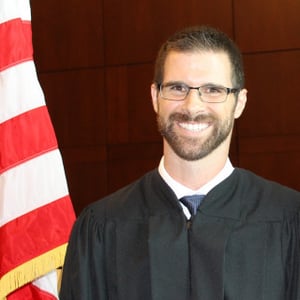
Judge, U.S. District Court, Eastern and Western Districts of Missouri
Josh Divine was most recently the Solicitor General of Missouri, where he oversaw the office's appellate and special litigation divisions. As Solicitor General, Mr. Divine led Missouri's trial and appellate teams to some of its most significant victories. Mr. Divine was lead counsel in blocking $700 billion in student loan bailouts attempted by the federal government. He was lead counsel in obtaining a $25 billion judgment against China for antitrust violations. And he was lead counsel in successfully defending the Missouri law that prohibits gender transition interventions in minors, making Missouri the only state in the nation to prevail at trial against an equal protection challenge to one of these laws. In addition, Mr. Divine's work at the trial court in Missouri v. Biden (restyled Murthy v. Missouri) helped expose systemic violations of the First Amendment by the federal government, which the trial court found was unconstitutionally pressuring social media companies to suppress millions of free speech posts.
Before serving as Solicitor General, Mr. Divine was Chief Counsel to U.S. Senator Josh Hawley, where he oversaw all legal issues, managed matters related to the Judiciary Committee, and developed tech policy. Mr. Divine clerked on the Supreme Court for Justice Thomas and on the Eleventh Circuit for Judge William Pryor. He received a J.D. from Yale Law School and a Bachelor of Science degree in mathematics from the University of Northern Colorado. His recent legal scholarship has appeared in the Virginia Law Review and the Hastings Law Journal.
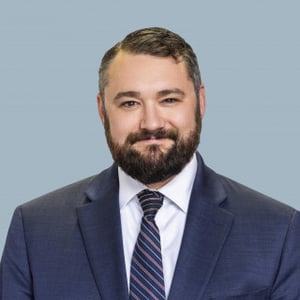
Partner, Ashbrook Byrne Kresge Flowers LLC
Ben Flowers, a partner at Ashbrook Byrne Kresge Flowers LLC, is an accomplished litigator with experience briefing, arguing, and winning high-stakes cases in courts throughout the country.
Before joining the law firm, Ben served as Ohio's 10th Solicitor General. In that role he regularly represented the State of Ohio before the Supreme Court of the United States, the United States Court of Appeals for the Sixth Circuit, and the Supreme Court of Ohio. Most prominently, in National Federation of Independent Business v. Department of Labor, Ben led a multi-state challenge to OSHA's vaccine mandate, ultimately prevailing before the Supreme Court.
Ben is a graduate of The Ohio State University and the University of Chicago Law School. Following law school, Ben clerked for Judge Sandra Ikuta of the U.S. Court of Appeals for the Ninth Circuit and for Justice Antonin Scalia of the Supreme Court of this United States. Ben lives in Upper Arlington, Ohio with his wife Denise and their three very active children.
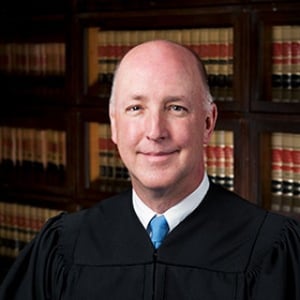
Justice, Indiana Supreme Court
Mark S. Massa was appointed to the Indiana Supreme Court by Governor Mitch Daniels in March 2012. He was retained by voters in 2014.
He is a native of Milwaukee, Wisconsin, and came to Indiana in 1979 to attend Indiana University. He graduated from IU in 1983 with a degree in journalism, and after internships at the South Bend Tribune and Milwaukee Sentinel, he joined the staff of The Evansville Press, where he was an award-winning sportswriter and covered the courts and local government. In 1985, he became a deputy press secretary and speechwriter for Governor Robert Orr; he later graduated from the evening division of the IU McKinney School of Law, clerked for Indiana Supreme Court Chief Justice Randall Shepard and joined the Marion County Prosecutor’s Office in Indianapolis. After serving as a Deputy Prosecutor for 15 years, including 7 years as Chief Counsel to Prosecutor Scott Newman, Justice Massa was an Assistant United States Attorney in the Southern District of Indiana, where he earned the Inspector General’s Integrity Award from the Department of Health and Human Services. He served as General Counsel to Governor Mitch Daniels, chaired the Alcohol and Tobacco Commission, served on the Indianapolis Marion County Police Merit Board, and was Executive Director of the Indiana Criminal Justice Institute prior to his appointment to the Court.
Justice Massa is an Indiana Bar Foundation Fellow, and a member of the American Bar Association, the Indiana State Bar Association, the Indianapolis Bar Association, and the Sagamore American Inn of Court. He is also an Executive Committee member of the Judicial Conference Court Improvement Program. Justice Massa chairs the Supreme Court Records Management Committee, the Lake County Judicial Nominating Commission, and, pursuant to statute and appointment of the Chief Justice of the Supreme Court, he serves as liaison to the State Board of Law Examiners and the Supreme Court Disciplinary Commission. He also teaches at the Indiana University McKinney School of Law.
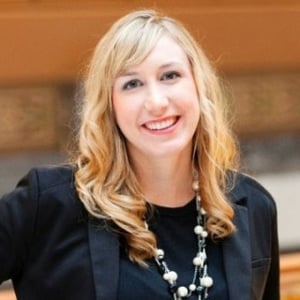
Policy Director and Legislative Counsel, Office of the Indiana Attorney General
Corrine Youngs serves as Policy Director and Legislative Counsel to Indiana Attorney General. Prior to joining the OAG, Corrine worked at the Bopp Law Firm PC, as an associate attorney practicing civil trial and appellate litigation in the areas of First Amendment, Campaign Finance, Election, and Constitutional Law. There, Corrine drafted briefs in state and federal courts, including the United States Supreme Court. She has argued in state and federal district courts, testified before committees at the Indiana Statehouse, and presented oral argument in the Seventh Circuit Court of Appeals. While at the Bopp Law Firm, Corrine also served as general counsel for Indiana Right to Life.
Corrine grew up in Fishers, Indiana and graduated from Marian University Summa Cum Laude with degrees in Theology and Communication. Corrine earned her J.D. from the Robert H. McKinney School of Law, where she served as President of the Federalist Society. Corrine also obtained a Masters in Public Affairs, concentrating on policy analysis at the School of Public and Environmental Affairs at Indiana University Indianapolis. While in graduate school, she worked as a legislative assistant in the Indiana General Assembly for the Republican House Caucus.
Corrine resides in Danville, Indiana with her husband Graham, twin girls Vivian and Violet, baby girl Eloise, and labradoodle pup Chloe. She is a member of the Hendricks County Republican Women and cantors at Mary, Queen of Peace Catholic Church. In Corrine’s spare time, she enjoys outdoor activities, CrossFit, as well as interior design and décor.
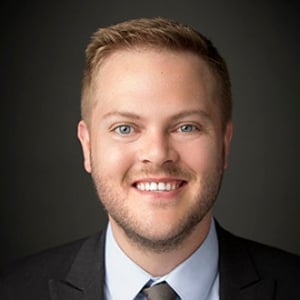
Lead Counsel, Government Affairs, Foundation for Individual Rights and Expression (FIRE)
Tyler is a 2010 graduate of Indiana University – Bloomington with dual degrees in political science and history. He was a member of Sigma Phi Epsilon and a director on IU’s largest student programming board, helping plan events such as Culture Fest and Homecoming activities. After spending time working as a program facilitator at Camp Miniwanca in Michigan, he enrolled at Michigan State University College of Law and graduated in May 2015. At MSU Law, he participated in the school’s First Amendment Clinic and was president of MSU Law’s chapter of the Federalist Society.
In his free time, Tyler enjoys hiking, soccer, and playing a variety of games on Playstation 4, though typically not simultaneously. He is an avid supporter of the Indianapolis Colts, Chelsea FC, and the Indiana Hoosiers.
First Amendment Lawyers Association
Edward S. Rudofsky P.C. has been associated with the firm since 1978 and a member since 1980. Mr. Rudofsky is a highly regarded litigator and appellate advocate with a wealth of practical experience in cases involving commercial and real estate issues, zoning, administrative law, and constitutional questions; has substantial experience counseling non-profit and religious institutions; administers the alternative dispute resolution program of the United Synagogue of Conservative Judaism; and serves as a mediator for the U.S. District Court for the Eastern District of New York. The more than 100 reported decisions in which Mr. Rudofsky has been counsel include a number of leading cases in which he has represented clients of the firm.
Mr. Rudofsky, who was born in Brooklyn, New York, is a graduate of Stuyvesant High School and Queens College of the City University of New York, and is a member of the charter class of Hofstra University School of Law, where he was the Managing Editor of the Law Review.
Upon graduation from law school, he was accepted into the Attorney General's Program for Honor Law Graduates and served as a Trial Attorney in the U.S. Department of Justice. Mr. Rudofsky was then appointed as an Assistant U.S. Attorney for the Eastern District of New York, ultimately serving as Deputy Chief of the Civil Division.
He has been admitted to practice law in New York and in various Federal trial and appellate courts, including the Supreme Court of the United States; and is a member of the American Bar Association, the New York State Bar Association, the Federal Bar Council, the Eastern District Association, and the First Amendment Lawyers Association (FALA); is rated AV® Preeminent™ by Martindale-Hubbell, has been recognized as a "Super Lawyer", and is named an "Elite" Lawyer by Avenue Magazine. He has been a member of the FALA Board of Officers since 2014 and served as the President of the FALA.
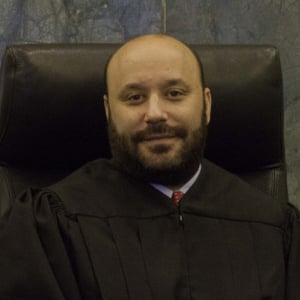
Judge, United States District Court, Eastern District of Arkansas
Lee Philip Rudofsky is a judge on the United States District Court for the Eastern District of Arkansas. Prior to his 2019 appointment by President Trump, Judge Rudofsky served as the Solicitor General of Arkansas, an Assistant General Counsel at Walmart, a Senior Litigation Associate at Kirkland & Ellis, and counsel to several Republican political campaigns. Today, in addition to his judicial service, Judge Rudofsky teaches law school classes on founding-era constitutional history and, separately, speaks to students across the country about the October 7th Massacre and the subsequent Israeli response. In 2024, Judge Rudofsky helped establish an annual judicial education mission to Israel that offers American judges the opportunity to learn first-hand about the Israeli legal system, Israeli society, and legal issues related to the Israel-Hamas war.
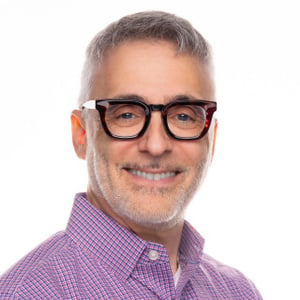
Professor of Law, University of Arkansas at Little Rock William H. Bowen School of Law
Professor Robert Steinbuch joined the Bowen School of Law faculty in 2005 after several years in government and private practice. Professor Steinbuch’s government service includes clerking on the United States Court of Appeals and working for the United States Department of Justice. Most recently, he worked for the United States Senate Judiciary Committee. He is well published in law reviews, legal periodicals and medical journals, and he has been interviewed by various news sources for his legal expertise. Professor Steinbuch’s publications include articles in the Harvard BlackLetter Law Journal (renamed the Harvard Journal on Racial & Ethnic Justice), the Houston Law Review, the Maryland Law Review, the Loyola of L.A. Law Review, the Kentucky Law Review, the Health Matrix, the National Law Journal, the American Journal of Cardiology, and the Journal of the National Medical Association. His article “Mere Thieves” was republished in the Securities Law Review as one of the year’s ten best securities-law articles. Professor Steinbuch has served as an expert witness on complex economic matters and is singular at Bowen to have testified before the United States Senate and the United States House of Representatives. He has also testified before the Arkansas Legislature. Professor Steinbuch serves as a Peer Reviewer for United States Department of State’s Fulbright Program. In addition, he is an editor for Journal of the National Medical Association. As a scholar in health law, Professor Steinbuch currently serves as a Commissioner on the Arkansas Commission for Newborn Umbilical Cord Blood Bank Initiative and as a Board of Trustees Member for the Healthcare Accreditation Colloquium. He has previously served on the Board of the Society of Chest Pain Centers. Professor Steinbuch is the recipient of the law school’s Faculty Excellence Awards in both Scholarship and Service.

CEO, President, and General Counsel, Alliance Defending Freedom
As the CEO, president, and general counsel of Alliance Defending Freedom, Kristen Waggoner leads the faith-based organization in advancing every person’s God-given right to live and speak the truth in the U.S. and around the world. She oversees more than 450 ADF team members in 10 global offices.
Since 2011, ADF has won 15 cases at the U.S. Supreme Court, three of which were argued by Waggoner: Masterpiece Cakeshop v. Colorado Civil Rights Commission, Uzuebgunam v. Presczewski, and 303 Creative v. Elenis. ADF also has a strong record of international success at the European Court of Human Rights, United Nations, and other leading courts and tribunals and has secured the release of more than 1,000 imprisoned Christians.
After clerking with Washington Supreme Court Justice Richard B. Sanders, Waggoner practiced law for over 16 years at a Seattle firm before joining ADF in 2013. She is Peer Review Rated AV® Preeminent™ in Martindale-Hubbell. Waggoner is a sought-after public speaker who often appears in national and international media outlets.
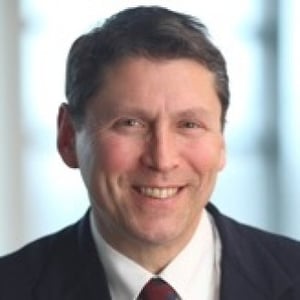
Emeritus Professor of Telecommunications and Law, Penn State University
Rob Frieden serves as an educator, researcher, grant seeker and consultant in the law, regulation, and business of broadband networks, cybersecurity, electronic commerce, intellectual property, the Internet of Things, privacy, regulatory reform, satellites, and spectrum management.
He currently serves as a 2022 Wilson Center Fellow and holds the rank of Emeritus Professor of Telecommunications and Law at Penn State University. Professor Frieden has published 4 books, written over 100 articles in law and telecommunications policy journals and frequently provides insights on current topics in telecommunications law and policy for media, conference attendees, and consultancy clients throughout the world.
Professor Frieden holds a B.A., with distinction, from the University of Pennsylvania (1977) and a J.D. from the University of Virginia (1980).
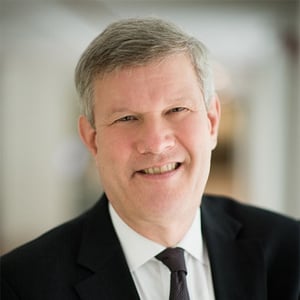
Senior Fellow and Director, Center for the Economics of the Internet, Hudson Institute
Harold Furchtgott-Roth is a senior fellow and director of the Center for the Economics of the Internet at Hudson Institute.
Mr. Furchtgott-Roth founded Furchtgott-Roth Economic Enterprises in 2003. He frequently comments on issues related to the communications sector of the economy. From 2001 to 2003, he was a visiting fellow at the American Enterprise Institute where he published A Tough Act to Follow, chronicling the difficulties implementing the Telecommunications Act of 1996.
From 1997 through 2001, Mr. Furchtgott-Roth served as a commissioner of the Federal Communications Commission. In that capacity, he served on the Joint Board on Universal Service. He is one of the few economists to have served as a federal regulatory commissioner, and the only one to have served on the Federal Communications Commission.
Before his appointment to the FCC, he was chief economist for the House Committee on Commerce and a principal staff member on the Telecommunications Act of 1996. Earlier in his career, he was a senior economist with Economists Incorporated and a research analyst with the Center for Naval Analyses.
Mr. Furchtgott-Roth is a member of the Washington Legal Foundation’s Legal Policy Advisory Board. He is the coauthor of three books: Cable TV: Regulation or Competition, with R.W. Crandall; Economics of A Disaster: The Exxon Valdez Oil Spill, with B.M. Owen et al; and International Trade in Computer Software, with S.E. Siwek.
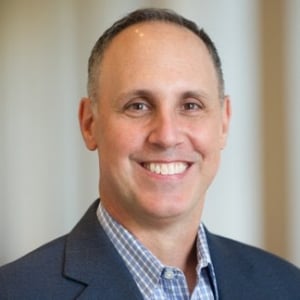
Sr. VP of Industry Affairs and Business Development, NTCA – The Rural Broadband Association
Michael Romano oversees NTCA’s public policy, government affairs and business development initiatives, as well as the educational and community-focused mission of the Foundation for Rural Service. Before joining NTCA, Mike was of counsel with Bingham McCutchen, LLP (now Morgan Lewis), served as the founding vice president and general counsel of GTT Communications and held a variety of positions with America Online and Level 3 Communications.
Mike has a Bachelor of Arts degree in American history from Middlebury College, and a Juris Doctor degree from Georgetown University Law Center.
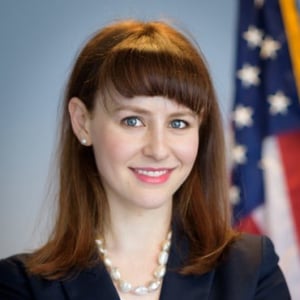
Policy Director, Telecommunications, U.S. Senate Committee on Commerce, Science, & Transportation
Arielle Roth serves as Policy Director, Telecommunications for Ranking Member Ted Cruz on the Senate Committee on Commerce, Science, and Transportation. Prior to joining the committee, Roth spent almost a decade working on federal communications and broadband policy, including in senior roles at the Federal Communications Commission and as Wireline Legal Advisor to former Commissioner Michael O’Rielly. Her previous congressional experience includes serving as Legislative Counsel to U.S. Senator Roy Blunt and as Counsel on Detail to the House Committee on Energy and Commerce. Before entering government, Roth was a Legal Fellow with the Hudson Institute's Center for the Economics of the Internet. Roth holds degrees from the University of Toronto and the McGill University Faculty of Law. She lives in D.C. with her husband Yaakov and their five children.
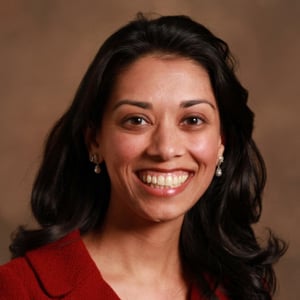
General Counsel, Center for Individual Rights
Darpana Sheth joined CIR as General Counsel in May 2025. She is a nationally recognized constitutional litigator with over two decades of experience serving in in leadership roles at other nonprofit organizations.
Before joining CIR, Darpana served for four years as Vice President of Litigation for the Foundation for Individual Rights and Expression. Prior to that, Darpana was a Senior Attorney with the Institute for Justice, where she also served as Director of the Institute’s National Initiative to End Forfeiture Abuse.
Before finding her calling as a public-interest attorney, Darpana served as an Assistant Attorney General for the State of New York and worked in private practice as a litigation associate at the Manhattan law firm of Chadbourne & Parke, LLP. She also served as law clerk to the Honorable Jerome A. Holmes of the U.S. Court of Appeals for the Tenth Circuit.
A native of Philadelphia, Darpana graduated from the University of Pennsylvania with a Bachelor of Arts in Political Science and History. She earned her law degree from Georgetown University Law Center.
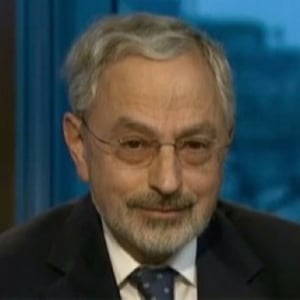
David B. Smith, PLLC
David B. Smith has over 35 years of white collar criminal experience. He has litigated scores of cases and argued more than one hundred federal criminal appeals as a federal prosecutor and defense attorney, including extensive experience with civil and criminal litigation in the Supreme Court of the United States. Mr. Smith has been repeatedly named in the list of preeminent lawyers in the field of white collar criminal defense by Best Lawyers in America (2012-2021) and Virginia Super Lawyers (2009-2020), and has received the President’s Commendation for outstanding service from the National Association of Criminal Defense Lawyers in 1993, 1994, and 2004. He served for nine years on the Board of the NACDL and has been Chair of its Forfeiture Committee since 1990. He is also a Vice-Chair of its Amicus Committee.
For nearly a decade prior to entering private practice, Mr. Smith was a prosecutor in the Criminal Division of the United States Department of Justice and at the United States Attorney’s Office for the Eastern District of Virginia, where he was involved in complex white collar criminal investigations, trials, and appeals involving defense procurement fraud, congressional bribery, espionage, tax evasion, mail fraud, false claims and other crimes. In 1995-1996, Mr. Smith served as an Associate Independent Counsel in the investigation of Michael Espy, the former secretary of agriculture.
Mr. Smith is regarded as the foremost expert in the country on asset forfeiture law and practice. He is the author of the leading two-volume legal treatise on forfeiture, Prosecution and Defense of Forfeiture Cases (2020), published by Matthew Bender, and co-author of Civil RICO (2020), also published by Matthew Bender. He has testified before congressional committees several times with respect to forfeiture, restitution, and money laundering legislation. Mr. Smith has regularly counseled the Senate and House Judiciary Committees on forfeiture legislation, and was heavily involved in drafting the Civil Asset Forfeiture Reform Act of 2000. He has also assisted the federal advisory committees in writing the procedural rules governing criminal and civil forfeiture proceedings. In 2000-2001, Mr. Smith was appointed by Senator Richard Shelby (R. Ala.), the Chairman of the Senate Intelligence Committee, to serve as a Commissioner with the Judicial Review Commission on Foreign Asset Control.

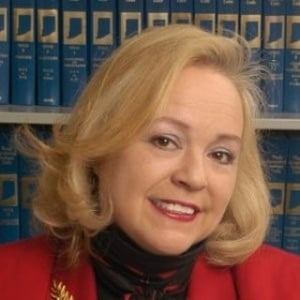
Plenary Session 2: Legislation, Confirmations, and Oversight– Working and Succeeding in a Legislative Legal Role
Featuring: Ms. Ashley Callen, Partner, Jenner & Block LLP Mr. Michael Fragoso, Partner, Torridon Group...
Plenary Session 2: Legislation, Confirmations, and Oversight– Working and Succeeding in a Legislative Legal Role
Inaugural Legislative Branch Summit
Washington, DCLitigation Update: Jackson v. Raffensperger
Jaimie N. Cavanaugh, Renée Flaherty
In Jackson v. Raffensperger, 316 Ga. 383 (2023), the Supreme Court of Georgia struck down...
Litigation Update: Jackson v. Raffensperger
Jaimie N. Cavanaugh, Renée Flaherty
In Jackson v. Raffensperger, 316 Ga. 383 (2023), the Supreme Court of Georgia struck down...
Litigation Update: Jackson v. Raffensperger
TeleforumPanel III: State AG Challenges to Biden's Recent Title IX Regulation Efforts
Indianapolis, INPanel 1: The First Amendment Under Attack
Inaugural Arkansas Chapters Conference
Little Rock, ARConsumers' Research v. FCC and the Legality of the Universal Service Fund Contribution Regime
TeleforumCivil Asset Forfeiture Update
Capitol Hill Event Cosponsored by the American Civil Liberties Union and the Institute for Justice
Washington, DCInternational: Cybersecurity – The Policy and Politics of a Leading National Security Threat
Steven Gill Bradbury, Joel F. Brenner, Michelle Richardson, Paul Rosenzweig, Vincent Vitkowsky, John C. Yoo
Cyber attacks were the first identified global threat in the U.S. Intelligence Community's 2013 Worldwide...