
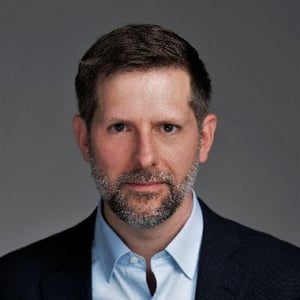
Head of AI Policy, Abundance Institute
Neil Chilson is the Head of AI Policy at the Abundance Institute. Prior to this position, he served as a Senior Research Fellow at the Center for Growth and Opportunity. Chilson is a lawyer, computer scientist, and author of the book “Getting Out of Control: Emergent Leadership in a Complex World.”
Chilson was previously the senior research fellow for Technology and Innovation at Stand Together, where he guided efforts to understand and promote the legal and cultural paradigms that best enable people to discover, innovate, and improve all our lives.
Before Stand Together, Chilson was the Chief Technologist at the Federal Trade Commission, where he focused on the economics of privacy and blockchain-related issues. Previously, he was an attorney advisor to Acting FTC Chairman Maureen K. Ohlhausen. In both roles he advised Chairman Ohlhausen and worked with staff on nearly every major technology-related case, report, workshop, or other FTC proceeding since January 2014. Neil joined the FTC from telecom firm Wilkinson Barker Knauer. Neil is frequently quoted by the press and his work has appeared in numerous news outlets, including The Wall Street Journal, The Washington Post, USAToday, and Newsweek. Neil has a J.D. from The George Washington Law School, a M.S. in computer science from University of Illinois, Urbana-Champaign, and a B.S. in computer science from Harding University.

AI Innovation and Law Fellow, University of Texas School of Law
Kevin Frazier is an AI Innovation and Law Fellow with University of Texas School of Law.

Senior Vice President, Americans for Responsible Innovation
Satya Thallam is Senior Vice President for Government of Government Affairs at Americans for Responsible Innovation, focused on AI policy issues. He is also Non-Resident Senior Fellow at the Foundation for American Innovation. He is a policy expert and advisor, having served in senior roles in the congressional and executive branches and as an executive at a biotechnology startup, and is frequently invited to testify before Congress and appear in media.
Previously, he was a senior policy official at the White House Office of Management and Budget (OMB), with direct oversight, review, and negotiation of all federal regulatory policymaking across over a dozen cabinet agencies. In this role, he advised the Director of OMB and fellow senior White House colleagues on regulatory policies and process. His time in government began in the U.S. Senate, at the Committee on Homeland Security and Governmental Affairs, where for nearly five years he was the Senate’s point person on regulatory reform, as well as the committee’s expert on areas running the breadth of the committee’s jurisdiction.
Satya has also spent many years in the think tank sector, leading programs primarily related to financial services policy, at both university-based and independent organizations. In this capacity, he authored policy reports, congressional testimonies, op-eds, and presentations, and built new research programs. Satya’s policy career began at the Goldwater Institute, the premier state policy-focused think tank, beginning as an intern and rising to a director-level role leading the organization’s fiscal policy program.

Senior Fellow, R Street Institute
Prior to R Street, Adam spent 12 years as a senior fellow at the Mercatus Center at George Mason University. Before the Mercatus Center, he served as the president of the Progress and Freedom Foundation. Adam has also worked for the Adam Smith Institute, the Heritage Foundation and the Cato Institute.
Adam has published 10 books on a wide range of topics, including online child safety, internet governance, intellectual property, telecommunications policy, media regulation and federalism.
In 2008, Adam received the Family Online Safety Institute’s “Award for Outstanding Achievement.”
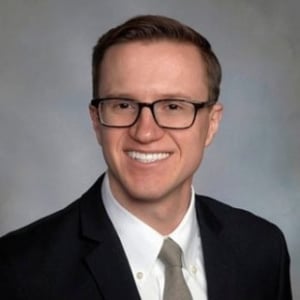
Chief Counsel for the Administrative State, Regulatory Reform, and Antitrust, House Committee on the Judiciary
Adam Cella is currently the Chief Counsel for the Administrative State, Regulatory Reform, and Antitrust at the House Committee on the Judiciary. Formerly, he was an attorney-advisor at the U.S. Federal Trade Commission. Prior to joining the FTC, he was an associate at Axinn, Veltrop & Harkrider LLP.
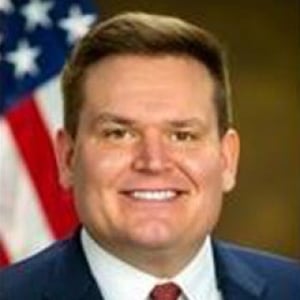
Chief Counsel, Senate Judiciary Committee
Thomas DeMatteo is Chief Counsel on the Senate Judiciary Committee to Senator Mike Lee. He previously served as counsel to the Assistant Attorney General of the Department of Justice Antitrust Division, where he worked closely with leadership and staff on civil merger and non-merger matters across numerous industries including, large technology platforms, defense, finance, and consumer products.
Mr. DeMatteo joined the Antitrust Division through the Attorney General’s Honors Program as a Trial Attorney and previously worked at an international law firm, where he advised clients on antitrust and competition matters. He is a graduate of Washington and Lee University School of Law and the University of Rochester, where he was a member of the football team and selected to the Liberty League All-Academic Team.

Chief Judge, United States Court of Appeals, Fifth Circuit
Jennifer Walker Elrod is the Chief Judge of the United States Court of Appeals for the Fifth Circuit. She was nominated to the Fifth Circuit in 2007, and she served as a Circuit Judge on the court until assuming the role of Chief Judge in October 2024. Prior to serving as a Circuit Judge, Chief Judge Elrod was appointed and then twice elected Judge of the 190th District Court of Harris County, Texas, where she spent over five years presiding over more than 200 jury and non-jury trials.
Chief Judge Elrod graduated cum laude from Harvard Law School, where she was an active member of the Harvard Federalist Society, an Ames Moot Court finalist, and a Senior Editor of the Harvard Journal of Law & Public Policy. She clerked for the Honorable Sim Lake in the Southern District of Texas. Before serving as a judge, Chief Judge Elrod worked in private practice, focusing on civil litigation, antitrust, and employment matters.
She has been repeatedly recognized for her work as a jurist, as well as for her pro bono work and contributions to the community. She has been named the 2022 Texas Review of Law & Politics’ Jurist of the Year, the 2018 Harvard Federalist Society’s Alumni of the Year, the 2016–17 Texas Association of Civil Trial and Appellate Specialists’ Appellate Judge of the Year, and the 2008 Mexican-American Bar Association of Texas’s Judge of the Year.
Chief Judge Elrod is actively engaged in the academic and legal communities. Chief Judge Elrod currently serves on the Board of Directors and as the Jurist-in-Residence at the South Texas College of Law, where she teaches civil procedure and First Amendment law. She is also a member of the American Law Institute and of the Board of Advisors for the Harvard Journal of Law & Public Policy, and she is a former member of the Board of Regents of her alma mater, Baylor University, and the Board of Visitors at Brigham Young University Law School. She previously served as the Chair of the Codes of Conduct Committee for the Judicial Conference of the United States. She has also served as the M.D. Anderson Visiting Public Service Professor at the Texas Tech University School of Law and as Jurist-in-Residence at Brigham Young University Law School, and she has taught legal writing at the University of Houston Law Center. She presented the Lewis F. Powell, Jr. Distinguished Lecture at the Washington and Lee University School of Law and is a frequent speaker on the topics of trial and appellate procedure, ethics, employment law, and constitutional law. Chief Judge Elrod also serves on the board of the Garland R. Walker Inn of Court, and co-produces an annual musical CLE, for which her pupilage group has won multiple national awards.
Chief Judge Elrod’s publications include: Trial by Siri: AI Comes to the Courtroom; Don’t Mess with Texas Judges: In Praise of the State Judiciary; For Good: Enriching Your Practice and Your Life Through Pro Bono and Community Service; Is the Jury Still Out?: A Case for the Continued Viability of the American Jury; and W(h)ither the Jury? The Diminishing Role of the Jury Trial in our Legal System.
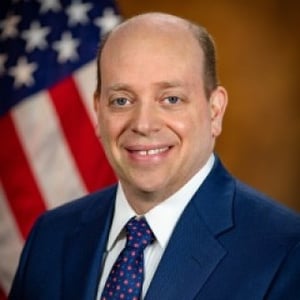
Deputy Assistant Attorney General, Antitrust Division, United States Department of Justice
Michael Kades is a Deputy Assistant Attorney General for the Antitrust Division with a focus on civil enforcement.
Prior to coming to the US Department of Justice, Michael was director for markets and competition policy at the Washington Center for Equitable Growth. His research focused on competition and antitrust enforcement, with an emphasis on consumers, wages, equality, and innovation. He testified before Congress multiple times and authored several reports and articles on antitrust policy.
Prior to joining Equitable Growth, Michael worked as antitrust counsel for Sen. Amy Klobuchar (D-MN), on detail to the from the Federal Trade Commission. He worked on the CREATES Act, the Holocaust Expropriated Art Recovery Act, and the Trade Secrets Protection Act, all of which Congress enacted. He was also the primary staffer on the Merger Filing Fee Modernization Act and the Consolidation Prevention and Competition Protection Act.
Michael spent 20 years investigating and litigating antitrust actions as an attorney at the Federal Trade Commission. From 2013-15, he was the Deputy Chief Trial Counsel for the Bureau of Competition where he participated in a number of merger investigations and litigations. From 2006-2013, served as attorney advisor to Chairman Jon Leibowitz. He oversaw the Commission’s strategy to address anticompetitive patent settlements, worked on the 2010 horizontal merger guidelines, and advised the Chairman on antitrust issues. From 1997-2006, he was an attorney in the Health Care Products Services. He argued In re Schering Plough and In re South Carolina Board of Dentistry before the Commission as well as appearing in federal court. He played a leading role in FTC v. Mylan in which the Commission obtained $100 million in disgorgement. While at the Commission, he received the Chairman’s Award and the Paul Rand Dixon Award.
Kades is a graduate of Yale University and the University of Wisconsin Law School.
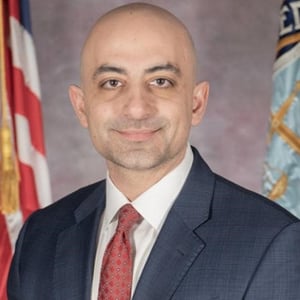
Director, Bureau of Consumer Protection, Federal Trade Commission
Chris Mufarrige served in the first Trump Administration as a Senior Adviser to the Director and Deputy Director of the Consumer Financial Protection Bureau, advising on enforcement, rulemaking, and supervisory exams relating to the country’s largest banks and nonbank financial institutions. Most recently, he was Commissioner Melissa Holyoak’s Chief of Staff and Attorney Adviser. He has also worked at private law firms and as an in-house lawyer. In his free time, Mufarrige taught a class on financial services and consumer protection at George Mason University’s Antonin Scalia Law School.

Chair, Global Antitrust Law Practice Group, Morrison Foerster
Alex Okuliar is Co-Chair of Morrison Foerster’s Global Antitrust Law Practice Group. He is the former Deputy Assistant Attorney General for Civil Antitrust Enforcement at the U.S. Department of Justice and a former advisor at the Federal Trade Commission.
Alex’s practice spans merger review, civil litigation, and criminal investigations. Over his twenty-five-year career, Alex has worked on nearly one thousand deals. He has deep experience guiding clients through the complex global merger clearance process and has litigated agency merger challenges through trial. He has also helped clients succeed in a wide range of federal and state cases, including class actions and private party disputes alleging price fixing, monopolization, group boycotts, market allocation, and tying. His understanding of the agency processes from the inside allows him to offer expert, timely, and practical advice to clients navigating merger and conduct investigations by the U.S. Department of Justice, the Federal Trade Commission, state Attorneys General, and foreign agencies. Alex’s work has been recognized by leading industry publications such as Chambers, The Legal 500 U.S., and Global Competition Review.
Outside of client work, Alex is a prolific thought leader and was recognized as a 2024 Top Author for Antitrust & Trade Regulation by JD Supra’s Readers’ Choice Awards. He currently serves as the co-chair of the ABA Antitrust Law Section’s Joint Conduct Committee and is the former chair of the Section’s Intellectual Property Committee and co-chair of the 2023 Antitrust Fall Forum on Artificial Intelligence. He is also a member of the Corporations, Securities & Antitrust Executive Committee of The Federalist Society for Law and Public Policy Studies.
Before law school, Alex co-founded and sold an online technology company. Alex received his B.S. in economics and B.A. with distinction in history from the Wharton School of the University of Pennsylvania and his J.D. from Vanderbilt University Law School.
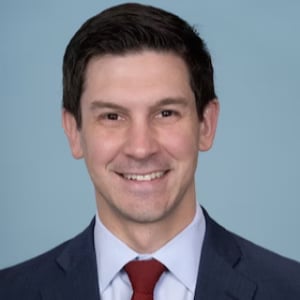
General Counsel, U.S. Commodity Futures Trading Commissioin
Tyler Badgley is the General Counsel at the Commodity Futures Trading Commission. In that role, Mr. Badgley leads the agency’s Legal Division and serves as the Commission’s chief legal advisor. He was appointed General Counsel in January 2026.
Prior to joining the CFTC, Mr. Badgley served as the Deputy General Counsel at the U.S. Department of the Treasury and was the first Executive Secretary under Secretary Scott K.H. Bessent. Mr. Badgley was previously a Senior Counsel at the U.S. Chamber Litigation Center, the litigation arm of the U.S. Chamber of Commerce. There, he focused on complex litigation and regulatory issues, particularly in connection with capital markets.
Mr. Badgley also practiced law at Sullivan & Cromwell LLP, served as a Special Counsel to the U.S. Senate Committee on the Judiciary, and began his legal career as a law clerk for the Honorable Edith H. Jones of the U.S. Court of Appeals for the Fifth Circuit. Mr. Badgley graduated Order of the Coif from the University of Virginia School of Law, where he served as Articles Editor for the Virginia Law Review. He also received his undergraduate degree in Economics and Government from the University of Virginia.

Partner, Lewis Brisbois
Sarah E. Lang is a partner in the New York office of Lewis Brisbois and a member of the Appellate Practice. Ms. Lang has represented clients at all levels of state and federal courts, including the New York State Appellate Division, the Second Circuit Court of Appeals, and the U.S. Supreme Court. The primary focus of her practice is drafting and arguing substantive motions and appeals before the federal courts and New York’s trial and appellate courts in substantive areas including general liability, New York Labor Law, medical malpractice, premises liability, and rideshare and transportation matters, among others. She also has extensive experience representing clients, including religious institutions, in matters arising under Title VII, the First Amendment, RLUIPA, New York’s City and State Human Rights Laws, New York’s Religious Corporations Law, and New York’s Real Property Tax Law. This includes federal jury trial experience and providing preventive advice and counseling. Prior to joining the firm, Ms. Lang clerked on the United States Court of Appeals for the Eighth Circuit, as well as the United States District Court for the Eastern District of North Carolina. She also previously served as an Attorney Advisor for the United States Department of Education.

President, Harned Strategies LLC
Karen Harned is President at Harned Strategies LLC. Previously, she served as Executive Director of the National Federation of Independent Business Small Business Legal Center, a post she held from 2002-2022. Prior to joining the Legal Center, Ms. Harned was an attorney at a Washington, D.C. law firm specializing in food and drug law, where she represented several small and large businesses and their respective trade associations before Congress and federal agencies. She also served as Assistant Press Secretary to U.S. Senator Don Nickles of Oklahoma from August of 1989 to March of 1993. Ms. Harned received her B.A. from the University of Oklahoma in 1989 and her J.D. from The George Washington University National Law Center in 1995. She is admitted to practice in the District of Columbia.
As Executive Director of the NFIB Small Business Legal Center, Ms. Harned commented regularly on small business cases before federal and state courts, as well as the U.S. Supreme Court. She has appeared on Fox News, Fox Business, NBC Nightly News, CNN, CNBC and MSNBC, as well as National Public Radio, CBS Radio, and radio outlets across the country. Her opinion editorials and articles regarding healthcare, lawsuit abuse, regulation, and other issues important to small business have been published in newspapers and other publications nationwide.
Ms. Harned has testified before Congress on the small business impact of regulation and the civil justice system. Additionally, she has conducted numerous webinars and legal compliance seminars for small business owners across the country on issues relating to employment law, including unionization and immigration.
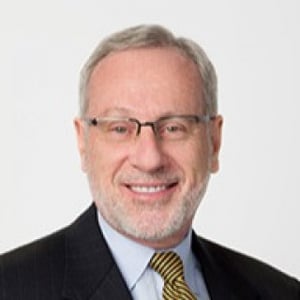
President, Center for Constitutional Litigation
Robert S. Peck, founder and president of CCL, is a sought-after appellate litigator within the plaintiffs’ bar. He is credited with having developed groundbreaking constitutional challenges to laws impeding access to courts. He regularly appears before the U.S. Supreme Court and state supreme courts, litigating cases on the merits as well as at the petition stage. Bob’s diverse practice includes state and federal constitutional law, complex civil litigation, federal preemption, personal jurisdiction, punitive damages, products liability, mass torts, consumer protection, and Section 1983 cases.
Bob has taught advanced constitutional law and state constitutional law at The George Washington University Law School and American University Washington College of Law as a member of the adjunct faculty. He is a past chair of the Board of Advisors of the RAND Corporation’s Institute for Civil Justice; past member of the Board of Directors of the National Center for State Courts; a member of the advisory committee of the Civil Justice Research Institute at the University of California, Berkeley; and a Leaders Forum member of the American Association for Justice. Bob is a past president of the U.S. Supreme Court Fellows Alumni Association and the Freedom to Read Foundation, and a past national chair of Lawyers for Libraries. He has received the prestigious AV Preeminent rating from Martindale Hubbell for both legal ability and ethical standards.

Of Counsel, Kellogg Hansen
Collin White litigates high-stakes cases in trial and appellate courts across the country. Since he joined the firm in 2015, he has represented clients from a wide range of industries in cases about antitrust, intellectual property, securities, telecommunications, and administrative and constitutional law. He also advises clients on antitrust and regulatory matters.
Collin regularly represents both plaintiffs and defendants in antitrust cases. He has represented plaintiffs in a conspiracy case about software for auto dealers, In re Dealer Management Systems Antitrust Litig., MDL No. 2817 (N.D. Ill.), and a landmark monopolization case about spot cable advertising, Viamedia Inc. v. Comcast Corp., No. 16-cv-05486 (N.D. Ill.). He has represented defendants in the Supreme Court’s leading modern Rule of Reason decision, Ohio v. American Express Co., 138 S. Ct. 2274 (2018); a price-discrimination case about a well-known energy shot, U.S. Wholesale Outlet & Distribution, Inc. v. Innovation Ventures, LLC, 89 F.4th 1126 (9th Cir. 2023) (cert. petition filed Apr. 12, 2024); the FTC’s attempt to block Meta’s acquisition of Within, a virtual reality application developer, FTC v. Meta Platforms Inc., No. No. 5:22-cv-04325-EJD (N.D. Cal.); and the FTC’s ongoing monopolization action in FTC v. Meta Platforms, Inc., No. 20-3590 (D.D.C.).
Collin also regularly represents clients in appeals. For example, he has helped secure victories for telecommunications clients (in Greenlining Institute v. FCC, No. 17-73283 (9th Cir. 2020), and Bellsouth Telecommunications LLC v. Cobb County, No. S17G2011 (Ga. 2019)); a software company (in Intellisoft, Ltd. v. Acer Am. Corp., 955 F.3d 927 (Fed. Cir. 2020)); and an individual injured by a medical device (in In re Bard IVC Filters Products Liability Litigation, 969 F.3d 1067 (9th Cir. 2020)).
Head of AI Policy, Abundance Institute
Neil Chilson is the Head of AI Policy at the Abundance Institute. Prior to this position, he served as a Senior Research Fellow at the Center for Growth and Opportunity. Chilson is a lawyer, computer scientist, and author of the book “Getting Out of Control: Emergent Leadership in a Complex World.”
Chilson was previously the senior research fellow for Technology and Innovation at Stand Together, where he guided efforts to understand and promote the legal and cultural paradigms that best enable people to discover, innovate, and improve all our lives.
Before Stand Together, Chilson was the Chief Technologist at the Federal Trade Commission, where he focused on the economics of privacy and blockchain-related issues. Previously, he was an attorney advisor to Acting FTC Chairman Maureen K. Ohlhausen. In both roles he advised Chairman Ohlhausen and worked with staff on nearly every major technology-related case, report, workshop, or other FTC proceeding since January 2014. Neil joined the FTC from telecom firm Wilkinson Barker Knauer. Neil is frequently quoted by the press and his work has appeared in numerous news outlets, including The Wall Street Journal, The Washington Post, USAToday, and Newsweek. Neil has a J.D. from The George Washington Law School, a M.S. in computer science from University of Illinois, Urbana-Champaign, and a B.S. in computer science from Harding University.

Senior Legal Fellow, The Future of Free Speech, Vanderbilt University
Ashkhen Kazaryan is a renowned expert in First Amendment law and technology policy, specializing in digital free speech, artificial intelligence, and the intersection of constitutional rights with emerging technologies. As a Senior Legal Fellow at the Future of Free Speech at Vanderbilt University, she leads initiatives to protect free expression and shape policies that uphold the First Amendment in the digital age.
Previously, Ashkhen was the lead for North and Latin America on the content regulation team at Meta, where she also served as the company’s policy lead on Section 230. She has also been a Senior Fellow at Stand Together and the Director of Civil Liberties at TechFreedom, where she worked extensively on platform liability, free speech, and internet governance. She is currently Fellow for the First Amendment at the Freedom Forum.
Ashkhen earned her specialist in law degree summa cum laude from Lomonosov Moscow State University in 2012 and later received a master of law degree from Yale Law School in 2016. During her time at Yale, she contributed as an articles editor for the Yale Journal of Law and Feminism, a senior editor for the Yale Law and Policy Review, and an editor for the Yale Journal of Law and Technology, while also serving as co-chair of the Public Interest Fellowship.
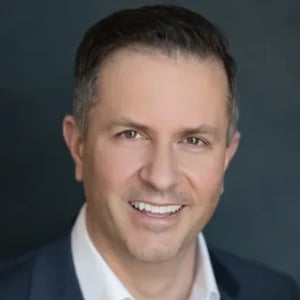
Founder and CEO, Chamber of Progress
Adam Kovacevich (Kuh-VACK-uh-VITCH) is the Founder and CEO of Chamber of Progress, a center-left tech industry policy coalition promoting technology’s progressive future.
Chamber of Progress – which Adam founded in March 2021 – works to ensure that all Americans benefit from technological leaps, and that the tech industry operates responsibly and fairly. It has been called “one of the most powerful tech lobby groups,” (New York Times), “one of the tech industry’s most prominent allies in Washington,” (Washington Post) and “a significant voice in the progressive movement” (Washingtonian).
Adam is a veteran Democratic tech industry leader who has had a front row seat for more than 20 years in the tech industry’s political maturation. He is an expert in helping lead technology companies through today’s challenging political environment.
Senior Fellow, R Street Institute
Prior to R Street, Adam spent 12 years as a senior fellow at the Mercatus Center at George Mason University. Before the Mercatus Center, he served as the president of the Progress and Freedom Foundation. Adam has also worked for the Adam Smith Institute, the Heritage Foundation and the Cato Institute.
Adam has published 10 books on a wide range of topics, including online child safety, internet governance, intellectual property, telecommunications policy, media regulation and federalism.
In 2008, Adam received the Family Online Safety Institute’s “Award for Outstanding Achievement.”

Tazewell Taylor Professor of Law and William H. Cabell Research Professor, William & Mary Law School
Jonathan H. Adler joined the William & Mary law faculty as the Tazwell Taylor Professor of Law and William H. Cabell Research Professor in 2025. Prior to joining the faculty, he was the inaugural Johan Verheij Memorial Professor of Law and the founding Director of the Coleman P. Burke Center for Environmental Law at the Case Western Reserve University School of Law.
Professor Adler is the author or editor of seven books, including Climate Liberalism: Perspectives on Liberty, Property and Pollution (Palgrave, 2023), Marijuana Federalism: Uncle Sam and Mary Jane (Brookings Institution Press, 2020), Business and the Roberts Court (Oxford University Press, 2016) and Rebuilding the Ark: New Perspectives on Endangered Species Act Reform (AEI Press, 2011).
His articles have appeared in publications ranging from the Harvard Environmental Law Review and Yale Journal on Regulation to the Wall Street Journal, New York Times, and Washington Post. He has testified before Congress a dozen times, and his work has been cited in the U.S. Supreme Court. A 2024 study identified Professor Adler as the seventh most cited legal academic in administrative and environmental law from 2019 to 2023.
Professor Adler is a contributing editor to Civitas Outlook and a regular contributor to the popular legal blog, The Volokh Conspiracy. A regular commentator on constitutional and regulatory issues, he has appeared on numerous radio and television programs, ranging from the PBS Newshour and National Public Radio to the Fox News Channel and Entertainment Tonight.
Professor Adler is a senior fellow at the Property & Environment Research Center in Bozeman, Montana. In 2018, Professor Adler was elected to membership in the American Law Institute and helped co-found the organization Checks and Balances. In 2024, Professor Adler was appointed a public member of the Administrative Conference of the United States.
Professor Adler clerked for the Honorable David B. Sentelle on the U.S. Court of Appeals for the District of Columbia Circuit.
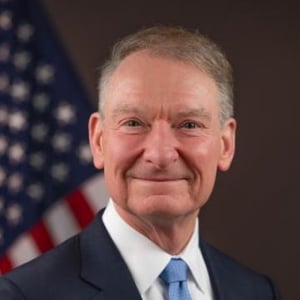
Chairman of the Securities and Exchange Commission
Paul S. Atkins was sworn into office as the 34th Chairman of the Securities and Exchange Commission on April 21, 2025, after being nominated by President Donald J. Trump on January 20, 2025, and confirmed by the U.S. Senate on April 9, 2025.
Prior to returning to the SEC, Chairman Atkins was most recently chief executive of Patomak Global Partners, a company he founded in 2009. Chairman Atkins helped lead efforts to develop best practices for the digital asset sector. He served as an independent director and non-executive chairman of the board of BATS Global Markets, Inc. from 2012 to 2015.
Chairman Atkins was appointed by President George W. Bush to serve as a Commissioner of the SEC from 2002 to 2008. During his tenure, he advocated for transparency, consistency, and the use of cost-benefit analysis at the agency. Chairman Atkins also represented the SEC at meetings of the President’s Working Group on Financial Markets and the U.S.-EU Transatlantic Economic Council. From 2009 to 2010, he was appointed a member of the Congressional Oversight Panel for the Troubled Asset Relief Program.
Before serving as an SEC Commissioner, Chairman Atkins was a consultant on securities and investment management industry matters, especially regarding issues of strategy, regulatory compliance, risk management, new product development, and organizational control.
From 1990 to 1994, Chairman Atkins served on the staff of two chairmen of the SEC, Richard C. Breeden and Arthur Levitt, ultimately as chief of staff and counselor, respectively. He received the SEC’s 1992 Law and Policy Award for work regarding corporate governance matters.
Chairman Atkins began his career as a lawyer in New York, focusing on a wide range of corporate transactions for U.S. and foreign clients, including public and private securities offerings and mergers and acquisitions. He was resident for 2½ years in his firm's Paris office and admitted as conseil juridique in France.
A member of the New York and Florida bars, Chairman Atkins received his J.D. from Vanderbilt University School of Law in 1983 and was Senior Student Writing Editor of the Vanderbilt Law Review. He received his A.B., Phi Beta Kappa, from Wofford College in 1980.
Originally from Lillington, North Carolina, Chairman Atkins grew up in Tampa, Florida. He and his wife Sarah have three sons.
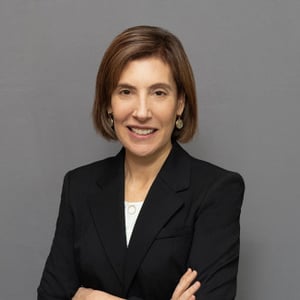
Partner, Williams & Connolly
Lisa Blatt serves as Chair of Williams & Connolly’s Supreme Court and Appellate practice. Lisa has argued 53 cases before the United States Supreme Court, prevailing in 86% of them. The National Law Journal has called her a "visionary" and one of "the 100 most influential lawyers in America." Bloomberg has described her as a "legendary high court litigator" while The National Journal likewise has referred to her as a "SCOTUS legend." In 2021, The American Lawyer recognized Lisa as the "Litigator of the Year." Lisa’s appellate work has been highlighted by multiple publications and has earned her rankings in Chambers USA, Benchmark Litigation, The Legal 500, and Washingtonian magazine. Lisa was selected as one of the “Top 10 Women in Litigation” in the United States by Benchmark Litigation in 2020 and 2021. Managing IP named her the 2021 “Practitioner of the Year (Appellate)” for her work as lead counsel to Booking.com before the Supreme Court. In 2021, Chambers USA reported that clients describe Lisa as “one of the best advocates today. She is extremely strong on her feet, connects with judges and has an unmatched win record,” and her “command of the case law and the way she presents is a work of art.”
Lisa has argued and briefed numerous appeals on a wide range of business law issues in federal and state courts of appeal. The American Lawyer Litigation Daily has twice named her "Litigator of the Week" – for her work in Price v. Philip Morris, Inc. in overturning reinstatement of a $10 billion verdict against client Philip Morris in a "light" cigarette case, and in SmithKline Beecham Corp. v. Abbott Laboratories, a landmark case on behalf of GlaxoSmithKline finding that the Equal Protection Clause bars peremptory challenges of jurors based on sexual orientation. Lisa also represented Marvin Gaye’s heirs in their copyright dispute over the hit songs “Got To Give It Up” and “Blurred Lines,” and the Washington Redskins football team in its dispute with the U.S. Patent and Trademark Office over the team's trademarks.
Lisa has substantial experience with trademark law and the pharmaceutical industry. Her Supreme Court cases also have addressed a broad range of issues, involving First Amendment, arbitration, antitrust, civil procedure, preemption, employment and ERISA, and bankruptcy.
Lisa began her career at Williams & Connolly as an associate before joining the general counsel’s office at the Department of Energy, followed by thirteen years in the Office of the Solicitor General.
Lisa received her J.D. summa cum laude from the University of Texas School of Law before clerking for The Honorable Ruth Bader Ginsburg on the U.S. Court of Appeals for the District of Columbia Circuit.
Lisa assists the U.S. Chamber of Commerce in selecting cases for amicus participation, and is on the Advisory Boards for Georgetown University Law Center's Supreme Court Institute and the Washington Legal Foundation. She also teaches at Georgetown University’s Law Center.

Supreme Court & Appellate Litigation Chair, Lex Politica; Of Counsel, Alliance Defending Freedom
Erin Morrow Hawley serves as Chair of Lex Politica's Supreme Court and Appellate Practice overseeing the firm’s strategic appellate litigation and critical motions practice in the trial courts. Erin is an experienced litigator who represents clients in constitutional, regulatory, and appellate matters in federal and state courts throughout the country.
Erin has represented dozens of clients before the Supreme Court of the United States, served as lead counsel in high-profile cases raising novel constitutional and statutory issues, and authored numerous successful petitions for certiorari and briefs in opposition. She has argued in state and federal appellate and trial courts throughout the country, including the Supreme Court of the United States. Erin represents diverse clients in high-stakes litigation from state governments to faith-based nonprofits to Fortune 100 companies. She possesses expertise on a wide range of subject matters including administrative law, the First Amendment, religious liberty, federal jurisdiction, federal preemption, equitable jurisdiction, tax law, the Affordable Care Act, and Title IX.
Erin represents clients in cases where public communications strategy is paramount. She is a sought-after speaker and writer, has testified multiple times before Congress, and is a frequent presenter on constitutional and administrative law issues, including at the Oxford Union, the National Federalist Society Convention, and university campuses across the country. She is a frequent commentator to media outlets, including Fox News, MSNBC, the Wall Street Journal, WORLD, USA Today, the Federalist, and the Hill.
Erin previously oversaw Alliance Defending Freedom’s--where she still serves as Of Counsel--litigation strategies to empower women and protect the dignity of life, defend pregnancy centers’ First Amendment rights from government overreach, and safeguard Americans’ freedoms from the ever-encroaching administrative state.

Editor, SCOTUSblog
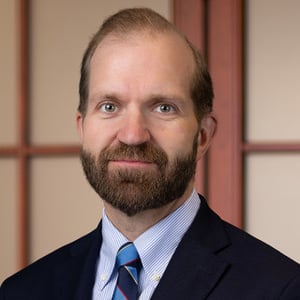
Partner, McGuireWoods
John Moran is a member of the firm’s nationally recognized Government Investigations and White Collar Litigation department. A former senior official at the U.S. Department of Justice (DOJ) and the White House and an experienced litigator and counselor, John draws on his broad experience from private practice and government service to advise and represent clients in government enforcement, congressional investigations, high-stakes civil disputes, and regulatory litigation. He also serves as co-chair of the firm’s Congressional Investigations practice, representing both companies and individuals in congressional investigations and hearings and is a member of the firm’s Appeals & Issues group.
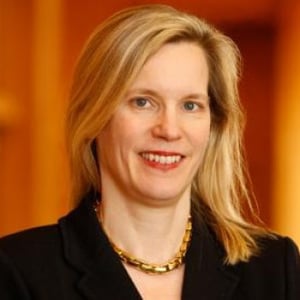
John S. Battle Professor of Law, University of Virginia School of Law
Julia D. Mahoney teaches courses in property, government finance, constitutional law and nonprofit organizations. A graduate of Yale Law School, she joined the University of Virginia faculty as an associate professor in 1999 and is now John S. Battle Professor of Law. She has also taught at the University of Southern California Law School and the University of Chicago Law School, and before entering the legal academy, practiced law at the New York firm Wachtell, Lipton, Rosen & Katz. Her scholarly articles include works on land preservation, eminent domain, health care reform and property rights in human biological materials.

Professor of Law, Northwestern University Pritzker School of Law
Joshua Kleinfeld teaches and writes about political, legal, and moral philosophy, criminal law, and criminal procedure. He also practices law in Northwestern's Juvenile Criminal Defense Clinic. He is a full professor with tenure at the Northwestern Pritzker School of the Law and (by courtesy) in Northwestern’s philosophy department. In 2017-18, he was a visiting professor at Harvard and Stanford Law Schools. He is the recipient of the Bator Award, given annually to one American law professor under the age of 40 who has demonstrated "excellence in legal scholarship, a commitment to teaching, a concern for students, and who has made a significant public impact."
In philosophy, Kleinfeld's research focuses on the idea of "embodied ethical life," as developed in the socio-theoretic tradition of Hegel, Weber, and Durkheim. This tradition aims to understand and critique social life by bringing to light the normative ideas implicit in social practices and institutions. In law, this means that the most interesting philosophical concepts are often those reflected or actualized in legal practice – in the law as judges and lawyers think of it and wield it.
In criminal law and procedure, Kleinfeld has developed a theory known as "reconstructivism," which holds that the chief office of criminal law is not to dole out retributive justice, nor to optimize crime and cost control, but to reconstruct a violated normative order in the wake of a crime. This work, which draws on the thought of Hegel, Durkheim, Jean Hampton, and Antony Duff, develops an alternative to retributive and utilitarian theories of criminal law by focusing on the distinctive social function and sense of justice at work in the criminal system.
Kleinfeld is also involved in practical criminal justice reform. In this vein, he defends children accused of homicide in the Northwestern Juvenile Criminal Defense clinic and assists in litigation efforts meant to reform American criminal law through the courts. He has also developed a view of criminal justice reform known as "democratization," which holds that the root of the American criminal justice crisis is a set of bureaucratic attitudes, structures, and incentives divorced from the American public’s concerns and sense of justice, and that the primary solution is to make criminal justice more community-focused and responsive to lay influences. Working with others, he has developed a number of policy proposals meant to reform American criminal justice in a democratic direction.
Kleinfeld holds a JD from Yale Law School, a PhD in philosophy from the Goethe University of Frankfurt (supervised by Axel Honneth, Klaus Günther, and Rainer Forst), and a BA in philosophy from Yale College. He clerked for Judge J. Harvie Wilkinson on the United States Court of Appeals for the Fourth Circuit; Judge Janice Rogers Brown on the United States Court of Appeals for the D.C. Circuit; and President (chief justice) Aharon Barak of the Supreme Court of Israel. He worked as an Associate at Debevoise & Plimpton LLP in Frankfurt, Germany, in the area of corporate criminal law. Before law school, he worked as a Senior Research Analyst at the White House’s Council on Bioethics.
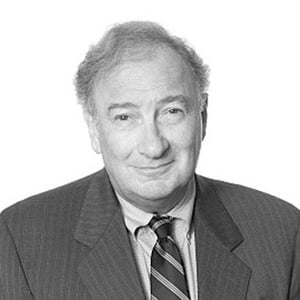
Retired, Winston & Strawn LLP
Jerry Loeser is of counsel in the Chicago office of Winston & Strawn, and his practice focuses on banking regulation. He has extensive experience in counseling financial services clients on, among other things, bank acquisitions, privacy, financial modernization, the USA PATRIOT Act, Basel II and III, lending limits, capital, trust, affiliate transactions, and Federal Reserve, OCC, FDIC, and CFPB regulations.
Prior to working at large corporate law firms, Jerry was chief regulatory and compliance counsel for Comerica Bank, where he also served as senior vice president and deputy general counsel and as general counsel of its retail bank division. Before that, he served as chief regulatory in-house counsel at Wells Fargo & Co. Jerry began his legal career advising the Board of Governors of the Federal Reserve System in Washington, D.C.

Assistant Professor of Law, American University Washington College of Law
Charles Duan is an assistant professor at American University Washington College of Law. His research focuses on how intellectual property and technology law interact with public policy and the public interest. He has written about patent law and drug pricing, copyright protection in legal texts, government use of patents, consumer interests in technology, and conflicts between regulation and intellectual property.
Duan previously was a postdoctoral fellow at Cornell Tech and a research fellow at Colorado Law School, working on National Science Foundation–funded Internet law research. He was also the director of technology and innovation policy at the R Street Institute, the director of the patent reform project at Public Knowledge, and a patent attorney at the law firm Knobbe Martens. In addition to his academic publications, he has authored over two hundred amicus curiae briefs, policy papers, administrative comments, and media articles, which have been cited in the Supreme Court and federal courts of appeals. He received an A.B. degree in Computer Science from Harvard College, and his J.D. from Harvard Law School.

Of-Counsel, Holland & Knight
John Moran is a litigation attorney in Holland & Knight's Washington, D.C. office. Mr. Moran focuses his practice on intellectual property matters.
Mr. Moran has experience litigating many patent, trademark and trade secret cases in federal district court and argues appeals at the U.S. Court of Appeals for the Federal Circuit and U.S. Court of Appeals for the Fourth Circuit. He also has experience representing clients in Section 337 investigations before the International Trade Commission. His significant knowledge has led him to be called upon to testify as an expert witness on patent issues.
Mr. Moran has prosecuted or directly supervised the prosecution of hundreds of patent applications in many different technologies, including telecommunications systems and equipment, robotics, artificial intelligence (AI), imaging technology, nuclear reactor instrumentation, semiconductor devices and manufacturing processes and medical devices.
Prior to entering private practice, Mr. Moran worked as an electrical engineer for six years in the fields of semiconductor design, microprocessor design and software, microprocessor-controlled products, process control and telecommunications. His engineering career included four years with RCA at its solid state division and at its David Sarnoff Research Center.
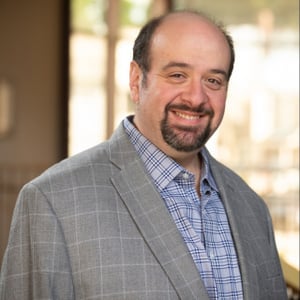
Associate Professor, UNH Franklin Pierce School of Law
Zvi S. Rosen is an Associate Professor at UNH Franklin Pierce School of Law and the Faculty Director of the Franklin Pierce Society for Intellectual Property. He has served as a Assistant Professor at the Southern Illinois University School of Law, as a Visiting Assistant Professor at the Maurice A. Deane School of Law at Hofstra University, and as a Visiting Scholar and Professorial Lecturer in Law at George Washington University School of Law.
In 2015-2016, he was the Abraham L. Kaminstein Scholar in Residence at the U.S. Copyright Office. Mr. Rosen received his J.D. from Northwestern University School of Law in 2005 and LLM in Intellectual Property in 2006 from the George Washington University Law School. He has practiced at Fried, Frank, Harris, Shriver & Jacobson LLP as well as smaller firms and his own practice, and clerked for the Hon. Thomas B. Bennett of the U.S. Bankruptcy Court for the Northern District of Alabama. He has written extensively on the development of modern copyright and trademark law, as well as on bankruptcy law.
CoFounder, RightsClick
Steven’s extensive background in IP law and policy began as an attorney for the U.S. Senate Judiciary Committee, after which, he served as senior counsel for Policy and International Affairs at the U.S. Copyright Office and then as Chief Intellectual Property Counsel for the Global Intellectual Property Center of the U.S. Chamber of Commerce. Before co-founding RightsClick, he started the IP consultancy Sentinel Worldwide, and teaches copyright law at George Washington University Law School.

Topics
A Decision Deferred, Not a Decision Denied: Supreme Court Dismisses NVIDIA v. E. Ohman J:or Fonder AB as Improvidently Granted
Today, the Supreme Court issued a per curiam decision dismissing the petition in NVIDIA v....
AI Policy In President Trump's Second Term
Neil Chilson, Kevin Frazier, Satya Thallam, Adam Thierer
There have been significant changes in federal AI policy over the course of the first...
Corporations, Securities, & Antitrust: The Future of Antitrust
Adam Cella, Thomas DeMatteo, Jennifer Walker Elrod, Michael Kades, Christopher Mufarrige, Alexander P. Okuliar
Critics have raised concerns about the inadequacy of the consumer welfare standard for the 21st...
A Seat at the Sitting - November 2024
Tyler S. Badgley, Sarah E. Lang, Karen Harned, Robert S. Peck, Collin R. White
Each month, a panel of constitutional experts convenes to discuss the Court’s upcoming docket sitting...
What Should the Next Administration Do About AI?
Neil Chilson, Ashkhen Kazaryan, Adam Kovacevich, Adam Thierer
This virtual event explored the potential trajectories of AI policy under the upcoming shift in presidential...
Supreme Court Preview: What Is in Store for October Term 2024?
Jonathan H. Adler, Paul S. Atkins, Lisa S. Blatt, Erin M. Hawley, Sarah Isgur, John S. Moran
On October 1, 2024, the Federalist Society's Faculty Division and Practice Groups will host a panel at...
Open Minds with Prof. Julia Mahoney and Prof. Joshua Kleinfeld - Part I
Julia D. Mahoney, Joshua Kleinfeld
In Part I, Professor Julia Mahoney joins Professor Joshua Kleinfeld to delve into the complexities...
Surprise, the Only Constant
Julius L. Loeser
A review of Alex Pollock & Howard Adler, Surprised Again! The COVID Crisis and the...
AI Meets Copyright: Understanding New York Times v. OpenAI
Charles Duan, John P. Moran, Zvi Rosen, Steven M. Tepp
Artificial intelligence is the most important technological tool being developed today, but the use of...