
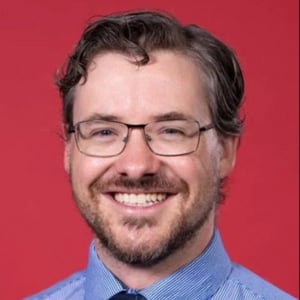
Senior Legal Fellow, Pacific Legal Foundation
Ethan Blevins is a senior legal fellow working primarily on equality and opportunity issues and property rights on PLF’s Constitutional Scholarship team. He previously worked as a staff attorney with PLF, mostly suing his favorite defendant, the City of Seattle. He earned a nickname from The Seattle Times as “the sharpest pin around to the council’s liberal bubble.” He’s had a lifelong dream to earn a superhero name, so he proudly accepts the teasing title of “The Pin” from his coworkers.
In addition to his legal work, Ethan has spoken and written on a variety of legal and policy issues. He has appeared on numerous radio and television programs, and his writings have appeared in The Wall Street Journal, The Seattle Times, The Salt Lake Tribune, The Hill, and other major publications.
Ethan’s introduction to liberty began as a teenager when he read Arthur Koestler’s chilling account of communism in Darkness at Noon. He was living in China at the time, and he saw firsthand the corruption and poverty wrought by dictatorship.
He felt inspired to dedicate his legal career to fighting for liberty after clerking for then-Justice Don Willett on the Texas Supreme Court, a judge known for his fierce commitment to constitutional rights (and his Twitter presence).
Ethan earned his law degree cum laude from Duke School of Law, as well as a master’s degree in international and comparative law. He writes poetry and fiction and has completed two fantasy novels, with several other books always in the works. He also enjoys mnemonics, comic books, gaming, and playing the ukulele. He lives in Bountiful, Utah, with his wife and four kids.
Ethan is a member of the bar only in the states of Montana, Utah and Washington.

Partner, Briscoe Prows Kao Ivester & Bazel LLP
Tony Francois is experienced in Water and Real Property Law, Land Use and Zoning, Environmental Regulation, Natural Resources Development, Agricultural Law, and Constitutional Law. He has represented homeowners, builders, farmers and ranchers, trade associations, and water districts in administrative, civil, and criminal proceedings before state and federal administrative agencies and state and federal trial and appellate courts. He is a member of the California State Bar and the Northern, Eastern, and Central Districts of California and the Districts of New Mexico and North Dakota, and has litigated cases in federal courts in California, Oregon, Washington, Idaho, Montana, Nevada, Arizona, New Mexico, Colorado, North and South Dakota, Minnesota, Massachusetts, Maryland, South Carolina, and the District of Columbia, as well as the Sixth, Eighth, Ninth, and Tenth Circuit Courts of Appeals. He has appeared before the Supreme Courts of California, Idaho, Nevada, and the United States.
Prior to attending law school, he served as an infantry officer in the United States Army, and was stationed in the former West Germany during the fall of the Berlin Wall.
Tony was an Attorney at Pacific Legal Foundation from 2012 to 2021. He was a lobbyist for 10 years, first with California Farm Bureau Federation from 2003 to 2007, and then with KP Public Affairs from 2007 to 2012. He was an attorney at McQuaid, Bedford & Van Zandt in San Francisco from 1999 – 2003.
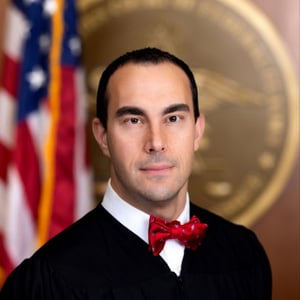
U.S. Court of Federal Claims and Jurist-In-Residence Professor of Law, The University of Akron School of Law
Judge Ryan T. Holte was sworn in as a judge on the United States Court of Federal Claims in July 2019. Prior to confirmation he served as the David L. Brennan Professor of Law and Director of the Center for Intellectual Property Law and Technology at The University of Akron School of Law (2017-2019) and an assistant professor of law at Southern Illinois University School of Law (2013-2017). Judge Holte has written and presented widely on patent law subjects and empirical legal studies of Federal Circuit and district court patent law cases. His most recent articles were published in the Iowa Law Review (2019), George Mason Law Review (2018), and Washington Law Review (2017).
In practice, Judge Holte served for six years as general counsel and partner of an electrical engineering technology company and is co-inventor of multiple patents related to Systems and Methods for Countering Satellite-Navigated Munitions. Prior to entering academia, Judge Holte practiced as a litigation attorney at the Federal Trade Commission and an associate in the Intellectual Property Practice Group at Jones Day. Prior to practice, he served as a law clerk to Judge Stanley F. Birch, Jr. on the United States Court of Appeals for the Eleventh Circuit and as a law clerk to Judge Loren A. Smith on the United States Court of Federal Claims.
Judge Holte received his JD from the University of California Davis School of Law and his BS, magna cum laude, in engineering from the California Maritime Academy where he was a First Class graduate of the Corps of Cadets Third Engineering Division and sailed as a U.S. Merchant Marine oiler.
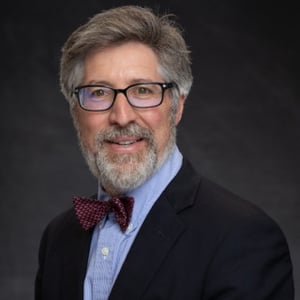
Associate Professor of Government, Hillsdale College, Washington, D.C. Campus
Richard Samuelson is an Associate Professor of Government at Hillsdale College’s Washington, D.C., campus. Dr. Samuelson is an historian of the American founding and of American politics and constitutional thought. He graduated from Bates College and received his MA and PhD in American history from the University of Virginia. Dr. Samuelson taught at California State University San Bernardino from 2007 to 2022. He was the 2009-2010 Garwood Visiting Fellow at Princeton University’s James Madison Program.
Dr. Samuelson has written extensively on John Adams and on the Adams family of Massachusetts, and on the constitutional politics of the founding more largely. His work also connects the founding with more contemporary issues, with a particular focus on religious liberty, and the challenge the modern American state, and contemporary civil rights laws present to religious liberty.
His essays and reviews have appeared in The Review of Politics, The William and Mary Quarterly, Commentary, The Claremont Review of Books, The Public Interest, National Review, and other publications. He has also contributed many essays and reviews to such online publications as Mosaic, Law and Liberty, Realclearpolitics, and other platforms.
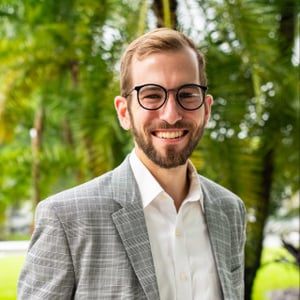
AI Innovation and Law Fellow, University of Texas School of Law
Kevin Frazier is an AI Innovation and Law Fellow with University of Texas School of Law.
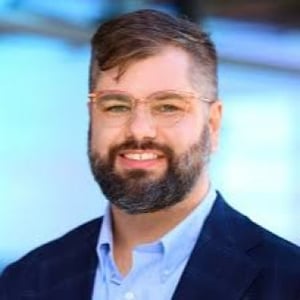
Chief Economist, Foundation of American Innovation
Samuel Hammond is Chief Economist at the Foundation for American Innovation, where his research focuses on artificial intelligence and the institutional impact of emerging technologies. He previously worked as the director of social policy for the Niskanen Center, where he remains a senior fellow; as an economist for the Government of Canada specializing in regional economic development; and as a graduate research fellow for the Mercatus Center at George Mason University.
Sam received a BA in Economics from Saint Mary’s University and MA in Economics from George Mason University and Carleton University.
AI Innovation and Law Fellow, University of Texas School of Law
Kevin Frazier is an AI Innovation and Law Fellow with University of Texas School of Law.

Associate Attorney - Investment Funds, Kirkland & Ellis LLP
Dhruva Krishna is an investment funds associate in the Los Angeles office of Kirkland & Ellis LLP. Dhruva's practice largely focuses on the formation, structuring, marketing, management and regulatory compliance of investment funds, including operational, legal and regulatory issues, with various sponsors ranging up to $15 billion. He also assists with related fund documentation and processes, including transfers, secondaries, co-investments and more. As an avid musician and writer, Dhruva is especially interested in the intersection of technology, regulation and innovation.

Research Fellow and Assistant Director, Stanford Program in Law, Science, and Technology and the Stanford Center for Legal Informatics (CodeX)
Dr. Megan Ma is a Research Fellow and the Associate Director of the Stanford Program in Law, Science, and Technology and the Stanford Center for Legal Informatics (CodeX). Her research focuses on the use and integration of generative AI in legal applications and the translation of legal knowledge to code, considering their implications in contexts of human-machine collaboration. She also teaches courses in computational law and insurance tech at the Law School.
Dr. Ma is also currently an Advisor to the PearX for AI program, Editor-in-Chief for the Cambridge Forum on AI, Law, and Governance, and the Managing Editor of the MIT Computational Law Report and a Research Affiliate at Singapore Management University in their Centre for Computational Law. Megan received her PhD in Law at Sciences Po and was a lecturer there, having taught courses in Artificial Intelligence and Legal Reasoning, Legal Semantics, and Public Health Law and Policy. She has previously been a Visiting PhD at the University of Cambridge and Harvard Law School respectively.
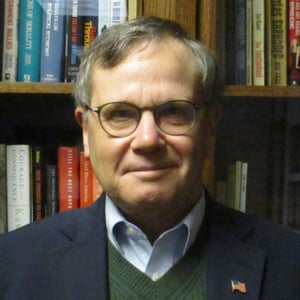
Senior Fellow in Constitutional Jurisprudence, Independence Institute
Professor Robert G. Natelson is a constitutional scholar and author.
Rob’s constitutional scholarship has been cited repeatedly by justices and parties at the U.S. Supreme Court—as well as by federal appeals courts, and at least 18 state supreme courts.
Rob’s research into the Constitution’s original meaning has carried him to libraries throughout the United States and in Britain, including four months at Oxford University. His books and articles span many different parts of the Constitution, including groundbreaking studies of the Necessary and Proper Clause, the Indian Commerce Clause, federalism, Founding-Era interpretation, regulation of elections, and the amendment process of Article V. He created the first-ever online bibliography for 18th century materials used in constitutional research. He is a contributing author to the Encyclopedia of the Supreme Court of the United States (on Magna Carta). He contributed eight essays to the third edition of the Heritage Guide to the Constitution: five on the amendment procedure and one each on the Guarantee Clause, the Postal Clause, and the Recess Appointments Clause.
U.S. Supreme Court justices have relied explicitly on Rob’s research in 41 citations in 13 separate cases.
Publius comes from the pen name Alexander Hamilton, James Madison, and John Jay used when they wrote 85 publicly printed letters now known as the Federalist Papers. Hamilton chose “Publius” as a name that would represent friends of the newly proposed American republic - Publius Valeria Publicola was a Roman general who helped to found the Roman Republic. The Federalist Society continues the tradition of publishing things under the name Publius in celebration of our constitutional roots and recognition that author credit is not always necessary.

Public Lands at the Founding
Ethan Blevins, Tony Francois, Ryan T. Holte, Richard Samuelson
In this Federalist Society America 250 series, experts analyze modern legal and policy debates through...
Panel 4: Going Nuclear: European Decline and American Revival?
CLE credit for this event is available at On-Demand CLE. The contrast between American and European...
Law for Little Tech: Part 4 - What are the Gaps in the Little Tech Agenda?
Kevin Frazier, Sam Hammond
“Starting small, but aspiring to grow” defines the little tech agenda. Big Tech companies often...
Tech Roundup Episode 24 - DOGEing Barriers? Legal Challenges to AI in Government
Kevin Frazier, Dhruva Krishna, Megan Ma
Artificial Intelligence has been rapidly brought to the forefront of the public conversation in recent...
The Meaning of "Regulate Commerce" to the Constitution's Ratifiers
Robert G. Natelson
I. Previous Scholarship[1] A. Views of “Commerce”: Traditional and “Mega” The Constitution grants Congress power...
Topics
How Fifth Circuit Affirmed George Washington’s Vision of Fundamental Justice
The recent ruling by the U.S. Court of Appeals for the Fifth Circuit in Jarkesy v. SEC is...
Tort And Federal Preemption (Florida)
Publius
The Florida state court system recently closed its books on an important tort and federal...