

Senior Counselor, The Cohen Group
Over the course of a 34-year career in the Foreign Service, Ambassador Jeffrey Davidow became one of America's most senior and well-respected diplomats. He has extensive experience in both Latin America and Africa, having served as US Ambassador to Mexico, Venezuela, and Zambia. He also headed the State Department's efforts in Latin America, serving as Assistant Secretary of State for Western Hemisphere Affairs. He retired in 2003 from the US State Department with the rank of Career Ambassador, the highest position in the Foreign Service which, by law, can be held by no more than five individuals at one time.
In 1993, President Clinton nominated Ambassador Davidow to be US Ambassador to Venezuela, a position he held until 1996. From 1996 to 1998, he was the State Department's chief policymaker for the Western Hemisphere, serving as Assistant Secretary of State for that region. President Clinton nominated Ambassador Davidow again in 1998, this time as US Ambassador to Mexico. Ambassador Davidow held this post from 1998 until 2002. After leaving Mexico in September 2002, he became a Visiting Fellow at the John F. Kennedy School of Government and the David Rockefeller Center for Latin American Studies.
Ambassador Davidow joined the US Foreign Service in 1969 and began his career at the American Embassy in Guatemala. He later became the head of the liaison office at the US Embassy in Zimbabwe and later returned to the US to act as the Director of the Office of Southern African Affairs in 1985. He also pursued a fellowship at Harvard University. In 1988, President Ronald Reagan nominated him to be US Ambassador to Zambia, a position he held until 1990. After his ambassadorship to Zambia, he served as Deputy Assistant Secretary of State for Africa. Ambassador Davidow spent many years involved in multiple negotiations in southern Africa - Angola, Namibia, Mozambique, Zimbabwe, and South Africa itself - that helped bring relative peace to that region.
Since leaving the Foreign Service, Ambassador Davidow has served as President of the Institute of the Americas in San Diego. Established in 1983, the Institute of the Americas is a leading institution in United States-Canada-Latin America cooperation. The Institute, best known for its energy and technology programs, brings together business and government leaders and representatives of civil society in forums designed to seek ways in which public and private entities can collaborate, clarify rules and regulations so private enterprise can flourish, promote the development of infrastructure through public-private funding, and implement effective policies for managing economic growth in Latin America.
Ambassador Davidow is also an accomplished public speaker and author. He has published articles in Foreign Policy and Foreign Affairs and authored two books, one on international negotiations and the other, The US and Mexico: The Bear and the Porcupine, a bestseller in Mexico and a prominent textbook at American universities. He speaks frequently on hemispheric policy and on Mexican developments for organizations such as the North American Forum, the Trilateral Commission, the Woodrow Wilson Center, the Pacific Council, the Chinese Academy of Social Sciences, the InterAmerican Development Bank, and many university and other groups. He also served as an adviser to President Obama for the 2009 Summit of the Americas.
A native of Massachusetts, Ambassador Davidow received a BA from the University of Massachusetts in 1965 and an MA from the University of Minnesota in 1967. He also did postgraduate work in India in 1968 on a Fulbright travel grant.
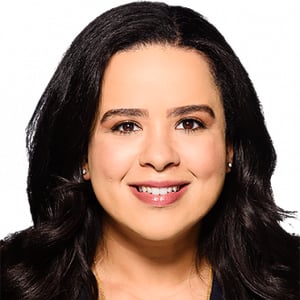
Senior Policy Analyst, Latin America and the Western Hemisphere, The Heritage Foundation
Ana Rosa Quintana leads The Heritage Foundation’s efforts on U.S. policy toward Latin America.
She has authored numerous policy studies included but not limited to Mexico, Central America, Cuba, Colombia and Venezuela. She has written articles for a wide range of outlets including The Atlantic, Real Clear World, the National Interest, The Hill, and various publications. She has presented at the State Department and other U.S. government agencies. Her work has been cited in media venues such as The Washington Post, The Wall Street Journal, Bloomberg Business, The Guardian, and she has been a commentator on media outlets like Fox News, MSNBC, and Al Jazeera. She has also testified multiple times before the U.S. Congress.
Quintana holds a Master of Arts degree in global affairs and a bachelor’s degree in political science, both from Florida International University. She also received certificates in National Security, Latin American and Caribbean studies. She was a scholar in the university’s Jack D. Gordon Institute for Public Policy and Citizenship Studies. She’s fluent in Spanish and studied in Minas Gerais, Brazil, on a scholarship sponsored by the Department of Defense.
She was formerly a National Security Fellow with the Foundation for Defense of Democracies and a former Penn Kemble Democracy Forum Fellow with the National Endowment for Democracy.
Prior to joining Heritage, she was a student trainee at the Defense Intelligence Agency. She also held internships at Virginia-based International Relief and Development, where she worked on rule of law issues in Latin America, and at the U.S. Agency for International Development, where she worked on civilian-military cooperation.
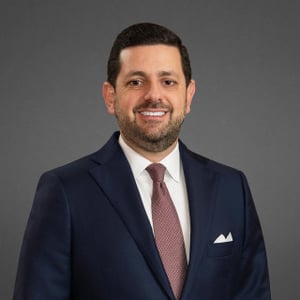
Of Counsel, DLA Piper LLP (US)
Harout J. Samra – a Board Certified Specialist in International Law – focuses his practice on international dispute resolution and arbitration matters, including international civil litigation in US courts.
Harout has represented clients from both the public and private sectors, including foreign governments, public officials and clients from a variety of industries. He has experience in international arbitrations administered under the International Chamber of Commerce (ICC), International Centre for Dispute Resolution (ICDR), United Nations Commission on International Trade Law (UNCITRAL), China International Economic and Trade Arbitration Commission (CIETAC), Bogota Chamber of Commerce, Madrid Court of Arbitration and International Centre for Settlement of Investment Disputes (ICSID) arbitration rules.
Harout currently serves as a member of the Florida Supreme Court Judicial Nominating Commission, by appointment of Governor Ron DeSantis. He previously served, by appointment of Governor Rick Scott, as a member of the Florida Third District Court of Appeal Judicial Nominating Commission, and was elected as Chair of the Commission from 2018-2019.
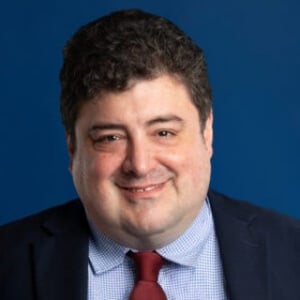
Senior Fellow and Director of Finance Policy, Competitive Enterprise Institute
John Berlau is a senior fellow and Director of Finance Policy at the Competitive Enterprise Institute. His work focuses on how public policy affects access to capital, entrepreneurship, and investments made by the public and business community alike. In recent years, he has studied the consequences of financial reform efforts passed by Congress like the Sarbanes-Oxley Act, the government’s response to the 2008 financial crisis including the Dodd-Frank Act, the placement of Fannie Mae and Freddie Mac into conservatorship, and the rise of cryptocurrency.
He is also the author of the book George Washington: Entrepreneur: How Our Founding Father’s Private Business Pursuits Changed America and the World. The book received rave reviews in the Wall Street Journal and other forums, and was endorsed by eminent historians and scholars such as Richard Brookhiser, Amity Shlaes, and Craig Shirley.
Berlau is a contributing writer for Forbes. His work has been published and cited in The Wall Street Journal, The New York Times, The Washington Post, Financial Times, Bloomberg News, The Atlantic, Politico, Daily Caller, Washington Examiner, Investor’s Business Daily, National Journal, National Review, American Spectator, Reason Magazine, and more. He is a frequent guest on radio and television programs, including CNBC’s “The Call,” “Power Lunch” and “Closing Bell,” Fox News’ “Fox & Friends” and “Your World with Neil Cavuto,” and Fox Business’ “Cavuto.”
He has testified on the impact of financial regulation before the House Committee on Financial Services and the House Committee on Energy and Commerce. A recognized expert on the phenomenon of crowdfunding, Berlau has spoken at prominent conferences such as South by Southwest Interactive in Austin, Money 20/20 in Las Vegas, the FinTech Global Expo in San Diego, the CFGE Crowdfund Banking and Lending Summit in San Francisco and the Crowdfund Intermediary Regulatory Advocates (CFIRA) Summit in Washington, D.C. He is also author of the widely cited paper “Declaration of Crowdfunding Independence: Finance of the People, by the People, and for the People.”
Berlau is an award-winning financial and political journalist. He served as Washington correspondent for Investor’s Business Daily and as a staff writer for Insight magazine, published by The Washington Times. In 2002, he received the Sandy Hume Memorial Award for Excellence in Political Journalism from Washington’s National Press Club. He was a media fellow at the Hoover Institution in 2003. He graduated from the University of Missouri-Columbia in 1994 with degrees in journalism and economics.
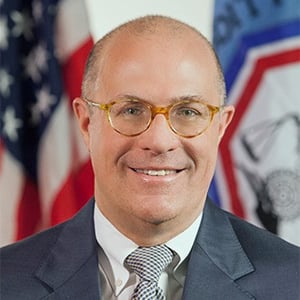
Senior Counsel, Willkie Farr & Gallagher LLP
J. Christopher “Chris” Giancarlo is senior counsel at Willkie Farr & Gallagher LLP, based in the firm’s New York office. Chris served as the thirteenth Chairman of the U.S. Commodity Futures Trading Commission (CFTC), where he oversaw regulation of the futures, options and swaps derivatives markets. Chris was also a successful entrepreneur helping GFI Group Inc. grow into a leading trading platform and technology vendor to global markets for OTC swaps and other derivatives and managing GFI’s successful private equity financing and IPO.
Chris is a renowned blockchain technology advocate and key contributor to the global discourse on cryptocurrencies and digital assets. During his tenure at the CFTC (2014-2019), Chris oversaw the first bitcoin futures products entering the marketplace and applied a “Do No Harm” regulatory approach towards blockchain technology.
Chris has testified often about financial and derivatives markets before the U.S. Congress and EU Parliament and is a frequent guest on broadcast radio and television, including BloombergTV, CNBC, Fox Business and the BBC, as well as podcasts such as “Unchained” and “CoinDesk.” Chris has written and spoken extensively on public policy, legal and other matters involving technology and the financial markets and has authored numerous white papers, articles and op-eds that have been published in The Wall Street Journal, Financial Times, Cato Journal, New York Law Journal, Les Echos and Coinbase.
Chris has over 45,000 followers on Twitter as @giancarloMKTS where he is known as “CryptoDad.”
Vice President and Director, Center for Monetary and Financial Alternatives, Cato Institute
Norbert Michel is vice president and director of the Cato Institute’s Center for Monetary and Financial Alternatives, where he specializes on issues pertaining to financial markets and monetary policy. Michel was most recently the Director for Data Analysis at the Heritage Foundation where he edited, and contributed chapters, to two books: The Case Against Dodd–Frank: How the “Consumer Protection” Law Endangers Americans, and Prosperity Unleashed: Smarter Financial Regulation
Michel was previously a tenured professor at Nicholls State University’s College of Business, teaching finance, economics and statistics. Before that, he worked at Heritage as a tax policy analyst in the think tank’s Center for Data Analysis from 2002 to 2005. He previously was with the global energy company Entergy, where he worked on models to help predict bankruptcies of commercial clients.
Michel holds a doctoral degree in financial economics from the University of New Orleans. He received his bachelor of business administration degree in finance and economics from Loyola University. He currently resides in Virginia.
Jay Kingham Senior Research Fellow in International Regulatory Affairs, The Heritage Foundation
Brett D. Schaefer is the Jay Kingham Fellow in International Regulatory Affairs at Heritage's Margaret Thatcher Center for Freedom.
Schaefer analyzes a range of foreign policy issues, focusing primarily on the United Nations and affiliated funds and programs. He frequently speaks and publishes on issues related to the world body and its activities.
Schaefer is editor of the 2009 book, ConUNdrum: The Limits of the United Nations and the Search for Alternatives (Rowman & Littlefield). It features chapters written by fellow experts on an array of international activities and responsibilities conducted by the U.N. and related international organizations, among them diplomacy, international law, peacekeeping, the environment, disarmament, health, human rights, trade and development.
A frequent visitor to sub-Saharan Africa, Schaefer has written extensively on economic development and peace and security issues there and how those issues affect America's national interests.
Schaefer's writing and analysis include contributions to rankings of individual nations in the annual Index of Economic Freedom, published by Heritage and The Wall Street Journal.
He speaks frequently to audiences of business leaders, congressional staff and academics, and has testified before Congress on the United Nations and foreign assistance and development.
Schaefer's appearances on a variety of radio and television programs include CNN, Fox, MSNBC, BBC and C-SPAN.
He joined Heritage in 1995 and was named Kingham Fellow in September 1996. He worked at the Pentagon as an assistant for international criminal court policy from March 2003 to March 2004.Schaefer received his master's degree in international development from the School of International Service at American University in Washington, D.C. He also holds a bachelor's degree in anthropology from Florida State University.

Senior Legal Fellow and Manager, National Security Law Program, The Heritage Foundation
Charles “Cully” Stimson is a widely recognized expert in national security, homeland security, crime control, drug policy and immigration. A senior legal fellow at The Heritage Foundation since 2007, Stimson became Manager of the National Security Law Program in Heritage’s Institute for Constitutional Government in April 2013 after serving as Heritage’s chief of staff for a year.
Stimson writes and lectures on policy issues such as the law of armed conflict, terrorist detainee policy and interrogations, the Geneva Conventions, military commissions, the Patriot Act and FISA, criminal law and the death penalty, immigration and the war on drugs. As chief of staff to then-Heritage President Edwin J. Feulner, he was a key adviser on public policy matters as well as manager of Feulner’s office staff and Heritage’s day-to-day operations.
Stimson’s many research papers, op-eds and articles include special reports such as “Adult Time for Adult Crime,” a comprehensive study on the constitutionality of life sentences for teen-age murderers, and Sexual Assault in the Military: Understanding the Problem and How to Fix It, a ground-breaking paper detailing the inner workings of the military justice system compared to its civilian counterpart. His work on criminal and immigration law has been cited in briefs before the U.S. Supreme Court.
He testifies before the U.S. Senate and House on national security issues, and recently testified before the Senate Armed Services Committee on the Law of Armed Conflict, Law of War, and the 2001 Authorization for Use of Military Force.
Before joining the think tank in 2007, Stimson served as Deputy Assistant Secretary of Defense for Detainee Affairs. He advised then-Secretaries of Defense Donald Rumsfeld and Robert Gates and coordinated the Pentagon’s global detention policy and operations, including at Guantanamo Bay and in Iraq and Afghanistan. He was chairman of detainee-related panels such as the Defense Senior Leadership Oversight Committee, and the Special Detainee Follow Up Group. He represented the United States before the U.N. in Geneva, Switzerland in May 2006 where he led the DOD delegation in defense of the United States’ Second Period Report on the Convention Against Torture.
An accomplished trial lawyer, Stimson worked as a prosecutor at the local, state and federal levels, where he concentrated on violent crimes such as homicide, sexual assault and domestic violence. A third generation naval officer, Cully also served as a military prosecutor, defense counsel, and recently served as Deputy Chief Judge of the Navy-Marine Corps Trial Judiciary. He continues to serve, with the rank of Captain, as the Commanding Officer of the Preliminary Hearing Unit.
Stimson’s thousands of media interviews and appearances include Fox News Channel, MSNBC, CNN, BBC, NPR and C-SPAN. He has been quoted by most major newspapers, including The Washington Post, Wall Street Journal, New York Times, Los Angeles Times, and London Times.
A businessman and educator by training, Stimson is Vice Chairman of his family’s commercial real estate company in Seattle. Before 9/11, he was a Vice President at a New York-based global financial services and insurance brokerage firm where ran the private equity mergers and acquisitions D.C. operation.
Stimson holds a law degree from the George Mason University School of Law, where he later taught as an Adjunct Professor of Law. He is a graduate of Kenyon College, where he was Captain of the men’s varsity soccer team and an All-Conference player. He also studied at Harvard and Exeter universities. An avid soccer player and triathlete, he serves as Chairman of the Board of the United States Soccer Foundation, the charitable giving arm of U.S. Soccer.
Senior Vice President, Spectrum Strategy & Technology Policy, Qualcomm
Dean Brenner is Senior Vice President, Government Affairs for Qualcomm Incorporated. He directs Qualcomm’s global spectrum acquisitions and strategy and is responsible for global technology policy. He represents Qualcomm before the Federal Communications Commission and other agencies of the United States and Canadian governments responsible for spectrum and telecommunications policy and interacts with spectrum regulators around the world. He also leads Qualcomm’s policy initiatives relating to mobile healthcare.
Mr. Brenner led Qualcomm’s bidding team in recent spectrum auctions in India (the 2.3 GHz band), the United States (the 700 MHz band), and the United Kingdom (the L Band). In addition, he was responsible for obtaining the regulatory approvals for Qualcomm’s sale of 700 MHz spectrum to AT&T in 2011. In 2006, he obtained the regulatory approvals to launch FLO TV, a mobile TV service. He has spoken at conferences on spectrum policy in the United States, Canada, South Korea, Belgium, Great Britain, and elsewhere around the world. He joined Qualcomm in November 2003.
Mr. Brenner received his A.B. degree, magna cum laude with distinction in public policy studies, from Duke in 1982. He won a prize for the best paper on communications policy, and he was a recipient for four years of a CBS Scholarship. He received his J.D., cum laude, from Georgetown University in 1985. He is admitted to the Bars of the District of Columbia, Maryland, and the U.S. Supreme Court, the U.S. Courts of Appeal for the D.C., Third, and Eleventh Circuits, and the U.S. District Court for the District of Columbia.
Mr. Brenner is a member of the Federal Advisory Board for Space-Based Positioning, Navigation, & Timing, which advises the Executive Branch on policy matters impacting the Global Positioning System. He is also a member of the Board of Governors of 4G Americas, the Board for Jewish Life at Duke University, and the Board of Trustees of the Field School. He lives in Washington, DC with his wife Robin Shaffert and their two sons, Michael and Steven.

Director (Group Manager), Technology and Innovation Policy, Toyota North America
Hilary Cain is Director of Technology and Innovation Policy for Toyota. In this position, she handles policy issues relating to connected and automated vehicle technology, including artificial intelligence, data privacy, cybersecurity, and telecommunications.
Prior to joining Toyota, Cain was on the staff of the U.S. House of Representatives’ Committee on Science, Space, and Technology. She served as Staff Director of the Subcommittee on Technology and Innovation with jurisdiction over matters relating to competitiveness, technology, standards, and innovation. Previously, as a Counsel to the Committee, she handled parliamentary, procedural, and jurisdictional matters and participated in the development and implementation of legislative strategy. Before joining the Committee staff, Cain served as Legislative Director and Ways and Means Counsel for individual Members of Congress.
She holds a J.D. and a M.A. in Public Affairs from the University of Texas, and a B.A. in Political Science with honors from the University of Washington.

Vice President & Associate General Counsel, NCTA- The Internet & Television Association
Danielle J. Piñeres is a Vice President & Associate General Counsel at NCTA – The Internet & Television Association, where she focuses on wireless spectrum policy issues. Prior to her employment at NCTA, Ms. Piñeres worked as an associate with the law firm of Harris, Wiltshire & Grannis LLP in Washington, D.C., where she practiced in the areas of telecommunications (including spectrum regulation), international trade and foreign investment, and appellate litigation. Before joining HWG, Ms. Piñeres clerked for the Honorable Emily C. Hewitt at the United States Court of Federal Claims. Ms. Piñeres received her J.D. magna cum laude from the Georgetown University Law Center.

Professor of Law, University of Michigan Law School
Christopher J. Walker is a Professor of Law at the University of Michigan. Prior to joining Michigan law faculty in 2022, he spent a decade teaching at The Ohio State University Moritz College of Law. He previously clerked for Justice Anthony Kennedy of the U.S. Supreme Court, worked on the Civil Appellate Staff at the U.S. Department of Justice, and served on the Senate Judiciary Committee staff for the Gorsuch Supreme Court confirmation. Professor Walker’s research focuses on administrative law, regulation, and law and policy at the agency level. Outside the law school, he chaired the American Bar Association’s Section of Administrative Law and Regulatory Practice in 2020-21 and served as one of forty Public Members of the Administrative Conference of the United States from 2016-2022, and he continues to serve in both organizations in various capacities. He also works of counsel at the U.S. Chamber Litigation Center. In 2022, he received the Federalist Society’s Joseph Story Award.
Senior Vice President, Spectrum Strategy & Technology Policy, Qualcomm
Dean Brenner is Senior Vice President, Government Affairs for Qualcomm Incorporated. He directs Qualcomm’s global spectrum acquisitions and strategy and is responsible for global technology policy. He represents Qualcomm before the Federal Communications Commission and other agencies of the United States and Canadian governments responsible for spectrum and telecommunications policy and interacts with spectrum regulators around the world. He also leads Qualcomm’s policy initiatives relating to mobile healthcare.
Mr. Brenner led Qualcomm’s bidding team in recent spectrum auctions in India (the 2.3 GHz band), the United States (the 700 MHz band), and the United Kingdom (the L Band). In addition, he was responsible for obtaining the regulatory approvals for Qualcomm’s sale of 700 MHz spectrum to AT&T in 2011. In 2006, he obtained the regulatory approvals to launch FLO TV, a mobile TV service. He has spoken at conferences on spectrum policy in the United States, Canada, South Korea, Belgium, Great Britain, and elsewhere around the world. He joined Qualcomm in November 2003.
Mr. Brenner received his A.B. degree, magna cum laude with distinction in public policy studies, from Duke in 1982. He won a prize for the best paper on communications policy, and he was a recipient for four years of a CBS Scholarship. He received his J.D., cum laude, from Georgetown University in 1985. He is admitted to the Bars of the District of Columbia, Maryland, and the U.S. Supreme Court, the U.S. Courts of Appeal for the D.C., Third, and Eleventh Circuits, and the U.S. District Court for the District of Columbia.
Mr. Brenner is a member of the Federal Advisory Board for Space-Based Positioning, Navigation, & Timing, which advises the Executive Branch on policy matters impacting the Global Positioning System. He is also a member of the Board of Governors of 4G Americas, the Board for Jewish Life at Duke University, and the Board of Trustees of the Field School. He lives in Washington, DC with his wife Robin Shaffert and their two sons, Michael and Steven.
Director (Group Manager), Technology and Innovation Policy, Toyota North America
Hilary Cain is Director of Technology and Innovation Policy for Toyota. In this position, she handles policy issues relating to connected and automated vehicle technology, including artificial intelligence, data privacy, cybersecurity, and telecommunications.
Prior to joining Toyota, Cain was on the staff of the U.S. House of Representatives’ Committee on Science, Space, and Technology. She served as Staff Director of the Subcommittee on Technology and Innovation with jurisdiction over matters relating to competitiveness, technology, standards, and innovation. Previously, as a Counsel to the Committee, she handled parliamentary, procedural, and jurisdictional matters and participated in the development and implementation of legislative strategy. Before joining the Committee staff, Cain served as Legislative Director and Ways and Means Counsel for individual Members of Congress.
She holds a J.D. and a M.A. in Public Affairs from the University of Texas, and a B.A. in Political Science with honors from the University of Washington.
Vice President & Associate General Counsel, NCTA- The Internet & Television Association
Danielle J. Piñeres is a Vice President & Associate General Counsel at NCTA – The Internet & Television Association, where she focuses on wireless spectrum policy issues. Prior to her employment at NCTA, Ms. Piñeres worked as an associate with the law firm of Harris, Wiltshire & Grannis LLP in Washington, D.C., where she practiced in the areas of telecommunications (including spectrum regulation), international trade and foreign investment, and appellate litigation. Before joining HWG, Ms. Piñeres clerked for the Honorable Emily C. Hewitt at the United States Court of Federal Claims. Ms. Piñeres received her J.D. magna cum laude from the Georgetown University Law Center.
Professor of Law, University of Michigan Law School
Christopher J. Walker is a Professor of Law at the University of Michigan. Prior to joining Michigan law faculty in 2022, he spent a decade teaching at The Ohio State University Moritz College of Law. He previously clerked for Justice Anthony Kennedy of the U.S. Supreme Court, worked on the Civil Appellate Staff at the U.S. Department of Justice, and served on the Senate Judiciary Committee staff for the Gorsuch Supreme Court confirmation. Professor Walker’s research focuses on administrative law, regulation, and law and policy at the agency level. Outside the law school, he chaired the American Bar Association’s Section of Administrative Law and Regulatory Practice in 2020-21 and served as one of forty Public Members of the Administrative Conference of the United States from 2016-2022, and he continues to serve in both organizations in various capacities. He also works of counsel at the U.S. Chamber Litigation Center. In 2022, he received the Federalist Society’s Joseph Story Award.
Director and Senior Fellow, Berkeley Center for Law and Technology, University of California at Berkeley
Mark Cohen heads the Asia IP Project at the Berkeley Center for Law and Technology at Berkeley Law School. He is also responsible for teaching international trade law and research and writing on IP issues. Previously, Cohen was Senior Counsel, China in the Office of Policy and International Affairs at the U.S. Patent and Trademark Office, after serving as a visiting professor at Fordham Law School (2011-2012). Prior to that time, he served in such functions as: Director, International Intellectual Property at Microsoft Corporation; Of Counsel to Jones Day’s Beijing office; and Senior Intellectual Property Attaché at the U.S. Embassy in Beijing (2004- 2008). In total, he has over 30 years private, public sector, in-house and academic experience in China and transition economies, with a focus on technology trade and intellectual property.
Cohen was the first IPR Attaché posted by USPTO to handle IPR issues in a foreign country. In addition, he launched the annual “Ambassador’s IPR Roundtable” which he co-chaired for five years, devised IPR “toolkits”, “road shows”, pro-bono programs, internal training programs for the US government and external training programs, and worked with USPTO and other US agencies to engage China and Chinese IP agencies. Cohen led a China team at USPTO consisting of 21 individuals in DC, Beijing, Shanghai and Guangzhou, China on all aspects of USPTO’s activities in China. Among his book-length publications are Antimonopoly Law and Practice in China (Oxford University Press 2011, with Steve Harris et al.). He was also the editor of Chinese Intellectual Property Law and Practice (Kluwer Law International 1999) and has edited or published a number of on-line publications, including the blog www.chinaipr.com.
Mr. Cohen has taught and lectured at numerous universities in the United States, Asia and Europe. Amongst other honors, he was the recipient of the US Chamber of Commerce’s “IP Champion” award in 2014. Mr. Cohen holds a J.D. degree from Columbia University (1984), an M.A. from the University of Wisconsin in Chinese Language and Literature (1979) and a B.A. from the State University of New York at Albany in Chinese Studies (1977).
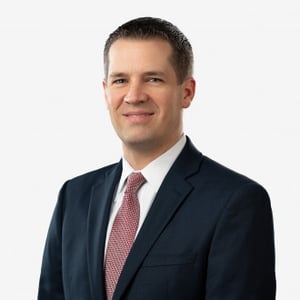
Partner, Arent Fox LLP
Dave Hanke is a go-to national security lawyer for domestic and foreign companies navigating the Committee on Foreign Investment in the United States (CFIUS) and its implementation of the Foreign Investment Risk Review Modernization Act (FIRRMA) – the most sweeping overhaul of CFIUS in 40 years – as well as new export controls on emerging and foundational technologies under the Export Control Reform Act of 2018.
He has assisted large multinational corporations, early-stage technology companies, and venture capital firms on various CFIUS issues, ranging from advising on the CFIUS implications of various transactions to preparing CFIUS filings. In addition, he helps U.S. companies prepare informal submissions to CFIUS to identify problematic foreign investments in their domestic competitors that may raise U.S. national security concerns and that have not already been filed with CFIUS.
Hanke also advises defense contractors and other companies on issues of foreign ownership, control, or influence (FOCI) in accordance with the government’s National Industrial Security Program Operating Manual (NISPOM). He has experience advising clients on security clearance issues, and he helps companies ensure they have in place policies, procedures, training, and systems relevant for access to classified information. Hanke also provides cybersecurity advice and representation to companies that contract with federal agencies.

Principal, Navigators Global
Andy Keiser served 14 years on Capitol Hill for former House Intelligence Committee Chairman Mike Rogers - as Senior Advisor to the Committee, Chief of Staff, and Legislative Director handling all national security policy issues.
As Deputy National Security Senior Advisor to the pre-election phase of the Trump for America transition team, Mr. Keiser prepared and advised the transition's policy, personnel and agency action teams on all aspects of the national security portfolio. This included work in the Departments of Defense, State, Justice, Homeland Security, the Intelligence Community, and the National Security Council.
He was also the head writer for a nationally-syndicated radio program and assisted in the production of the CNN series “Declassified.”
Mr. Keiser has written extensively on intelligence, space and cyber policy, missile defense, Afghanistan, China, Iran, ISIS, North Korea, and Russia. He also helped shepherd six Intelligence Authorization Acts into law and managed Chairman Rogers’ cyber threat sharing legislation, which passed the House twice and the core of which was later signed into law by President Obama.
He has a Bachelor of Arts from Michigan State University and a Master of Arts from the United States Naval War College. He is active on various national security-focused policy projects at the Center for the Study of the Presidency and Congress, where he serves as a Senior Advisor, and at the National Security Institute at George Mason University’s Antonin Scalia Law School, where he serves as a Fellow. He also is a member of the OSS Society and serves on the Meridian International Center’s Global Leadership Council.
Mr. Keiser is currently a Principal at Navigators Global, where he focuses on cybersecurity and other national security priorities. Dubbed a “national security expert” by the Washington Post, Andy is a regular media commentator on national security issues.

Professor of Law, Southern Illinois University School of Law
Professor Mark F. Schultz joined the faculty in 2003. He teaches and writes primarily in the area of intellectual property.
Professor Schultz is a frequent author and speaker known for his work on the law and economics of the global intellectual property system. In one of his most influential projects, he worked with the Organization for Economic Cooperation and Development (OECD) to construct a groundbreaking global trade secret protection index (the TSPI). The TSPI is influencing policy discussions on this cutting-edge topic in capitals around the world. Other recent projects have included an empirical study that quantified for the first time the backlogs in patent offices worldwide, a report on how patented innovation is meeting global health challenges, and the construction of a new global index of copyright strength.
Professor Schultz is an influential voice in public policy debates regarding intellectual property. He has testified before the U.S. Congress on copyright law at the invitation of the House Judiciary Committee and has briefed the staff of the U.S. Senate Judiciary Committee on trade secret legislation. He speaks frequently around the world about the connection between secure and effective intellectual property rights and flourishing national economies and individual lives, with invitations from the U.S. Patent and Trademark Office, the U.S. Trade Representative, and the U.S. Copyright Office, as well as numerous academic institutions, think tanks, and industry groups. He served as an NGO delegate to the World Intellectual Property Organization (WIPO) for several years during the WIPO Development Agenda talks. He is also one of the organizers of an ongoing multilateral diplomatic dialogue on best practices in national trade secret laws, and is co-founder of the Center for Protection of Intellectual Property (CPIP) at George Mason University in Washington, D.C.
Among the awards and recognition he has received for his scholarship was the School of Law's Outstanding Scholar of the Year award in 2008. He has been a distinguished visiting scholar at the University of Botswana and a visiting professor at DePaul University College of Law.
Professor Schultz graduated with honors from the George Washington University School of Law. Following law school, he was a judicial clerk for the Hon. Daniel M. Friedman of the United States Court of Appeals for the Federal Circuit in Washington, D.C., and the Hon. Eric G. Bruggink of the United States Court of Federal Claims. Prior to joining academia, he practiced law for a decade, serving as outside general counsel to several tech startups and helping technology companies to expand their businesses and commercialize their intellectual property in dozens of countries. He holds a B.A. in International Economics from George Washington University and has done PhD level coursework in development economics at Southern Illinois University.
He is active in leadership roles in local and national organizations. He has served as chair of the Federalist Society's Intellectual Property Practice Group and the AALS Section on Internet and Computer Law. He is an officer of the American Bar Association's International IP Committee of the International Law Section and the American Intellectual Property Law Association’s Trade Secret Law Committee. He currently is chair of the Academic Advisory Board of the Copyright Alliance.
Professor Schultz teaches Copyright Law, Trade Secret Law, Trademark Law, and a senior seminar on Intellectual Property and Global Development. He established and directs both the Specialization in Intellectual Property Law and the IP Semester in Practice Externship Program. He also co-founded a Legal Globalization Class, offered every other year, that takes students to South Africa and Botswana after spending a semester learning about the legal system, culture, history, and politics of southern Africa. The popular course is a once-in-a-lifetime experience that introduces students to leading lawyers, judges, government officials, and human rights advocates, taking them from Cape Town to Johannesburg to Gaborone as well as many popular destinations including game reserves, national parks, the Cape of Good Hope, and the Cradle of Humankind.
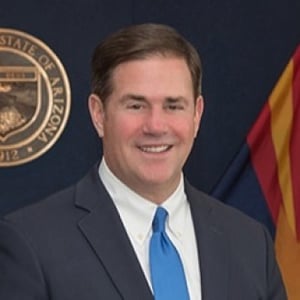
Governor, State of Arizona
Governor Doug Ducey was elected as Arizona's 23rd governor in 2014 and re-elected in 2018 with more votes than anyone in state history. Upon election, Arizona had a $1 billion deficit and a sluggish economy. Today, Arizona has a record surplus, a balanced budget and a booming economy.
That’s no coincidence. Governor Ducey has eliminated overburdensome regulations, fostered the creation of hundreds of thousands of jobs, and reformed taxes every year he’s been in office—including signing the largest income tax cut in state history.
Throughout his administration, Governor Ducey has prioritized education. Since he took office, Arizona has invested over $8 billion into K-12 education and brought per-pupil funding to a record high. He has also positioned Arizona as a national leader in school choice and civics education.
Even with record investments and historic tax cuts, Governor Ducey has found a way to ensure Arizona’s insulated from future downturns, adding $1 billion to the state’s Rainy Day Fund.
He is a former businessman and CEO of Cold Stone Creamery who today also serves as Chairman of the Republican Governors Association. He has 3 sons, has been married to his wife Angela for 31 years and resides in Paradise Valley, Arizona.
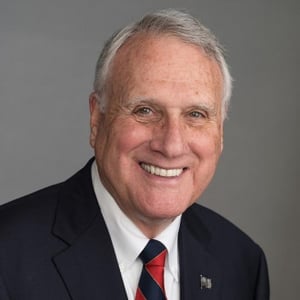
Senior Advisor, Covington & Burling
Senator Jon Kyl advises companies on domestic and international policies that influence U.S. and multi-national businesses and assists corporate clients on tax, health care, national security, and intellectual property matters, among others.
Jon served in the U.S. Senate from 1995 to 2013, retiring as the second-highest ranking Republican senator. He returned to the Senate in September 2018 after being appointed to succeed the late John McCain, and retired again at the end of 2018.
During Jon’s 26 years in Congress, he built a reputation for mastering the complexities of legislative policy and coalition building, first in the House of Representatives and then in the Senate. In 2010, Time magazine called him one of the 100 most influential people in the world, noting his "encyclopedic knowledge of domestic and foreign policy, and his hard work and leadership" and his "power to persuade."
Jon sat on the powerful Senate Finance Committee and was the ranking Republican on the Senate Judiciary Committee’s Subcommittee on Crime and Terrorism. A member of the Republican Leadership for well over a decade, Jon chaired the Senate Republican Policy Committee and the Senate Republican Conference, before becoming Senate Republican Whip. In filling Senator McCain’s seat, he served on the Armed Services and Homeland Security Committees.

Former President & CEO, The Federalist Society for Law and Public Policy Studies
Eugene B. Meyer, former President and CEO of the Federalist Society, has served as Executive Director, CEO, and/or President of the organization for more than 40 years. He is responsible for shepherding the organization from a small group of law students to a community of 90,000 lawyers, law students, academics, judges, and others interested in the rule of law. The Society now includes a Student Chapter at nearly every ABA-accredited law school in the country and Lawyers Chapters in 220 major cities across the nation. Gene earned his B.A. in history at Yale in 1975 and his M.A. in political science from the London School of Economics in 1976. Gene currently serves on the boards of the U.S. Chess Center, the Holman Foundation, the Sarah Scaife Foundation, and the advisory board of the Adam Smith Society. He holds the title of International Chess Master.

President, Americas and Global Chief Legal Officer, Merkle Science
Mary Beth Buchanan is currently President, Americas and Global Chief Legal Officer at Merkle Science. She was former General Counsel for Kraken Cryptocurrency Exchange. She was a partner at Bryan Cave LLP in the firm’s White Collar Defense and Investigations and Securities Litigation and Enforcement Client Service Groups. She concentrated her practice on white collar criminal defense, SEC and FINRA enforcement matters, corporate and accounting fraud, internal investigations, corporate compliance, foreign corrupt practices violations, Congressional investigations and complex civil litigation.
Ms. Buchanan served as the United States Attorney for the Western District of Pennsylvania from September 2001 to November 2009, having been appointed by President George W. Bush. She is the only woman in Pennsylvania's history to be presidentially appointed to this position. As the United States Attorney, Ms. Buchanan oversaw the prosecution of more than 5,000 cases, including corporate and securities fraud, bank fraud, foreign corrupt practices, false claims, money laundering, health care fraud, public corruption and a broad range of violent crimes. Prior to that time, Ms. Buchanan spent more than 13 years as an Assistant United States Attorney litigating criminal, civil and appellate cases.
During her tenure as the United States Attorney, Ms. Buchanan also held several posts at the DOJ, including serving as the director of the Executive Office for United States Attorneys, acting director of the DOJ’s Office on Violence Against Women and chair of the Attorney General’s Advisory Committee. Ms. Buchanan also served on the U.S. Sentencing Commission's Organizational Guidelines Advisory Committee, which made recommendations to the Commission for amendments to the Sentencing Guidelines for Business Organizations.

Nonresident Senior Fellow, American Enterprise Institute
Jim Harper is a nonresident senior fellow at the American Enterprise Institute (AEI), where he focuses on privacy issues, and select legal and constitutional law issues.
A lawyer by training, Mr. Harper has served as counsel for the Subcommittee on Commercial, and Administrative Law of the US House Committee on the Judiciary and as counsel for the Senate Committee on Government Affairs. More recently, he worked at the Competitive Enterprise Institute and the Cato Institute, where he wrote on the intersection of business, technology, and public policy, including privacy, surveillance, data security, telecommunications, and cryptocurrencies. He also served as global policy counsel for the Bitcoin Foundation. Mr. Harper was a founding member of the Department of Homeland Security’s Data Privacy and Integrity Advisory Committee. Early in his post-Hill career, he represented companies such as PayPal and Verisign before Congress.
Mr. Harper is the co-editor of “Terrorizing Ourselves: Why U.S. Counterterrorism Policy Is Failing and How to Fix It” (Cato Institute, 2010) and the author of “Identity Crisis: How Identification Is Overused and Misunderstood” (Cato Institute, 2006). He has written several amicus briefs in Fourth Amendment cases before the U.S. Supreme Court and has published scholarly articles in a variety of law journals. In the popular press, Mr. Harper has been published in The New York Times and The Wall Street Journal, among many other publications.
Mr. Harper has a law degree from the U.C. Hastings College of the Law, where he was editor-in-chief of the Hastings Constitutional Law Quarterly, and a BA from the University of California, Santa Barbara.
Regent’s Professor of Law and Director for the Center for Law, Science and Innovation, ASU Sandra Day O’Connor College of Law
Gary Marchant is a Regent's Professor of Law and director of the Center for Law, Science and Innovation. His research interests include legal aspects of genomics and personalized medicine, the use of genetic information in environmental regulation, risk and the precautionary principle, and governance of emerging technologies such as nanotechnology, neuroscience, biotechnology and artificial intelligence.
He teaches courses in Law, Science and Technology, Genetics and the Law, Biotechnology: Science, Law and Policy, Health Technologies and Innovation, Privacy, Big Data and Emerging Technologies, and Artificial Intelligence: Law and Ethics. He was named a Regents' Professor in 2011 and also is a professor in ASU’s School of Life Sciences, a Distinguished Sustainability Scientist in ASU’s Julie Ann Wrigley Global Institute of Sustainability, and is a Lincoln Professor of Emerging Technologies Law and Ethics with the Lincoln Center for Applied Ethics at ASU.
Prior to joining ASU in 1999, Professor Marchant was a partner at the Washington, D.C., office of Kirkland & Ellis, where his practice focused on environmental and administrative law. During law school, he was Editor-in-Chief of the Harvard Journal of Law & Technology and editor of the Harvard Environmental Law Review and was awarded the Fay Diploma (awarded to top graduating student at Harvard Law School).
Professor Marchant frequently lectures about the intersection of law and science at national and international conferences. He has authored more than 150 articles and book chapters on various issues relating to emerging technologies. Among other activities, he has served on five National Academy of Sciences committees, has been the principal investigator on several major grants, and has organized numerous academic conferences on law and science issues.

George C. Dix Professor in Constitutional Law, Northwestern University Pritzker School of Law
John O. McGinnis is a graduate of Harvard College and Harvard Law School where he was an editor of the Harvard Law Review. He also has an MA degree from Balliol College, Oxford, in philosophy and theology. Professor McGinnis clerked on the U.S. Court of Appeals for the District of Columbia. From 1987 to 1991, he was deputy assistant attorney general in the Office of Legal Counsel at the Department of Justice. He is the author of Accelerating Democracy: Transforming Government Through Technology (Princeton 2013) and Originalism and the Good Constitution (Harvard 2013) (with M. Rappaport). He is a past winner of the Paul Bator award given by the Federalist Society to an outstanding academic under 40. He has been listed by the United States on the roster of panelists who may be called upon to decide World Trade Organization Disputes.
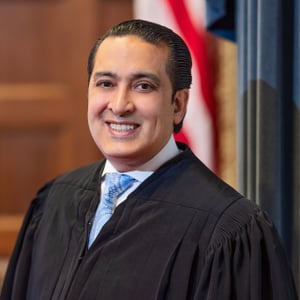
Judge, United States Court of Appeals, Sixth Circuit
John B. Nalbandian serves as a United States Circuit Judge from Kentucky on the U.S. Court of Appeals for the Sixth Circuit. He was nominated and confirmed to that position in 2018. Prior to that, Judge Nalbandian was a partner in the litigation practice group of Taft Stettinius & Hollister LLP in Cincinnati, where he served as the firm’s lead appellate lawyer and also practiced complex litigation in state and federal courts. Judge Nalbandian was board certified by the Ohio State Bar Association as a specialist in appellate law. Prior to joining Taft, Judge Nalbandian practiced for five years in the appellate section of Jones Day in Washington, DC. Upon graduation from law school, Judge Nalbandian clerked for the Honorable Jerry E. Smith of the U.S. Court of Appeals for the Fifth Circuit in Houston. While in private practice, he also served as a board member of the State Justice Institute, a nonprofit organization established by the federal government to improve the administration of justice in state courts. He served as President of the Cincinnati Lawyers Chapter of the Federalist Society. He has also been involved in his community as a board member of the Greater Cincinnati Minority Counsel Program, and as a board member of the Asian Pacific Bar Association of Southwest Ohio. Judge Nalbandian earned his B.S., magna cum laude, from the Wharton School at the University of Pennsylvania and his J.D. from the University of Virginia School of Law, where he was inducted into the Order of the Coif and served as managing editor of the Virginia Law Review.
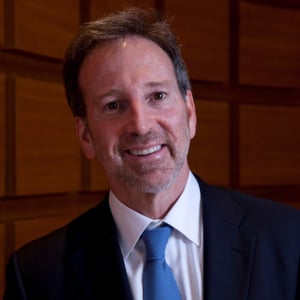
Counsel, White & Case
Antonio Garza served as the U.S. Ambassador to Mexico from 2002 through 2009 and is now Counsel to White & Case in Mexico City. Garza is currently a Director to both Kansas City Southern (NYSE:KSU), where he is member of the Executive Committee and Chairman of the company's subsidiary, Kansas City Southern de Mexico, and MoneyGram (NYSE:MGI) where he serves as Chairman of the company's Committee on Compliance and Ethics. Additionally, Garza is a Trustee at Southern Methodist University (J.D.,1983) and acts as Chairman of the university's Committee on Legal and Governmental Affairs and is a past-Chairman and President of the TexasExes, the alumni association of the University of Texas at Austin (B.B.A.,1980). Mr. Garza served as Chairman of the Texas Railroad Commission from 1998-2002, and prior to that as Texas 99th Secretary of State and Cameron County Judge , 1988-1994.
Principal, Navigators Global
Andy Keiser served 14 years on Capitol Hill for former House Intelligence Committee Chairman Mike Rogers - as Senior Advisor to the Committee, Chief of Staff, and Legislative Director handling all national security policy issues.
As Deputy National Security Senior Advisor to the pre-election phase of the Trump for America transition team, Mr. Keiser prepared and advised the transition's policy, personnel and agency action teams on all aspects of the national security portfolio. This included work in the Departments of Defense, State, Justice, Homeland Security, the Intelligence Community, and the National Security Council.
He was also the head writer for a nationally-syndicated radio program and assisted in the production of the CNN series “Declassified.”
Mr. Keiser has written extensively on intelligence, space and cyber policy, missile defense, Afghanistan, China, Iran, ISIS, North Korea, and Russia. He also helped shepherd six Intelligence Authorization Acts into law and managed Chairman Rogers’ cyber threat sharing legislation, which passed the House twice and the core of which was later signed into law by President Obama.
He has a Bachelor of Arts from Michigan State University and a Master of Arts from the United States Naval War College. He is active on various national security-focused policy projects at the Center for the Study of the Presidency and Congress, where he serves as a Senior Advisor, and at the National Security Institute at George Mason University’s Antonin Scalia Law School, where he serves as a Fellow. He also is a member of the OSS Society and serves on the Meridian International Center’s Global Leadership Council.
Mr. Keiser is currently a Principal at Navigators Global, where he focuses on cybersecurity and other national security priorities. Dubbed a “national security expert” by the Washington Post, Andy is a regular media commentator on national security issues.
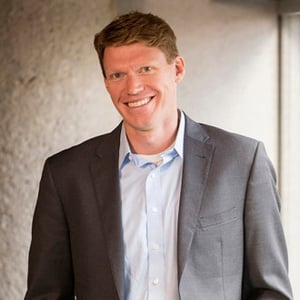
Professor of Law, Vanderbilt Law School

Professor Emeritus of Law, Antonin Scalia Law School, George Mason University
Jeremy A. Rabkin is a Professor Emeritus of Law at the Antonin Scalia Law School, George Mason University. Before joining the faculty in June 2007, he was for over two decades a professor in the Department of Government at Cornell University. Professor Rabkin serves on the board of directors of the Center for Individual Rights, a public interest law firm based in Washington, D.C. Previously he was a board member of the U.S. Institute of Peace and the board of academic advisors of the American Enterprise Institute.
Professor Rabkin’s books include Law Without Nations? (Princeton University Press, 2005). He authored “If You Need a Friend, Don’t Call a Cosmopolitan,” a chapter in Varieties of Sovereignty and Citizenship (Sigal R. Ben-Porath & Rogers M. Smith eds., University of Pennsylvania Press, 2012). His articles have appeared in major law reviews and political science journals and his journalistic contributions in a range of magazines and newspapers, including the Washington Post and the Wall Street Journal.

Vice President, Legislative Strategy, BSA
Craig Albright leads BSA's engagement with the US Congress.
Prior to joining BSA, he spent four years as the World Bank Group's Special Representative for the United States, Australia, Canada and New Zealand, managing relations with government officials, private sector executives, think tank academics, civil society leaders and others. Before that, Mr. Albright spent more than 12 years in the US government. He served in the White House as Special Assistant to President George W. Bush for Legislative Affairs and Deputy Assistant to Vice President Dick Cheney for Legislative Affairs. In Congress, his positions included Legislative Director and Chief of Staff for former Congressman Joe Knollenberg of Michigan and Chief of Staff for Congresswoman Kay Granger of Texas.
Mr. Albright is a graduate of Michigan State University.

Partner, Steptoe & Johnson LLP
Stewart Baker is a partner in the law firm of Steptoe & Johnson in Washington, D.C. From 2005 to 2009, he was the first Assistant Secretary for Policy at the Department of Homeland Security. His law practice covers cybersecurity, data protection, homeland security, and travel and foreign investment regulation; he has been awarded one patent.
Mr. Baker has been General Counsel of the National Security Agency and General Counsel of the commission that investigated WMD intelligence failures prior to the Iraq war. He is the author of Skating on Stilts, a book on terrorism, cybersecurity, and other technology issues; he also hosts the weekly Cyberlaw Podcast.

Partner, Davis Graham & Stubbs LLP
Mark Champoux helps clients resolve significant disputes arising in litigation, government enforcement, and regulatory actions in forums across the country. He rejoined Davis Graham & Stubbs LLP in July 2020 after serving as Principal Deputy Assistant Attorney General in the U.S. Department of Justice’s Office of Legal Policy, where he was a primary policy advisor to the Attorney General and coordinated major initiatives relating to regulations, emerging technologies, data privacy, national security, and law enforcement. Mr. Champoux also supervised DOJ’s work in supporting federal judicial nominations, personally preparing over 100 nominees for confirmation by the Senate and overseeing DOJ’s work to secure the confirmation of U.S. Supreme Court Justice Brett M. Kavanaugh, an undertaking that earned him the Attorney General’s Distinguished Service Award.
Mr. Champoux has an extensive record of experience in private practice. He has successfully defended both Fortune 500 companies and small businesses, obtaining complete defense judgments through dispositive motions and trial and leveraging favorable settlements by winning key motions and defeating class certification. In recognition of his litigation work, Benchmark Litigation named Mr. Champoux to the nationwide 40 & Under Hot List in 2016-2017. Mr. Champoux was also named a “Rising Star” by Super Lawyers magazine in 2014-2017 and a “Future Litigation Star” by Benchmark Litigation in 2015.
Mr. Champoux’s practice includes disputes involving emerging technologies, data privacy, natural resources, oil and gas, environmental liabilities, government enforcement, and regulations. He also has substantial experience in a broad range of other litigation areas, including contracts, business torts, real estate, securities fraud, shareholder actions, civil RICO, products liability, and special districts.
Mr. Champoux has also handled numerous pro bono criminal matters, including a successful petition for certiorari in the U.S. Supreme Court with subsequent reversal of conviction for an indigent criminal defendant.
Mr. Champoux received his J.D. in 2007 from Harvard Law School, where he was deputy editor-in-chief of the Harvard Journal of Law & Public Policy, and his B.A. in 2004 from Brigham Young University, graduating magna cum laude and as valedictorian. Before first joining DGS in 2012, Mr. Champoux was a trial attorney at Kirkland & Ellis LLP in Washington, D.C. and clerked for then-Judge Neil M. Gorsuch on the U.S. Court of Appeals for the Tenth Circuit.

Executive Vice President, Chief Legal Officer, Gates Corporation
Matthew R. A. Heiman joined the Company in May 2026 and has served as the Company’s Chief Legal Officer and Corporate Secretary since June 2026. As Chief Legal Officer, Mr. Heiman is responsible for all legal functions for Gates, including securities and corporate governance, M&A, litigation, commercial, regulatory, compliance, patents and trademarks, real estate, employment and labor, sustainability and environmental matters. Prior to joining Gates, Mr. Heiman held senior legal leadership roles at Waystar, where he served as Chief Legal & Administrative Officer from 2023 to 2025 and as General Counsel and Corporate Secretary from 2020 to 2023. Prior to that, he was with Johnson Controls, where he served as Vice President, Corporate Secretary, and Associate General Counsel. Mr. Heiman has been a Senior Fellow for the National Security Institute at George Mason University’s Antonin Scalia School of Law since 2018.

Stevenson Bernard Professor, George Washington University Law School
The Honorable F. Scott Kieff is the Stevenson Bernard Professor at George Washington University Law School and a Visiting Fellow at Stanford University’s Hoover Institution.
He served as Commissioner of the U.S. International Trade Commission from 2013-2017. He also served during the Bush, Obama, and Trump Administrations in the part-time leadership of the national security defense-intelligence community.
He was previously a professor of law and medicine at Washington University in Saint Louis and a Senior Fellow at Hoover. A former law clerk to U.S. Circuit Judge Giles S. Rich, he is a graduate of Penn Law School and MIT, where he studied molecular biology and microeconomics. He was elected to the European Academy of Sciences and Arts in 2012 and the Academia Europaea in 2024.
His private sector work through Kieff Strategies LLC (www.kieffstrategies.com) provides neutral services including mediation and compliance, and expert services including crisis management, advising, and testimony.
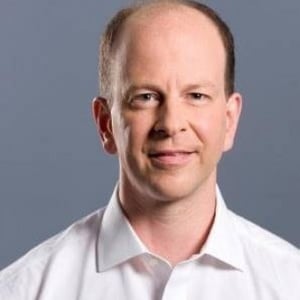
Founder, Culper Partners
David Kris is a founder of Culper Partners LLC. An expert in intelligence, law enforcement and security issues, he has more than 25 years of experience in government, the private sector, and academia.
Prior to forming Culper, Mr. Kris was for six years the General Counsel of Intellectual Ventures, a privately held invention investment company with more than $6B under management and offices in the United States, Europe and Asia. He was also the Deputy General Counsel and Chief Compliance officer of Time Warner, Inc., the network and media company.
In government, Mr. Kris was the Presidentially-appointed and Senate-confirmed head of the Department of Justice’s National Security Division, with responsibility for all federal espionage and terrorism investigations and prosecutions and use of the Foreign Intelligence Surveillance Act; a senior advisor to Republican and Democratic Attorneys General and Deputy Attorneys General; and a federal prosecutor for more than eight years. He currently advises two elements of the U.S. Intelligence Community and serves as an amicus curiae to the two Foreign Intelligence Surveillance Courts.
An authority on U.S. foreign intelligence surveillance, Mr. Kris is co-author of the leading treatise in the field, National Security Investigations and Prosecutions, as well as the author of several other articles and blog posts. He is a member of the board of directors and a Contributing Editor of the Lawfareblog, adjunct professor at the University of Washington Law School, and a University Affiliate at Georgetown University.
Mr. Kris is the recipient of numerous awards and medals, including the National Intelligence Superior Service Medal, the Office of the Secretary of Defense Medal for Exceptional Public Service, the CIA Agency Seal Medal, the Department of Justice Edmund J. Randolph Award, and on two occasions the Attorney General’s Award for Exceptional Service, the Department of Justice’s highest honor.
He is a 1988 graduate of Haverford College and a 1991 graduate of Harvard Law School, and a former law clerk to Judge Stephen S. Trott of the U.S. Court of Appeals for the Ninth Circuit.

USMCA in Practice: What it Means for the Future of US-Mexico Relations
Jeffrey Davidow, Ana Rosa Quintana, Harout J. Samra
The new United States-Mexico-Canada Agreement (USMCA) entered into force in the United States on July...
Deep Dive Episode 127 – Should the Fed Create Fedcoin, Digital Dollars, and Fed Accounts?
John Berlau, J. Christopher Giancarlo, Norbert J. Michel
As cryptocurrencies have proliferated in the private sector, central banks are now contemplating getting into...
Legal Implications of the International Criminal Court's Decision to Investigate Americans
Brett Schaefer, Charles "Cully" Stimson
In 2017, the prosecutor for the International Criminal Court (ICC) announced her formal request to...
Deep Dive Episode 75 – Spectrum Wars
Dean Brenner, Hilary Cain, Danielle Piñeres, Christopher J. Walker
With the advent of mobile devices, ubiquitous home laptop, tablet and iPad computers, content streaming...
Spectrum Wars
Dean Brenner, Hilary Cain, Danielle Piñeres, Christopher J. Walker
With the advent of mobile devices, ubiquitous home laptop, tablet and iPad computers, content streaming...
Chinese Misappropriation of U.S. Technology: Assessing the U.S. Response
Mark Cohen, David Hanke, Andy Keiser, Mark F. Schultz
Chinese targeting and misappropriation of U.S. technology has increasingly been identified as a threat to...
A Fireside Chat with Governor Doug Ducey and Senator Jon Kyl
Doug Ducey, Jon Kyl, Eugene B. Meyer
On March 15-16, 2019, the Federalist Society's student chapter at the ASU Sandra Day O'Connor...
Panel 4: Blockchain-Backed Cryptocurrencies: Order Without Law in the Digital Age
Mary Beth Buchanan, Jim Harper, Gary E. Marchant, John O. McGinnis, John B. Nalbandian
On March 15-16, 2019, the Federalist Society's student chapter at the ASU Sandra Day O'Connor...
New NAFTA or Else ... What?
Antonio Garza, Andy Keiser, Timothy Meyer, Jeremy A. Rabkin
Last month, the Trump administration announced completion of a U.S.-Canada-Mexico-Agreement, intended to supersede the 1993...
Panel 2 — The Tech Titans' Duties to Assist the Government
Craig Albright, Stewart A. Baker, Mark Champoux, Matthew R. A. Heiman, F. Scott Kieff, David Kris
It is difficult to imagine any criminal acts, espionage, or terrorism that does not leave...