

Professor Emeritus, Paul M. Hebert Law Center, Louisiana State University
In memoriam
Dr. John Baker is Professor Emeritus of Law, and previously the Dale E. Bennett Professor of Law, at Louisiana State University Law School. He is currently Visiting Professor at Peking University School of Transnational Law (via Zoom) and has been Visiting Professor at The Center for the Constitution, Georgetown Law School (2013-2020). He has also been a Visiting Fellow at Oriel College, the University of Oxford (2012-2014) and taught at Blackfriars Hall, Oxford in 2014. Dr. Baker has also been an adjunct Fellow at the Heritage Foundation (Spring, 2008) and a Distinguished Scholar at the Catholic University of America Law School (2011-12). He has taught at Tulane Law School, George Mason Law School, Pepperdine Law School, New York Law School, Hong Kong University, and the University of Dallas, School of Management and also taught and/or lectured in 17 foreign countries. Notable among his foreign visits are the
following: Visiting Professor at the University of Lyon III (France) (1999-2011); Visiting Professor at the Universidad de los Andes, Chile (2012), as a Fulbright Specialist (2006); and a Fulbright Scholar at various universities in the Philippines. Dr. Baker received his J.D., with honors, from the University of Michigan Law School and his B.A., magna cum laude, from the University of Dallas. He also earned a Ph.D. in Political Thought from the University of London. Baker has taught over a dozen different subjects, mostly courses in public law. His main areas of interest are Constitutional Law (particularly federalism and separation of powers), Criminal Law, Anti-Terrorism Law, International Law, Health Care Law, Mediation, and Comparative Law.
In addition to law review articles and book chapters, Dr. Baker’s academic publications include Hall's Criminal Law: Cases and Materials (with Benson, Force and George; 5th ed. Michie, 1993); An Introduction to the Law of the United States (ed. with Levasseur; University Press of America, 1992). He has also published on Forbes.com, FoxNews.com, in The Washington Times, and a number of times in The Wall Street Journal. He argues in federal court, including two oral arguments in the U.S. Supreme Court. For many years, he co-taught courses for the Federalist Society on separation of powers with the late Supreme Court Justice Antonin Scalia. In September 2016, he co-taught a Supreme Court seminar in China with Justice Samuel Alito. Following law school, he served as a law clerk in federal district court and as an assistant district attorney in New Orleans before joining LSU in 1975. While a professor, he has been as a consultant to USAID, USIA (since rolled into the State Department), the Justice Department, the U.S. Senate Judiciary Subcommittee on Separation of Powers, and the Office of Planning in the White House. He served on an ABA Task Force which issued the report, The Federalization of Crime (1998) and later as a consultant to the “Bi-Partisan Task Force on the Over- federalization of Crime” (2012-2014) created by the U.S. House Judiciary Subcommittee on Crime. Dr. Baker was a co-founder of the first iteration (1995) of Stratfor Inc., a global intelligence agency. He co-authored its first book: The Intelligence Edge (with Friedman, Friedman and Chapman; Crown Books/Random House 1997). In 2022, he began a short, weekly video podcast available on YouTube and Rumble, The Baker Brief.
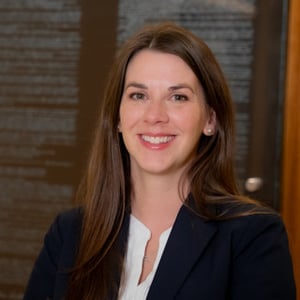
Vice President, Practice Groups, The Federalist Society
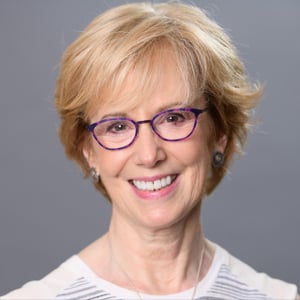
Director, GW Regulatory Studies Center & Distinguished Professor of Practice, Trachtenberg School of Public Policy & Public Administration, The George Washington University
Susan Dudley is the Founder and Director of the George Washington University Regulatory Studies Center, established in 2009 to raise awareness of regulations’ effects and improve regulatory policy through research, education, and outreach. She is also a distinguished professor of practice in the Trachtenberg School of Public Policy and Public Administration. She is past-president of the Society for Benefit Cost Analysis, a senior fellow of the Administrative Conference of the United States, and on the Regulatory Transparency Project Regulatory Practice Working Group. Her book, Regulation: A Primer, with Jerry Brito, is available on Amazon.com.
From April 2007 through January 2009, Professor Dudley served as the Presidentially-appointed Administrator of the Office of Information and Regulatory Affairs in the U.S. Office of Management and Budget and was responsible for the review of draft executive branch regulations under Executive Order 12866, the collection of federal-government-wide information under the Paperwork Reduction Act, the development and implementation of government-wide policies in the areas of information policy, privacy, and statistical policy, and international regulatory cooperation efforts.
Prior to OIRA, she directed the Regulatory Studies Program at the Mercatus Center at George Mason University, and taught courses on regulation at the George Mason University School of Law. Earlier in her career, Professor Dudley served as an economist at OIRA, as well as the Environmental Protection Agency and the Commodity Futures Trading Commission. She was also a consultant to government and private clients at Economists Incorporated. She holds a Master of Science degree from the Sloan School of Management at MIT and a Bachelor of Science degree (summa cum laude) in Resource Economics from the University of Massachusetts, Amherst.
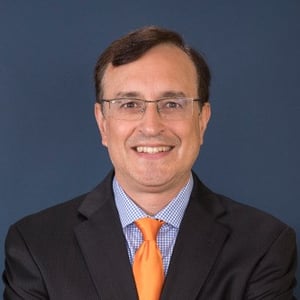
President, Center for Individual Rights
Todd Gaziano is the President of the Center for Individual Rights. Mr. Gaziano received his J.D. in 1988 from the University of Chicago Law School, where he was a John M. Olin Fellow in Law and Economics. He received his B.A. from West Virginia University, summa cum laude in 1985. He was selected as a Truman Scholar from West Virginia while an undergraduate.
Mr. Gaziano’s previous legal work includes service as a law clerk for U.S. Court of Appeals for the Fifth Circuit Judge Edith Jones, as an attorney in the U.S. Department of Justice Office of Legal Counsel, as a chief subcommittee counsel in the U.S. House of Representatives, as a Houston trial attorney, and as a chief corporate legal officer. He also served a six-year term as commissioner on the U.S. Commission on Civil Rights (2008-2013), where he helped conduct oversight and investigations of civil rights agencies.
For most of the last 25 years, Mr. Gaziano was a legal scholar and public interest law leader, promoting individual liberty in the Supreme Court and Congress. From 1997 to 2013, he was the founding director of the Edwin Meese Center for Legal and Judicial Studies at The Heritage Foundation. From 2014 until he joined CIR, he was the Chief of Legal Policy and Strategic Research, and Director of the Center for the Separation of Powers, at Pacific Legal Foundation.
Consultant in Media Policy and Law
Jane Mago began her communications law career in 1978 as a staff attorney at the Federal Communications Commission. She stayed at the FCC for more than 26 years, serving in many high level roles, including General Counsel, Chief of Strategic Planning and Policy Analysis, Deputy Chief of the Enforcement Bureau, Chief of Staff for Commissioners Rachelle Chong and Michael Powell, and Legal Advisor to Commissioner Anne Jones. During her FCC career, she also worked as an appellate litigator defending the FCC’s decisions in such matters as Radio and TV Deregulation, Broadcast Indecency and Must-Carry Rules.
Jane joined the National Association of Broadcasters in 2004 where she stayed until retiring in October 2014 as the Executive Vice President and General Counsel. She led the NAB legal team during many significant shifts in the regulatory landscape, including two rounds of review of the broadcast ownership rules.
Jane is a member of the New York Bar. She has an extensive background in appellate litigation and expertise in Constitutional issues (particularly First Amendment matters), FCC ownership rules, political broadcasting, EEO, administrative law, enforcement and licensing matters.
Jane holds BA, MA and JD degrees from the State University of New York at Buffalo.
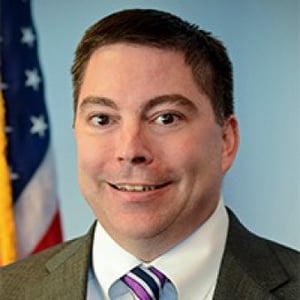
Visiting Fellow, Hudson Institute
Michael O’Rielly is a visiting fellow with Hudson Institute’s Center for the Economics of the Internet.
Comm. O'Rielly was nominated for a seat on the Federal Communications Commission by President Barack Obama on August 1, 2013 and was confirmed unanimously by the United States Senate on October 29, 2013. He was sworn into office on November 4, 2013. On January 29, 2015, he was sworn into office for a new term, following his re-nomination by the President and confirmation by the United States Senate and served through December 11, 2020.
Prior to joining the agency Commissioner O’Rielly served as a Policy Advisor in the Office of the Senate Republican Whip, led by U.S. Senator John Cornyn, since January 2013. He worked in the Republican Whip’s Office since 2010, as an Advisor from 2010 to 2012 and Deputy Chief of Staff and Policy Director from 2012 to 2013 for U.S. Senator Jon Kyl.
He previously worked for the Republican Policy Committee in the U.S. Senate as a Policy Analyst for Banking, Technology, Transportation, Trade, and Commerce issues from 2009 to 2010. Prior to this, Commissioner O’Rielly worked in the Office of U.S. Senator John Sununu, as Legislative Director from 2007 to 2009, and Senior Legislative Assistant from 2003 to 2007. Before his tenure as a Senate staffer, he served as a Professional Staff Member on the Committee on Energy and Commerce in the United States House of Representatives from 1998 to 2003, and Telecommunications Policy Analyst from 1995 to 1998.
He began his career as a Legislative Assistant to U.S. Congressman Tom Bliley from 1994 to 1995.
Commissioner O’Rielly received his B.A. from the University of Rochester.
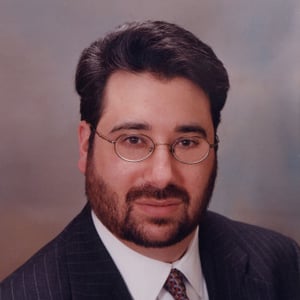
President, Phoenix Center for Advanced Legal and Economic Public Policy Studies
Lawrence J. Spiwak is President of the Phoenix Center for Advanced Legal & Economic Public Policy Studies, a non-profit 501(c)(3) organization that studies broad public-policy issues related to governance, social and economic conditions, with a particular emphasis on the law and economics of the digital age. Mr. Spiwak is a prolific scholar whose work is frequently cited by policymakers, major news media and academic journals around the world, and is in the top 1.3%of authors downloaded on the Social Science Research Network. Mr. Spiwak currently serves as the co-chair of the Federal Communications Bar Association’s (FCBA) committee responsible for overseeing the FEDERAL COMMUNICATIONS LAW JOURNAL and is a member of the program committee of the Telecommunications Policy Research Conference (“TPRC”). Mr. Spiwak is also the recipient of the FCBA’s Distinguished Service Award. Prior to joining the Phoenix Center, Mr. Spiwak was a Senior Attorney with the Competition Division in the FCC’s Office of General Counsel from 1994-1998. While in college, Mr. Spiwak was accepted into the Presidential Stay-In School program where he was responsible for delivering classified and confidential material among senior White House and Reagan Administration officials and received a full FBI security clearance. Mr. Spiwak received his B.A. with Special Honors from the George Washington University and his J.D. from the Benjamin N. Cardozo School of Law. Mr. Spiwak is a member in good standing of the bars of New York, Massachusetts, the District of Columbia, and the U.S. Court of Appeals for the D.C. Circuit.
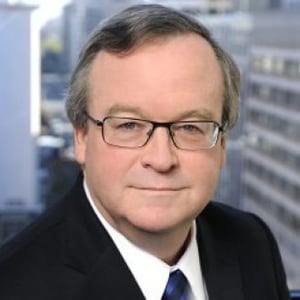
Partner, Harris, Wiltshire & Grannis LLP
Christopher Wright has been the head of the appellate group at Harris, Wiltshire & Grannis LLP since 2001. He has represented clients in a wide variety of appellate cases, with an emphasis on cases involving complex technical issues and cutting-edge constitutional law and administrative law issues.
Prior to joining the firm, Mr. Wright served as General Counsel of the Federal Communications Commission, in the Office of the Solicitor General of the United States, and as a law clerk to Chief Justice Warren E. Burger and Ninth Circuit Judge Joseph T. Sneed. Mr. Wright is one of very few lawyers who has argued more than 25 cases in both the Supreme Court and the D.C. Circuit, and he has argued in many of the other federal circuits as well.
Mr. Wright is a former President of the Edward Coke Appellate Inn of Court, the nation’s preeminent association of appellate lawyers, and a former President of the Federal Communications Bar Association, the nation’s preeminent association of communications lawyers. Mr. Wright has taught the D.C. Bar CLE courses on oral advocacy and judicial review of agency decisions on multiple occasions. He is ranked as an outstanding appellate lawyer and/or communications lawyer by numerous publications. Mr. Wright was elected to the Order of the Coif at Stanford Law School and Phi Beta Kappa at Harvard College.
Professor Emeritus, Paul M. Hebert Law Center, Louisiana State University
In memoriam
Dr. John Baker is Professor Emeritus of Law, and previously the Dale E. Bennett Professor of Law, at Louisiana State University Law School. He is currently Visiting Professor at Peking University School of Transnational Law (via Zoom) and has been Visiting Professor at The Center for the Constitution, Georgetown Law School (2013-2020). He has also been a Visiting Fellow at Oriel College, the University of Oxford (2012-2014) and taught at Blackfriars Hall, Oxford in 2014. Dr. Baker has also been an adjunct Fellow at the Heritage Foundation (Spring, 2008) and a Distinguished Scholar at the Catholic University of America Law School (2011-12). He has taught at Tulane Law School, George Mason Law School, Pepperdine Law School, New York Law School, Hong Kong University, and the University of Dallas, School of Management and also taught and/or lectured in 17 foreign countries. Notable among his foreign visits are the
following: Visiting Professor at the University of Lyon III (France) (1999-2011); Visiting Professor at the Universidad de los Andes, Chile (2012), as a Fulbright Specialist (2006); and a Fulbright Scholar at various universities in the Philippines. Dr. Baker received his J.D., with honors, from the University of Michigan Law School and his B.A., magna cum laude, from the University of Dallas. He also earned a Ph.D. in Political Thought from the University of London. Baker has taught over a dozen different subjects, mostly courses in public law. His main areas of interest are Constitutional Law (particularly federalism and separation of powers), Criminal Law, Anti-Terrorism Law, International Law, Health Care Law, Mediation, and Comparative Law.
In addition to law review articles and book chapters, Dr. Baker’s academic publications include Hall's Criminal Law: Cases and Materials (with Benson, Force and George; 5th ed. Michie, 1993); An Introduction to the Law of the United States (ed. with Levasseur; University Press of America, 1992). He has also published on Forbes.com, FoxNews.com, in The Washington Times, and a number of times in The Wall Street Journal. He argues in federal court, including two oral arguments in the U.S. Supreme Court. For many years, he co-taught courses for the Federalist Society on separation of powers with the late Supreme Court Justice Antonin Scalia. In September 2016, he co-taught a Supreme Court seminar in China with Justice Samuel Alito. Following law school, he served as a law clerk in federal district court and as an assistant district attorney in New Orleans before joining LSU in 1975. While a professor, he has been as a consultant to USAID, USIA (since rolled into the State Department), the Justice Department, the U.S. Senate Judiciary Subcommittee on Separation of Powers, and the Office of Planning in the White House. He served on an ABA Task Force which issued the report, The Federalization of Crime (1998) and later as a consultant to the “Bi-Partisan Task Force on the Over- federalization of Crime” (2012-2014) created by the U.S. House Judiciary Subcommittee on Crime. Dr. Baker was a co-founder of the first iteration (1995) of Stratfor Inc., a global intelligence agency. He co-authored its first book: The Intelligence Edge (with Friedman, Friedman and Chapman; Crown Books/Random House 1997). In 2022, he began a short, weekly video podcast available on YouTube and Rumble, The Baker Brief.

Senior Research Associate, Urban Institute
Yonah Freemark is senior research associate in Metropolitan Housing and Communities at the Urban Institute. His research focuses on the intersection of land use, affordable housing, and transportation. He has published peer-reviewed scholarship in numerous journals, including Urban Affairs Review, Politics & Society, Housing Policy Debate, and the Journal of the American Planning Association.
Previously, Freemark worked for Chicago’s Metropolitan Planning Council and has written for the New York Times, Next City, and CityLab, among others. He holds master’s degrees in both city planning and in transportation, as well as a PhD in urban studies from MIT.

Senior Research Fellow, Mercatus Center, George Mason University
Emily Hamilton is a Senior Research Fellow and Director of the Urbanity Project at the Mercatus Center at George Mason University. Her research focuses on urban economics and land-use policy. Hamilton has authored numerous academic articles and policy papers. Her writing has appeared in USA Today, the Washington Post, and the Los Angeles Times. She contributes to the blog Market Urbanism. Hamilton received her PhD in economics from George Mason University.
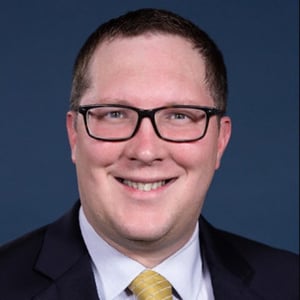
Attorney, Pacific Legal Foundation
Luke A. Wake is an attorney at the Pacific Legal Foundation. Prior to joining PLF, he was a senior staff attorney at the NFIB Small Business Legal Center.
Wake has particular expertise on environmental and land use issues, and has worked on numerous other constitutional issues and matters of importance to small business owners. He is an ardent defender of private property rights, which he believes are essential to the free enterprise system and the foundation of American liberty. As a strong advocate of individual rights and economic liberties, he has built his career defending small business interests.
Wake has focused on a whole host of issues, from employment law matters to regulatory compliance. In addition to serving as a resource for small business owners, Wake is committed to ensuring that the voice of small business is heard in the nation’s courts. As an appellate practitioner, Wake has focused particularly on informing the courts on matters of administrative law and on issues under the Fifth Amendment’s Takings Clause. He is also working to advance small business interests in law review articles, and was recently published in the Berkeley Journal of Law & Ecology. See R.S. Radford & Luke A. Wake, Deciphering and Extrapolating: Searching for Sense in Penn Central, 38 Ecology L.Q. 731, 746-747 (2011).
Before joining the Legal Center’s team, Wake completed a prestigious two-year fellowship as an attorney in the Pacific Legal Foundation’s College of Public Interest Law. Wake is a graduate of Case Western Reserve University School of Law in Cleveland Ohio, and is a member of the California Bar. He completed his undergraduate studies at Elon University in North Carolina in 2006 where he focused on political theory and corporate communications.
Consultant in Media Policy and Law
Jane Mago began her communications law career in 1978 as a staff attorney at the Federal Communications Commission. She stayed at the FCC for more than 26 years, serving in many high level roles, including General Counsel, Chief of Strategic Planning and Policy Analysis, Deputy Chief of the Enforcement Bureau, Chief of Staff for Commissioners Rachelle Chong and Michael Powell, and Legal Advisor to Commissioner Anne Jones. During her FCC career, she also worked as an appellate litigator defending the FCC’s decisions in such matters as Radio and TV Deregulation, Broadcast Indecency and Must-Carry Rules.
Jane joined the National Association of Broadcasters in 2004 where she stayed until retiring in October 2014 as the Executive Vice President and General Counsel. She led the NAB legal team during many significant shifts in the regulatory landscape, including two rounds of review of the broadcast ownership rules.
Jane is a member of the New York Bar. She has an extensive background in appellate litigation and expertise in Constitutional issues (particularly First Amendment matters), FCC ownership rules, political broadcasting, EEO, administrative law, enforcement and licensing matters.
Jane holds BA, MA and JD degrees from the State University of New York at Buffalo.
Visiting Fellow, Hudson Institute
Michael O’Rielly is a visiting fellow with Hudson Institute’s Center for the Economics of the Internet.
Comm. O'Rielly was nominated for a seat on the Federal Communications Commission by President Barack Obama on August 1, 2013 and was confirmed unanimously by the United States Senate on October 29, 2013. He was sworn into office on November 4, 2013. On January 29, 2015, he was sworn into office for a new term, following his re-nomination by the President and confirmation by the United States Senate and served through December 11, 2020.
Prior to joining the agency Commissioner O’Rielly served as a Policy Advisor in the Office of the Senate Republican Whip, led by U.S. Senator John Cornyn, since January 2013. He worked in the Republican Whip’s Office since 2010, as an Advisor from 2010 to 2012 and Deputy Chief of Staff and Policy Director from 2012 to 2013 for U.S. Senator Jon Kyl.
He previously worked for the Republican Policy Committee in the U.S. Senate as a Policy Analyst for Banking, Technology, Transportation, Trade, and Commerce issues from 2009 to 2010. Prior to this, Commissioner O’Rielly worked in the Office of U.S. Senator John Sununu, as Legislative Director from 2007 to 2009, and Senior Legislative Assistant from 2003 to 2007. Before his tenure as a Senate staffer, he served as a Professional Staff Member on the Committee on Energy and Commerce in the United States House of Representatives from 1998 to 2003, and Telecommunications Policy Analyst from 1995 to 1998.
He began his career as a Legislative Assistant to U.S. Congressman Tom Bliley from 1994 to 1995.
Commissioner O’Rielly received his B.A. from the University of Rochester.
Partner, Harris, Wiltshire & Grannis LLP
Christopher Wright has been the head of the appellate group at Harris, Wiltshire & Grannis LLP since 2001. He has represented clients in a wide variety of appellate cases, with an emphasis on cases involving complex technical issues and cutting-edge constitutional law and administrative law issues.
Prior to joining the firm, Mr. Wright served as General Counsel of the Federal Communications Commission, in the Office of the Solicitor General of the United States, and as a law clerk to Chief Justice Warren E. Burger and Ninth Circuit Judge Joseph T. Sneed. Mr. Wright is one of very few lawyers who has argued more than 25 cases in both the Supreme Court and the D.C. Circuit, and he has argued in many of the other federal circuits as well.
Mr. Wright is a former President of the Edward Coke Appellate Inn of Court, the nation’s preeminent association of appellate lawyers, and a former President of the Federal Communications Bar Association, the nation’s preeminent association of communications lawyers. Mr. Wright has taught the D.C. Bar CLE courses on oral advocacy and judicial review of agency decisions on multiple occasions. He is ranked as an outstanding appellate lawyer and/or communications lawyer by numerous publications. Mr. Wright was elected to the Order of the Coif at Stanford Law School and Phi Beta Kappa at Harvard College.
President, Phoenix Center for Advanced Legal and Economic Public Policy Studies
Lawrence J. Spiwak is President of the Phoenix Center for Advanced Legal & Economic Public Policy Studies, a non-profit 501(c)(3) organization that studies broad public-policy issues related to governance, social and economic conditions, with a particular emphasis on the law and economics of the digital age. Mr. Spiwak is a prolific scholar whose work is frequently cited by policymakers, major news media and academic journals around the world, and is in the top 1.3%of authors downloaded on the Social Science Research Network. Mr. Spiwak currently serves as the co-chair of the Federal Communications Bar Association’s (FCBA) committee responsible for overseeing the FEDERAL COMMUNICATIONS LAW JOURNAL and is a member of the program committee of the Telecommunications Policy Research Conference (“TPRC”). Mr. Spiwak is also the recipient of the FCBA’s Distinguished Service Award. Prior to joining the Phoenix Center, Mr. Spiwak was a Senior Attorney with the Competition Division in the FCC’s Office of General Counsel from 1994-1998. While in college, Mr. Spiwak was accepted into the Presidential Stay-In School program where he was responsible for delivering classified and confidential material among senior White House and Reagan Administration officials and received a full FBI security clearance. Mr. Spiwak received his B.A. with Special Honors from the George Washington University and his J.D. from the Benjamin N. Cardozo School of Law. Mr. Spiwak is a member in good standing of the bars of New York, Massachusetts, the District of Columbia, and the U.S. Court of Appeals for the D.C. Circuit.

Federalist Papers Book Club: The Federalist [Session 1]
Federalist ##1 and 9 (Reflection and choice; large or small republic)
Federalist Papers Book Club: The Federalist [Session 1]
John S. Baker
Slide deck 1 - Federalist #1Slide deck 2 - Federalist #9 Federalist Papers Book Club...
Deep Dive Episode 157 – Regulating Land Use During a Pandemic
Yonah Freemark, Emily Hamilton, Luke A. Wake
The COVID-19 pandemic has caused significant changes in urban land use. Where possible, companies have...
Justice Barrett and SCOTUS in 2021
Indianapolis Lawyers Chapter
The Congressional Review Act: First Branch Gets the Last Word
TeleforumTopics
SBA Proposes Rule to Eliminate Regulations that Discriminate Against Religious Applicants for Loans and Disaster Assistance
On January 19, 2021, in one of the Trump administration’s last actions to protect religious...
Courthouse Steps Oral Argument Webinar: FCC v. Prometheus Radio Project
TeleforumTopics
Finding “Law to Apply”: Shawnee Tribe v. Mnuchin and the Newest Nondelegation Canon
As the Trump Administration departs, lower courts are interpreting and applying Trump-era Supreme Court precedents...
Topics
Two RTP Short Films Recognized by Film Festivals
The Regulatory Transparency Project is pleased to share that two short films from its “Fourth Branch” series...
FCC v. Prometheus Radio Project - Post-Argument SCOTUScast
Jane Mago, Michael O'Rielly, Christopher J. Wright, Lawrence J. Spiwak
On On January 19, 2021, the U.S. Supreme Court heard oral arguments in Federal Communications Commission...