
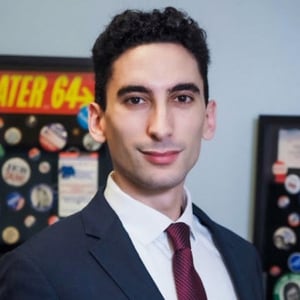
Andrew Pardue is an associate at Holtzman Vogel Baran Torchinsky Josefiak PLLC specializing in election and campaign finance law.
Prior to joining the firm, Andrew served as a law clerk for the D.C. Criminal Code Reform Commission and the Office of the Virginia Attorney General’s Civil Litigation Division, Consumer Protection Section. He also interned in the chambers of Magistrate Judge Lawrence Leonard of the United States District Court for the Eastern District of Virginia.
Andrew graduated from Harvard University with a B.A. in Government and a secondary concentration in Economics. He earned his J.D. from William & Mary Law School. While in law school, he served as Senior Notes Editor on the William & Mary Law Review and authored a published student note on congressional investigations of the executive branch. He also served as a graduate research fellow with the Center for the Study of Law and Markets. Andrew is a member of the Virginia Bar, the Federalist Society, and the Republican National Lawyers Association.
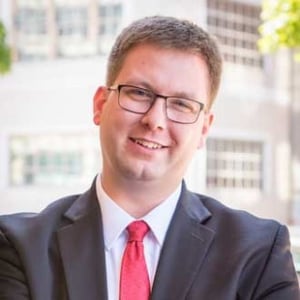
Senior Associate, Holtzman Vogel Josefiak Torchinsky PLLC
Drew Watkins is a senior associate with Holtzman Vogel Josefiak Torchinsky PLLC, providing counsel in the areas of campaign finance and election law, lobbying and ethics compliance, and tax-exempt organizations.
Prior to joining the firm, Drew served as a law clerk to the Honorable Joseph R. Goeke, Senior Judge of the United States Tax Court in Washington, D.C., and worked in the Office of General Counsel for the Governor of Kentucky, Matthew G. Bevin. While in law school, Drew served as a law clerk for the Kentucky Executive Branch Ethics Commission and interned for Senate Majority Leader Mitch McConnell in his office in Washington, D.C.
Drew graduated from the University of Louisville with a B.S. in Justice Administration. He earned his Juris Doctor, magna cum laude, from the University of Kentucky College of Law and was a member of the Order of the Coif. During law school, he served as a senior staff editor on the Kentucky Law Journal and authored a published student note on the Justice Against Sponsors of Terrorism Act. He is a member of the Kentucky, D.C. and Virginia bars and the Federalist Society.
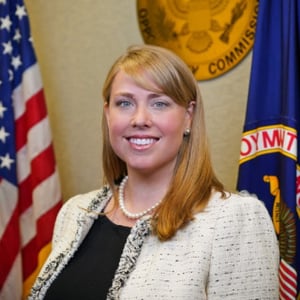
Chair, United States Equal Employment Opportunity Commission
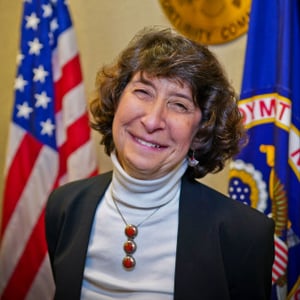
Vice Chair, Equal Employment Opportunity Commission
Jocelyn Samuels joined the U.S. Equal Employment Opportunity Commission (EEOC) as a Commissioner on October 14, 2020, and on July 14, 2021, was confirmed for a second term ending in 2026. Immediately prior to joining the Commission, she served as the Executive Director and Roberta A. Conroy Scholar of Law at the Williams Institute, focusing on legal strategies to attain equality for sexual and gender minorities. During the Obama administration, she served as the Director of the Office for Civil Rights at the U.S. Department of Health & Human Services and as the Acting Assistant Attorney General for Civil Rights at the U.S. Department of Justice. In these capacities, she supervised enforcement of civil rights laws through litigation, rulemaking and policy development, and public education and was an architect of numerous government policies applying federal law to remedy discrimination based on sexual orientation and gender identity. She previously served as a Vice President of the National Women’s Law Center, Labor Counsel to Senator Edward M. Kennedy, and a senior attorney at the EEOC in the Office of Legal Counsel. She received a J.D. from Columbia Law School and a B.A. from Middlebury College.
Chair, United States Equal Employment Opportunity Commission
Vice Chair, Equal Employment Opportunity Commission
Jocelyn Samuels joined the U.S. Equal Employment Opportunity Commission (EEOC) as a Commissioner on October 14, 2020, and on July 14, 2021, was confirmed for a second term ending in 2026. Immediately prior to joining the Commission, she served as the Executive Director and Roberta A. Conroy Scholar of Law at the Williams Institute, focusing on legal strategies to attain equality for sexual and gender minorities. During the Obama administration, she served as the Director of the Office for Civil Rights at the U.S. Department of Health & Human Services and as the Acting Assistant Attorney General for Civil Rights at the U.S. Department of Justice. In these capacities, she supervised enforcement of civil rights laws through litigation, rulemaking and policy development, and public education and was an architect of numerous government policies applying federal law to remedy discrimination based on sexual orientation and gender identity. She previously served as a Vice President of the National Women’s Law Center, Labor Counsel to Senator Edward M. Kennedy, and a senior attorney at the EEOC in the Office of Legal Counsel. She received a J.D. from Columbia Law School and a B.A. from Middlebury College.
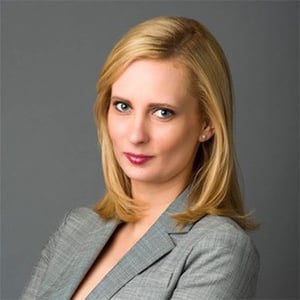
Executive Director, Committee for Justice
Ashley Baker serves as Executive Director at the Committee for Justice. Her focus areas include the Supreme Court, regulatory policy, antitrust, and judicial nominations. Her writing has appeared in Fox News, USA Today, The Boston Globe, The Hill, RealClearPolitics, The American Spectator, and elsewhere. Ashley is also the founder of the recently-formed Alliance on Antitrust coalition. She has testified before the United States Senate on the topic of antitrust law.
Ashley is an active member of the Federalist Society, where she serves as a member of the Regulatory Transparency Project's Antitrust & Consumer Protection and Cyber & Privacy working groups. As a member of the Republican National Lawyers Association, she has served as a speaker on the Supreme Court and the federal judiciary.
As an expert on the judicial nominations process, Ashley worked closely on the efforts to confirm Justices Neil Gorsuch and Brett Kavanaugh.
Much of Ashley’s work is at the intersection of the courts, regulation, and technology. Ashley also engages in policy analysis and outreach on legislation and regulations related to these issues by writing op-eds, letters to Congress for committee hearings, and regulatory comments.
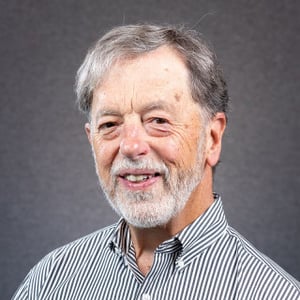
Professor of Law, Seattle University School of Law
John B. Kirkwood is a Professor at Seattle University School of Law and a member of the American Law Institute. The Supreme Court has quoted his work and four of his articles have won national awards for pathbreaking antitrust scholarship. He has published in the Florida Law Review, the Notre Dame Law Review, the Boston University Law Review, and many other journals and books. He has testified before Congress and at the hearings on predatory pricing held by the FTC and Justice Department. The New York Times, USA Today, The Seattle Times, and numerous other print and broadcast media have quoted him. He speaks often at antitrust conferences, consults on antitrust cases, and has drafted professors' amicus briefs in high-profile antitrust appeals. He is the immediate past Chair of the Antitrust and Economic Regulation Section of the Association of American Law Schools and an Advisor to the American Antitrust Institute and the Institute of Consumer Antitrust Studies. He was Co-Editor of Research in Law and Economics for eight years. After graduating from Yale magna cum laude and with Honors of Exceptional Distinction in Economics, he received a master's degree in public policy and a law degree from Harvard, both with honors. He set up the FTC's first antitrust policy planning office and later managed the Evaluation Office and the Premerger Notification Program. After transferring to the FTC's Northwest Regional Office, he led cases and investigations. At Seattle University, he has received the Outstanding Faculty Award and the Dean's Medal.

Professor of Law, Antonin Scalia Law School, George Mason University
Adam Mossoff is Professor of Law at Antonin Scalia Law School, George Mason University. He has published extensively on why patents, copyrights, and other intellectual property rights have been—and should be—legally secured to innovators and creators as property rights. His scholarship has been relied on by the United States Supreme Court, by lower federal courts, and by U.S. federal agencies. He has been invited to testify numerous times before the U.S. Senate and the House of Representatives on intellectual property legislation. His writings on intellectual property policy have also appeared in the Wall Street Journal, New York Times, Forbes, Investors Business Daily, and in other media outlets. His journal articles can be downloaded here.
Professor Mossoff is a longstanding member of the Executive Committee of the Intellectual Property Practice Group of the Federalist Society, on which he served as Chairperson from 2016-2018, and he is Chair of the Intellectual Property Working Group of the Regulatory Transparency Project of the Federalist Society. He is a Senior Fellow and Chair of the Forum for Intellectual Property at the Hudson Institute, a Visiting Intellectual Property Fellow at the Heritage Foundation, and a member of the Board of Directors of the Center for Intellectual Property Understanding. He is a member of the Intellectual Property Rights Policy Committee of ANSI and he has served as Chair and Vice-Chair of the Intellectual Property Committee of the IEEE-USA, on which he remains a member in good standing.
Executive Director, Committee for Justice
Ashley Baker serves as Executive Director at the Committee for Justice. Her focus areas include the Supreme Court, regulatory policy, antitrust, and judicial nominations. Her writing has appeared in Fox News, USA Today, The Boston Globe, The Hill, RealClearPolitics, The American Spectator, and elsewhere. Ashley is also the founder of the recently-formed Alliance on Antitrust coalition. She has testified before the United States Senate on the topic of antitrust law.
Ashley is an active member of the Federalist Society, where she serves as a member of the Regulatory Transparency Project's Antitrust & Consumer Protection and Cyber & Privacy working groups. As a member of the Republican National Lawyers Association, she has served as a speaker on the Supreme Court and the federal judiciary.
As an expert on the judicial nominations process, Ashley worked closely on the efforts to confirm Justices Neil Gorsuch and Brett Kavanaugh.
Much of Ashley’s work is at the intersection of the courts, regulation, and technology. Ashley also engages in policy analysis and outreach on legislation and regulations related to these issues by writing op-eds, letters to Congress for committee hearings, and regulatory comments.
Professor of Law, Seattle University School of Law
John B. Kirkwood is a Professor at Seattle University School of Law and a member of the American Law Institute. The Supreme Court has quoted his work and four of his articles have won national awards for pathbreaking antitrust scholarship. He has published in the Florida Law Review, the Notre Dame Law Review, the Boston University Law Review, and many other journals and books. He has testified before Congress and at the hearings on predatory pricing held by the FTC and Justice Department. The New York Times, USA Today, The Seattle Times, and numerous other print and broadcast media have quoted him. He speaks often at antitrust conferences, consults on antitrust cases, and has drafted professors' amicus briefs in high-profile antitrust appeals. He is the immediate past Chair of the Antitrust and Economic Regulation Section of the Association of American Law Schools and an Advisor to the American Antitrust Institute and the Institute of Consumer Antitrust Studies. He was Co-Editor of Research in Law and Economics for eight years. After graduating from Yale magna cum laude and with Honors of Exceptional Distinction in Economics, he received a master's degree in public policy and a law degree from Harvard, both with honors. He set up the FTC's first antitrust policy planning office and later managed the Evaluation Office and the Premerger Notification Program. After transferring to the FTC's Northwest Regional Office, he led cases and investigations. At Seattle University, he has received the Outstanding Faculty Award and the Dean's Medal.
Professor of Law, Antonin Scalia Law School, George Mason University
Adam Mossoff is Professor of Law at Antonin Scalia Law School, George Mason University. He has published extensively on why patents, copyrights, and other intellectual property rights have been—and should be—legally secured to innovators and creators as property rights. His scholarship has been relied on by the United States Supreme Court, by lower federal courts, and by U.S. federal agencies. He has been invited to testify numerous times before the U.S. Senate and the House of Representatives on intellectual property legislation. His writings on intellectual property policy have also appeared in the Wall Street Journal, New York Times, Forbes, Investors Business Daily, and in other media outlets. His journal articles can be downloaded here.
Professor Mossoff is a longstanding member of the Executive Committee of the Intellectual Property Practice Group of the Federalist Society, on which he served as Chairperson from 2016-2018, and he is Chair of the Intellectual Property Working Group of the Regulatory Transparency Project of the Federalist Society. He is a Senior Fellow and Chair of the Forum for Intellectual Property at the Hudson Institute, a Visiting Intellectual Property Fellow at the Heritage Foundation, and a member of the Board of Directors of the Center for Intellectual Property Understanding. He is a member of the Intellectual Property Rights Policy Committee of ANSI and he has served as Chair and Vice-Chair of the Intellectual Property Committee of the IEEE-USA, on which he remains a member in good standing.
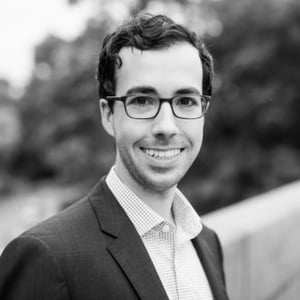
Senior Counsel, Becket Fund for Religious Liberty
Nick Reaves joined Becket in 2018. His practice centers on First Amendment appellate litigation. Nick has played a leading role in multiple religious freedom cases at the U.S. Supreme Court and has argued in federal appellate and trial courts across the country. He has represented individuals and organizations of many faith traditions—including Sikhs, Jews, Muslims, Hindus, Buddhists, and Christians—in their pursuit of the fundamental right to freely practice their religion.
In 2022, Nick was appointed as a Visiting Clinical Lecturer in Law at Yale Law School, where he co-directs Yale Law School’s Free Exercise Clinic. His scholarly work has been published in the Yale Law Journal Forum, the Harvard Journal of Law & Public Policy Per Curiam, the Virginia Journal of Social Policy & the Law, and the Notre Dame Law Review Reflection, among other leading legal journals. His writing has also been cited by the U.S. Supreme Court.
Recognized as a sought-after voice on religious freedom, Nick has spoken at institutions such as the University of Notre Dame, the University of Virginia, and Princeton Theological Seminary. He has also provided expert testimony before both the U.S. Commission on Civil Rights and the Equal Employment Opportunity Commission.
Before joining Becket, Nick practiced trial and appellate litigation as an associate at Jones Day and clerked for Chief Judge D. Brooks Smith on the U.S. Court of Appeals for the Third Circuit.
Nick earned his J.D. from the University of Virginia School of Law, where he served on the Managing Board of the Virginia Law Review and was elected to the Order of the Coif. He also graduated magna cum laude from the University of Notre Dame as a member of the Glynn Family Honors Program.
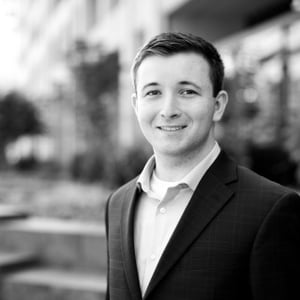
Paralegal, Becket
Matthew is a paralegal at the Becket Fund for Religious Liberty, where he's worked since 2022. He supports the attorney team with editing, legal research, and administrative duties.
Before Becket, Matthew’s legal experience included internships with the Federalist Society and the Champaign County Public Defender’s Office.
Matthew graduated from the University of Illinois Urbana-Champaign magna cum laude with a bachelor’s degree in Political Science with minors in Legal Studies and Philosophy. His senior honors thesis empirically evaluated the effects of state legislation on religious liberty litigation.
Outside of work, Matthew has continued studying philosophy, law, and policy. He is currently a Richard John Neuhaus Fellow with the Public Interest Fellowship. Previously, he participated in the Hertog Foundation’s The Supreme Court & American Politics cohort as a Fellow.
In his free time, Matthew enjoys volunteering at his parish, trips to the Library of Congress manuscript room, café hopping with a book in hand around the DMV, and training for the Chicago Marathon.
Director of the Program in Human Rights, Catholic University of America
William L. Saunders is Chair Emeritus of the Religious Liberties Practice Group of the Federalist Society. He is also a religious liberty and human rights scholar as well as director of the Center for Human rights at The Catholic University of America. He is Law Fellow with the Institute for Human Ecology, Professor and Director of the Program in Human Rights in the School of Arts & Sciences and Co-director of the Center for Religious Liberty at the Columbus School of Law. Before joining The Catholic University of America, Mr. Saunders served as Senior Vice President and Senior Counsel with Americans United for Life for ten years. From 1999 to 2009, he was Senior Fellow in Bioethics and Human Rights Counsel at the Family Research Council.
Mr. Saunders attended the University of North Carolina at Chapel Hill on a Morehead scholarship. He obtained his degree in law from the Harvard Law School.
Mr. Saunders was featured in Harvard’s first Guide to Conservative Public Interest Law in 2003 and again in the 2008 edition. He served on Harvard’s Advisory Committee for its 2008 celebration of public interest law. A member of the Supreme Court bar, he has authored numerous legal briefs in state, federal, foreign, and international courts.
Mr. Saunders’ book, Unborn Human Life and Fundamental Rights: Leading Constitutional Cases Under Scrutiny, was published in 2019. His articles and book chapters have been published by the university presses of Harvard, Villanova, Brigham Young, Fordham, Georgetown, Houston, Scranton, and the Catholic University of America, as well as by the Intercollegiate Studies Institute, Freedom House, Greenhaven Press, Rowan & Littlefield, Praeger, St. Augustine’s, and Intervarsity press. He has given lectures and participated in debates at many colleges, universities, and law schools, including Princeton, Harvard, Georgetown, and Notre Dame. He delivered the annual J. Michael Miller Lecture at the University of St. Thomas (on international law) in February 2007, the annual R. Wayne Kraft Memorial Lecture (on bioethics) at DeSales University in February 2004 and the annual James Moore Lecture (on human rights violations in Sudan) at Millikin University in 1999. He has also lectured, and/or has been published, in many foreign countries, including Italy, Germany, Poland, Austria, Spain, Greece, Slovakia, Mexico, Qatar, Malaysia, Romania, the Philippines, Hong Kong, and the United Kingdom.
In addition to speaking and writing frequently on bioethics topics, Mr. Saunders has submitted testimony to the President’s Council on Bioethics, as well as to UNESCO’s Committee on Bioethics, and has briefed Congressional staff and state legislatures. He is a regular columnist for the National Catholic Bioethics Quarterly.
Mr. Saunders has appeared often in the media, including BBC World News, CNN, Fox News, Vatican Radio, and National Public Radio. His articles on issues have appeared in a variety of journals, such as First Things, Human Events, Human Life Review, The Legal Times, Communio, The Family in America: A Journal of Public Policy, Ethics & Medics, and Touchstone.
Mr. Saunders served on the official United States delegation to the UN Special Session on Children in 2001/02. In 2011, he was a speaker at an official briefing at the UN, addressing the topic, why euthanasia is not a human right.
In 2004, he served on the NGO Working Committee in connection with the Doha Intergovernmental Conference for the Family.
Mr. Saunders is Senior Fellow with the Religious Freedom Institute, and Affiliated Scholar with the Pellegrino Center for Clinical Ethics at the Georgetown University School of Medicine. He is President of the Fellowship of Catholic Scholars and a member of the boards of the International Association of Catholic Bioethicists, the International Right to Life Federation, the Institute on Religion and Democracy, and the Society of Catholic Social Scientists.
In 1999, Mr. Saunders founded Sudan Relief and Rescue, Inc., to aid the persecuted church in Sudan. He has worked for and written on behalf of the persecuted church for many years.
Charles E. Rice Professor of Law, Concurrent Professor of Political Science, & Director, de Nicola Center for Ethics and Culture, University of Notre Dame Law School
Professor Carter Snead is one of the world’s leading experts on public bioethics – the governance of science, medicine, and biotechnology in the name of ethical goods. His research explores issues relating to neuroethics, enhancement, human embryo research, assisted reproduction, abortion, and end-of-life decision-making.
He is the author of What It Means to be Human: The Case for the Body in Public Bioethics (Harvard University Press, October 2020), which was named by the Wall Street Journal as one of the “Ten Best Books of 2020;” in his review for the same paper, Yuval Levin called it “among the most important works of moral philosophy produced so far in this century.” In May of 2022, it was listed in The New York Times as one of “Ten Books to Understand the Abortion Debate in the United States.” Snead and the book received the 2021 “Expanded Reason Award” (given by Francisco de Vitoria University (Madrid) and the Joseph Ratzinger/Benedict XVI Vatican Foundation), and has been reviewed and discussed in such publications as the Wall Street Journal, The New York Times, New York Post, USA Today, Bloomberg Opinion, Il Foglio, Christian Post, The Review of Metaphysics, American Journal of Jurisprudence, America Magazine, First Things, The New Atlantis, Plough, The Boston Pilot, Public Discourse, Practical Ethics (Oxford University), Legal Ethics Forum, Church Life Journal, Law & Liberty, Angelus News, Mirror of Justice, Crux, Mars Hill Audio Journal, Mercator Net, BioEdge, Front Porch Republic, The National Catholic Register, The American Conservative, Fare Forward, Catholic World Report, The Gospel Coalition, Chronicles: A Magazine of American Culture, The Human Life Review, Eikon, Salvo, The Catholic Thing, The Daily Signal, and National Review.
Additionally, he has written more than 70 journal articles, book chapters, and essays. His scholarly works appear in such publications as the New York University Law Review, the Harvard Law Review Forum, the Vanderbilt Law Review, Constitutional Commentary, Quaderni Costituzionali (Italy’s premier journal of constitutional law), the Yale Journal of Health Policy, Law and Ethics, the Journal of Medicine and Philosophy, and Political Science Quarterly. He is also the editor of two book series for the University of Notre Dame Press – “Catholic Ideas for a Secular World” and “Notre Dame Studies in Bioethics and Medical Ethics.” Snead teaches Law & Bioethics, Health Law, Torts, and Constitutional Criminal Procedure.
In addition to his scholarship and teaching, Snead has provided advice on the legal and public policy dimensions of bioethical questions to officials in all three branches of the U.S. government, and in several intergovernmental fora. Prior to joining the law faculty at Notre Dame, Snead served as general counsel to The President’s Council on Bioethics (Chaired by Dr. Leon R. Kass), where he was the primary drafter of the 2004 report, “Reproduction and Responsibility: The Regulation of New Biotechnologies.” He has testified in the U.S. House of Representatives on regulatory questions concerning RU-486 (the abortion pill). In 2013, he testified in the Texas state legislature on the constitutionality of a proposed fetal pain bill. Snead led the U.S. government delegation to UNESCO and served as its chief negotiator for the Universal Declaration on Bioethics and Human Rights, adopted in October 2005. He served as the U.S. government’s Permanent Observer to the Council of Europe’s Steering Committee on Bioethics, where he assisted in its efforts to elaborate international instruments and standards for the ethical governance of science and medicine. In conjunction with the American Association for the Advancement of Science, he has lectured to state and federal judges on the uses of neuroimaging in the courtroom. He regularly serves as an expert witness on bioethical matters before federal courts.
In 2008, he was appointed by the director-general of UNESCO to a four-year term on the International Bioethics Committee, a 36-member body of independent experts that advises member states on bioethics, law, and public policy. The IBC is the only bioethics commission in the world with a global mandate. In 2016, he was appointed to the Pontifical Academy for Life, the principal bioethics advisory body to Pope Francis. He is also an elected fellow of The Hastings Center, the oldest independent bioethics research institute in the world.
Snead received his J.D., magna cum laude, from Georgetown University, where he was elected to the Order of the Coif, and his bachelor of arts from St. John’s College in Annapolis, Maryland. He clerked for Judge Paul J. Kelly Jr. of the U.S. Court of Appeals for the Tenth Circuit.

Partner, Clement & Murphy, PLLC
Paul served as the 43rd Solicitor General of the United States from June 2005 until June 2008. Before his confirmation as Solicitor General, he served as Acting Solicitor General for nearly a year and as Principal Deputy Solicitor General for over three years.
Paul has argued over 100 cases before the United States Supreme Court, including McConnell v. FEC, Tennessee v. Lane, United States v. Booker, MGM v. Grokster, Hobby Lobby v. Burwell, Epic Systems Corp. v. Lewis, Rucho v. Common Cause, Facebook v. Duguid, and TransUnion v. Ramirez. Paul has argued more Supreme Court cases since 2000 than any lawyer in or out of government. He has also argued many important cases in the lower courts, including Walker v. Cheney, United States v. Moussaoui and NFL v. Brady.
Paul’s practice focuses on appellate matters, constitutional litigation and strategic counseling. He represents a broad array of clients in the Supreme Court and in federal and state appellate courts. Last year, for example, he successfully argued Supreme Court cases involving significant issues of energy regulation, statutory interpretation, state sovereign immunity and Article III standing, and successfully argued a trademark appeal in the Fourth Circuit, and a constitutional appeal before the en banc Eleventh Circuit.
Paul focuses on high-stakes appeals. In recent years, he successfully defended a $1.2 billion jury verdict for clients in a Tenth Circuit case, while securing the reversal of an over $2 billion jury verdict for another client in the Seventh Circuit and the approval of a nearly $1 billion dollar class action settlement in the Third Circuit. He has initiated major administrative law challenges and constitutional litigation against the federal government, such as the successful challenge to the HHS drug-pricing rule and threatened challenges that led to the withdrawal of the Treasury Department’s proposed cryptocurrency regulations. He also counsels clients on a variety of strategic legal questions, whether arising from pending legislation, government inquiries or ongoing litigation.
Paul has undertaken substantial pro bono engagements in the Supreme Court, such as twice successfully representing the defendant in Bond v. United States and successfully representing the Omaha Tribe in Nebraska v. Parker, the guardian ad litem in Adoptive Couple v. Baby Girl, the defendant in Sekhar v. United States, a high school football coach in Kennedy v. Bremerton, and the Little Sisters of the Poor. Paul’s pro bono representation also precipitated the federal government’s confession of error in United States v. Rojas.
Following law school, Paul clerked for Judge Laurence H. Silberman of the U.S. Court of Appeals for the D.C. Circuit and for Associate Justice Antonin Scalia of the U.S. Supreme Court. After his clerkships, he went on to serve as Chief Counsel of the U.S. Senate Subcommittee on the Constitution, Federalism and Property Rights.
Paul is a Distinguished Lecturer in Law at the Georgetown University Law Center, where he has taught in various capacities since 1998. He also serves as a Senior Fellow of the Law Center’s Supreme Court Institute. He is the Justice Joseph Story Distinguished Practitioner in Residence at the Gray Center at Scalia Law School.
Partner, Gibson Dunn & Crutcher LLP
Theodore B. Olson is a Partner in Gibson, Dunn & Crutcher’s Washington, D.C. office; a founder of the Firm’s Crisis Management, Sports Law, and Appellate and Constitutional Law Practice Groups.
Mr. Olson was Solicitor General of the United States during the period 2001-2004. From 1981-1984, he was Assistant Attorney General in charge of the Office of Legal Counsel in the U.S. Department of Justice. Except for those two intervals, he has been a lawyer with Gibson, Dunn & Crutcher in Los Angeles and Washington, D.C. since 1965.
Selected by Time magazine in 2010 as one of the 100 most influential people in the world, Mr. Olson is one of the nation’s premier appellate and United States Supreme Court advocates. He has argued 65 cases in the Supreme Court and has prevailed in over 75% of those cases. These include the two Bush v Gore cases arising out of the 2000 presidential election; Citizens United v Federal Election Commission; Hollingsworth v Perry, the case affirming the overturning of California’s Proposition 8, banning same-sex marriages; Murphy v NCAA, overturning a federal law prohibiting states from authorizing sports betting; and U.S. Dept. of Homeland Security v Regents of the Univ. of Calif., challenging the Trump Administration’s rescission of the Deferred Action for Childhood Arrivals (“DACA”). Mr. Olson’s practice is concentrated on appellate and constitutional law, federal legislation, media and commercial disputes, and assisting clients with strategies for the containment, management and resolution of major legal crises. He has handled cases at all levels of state and federal court systems throughout the United States. Mr. Olson co-authored “Redeeming the Dream, the Case for Marriage Equality” with David Boies. Both were featured in HBO’s award-winning documentary, “The Case Against 8.”
Mr. Olson's Supreme Court arguments have included cases involving separation of powers; federalism; voting rights; the Tenth Amendment; the First Amendment; the Equal Protection and Due Process Clauses; jury trial rights; punitive damages; takings of property; the Commerce Clause; administrative law; taxation; criminal law; sports wagering; copyright, patent and antitrust; securities; campaign finance; foreign sovereign immunities; telecommunications; the environment; the internet; the Supremacy Clause; and other federal constitutional and statutory questions. As Solicitor General, during the presidency of George W. Bush, Mr. Olson was the Government's principal advocate in the United States Supreme Court, responsible for supervising and coordinating all appellate litigation of the United States, and a legal adviser to the President and the Attorney General. As Assistant Attorney General for the Office of Legal Counsel during the Reagan Administration, Mr. Olson was the Executive Branch's principal legal adviser, rendering legal guidance to the President and to the heads of the Executive Branch departments on a wide range of constitutional and federal statutory questions, and assisting in formulating and articulating the Executive Branch's position on constitutional issues.
Mr. Olson has served as private counsel to two Presidents, Ronald W. Reagan and George W. Bush, in addition to serving those two Presidents in high-level positions in the Department of Justice. He has twice been awarded the United States Department of Justice's Edmund J. Randolph Award, its highest award for public service and leadership, and also received the Department of Defense's Distinguished Public Service Award, its highest civilian award, for his advocacy in the courts of the United States, including the Supreme Court. He also received the American Bar Association Medal, its highest award for “exceptionally distinguished service by a lawyer or lawyers to the cause of American jurisprudence.” Mr. Olson is to receive the 2021 Jack Valenti Friend of the White House Fellows Award in the Fall of 2021 to be presented by the White House Fellows Foundation and Association.
Mr. Olson is a member of the Commission on White House Fellowships; a member of the Board of Trustees of the Ronald Reagan Presidential Foundation; a member of the Board of Visitors of the Federalist Society; the Board of Directors of the Knight First Amendment Institute at Columbia University; and the 9/11 Pentagon Memorial Foundation. He was a visiting scholar at the National Constitution Center in 2007. He served on the President's Privacy and Civil Liberties Oversight Board from 2006 to 2008; and of the Council of the Administrative Conference of the United States from 2010 to 2020. He was Co-Chair of the Knight Commission on the Information Needs of Communities in a Democracy from 2008-2009, and served two terms on the Board of Directors of the National Center for State Courts.
Mr. Olson is a Fellow of both the American College of Trial Lawyers and the American Academy of Appellate Lawyers. He has been repeatedly listed in legal publications as one of the nation’s leading appellate lawyers. The late New York Times columnist William Safire described Mr. Olson as his generation's "most persuasive advocate" before the Supreme Court and "the most effective Solicitor General in decades.”
Mr. Olson received his law degree in 1965 from the University of California at Berkeley (Boalt Hall) where he was a member of the California Law Review and Order of the Coif. He received his bachelor's degree from the University of the Pacific, where he was recognized as the outstanding graduating student in both forensics and journalism. He has written and lectured extensively on appellate advocacy, oral communication in the courtroom, civil justice reform, and constitutional and administrative law.
Chair, United States Equal Employment Opportunity Commission
Vice Chair, Equal Employment Opportunity Commission
Jocelyn Samuels joined the U.S. Equal Employment Opportunity Commission (EEOC) as a Commissioner on October 14, 2020, and on July 14, 2021, was confirmed for a second term ending in 2026. Immediately prior to joining the Commission, she served as the Executive Director and Roberta A. Conroy Scholar of Law at the Williams Institute, focusing on legal strategies to attain equality for sexual and gender minorities. During the Obama administration, she served as the Director of the Office for Civil Rights at the U.S. Department of Health & Human Services and as the Acting Assistant Attorney General for Civil Rights at the U.S. Department of Justice. In these capacities, she supervised enforcement of civil rights laws through litigation, rulemaking and policy development, and public education and was an architect of numerous government policies applying federal law to remedy discrimination based on sexual orientation and gender identity. She previously served as a Vice President of the National Women’s Law Center, Labor Counsel to Senator Edward M. Kennedy, and a senior attorney at the EEOC in the Office of Legal Counsel. She received a J.D. from Columbia Law School and a B.A. from Middlebury College.
Associate, Taft Stettinius & Hollister LLP
Annie is an attorney in Taft’s Litigation practice group. She advises individual and business clients on all aspects of the litigation process.
Prior to joining Taft, Annie clerked for the Honorable Amul Thapar and the Honorable John Nalbandian of the United States Court of Appeals for the Sixth Circuit, as well as the Honorable Justin Walker of the United States Court of Appeals for the DC Circuit.
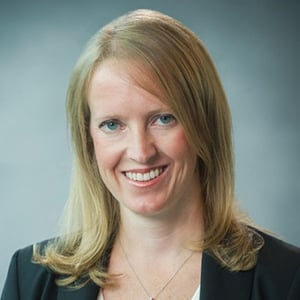
Partner, Clement & Murphy PLLC
Erin Murphy is widely recognized as one of the nation’s leading Supreme Court and appellate advocates. She has argued dozens of cases in appellate and trial courts throughout the country, including the Supreme Court and nearly all of the federal courts of appeals. Erin is one of only seven women in the top two bands of Chambers & Partners rankings for Appellate Law–Nationwide, and the National Law Journal has named her one of the nation’s “Outstanding Women Lawyers.” Erin has litigated appeals involving myriad provisions of the Constitution, including several cases involving the Constitution’s structural protections of liberty. She has litigated a wide range of statutory issues as well, including cases involving the Affordable Care Act, the Bankruptcy Code, the False Claims Act, the Federal Arbitration Act, the Federal Power Act, the Natural Gas Act, the National Labor Relations Act, and more. The National Law Journal named Erin a “Litigation Trailblazer” for her work representing institutional clients, which includes successfully arguing before the Supreme Court on behalf of the U.S. House of Representatives and the Wisconsin State Legislature. Erin also has an active pro bono practice, through which she has successfully represented many religious organizations and adherents, criminal defendants, asylum applicants, adoptive parents, and more.
Erin is an adjunct professor at her alma mater the Georgetown University Law Center, a member and former officer of the Edward Coke Appellate Inn of Court, and a frequent speaker on topics relating to the Supreme Court and appellate advocacy. In her spare time, Erin serves on the boards of directors of Street Law and the Mother of Light Center.

Senior Vice President for Legal Studies, Cato Institute
Clark Neily is senior vice president for legal studies at the Cato Institute. His areas of interest include constitutional law, overcriminalization, civil forfeiture, police accountability, and gun rights. Neily is the author of Terms of Engagement: How Our Courts Should Enforce the Constitution’s Promise of Limited Government. His writing has appeared in the Wall Street Journal, Forbes, and National Review Online, as well as various law reviews, including the Harvard Journal of Law and Public Policy, George Mason Law Review, Georgetown Journal of Law and Public Policy, NYU Journal of Law and Liberty, and Texas Review of Law and Politics. Neily is a frequent guest speaker and lecturer for the Federalist Society, Institute for Humane Studies, and American Constitution Society.
Before joining Cato in 2017, Neily was a senior attorney and constitutional litigator at the Institute for Justice and director of the Institute’s Center for Judicial Engagement. He is also an adjunct professor at the University of Texas School of Law, where he teaches constitutional litigation and public-interest law.
Neily served as co-counsel in District of Columbia v. Heller, the historic case in which the Supreme Court held for the first time that the Second Amendment protects an individual right to own a gun for self-defense.
Neily began his legal career as a law clerk to Judge Royce Lamberth on the U.S. District Court for the District of Columbia. After that he spent four years in the trial department of the Dallas-based firm Thompson & Knight. Neily received his undergraduate and law degrees from the University of Texas, where he was Chief Articles Editor of the Texas Law Review.
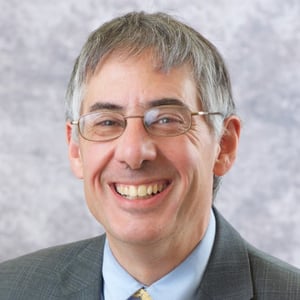
Wendell H. Ford Professor of Law, University of Kentucky J. David Rosenberg College of Law
Paul E. Salamanca graduated from Dartmouth College in 1983 and Boston College Law School in 1989, where he was a note editor for the Boston College Law Review and a member of the Order of the Coif.
Professor Salamanca served as a law clerk to Judge David H. Souter of the U.S. Court of Appeals for the First Circuit, and subsequently clerked for Justice Souter on the U.S. Supreme Court. He practiced law with the firm of Debevoise & Plimpton in New York from 1991 to 1994 and was a visiting assistant professor of law at Loyola University School of Law in New Orleans before joining the faculty at the University of Kentucky College of Law in June 1995.
Professor Salamanca writes in the areas of separation of powers, freedom of speech, freedom of religion, and privacy. He has published articles on these subjects in the University of Cincinnati Law Review, the Missouri Law Review, the Georgia Law Review and the Kentucky Law Journal, among other places.
From 2019 until 2021, Professor Salamanca served as a Senior Counsel and then as a Deputy Assistant Attorney General in the Environment and Natural Resources Division (ENRD) of the United States Department of Justice. His duties included supervision of the Natural Resources and Land Acquisition Sections of ENRD.
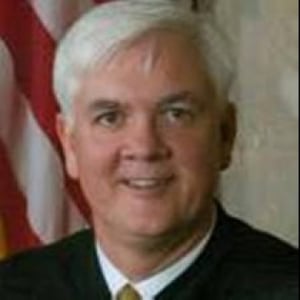
Judge, U.S. District Court, Eastern District of Kentucky
Judge Gregory F. Van Tatenhove has served as a District Court Judge in the Eastern District of Kentucky since his confirmation by the United States Senate on December 21, 2005. Prior to his appointment to the Court, Judge Van Tatenhove served over four years as the United States Attorney for the Eastern District of Kentucky. He has been an adjunct professor at the College of Law since the Spring Semester of 2017, where he teaches Crime and Punishment: Sentencing Policy and Procedure (LAW 902). Judge Van Tatenhove is presently a member of the University of Kentucky College of Law Board of Visitors as well as the Henry Clay Memorial Foundation board. Past service includes a term as President of the Asbury University Alumni Board and Vice-Chair of the Asbury Board of Trustees. He is also a Member of the Kentucky Bar Association Commission on the Future of Law Practice.

North Carolina Supreme Court Reverses Itself In Two Election Law Cases Decided Months Prior
Andrew Pardue, Andrew Watkins
In December 2022, the North Carolina Supreme Court issued opinions in two cases—one striking down...
DEIA Initiatives in the Workplace Post-SFFA
Andrea R. Lucas, Jocelyn Samuels, Kate Comerford Todd
In June, the Supreme Court held that consideration of applicants’ race in admissions decisions of...
DEIA Initiatives in the Workplace Post-SFFA
Andrea R. Lucas, Jocelyn Samuels, Kate Comerford Todd
In June, the Supreme Court held that consideration of applicants’ race in admissions decisions of...
A Conversation with Theodore Olson and Paul Clement
New York City Lawyers Chapter
New York, NYDEIA Initiatives in the Workplace Post-SFFA
Washington, D.C., DCCourthouse Steps Oral Argument: Illumina v. FTC
Ashley Baker, John B. Kirkwood, Adam Mossoff
In September, a panel of judges on the Fifth Circuit Court of Appeals heard oral...
Courthouse Steps Oral Argument: Illumina v. FTC
Ashley Baker, John B. Kirkwood, Adam Mossoff
In September, a panel of judges on the Fifth Circuit Court of Appeals heard oral...
Religious Liberty Pragmatism
Nick Reaves, Matthew Krauter
A review of Thomas C. Berg, Religious Liberty in a Polarized Age (Eerdmans 2023) In...
Panel Two: Aftermath of Bruen
2023 Kentucky Chapters Conference
Versailles, KYTalks with Authors: What It Means to Be Human
William L. Saunders, O. Carter Snead
In What It Means to Be Human - The Case for the Body in Public...