
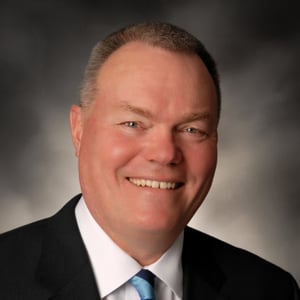
Chief Operating Officer and General Counsel, North American Meat Institute
Mark Dopp is the chief operating officer and general counsel for the North American Meat Institute (NAMI), previously serving as its senior vice president of regulatory affairs and general counsel. In his role, Dopp oversees policy development and represents industry views on significant regulatory, scientific, legislative, and communications matters. He also provides legal counsel to NAMI and oversees its administration and financial matters.
Dopp became the Meat Institute’s outside general counsel in May 1995 and in 1999 he formally joined the Institute and assumed responsibility for its legal and regulatory affairs. Before joining NAMI, Dopp worked at Hogan and Hartson (now Hogan Lovells), where he was active in areas of food and agricultural law on behalf of many clients, including domestic and foreign corporations. He joined Hogan and Hartson in 1989 as an associate and in January 1993 became a partner. Dopp began his career in USDA's Office of the General Counsel in 1984 and entered private practice in 1985.
Dopp received his Bachelor of Science-Agriculture degree in agricultural economics from the University of Wisconsin and his Master of Science from Michigan State University in 1981, also in agricultural economics. He received his law degree in 1984 from the University of Missouri.
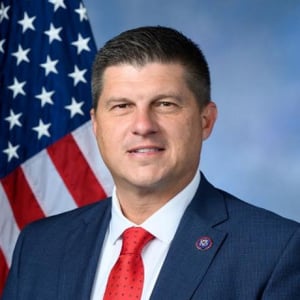
U.S. Congressman, (MN-01)
Congressman Brad Finstad was elected to Congress in a special election on August 9, 2022, and was sworn in three days later with his family by his side as he took the Oath of Office to proudly represent Minnesota’s First District.
Brad is a fourth-generation farmer and resident of the New Ulm area. He and his wife, Jackie, met on the school bus in second grade and they are now the proud parents of seven children. A graduate of the University of Minnesota with a degree in Agriculture Education and an emphasis in Rural Leadership Development, Brad and Jackie now operate an agriculture business in New Ulm while working alongside extended family to run their generational family farm.
Brad is proud to have served as State Director for USDA Rural Development in Minnesota where he worked to support infrastructure improvements, business development, homeownership, community services such as schools, public safety, health care, and high-speed internet access in rural areas. He previously served three terms in the Minnesota Legislature. He also held executive positions with the Minnesota Turkey Growers Association and the Center for Rural Policy and Development.
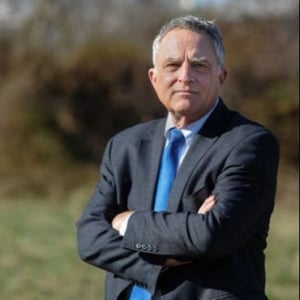
President, Board of Directors, Farm Action
Joe Maxwell is a co-founder of Farm Action. He focuses his work on a vision of an inclusive U.S. economy that works for all people, providing them an equitable opportunity to share in the prosperity they help build, rather than an economy that works for just a handful of individuals and multi-national corporations.
Joe has held key positions in both political and initiative petition campaigns. During the last election cycle, he assisted Presidential, U.S. Senate and U.S. House of Representatives candidates in developing their antitrust, agriculture, and food policy positions.
Joe holds degrees in agriculture economics and law from the University of Missouri. He served as a Missouri state legislator, as Missouri’s Lieutenant Governor, and is retired from the Army National Guard, where he served as a First Sergeant in the Field Artillery. Joe and his brother, Steve, are Missouri family farmers. Joe’s work has been profiled by The Hill, Huffington Post, Mother Jones, Politico, and The Nation. He has been cited by CNN, The New York Times, NPR, USA Today, Washington Post, and more.
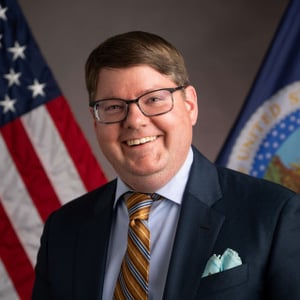
Deputy Secretary of Agriculture, U.S. Department of Agriculture
Judge Stephen Alexander Vaden was appointed as the Deputy Secretary of the U.S. Department of Agriculture on July 7, 2025. Alongside Secretary Brooke L. Rollins, Deputy Secretary Vaden leads the Department’s operations and implements policies that support America’s food and farm systems. A native of Union City, Tennessee, Deputy Secretary Vaden brings expertise in agricultural policy, law, and rural development. Previously, he served as a judge on the U.S. Court of International Trade and as General Counsel of USDA. Throughout Deputy Secretary Vaden’s time as General Counsel, he led successful Supreme Court litigation, advanced regulatory reform, and supported the implementation of the 2018 Farm Bill. He is a graduate of Yale Law School and Vanderbilt University. A public servant with strong agricultural roots, Deputy Secretary Vaden is committed to revitalizing rural America and ensuring an abundant, affordable, and safe U.S. food supply.

Senior Fellow and Director of Constitutional Studies, Manhattan Institute
Ilya Shapiro is a senior fellow and director of constitutional studies at the Manhattan Institute and a contributing editor of City Journal. Previously he was executive director and senior lecturer at the Georgetown Center for the Constitution, and before that a vice president of the Cato Institute.
Shapiro is the author of Lawless: The Miseducation of America’s Elites (2025) and Supreme Disorder: Judicial Nominations and the Politics of America’s Highest Court (2020), coauthor of Religious Liberties for Corporations? (2014), and editor of 11 volumes of the Cato Supreme Court Review (2008-18). He has contributed to a variety of academic, popular, and professional publications, including the Wall Street Journal, Harvard Journal of Law & Public Policy, Washington Post, Los Angeles Times, USA Today, National Review, and Newsweek. He also regularly provides commentary for various media outlets, writes the Shapiro’s Gavel newsletter on Substack, and once appeared on the Colbert Report.
Shapiro has testified many times before Congress and state legislatures and has filed more than 500 amicus curiae “friend of the court” briefs in the Supreme Court. He lectures regularly on behalf of the Federalist Society, is a member of the board of fellows of the Jewish Policy Center, was an inaugural Washington Fellow at the National Review Institute, and has been an adjunct law professor at the George Washington University and University of Mississippi. He is also the chairman of the board of advisers of the Mississippi Justice Institute, a barrister in the Edward Coke Appellate Inn of Court, and a former member of the Virginia Advisory Committee to the U.S. Commission on Civil Rights.
Earlier in his career, Shapiro was a special assistant/adviser to the Multi-National Force in Iraq on rule-of-law issues and practiced at Patton Boggs and Cleary Gottlieb. Before entering private practice, he clerked for Judge E. Grady Jolly of the U.S. Court of Appeals for the Fifth Circuit. He holds an AB from Princeton University, an MSc from the London School of Economics, and a JD from the University of Chicago Law School.
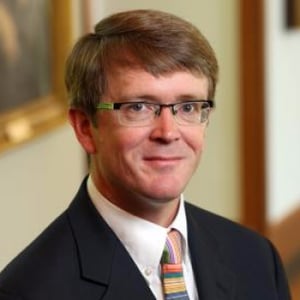
Samuel H. McCoy II Professor of Law, University of Virginia School of Law
John F. Duffy is the Samuel H. McCoy II Professor of Law and Class of 1966 Research Professor of Law at the University of Virginia School of Law, where he teaches administrative law, torts and intellectual property. Professor Duffy has published articles on a wide range of administrative law and regulatory issues in journals such as University of Chicago Law Review, Yale Law Journal, Stanford Law Review, Virginia Law Review, Columbia Law Review, Texas Law Review, Northwestern University Law Review, NYU Law Review, University of Pennsylvania Law Review and the Supreme Court Review. His 1998 article Administrative Common Law in Judicial Review, 77 Tex. L. Rev. 113 (1998), was one of the first articles to criticize the Chevron doctrine as being irreconcilable with § 706 of the APA; it won the American Bar Association’s Scholarship Award in Administrative Law. His 2008 article “Are Administrative Patent Judges Unconstitutional?” was covered on National Public Radio), in the New York Times (Adam Liptak, In One Flaw, Questions on Validity of 46 Judges, May 6, 2008), and in the Wall Street Journal (Dan Slater, Patently Unconstitutional, May 6, 2008). The NYT and WSJ agreed that he was “a different kind of law professor,” “one of the lucky few” whose “writings actually wind up changing the law.”
As an attorney in the courts, Duffy has twice successfully convinced the Supreme Court to overturn lower court doctrines that had been applied in many cases over decades but that were unanimously held to be irreconcilable with Supreme Court precedents. See TC Heartland v. Kraft Foods Group Brands, 581 U.S. 258 (2017); KSR v. Teleflex, 550 U.S. 398 (2007).
Prior to entering legal academics, Duffy clerked on the D.C. Circuit for Stephen Williams and on the Supreme Court for Antonin Scalia. While clerking, he became known as Justice Scalia’s “hapless law clerk,” who had been tasked with unearthing three-quarters of a century of legislative history that made “no difference” to the outcome in an otherwise forgettable case. See Conroy v. Aniskoff, 507 U.S. 511, 527-28 (1993) (Scalia, J., concurring in the judgment).
In earlier days, Duffy enjoyed being a professional blackjack player unwelcome in all Atlantic City casinos and a semi-professional road runner (best marathon time 2:24:33). He holds an A.B. in physics from Harvard and a J.D. from the University of Chicago.
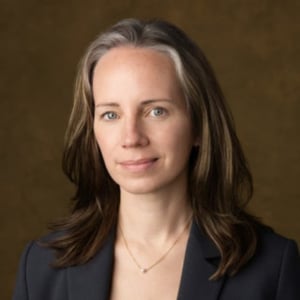
Senior Fellow in Executive Power, Cato Institute
Molly Nixon is a senior fellow at the Cato Institute, where she focuses on the scope, use, and history of executive power as well as its limits under the Constitution. Molly was previously an attorney with Pacific Legal Foundation’s separation of powers practice, where she litigated cases challenging congressional delegations of legislative power and executive branch overreach. Before that, she served as an Attorney-Advisor at the Department of the Interior and as Legislative Counsel for Congressman Justin Amash.
Molly holds a J.D. from New York University School of Law and a B.A. in History and International Relations from Boston University. She clerked for the U.S. District Court for the District of Alaska and practiced law at a firm in New York City for several years before moving to Washington, D.C.
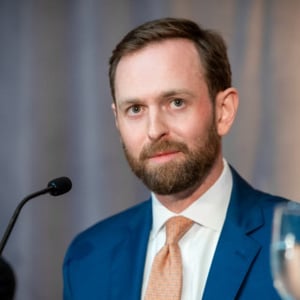
Commissioner, Federal Trade Commission
Andrew N. Ferguson was sworn in April 2, 2024 as a Commissioner of the Federal Trade Commission. President Joe Biden named Ferguson to a term that expires on September 25, 2030.
Ferguson most recently served as solicitor general of the Commonwealth of Virginia. Prior to that position, he served as chief counsel to U.S. Sen. Mitch McConnell of Kentucky, the Republican leader, and as a Republican counsel on the U.S. Senate Judiciary Committee. He also practiced law at several Washington, D.C. law firms. He earned his undergraduate degree and law degree from the University of Virginia. After law school, Ferguson clerked for Judge Karen L. Henderson on the U.S. Court of Appeals for the D.C. Circuit and U.S. Supreme Court Justice Clarence Thomas.
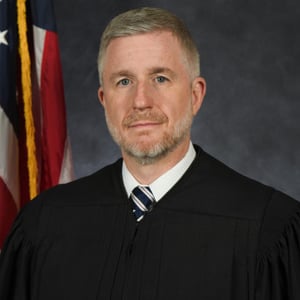
Judge, United States Court of Appeals, Third Circuit
Judge Paul Matey was appointed to the United States Court of Appeals for the Third Circuit in 2019 by President Trump.
Before his judicial service, Judge Matey was a partner at Lowenstein Sandler in New Jersey where he practiced complex commercial litigation and criminal defense. Earlier, Judge Matey was the Senior Vice President, General Counsel and Secretary for University Hospital Newark, an academic medical center and teaching hospital.
He also served as the Deputy Chief Counsel to Governor Chris Christie, and as an Assistant United States Attorney in the District of New Jersey, where he was awarded the Justice Department’s Director’s Award for Superior Performance. He also practiced at the Washington D.C. firm of Kellogg, Hansen, Todd, Figel & Frederick, and served as a law clerk to judges on the United States Court of Appeals for the Third Circuit and the United States District Court for the District of New Jersey.
He earned his bachelor’s degree from the University of Scranton, a Jesuit University, in 1993, and his juris doctorate, summa cum laude, from Seton Hall University School of Law in 2001, where he served as Editor-in-Chief of the Seton Hall Law Review.
In 2019, Judge Matey was elected to membership in the American Law Institute and, since 2020, has lectured on administrative law and the American legal history at Seton Hall.
Commissioner, Federal Trade Commission
Andrew N. Ferguson was sworn in April 2, 2024 as a Commissioner of the Federal Trade Commission. President Joe Biden named Ferguson to a term that expires on September 25, 2030.
Ferguson most recently served as solicitor general of the Commonwealth of Virginia. Prior to that position, he served as chief counsel to U.S. Sen. Mitch McConnell of Kentucky, the Republican leader, and as a Republican counsel on the U.S. Senate Judiciary Committee. He also practiced law at several Washington, D.C. law firms. He earned his undergraduate degree and law degree from the University of Virginia. After law school, Ferguson clerked for Judge Karen L. Henderson on the U.S. Court of Appeals for the D.C. Circuit and U.S. Supreme Court Justice Clarence Thomas.
Judge, United States Court of Appeals, Third Circuit
Judge Paul Matey was appointed to the United States Court of Appeals for the Third Circuit in 2019 by President Trump.
Before his judicial service, Judge Matey was a partner at Lowenstein Sandler in New Jersey where he practiced complex commercial litigation and criminal defense. Earlier, Judge Matey was the Senior Vice President, General Counsel and Secretary for University Hospital Newark, an academic medical center and teaching hospital.
He also served as the Deputy Chief Counsel to Governor Chris Christie, and as an Assistant United States Attorney in the District of New Jersey, where he was awarded the Justice Department’s Director’s Award for Superior Performance. He also practiced at the Washington D.C. firm of Kellogg, Hansen, Todd, Figel & Frederick, and served as a law clerk to judges on the United States Court of Appeals for the Third Circuit and the United States District Court for the District of New Jersey.
He earned his bachelor’s degree from the University of Scranton, a Jesuit University, in 1993, and his juris doctorate, summa cum laude, from Seton Hall University School of Law in 2001, where he served as Editor-in-Chief of the Seton Hall Law Review.
In 2019, Judge Matey was elected to membership in the American Law Institute and, since 2020, has lectured on administrative law and the American legal history at Seton Hall.
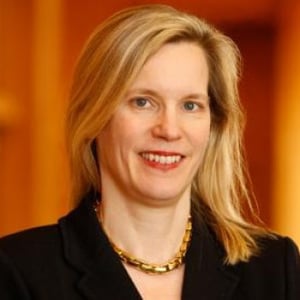
John S. Battle Professor of Law, University of Virginia School of Law
Julia D. Mahoney teaches courses in property, government finance, constitutional law and nonprofit organizations. A graduate of Yale Law School, she joined the University of Virginia faculty as an associate professor in 1999 and is now John S. Battle Professor of Law. She has also taught at the University of Southern California Law School and the University of Chicago Law School, and before entering the legal academy, practiced law at the New York firm Wachtell, Lipton, Rosen & Katz. Her scholarly articles include works on land preservation, eminent domain, health care reform and property rights in human biological materials.
Principal Deputy Assistant Attorney General, Antitrust Division, U.S. Department of Justice
On January 14, 2022, Doha Mekki was appointed Principal Deputy Assistant Attorney General for the Antitrust Division of the U.S. Department of Justice. As Principal Deputy Assistant Attorney General, Ms. Mekki supervises more than 350 attorneys who investigate and prosecute civil and criminal violations of federal antitrust and other competition laws. She is responsible for overseeing the Division’s civil enforcement, criminal enforcement, litigation, domestic and international policy, advocacy, and economic analysis programs, as well as the Division’s operations.
Ms. Mekki joined the Antitrust Division in 2015 as a Trial Attorney. In that capacity, she led investigations and litigated merger challenges in the rail, commercial vehicle, aviation, and healthcare industries, among others. She later served as Counsel to the Assistant Attorney General for Antitrust. In that role, she focused on civil antitrust enforcement in healthcare, sports, and digital markets, as well as criminal enforcement in labor markets. From 2020 until 2021, she served as an Assistant Chief in the Antitrust Division’s Defense, Industrials, and Aerospace Section, where she provided legal and policy guidance to attorneys and paralegals working on the section’s merger and anticompetitive conduct investigations and enforcement. Beginning in 2021, she served concurrently as the Antitrust Division’s Special Counsel for Labor. In that capacity, she helped advance the Division’s civil and criminal enforcement in labor markets. She is a two-time recipient of the Assistant Attorney General’s Award of Distinction and she has testified before Congress about competition in labor markets.
She was previously an associate in the antitrust and financial services groups of an international law firm in New York, NY, where her antitrust practice focused on federal antitrust litigation, government investigations, and counseling.
Ms. Mekki holds a B.A. from Duke University, a J.D. from the University of Pennsylvania Law School, and an M.B.E. in Bioethics from the Department of Medical Ethics at the University of Pennsylvania Perelman School of Medicine.
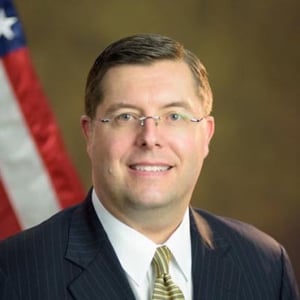
Chief Deputy Attorney General
Ryan Newman is currently Chief Deputy Attorney General for Florida Office of the Attorney General.
During the first Trump Administration, he served as Counselor to the United States Attorney General for national security and international affairs, Deputy General Counsel (Legal Counsel) for the Department of Defense, and Acting Assistant Attorney General for the Office of Legal Policy at the Department of Justice. Prior to serving in the Executive Branch, Ryan was Chief Counsel to United States Senator Ted Cruz during the 114th Congress.
Ryan served as a law clerk to the Honorable Samuel A. Alito, Jr. on the United States Supreme Court, the Honorable Richard J. Leon on the United States District Court for the District of Columbia, and the Honorable J.L. Edmondson on the United States Court of Appeals for the Eleventh Circuit.
Prior to law school, Ryan was an armor officer in the United States Army assigned to the 1st Squadron, 10th U.S. Cavalry Regiment (Buffalo Soldiers). He deployed to Iraq in 2003 for Operation Iraqi Freedom.
Ryan graduated from the United States Military Academy at West Point in 1998. He earned his law degree with high honors from The University of Texas School of Law in 2007.
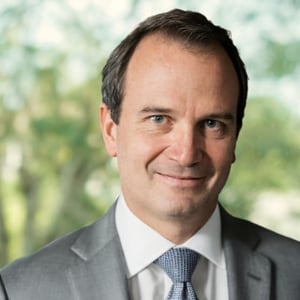
Judge, United States Court of Appeals, Fourth Circuit
Judge Julius “Jay” Richardson serves on the United States Court of Appeals for the Fourth Circuit. Jay grew up in Barnwell, South Carolina. After graduating from Vanderbilt University, Jay moved to Hawaii and worked at a pool-side bar-and-grill. Jay later earned his law degree from the University of Chicago Law School, where he served as Articles Editor for the Law Review and right fielder for the law school’s championship softball team. Following law school, Jay clerked for Judge Richard A. Posner and for Chief Justice William H. Rehnquist. He then practiced with Kellogg Hansen in Washington, DC before returning to South Carolina as an Assistant United States Attorney. Along with prosecuting violent crime, gangs, terrorism, public corruption, civil rights, and narcotics trafficking, he led the prosecution of Dylann Roof, who was convicted and sentenced to death for his racist massacre of nine Black worshippers during a Bible study at Mother Emanuel AME Church in Charleston. He and his wife Macon are blessed with four daughters.
Assistant Professor of Law, Antonin Scalia Law School, George Mason University
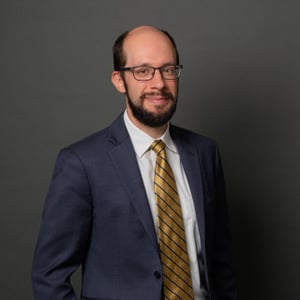
Lael Weinberger is an assistant professor of law at George Mason University Antonin Scalia Law School. Previously, Lael clerked for Justice Neil Gorsuch on the United States Supreme Court, Judge Frank Easterbrook on the Seventh Circuit Court of Appeals, and Chief Justice Daniel Eismann on the Idaho Supreme Court. Lael also practiced law at the Washington, D.C., office of Gibson Dunn and held fellowships at Stanford and Harvard law schools. Lael earned a law degree and a Ph.D. in history, both from the University of Chicago. Lael's academic work has appeared in journals such as the University of Chicago Law Review, Notre Dame Law Review, and Constitutional Commentary, among others. He has also written widely for broader public audiences, with his writings and reviews appearing in publications including Newsweek, National Review, Claremont Review, First Things, Christianity Today, LA Review of Books, World, and the New Rambler Review.
John S. Battle Professor of Law, University of Virginia School of Law
Julia D. Mahoney teaches courses in property, government finance, constitutional law and nonprofit organizations. A graduate of Yale Law School, she joined the University of Virginia faculty as an associate professor in 1999 and is now John S. Battle Professor of Law. She has also taught at the University of Southern California Law School and the University of Chicago Law School, and before entering the legal academy, practiced law at the New York firm Wachtell, Lipton, Rosen & Katz. Her scholarly articles include works on land preservation, eminent domain, health care reform and property rights in human biological materials.
Principal Deputy Assistant Attorney General, Antitrust Division, U.S. Department of Justice
On January 14, 2022, Doha Mekki was appointed Principal Deputy Assistant Attorney General for the Antitrust Division of the U.S. Department of Justice. As Principal Deputy Assistant Attorney General, Ms. Mekki supervises more than 350 attorneys who investigate and prosecute civil and criminal violations of federal antitrust and other competition laws. She is responsible for overseeing the Division’s civil enforcement, criminal enforcement, litigation, domestic and international policy, advocacy, and economic analysis programs, as well as the Division’s operations.
Ms. Mekki joined the Antitrust Division in 2015 as a Trial Attorney. In that capacity, she led investigations and litigated merger challenges in the rail, commercial vehicle, aviation, and healthcare industries, among others. She later served as Counsel to the Assistant Attorney General for Antitrust. In that role, she focused on civil antitrust enforcement in healthcare, sports, and digital markets, as well as criminal enforcement in labor markets. From 2020 until 2021, she served as an Assistant Chief in the Antitrust Division’s Defense, Industrials, and Aerospace Section, where she provided legal and policy guidance to attorneys and paralegals working on the section’s merger and anticompetitive conduct investigations and enforcement. Beginning in 2021, she served concurrently as the Antitrust Division’s Special Counsel for Labor. In that capacity, she helped advance the Division’s civil and criminal enforcement in labor markets. She is a two-time recipient of the Assistant Attorney General’s Award of Distinction and she has testified before Congress about competition in labor markets.
She was previously an associate in the antitrust and financial services groups of an international law firm in New York, NY, where her antitrust practice focused on federal antitrust litigation, government investigations, and counseling.
Ms. Mekki holds a B.A. from Duke University, a J.D. from the University of Pennsylvania Law School, and an M.B.E. in Bioethics from the Department of Medical Ethics at the University of Pennsylvania Perelman School of Medicine.
Chief Deputy Attorney General
Ryan Newman is currently Chief Deputy Attorney General for Florida Office of the Attorney General.
During the first Trump Administration, he served as Counselor to the United States Attorney General for national security and international affairs, Deputy General Counsel (Legal Counsel) for the Department of Defense, and Acting Assistant Attorney General for the Office of Legal Policy at the Department of Justice. Prior to serving in the Executive Branch, Ryan was Chief Counsel to United States Senator Ted Cruz during the 114th Congress.
Ryan served as a law clerk to the Honorable Samuel A. Alito, Jr. on the United States Supreme Court, the Honorable Richard J. Leon on the United States District Court for the District of Columbia, and the Honorable J.L. Edmondson on the United States Court of Appeals for the Eleventh Circuit.
Prior to law school, Ryan was an armor officer in the United States Army assigned to the 1st Squadron, 10th U.S. Cavalry Regiment (Buffalo Soldiers). He deployed to Iraq in 2003 for Operation Iraqi Freedom.
Ryan graduated from the United States Military Academy at West Point in 1998. He earned his law degree with high honors from The University of Texas School of Law in 2007.
Judge, United States Court of Appeals, Fourth Circuit
Judge Julius “Jay” Richardson serves on the United States Court of Appeals for the Fourth Circuit. Jay grew up in Barnwell, South Carolina. After graduating from Vanderbilt University, Jay moved to Hawaii and worked at a pool-side bar-and-grill. Jay later earned his law degree from the University of Chicago Law School, where he served as Articles Editor for the Law Review and right fielder for the law school’s championship softball team. Following law school, Jay clerked for Judge Richard A. Posner and for Chief Justice William H. Rehnquist. He then practiced with Kellogg Hansen in Washington, DC before returning to South Carolina as an Assistant United States Attorney. Along with prosecuting violent crime, gangs, terrorism, public corruption, civil rights, and narcotics trafficking, he led the prosecution of Dylann Roof, who was convicted and sentenced to death for his racist massacre of nine Black worshippers during a Bible study at Mother Emanuel AME Church in Charleston. He and his wife Macon are blessed with four daughters.
Assistant Professor of Law, Antonin Scalia Law School, George Mason University
Lael Weinberger is an assistant professor of law at George Mason University Antonin Scalia Law School. Previously, Lael clerked for Justice Neil Gorsuch on the United States Supreme Court, Judge Frank Easterbrook on the Seventh Circuit Court of Appeals, and Chief Justice Daniel Eismann on the Idaho Supreme Court. Lael also practiced law at the Washington, D.C., office of Gibson Dunn and held fellowships at Stanford and Harvard law schools. Lael earned a law degree and a Ph.D. in history, both from the University of Chicago. Lael's academic work has appeared in journals such as the University of Chicago Law Review, Notre Dame Law Review, and Constitutional Commentary, among others. He has also written widely for broader public audiences, with his writings and reviews appearing in publications including Newsweek, National Review, Claremont Review, First Things, Christianity Today, LA Review of Books, World, and the New Rambler Review.
Samuel H. McCoy II Professor of Law, University of Virginia School of Law
John F. Duffy is the Samuel H. McCoy II Professor of Law and Class of 1966 Research Professor of Law at the University of Virginia School of Law, where he teaches administrative law, torts and intellectual property. Professor Duffy has published articles on a wide range of administrative law and regulatory issues in journals such as University of Chicago Law Review, Yale Law Journal, Stanford Law Review, Virginia Law Review, Columbia Law Review, Texas Law Review, Northwestern University Law Review, NYU Law Review, University of Pennsylvania Law Review and the Supreme Court Review. His 1998 article Administrative Common Law in Judicial Review, 77 Tex. L. Rev. 113 (1998), was one of the first articles to criticize the Chevron doctrine as being irreconcilable with § 706 of the APA; it won the American Bar Association’s Scholarship Award in Administrative Law. His 2008 article “Are Administrative Patent Judges Unconstitutional?” was covered on National Public Radio), in the New York Times (Adam Liptak, In One Flaw, Questions on Validity of 46 Judges, May 6, 2008), and in the Wall Street Journal (Dan Slater, Patently Unconstitutional, May 6, 2008). The NYT and WSJ agreed that he was “a different kind of law professor,” “one of the lucky few” whose “writings actually wind up changing the law.”
As an attorney in the courts, Duffy has twice successfully convinced the Supreme Court to overturn lower court doctrines that had been applied in many cases over decades but that were unanimously held to be irreconcilable with Supreme Court precedents. See TC Heartland v. Kraft Foods Group Brands, 581 U.S. 258 (2017); KSR v. Teleflex, 550 U.S. 398 (2007).
Prior to entering legal academics, Duffy clerked on the D.C. Circuit for Stephen Williams and on the Supreme Court for Antonin Scalia. While clerking, he became known as Justice Scalia’s “hapless law clerk,” who had been tasked with unearthing three-quarters of a century of legislative history that made “no difference” to the outcome in an otherwise forgettable case. See Conroy v. Aniskoff, 507 U.S. 511, 527-28 (1993) (Scalia, J., concurring in the judgment).
In earlier days, Duffy enjoyed being a professional blackjack player unwelcome in all Atlantic City casinos and a semi-professional road runner (best marathon time 2:24:33). He holds an A.B. in physics from Harvard and a J.D. from the University of Chicago.
Senior Fellow in Executive Power, Cato Institute
Molly Nixon is a senior fellow at the Cato Institute, where she focuses on the scope, use, and history of executive power as well as its limits under the Constitution. Molly was previously an attorney with Pacific Legal Foundation’s separation of powers practice, where she litigated cases challenging congressional delegations of legislative power and executive branch overreach. Before that, she served as an Attorney-Advisor at the Department of the Interior and as Legislative Counsel for Congressman Justin Amash.
Molly holds a J.D. from New York University School of Law and a B.A. in History and International Relations from Boston University. She clerked for the U.S. District Court for the District of Alaska and practiced law at a firm in New York City for several years before moving to Washington, D.C.
Samuel H. McCoy II Professor of Law, University of Virginia School of Law
John F. Duffy is the Samuel H. McCoy II Professor of Law and Class of 1966 Research Professor of Law at the University of Virginia School of Law, where he teaches administrative law, torts and intellectual property. Professor Duffy has published articles on a wide range of administrative law and regulatory issues in journals such as University of Chicago Law Review, Yale Law Journal, Stanford Law Review, Virginia Law Review, Columbia Law Review, Texas Law Review, Northwestern University Law Review, NYU Law Review, University of Pennsylvania Law Review and the Supreme Court Review. His 1998 article Administrative Common Law in Judicial Review, 77 Tex. L. Rev. 113 (1998), was one of the first articles to criticize the Chevron doctrine as being irreconcilable with § 706 of the APA; it won the American Bar Association’s Scholarship Award in Administrative Law. His 2008 article “Are Administrative Patent Judges Unconstitutional?” was covered on National Public Radio), in the New York Times (Adam Liptak, In One Flaw, Questions on Validity of 46 Judges, May 6, 2008), and in the Wall Street Journal (Dan Slater, Patently Unconstitutional, May 6, 2008). The NYT and WSJ agreed that he was “a different kind of law professor,” “one of the lucky few” whose “writings actually wind up changing the law.”
As an attorney in the courts, Duffy has twice successfully convinced the Supreme Court to overturn lower court doctrines that had been applied in many cases over decades but that were unanimously held to be irreconcilable with Supreme Court precedents. See TC Heartland v. Kraft Foods Group Brands, 581 U.S. 258 (2017); KSR v. Teleflex, 550 U.S. 398 (2007).
Prior to entering legal academics, Duffy clerked on the D.C. Circuit for Stephen Williams and on the Supreme Court for Antonin Scalia. While clerking, he became known as Justice Scalia’s “hapless law clerk,” who had been tasked with unearthing three-quarters of a century of legislative history that made “no difference” to the outcome in an otherwise forgettable case. See Conroy v. Aniskoff, 507 U.S. 511, 527-28 (1993) (Scalia, J., concurring in the judgment).
In earlier days, Duffy enjoyed being a professional blackjack player unwelcome in all Atlantic City casinos and a semi-professional road runner (best marathon time 2:24:33). He holds an A.B. in physics from Harvard and a J.D. from the University of Chicago.
Senior Fellow in Executive Power, Cato Institute
Molly Nixon is a senior fellow at the Cato Institute, where she focuses on the scope, use, and history of executive power as well as its limits under the Constitution. Molly was previously an attorney with Pacific Legal Foundation’s separation of powers practice, where she litigated cases challenging congressional delegations of legislative power and executive branch overreach. Before that, she served as an Attorney-Advisor at the Department of the Interior and as Legislative Counsel for Congressman Justin Amash.
Molly holds a J.D. from New York University School of Law and a B.A. in History and International Relations from Boston University. She clerked for the U.S. District Court for the District of Alaska and practiced law at a firm in New York City for several years before moving to Washington, D.C.

Antitrust Law Down on the Farm: Farmers, Food Inflation, and a Fair Deal
Litigation Update: AAER v. Fearless Fund
Topics
Congress Considers the Economics of AI
Artificial intelligence (AI) is one of the most important current drivers of the economy. The...
Luncheon Fireside Chat with Hon. Andrew Ferguson and Hon. Paul B. Matey
Andrew N. Ferguson, Paul B. Matey
Hon. Andrew Ferguson, Commissioner, Federal Trade Commission Hon. Paul B. Matey, U.S. Court of Appeals, Third Circuit
Luncheon Fireside Chat with Hon. Andrew Ferguson and Hon. Paul B. Matey
Andrew N. Ferguson, Paul B. Matey
Hon. Andrew Ferguson, Commissioner, Federal Trade Commission Hon. Paul B. Matey, U.S. Court of Appeals, Third Circuit
Panel 1: Did James Madison Think Corporations Were People Too?
Julia D. Mahoney, Doha Mekki, Ryan Dean Newman, Julius N. Richardson, Lael Weinberger
How did citizens understand corporate power at the Founding? What were the rights, privileges, and...
Panel 1: Did James Madison Think Corporations Were People Too?
Julia D. Mahoney, Doha Mekki, Ryan Dean Newman, Julius N. Richardson, Lael Weinberger
How did citizens understand corporate power at the Founding? What were the rights, privileges, and...
Courthouse Steps Decision: Corner Post, Inc. v. Board of Governors of the Federal Reserve System
John F. Duffy, Molly Nixon
On July 1, 2024, the U.S. Supreme Court issued their opinion in Corner Post, Inc....
Courthouse Steps Decision: Corner Post, Inc. v. Board of Governors of the Federal Reserve System
John F. Duffy, Molly Nixon
On July 1, 2024, the U.S. Supreme Court issued their opinion in Corner Post, Inc....
Courthouse Steps Decision: Corner Post, Inc. v. Board of Governors of the Federal Reserve System