

Dr. John Eastman is the former Henry Salvatori Professor of Law & Community Service and former Dean at Chapman University's Dale E. Fowler School of Law, where he had been a member of the faculty since 1999, specializing in Constitutional Law, Legal History, and Property. He is a founding director of the Center for Constitutional Jurisprudence, a public interest law firm affiliated with the Claremont Institute that he founded in 1999. He has a Ph.D. in Government from the Claremont Graduate School and a J.D. from the University of Chicago Law School, and a B.A. in Politics and Economics from the University of Dallas. He serves as the Chairman of the Board of the National Organization for Marriage.
Prior to joining the Chapman law faculty, Dr. Eastman served as a law clerk to the Honorable Clarence Thomas, Associate Justice, Supreme Court of the United States, and to the Honorable J. Michael Luttig, Judge, United States Court of Appeals for the Fourth Circuit and practiced law with the national law firm of Kirkland & Ellis. Dr. Eastman has also represented numerous clients in important constitutional law matters and has argued before the Supreme Court. On behalf of the Claremont Institute Center for Constitutional Jurisprudence, he has participated as amicus curiae before the Supreme Court of the United States, U.S. Courts of Appeals, and State Supreme Courts in more than one hundred cases of constitutional significance, including Boy Scouts of America v. Dale, Zelman v. Simmons-Harris (the school vouchers case), Kelo v. New London, Ct. (eminent domain), and Van Orden v. Perry (the 10 Commandments case). He has also appeared as an expert legal commentator on numerous television and radio programs, including C-SPAN, Fox News, PBS, NewsHour, and The O'Reilly Factor.
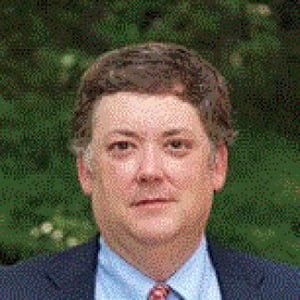
Owner and Chief Executive Officer, Coalmont Electrical Developme, Outsider Inside the Supreme Court: A Decisive First Amendment Battle
Shaun McCutcheon grew up in Vestavia Hills, Alabama, and received his Bachelor of Electrical Engineering degree from Georgia Institute of Technology in 1989. Shaun is a registered Professional Engineer in Alabama and still attending Georgia Tech occasionally for continuing education in order to obtain a Power Systems Certificate. After graduation, he worked for an electrical controls company, heading up a number of heavy industrial projects for paper, steel other process industries.
Mr. McCutcheon traveled extensively for 15 years installing motor drives and controls. In 1996, Shaun started his own electrical engineering company, Coalmont, in order to develop custom systems for customers needing upgrades and production improvements. Coalmont is now located in Tuscaloosa County and focuses primarily on difficult projects for the coal mining industry. Mr. McCutcheon’s group is also working on some new energy projects in Alabama for clean coal liquefaction and alternate energy conversion. Shaun specializes in controls and large horsepower energy conversion, both AC and DC.
Mr. McCutcheon is a member of IEEE and the NFIB and hopes to help create additional Alabama jobs with new mines and associated heavy industries such as wood products and automotive. He is a sponsor of the Young Republicans and Finance Director and an elected member of the Jefferson County Republican Executive Committee. He was elected to the Jefferson County Steering Committee, and is He is the chairman of Conservative Action Fund PAC. Mr. McCutcheon also sponsors several charities including Feed the Children.
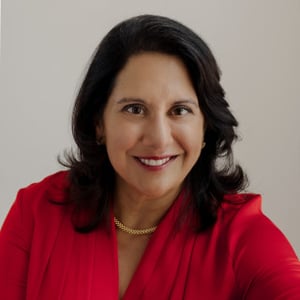
Judge, United States Court of Appeals, District of Columbia Circuit
Judge Rao was appointed to the United States Court of Appeals for the District of Columbia Circuit in March 2019. She graduated from Yale College in 1995 and the University of Chicago Law School in 1999. Following graduation, she served as a law clerk to Judge J. Harvie Wilkinson III of the U.S. Court of Appeals for the Fourth Circuit and, in the 2001 October Term, as law clerk to Justice Clarence Thomas of the U.S. Supreme Court. Between her clerkships, Judge Rao served as counsel for nominations and constitutional law to the U.S. Senate Committee on the Judiciary. In 2002, she joined the international arbitration group of Clifford Chance LLP in London, England. From 2005-2006, she served as Special Assistant and Associate White House Counsel to President George W. Bush. From 2006 to 2017, Judge Rao was a professor at the Antonin Scalia Law School at George Mason University, where she taught constitutional law, legislation and statutory interpretation, and the history and foundations of the administrative state. In 2014, she founded the Center for the Study of the Administrative State, a non-profit Center that promotes academic scholarship and public policy debates about administrative law. In July 2017, she was appointed to serve as the Administrator of the Office of Information and Regulatory Affairs in the Office of Management Budget. She served in this position until her appointment to the D.C. Circuit.
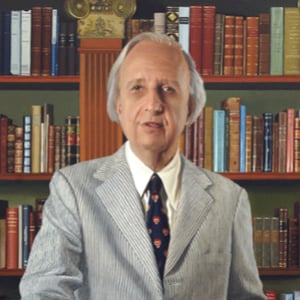
Judge, United States Court of Appeals, Eighth Circuit
Morris Sheppard Arnold is a federal judge on the United States Court of Appeals for the 8th Circuit. He joined the court in 1992 after being nominated by President George H.W. Bush. Prior to his appointment, he served on the U.S. District Court for the Western District of Arkansas after a nomination by Ronald Reagan in 1985. He assumed senior status on October 9, 2006.
Morris also served as a judge on the Foreign Intelligence Surveillance Court of Review from 2008 to 2013. He was the presiding judge on that court from 2012 to 2013.
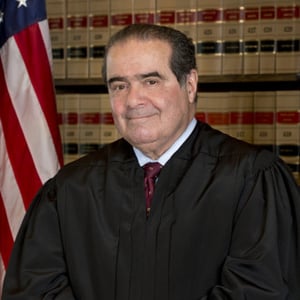
Associate Justice, United States Supreme Court
Antonin Scalia, Associate Justice, was born in Trenton, New Jersey, March 11, 1936. He married Maureen McCarthy and has nine children- Ann Forrest, Eugene, John Francis, Catherine Elisabeth, Mary Clare, Paul David, Matthew, Christopher James, and Margaret Jane. He received his A.B. from Georgetown University and the University of Fribourg, Switzerland, and his LL.B. from Harvard Law School, and was a Sheldon Fellow of Harvard University from 1960-1961. He was in private practice in Cleveland, Ohio from 1961-1967, a Professor of Law at the University of Virginia from 1967-1971, and a Professor of Law at the University of Chicago from 1977-1982, and a Visiting Professor of Law at Georgetown University and Stanford University. He was chairman of the American Bar Association's Section of Administrative Law, 1981-1982, and its Conference of Section Chairmen, 1982-1983. He served the federal government as General Counsel of the Office of Telecommunications Policy from 1971-1972, Chairman of the Administrative Conference of the United States from 1972-1974, and Assistant Attorney General for the Office of Legal Counsel from 1974-1977. He was appointed Judge of the United States Court of Appeals for the District of Columbia Circuit in 1982. President Reagan nominated him as an Associate Justice of the Supreme Court, and he took his seat September 26, 1986.
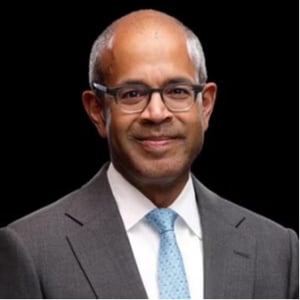
Partner, Davis Polk & Wardwell LLP
Kannon is the head of our Supreme Court & Appellate practice. He has argued 39 cases before the U.S. Supreme Court and has argued more than 150 appeals in courts across the country, including every federal court of appeals and numerous state courts.
Kannon is ranked as a “Star Individual” in appellate law by Chambers USA, where a client notes, “It’s hard to think of enough superlatives to describe his talent, his judgment, his ability, his experience – he is as good as it gets.” Legal 500 U.S. recognizes Kannon in its Hall of Fame for appellate work. A client shares, “His work is the best in the business, and he is a wonderful human being in addition to being a world-class appellate litigator.”
In 2024 and 2022, Kannon was a finalist for the American Lawyer’s “Litigator of the Year” award. He was named “Appellate Litigator of the Year” by Benchmark Litigation in 2021 and was a 2026 finalist for that recognition.
Before entering private practice, Kannon served as an Assistant to the Solicitor General at the U.S. Department of Justice.
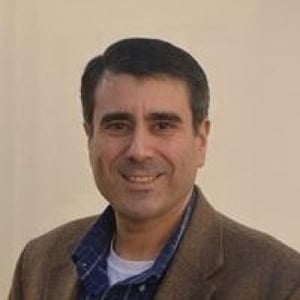

George C. Dix Professor in Constitutional Law, Northwestern University Pritzker School of Law
John O. McGinnis is a graduate of Harvard College and Harvard Law School where he was an editor of the Harvard Law Review. He also has an MA degree from Balliol College, Oxford, in philosophy and theology. Professor McGinnis clerked on the U.S. Court of Appeals for the District of Columbia. From 1987 to 1991, he was deputy assistant attorney general in the Office of Legal Counsel at the Department of Justice. He is the author of Accelerating Democracy: Transforming Government Through Technology (Princeton 2013) and Originalism and the Good Constitution (Harvard 2013) (with M. Rappaport). He is a past winner of the Paul Bator award given by the Federalist Society to an outstanding academic under 40. He has been listed by the United States on the roster of panelists who may be called upon to decide World Trade Organization Disputes.
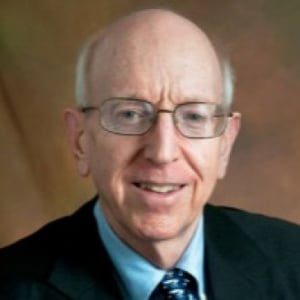
Senior Lecturer in Law, University of Chicago Law School
Following his graduation from Harvard Law School, Judge Posner clerked for Justice William J. Brennan, Jr. From 1963 to 1965, he was assistant to Commissioner Philip Elman of the Federal Trade Commission. For the next two years, he was assistant to the solicitor general of the United States. Prior to going to Stanford Law School in 1968 as Associate Professor, Judge Posner served as general counsel of the President's Task Force on Communications Policy. He first came to the University of Chicago Law School in 1969, and was Lee and Brena Freeman Professor of Law prior to his appointment in 1981 as a judge of the US Court of Appeals for the Seventh Circuit. He was the chief judge of the court from 1993 to 2000.
Judge Posner has written a number of books, including Economic Analysis of Law (9th ed., 2014); The Economics of Justice (1981); Law and Literature (3rd ed. 2009); The Problems of Jurisprudence (1990); Cardozo: A Study in Reputation (1990); The Essential Holmes (1992); Sex and Reason (1992); Overcoming Law (1995); The Federal Courts: Challenge and Reform (1996); Law and Legal Theory in England and America (1996); The Problematics of Moral and Legal Theory (1999); Antitrust Law (2d ed. 2001); Law, Pragmatism, and Democracy (2003); Catastrophe: Risk and Response (2004); Preventing Surprise Attacks: Intelligence Reform in the Wake of 9/11 (2005); How Judges Think (2008); A Failure of Capitalism: The Crisis of '08 and the Descent into Depression (2009); The Crisis of Capitalist Democracy (2010); The Behavior of Federal Judges: A Theoretical and Empirical Study of Rational Choice (coauthored with Lee Epstein and William M. Landes) (2013); and Reflections on Judging (2013). He also wrote books on the Clinton impeachment and Bush v. Gore, many articles in legal and economic journals, and book reviews in the popular press.
He has taught administrative law, antitrust, economic analysis of law, history of legal thought, conflict of laws, regulated industries, law and literature, the legislative process, family law, primitive law, torts, civil procedure, evidence, health law and economics, law and science, and jurisprudence. He was the founding editor of the Journal of Legal Studies and (with Orley Ashenfelter) the American Law and Economics Review. He is an Honorary Bencher of the Inner Temple and a corresponding fellow of the British Academy, and he was the President of the American Law and Economics Association from 1995 to 1996 and the honorary President of the Bentham Club of University College, London, for 1998. He has received honorary degrees from leading American and foreign universities, along with a number of awards, including the Thomas Jefferson Memorial Foundation Award in Law from the University of Virginia in 1994, the Marshall-Wythe Medallion from the College of William and Mary in 1998, the 2003 Research Award from the Fellows of the American Bar Foundation, the 2003 John Sherman Award from the US Department of Justice, the Learned Hand Medal for Excellence in Federal Jurisprudence from the Federal bar Council in 2005, the Thomas C. Schelling Award from the John F. Kennedy School of Government at Harvard University in 2005, and the Ronald H. Coase Medal from the American Law and Economics Association in 2010.
Temple University James E. Beasley School of Law

Senior Fellow and Director of Constitutional Studies, Manhattan Institute
Ilya Shapiro is a senior fellow and director of constitutional studies at the Manhattan Institute and a contributing editor of City Journal. Previously he was executive director and senior lecturer at the Georgetown Center for the Constitution, and before that a vice president of the Cato Institute.
Shapiro is the author of Lawless: The Miseducation of America’s Elites (2025) and Supreme Disorder: Judicial Nominations and the Politics of America’s Highest Court (2020), coauthor of Religious Liberties for Corporations? (2014), and editor of 11 volumes of the Cato Supreme Court Review (2008-18). He has contributed to a variety of academic, popular, and professional publications, including the Wall Street Journal, Harvard Journal of Law & Public Policy, Washington Post, Los Angeles Times, USA Today, National Review, and Newsweek. He also regularly provides commentary for various media outlets, writes the Shapiro’s Gavel newsletter on Substack, and once appeared on the Colbert Report.
Shapiro has testified many times before Congress and state legislatures and has filed more than 500 amicus curiae “friend of the court” briefs in the Supreme Court. He lectures regularly on behalf of the Federalist Society, is a member of the board of fellows of the Jewish Policy Center, was an inaugural Washington Fellow at the National Review Institute, and has been an adjunct law professor at the George Washington University and University of Mississippi. He is also the chairman of the board of advisers of the Mississippi Justice Institute, a barrister in the Edward Coke Appellate Inn of Court, and a former member of the Virginia Advisory Committee to the U.S. Commission on Civil Rights.
Earlier in his career, Shapiro was a special assistant/adviser to the Multi-National Force in Iraq on rule-of-law issues and practiced at Patton Boggs and Cleary Gottlieb. Before entering private practice, he clerked for Judge E. Grady Jolly of the U.S. Court of Appeals for the Fifth Circuit. He holds an AB from Princeton University, an MSc from the London School of Economics, and a JD from the University of Chicago Law School.
Resident Fellow, American Enterprise Institute
Timothy P. Carney is a resident fellow at the American Enterprise Institute, where he works on economic competition, cronyism, civil society, localism, and religion in America. He is concurrently the commentary editor at the Washington Examiner.
Mr. Carney’s latest book, “Alienated America: Why Some Places Thrive While Others Collapse” (HarperCollins), was published in February 2019. His previous books include “Obamanomics: How Barack Obama Is Bankrupting You and Enriching His Wall Street Friends, Corporate Lobbyists, and Union Bosses” (Regnery Publishing, 2009) and “The Big Ripoff: How Big Business and Big Government Steal Your Money” (John Wiley & Sons, 2006), which was awarded the 2008 Culture of Enterprise award by the Intercollegiate Studies Institute.
In addition to his Washington Examiner columns, Mr. Carney’s work has been published in a variety of magazines, websites, and newspapers, including The Atlantic, New York Post, The New York Times, Reason Magazine, and The Wall Street Journal. His television appearances include CNBC, CNN, Fox News, MSNBC, and the “PBS NewsHour.”
Mr. Carney has a bachelor’s degree from St. John’s College in Annapolis.

Putting Your Money Where Your Mouth Is: Campaign Finance After McCutcheon v. FEC
Abolishing Agency Independence
Austin, TexasSecond Annual Judicial Speaker Series
Luncheon with U.S. Supreme Court Justice Antonin Scalia
New York, New YorkCrime, Guns and Race: A Forum on Today's Civil Rights Issues
Hartford, ConnecticutFinancing Political Campaigns - Recent Legal Developments
Coral Gables, FloridaSupreme Court Roundup and Preview
Indianapolis, IndianaInterpretive Methodology
New Haven, ConnecticutWhat Was Hobby Lobby All About? Plus Other Big Decisions by the Supreme Court
Philadelphia, PennsylvaniaDebate on the Significance of Hobby Lobby and Harris
DeKalb, Illinois