
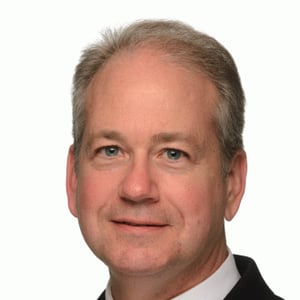
Senior Counsel, Americans United for Life
Clarke has a law degree from Valparaiso University School of Law and a B.A. in Political Science from Allegheny College.
Clarke Forsythe is currently Senior Counsel for AUL and author of Abuse of Discretion: The Inside Story of Roe v. Wade. His twenty-seven years of service to AUL includes founding and directing the AUL Project in Law & Bioethics, serving for six years as Vice President and General Counsel, overseeing our nationwide litigation and legislation strategy, and serving as President for ten years.
Mr. Forsythe has argued cases before federal and state courts and has testified before Congress and state legislatures. He is also a prolific writer on pro-life law issues, having published more than 15 law review articles and book chapters, as well as articles in First Things, the Wall Street Journal, and National Review Online. Other leading newspapers that have published his articles or quoted him include The New York Times, USA Today, the Washington Times, the Washington Post, Chicago Tribune, and the Wall Street Journal. Clarke blogs frequently on “The Road to Roe."
In 2006, Mr. Forsythe received an M.A. in Bioethics from Trinity International University. His recent articles include “A Lack of Prudence,” published in Human Life Review; “Protecting Unconscious, Medically-Dependent Persons after Wendland & Schiavo,” published in Constitutional Commentary; “The Tragic Failure of Roe v. Wade: Why Abortion Should be Returned to the States” published in Texas Review of Law and Politics; and most recently, “A Road Map Through the Supreme Court’s Back Alley” published in Villanova Law Review.
His first book, Politics for the Greatest Good: The Case for Prudence in the Public Square, was published by InterVarsity Press in 2009. First Things called it “an essential book for lawmakers and all participants in the ongoing culture wars.”

Laurence A. Tisch Professor of Law and Director, Classical Liberal Institute, New York University School of Law; Director, Classical Liberal Institute, Civitas Institute University of Texas at Austin
Richard A. Epstein is the Laurence A. Tisch Professor of Law, at New York University, a senior research fellow at the Civitas Institute at the University of Texas Austin, and a senior Lecturer, the University of Chicago. He received an LL.D., h.c . from the University of Ghent, 2003 , and an LLD h.c . from the University of Siegen in 2018 and the Bradley Prize in 2011. He has been a member of the American Academy of Arts and Sciences since 1985. He has edited both the Journal of Legal Studies (1981-1991) and the Journal of Law and Economics (1991-2001). He is also a founder and director of the Classical Liberal Institute at NYU Law School. His most recent book is The Classical Liberal Constitution: The Uncertain Quest for Limited Government (2014). His other books include Takings: Private Property and the Power of Eminent Domain ( 1985); Bargaining with the State (1993); Simple Rules for a Complex World (1995); Principles for a Free Society: Reconciling Individual Liberty and the Common Good (1998); Skepticism and Freedom: A Modern Theory of Classical Liberalism (2003); Design for Liberty: Private Property, Public Administration and the Rule of Law (2011), and most recently, The Myth of Birthright citizenship—and Beyond (2026). He has taught courses in , administrative law, antitrust, constitutional, contracts, environmental law, land use planning; real property, torts and water law. He has written and spoken extensively on a wide range of topics, and is writes a regular column for Defining Ideas.
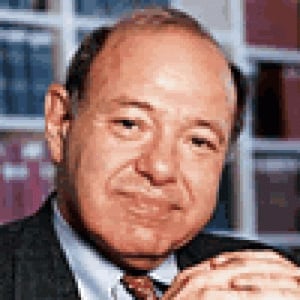
Inez Milholland Professor of Civil Liberties, New York University School of Law
Burt Neuborne is the Inez Milholland Professor of Civil Liberties and founding Legal Director of the Brennan Center for Justice at NYU Law School. For 45 years, he has been one of the nation's foremost civil liberties lawyers, serving as National Legal Director of the ACLU from 1981-86, Special Counsel to the NOW Legal Defense and Education Fund from 1990-1996, and as a member of the New York City Human Rights Commission from 1988-1992. He has argued numerous Supreme Court cases, and has litigated literally hundreds of important constitutional cases in the state and federal courts. He challenged the constitutionality of the Vietnam War, pioneered the flag burning cases, worked on the Pentagon Papers case, worked with Justice Ruth Bader Ginsburg when she headed the ACLU Women's Rights Project, anchored the ACLU's legal program during the Reagan years, and defended the Legal Services program against unconstitutional attacks. He currently directs the legal program of the Brennan Center, especially its efforts to reinforce American democracy and secure campaign finance reform. The Brennan Center was established in 1994 to honor Justice William Brennan, Jr.’s monumental contribution to American Law.
At the same time, Professor Neuborne has forged a national reputation as a constitutional scholar and teacher. In 1990, he was the recipient of the University-wide Distinguished Teacher Award at New York University for his work in teaching Civil Procedure, Evidence, Federal Courts and Constitutional Law. He is the author of three books and over 20 law review articles on diverse areas of constitutional law and procedure. Among his best known scholarly works is the two-volume Political and Civil Rights in the United States, which he co-authored with NYU colleagues Norman Dorsen and Sylvia Law and the Deputy Solicitor General of the United States, Paul Bender. His 1992 lectures on American law at Universitat Pompeu Fabra in Barcelona have been translated and published in Spanish. In 2001, in recognition of his scholarship and his work in the courts, Professor Neuborne was elected to membership in the American Academy of Arts and Sciences.
In 1996, Professor Neuborne appeared as Jerry Falwell's lawyer in Milos Forman's The People v. Larry Flynt.
For the past 14 years, Professor Neuborne has served as a principal counsel in a series of lawsuits seeking to recover property unjustly taken from Holocaust victims by Swiss banks and German corporations during the Nazi era. The litigation has succeeded in assembling more than $8.5 billion for distribution to Holocaust victims and their families throughout the world. Professor Neuborne was appointed by the Court to oversee the $1.25 Swiss bank settlement, and was appointed by the United States to serve on the Board of Trustees of the German Foundation “Remembrance, Responsibility and Future,” established to distribute the $5.2 billion settlement in the German slave labor litigation.
Professor Neuborne is married to Helen Redleaf Neuborne.
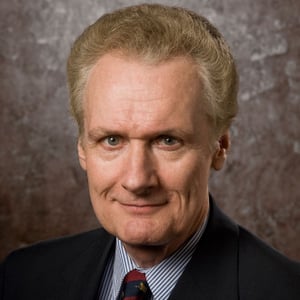
Vice President for Legal Affairs, Cato Institute
Roger Pilon is the Cato’s Institute’s vice president for legal affairs, the founding director of Cato’s Robert A. Levy Center for Constitutional Studies, the inaugural holder of Cato’s B. Kenneth Simon Chair in Constitutional Studies, and the founding publisher of the Cato Supreme Court Review.
Prior to joining Cato, Pilon held five senior posts in the Reagan administration, including at State and Justice, and was a national fellow at Stanford’s Hoover Institution. In 1989 the Bicentennial Commission presented him with its Benjamin Franklin Award for excellence in writing on the U.S. Constitution. In 2001 Columbia University’s School of General Studies awarded him its Alumni Medal of Distinction. Pilon lectures and debates at universities and law schools across the country and testifies often before Congress.
His writing has appeared in the Wall Street Journal, the Washington Post, the New York Times, the Los Angeles Times, Legal Times, National Law Journal, Harvard Journal of Law and Public Policy, Stanford Law and Policy Review, and elsewhere. He has appeared on ABC’s Nightline, CBS’s 60 Minutes II, Fox News Channel, NPR, CNN, MSNBC, CNBC, C-SPAN, and other media.
Pilon holds a BA from Columbia University, an MA and a PhD from the University of Chicago, and a JD from the George Washington University School of Law.
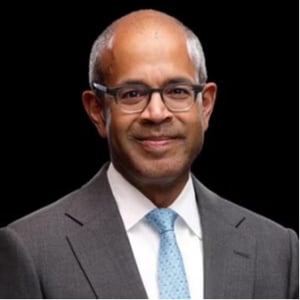
Partner, Davis Polk & Wardwell LLP
Kannon is the head of our Supreme Court & Appellate practice. He has argued 39 cases before the U.S. Supreme Court and has argued more than 150 appeals in courts across the country, including every federal court of appeals and numerous state courts.
Kannon is ranked as a “Star Individual” in appellate law by Chambers USA, where a client notes, “It’s hard to think of enough superlatives to describe his talent, his judgment, his ability, his experience – he is as good as it gets.” Legal 500 U.S. recognizes Kannon in its Hall of Fame for appellate work. A client shares, “His work is the best in the business, and he is a wonderful human being in addition to being a world-class appellate litigator.”
In 2024 and 2022, Kannon was a finalist for the American Lawyer’s “Litigator of the Year” award. He was named “Appellate Litigator of the Year” by Benchmark Litigation in 2021 and was a 2026 finalist for that recognition.
Before entering private practice, Kannon served as an Assistant to the Solicitor General at the U.S. Department of Justice.

Wade H. and Dores M. McCree Collegiate Professor of Law, The University of Michigan Law School
Professor Schlanger joined the Law School faculty in fall 2009. She teaches constitutional law, torts, and classes relating to civil rights (such as Civil Rights and Homeland Security) and to prisons (such as Prisons and the Law, and the Constitutional Law of Incarceration). She also founded and runs the Civil Rights Litigation Clearinghouse. Previously, she had been a professor at Washington University in St. Louis, and an assistant professor at Harvard University. She was voted the David M. Becker Professor of the Year in 2008 at Washington University School of Law.
Professor Schlanger is the court-appointed monitor for a statewide settlement dealing with deaf prisoners in Kentucky, and she serves on the Department of Homeland Security's Advisory Committee on Family Residential Centers. She took a two-year leave from the University in 2010 and 2011, serving as the presidentially appointed Officer for Civil Rights and Civil Liberties at the U.S. Department of Homeland Security. As the head of civil rights and civil liberties for DHS, she was the Secretary's lead advisor on civil rights and civil liberties issues; in that capacity, she testified before Congress; chaired the Privacy, Civil Rights, and Civil Liberties Subcommittee of the federal Information Sharing Environment's Information Sharing and Access Interagency Policy Committee; chaired the Interagency Coordinating Council on Emergency Preparedness and Individuals with Disabilities; served on the first U.S. Delegation to the U.N. Universal Periodic Review; and met with community leaders and groups across America to ensure that their perspectives regarding civil rights and homeland security were considered in the Department's policy process.
Professor Schlanger earned her J.D. from Yale in 1993. While there, she served as book reviews editor of the Yale Law Journal and received the Vinson Prize. She then served as law clerk for Justice Ruth Bader Ginsburg of the U.S. Supreme Court from 1993 to 1995. From 1995 to 1998, she was a trial attorney in the U.S. Department of Justice Civil Rights Division, where she worked to remedy civil rights abuses by prison and police departments and earned two Division Special Achievement awards. Schlanger, a leading authority on civil rights issues and civil and criminal detention, served on the Vera Institute’s blue ribbon Commission on Safety and Abuse in America's Prisons; she worked as an advisor on the development of proposed national standards implementing the Prison Rape Elimination Act, and testified before the Prison Rape Elimination Commission. She also served as the reporter for the American Bar Association’s revision of its Standards on the Treatment of Prisoners, and as chair of the Association of American Law Schools Section on Law and the Social Sciences.
Professor Schlanger also writes frequently for publications like the Democracy Journal, Politico Magazine, the American Prospect, and others. A full list of scholarly and non-scholarly publications, with links, is available on the publications page.
She is married to Law School Professor Samuel Bagenstos; they have two teenagers.
Laurence A. Tisch Professor of Law and Director, Classical Liberal Institute, New York University School of Law; Director, Classical Liberal Institute, Civitas Institute University of Texas at Austin
Richard A. Epstein is the Laurence A. Tisch Professor of Law, at New York University, a senior research fellow at the Civitas Institute at the University of Texas Austin, and a senior Lecturer, the University of Chicago. He received an LL.D., h.c . from the University of Ghent, 2003 , and an LLD h.c . from the University of Siegen in 2018 and the Bradley Prize in 2011. He has been a member of the American Academy of Arts and Sciences since 1985. He has edited both the Journal of Legal Studies (1981-1991) and the Journal of Law and Economics (1991-2001). He is also a founder and director of the Classical Liberal Institute at NYU Law School. His most recent book is The Classical Liberal Constitution: The Uncertain Quest for Limited Government (2014). His other books include Takings: Private Property and the Power of Eminent Domain ( 1985); Bargaining with the State (1993); Simple Rules for a Complex World (1995); Principles for a Free Society: Reconciling Individual Liberty and the Common Good (1998); Skepticism and Freedom: A Modern Theory of Classical Liberalism (2003); Design for Liberty: Private Property, Public Administration and the Rule of Law (2011), and most recently, The Myth of Birthright citizenship—and Beyond (2026). He has taught courses in , administrative law, antitrust, constitutional, contracts, environmental law, land use planning; real property, torts and water law. He has written and spoken extensively on a wide range of topics, and is writes a regular column for Defining Ideas.
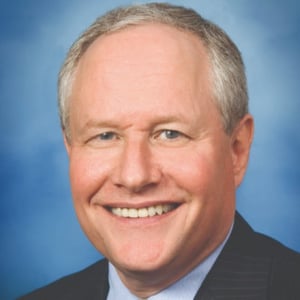
Editor, The Weekly Standard
William Kristol is the editor of The Weekly Standard. He is also a regular panelist on Fox News Sunday, a contributor for the Fox News Channel, and a monthly columnist for the Washington Post. Before starting the Weekly Standard in 1995, Mr. Kristol led the Project for the Republican Future, where he helped shape the strategy that produced the 1994 Republican congressional victory. Prior to that, Mr. Kristol served as chief of staff to Vice President Dan Quayle during the first Bush Administration, and to Education Secretary William Bennett under President Reagan. Before coming to Washington in 1985, Mr. Kristol was on the faculty of Harvard University’s Kennedy School of Government and the Department of Political Science at the University of Pennsylvania.
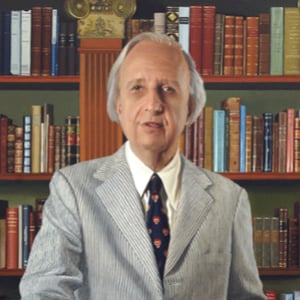
Judge, United States Court of Appeals, Eighth Circuit
Morris Sheppard Arnold is a federal judge on the United States Court of Appeals for the 8th Circuit. He joined the court in 1992 after being nominated by President George H.W. Bush. Prior to his appointment, he served on the U.S. District Court for the Western District of Arkansas after a nomination by Ronald Reagan in 1985. He assumed senior status on October 9, 2006.
Morris also served as a judge on the Foreign Intelligence Surveillance Court of Review from 2008 to 2013. He was the presiding judge on that court from 2012 to 2013.
Vice President for Legal Affairs, Cato Institute
Roger Pilon is the Cato’s Institute’s vice president for legal affairs, the founding director of Cato’s Robert A. Levy Center for Constitutional Studies, the inaugural holder of Cato’s B. Kenneth Simon Chair in Constitutional Studies, and the founding publisher of the Cato Supreme Court Review.
Prior to joining Cato, Pilon held five senior posts in the Reagan administration, including at State and Justice, and was a national fellow at Stanford’s Hoover Institution. In 1989 the Bicentennial Commission presented him with its Benjamin Franklin Award for excellence in writing on the U.S. Constitution. In 2001 Columbia University’s School of General Studies awarded him its Alumni Medal of Distinction. Pilon lectures and debates at universities and law schools across the country and testifies often before Congress.
His writing has appeared in the Wall Street Journal, the Washington Post, the New York Times, the Los Angeles Times, Legal Times, National Law Journal, Harvard Journal of Law and Public Policy, Stanford Law and Policy Review, and elsewhere. He has appeared on ABC’s Nightline, CBS’s 60 Minutes II, Fox News Channel, NPR, CNN, MSNBC, CNBC, C-SPAN, and other media.
Pilon holds a BA from Columbia University, an MA and a PhD from the University of Chicago, and a JD from the George Washington University School of Law.

How We Got to Roe v. Wade: What the Justices’ Papers Reveal
Lunch with Clark Forsythe
Milwaukee, WisconsinCIA Torture
Who's to Judge: Libertarian Activism v. Conservative Restraint
Supreme Court Roundup
Ferguson and the Role of Police
The Case Against Employment Discrimination Laws
Denver, ColoradoTerror and the First Amendment: Preserving Liberty in an Age of Extremism
Washington, District of ColumbiaJudicial Lecture by Judge Arnold
Berkeley, CaliforniaThe Natural Rights Foundations of the Constitution: Dream, Nightmare, or Reality?
New York, New York