
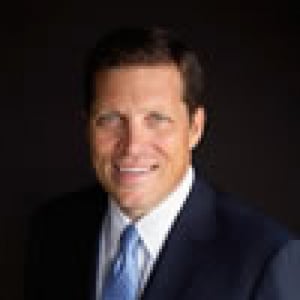
Partner, Graves Garrett LLC
Todd Graves is a lawyer in private practice with the law firm of Graves Garrett. Todd represents individuals and businesses nationwide before federal and state courts and administrative agencies. His areas of expertise include white collar criminal defense, political speech and election law, internal investigations, regulatory compliance, and complex commercial litigation. Todd is admitted to the United States Supreme Court, the Missouri Bar, the Kansas Bar, the Texas Bar, the Iowa Bar, the Federal Courts of Appeals for the Tenth Circuit, the Eighth Circuit and the Sixth Circuit, and the Federal District Courts for the Western District of Missouri, Eastern District of Missouri, the District of Kansas, and the Western District of Michigan.
Todd currently serves as Executive Vice-President of the Pony Express Council of the Boy Scouts of America. He is a member of the Board of Directors of the American Royal Association and a founding board member of the Kansas City Missouri Police Foundation.
Before forming Graves Garrett, Todd served as the United States Attorney for the Western District of Missouri. As United States Attorney, Todd was responsible for prosecuting federal crimes including mail and wire fraud, money laundering, public corruption, health care fraud, child pornography, firearms violations, narcotics trafficking, pharmaceutical diversion, corporate fraud, and terrorism financing. During Graves’ tenure, felony filings doubled.
In addition, Todd was responsible for defending civil lawsuits brought against the United States, handling federal forfeiture actions, and collecting debts and restitution. Todd managed a staff of 120 with headquarters in Kansas City and two branch offices.
Todd also served as a member of the Attorney General’s Advisory Committee, advising the Attorney General on Department of Justice national priorities and policies. Todd participated in drafting Department of Justice policies in corporate investigations including charging, pre-trial diversion, and sentencing. Todd was also a member of the national Executive Working Group, which includes six Department of Justice officials, six state attorneys general, and six district attorneys.
Todd was appointed United States Attorney from his position as Platte County Prosecuting Attorney, an office to which he was elected in 1994 and 1998. At the time of his election in 1994, he was the youngest full-time prosecuting attorney in Missouri. In that position, he oversaw a yearly caseload of approximately 400 felonies, 2500 misdemeanors and 14,000 traffic offenses.
As Prosecuting Attorney and as United States Attorney, Todd actively managed cases and trials under his authority and personally tried numerous jury trials to verdict, including cases of child molestation, drug distribution, murder and capital murder.
Prior to his service as Platte County Prosecuting Attorney, Todd was in private practice with the Bryan Cave law firm. Before joining Bryan Cave, he was an Assistant Attorney General for the State of Missouri.
In 1991, Todd received his law degree and a master’s degree in public administration from the University of Virginia. He received a bachelor’s degree, Summa Cum Laude, from the University of Missouri in 1988.
Raised on a family farm near Tarkio, Missouri, Todd has been married 24 years to his wife, Tracy. The couple has four children, and they reside on a 270 acre farm north of Kansas City that has been in the family since 1867.
U.S. Court of Appeals, Eighth Circuit
The Honorable Raymond W. Gruender was nominated by President George W. Bush to the United States Court of Appeals for the Eighth Circuit on September 29, 2003, and confirmed by the Senate on May 20, 2004. He was sworn in on June 28, 2004. Between 2012 and 2014, he served on the Judicial Conference Committee on Criminal Law.
From May 2001 until May 2004, Judge Gruender served as the United States Attorney for the Eastern District of Missouri where he oversaw an office of sixty Assistant United States Attorneys (AUSAs) actively engaged in both civil and criminal matters. Between 2001 and 2002, he served on the Attorney General’s Advisory Committee. Prior to serving as the United States Attorney, Judge Gruender served as an AUSA between 1990 and 1994 and again between 2000 and 2001. As an AUSA, he specialized in prosecuting white-collar and public corruption matters.
In addition to his experience as a federal prosecutor, Judge Gruender spent nine years in private practice. Between 1987 and 1990, he was an associate with Lewis, Rice and Fingersh. Between 1994 and 2000, he was a partner with Thompson Coburn, LLP. He has represented both plaintiffs and defendants in a broad array of civil matters such as admiralty, antitrust, contracts, employment, securities, fraud, banking and various tort claims. His practice also included representing those accused of or under investigation for crimes, as well as victims and witnesses of crimes. Although his practice primarily was in federal courts, he also was active in state courts. He is a member of the Missouri and Illinois bars, and and the Federalist Society.
Judge Gruender graduated from St. Louis University High School in 1981. By 1987, he had obtained Bachelor of Science in Business Administration, Master of Business Administration and Juris Doctorate degrees from Washington University in St. Louis. He served on the Washington University Law Quarterly and was a member of the Order of the Coif. In December 2003, he was awarded an honorary Doctor of Laws degree by William Woods University in Fulton, Missouri.
Judge Gruender also has been active in civic affairs. He served on the Board of Directors, including as board president, of A.L.I.V.E. (Alternatives to Living in Violent Environments), a not-for-profit organization dedicated to eliminating domestic violence and serving its victims. He currently serves on the Board of Directors of the St. Louis Variety Club, having received its 2003 “Have a Heart, Lend a Hand” volunteer award. He also has served as a director of the Shakespeare Festival of St. Louis.
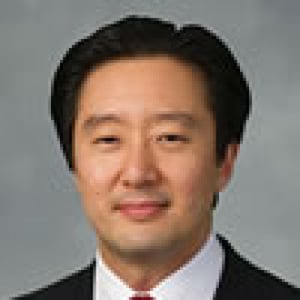
Partner, Alston & Bird LLP
Edward (Ted) Kang’s practice focuses on white collar defense and compliance in the areas of the Foreign Corrupt Practices Act (FCPA), False Claims Act (FCA), Office of Foreign Assets Control (OFAC) sanctions, anti-money laundering, antitrust, and the Food, Drug, and Cosmetic Act (FDCA).
Ted represents companies and individuals under investigation by the Department of Justice (DOJ) and other federal and state enforcement agencies. He also counsels and conducts internal investigations for clients in a wide range of industries. Ted is an accomplished courtroom lawyer and has tried a dozen cases to verdict and argued nine cases on appeal to federal circuit courts.
Ted served for eight years as a federal prosecutor in the Department of Justice’s Criminal Division and at the U.S. Attorney’s Office for the District of Connecticut, where he prosecuted some of the department’s most high-profile fraud and public corruption cases. He is a recipient of the 2012 Attorney General’s Award for Distinguished Service and was named a 2014 D.C. “Rising Star” by The National Law Journal.
Ted is frequently called upon to provide expert analysis on white collar matters. He has provided legal commentary for The Washington Post and The Wall Street Journal and was a television analyst for WUSA9-DC.

Vice President, Edwin Meese III Institute for the Rule of Law, Advancing American Freedom
John G. Malcolm oversees Advancing American Freedom’s work to increase understanding of the Constitution and the rule of law as Vice President of the organization’s Edwin Meese III Institute for the Rule of Law. Malcolm brings to the challenge a wealth of legal expertise and experience in both the public and private sectors.
Prior to joining Advancing American Freedom in 2025, Malcolm was the Vice President of the Institute for Constitutional Government and the Director of the Meese Center for Legal and Judicial Studies at the Heritage Foundation. Prior to joining Heritage in 2012, Malcolm was general counsel at the U.S. Commission on International Religious Freedom, as well as a distinguished practitioner in residence at Pepperdine Law School. From 2004 to 2009, Malcolm was executive vice president and director of worldwide anti-piracy operations for the Motion Picture Association.
Malcolm served as a deputy assistant attorney general in the Department of Justice’s Criminal Division from 2001 to 2004, where he oversaw sections on computer crime and intellectual property, domestic security, child exploitation and obscenity, and special investigations. Immediately prior to that, he was a founding partner in the Atlanta law firm of Malcolm & Schroeder, LLP.
From 1990 to 1997, Malcolm was an assistant U.S. attorney in Atlanta, assigned to the fraud and public corruption section, and also an associate independent counsel, investigating fraud and abuse in the Department of Housing and Urban Development. He was honored with the Director’s Award for Superior Performance for his work in connection with the successful prosecution of Walter Leroy Moody Jr., who assassinated an 11th Circuit judge and the head of the Savannah chapter of the NAACP.
A graduate of Harvard Law School and Columbia College, Malcolm began his career as a law clerk to a federal district court judge and a federal appellate court judge, and as an associate at the Atlanta-based law firm of Sutherland, Asbill & Brennan (new Eversheds Sutherland).
Malcolm, who resides in Washington, D.C., serves on the Board of Trustees of the Washington National Opera and is a Senate-confirmed member of the Board of Directors of the Legal Services Corporation, the largest funder of civil legal aid in the United States.

Thomas M. Siebel Senior Fellow, The Hoover Institution, Stanford University; Gary T. Schwartz Distinguished Professor of Law Emeritus, UCLA School of Law
Eugene Volokh is the Thomas M. Siebel Senior Fellow at the Hoover Institution (Stanford), as well as the Gary T. Schwartz Distinguished Professor of Law Emeritus and Distinguished Research Professor at UCLA School of Law. He recently retired from teaching at UCLA, after 30 years there, and is now focusing on research.
Volokh is the author of the textbooks The First Amendment and Related Statutes (8th ed. 2023), and Academic Legal Writing (5th ed. 2016), as well as over 100 academic law journal articles, mostly on First Amendment law. He is a member of The American Law Institute; the editor-in-chief of the Journal of Free Speech Law; and the creator and coauthor of The Volokh Conspiracy, a leading legal blog founded in 2002 (hosted at the Washington Post from 2014 to 2017 and now at Reason Magazine).
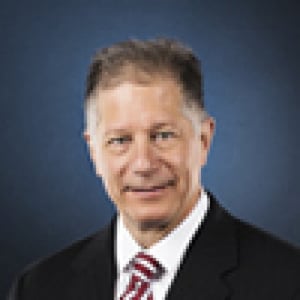
Partner, Arent Fox LLP
Peter is a partner in Arent Fox's White Collar & Investigations practice. His practice focuses on defending companies and individuals in white collar criminal matters and other issues that are related to internal fraud investigations and corporate governance.
Prior to joining Arent Fox, Peter was a partner at an international law firm where he represented businesses and individuals threatened with government investigations. Before working at that firm, he spent 17 years as a federal prosecutor at the Justice Department, where he served in both the Public Integrity Section of the Criminal Division and at the United States Attorney’s Office in the District of Columbia.
While Peter was at the DOJ, he investigated and prosecuted local, state, and federal officials. His trial experience included some of the DOJ’s highest profile criminal cases. One of these cases involved Peter’s service as a Deputy Special Counsel in the investigation and prosecution of Lewis “Scooter” Libby. While at the Public Integrity Section, Peter was also responsible for the prosecution of David Safavian, in which the former Chief of Staff of the General Services Administration (GSA) was tried for obstruction of justice and false statements in connection with the Jack Abramoff investigation.
While at the DOJ, Peter coordinated and supervised investigations conducted by the Federal Bureau of Investigation (FBI), the Office of Inspector Generals (OIG) from the GSA, the DOJ, the Drug Enforcement Agency (DEA), and the Special Inspector General for Iraq Reconstruction (SIGIR).
Prior to his work at the DOJ, Peter was an Assistant United States Attorney in the District of Columbia. There he spent the majority of his time prosecuting violent crimes, winning convictions in 16 out of 18 first-degree murder cases he tried. In addition, Peter won life sentences for all six of the defendants he prosecuted in a nine-month long Racketeer Influenced and Corrupt Organizations (RICO) prosecution of a murderous drug-gang. In his career, Peter has first-chaired over 100 jury trials and argued two dozen appellate cases.
In addition to his work at the federal level, Peter was also a state prosecutor for five years in Middlesex County, Massachusetts.

Professor of Law, University of San Diego School of Law (Retired)
Gail Heriot is a recently retired law professor from the University of San Diego. She also served as a member of the U.S. Commission on Civil Rights from 2007 to 2025. She is also the chairman of the board of the American Civil Rights Project and the chair emerita of the Civil Rights practice group at the Federalist Society for Law & Public Policy.
Professor Heriot is a prolific writer in the area of civil rights. She is the author of many law review articles. She is also the editor (along with Maimon Schwarzschild) of the 2021 anthology, A Dubious Expediency: How Race Preferences Damage Higher Education. Her upcoming book is entitled, Why We Walk on Eggshell: How Our Civil Rights Laws Helped Bring About the Woke Era—And the Trump Era, Too.
Her writings for a general audience have appeared in the Wall Street Journal, the San Diego Union-Tribune, the National Review and many other newspapers and magazines.
In 1996, she co-chaired the successful “Yes on Proposition 209” campaign, which amended the California Constitution to prohibit state-sponsored discrimination or preferential treatment based on race, sex, color, ethnicity or national origin. In 2020, she co-chaired the “No on Proposition 16” campaign, which successfully prevented Proposition 209’s repeal.
Partner, Loevy & Loevy
Arthur Loevy graduated from the University of Michigan Law School in 1963, and has been a member of the Illinois bar continuously for more than forty years. He began his legal career practicing labor law until 1970 when he became an elected officer of a trade union, the Amalgamated Clothing and Textile Workers Union (“ACTWU”). Arthur proceeded to serve in various elected capacities for trade unions, including International Executive Vice President of ACTWU, International Secretary-Treasurer of ACTWU, and, most recently International Secretary-Treasurer of the Union of Needle-Trades Industrial and Textile Employees (U.N.I.T.E.).
Arthur Loevy has also served as a Director and Vice Chairman of the Executive Committee of the Amalgamated Bank of New York (1990-98), the President, Chief Executive Officer, and Trustee of various Taft-Hartley insurance and trust funds for almost twenty years, the President of the Amalgamated Housing Foundation (1974-98), and the President of the Sidney Hillman Health Center in Chicago (1980-98).
Since January 1, 1997, Arthur Loevy has resumed the practice of law on a full-time basis. In 1998, he joined the law firm started by his son, Jon Loevy, and has practiced here ever since.
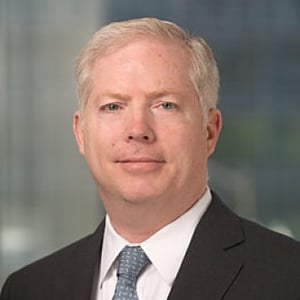
Adjunct Scholar and Former Director, Project On Criminal Justice, Cato Institute
Tim Lynch is an attorney specializing in criminal law, constitutional law, and civil liberties. He is an adjunct scholar at the Cato Institute and the former director of Cato’s Project on Criminal Justice. His research interests include all aspects of constitutional criminal procedure, overcriminalization, the drug war, and police and prosecutorial misconduct. In 2000, he served on the National Committee to Prevent Wrongful Executions. Lynch also prepares amicus briefs before appellate courts and the U.S. Supreme Court in cases involving constitutional rights. He is the editor of In the Name of Justice: Leading Experts Reexamine the Classic Article “The Aims of the Criminal Law” and After Prohibition: An Adult Approach to Drug Policies in the 21st Century.
Lynch has published a variety of articles in both the law journals and in opinion pieces for the New York Times, the Washington Post, the Wall Street Journal, the Los Angeles Times, and other newspapers. He has appeared on The PBS NewsHour, NBC Nightly News, ABC World News Tonight, and C-SPAN’s Washington Journal. Lynch is a member of the Virginia, District of Columbia, and Supreme Court bars. He earned both a BS and a JD from Marquette University.
Mr. Lynch can be reached via his personal website.
Research Fellow in Empirical Policy Analysis, Center for Data A, The Heritage Foundation
David B. Muhlhausen is a leading expert on the need for evaluating the effectiveness of federal social programs in The Heritage Foundation’s Center for Data Analysis. A Research Fellow in Empirical Policy Analysis at the think tank, Muhlhausen has testified frequently before Congress on the efficiency and effectiveness of federal programs, including testimonies before the U.S. Senate Committee on the Budget and the House Committee on Ways and Means.
In 2013, Praeger published his book, Do Federal Social Programs Work? The book presents an extensive review of scientifically rigorous national studies that almost unanimously find that the federal government fails to solve social problems.
Muhlhausen rose to national prominence in 2001 with publication of his analysis showing the highly touted Community Oriented Policing Services (COPS) program to be a waste of taxpayer dollars. His research illustrated that COPS neither had put 100,000 new police officers on the street nor reduced violent crime.
His work prompted Vice President Joseph Biden, at the time a U.S. senator from Delaware and chairman of the Senate Subcommittee on Crime and Drugs, to call a hearing specifically to investigate Muhlhausen’s findings. “I want to have a hearing on what has been, from The Heritage Foundation and other places, criticism that the COPS program does not work,” Biden said in opening the hearing.
Muhlhausen joined Heritage in 1999 after serving on the staff for the Senate Judiciary Committee, where he specialized in crime and juvenile justice policies. Prior to that, he was a manager at a juvenile correctional facility in Baltimore.
He holds a doctorate in public policy from the University of Maryland-Baltimore County and a bachelor’s degree in political science and justice studies from Frostburg State University.
In addition to his work at Heritage, Muhlhausen is an adjunct professor at George Mason University, teaching program evaluation and statistical methods to graduate students.
A native of Colorado, Muhlhausen grew up in Maryland. He currently resides in Falls Church, Va.
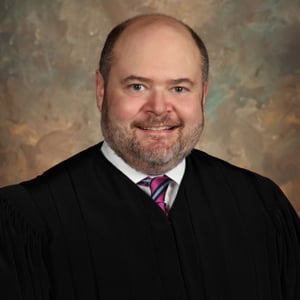
Judge, United States Court of Appeals, Eighth Circuit
David Stras became a judge on the United States Court of Appeals for the Eighth Circuit on January 31, 2018. Before serving on the Eighth Circuit, Judge Stras was an Associate Justice of the Minnesota Supreme Court, a position he occupied from July 1, 2010 until his appointment to the Eighth Circuit.
Prior to becoming a judge, Stras was a member of the faculty of the University of Minnesota Law School from 2004 through 2010. He taught and wrote in the areas of federal courts and jurisdiction, constitutional law, criminal law, and law and politics.
Judge Stras received his Bachelor of Arts degree, with highest distinction, in 1995 and his Master of Business Administration in 1999, both from the University of Kansas. He also received his law degree from the University of Kansas School of Law in 1999, where he served as Editor-in-Chief of the Criminal Procedure Edition of the Kansas Law Review.
Following law school, Stras clerked for The Honorable Melvin Brunetti of the United States Court of Appeals for the Ninth Circuit and then for The Honorable J. Michael Luttig of the United States Court of Appeals for the Fourth Circuit.
From 2001 to 2002, he practiced white-collar criminal and appellate litigation with the Washington, D.C., office of Sidley Austin Brown & Wood. Following his year in practice, he clerked for The Honorable Clarence Thomas of the Supreme Court of the United States.
Former Philadelphia Police Officer
Michael P. Tremoglie is a former Philadelphia police officer, corporate executive, and now a journalist and writer. He was an editor and an investigative journalist for the Philadelphia Bulletin. He has also written for the Philadelphia Daily News, Philadelphia Inquirer, Pittsburgh Tribune-Review, Insight magazine, and the Washington Times.
He has appeared on nationally syndicated radio shows such as Bill Bennett’s Morning in America and the Larry Elder show. His work has been featured on Rush Limbaugh and other radio programs.
Many of his articles were reprinted in law reviews and referenced in congressional testimony. He is the author of a critically acclaimed novel, A Sense of Duty, derived from his experiences on the police force.
Active in the community, he started, in 2008, a wrestling club to help Philadelphia’s minority and inner city youth be competitive with suburban athletes. He also helped coach a high school wrestling team.
That same year he joined the Philadelphia chapter of the Federalist Society. Two years later his cousin, a judge in Sicily, also joined. Together, in 2011, they co-founded the Italian affiliate of the Federalist Society, Academia Res Publica.
They have done much comparative study of the two criminal justice systems.
Mike holds a Bachelor of Science degree in Accounting and a Master of Science degree in Criminal Justice from St. Joseph’s University in Philadelphia.
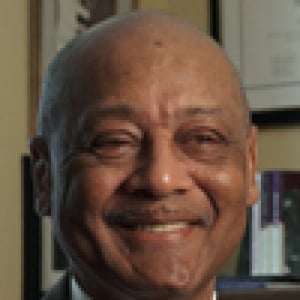
Founder and President, Center for Neighborhood Enterprise
Robert (Bob) Woodson is Founder and President of the Center for Neighborhood Enterprise and one of America’s most influential leaders on issues of poverty and upward mobility. He chose the word “enterprise” in naming the organization because he believes strongly that market-based principles should also operate in the social economy.
Woodson was instrumental in paving the way for resident management and ownership of public housing, brought together task forces of grassroots groups to advise the 104th Congress, the Pennsylvania Legislature, and the Wisconsin Assembly on welfare reform, and helped create Violence-Free Zones that operate in many of the nation’s most troubled schools and communities.
More recently, he has taken Wisconsin Congressman Paul Ryan on a “listening and learning” tour of some of America’s most impoverished neighborhoods in an effort to move beyond the traditional conservative and liberal understanding of how to address the needs of the poor.
Woodson is frequently featured as a social commentator in print and on-air media, including The News Hour with Jim Lehrer, The O’Reilly Factor, the Garrison Show and other national and local broadcasts. He is the only person ever to receive both the liberal and conservative world’s most prestigious awards – the John D. and Catherine T. MacArthur “Genius” Fellowship and the Lynde and Harry Bradley Foundation Prize, as well as the Presidential Citizens Medal.
He has written several books, including The Triumphs of Joseph: How Today’s Community Healers are Reviving Our Streets and Neighborhood.
Professor of Law, University of San Diego School of Law (Retired)
Gail Heriot is a recently retired law professor from the University of San Diego. She also served as a member of the U.S. Commission on Civil Rights from 2007 to 2025. She is also the chairman of the board of the American Civil Rights Project and the chair emerita of the Civil Rights practice group at the Federalist Society for Law & Public Policy.
Professor Heriot is a prolific writer in the area of civil rights. She is the author of many law review articles. She is also the editor (along with Maimon Schwarzschild) of the 2021 anthology, A Dubious Expediency: How Race Preferences Damage Higher Education. Her upcoming book is entitled, Why We Walk on Eggshell: How Our Civil Rights Laws Helped Bring About the Woke Era—And the Trump Era, Too.
Her writings for a general audience have appeared in the Wall Street Journal, the San Diego Union-Tribune, the National Review and many other newspapers and magazines.
In 1996, she co-chaired the successful “Yes on Proposition 209” campaign, which amended the California Constitution to prohibit state-sponsored discrimination or preferential treatment based on race, sex, color, ethnicity or national origin. In 2020, she co-chaired the “No on Proposition 16” campaign, which successfully prevented Proposition 209’s repeal.
Partner, Loevy & Loevy
Arthur Loevy graduated from the University of Michigan Law School in 1963, and has been a member of the Illinois bar continuously for more than forty years. He began his legal career practicing labor law until 1970 when he became an elected officer of a trade union, the Amalgamated Clothing and Textile Workers Union (“ACTWU”). Arthur proceeded to serve in various elected capacities for trade unions, including International Executive Vice President of ACTWU, International Secretary-Treasurer of ACTWU, and, most recently International Secretary-Treasurer of the Union of Needle-Trades Industrial and Textile Employees (U.N.I.T.E.).
Arthur Loevy has also served as a Director and Vice Chairman of the Executive Committee of the Amalgamated Bank of New York (1990-98), the President, Chief Executive Officer, and Trustee of various Taft-Hartley insurance and trust funds for almost twenty years, the President of the Amalgamated Housing Foundation (1974-98), and the President of the Sidney Hillman Health Center in Chicago (1980-98).
Since January 1, 1997, Arthur Loevy has resumed the practice of law on a full-time basis. In 1998, he joined the law firm started by his son, Jon Loevy, and has practiced here ever since.
Adjunct Scholar and Former Director, Project On Criminal Justice, Cato Institute
Tim Lynch is an attorney specializing in criminal law, constitutional law, and civil liberties. He is an adjunct scholar at the Cato Institute and the former director of Cato’s Project on Criminal Justice. His research interests include all aspects of constitutional criminal procedure, overcriminalization, the drug war, and police and prosecutorial misconduct. In 2000, he served on the National Committee to Prevent Wrongful Executions. Lynch also prepares amicus briefs before appellate courts and the U.S. Supreme Court in cases involving constitutional rights. He is the editor of In the Name of Justice: Leading Experts Reexamine the Classic Article “The Aims of the Criminal Law” and After Prohibition: An Adult Approach to Drug Policies in the 21st Century.
Lynch has published a variety of articles in both the law journals and in opinion pieces for the New York Times, the Washington Post, the Wall Street Journal, the Los Angeles Times, and other newspapers. He has appeared on The PBS NewsHour, NBC Nightly News, ABC World News Tonight, and C-SPAN’s Washington Journal. Lynch is a member of the Virginia, District of Columbia, and Supreme Court bars. He earned both a BS and a JD from Marquette University.
Mr. Lynch can be reached via his personal website.
Research Fellow in Empirical Policy Analysis, Center for Data A, The Heritage Foundation
David B. Muhlhausen is a leading expert on the need for evaluating the effectiveness of federal social programs in The Heritage Foundation’s Center for Data Analysis. A Research Fellow in Empirical Policy Analysis at the think tank, Muhlhausen has testified frequently before Congress on the efficiency and effectiveness of federal programs, including testimonies before the U.S. Senate Committee on the Budget and the House Committee on Ways and Means.
In 2013, Praeger published his book, Do Federal Social Programs Work? The book presents an extensive review of scientifically rigorous national studies that almost unanimously find that the federal government fails to solve social problems.
Muhlhausen rose to national prominence in 2001 with publication of his analysis showing the highly touted Community Oriented Policing Services (COPS) program to be a waste of taxpayer dollars. His research illustrated that COPS neither had put 100,000 new police officers on the street nor reduced violent crime.
His work prompted Vice President Joseph Biden, at the time a U.S. senator from Delaware and chairman of the Senate Subcommittee on Crime and Drugs, to call a hearing specifically to investigate Muhlhausen’s findings. “I want to have a hearing on what has been, from The Heritage Foundation and other places, criticism that the COPS program does not work,” Biden said in opening the hearing.
Muhlhausen joined Heritage in 1999 after serving on the staff for the Senate Judiciary Committee, where he specialized in crime and juvenile justice policies. Prior to that, he was a manager at a juvenile correctional facility in Baltimore.
He holds a doctorate in public policy from the University of Maryland-Baltimore County and a bachelor’s degree in political science and justice studies from Frostburg State University.
In addition to his work at Heritage, Muhlhausen is an adjunct professor at George Mason University, teaching program evaluation and statistical methods to graduate students.
A native of Colorado, Muhlhausen grew up in Maryland. He currently resides in Falls Church, Va.
Judge, United States Court of Appeals, Eighth Circuit
David Stras became a judge on the United States Court of Appeals for the Eighth Circuit on January 31, 2018. Before serving on the Eighth Circuit, Judge Stras was an Associate Justice of the Minnesota Supreme Court, a position he occupied from July 1, 2010 until his appointment to the Eighth Circuit.
Prior to becoming a judge, Stras was a member of the faculty of the University of Minnesota Law School from 2004 through 2010. He taught and wrote in the areas of federal courts and jurisdiction, constitutional law, criminal law, and law and politics.
Judge Stras received his Bachelor of Arts degree, with highest distinction, in 1995 and his Master of Business Administration in 1999, both from the University of Kansas. He also received his law degree from the University of Kansas School of Law in 1999, where he served as Editor-in-Chief of the Criminal Procedure Edition of the Kansas Law Review.
Following law school, Stras clerked for The Honorable Melvin Brunetti of the United States Court of Appeals for the Ninth Circuit and then for The Honorable J. Michael Luttig of the United States Court of Appeals for the Fourth Circuit.
From 2001 to 2002, he practiced white-collar criminal and appellate litigation with the Washington, D.C., office of Sidley Austin Brown & Wood. Following his year in practice, he clerked for The Honorable Clarence Thomas of the Supreme Court of the United States.
Former Philadelphia Police Officer
Michael P. Tremoglie is a former Philadelphia police officer, corporate executive, and now a journalist and writer. He was an editor and an investigative journalist for the Philadelphia Bulletin. He has also written for the Philadelphia Daily News, Philadelphia Inquirer, Pittsburgh Tribune-Review, Insight magazine, and the Washington Times.
He has appeared on nationally syndicated radio shows such as Bill Bennett’s Morning in America and the Larry Elder show. His work has been featured on Rush Limbaugh and other radio programs.
Many of his articles were reprinted in law reviews and referenced in congressional testimony. He is the author of a critically acclaimed novel, A Sense of Duty, derived from his experiences on the police force.
Active in the community, he started, in 2008, a wrestling club to help Philadelphia’s minority and inner city youth be competitive with suburban athletes. He also helped coach a high school wrestling team.
That same year he joined the Philadelphia chapter of the Federalist Society. Two years later his cousin, a judge in Sicily, also joined. Together, in 2011, they co-founded the Italian affiliate of the Federalist Society, Academia Res Publica.
They have done much comparative study of the two criminal justice systems.
Mike holds a Bachelor of Science degree in Accounting and a Master of Science degree in Criminal Justice from St. Joseph’s University in Philadelphia.
Founder and President, Center for Neighborhood Enterprise
Robert (Bob) Woodson is Founder and President of the Center for Neighborhood Enterprise and one of America’s most influential leaders on issues of poverty and upward mobility. He chose the word “enterprise” in naming the organization because he believes strongly that market-based principles should also operate in the social economy.
Woodson was instrumental in paving the way for resident management and ownership of public housing, brought together task forces of grassroots groups to advise the 104th Congress, the Pennsylvania Legislature, and the Wisconsin Assembly on welfare reform, and helped create Violence-Free Zones that operate in many of the nation’s most troubled schools and communities.
More recently, he has taken Wisconsin Congressman Paul Ryan on a “listening and learning” tour of some of America’s most impoverished neighborhoods in an effort to move beyond the traditional conservative and liberal understanding of how to address the needs of the poor.
Woodson is frequently featured as a social commentator in print and on-air media, including The News Hour with Jim Lehrer, The O’Reilly Factor, the Garrison Show and other national and local broadcasts. He is the only person ever to receive both the liberal and conservative world’s most prestigious awards – the John D. and Catherine T. MacArthur “Genius” Fellowship and the Lynde and Harry Bradley Foundation Prize, as well as the Presidential Citizens Medal.
He has written several books, including The Triumphs of Joseph: How Today’s Community Healers are Reviving Our Streets and Neighborhood.
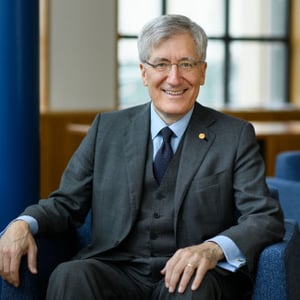
McCormick Professor of Jurisprudence; Director, James Madison Program, Princeton University
Robert P. George is McCormick Professor of Jurisprudence and Director of the James Madison Program in American Ideals and Institutions at Princeton University. He has several times been a Visiting Professor at Harvard Law School. He has served as Chairman of the U.S. Commission on International Religious Freedom and on the U.S. Commission on Civil Rights and the President’s Council on Bioethics. He has also served as the U.S. member of UNESCO’s World Commission on the Ethics of Scientific Knowledge and Technology. He was a Judicial Fellow at the Supreme Court of the United States, where he received the Justice Tom C. Clark Award. A Phi Beta Kappa graduate of Swarthmore, he holds the degrees of J.D. and M.T.S. from Harvard University and the degrees of D.Phil., B.C.L., D.C.L., and D.Litt. from Oxford University, in addition to twenty-one honorary doctorates. He is a recipient of the U.S. Presidential Citizens Medal, the Honorific Medal for the Defense of Human Rights of the Republic of Poland, the Canterbury Medal of the Becket Fund for Religious Liberty, the Bradley Prize, the Irving Kristol Award of the American Enterprise Institute, and Princeton University’s President’s Award for Distinguished Teaching. His books include Making Men Moral: Civil Liberties and Public Morality and In Defense of Natural Law (both published by Oxford University Press), as well as The Clash of Orthodoxies and Conscience and Its Enemies (both published by ISI Books).

George C. Dix Professor in Constitutional Law, Northwestern University Pritzker School of Law
John O. McGinnis is a graduate of Harvard College and Harvard Law School where he was an editor of the Harvard Law Review. He also has an MA degree from Balliol College, Oxford, in philosophy and theology. Professor McGinnis clerked on the U.S. Court of Appeals for the District of Columbia. From 1987 to 1991, he was deputy assistant attorney general in the Office of Legal Counsel at the Department of Justice. He is the author of Accelerating Democracy: Transforming Government Through Technology (Princeton 2013) and Originalism and the Good Constitution (Harvard 2013) (with M. Rappaport). He is a past winner of the Paul Bator award given by the Federalist Society to an outstanding academic under 40. He has been listed by the United States on the roster of panelists who may be called upon to decide World Trade Organization Disputes.

Former President & CEO, The Federalist Society for Law and Public Policy Studies
Eugene B. Meyer, former President and CEO of the Federalist Society, has served as Executive Director, CEO, and/or President of the organization for more than 40 years. He is responsible for shepherding the organization from a small group of law students to a community of 90,000 lawyers, law students, academics, judges, and others interested in the rule of law. The Society now includes a Student Chapter at nearly every ABA-accredited law school in the country and Lawyers Chapters in 220 major cities across the nation. Gene earned his B.A. in history at Yale in 1975 and his M.A. in political science from the London School of Economics in 1976. Gene currently serves on the boards of the U.S. Chess Center, the Holman Foundation, the Sarah Scaife Foundation, and the advisory board of the Adam Smith Society. He holds the title of International Chess Master.

Chief Judge, United States Court of Appeals, Eleventh Circuit
William H. Pryor Jr. serves as Chief Circuit Judge on the United States Court of Appeals for the Eleventh Circuit.
In 2013–18, he served on the United States Sentencing Commission and, in 2017–18, served as Acting Chair.
He has taught as a visiting professor at the University of Alabama School of Law and previously taught as an adjunct professor at the Cumberland School of Law of Samford University.
He served as the 45th Attorney General of Alabama from 1997 to 2004. When he took office, he was the youngest attorney general in the nation. In his reelection, he received the highest percentage of votes of any statewide candidate.
He graduated magna cum laude from Tulane Law School where he finished first in the common-law curriculum and was editor in chief of the Tulane Law Review. He then served as a law clerk for Judge John Minor Wisdom of the U.S. Court of Appeals for the Fifth Circuit.
He is a member of The American Law Institute and an Adviser for the RESTATEMENT OF THE LAW THIRD, CONFLICT OF LAWS. He is a coauthor with Bryan Garner, Justices Gorsuch and Kavanaugh, and several other judges of a treatise, THE LAW OF JUDICIAL PRECEDENT. He has published in the Yale Law Journal, Columbia Law Review, Virginia Law Review, Notre Dame Law Review, Harvard Journal of Law & Public Policy, Yale Law & Policy Review, George Mason Law Review, Florida Law Review, Alabama Law Review, Case Western Reserve Law Review, and Tulane Law Review. He has published op-eds in The Wall Street Journal, The New York Times, National Review, and USA Today. He has debated at National Lawyers’ Conventions of the Federalist Society (including on National Public Radio) and at the Oxford Union in the United Kingdom. And he is listed among several “widely admired judicial writers” in Bryan Garner’s The Redbook: A Manual on Legal Style.
He is a member of the Tulane Law School Hall of Fame and has received the Defender of the Constitution Award from the Heritage Foundation, the Jurist of the Year Award from the Texas Review of Law & Politics, and the St. Thomas More Award from the St. Thomas More Society of Atlanta. Judge Pryor is also a proud member of the National Society of the Sons of the American Revolution.
McCormick Professor of Jurisprudence; Director, James Madison Program, Princeton University
Robert P. George is McCormick Professor of Jurisprudence and Director of the James Madison Program in American Ideals and Institutions at Princeton University. He has several times been a Visiting Professor at Harvard Law School. He has served as Chairman of the U.S. Commission on International Religious Freedom and on the U.S. Commission on Civil Rights and the President’s Council on Bioethics. He has also served as the U.S. member of UNESCO’s World Commission on the Ethics of Scientific Knowledge and Technology. He was a Judicial Fellow at the Supreme Court of the United States, where he received the Justice Tom C. Clark Award. A Phi Beta Kappa graduate of Swarthmore, he holds the degrees of J.D. and M.T.S. from Harvard University and the degrees of D.Phil., B.C.L., D.C.L., and D.Litt. from Oxford University, in addition to twenty-one honorary doctorates. He is a recipient of the U.S. Presidential Citizens Medal, the Honorific Medal for the Defense of Human Rights of the Republic of Poland, the Canterbury Medal of the Becket Fund for Religious Liberty, the Bradley Prize, the Irving Kristol Award of the American Enterprise Institute, and Princeton University’s President’s Award for Distinguished Teaching. His books include Making Men Moral: Civil Liberties and Public Morality and In Defense of Natural Law (both published by Oxford University Press), as well as The Clash of Orthodoxies and Conscience and Its Enemies (both published by ISI Books).
George C. Dix Professor in Constitutional Law, Northwestern University Pritzker School of Law
John O. McGinnis is a graduate of Harvard College and Harvard Law School where he was an editor of the Harvard Law Review. He also has an MA degree from Balliol College, Oxford, in philosophy and theology. Professor McGinnis clerked on the U.S. Court of Appeals for the District of Columbia. From 1987 to 1991, he was deputy assistant attorney general in the Office of Legal Counsel at the Department of Justice. He is the author of Accelerating Democracy: Transforming Government Through Technology (Princeton 2013) and Originalism and the Good Constitution (Harvard 2013) (with M. Rappaport). He is a past winner of the Paul Bator award given by the Federalist Society to an outstanding academic under 40. He has been listed by the United States on the roster of panelists who may be called upon to decide World Trade Organization Disputes.
Former President & CEO, The Federalist Society for Law and Public Policy Studies
Eugene B. Meyer, former President and CEO of the Federalist Society, has served as Executive Director, CEO, and/or President of the organization for more than 40 years. He is responsible for shepherding the organization from a small group of law students to a community of 90,000 lawyers, law students, academics, judges, and others interested in the rule of law. The Society now includes a Student Chapter at nearly every ABA-accredited law school in the country and Lawyers Chapters in 220 major cities across the nation. Gene earned his B.A. in history at Yale in 1975 and his M.A. in political science from the London School of Economics in 1976. Gene currently serves on the boards of the U.S. Chess Center, the Holman Foundation, the Sarah Scaife Foundation, and the advisory board of the Adam Smith Society. He holds the title of International Chess Master.
Chief Judge, United States Court of Appeals, Eleventh Circuit
William H. Pryor Jr. serves as Chief Circuit Judge on the United States Court of Appeals for the Eleventh Circuit.
In 2013–18, he served on the United States Sentencing Commission and, in 2017–18, served as Acting Chair.
He has taught as a visiting professor at the University of Alabama School of Law and previously taught as an adjunct professor at the Cumberland School of Law of Samford University.
He served as the 45th Attorney General of Alabama from 1997 to 2004. When he took office, he was the youngest attorney general in the nation. In his reelection, he received the highest percentage of votes of any statewide candidate.
He graduated magna cum laude from Tulane Law School where he finished first in the common-law curriculum and was editor in chief of the Tulane Law Review. He then served as a law clerk for Judge John Minor Wisdom of the U.S. Court of Appeals for the Fifth Circuit.
He is a member of The American Law Institute and an Adviser for the RESTATEMENT OF THE LAW THIRD, CONFLICT OF LAWS. He is a coauthor with Bryan Garner, Justices Gorsuch and Kavanaugh, and several other judges of a treatise, THE LAW OF JUDICIAL PRECEDENT. He has published in the Yale Law Journal, Columbia Law Review, Virginia Law Review, Notre Dame Law Review, Harvard Journal of Law & Public Policy, Yale Law & Policy Review, George Mason Law Review, Florida Law Review, Alabama Law Review, Case Western Reserve Law Review, and Tulane Law Review. He has published op-eds in The Wall Street Journal, The New York Times, National Review, and USA Today. He has debated at National Lawyers’ Conventions of the Federalist Society (including on National Public Radio) and at the Oxford Union in the United Kingdom. And he is listed among several “widely admired judicial writers” in Bryan Garner’s The Redbook: A Manual on Legal Style.
He is a member of the Tulane Law School Hall of Fame and has received the Defender of the Constitution Award from the Heritage Foundation, the Jurist of the Year Award from the Texas Review of Law & Politics, and the St. Thomas More Award from the St. Thomas More Society of Atlanta. Judge Pryor is also a proud member of the National Society of the Sons of the American Revolution.
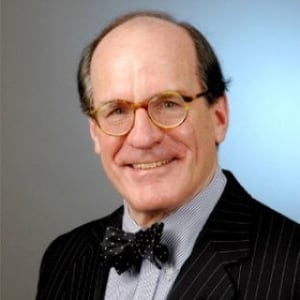
Retired Partner, Sullivan & Cromwell LLP
Upon his resignation as the Legal Adviser of the U.S. Department of State in January 1993, Mr. Williamson rejoined Sullivan & Cromwell's Washington, D.C. office. He originally joined the Firm in 1964 after graduating from New York University School of Law, where he was an editor of the Law Review. He became a partner of the Firm in 1971, moved to its London office in 1976, returned to its New York office in 1979, moved to its Washington, D.C. office in 1988 and became Of Counsel in 2007. In 2018, he retired from the firm.
At Sullivan & Cromwell, Mr. Williamson engaged in a broad and wide-ranging domestic and international financing and transactions practice, as well as advice with respect to corporate governance issues, the United States’ economic sanctions laws, the ethics rules applicable to government officials and the immunities of foreign sovereigns and international organizations.
Mr. Williamson has been an active participant on panels and other forums involving public international law and national security issues, such as the domestic and international bases for the use of force, the role of the United States with respect to the International Criminal Court, the law of the sea and the application of international legal principles in the war against terrorism.
Mr. Williamson is a member of the Council on Foreign Relations and a former member of the Executive Council of the American Society of International Law, the Executive Committees of the Business and Advisory Committee (BIAC) to the OECD and the U.S. Council for International Business, the United States Advisory Board of NTT DoCoMo, Inc. and the Board of Directors of Triton Oil & Gas Limited.
Mr. Williamson has served on the Boards of Regents and Trustees of the University of the South and as chair of the Board of Regents. He is currently a member of the Board of Directors of the American Council of Trustees and Alumni, a higher education watchdog.
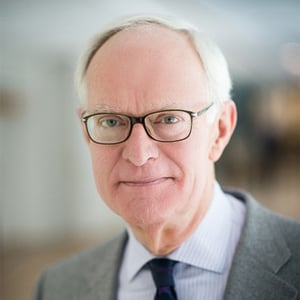
Distinguished Fellow, Hudson Institute
Christopher DeMuth is a distinguished fellow at Hudson Institute. He was president of the American Enterprise Institute for Public Policy Research (AEI) from 1986 to 2008 and was the D.C. Searle Senior Fellow at AEI from 2008 to 2011.
Mr. DeMuth was raised in Kenilworth, Illinois, and attended the Lawrenceville School (1964), Harvard College (A.B. 1968), and the University of Chicago Law School (J.D. 1973). He served as staff assistant to President Richard M. Nixon from 1969 to 1970, working first for Daniel P. Moynihan (then assistant to the President for Urban Affairs) on urban policy matters and then as chairman of the White House Task Force on Environmental Policy. Following law school, he practiced regulatory, antitrust, and general corporate law with Sidley & Austin in Chicago (1973-1976) and was associate general counsel of the Consolidated Rail Corporation (Conrail) in Philadelphia (1976-1977).
From 1977 to 1981, Mr. DeMuth was lecturer in public policy at the Kennedy School of Government at Harvard University, and director of the Harvard Faculty Project on Regulation. There he taught courses on law, economics, and regulatory policy and conducted and sponsored research on health, safety, environmental, and economic regulation.
Returning to Washington in 1981, Mr. DeMuth served as administrator for information and regulatory affairs in the U.S. Office of Management and Budget, and as executive director of the Presidential Task Force on Regulatory Relief during President Ronald Reagan’s first term of office. From 1984 to 1986, he was managing director of Lexecon Inc., a law-and-economics consulting firm; in 1986, he was also publisher and editor-in-chief of Regulation magazine. He was elected president of the American Enterprise Institute in December 1986.
Many of Mr. DeMuth’s articles, lectures, and occasional talks are posted on his website (https://www.ccdemuth.com).
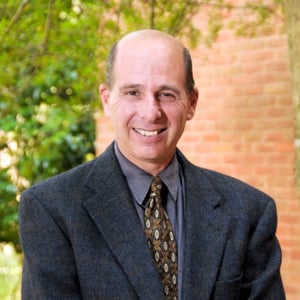
Sandra Day O'Connor Professor of Law & Professor of Government, William & Mary Law School
Neal Devins is the Sandra Day O’Connor Professor of Law and Professor of Government at the College of William and Mary. He is the author of several books and more than 100 articles and book chapters on courts, constitutional law, and law & politics. His books include The Company They Keep (Oxford 2019) (with Larry Baum), The Democratic Constitution (Oxford 2d ed. 2015) (with Louis Fisher), Political Dynamics of Constitutional Law (West 6th ed. 2019) (with Louis Fisher), and Shaping Constitutional Values: The Supreme Court, Elected Government, and the Abortion Dispute (Johns Hopkins University Press 1996). His articles have appeared in The Yale Law Journal, The Stanford Law Review, The Columbia Law Review, The Michigan Law Review, The California Law Review, The Virginia Law Review, The University of Pennsylvania Law Review, The University of Chicago Law Review, The New York University Law Review, and several other journals and magazines. Professor Devins is also the author of op-eds appearing in The Wall Street Journal, The New York Times, The Washington Post, The Los Angeles Times, Slate, and several other newspapers. He has testified before House and Senate committees on budget reform and the separation of powers. Professor Devins is a graduate of Georgetown University (A.B. 1978) and Vanderbilt Law School (J.D. 1982).
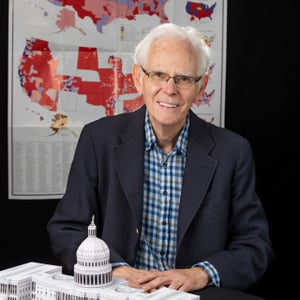
David Mayhew, Sterling Professor of Political Science Emeritus, Yale University
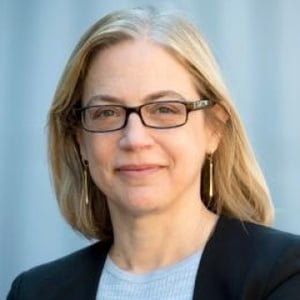
Harlan Fiske Stone Professor of Constitutional Law, Columbia Law School
A leading administrative and constitutional law scholar, Gillian Metzger ’96 writes and teaches in the areas of administrative law, constitutional law, and federal courts, with an emphasis on federalism and privatization. In 2023-2024, she served as Acting Assistant Attorney General and Deputy Assistant Attorney General in the Office of Legal Counsel in the Department of Justice.
Metzger's recent work covers topics ranging from constitutional attacks on the administrative state to appropriations, administrative law under the Roberts Court, and the role of administrative agencies in a polarized world. In 2015, Metzger won the American Bar Association Administrative Law Section Annual Scholarship Award for “The Constitutional Duty to Supervise,” which examined presidential control and oversight of the modern administrative state. She is a co-editor of Gellhorn & Byse’s Administrative Law: Cases and Comments, 13th ed. (Foundation Press, 2023), a seminal administrative law casebook.
Professor Metzger was recently elected to the American Academy of Arts & Sciences and is a Senior Fellow of the Administrative Conference of the United States. In 2020, she was awarded Columbia University's Faculty Mentorship Award and in 2014, the Law School’s graduating class awarded Metzger the Willis L.M. Reese Prize for Excellence in Teaching, recognizing, among many other accomplishments, her commitment to mentoring new generations of law students.
In 2012, Metzger helped launch Columbia Law School’s Center for Constitutional Governance (CCG)—where she now serves as faculty director—a nonpartisan legal and policy organization devoted to the study of constitutional structure and authority. CCG brings together a diverse group of constitutional scholars to explore policy areas such as health care, civil rights, immigration, financial regulation, and national security.
Metzger also has co-authored and filed numerous amicus briefs in major constitutional and administrative law challenges before the Supreme Court and other courts. Most recently, Metzger filed a brief in Seila Law Center v. CFPB, a separation of powers challenge, and in Kisor v. Wilkie, a case involving judicial deference to agencies. She has also filed briefs in cases involving reproductive rights and the Affordable Care Act, among others.
Previously, Metzger served as vice dean of intellectual life at Columbia Law School. Before joining the Law School, she worked as an attorney with the Brennan Center for Justice. Metzger also clerked for U.S. Supreme Court Justice Ruth Bader Ginsburg ’59 and Judge Patricia M. Wald of the U.S. Circuit Court of Appeals for the District of Columbia. In 2018, Metzger moderated a panel discussion with Justice Ginsburg on impact litigation at Columbia Law School.
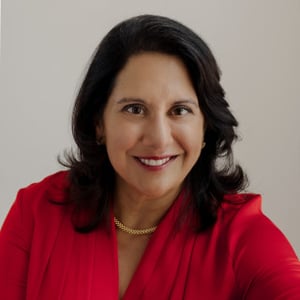
Judge, United States Court of Appeals, District of Columbia Circuit
Judge Rao was appointed to the United States Court of Appeals for the District of Columbia Circuit in March 2019. She graduated from Yale College in 1995 and the University of Chicago Law School in 1999. Following graduation, she served as a law clerk to Judge J. Harvie Wilkinson III of the U.S. Court of Appeals for the Fourth Circuit and, in the 2001 October Term, as law clerk to Justice Clarence Thomas of the U.S. Supreme Court. Between her clerkships, Judge Rao served as counsel for nominations and constitutional law to the U.S. Senate Committee on the Judiciary. In 2002, she joined the international arbitration group of Clifford Chance LLP in London, England. From 2005-2006, she served as Special Assistant and Associate White House Counsel to President George W. Bush. From 2006 to 2017, Judge Rao was a professor at the Antonin Scalia Law School at George Mason University, where she taught constitutional law, legislation and statutory interpretation, and the history and foundations of the administrative state. In 2014, she founded the Center for the Study of the Administrative State, a non-profit Center that promotes academic scholarship and public policy debates about administrative law. In July 2017, she was appointed to serve as the Administrator of the Office of Information and Regulatory Affairs in the Office of Management Budget. She served in this position until her appointment to the D.C. Circuit.

Executive Vice President, The Federalist Society
Dean Reuter is Executive Vice President at the Federalist Society for Law and Public Policy Studies. He has served in two federal government agency Offices of the Inspector General, as Counsel to the Inspector General and Deputy Inspector General, responsible for policing the use of federal funds granted and contracted through those agencies. As such, he helped conduct and oversee criminal investigations across the country. He is the principal author of the non-fiction book, The Hidden Nazi: The Untold Story of America's Deal with the Devil, and editor of Liberty’s Nemesis: The Unchecked Expansion of the State and Confronting Terror: 9/11 and the Future of American National Security. He was appointed by the President and served as Vice-Chairman of the Board of Directors of the Corporation for National and Community Service, and recently served as an appointee on the U.S. Commission on Presidential Scholars. He is a graduate of Hood College (BA with Honors) and the University of Maryland School of Law.
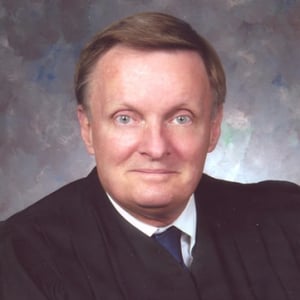
Judge, United States Court of Appeals, Fifth Circuit
Judge Smith was appointed U.S. Circuit Judge for the Fifth Circuit by President Reagan and entered on duty in January 1988. He attended public schools in Lubbock, Texas, and graduated from Yale University, receiving a B.A. in 1969 and a J.D. in 1972.
Judge Smith was a Law Clerk to U.S. District Judge Halbert Woodward, Northern District of Texas, 1972-1973; with the Houston law firm of Fulbright & Jaworski as an Associate, 1973-1981, and as Partner, 1981-1984; and as City Attorney, City of Houston, 1984-1988. He was Chairman, Civil Service Commission, City of Houston, 1982-1984; and a Director, Harris County Housing Authority, 1978-1980.
Judge Smith lives in Houston and is married to Mary Jane Smith and has four children: Ruth Ann, Clark, J.J., and Brandon. He formerly was Chair of the Advisory Committee on Federal Rules of Evidence of the Judicial Conference of the United States. He assists LexisNexis/Matthew Bender & Co. in periodic revisions of several chapters of Moore’s Federal Practice.
Distinguished Fellow, Hudson Institute
Christopher DeMuth is a distinguished fellow at Hudson Institute. He was president of the American Enterprise Institute for Public Policy Research (AEI) from 1986 to 2008 and was the D.C. Searle Senior Fellow at AEI from 2008 to 2011.
Mr. DeMuth was raised in Kenilworth, Illinois, and attended the Lawrenceville School (1964), Harvard College (A.B. 1968), and the University of Chicago Law School (J.D. 1973). He served as staff assistant to President Richard M. Nixon from 1969 to 1970, working first for Daniel P. Moynihan (then assistant to the President for Urban Affairs) on urban policy matters and then as chairman of the White House Task Force on Environmental Policy. Following law school, he practiced regulatory, antitrust, and general corporate law with Sidley & Austin in Chicago (1973-1976) and was associate general counsel of the Consolidated Rail Corporation (Conrail) in Philadelphia (1976-1977).
From 1977 to 1981, Mr. DeMuth was lecturer in public policy at the Kennedy School of Government at Harvard University, and director of the Harvard Faculty Project on Regulation. There he taught courses on law, economics, and regulatory policy and conducted and sponsored research on health, safety, environmental, and economic regulation.
Returning to Washington in 1981, Mr. DeMuth served as administrator for information and regulatory affairs in the U.S. Office of Management and Budget, and as executive director of the Presidential Task Force on Regulatory Relief during President Ronald Reagan’s first term of office. From 1984 to 1986, he was managing director of Lexecon Inc., a law-and-economics consulting firm; in 1986, he was also publisher and editor-in-chief of Regulation magazine. He was elected president of the American Enterprise Institute in December 1986.
Many of Mr. DeMuth’s articles, lectures, and occasional talks are posted on his website (https://www.ccdemuth.com).
Sandra Day O'Connor Professor of Law & Professor of Government, William & Mary Law School
Neal Devins is the Sandra Day O’Connor Professor of Law and Professor of Government at the College of William and Mary. He is the author of several books and more than 100 articles and book chapters on courts, constitutional law, and law & politics. His books include The Company They Keep (Oxford 2019) (with Larry Baum), The Democratic Constitution (Oxford 2d ed. 2015) (with Louis Fisher), Political Dynamics of Constitutional Law (West 6th ed. 2019) (with Louis Fisher), and Shaping Constitutional Values: The Supreme Court, Elected Government, and the Abortion Dispute (Johns Hopkins University Press 1996). His articles have appeared in The Yale Law Journal, The Stanford Law Review, The Columbia Law Review, The Michigan Law Review, The California Law Review, The Virginia Law Review, The University of Pennsylvania Law Review, The University of Chicago Law Review, The New York University Law Review, and several other journals and magazines. Professor Devins is also the author of op-eds appearing in The Wall Street Journal, The New York Times, The Washington Post, The Los Angeles Times, Slate, and several other newspapers. He has testified before House and Senate committees on budget reform and the separation of powers. Professor Devins is a graduate of Georgetown University (A.B. 1978) and Vanderbilt Law School (J.D. 1982).
David Mayhew, Sterling Professor of Political Science Emeritus, Yale University
Harlan Fiske Stone Professor of Constitutional Law, Columbia Law School
A leading administrative and constitutional law scholar, Gillian Metzger ’96 writes and teaches in the areas of administrative law, constitutional law, and federal courts, with an emphasis on federalism and privatization. In 2023-2024, she served as Acting Assistant Attorney General and Deputy Assistant Attorney General in the Office of Legal Counsel in the Department of Justice.
Metzger's recent work covers topics ranging from constitutional attacks on the administrative state to appropriations, administrative law under the Roberts Court, and the role of administrative agencies in a polarized world. In 2015, Metzger won the American Bar Association Administrative Law Section Annual Scholarship Award for “The Constitutional Duty to Supervise,” which examined presidential control and oversight of the modern administrative state. She is a co-editor of Gellhorn & Byse’s Administrative Law: Cases and Comments, 13th ed. (Foundation Press, 2023), a seminal administrative law casebook.
Professor Metzger was recently elected to the American Academy of Arts & Sciences and is a Senior Fellow of the Administrative Conference of the United States. In 2020, she was awarded Columbia University's Faculty Mentorship Award and in 2014, the Law School’s graduating class awarded Metzger the Willis L.M. Reese Prize for Excellence in Teaching, recognizing, among many other accomplishments, her commitment to mentoring new generations of law students.
In 2012, Metzger helped launch Columbia Law School’s Center for Constitutional Governance (CCG)—where she now serves as faculty director—a nonpartisan legal and policy organization devoted to the study of constitutional structure and authority. CCG brings together a diverse group of constitutional scholars to explore policy areas such as health care, civil rights, immigration, financial regulation, and national security.
Metzger also has co-authored and filed numerous amicus briefs in major constitutional and administrative law challenges before the Supreme Court and other courts. Most recently, Metzger filed a brief in Seila Law Center v. CFPB, a separation of powers challenge, and in Kisor v. Wilkie, a case involving judicial deference to agencies. She has also filed briefs in cases involving reproductive rights and the Affordable Care Act, among others.
Previously, Metzger served as vice dean of intellectual life at Columbia Law School. Before joining the Law School, she worked as an attorney with the Brennan Center for Justice. Metzger also clerked for U.S. Supreme Court Justice Ruth Bader Ginsburg ’59 and Judge Patricia M. Wald of the U.S. Circuit Court of Appeals for the District of Columbia. In 2018, Metzger moderated a panel discussion with Justice Ginsburg on impact litigation at Columbia Law School.
Judge, United States Court of Appeals, District of Columbia Circuit
Judge Rao was appointed to the United States Court of Appeals for the District of Columbia Circuit in March 2019. She graduated from Yale College in 1995 and the University of Chicago Law School in 1999. Following graduation, she served as a law clerk to Judge J. Harvie Wilkinson III of the U.S. Court of Appeals for the Fourth Circuit and, in the 2001 October Term, as law clerk to Justice Clarence Thomas of the U.S. Supreme Court. Between her clerkships, Judge Rao served as counsel for nominations and constitutional law to the U.S. Senate Committee on the Judiciary. In 2002, she joined the international arbitration group of Clifford Chance LLP in London, England. From 2005-2006, she served as Special Assistant and Associate White House Counsel to President George W. Bush. From 2006 to 2017, Judge Rao was a professor at the Antonin Scalia Law School at George Mason University, where she taught constitutional law, legislation and statutory interpretation, and the history and foundations of the administrative state. In 2014, she founded the Center for the Study of the Administrative State, a non-profit Center that promotes academic scholarship and public policy debates about administrative law. In July 2017, she was appointed to serve as the Administrator of the Office of Information and Regulatory Affairs in the Office of Management Budget. She served in this position until her appointment to the D.C. Circuit.
Executive Vice President, The Federalist Society
Dean Reuter is Executive Vice President at the Federalist Society for Law and Public Policy Studies. He has served in two federal government agency Offices of the Inspector General, as Counsel to the Inspector General and Deputy Inspector General, responsible for policing the use of federal funds granted and contracted through those agencies. As such, he helped conduct and oversee criminal investigations across the country. He is the principal author of the non-fiction book, The Hidden Nazi: The Untold Story of America's Deal with the Devil, and editor of Liberty’s Nemesis: The Unchecked Expansion of the State and Confronting Terror: 9/11 and the Future of American National Security. He was appointed by the President and served as Vice-Chairman of the Board of Directors of the Corporation for National and Community Service, and recently served as an appointee on the U.S. Commission on Presidential Scholars. He is a graduate of Hood College (BA with Honors) and the University of Maryland School of Law.
Judge, United States Court of Appeals, Fifth Circuit
Judge Smith was appointed U.S. Circuit Judge for the Fifth Circuit by President Reagan and entered on duty in January 1988. He attended public schools in Lubbock, Texas, and graduated from Yale University, receiving a B.A. in 1969 and a J.D. in 1972.
Judge Smith was a Law Clerk to U.S. District Judge Halbert Woodward, Northern District of Texas, 1972-1973; with the Houston law firm of Fulbright & Jaworski as an Associate, 1973-1981, and as Partner, 1981-1984; and as City Attorney, City of Houston, 1984-1988. He was Chairman, Civil Service Commission, City of Houston, 1982-1984; and a Director, Harris County Housing Authority, 1978-1980.
Judge Smith lives in Houston and is married to Mary Jane Smith and has four children: Ruth Ann, Clark, J.J., and Brandon. He formerly was Chair of the Advisory Committee on Federal Rules of Evidence of the Judicial Conference of the United States. He assists LexisNexis/Matthew Bender & Co. in periodic revisions of several chapters of Moore’s Federal Practice.
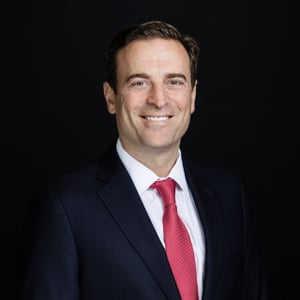
Partner, Cooper & Kirk PLLC
Adam Paul Laxalt is a partner at Cooper & Kirk which he joined in March 2019. Mr. Laxalt served as Nevada’s 33rd Attorney General from 2015-2019. Mr. Laxalt graduated Magna Cum Laude from Georgetown University and also graduated from Georgetown University Law Center. He is a former Navy and Iraq War veteran. Mr. Laxalt also served as an Assistant Professor of Law at the U.S. Naval Academy.
As Nevada’s Attorney General and top law-enforcement officer, Mr. Laxalt supervised all criminal and civil matters for Nevada’s largest law office. He provided strategic direction and supervision of almost 400 employees, thousands of legal matters, and nearly 50 trials. Mr. Laxalt served as chief legal counsel for the state of Nevada, as well as to Constitutional Officers, state agencies, boards, and commissions. He managed approximately $1.2 billion in potential civil liabilities for the state.
As a former member of the military, Laxalt’s support of service members culminated in the creation of the Office of Military Legal Assistance, a first-of-its-kind program that provides Nevada’s military members with free legal representation. The program was recently named a “Best Practice Program” by the Department of Defense with a recommendation for duplication in states throughout the country, and to date, has helped military personnel and veterans handle over 210 pro bono matters.
Consistent with his commitment to defending our nation’s constitutional principles and protecting the important role of the States in our federalist system of government, Laxalt created Nevada’s first ever Federalism Unit within the Attorney General’s Office. To protect the interests of Nevadans, the Federalism Unit has challenged multiple occasions of unlawful federal overreach, including the Environmental Protection Agency’s Waters of the United States Rule, the Bureau of Land Management’s Sage Grouse Plan, and other instances of unilateral federal executive orders. The Unit has also filed friend of the court briefs on many important issues including public roads, Environmental Protection Agency overreach, federal interference with Nevada’s criminal justice system and Second Amendment issues.
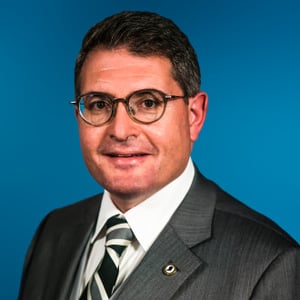
Co-Chairman, The Federalist Society for Law and Public Policy Studies
Leonard is Co-Chairman and former Executive Vice President of the Federalist Society, joining the organization over 25 years ago. Since that time he has been instrumental in helping the organization top 70,000, focusing on the growth of lawyers membership, operations and activities advancing limited, constitutional government. In addition to his work at the Society, Leonard has advised President Trump on judicial selection, assisted with the Gorsuch and Kavanaugh Supreme Court selection and confirmation process, and served as a member of the transition team. He also organized the outside coalition efforts in support of the Roberts and Alito U.S. Supreme Court confirmations. Leonard was appointed by President George W. Bush to three terms to the U.S. Commission on International Religious Freedom as chairman. He was also a U.S. Delegate to the UN Council and UN Commission on Human Rights during the Bush Administration. Leonard was the recipient of the 2009 Bradley Prize, along with the other founders and directors of the Federalist Society, for his work in advancing freedom and the rule of law. He is the coeditor of Presidential Leadership: Rating the Best and the Worst in the White House, as well as the author of opinion editorials in the New York Times,The Wall Street Journal, and Washington Post. Leonard holds degrees from Cornell University and Cornell Law School. He presently resides in Northern Virginia, where he and his wife Sally have raised their seven children.
Chief Judge, United States Court of Appeals, Eleventh Circuit
William H. Pryor Jr. serves as Chief Circuit Judge on the United States Court of Appeals for the Eleventh Circuit.
In 2013–18, he served on the United States Sentencing Commission and, in 2017–18, served as Acting Chair.
He has taught as a visiting professor at the University of Alabama School of Law and previously taught as an adjunct professor at the Cumberland School of Law of Samford University.
He served as the 45th Attorney General of Alabama from 1997 to 2004. When he took office, he was the youngest attorney general in the nation. In his reelection, he received the highest percentage of votes of any statewide candidate.
He graduated magna cum laude from Tulane Law School where he finished first in the common-law curriculum and was editor in chief of the Tulane Law Review. He then served as a law clerk for Judge John Minor Wisdom of the U.S. Court of Appeals for the Fifth Circuit.
He is a member of The American Law Institute and an Adviser for the RESTATEMENT OF THE LAW THIRD, CONFLICT OF LAWS. He is a coauthor with Bryan Garner, Justices Gorsuch and Kavanaugh, and several other judges of a treatise, THE LAW OF JUDICIAL PRECEDENT. He has published in the Yale Law Journal, Columbia Law Review, Virginia Law Review, Notre Dame Law Review, Harvard Journal of Law & Public Policy, Yale Law & Policy Review, George Mason Law Review, Florida Law Review, Alabama Law Review, Case Western Reserve Law Review, and Tulane Law Review. He has published op-eds in The Wall Street Journal, The New York Times, National Review, and USA Today. He has debated at National Lawyers’ Conventions of the Federalist Society (including on National Public Radio) and at the Oxford Union in the United Kingdom. And he is listed among several “widely admired judicial writers” in Bryan Garner’s The Redbook: A Manual on Legal Style.
He is a member of the Tulane Law School Hall of Fame and has received the Defender of the Constitution Award from the Heritage Foundation, the Jurist of the Year Award from the Texas Review of Law & Politics, and the St. Thomas More Award from the St. Thomas More Society of Atlanta. Judge Pryor is also a proud member of the National Society of the Sons of the American Revolution.
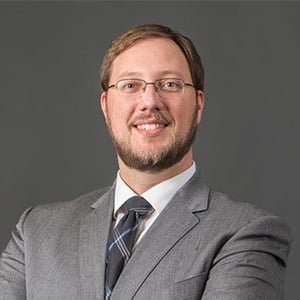
Laurence H. Silberman Chair in Constitutional Governance and Senior Fellow, American Enterprise Institute; Co-Director, Antonin Scalia Law School’s C. Boyden Gray Center for the Study of the Administrative State
Adam J. White is the Laurence H. Silberman Chair in Constitutional Governance and senior fellow at the American Enterprise Institute, where he focuses on the Supreme Court and the administrative state. Concurrently, he codirects the Antonin Scalia Law School’s C. Boyden Gray Center for the Study of the Administrative State.
Mr. White practiced constitutional and administrative law, particularly in the regulation of energy and financial markets. He started his legal career as a law clerk for Judge David B. Sentelle at the US Court of Appeals for the DC Circuit.
Mr. White has written for the Wall Street Journal, the New York Times, the Washington Post, National Affairs, Commentary, Harvard Journal of Law & Public Policy, and Notre Dame Law Review, among other publications. He is a regular contributor to the Yale Journal on Regulation’s Notice and Comment blog, and for many years, he was one of the Weekly Standard’s lead writers on constitutional law and the Supreme Court.
Mr. White has testified often before Congress, including before the Senate’s Committees on the Judiciary; Commerce, Science, and Transportation; and Homeland Security and Governmental Affairs and before the House’s Judiciary and Financial Services Committees. In 2018, the Senate Committee on the Judiciary called him to testify in Brett Kavanaugh’s Supreme Court confirmation hearings to advise senators on Kavanaugh’s approach to administrative law.
In 2021, he served on the Presidential Commission on the Supreme Court of the United States, where he criticized “Court packing” and other efforts to restructure the Supreme Court. In 2017, he was appointed to serve on the Administrative Conference of the United States. He also serves on the leadership council for the American Bar Association’s Administrative Law and Regulatory Practice Section, which he will chair in 2023–24. Before joining AEI, he was a research fellow at Stanford University’s Hoover Institution and an adjunct fellow at the Manhattan Institute.
Mr. White has a JD from Harvard Law School and a bachelor of business administration from the College of Business at the University of Iowa.
Partner, Cooper & Kirk PLLC
Adam Paul Laxalt is a partner at Cooper & Kirk which he joined in March 2019. Mr. Laxalt served as Nevada’s 33rd Attorney General from 2015-2019. Mr. Laxalt graduated Magna Cum Laude from Georgetown University and also graduated from Georgetown University Law Center. He is a former Navy and Iraq War veteran. Mr. Laxalt also served as an Assistant Professor of Law at the U.S. Naval Academy.
As Nevada’s Attorney General and top law-enforcement officer, Mr. Laxalt supervised all criminal and civil matters for Nevada’s largest law office. He provided strategic direction and supervision of almost 400 employees, thousands of legal matters, and nearly 50 trials. Mr. Laxalt served as chief legal counsel for the state of Nevada, as well as to Constitutional Officers, state agencies, boards, and commissions. He managed approximately $1.2 billion in potential civil liabilities for the state.
As a former member of the military, Laxalt’s support of service members culminated in the creation of the Office of Military Legal Assistance, a first-of-its-kind program that provides Nevada’s military members with free legal representation. The program was recently named a “Best Practice Program” by the Department of Defense with a recommendation for duplication in states throughout the country, and to date, has helped military personnel and veterans handle over 210 pro bono matters.
Consistent with his commitment to defending our nation’s constitutional principles and protecting the important role of the States in our federalist system of government, Laxalt created Nevada’s first ever Federalism Unit within the Attorney General’s Office. To protect the interests of Nevadans, the Federalism Unit has challenged multiple occasions of unlawful federal overreach, including the Environmental Protection Agency’s Waters of the United States Rule, the Bureau of Land Management’s Sage Grouse Plan, and other instances of unilateral federal executive orders. The Unit has also filed friend of the court briefs on many important issues including public roads, Environmental Protection Agency overreach, federal interference with Nevada’s criminal justice system and Second Amendment issues.
Co-Chairman, The Federalist Society for Law and Public Policy Studies
Leonard is Co-Chairman and former Executive Vice President of the Federalist Society, joining the organization over 25 years ago. Since that time he has been instrumental in helping the organization top 70,000, focusing on the growth of lawyers membership, operations and activities advancing limited, constitutional government. In addition to his work at the Society, Leonard has advised President Trump on judicial selection, assisted with the Gorsuch and Kavanaugh Supreme Court selection and confirmation process, and served as a member of the transition team. He also organized the outside coalition efforts in support of the Roberts and Alito U.S. Supreme Court confirmations. Leonard was appointed by President George W. Bush to three terms to the U.S. Commission on International Religious Freedom as chairman. He was also a U.S. Delegate to the UN Council and UN Commission on Human Rights during the Bush Administration. Leonard was the recipient of the 2009 Bradley Prize, along with the other founders and directors of the Federalist Society, for his work in advancing freedom and the rule of law. He is the coeditor of Presidential Leadership: Rating the Best and the Worst in the White House, as well as the author of opinion editorials in the New York Times,The Wall Street Journal, and Washington Post. Leonard holds degrees from Cornell University and Cornell Law School. He presently resides in Northern Virginia, where he and his wife Sally have raised their seven children.
Chief Judge, United States Court of Appeals, Eleventh Circuit
William H. Pryor Jr. serves as Chief Circuit Judge on the United States Court of Appeals for the Eleventh Circuit.
In 2013–18, he served on the United States Sentencing Commission and, in 2017–18, served as Acting Chair.
He has taught as a visiting professor at the University of Alabama School of Law and previously taught as an adjunct professor at the Cumberland School of Law of Samford University.
He served as the 45th Attorney General of Alabama from 1997 to 2004. When he took office, he was the youngest attorney general in the nation. In his reelection, he received the highest percentage of votes of any statewide candidate.
He graduated magna cum laude from Tulane Law School where he finished first in the common-law curriculum and was editor in chief of the Tulane Law Review. He then served as a law clerk for Judge John Minor Wisdom of the U.S. Court of Appeals for the Fifth Circuit.
He is a member of The American Law Institute and an Adviser for the RESTATEMENT OF THE LAW THIRD, CONFLICT OF LAWS. He is a coauthor with Bryan Garner, Justices Gorsuch and Kavanaugh, and several other judges of a treatise, THE LAW OF JUDICIAL PRECEDENT. He has published in the Yale Law Journal, Columbia Law Review, Virginia Law Review, Notre Dame Law Review, Harvard Journal of Law & Public Policy, Yale Law & Policy Review, George Mason Law Review, Florida Law Review, Alabama Law Review, Case Western Reserve Law Review, and Tulane Law Review. He has published op-eds in The Wall Street Journal, The New York Times, National Review, and USA Today. He has debated at National Lawyers’ Conventions of the Federalist Society (including on National Public Radio) and at the Oxford Union in the United Kingdom. And he is listed among several “widely admired judicial writers” in Bryan Garner’s The Redbook: A Manual on Legal Style.
He is a member of the Tulane Law School Hall of Fame and has received the Defender of the Constitution Award from the Heritage Foundation, the Jurist of the Year Award from the Texas Review of Law & Politics, and the St. Thomas More Award from the St. Thomas More Society of Atlanta. Judge Pryor is also a proud member of the National Society of the Sons of the American Revolution.
Laurence H. Silberman Chair in Constitutional Governance and Senior Fellow, American Enterprise Institute; Co-Director, Antonin Scalia Law School’s C. Boyden Gray Center for the Study of the Administrative State
Adam J. White is the Laurence H. Silberman Chair in Constitutional Governance and senior fellow at the American Enterprise Institute, where he focuses on the Supreme Court and the administrative state. Concurrently, he codirects the Antonin Scalia Law School’s C. Boyden Gray Center for the Study of the Administrative State.
Mr. White practiced constitutional and administrative law, particularly in the regulation of energy and financial markets. He started his legal career as a law clerk for Judge David B. Sentelle at the US Court of Appeals for the DC Circuit.
Mr. White has written for the Wall Street Journal, the New York Times, the Washington Post, National Affairs, Commentary, Harvard Journal of Law & Public Policy, and Notre Dame Law Review, among other publications. He is a regular contributor to the Yale Journal on Regulation’s Notice and Comment blog, and for many years, he was one of the Weekly Standard’s lead writers on constitutional law and the Supreme Court.
Mr. White has testified often before Congress, including before the Senate’s Committees on the Judiciary; Commerce, Science, and Transportation; and Homeland Security and Governmental Affairs and before the House’s Judiciary and Financial Services Committees. In 2018, the Senate Committee on the Judiciary called him to testify in Brett Kavanaugh’s Supreme Court confirmation hearings to advise senators on Kavanaugh’s approach to administrative law.
In 2021, he served on the Presidential Commission on the Supreme Court of the United States, where he criticized “Court packing” and other efforts to restructure the Supreme Court. In 2017, he was appointed to serve on the Administrative Conference of the United States. He also serves on the leadership council for the American Bar Association’s Administrative Law and Regulatory Practice Section, which he will chair in 2023–24. Before joining AEI, he was a research fellow at Stanford University’s Hoover Institution and an adjunct fellow at the Manhattan Institute.
Mr. White has a JD from Harvard Law School and a bachelor of business administration from the College of Business at the University of Iowa.

Criminal Law: Free Speech, Anti-Corruption, and the Criminalization of Government Affairs
Todd P. Graves, Raymond W. Gruender, Edward T. Kang, John G. Malcolm, Eugene Volokh, Peter R. Zeidenberg
If we accept the premise that government, and government power, is growing, then the stakes...
Civil Rights: Ferguson, Baltimore, and Criminal Justice Reform
Gail L. Heriot, Arthur Loevy, Tim Lynch, David B. Muhlhausen, David R. Stras, Michael P. Tremoglie, Robert L. Woodson
Criminal justice and policing reform are much in the news lately, sparked by events that...
Civil Rights: Ferguson, Baltimore, and Criminal Justice Reform
Gail L. Heriot, Arthur Loevy, Tim Lynch, David B. Muhlhausen, David R. Stras, Michael P. Tremoglie, Robert L. Woodson
Criminal justice and policing reform are much in the news lately, sparked by events that...
Eighth Annual Rosenkranz Debate
Robert P. George, John O. McGinnis, Eugene B. Meyer, William H. Pryor
RESOLVED: The Constitution is designed for a moral and religious people and it's wholly unsuited...
Eighth Annual Rosenkranz Debate
Robert P. George, John O. McGinnis, Eugene B. Meyer, William H. Pryor
RESOLVED: The Constitution is designed for a moral and religious people and it's wholly unsuited...
OBB Personenverkehr AG v. Sachs - Post-Argument SCOTUScast
Edwin D. Williamson
On October 5, 2015, the Supreme Court heard oral argument in OBB Personenverkehr AG v. Sachs....
Showcase Panel II: The Living Congress: Adaptation or Decline?
Christopher C. DeMuth, Neal E. Devins, David Mayhew, Gillian E. Metzger, Neomi Rao, Dean Reuter, Jerry E. Smith
Clearly, we live in a very different society from that of the founding period. Size...
Showcase Panel II: The Living Congress: Adaptation or Decline?
Christopher C. DeMuth, Neal E. Devins, David Mayhew, Gillian E. Metzger, Neomi Rao, Dean Reuter, Jerry E. Smith
Clearly, we live in a very different society from that of the founding period. Size...
Special Session: Overreach in the States
Adam P. Laxalt, Leonard A. Leo, William H. Pryor, Adam White
This panel of current and former state Attorneys General will examine the relationship between the...
Special Session: Overreach in the States
Adam P. Laxalt, Leonard A. Leo, William H. Pryor, Adam White
This panel of current and former state Attorneys General will examine the relationship between the...