

Mizuho Financial Group Professor of Finance, Harvard Business Sc, Harvard Law School
Mihir A. Desai is the Mizuho Financial Group Professor of Finance at Harvard Business School and a Professor of Law at Harvard Law School. He received his Ph.D. in political economy from Harvard University; his MBA as a Baker Scholar from Harvard Business School; and a bachelor's degree in history and economics from Brown University. In 1994, he was a Fulbright Scholar to India.
Professor Desai's areas of expertise include tax policy, international finance, and corporate finance. His academic publications have appeared in leading economics, finance, and law journals. His work has emphasized the appropriate design of tax policy in a globalized setting, the links between corporate governance and taxation, and the internal capital markets of multinational firms. His research has been cited in The Economist, BusinessWeek, The New York Times, and several other publications. He is a Research Associate in the National Bureau of Economic Research's Public Economics and Corporate Finance Programs, and served as the co-director of the NBER's India program.
His general interest publications include opinion pieces on varied topics, including tax policy and the effects of globalization on domestic welfare, in The Washington Post, The Wall Street Journal, Tax Notes and The New York Times. He has also written for practitioners in the Harvard Business Review on the role of the Global CFO, on how to reform the U.S. tax system, and how changing incentive systems have contributed to the degradation of American competitiveness. He has testified several times to Congressional bodies, including most recently to the Senate Finance Committee on corporate tax reform and inversions.
Professor Desai has taught extensively as an award-winning teacher at HBS and at Harvard University. As a second-year professor teaching finance in the required curriculum, he received the Student Association Award for teaching excellence from the HBS Class of 2001. He subsequently built a second-year elective on International Financial Management, and his many cases on international finance are collected in a casebook published by John Wiley and are taught around the world. Since 1999, he has co-taught Public Economics (EC 1410) at Harvard College. He has also taught seminars and classes on tax policy at Harvard Law School, NYU Law School, and Columbia Law School. Most recently, Professor Desai has been active in delivering various executive education programs at HBS, including the General Managers Program (GMP), on campus and around the world. In 2011, Professor Desai launched, with Professor Joe Lassiter, the first offering at HBS for Harvard undergraduates, Innovation and Entrepreneurship, that is also included as part of the General Education curriculum at Harvard College. In the fall of 2014, Professor Desai began teaching Taxation at Harvard Law School.
From 2008 to 2011, Professor Desai led HBS's doctoral programs, which include the DBA and joint programs with the Graduate School of Arts and Sciences. In that role, he led the restructuring of various programs and initiated a terminal master's program. From 2010 to 2014, Professor Desai was the Senior Associate Dean for Planning and University Affairs, where he was part of the senior management team of the Business School focused on integration with the rest of the University. Specifically, he has launched a program for Harvard undergraduates to collaborate on research with HBS professors (PRIMO), led the course for undergraduates described above, helped launch the Harvard Innovation Lab, worked on campus planning efforts including the design of Tata Hall and served on the newly created Harvard Libraries Board.
His professional experiences include working at CS First Boston (1989-1991), McKinsey & Co. (1992), and advising a number of firms and governmental organizations. He is also on the Advisory Board of the International Tax Policy Forum and the Centre for Business Taxation at Oxford University.
Senior Lecturer on Law, Harvard Law School
Stephen E. Shay is a Senior Lecturer at Harvard Law School.
Before joining the Harvard Law School faculty as a Professor of Practice in 2011, Mr. Shay was Deputy Assistant Secretary for International Tax Affairs in the United States Department of the Treasury. Prior to re-joining the Treasury Department in 2009, Mr. Shay was a tax partner for 22 years with Ropes & Gray, LLP. Mr. Shay served in the Office of International Tax Counsel at the Department of the Treasury, including as International Tax Counsel, from 1982 to 1987, during which Mr. Shay actively participated in the development and enactment of international provisions in the Tax Reform Act of 1986.
Mr. Shay has published scholarly and practice articles relating to international taxation, and testified for law reform before Congressional tax-writing committees. He has had extensive practice experience in the international tax area and while in active practice was recognized as a leading practitioner in Chambers Global: The World's Leading Lawyers, Chambers USA: America's Leading Lawyers, The Best Lawyers in America, Euromoney's Guide to The World's Leading Tax Advisers and Euromoney's, Guide to The Best of the Best. Mr. Shay discloses certain related interests and activities not connected with his position at Harvard Law School on the Harvard Law School website.
Mr. Shay is President of the American Tax Policy Institute Board of Trustees and is the IBFD Professor in Residence for 2015. Mr. Shay serves on the Executive Committee of the New York State Bar Association Tax Section and has been active in the American Bar Association Tax Section as a Council Director and Chair of the Committee on Foreign Activities of U.S. Taxpayers, in the American Law Institute as an Associate Reporter and in the Taxes Committee of the International Bar Association. Mr. Shay is a 1972 graduate of Wesleyan University, and he earned his J.D. and his M.B.A. from Columbia University in 1976.
Senior Fellow, Administrative Conference of the United States
Paul D. Kamenar is a Washington, D.C. public policy and appellate attorney who counsels clients on legal, regulatory, and public policy matters. He is also a Senior Fellow of the Administrative Conference of the United States and guest lectures at the U.S. Naval Academy on National Security Law. He has been a speaker at several conferences across the country on overcriminalization and regulatory enforcement, including those sponsored by the American Bar Association, George Mason University Law School, S.J. Quinney College of Law-University of Utah, American University Washington College of Law, Northwestern University School of Law, and the Cleveland Chapter of the Federalist Society. He also has briefed Members of Congress and their staff on overcriminalization issues along with representatives from the National Association of Criminal Defense Lawyers and the Heritage Foundation. He and his clients have also testified before congressional committees on these issues. He was Senior Executive Counsel of the Washington Legal Foundation, Clinical Professor of Law at George Mason University Law School from 1999-2005, and adjunct professor at Georgetown University Law Center teaching a separation of powers/appellate advocacy seminar. He is a graduate of Georgetown Law and received his undergraduate degree from Rutgers College.

Professor of Law, Antonin Scalia Law School, George Mason University
ILYA SOMIN is Professor of Law at George Mason University and the B. Kenneth Simon Chair in Constitutional Studies at the Cato Institute. His research focuses on constitutional law, property law, democratic theory, federalism, and migration rights. He is the author of Free to Move: Foot Voting, Migration, and Political Freedom (Oxford University Press, revised and expanded edition, 2022), Democracy and Political Ignorance: Why Smaller Government is Smarter (Stanford University Press, revised and expanded second edition, 2016), and The Grasping Hand: Kelo v. City of New London and the Limits of Eminent Domain (University of Chicago Press, 2015, rev. paperback ed., 2016), coauthor of A Conspiracy Against Obamacare: The Volokh Conspiracy and the Health Care Case (Palgrave Macmillan, 2013), and co-editor of Eminent Domain: A Comparative Perspective (Cambridge University Press, 2017). Democracy and Political Ignorance has been translated into Italian and Japanese.
Somin’s work has appeared in numerous scholarly journals, including the Yale Law Journal, Stanford Law Review, Northwestern University Law Review, Georgetown Law Journal, Critical Review, and others. Somin has also published articles in a variety of popular press outlets, including the New York Times, Washington Post, Wall Street Journal, Los Angeles Times, CNN, NBC, The Atlantic, USA Today, Boston Globe, US News and World Report, South China Morning Post, National Law Journal and Reason. He has been quoted or interviewed by the New York Times, Washington Post, Wall Street Journal, Time, Newsweek, The Economist, the Christian Science Monitor, the Financial Times, The Guardian, the Associated Press, CBS, MSNBC, NPR, BBC, Reuters, the Canadian Broadcasting Corporation, the Australian Broadcasting Corporation, Radio Free Europe/Radio Liberty, Al Jazeera, and the Voice of America, among other media.
Somin’s writings have been cited in decisions by the United States Supreme Court, multiple state supreme courts and lower federal courts, and the Supreme Court of Israel. He is co-counsel for the plaintiffs in VOS Selections, Inc. v. Trump, a case challenging the constitutionality of President Trump’s “Liberation Day” tariffs. Somin has testified on the use of drones for targeted killing in the War on Terror before the US Senate Judiciary Subcommittee on the Constitution, Civil Rights, and Human Rights. In 2009, he testified on property rights issues at the United States Senate Judiciary Committee confirmation hearings for Supreme Court Justice Sonia Sotomayor. Somin writes regularly for the popular Volokh Conspiracy law and politics blog, now affiliated with Reason magazine (previously affiliated with the Washington Post from 2014 to 2017). From 2006 to 2013, he served as Co-Editor of the Supreme Court Economic Review, one of the country’s top-rated law and economics journals.
Somin has served as a visiting professor at the University of Pennsylvania Law School. He has also been a visiting professor or scholar at the Georgetown University Law Center, the University of Hamburg, Germany, the University of Torcuato Di Tella in Buenos Aires, Argentina, Uriel Reichman University in Israel, and Zhengzhou University in China. He is a University Affiliate of the Schar School of Policy and Government at George Mason University, and an affiliated faculty member of the George Mason University Institute for Immigration Research. Before joining the faculty at George Mason, Somin was the John M. Olin Fellow in Law at Northwestern University Law School in 2002-2003. In 2001-2002, he clerked for the Hon. Judge Jerry E. Smith of the U.S. Court of Appeals for the Fifth Circuit. Professor Somin earned his B.A., Summa Cum Laude, at Amherst College, M.A. in Political Science from Harvard University, and J.D. from Yale Law School.
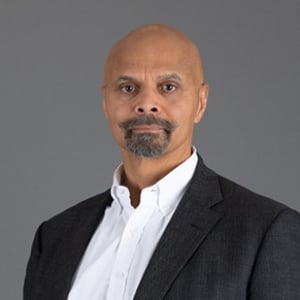
Partner, Benesch, Friedlander, Coplan & Aronoff LLP
Peter focuses his legal practice on representing management in employment-related litigation and in contract negotiations, NLRB proceedings, EEO matters and arbitration.
Peter Kirsanow is a partner with Benesch’s Labor & Employment Practice Group. He returned to Benesch in January 2008 after serving as a presidential appointee to the National Labor Relations Board (NLRB) in Washington D.C. for two years. While serving on the NLRB, he was involved with significant decisions including Oakwood Healthcare, Inc., Dana/Metaldyne and Oil Capital Sheet Metal, Inc. In addition, Peter testified before the Senate Judiciary Committee on the nominations of John Roberts, Samuel Alito, Sonia Sotomayor, Elena Kagan and Neil Gorsuch to the Supreme Court. He also continues to testify before and advise members of the U.S. Congress on employment law matters, most recently on November 18 before the House Subcommittee on Investigations and Oversight regarding disparate impact theory.
Peter was recently reappointed by the Majority Leader of the House of Representatives to his fourth consecutive six-year term on the U.S. Commission on Civil Rights. This is a part-time position which will expire in December 2025.
Recently, Peter and a team of Benesch attorneys served as lead counsel to the National Association of Manufacturers in litigation before the U.S. Circuit Court for the District of Columbia against the NLRB, challenging the Board’s Notice of Employer Rights Posting Rule. The court ruled in favor of Benesch’s client, striking down the NLRB’s Rule in its entirety. This ruling impacts over 6,000,000 employers nationwide which would have been subject to the posting requirement.
Additionally, Peter is past chair of the board of directors of the Center for New Black Leadership and is a member of Benesch’s Diversity & Inclusion Committee. This committee helps ensure that the firm promotes an environment in which differences are respected, employees are treated fairly, and individual skills and talents are valued.
Special Adviser, Media and Democracy Reform Initiative, Common Cause
Michael Copps is special adviser for Common Cause's Media and Democracy Reform Initiative.
From 2001-11, he served as a member of the Federal Communications Commission, where his tenure was marked by a consistent embrace of the public interest. As a strong voice in opposition to consolidation in the media, he dissented in the FCC vote on the Comcast-NBC Universal merger. He has been a consistent proponent of localism in programming and diversity in media ownership. Though retired from the Commission, he has maintained a commitment to an inclusive, informative media landscape. In addition to his work at Common Causes, Mr. Copps sits on the boards of Free Press and Public Knowledge.
Before joining the FCC, Mr. Copps served as assistant secretary of commerce for trade development at the Department of Commerce and chief of staff to U.S. Sen. Fritz Hollings from the early 1970s to 1983. He has a Ph.D. in History from the University of North Carolina at Chapel Hill.
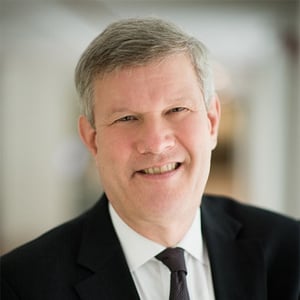
Senior Fellow and Director, Center for the Economics of the Internet, Hudson Institute
Harold Furchtgott-Roth is a senior fellow and director of the Center for the Economics of the Internet at Hudson Institute.
Mr. Furchtgott-Roth founded Furchtgott-Roth Economic Enterprises in 2003. He frequently comments on issues related to the communications sector of the economy. From 2001 to 2003, he was a visiting fellow at the American Enterprise Institute where he published A Tough Act to Follow, chronicling the difficulties implementing the Telecommunications Act of 1996.
From 1997 through 2001, Mr. Furchtgott-Roth served as a commissioner of the Federal Communications Commission. In that capacity, he served on the Joint Board on Universal Service. He is one of the few economists to have served as a federal regulatory commissioner, and the only one to have served on the Federal Communications Commission.
Before his appointment to the FCC, he was chief economist for the House Committee on Commerce and a principal staff member on the Telecommunications Act of 1996. Earlier in his career, he was a senior economist with Economists Incorporated and a research analyst with the Center for Naval Analyses.
Mr. Furchtgott-Roth is a member of the Washington Legal Foundation’s Legal Policy Advisory Board. He is the coauthor of three books: Cable TV: Regulation or Competition, with R.W. Crandall; Economics of A Disaster: The Exxon Valdez Oil Spill, with B.M. Owen et al; and International Trade in Computer Software, with S.E. Siwek.
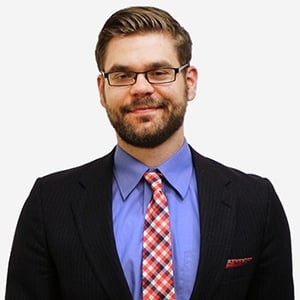
Senior Research Fellow, Center for Growth and Opportunity
William Rinehart is a Senior Research Fellow at the Center for Growth and Opportunity at Utah State University.
He specializes in telecommunication, Internet, and data policy, with a focus on emerging technologies and innovation. His work has appeared in The Wall Street Journal, Bloomberg, Wired, Morning Consult, The Hill, Forbes, Reason, Marginal Revolution, Overlawyered, and on BBC Radio and NPR, just to name a few. Rinehart speaks regularly on topics related to tech policy and has been cited in regulatory orders from the FCC as well as Supreme Court petitions.
Rinehart came to the Center from the American Action Forum, where he served as Director of Technology and Innovation Policy. He was also previously a Research Fellow at TechFreedom and the Director of Operations at the International Center for Law & Economics. Additionally, he worked for the Institute for Policy and Civic Engagement as the Research Assistant in Technology and Civic Engagement. Rinehart is currently a Frédéric Bastiat Fellow at the Mercatus Center and previously a Fellow at the Internet Law & Policy Foundry. Additionally, he served on the Federal Communications Commission’s Broadband Deployment Committee and Consumer Advocacy Committee.
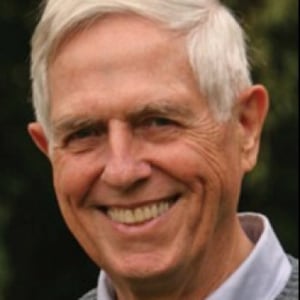
U.S. Court of Appeals for the D.C. Circuit (ret.) and former U.S. Senator
James L. Buckley was born in New York City in 1923, grew up in rural Connecticut, and received his B.A. degree from Yale. Following service as a naval officer in World War II, he returned to New Haven to secure his law degree. After several years in private practice, he joined a group of small companies engaged in oil exploration abroad. He was elected to the United States Senate in 1970 as the candidate of New York's Conservative Party. He failed of re-election; but he has since served as an under secretary of state in the Reagan administration, as president of Radio Free Europe/Radio Liberty in Munich, Germany, and, most recently, as a judge on the U.S. Court of Appeals for the District of Columbia Circuit. He retired in 2000 and now resides in Bethesda, Maryland.
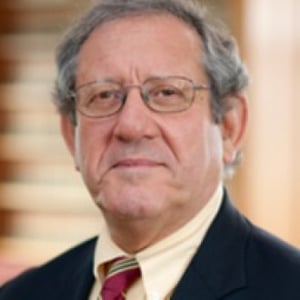
Professor of Law, Brooklyn Law School
Joel Gora has been a professor at Brooklyn Law School since 1978, teaching constitutional law, civil procedure and a number of other related courses. He also served as Associate Dean for Academic Affairs from 1993-1997 and again from 2002 through 2006. He is the author of a number of books and articles dealing with First Amendment and other constitutional law issues. He is also an expert on campaign finance law matters, working in the field as both an advocate and an academic. Prior to joining the Brooklyn Law School faculty, Professor Gora was a law clerk at the United States Court of Appeals for the Second Circuit for two years after he graduated from law school, and then a full-time lawyer with the American Civil Liberties Union for almost ten years. During his ACLU career, he worked on dozens of United States Supreme Court cases, including many landmark rulings. Chief among them was the case of Buckley v. Valeo, the Court’s historic 1976 decision on the relationship between campaign finance restrictions and First Amendment rights. He has worked, on behalf of the ACLU, on almost every one of the important campaign finance cases to come before the Court. He also served for more than 25 years on the board of directors of the New York Civil Liberties Union, and as one of its general counsel. He has served as well on a number of policy committees of the New York City Bar, and was also a member of the board of the Federal Bar Council. Professor Gora received his B.A. from Pomona College and LL.B. from Columbia Law School.
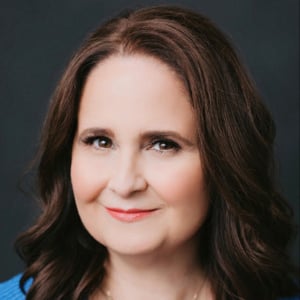
Chief Judge, United States Court of Appeals, Fifth Circuit
Jennifer Walker Elrod is the Chief Judge of the United States Court of Appeals for the Fifth Circuit. She was nominated to the Fifth Circuit in 2007, and she served as a Circuit Judge on the court until assuming the role of Chief Judge in October 2024. Prior to serving as a Circuit Judge, Chief Judge Elrod was appointed and then twice elected Judge of the 190th District Court of Harris County, Texas, where she spent over five years presiding over more than 200 jury and non-jury trials.
Chief Judge Elrod graduated cum laude from Harvard Law School, where she was an active member of the Harvard Federalist Society, an Ames Moot Court finalist, and a Senior Editor of the Harvard Journal of Law & Public Policy. She clerked for the Honorable Sim Lake in the Southern District of Texas. Before serving as a judge, Chief Judge Elrod worked in private practice, focusing on civil litigation, antitrust, and employment matters.
She has been repeatedly recognized for her work as a jurist, as well as for her pro bono work and contributions to the community. She has been named the 2022 Texas Review of Law & Politics’ Jurist of the Year, the 2018 Harvard Federalist Society’s Alumni of the Year, the 2016–17 Texas Association of Civil Trial and Appellate Specialists’ Appellate Judge of the Year, and the 2008 Mexican-American Bar Association of Texas’s Judge of the Year.
Chief Judge Elrod is actively engaged in the academic and legal communities. Chief Judge Elrod currently serves on the Board of Directors and as the Jurist-in-Residence at the South Texas College of Law, where she teaches civil procedure and First Amendment law. She is also a member of the American Law Institute and of the Board of Advisors for the Harvard Journal of Law & Public Policy, and she is a former member of the Board of Regents of her alma mater, Baylor University, and the Board of Visitors at Brigham Young University Law School. She previously served as the Chair of the Codes of Conduct Committee for the Judicial Conference of the United States. She has also served as the M.D. Anderson Visiting Public Service Professor at the Texas Tech University School of Law and as Jurist-in-Residence at Brigham Young University Law School, and she has taught legal writing at the University of Houston Law Center. She presented the Lewis F. Powell, Jr. Distinguished Lecture at the Washington and Lee University School of Law and is a frequent speaker on the topics of trial and appellate procedure, ethics, employment law, and constitutional law. Chief Judge Elrod also serves on the board of the Garland R. Walker Inn of Court, and co-produces an annual musical CLE, for which her pupilage group has won multiple national awards.
Chief Judge Elrod’s publications include: Trial by Siri: AI Comes to the Courtroom; Don’t Mess with Texas Judges: In Praise of the State Judiciary; For Good: Enriching Your Practice and Your Life Through Pro Bono and Community Service; Is the Jury Still Out?: A Case for the Continued Viability of the American Jury; and W(h)ither the Jury? The Diminishing Role of the Jury Trial in our Legal System.

Gun Rights: Will the 2nd Amendment Survive the Current Executive Branch?
Corporate Inversions: Tax Dodge, or Symptom of the Tax Code?
TeleforumOvercriminalization and Prosecutorial Abuse by the Department of Justice
Baltimore, MarylandKelo v. City of New London: Ten Years Later
HoustonProving Racial Discrimination: The Ferguson DOJ Report
St. Louis, MissouriTelecommunications Transactions and the Public Interest
TeleforumA Landmark Decision Turns 40: A Conversation on Buckley v. Valeo
BrooklynRoe v. Wade at 43: The Past, Present, and Future
Cleveland, OhioOMB Memo Tries to Get Ahead of Midnight Regulations
Regulatory activity tends to surge in the final year of a presidential administration. Significant legislation from...
Empty Courtrooms: The Decline of the American Trial