
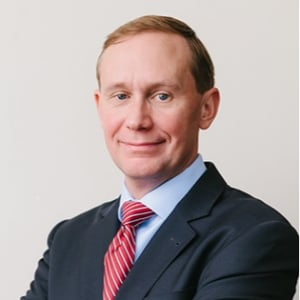
Associate Professor, Boston College Law School
David Olson is an associate professor and the Faculty Director of the Program on Innovation and Entrepreneurship. He teaches patent law, intellectual property law, antitrust law, and various seminars. His research and writing primarily focus on patents, copyrights, antitrust, and incentives for innovation and competition. Since joining BC Law in 2007, he has been recognized for his teaching excellence and contributions. In 2011, he received the Business & Law Society Faculty Award for Achievement in Business & Law. In 2012, he received the Professor Emil Slizewski Award for Faculty Excellence. For one semester in 2015, Olson served as a visiting professor at Pontifical Catholic University, Rio de Janeiro, Brazil, where he conducted research and taught a course on intellectual property.
Olson has published scholarly articles on patent law, copyright law, antitrust, music licensing, and first amendment copyright issues. His writing has been cited in Supreme Court and other legal opinions. He has testified before the U.S. Congress on matters of drug patents, FDA regulation, and antitrust.
The media frequently seeks Olson’s insights and opinions. He has been quoted in the Wall Street Journal, Associated Press, and Reuters, among others. He has appeared as a guest panelist on WBUR’s Radio Boston, WAMU's Kojo Namdi Show, and Public Radio Canada. His op-eds have appeared in the Chicago Tribune, Washington Times, and The Hill.
Olson came to Boston College from Stanford Law School's Center for Internet and Society, where he conducted research on patent law and litigated copyright fair use impact cases. Before entering academia, Olson practiced law as a patent litigator. He clerked for Judge Jerry Smith of the U.S. Court of Appeals for the Fifth Circuit.
Associate Professor, Boston College Law School
David Olson is an associate professor and the Faculty Director of the Program on Innovation and Entrepreneurship. He teaches patent law, intellectual property law, antitrust law, and various seminars. His research and writing primarily focus on patents, copyrights, antitrust, and incentives for innovation and competition. Since joining BC Law in 2007, he has been recognized for his teaching excellence and contributions. In 2011, he received the Business & Law Society Faculty Award for Achievement in Business & Law. In 2012, he received the Professor Emil Slizewski Award for Faculty Excellence. For one semester in 2015, Olson served as a visiting professor at Pontifical Catholic University, Rio de Janeiro, Brazil, where he conducted research and taught a course on intellectual property.
Olson has published scholarly articles on patent law, copyright law, antitrust, music licensing, and first amendment copyright issues. His writing has been cited in Supreme Court and other legal opinions. He has testified before the U.S. Congress on matters of drug patents, FDA regulation, and antitrust.
The media frequently seeks Olson’s insights and opinions. He has been quoted in the Wall Street Journal, Associated Press, and Reuters, among others. He has appeared as a guest panelist on WBUR’s Radio Boston, WAMU's Kojo Namdi Show, and Public Radio Canada. His op-eds have appeared in the Chicago Tribune, Washington Times, and The Hill.
Olson came to Boston College from Stanford Law School's Center for Internet and Society, where he conducted research on patent law and litigated copyright fair use impact cases. Before entering academia, Olson practiced law as a patent litigator. He clerked for Judge Jerry Smith of the U.S. Court of Appeals for the Fifth Circuit.
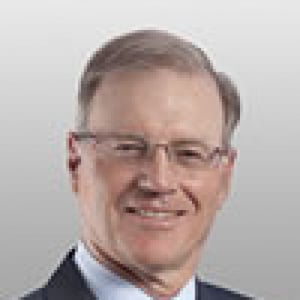
Partner, Covington & Burling LLP
Robert Haslam is a partner in Covington & Burling's Silicon Valley office. His practice has emphasized trial work involving patent and trade secret litigation and other related high technology disputes. He has represented clients in litigation involving a range of arts and practices, including semiconductor products and processes, cryptography, GPS and cellular technology, electronic circuits, microprocessors and software products, and medical devices and other life science products. He has tried cases in both federal and state court. In addition, Mr. Haslam advises clients on strategies relating to intellectual property matters.
Mr. Haslam is a Fellow of the American College of Trial Lawyers, which is composed of the best of the trial bar and is widely considered to be the premier professional trial organization in America. Membership in the College can never be more than 1% of the total lawyer population of any state or province, and fellowship in the College is extended by invitation only to those experienced trial lawyers who have mastered the art of advocacy and whose professional careers have been marked by the highest standards of ethical conduct, professionalism, civility and collegiality.
He has also been recognized as a leading intellectual property lawyer by a number of publications, including Chambers USA; The Recorder, where they named him as one of the top two “go to” patent litigators in Northern California; and the Daily Journal who has named him not only as one of the “brain trust of 25 lawyers who comprise the state’s best and brightest” intellectual property lawyers in California, but as one of the “Top IP Litigators in California” for each year the list has been in existence.
Mr. Haslam has also twice served on, once as chair of, the Northern District of California Patent Rules Committee, which issued revisions to the local rules for the management of patent litigation. These rules have served as a model and have been adopted in whole or in part by other judicial districts.
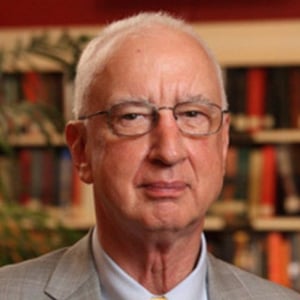
Former Chief Judge, United States Court of Appeals for the Federal Circuit
Judge Michel served for more than 22 years on the Federal Circuit, retiring on May 31, 2010. From December 25, 2004 until his retirement, he also discharged the duties of Chief Judge of this national court, serving simultaneously on the U.S. Judicial Conference -- the Judiciary's governing body -- and by appointment of the Chief Justice on its seven-judge Executive Committee.
He judged several thousand appeals and authored more than 800 opinions, one third concerning intellectual property law. Intellectual Asset Management magazine inducted him into its Hall of Fame and he was designated one of the 50 most influential leaders in intellectual property law in the world. His contributions were also recognized by lifetime achievement and similar awards by the American Intellectual Property Law Association (AIPLA); Intellectual Property Owners Education Foundation (IPO); the American Bar Association's Intellectual Property Section; Managing Intellectual Property magazine; the Sedona Conference; the Patent and Trademark Office Society (PTOS); the New York, Chicago, Philadelphia, and Los Angeles Intellectual Property Law Associations; and the William C. Connor, the Giles S. Rich, and the Richard Linn Intellectual Property American Inns of Court. In 2010 the Los Angeles IP Inn was renamed in his honor as the Paul R. Michel IP Inn.
Judge Michel received the Jefferson Medal, the Eli Whitney Award, and the Katz-Kiley Prize as well as Honorary Doctor of Law degrees from the Catholic University of America and the John Marshall Law School. He is a lifetime Member of Honore of FICPI, the international association of private practitioners of intellectual property law. Williams College granted him the Kellogg Award for "outstanding leadership in law and public service."
Judge Michel has written numerous articles on patent law and advocacy, taught related courses and master classes at George Washington University, the University of Akron, and John Marshall law schools, serving as well on their IP advisory boards and on counterpart boards at the universities of California (Berkley), Washington, and Maryland. He co-authored a casebook, Patent Litigation and Strategy (West, 1999) and an August 2010 editorial in the New York Times on strengthening the patent system to promote prosperity and create new jobs.
A frequent speaker at conferences and law schools during his judicial tenure and since, he retired from a lifetime appointment to be free to speak out on the national need for better patent policy and protection of intellectual property and the vital, unmet resource needs of the courts, the PTO, the International Trade Commission, and other IP-related agencies. He was appointed Distinguished Scholar in Residence by IPO, following his retirement. Judge Michel also consults for law firms and their clients in intellectual property litigations, conducting moot courts, mock trials, case evaluations, editing briefs, advising on strategy and providing mediation and arbitration services.

Professor of Law, Antonin Scalia Law School, George Mason University
Adam Mossoff is Professor of Law at Antonin Scalia Law School, George Mason University. He has published extensively on why patents, copyrights, and other intellectual property rights have been—and should be—legally secured to innovators and creators as property rights. His scholarship has been relied on by the United States Supreme Court, by lower federal courts, and by U.S. federal agencies. He has been invited to testify numerous times before the U.S. Senate and the House of Representatives on intellectual property legislation. His writings on intellectual property policy have also appeared in the Wall Street Journal, New York Times, Forbes, Investors Business Daily, and in other media outlets. His journal articles can be downloaded here.
Professor Mossoff is a longstanding member of the Executive Committee of the Intellectual Property Practice Group of the Federalist Society, on which he served as Chairperson from 2016-2018, and he is Chair of the Intellectual Property Working Group of the Regulatory Transparency Project of the Federalist Society. He is a Senior Fellow and Chair of the Forum for Intellectual Property at the Hudson Institute, a Visiting Intellectual Property Fellow at the Heritage Foundation, and a member of the Board of Directors of the Center for Intellectual Property Understanding. He is a member of the Intellectual Property Rights Policy Committee of ANSI and he has served as Chair and Vice-Chair of the Intellectual Property Committee of the IEEE-USA, on which he remains a member in good standing.
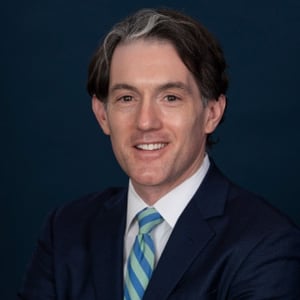
Chief Economist, U.S. Chamber of Commerce
Curtis Dubay is the Chief Economist at the U.S. Chamber of Commerce. He tracks the condition of the economy, analyzes the impact of public policy on economic growth, and runs the Chamber’s Chief Economists Committee. Previously, he was senior economist at the American Bankers Association and a research fellow in tax and economic policy at The Heritage Foundation. He also worked at the accounting firm PricewaterhouseCoopers (PwC) and at the Tax Foundation.
Dubay has researched and published frequently on a wide range of tax and economic issues. He isregularly quoted by the press and has appeared often in the media, including on CNBC, Fox Business, Fox News, and C-SPAN. He has testified before Congress several times and been cited in newspapers such as The Wall Street Journal, The New York Times, The Washington Post, USA Today, and Politico.
Dubay received his master’s degree in economics from the University of Connecticut and his bachelor’s degree in economics and leadership studies from the University of Richmond. He resides in Washington, D.C., with his wife and three sons.
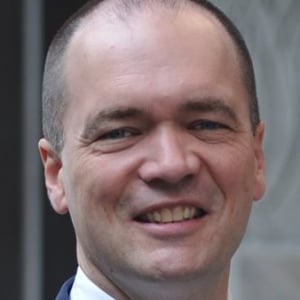
Professor of Law, High Point School of Law
Scott Gaylord directs High Point Law’s Appellate Litigation Clinic and serves as a Professor of Law, teaching Constitutional Law and related upper-level elective courses. The Appellate Clinic works with students to write and file briefs in significant court cases, including appeals before the United States Supreme Court.
Professor Gaylord is a prominent Constitutional Law scholar with an impressive background in both academia and legal practice. He has authored or co-authored 18 substantial law review articles, co-authored a Constitutional Law casebook, and has written more than 35 amicus briefs to the U.S. Supreme Court and federal circuit courts on prominent national cases involving religious liberty and free speech. He is a frequent speaker on constitutional law and First Amendment topics at law schools across the country and has regularly provided commentary on ongoing constitutional issues to national media outlets, including th eNew York Times, USA Today, the Diane Rehm Show, NPR, The National Constitution Center, and Bloomberg Law.
Professor Gaylord also started an appellate advocacy clinic at his former law school and currently serves on the North Carolina Chief Justice’s Commission on Professionalism, along with holding many other service and leadership roles. Prior to joining the academy in 2007, he practiced complex civil and commercial litigation with the Charlotte firm of Robinson Bradshaw & Hinson, and he clerked for Judge Edith H. Jones on the United States Court of Appeals for the Fifth Circuit.
Professor Gaylord earned his B.A. in philosophy and English, summa cum laude, from Colgate University, his Ph.D. in philosophy from the University of North Carolina at Chapel Hill, and his J.D. from Notre Dame Law School, where he also graduated summa cum laude.

Resale Price Maintenance & State Law Holdups
David S. Olson
In this paper, David S. Olson discusses the legal status of resale price maintenance agreements,...
Patent Litigation and Federal Rules
TeleforumHurtful and Demeaning Speech on the University Campus
Dallas, TexasJock Taxes, Internet Taxes & Corporate Inversions: Recent Tax Controversies
Cleveland, OhioGoing, Going, Gone
Allan Meltzer is probably the foremost watcher today of Federal Reserve monetary policy. He certainly...
Resale Price Maintenance & State Law Holdups
David S. Olson
In this paper, David S. Olson discusses the legal status of resale price maintenance agreements,...
Topics
Without Justice Scalia, "Corruption" Cases May Get Hazier
Stephen Klein writes for Pillar of Law: After the unfortunate passing of Justice Antonin Scalia...
"Kill the Sea Turtles" and Other Things You Can't Make the Government Say
Edward Snowden: Patriot or Traitor?
Free Speech on Campus/Trigger Warnings