
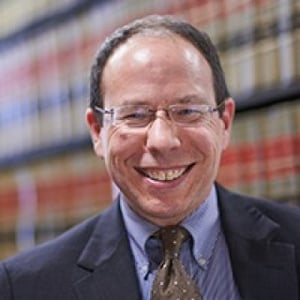
Professor of Law, Michigan State University (currently serving as FCC General Counsel)
Professor Candeub joined the MSU Law faculty in fall 2004. He is also a Fellow with MSU's Institute of Public Utilities. Prior to joining MSU, he served as an advisor at the Federal Communications Commission (FCC). From 1998 to 2000, Professor Candeub was a litigation associate for the Washington D.C. firm of Jones, Day, Reavis & Pogue and also has served as a corporate associate with Cleary, Gottlieb, Steen & Hamilton, also in Washington, D.C. Immediately following law school, he clerked for Chief Judge J. Clifford Wallace, U.S. Court of Appeals for the Ninth Circuit. While in law school, Professor Candeub was an articles editor for the University of Pennsylvania Law Review.
Professor Candeub's scholarly interests focus on the law and regulation of communications, internet, technology. His numerous law review articles and scholarly papers have placed him at the center of legal and policy controversies, and he often writes for popular outlets such as the Wall Street Journal and US News. Federal courts, including the U.S. Supreme Court, have cited and relied upon his work.
He joined the Trump administration in 2019 as Deputy Assistant Secretary of Commerce for Telecommunications and Information and assumed the role of Acting Assistant Secretary. He later joined the Department of Justice as Deputy Associate Attorney General.
Professor Candeub is a senior fellow at the D.C.-based Center of Renewing America.
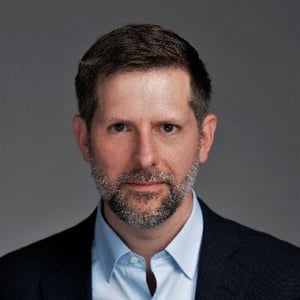
Head of AI Policy, Abundance Institute
Neil Chilson is the Head of AI Policy at the Abundance Institute. Prior to this position, he served as a Senior Research Fellow at the Center for Growth and Opportunity. Chilson is a lawyer, computer scientist, and author of the book “Getting Out of Control: Emergent Leadership in a Complex World.”
Chilson was previously the senior research fellow for Technology and Innovation at Stand Together, where he guided efforts to understand and promote the legal and cultural paradigms that best enable people to discover, innovate, and improve all our lives.
Before Stand Together, Chilson was the Chief Technologist at the Federal Trade Commission, where he focused on the economics of privacy and blockchain-related issues. Previously, he was an attorney advisor to Acting FTC Chairman Maureen K. Ohlhausen. In both roles he advised Chairman Ohlhausen and worked with staff on nearly every major technology-related case, report, workshop, or other FTC proceeding since January 2014. Neil joined the FTC from telecom firm Wilkinson Barker Knauer. Neil is frequently quoted by the press and his work has appeared in numerous news outlets, including The Wall Street Journal, The Washington Post, USAToday, and Newsweek. Neil has a J.D. from The George Washington Law School, a M.S. in computer science from University of Illinois, Urbana-Champaign, and a B.S. in computer science from Harding University.
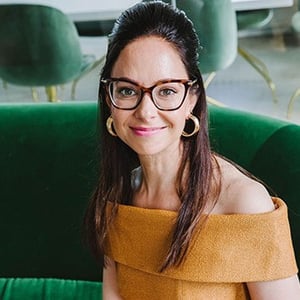
Founder, C. A. Goldberg PLLC
Carrie Goldberg is a victims’ rights attorney who has built a team that provides cutting edge legal help for clients under attack by pervs, assholes, psychos, and trolls. Her book Nobody’s Victim was published in August 2019.
Carrie’s work includes:
Carrie is admitted to practice law in New York State, 1st Appellate Department and the Eastern and Southern New York Districts of United States District Court. She is also admitted to The Supreme Court of the United States, US Court of Appeals for the Second Circuit, Eastern District of New York, Southern District of New York and has been admitted pro hac vice in California, Florida, and Massachusetts. She is also a member of the bar in New York State.
She is the recipient of 2017’s Privacy Champion Award from Electronic Privacy Information Center.
Education:
Background:
Prior to opening her firm in 2014, Carrie was the Associate Director of Legal Services at The Vera Institute of Justice, Inc. Guardianship Project and was a case manager for Nazi victims and Holocaust survivors with Selfhelp Community Services in Manhattan.
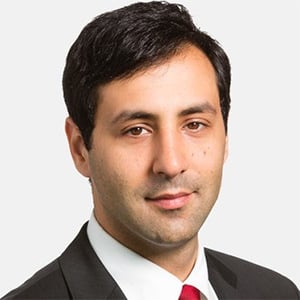
The Heritage Foundation, Associate Director and Research Fellow, B. Kenneth Simon Center for American Studies
Arthur Milikh conducts research on America’s founding principles. As associate director of The Heritage Foundation’s B. Kenneth Simon Center for American Studies, he oversees the center’s research portfolio and gives talks on the tenets of the American political tradition to policymakers, political leaders, and the public.
Before joining Heritage in 2014, Milikh worked for the House Armed Services Committee and at the Hudson Institute, a conservative think tank. He has published articles in a variety of outlets.
He received a bachelor of arts degree in political science and philosophy from Emory University and a master’s degree in political theory from University of Chicago. He is a doctoral candidate at the Catholic University of America.
Milikh currently resides in Washington with his wife.
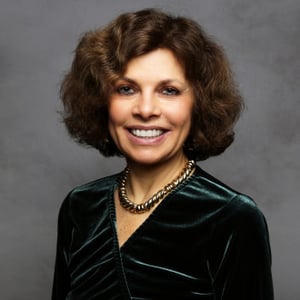
John Marshall Harlan II Professor of Law Emerita, New York Law School; Former President, American Civil Liberties Union
Nadine Strossen, New York Law School Professor Emerita and Senior Fellow at FIRE (the Foundation for Individual Rights and Expression), was national President of the American Civil Liberties Union from 1991 to 2008. An internationally acclaimed free speech scholar and advocate, who regularly addresses diverse audiences and provides media commentary around the world, Strossen is also the Host and Project Consultant for Free To Speak, a 3-hour documentary film series distributed on public television in 2023. Her books about free speech include: Free Speech: What Everyone Needs to Know® (Oxford University Press 2023); HATE: Why We Should Resist It with Free Speech, Not Censorship (Oxford University Press 2018); and Defending Pornography: Free Speech, Sex, and the Fight for Women’s Rights (Scribner 1995), which was republished with a new Preface in 2024 as part of the NYU Classics Series. Her many honors and awards include the National Coalition Against Censorship’s Judy Blume Lifetime Achievement Award for Free Speech. She serves on the Advisory Boards of several organizations that do free speech work, including: ACLU, Academic Freedom Alliance, Foundation Against Intolerance and Racism (FAIR), Heterodox Academy, National Coalition Against Censorship, and the University of Austin.
Professor of Law, Michigan State University (currently serving as FCC General Counsel)
Professor Candeub joined the MSU Law faculty in fall 2004. He is also a Fellow with MSU's Institute of Public Utilities. Prior to joining MSU, he served as an advisor at the Federal Communications Commission (FCC). From 1998 to 2000, Professor Candeub was a litigation associate for the Washington D.C. firm of Jones, Day, Reavis & Pogue and also has served as a corporate associate with Cleary, Gottlieb, Steen & Hamilton, also in Washington, D.C. Immediately following law school, he clerked for Chief Judge J. Clifford Wallace, U.S. Court of Appeals for the Ninth Circuit. While in law school, Professor Candeub was an articles editor for the University of Pennsylvania Law Review.
Professor Candeub's scholarly interests focus on the law and regulation of communications, internet, technology. His numerous law review articles and scholarly papers have placed him at the center of legal and policy controversies, and he often writes for popular outlets such as the Wall Street Journal and US News. Federal courts, including the U.S. Supreme Court, have cited and relied upon his work.
He joined the Trump administration in 2019 as Deputy Assistant Secretary of Commerce for Telecommunications and Information and assumed the role of Acting Assistant Secretary. He later joined the Department of Justice as Deputy Associate Attorney General.
Professor Candeub is a senior fellow at the D.C.-based Center of Renewing America.
Head of AI Policy, Abundance Institute
Neil Chilson is the Head of AI Policy at the Abundance Institute. Prior to this position, he served as a Senior Research Fellow at the Center for Growth and Opportunity. Chilson is a lawyer, computer scientist, and author of the book “Getting Out of Control: Emergent Leadership in a Complex World.”
Chilson was previously the senior research fellow for Technology and Innovation at Stand Together, where he guided efforts to understand and promote the legal and cultural paradigms that best enable people to discover, innovate, and improve all our lives.
Before Stand Together, Chilson was the Chief Technologist at the Federal Trade Commission, where he focused on the economics of privacy and blockchain-related issues. Previously, he was an attorney advisor to Acting FTC Chairman Maureen K. Ohlhausen. In both roles he advised Chairman Ohlhausen and worked with staff on nearly every major technology-related case, report, workshop, or other FTC proceeding since January 2014. Neil joined the FTC from telecom firm Wilkinson Barker Knauer. Neil is frequently quoted by the press and his work has appeared in numerous news outlets, including The Wall Street Journal, The Washington Post, USAToday, and Newsweek. Neil has a J.D. from The George Washington Law School, a M.S. in computer science from University of Illinois, Urbana-Champaign, and a B.S. in computer science from Harding University.
Founder, C. A. Goldberg PLLC
Carrie Goldberg is a victims’ rights attorney who has built a team that provides cutting edge legal help for clients under attack by pervs, assholes, psychos, and trolls. Her book Nobody’s Victim was published in August 2019.
Carrie’s work includes:
Carrie is admitted to practice law in New York State, 1st Appellate Department and the Eastern and Southern New York Districts of United States District Court. She is also admitted to The Supreme Court of the United States, US Court of Appeals for the Second Circuit, Eastern District of New York, Southern District of New York and has been admitted pro hac vice in California, Florida, and Massachusetts. She is also a member of the bar in New York State.
She is the recipient of 2017’s Privacy Champion Award from Electronic Privacy Information Center.
Education:
Background:
Prior to opening her firm in 2014, Carrie was the Associate Director of Legal Services at The Vera Institute of Justice, Inc. Guardianship Project and was a case manager for Nazi victims and Holocaust survivors with Selfhelp Community Services in Manhattan.
The Heritage Foundation, Associate Director and Research Fellow, B. Kenneth Simon Center for American Studies
Arthur Milikh conducts research on America’s founding principles. As associate director of The Heritage Foundation’s B. Kenneth Simon Center for American Studies, he oversees the center’s research portfolio and gives talks on the tenets of the American political tradition to policymakers, political leaders, and the public.
Before joining Heritage in 2014, Milikh worked for the House Armed Services Committee and at the Hudson Institute, a conservative think tank. He has published articles in a variety of outlets.
He received a bachelor of arts degree in political science and philosophy from Emory University and a master’s degree in political theory from University of Chicago. He is a doctoral candidate at the Catholic University of America.
Milikh currently resides in Washington with his wife.
John Marshall Harlan II Professor of Law Emerita, New York Law School; Former President, American Civil Liberties Union
Nadine Strossen, New York Law School Professor Emerita and Senior Fellow at FIRE (the Foundation for Individual Rights and Expression), was national President of the American Civil Liberties Union from 1991 to 2008. An internationally acclaimed free speech scholar and advocate, who regularly addresses diverse audiences and provides media commentary around the world, Strossen is also the Host and Project Consultant for Free To Speak, a 3-hour documentary film series distributed on public television in 2023. Her books about free speech include: Free Speech: What Everyone Needs to Know® (Oxford University Press 2023); HATE: Why We Should Resist It with Free Speech, Not Censorship (Oxford University Press 2018); and Defending Pornography: Free Speech, Sex, and the Fight for Women’s Rights (Scribner 1995), which was republished with a new Preface in 2024 as part of the NYU Classics Series. Her many honors and awards include the National Coalition Against Censorship’s Judy Blume Lifetime Achievement Award for Free Speech. She serves on the Advisory Boards of several organizations that do free speech work, including: ACLU, Academic Freedom Alliance, Foundation Against Intolerance and Racism (FAIR), Heterodox Academy, National Coalition Against Censorship, and the University of Austin.
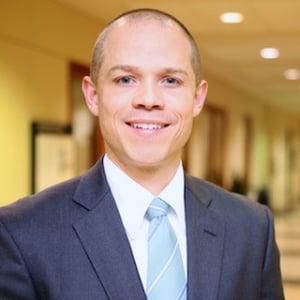
Associate Professor of Law, University of Tennessee College of Law
Professor Areheart is an Associate Professor at UT. He writes about antidiscrimination theory, disability rights, and social movements. Professor Areheart is particularly interested in the structure of employment discrimination laws and the major normative theories that animate them. His articles have been published or are forthcoming in the Yale Law Journal, Minnesota Law Review, Boston College Law Review,University of Chicago Law Review,Michigan Law Review, Indiana Law Journal, Alabama Law Review, and George Washington Law Review.
In 2017, Professor Areheart was awarded the Michael J. Zimmer Award, a national prize recognizing “a rising scholar who values workplace justice and community, and who has made significant contributions to the field of labor and employment law scholarship.” He is a current Chair of the SEALS Prospective Law Teachers Workshop. He is a past Chair of the AALS Employment Discrimination section and the AALS New Law Professors section.
Professor Areheart teaches Business Associations, Contracts, Employment Discrimination, and Employment Law.
Professor of Law and the Mike and Teresa Baker College Professor, The University of Houston Law Center
Johnny Rex Buckles has been a faculty member of the University of Houston Law Center since August of 2000. He has also served as a Visiting Professor of Law at the Washington & Lee University School of Law. Professor Buckles has taught Taxation of Exempt Organizations, Federal Income Tax, Law & Theology, Estate Planning, Trusts & Wills, Contracts and Tax Policy Seminar. Professor Buckles’ primary research interests are in the law of tax and charity, and in law and theology. His publications include a number of law review articles and contributions to collective works. Professor Buckles holds a Juris Doctorate from the Harvard Law School, a Master of Arts in Biblical Studies from Dallas Theological Seminary, and a Bachelor of Science from Oklahoma State University.
Professor of Law, Michigan State University (currently serving as FCC General Counsel)
Professor Candeub joined the MSU Law faculty in fall 2004. He is also a Fellow with MSU's Institute of Public Utilities. Prior to joining MSU, he served as an advisor at the Federal Communications Commission (FCC). From 1998 to 2000, Professor Candeub was a litigation associate for the Washington D.C. firm of Jones, Day, Reavis & Pogue and also has served as a corporate associate with Cleary, Gottlieb, Steen & Hamilton, also in Washington, D.C. Immediately following law school, he clerked for Chief Judge J. Clifford Wallace, U.S. Court of Appeals for the Ninth Circuit. While in law school, Professor Candeub was an articles editor for the University of Pennsylvania Law Review.
Professor Candeub's scholarly interests focus on the law and regulation of communications, internet, technology. His numerous law review articles and scholarly papers have placed him at the center of legal and policy controversies, and he often writes for popular outlets such as the Wall Street Journal and US News. Federal courts, including the U.S. Supreme Court, have cited and relied upon his work.
He joined the Trump administration in 2019 as Deputy Assistant Secretary of Commerce for Telecommunications and Information and assumed the role of Acting Assistant Secretary. He later joined the Department of Justice as Deputy Associate Attorney General.
Professor Candeub is a senior fellow at the D.C.-based Center of Renewing America.
Assistant Professor, Savannah Law School
Professor D’Agostino is an Assistant Professor teaching Torts and Evidence. He also has interests in contracts, international business law, law and philosophy, and law and science, particularly the effects of modern science on law. Formerly a Legal Fellow in the D.C. office of Congressman Tom Price of Georgia, a Researcher at Georgetown University Law Center, and a Visiting Scholar at the Southeastern Legal Foundation, he also served as a U.S. Senate Judiciary Committee Law Clerk for Senator Tom Coburn of Oklahoma and as a Legal Intern for the U.S. Attorney’s Office for the District of Columbia, Civil Division.
Professor D’Agostino was a member of the Editorial Board of the Virginia Law Review and Executive Editor of the Virginia Journal of International Law. In 2010, he served on the National Symposium Editorial Board of the Harvard Journal of Law & Public Policy and as a pro bono researcher for the U.N. Special Rapporteur on Violence Against Women. He helped to organize the Federalist Society’s 2011 National Student Symposium held at the University of Virginia School of Law and keynoted by U.S. Supreme Court Justice Clarence Thomas, a Savannah area native.
Welpton & Wise Professor of Law, University of Nebraska College of Law
Professor Rick Duncan is the Welpton & Wise Professor of Law at the University Of Nebraska College Of Law. He is a graduate of the Cornell Law School and served as an editor of the Cornell Law Review. He teaches Constitutional Law with a special emphasis on the law of religious freedom, free speech, and federalism. Duncan has written numerous books, articles, and commentaries on a wide variety of legal topics. His recent publications include an article on Justice Scalia’s legacy, another on Kermit Gosnell and Roe v. Wade, a piece on the Electoral College and Federalism, a 2019 piece on Masterpiece Cakeshop and the First Amendment, and three recent articles on the “no compelled speech” doctrine as a First Amendment defense against authoritarianism and tyranny. His most recent article, on School Choice and the First Amendment, will be published in 2023 in Case Western Law Review. He is also the co-author of a book on Secured Transactions under Article 9 of the UCC. He served as Chairman of the Nebraska Advisory Committee to the U.S. Commission on Civil Rights during the Reagan Administration. He also loves to speak at Federalist Society meetings around the country on life, liberty, and the pursuit of federalism.
Duncan has five children, five grandchildren, and a wonderful wife who help him pursue happiness. He loves lifting weights (particularly going heavy on the incline bench press), attending Broadway musicals and plays, including Hamilton: An American Musical which he has seen 12 times (possibly a Nebraska record). He regularly reads both the Bible and the New York Times because it is important to keep up with what both sides have to say. He loves following major league baseball, especially the San Diego Padres. And his favorite legal aphorism is “first come rights then comes government to secure those rights.”
Associate Professor, Universite de Montreal
Associate Dean for Administrative Affairs, The George Washington University, 2001-2003
Professor of Law, Roger Williams University School of Law, 1995-2001.
Selected Publications:
Regulatory Takings and the Original Understanding, 45 Wm. & Mary Law Review 2053 (2004)
Judicial Review Before John Marshall, 72 George Washington Law Review 51 (2003)
Public Use and the Original Understanding of the Takings Clause, 53 Hastings Law Journal 1245 (2002)
The Economic Origins of the Seventh Amendment, 87 Iowa Law Review 145 (2001)
The Law-Finding Function of the American Jury, 1999 Wisconsin Law Review 377 (1999)
Sheila M. McDevitt Professor of Law and Faculty Director of the Election Law Center, Florida State University College of Law
Professor Morley joined FSU Law in 2018, and teaches and writes in the areas of election law, constitutional law, remedies, and the federal courts. He is best known for his work on election emergencies and post-election litigation, nationwide and other defendant-oriented injunctions, the jurisdiction of the federal courts and their equitable powers more generally. He has testified before congressional committees, made presentations to election officials for the U.S. Election Assistance Commission and participated in bipartisan blue-ribbon groups to develop election reforms. The governor of Florida also appointed Professor Morley to the Criminal Punishment Code Task Force, to propose potential revisions to the legislature.
The U.S. Supreme Court has cited several of his articles, and he was counsel of record for the successful Petitioner in a landmark campaign finance case. Professor Morley has appeared on C-SPAN, Court TV, Fox News and numerous local news programs, and has been quoted in the Washington Post, Los Angeles Times, Roll Call, Politico, U.S. News and World Report, and a wide range of other national publications. His work has been published in many of the nation’s top law reviews, including the Georgetown Law Journal, Northwestern University Law Review, Boston University Law Review and Emory Law Journal.
Before joining FSU Law, Professor Morley was a Climenko Fellow and Lecturer in Law at Harvard Law School. Prior to his experience in academia, he served in government as special assistant to the General Counsel of the Army at the Pentagon, as well as a law clerk for Judge Gerald B. Tjoflat of the U.S. Court of Appeals for the Eleventh Circuit. During his tenure with the Army General Counsel’s office, he was awarded the Meritorious Civilian Service Award and the Army Staff Lapel Pin. He also worked as an associate at Williams & Connolly LLP and the Supreme Court & Appellate group of Winston & Strawn, LLP, both in Washington, D.C.
Professor Morley earned his J.D. from Yale Law School in 2003, where he was a senior editor on the Yale Law Journal; served on the moot court board; and received the Thurman Arnold Prize for Best Oralist in the Morris Tyler Moot Court of Appeals.
Professor of Law, Florida Coastal School of Law
Prof. Shannon has expertise in civil procedure, legal process, and federal courts and litigation. Prior to joining Florida Coastal School of Law in 2004, Prof. Shannon was an Instructor/Visiting Associate Professor at University of Idaho College of Law and an Attorney with Helsell Fetterman LLP. He earned a J.D. from University of Washington School of Law and a B.A. from University of Washington.

Professor of Law, South Texas College of Law Houston
Josh Blackman is a national thought leader on constitutional law and the United States Supreme Court. Josh’s work was quoted during two presidential impeachment trials. He has testified before Congress and advises federal and state lawmakers. Josh regularly appears on TV, including NBC, CBS, ABC, Fox, and the BBC. Josh is also a frequent guest on NPR and other syndicated radio programs. He has published commentaries in the New York Times, Wall Street Journal, Washington Post, and leading national publications.
Since 2012, Josh has served as a professor at the South Texas College of Law Houston. He holds the Centennial Chair of Constitutional Law. Josh is an Adjunct Fellow at the Manhattan Institute. Josh has written more than seven dozen law review articles that have been cited more than a thousand times. Josh was selected as the Jurist of the Year by the Texas Journal of Law & Public Policy, received the inaugural Meese III Originalism Award, and was awarded the Inaugural Joseph Story Award. Josh was selected by Forbes Magazine for the “30 Under 30” in Law and Policy. Josh is the President of the Harlan Institute, and founded FantasySCOTUS, the Internet’s Premier Supreme Court Fantasy League. He blogs at the Volokh Conspiracyand posts@JoshMBlackman.
Professor of Law, Michigan State University (currently serving as FCC General Counsel)
Professor Candeub joined the MSU Law faculty in fall 2004. He is also a Fellow with MSU's Institute of Public Utilities. Prior to joining MSU, he served as an advisor at the Federal Communications Commission (FCC). From 1998 to 2000, Professor Candeub was a litigation associate for the Washington D.C. firm of Jones, Day, Reavis & Pogue and also has served as a corporate associate with Cleary, Gottlieb, Steen & Hamilton, also in Washington, D.C. Immediately following law school, he clerked for Chief Judge J. Clifford Wallace, U.S. Court of Appeals for the Ninth Circuit. While in law school, Professor Candeub was an articles editor for the University of Pennsylvania Law Review.
Professor Candeub's scholarly interests focus on the law and regulation of communications, internet, technology. His numerous law review articles and scholarly papers have placed him at the center of legal and policy controversies, and he often writes for popular outlets such as the Wall Street Journal and US News. Federal courts, including the U.S. Supreme Court, have cited and relied upon his work.
He joined the Trump administration in 2019 as Deputy Assistant Secretary of Commerce for Telecommunications and Information and assumed the role of Acting Assistant Secretary. He later joined the Department of Justice as Deputy Associate Attorney General.
Professor Candeub is a senior fellow at the D.C.-based Center of Renewing America.
Professor of Law and Jamie L. Whitten Chair in Law and Government, University of Mississippi School of Law
Christopher Green (https://law.olemiss.edu/faculty-directory/christopher-green/) is Professor of Law and Jamie L. Whitten Chair in Law and Government at the University of Mississippi, where he has taught since 2006. He is a graduate of Princeton University and Yale Law School, and has a PhD in philosophy from the University of Notre Dame. He clerked for Judge Rhesa H. Barksdale on the Fifth Circuit and is the author of Equal Citizenship, Civil Rights, and the Constitution: The Original Sense of the Privileges or Immunities Clause (2015) and a large number of articles and essays on constitutional theory and the Fourteenth Amendment, including the two-part Original Sense of the (Equal) Protection Clause and Clarity and Reasonable Doubt in Early State-Constitutional Judicial Review. He is an affiliated scholar with the University of San Diego Center for the Study of Constitutional Originalism.
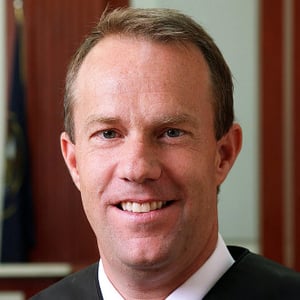
Associate Chief Justice, Utah Supreme Court
Thomas R. Lee was appointed to the Utah Supreme Court by Governor Gary Herbert in July 2010. He currently serves as Associate Chief Justice and as a member of the Utah Judicial Council. He also chaired the Supreme Court's Advisory Committee on Professionalism and Civility during a time in which the court promulgated Standards of Professionalism and Civility for judges in Utah. Justice Lee is a graduate, with high honors, of the University of Chicago Law School. After law school, he served as a law clerk for Judge J. Harvie Wilkinson, III, of the United States Court of Appeals for the Fourth Circuit and then for Justice Clarence Thomas of the United States Supreme Court. Justice Lee then joined the law firm now known as Parr, Brown, Gee & Loveless, where he became a shareholder. Prior to his appointment to the bench, Justice Lee was a full-time professor at the law school at Brigham Young University, where he continues to serve as Distinguished Lecturer. During his years as a full-time law professor, he maintained a part-time intellectual property litigation practice with Howard, Phillips, & Andersen. He also developed a part-time appellate practice, arguing numerous cases in federal courts throughout the country and in the United States Supreme Court. In 2004 - 05, Justice Lee served as Deputy Assistant Attorney General in the Civil Division of the U.S. Department of Justice.
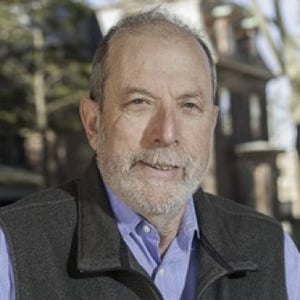
Distinguished Professor of Law, Rutgers Law School
Earl Maltz is a Distinguished Professor and the author of two books and more than 50 articles on constitutional law, statutory interpretation, the role of the courts and legal history. He teaches constitutional law, employment discrimination, conflicts of law and a seminar on the Supreme Court.
Professor Maltz is the author of Rethinking Constitutional Law: Originalism, Interventionism, and the Politics of Judicial Review (1994), Civil Rights, The Constitution and Congress, 1863-1865 (1990), and over 50 articles on constitutional law, statutory interpretation, the role of the courts and legal history. He received his B.A. from Northwestern University, where he was elected to Phi Beta Kappa, and his J.D. cum laude from Harvard. Professor Maltz teaches Constitutional Law, Employment Discrimination, Conflicts of Law, and a seminar on the Supreme Court.
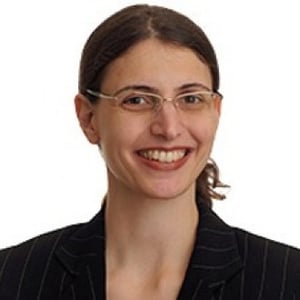
Professor of Law and Director of the Center for Intellectual Property Law, Maurice A. Deane School of Law at Hofstra University
Professor Manta teaches intellectual property law subjects. Her research examines the intersection between intellectual property law and social science, with a focus on psychology. She has most recently written about the hedonic value of trademarks and its legal implications, the problem of cognitive bias in copyright infringement litigation, price discrimination through software licensing in the age of the Internet of Things, and the role of criminal sanctions in intellectual property. Professor Manta has published or has forthcoming work in the Emory Law Journal, William & Mary Law Review, Iowa Law Review, Alabama Law Review, Boston College Law Review, Ohio State Law Journal, Washington and Lee Law Review, Harvard Journal of Law & Technology, Stanford Technology Law Review, Florida Law Review, Arizona Law Review, and Cornell Law Review Online, among others. She is also a co-author for a forthcoming textbook on criminal law issues in intellectual property. Professor Manta has further been a guest blogger for PrawfsBlawg and for Concurring Opinions. In 2014, she received the Lawrence A. Stessin Prize for Outstanding Scholarly Publications, which is awarded to two junior faculty members across all disciplines at Hofstra University.
Before joining the law school faculty in 2012, Professor Manta was an Assistant Professor of Law at the Case Western Reserve University School of Law. She was a Bigelow Teaching Fellow and Lecturer in Law at the University of Chicago Law School from 2007 to 2009. Professor Manta has also served on the faculties of Brooklyn Law School, The George Washington University School of Law, and the University of Arkansas at Little Rock William H. Bowen School of Law. She clerked for Judge Morris S. Arnold on the U.S. Court of Appeals for the Eighth Circuit for the 2006-2007 term.
While earning her J.D. at Yale Law School, Professor Manta was the grand prize winner of the Foley & Lardner LLP Intellectual Property Writing Competition. She also served as tributes editor of the Yale Law Journal, articles editor of the Yale Law & Policy Review, and editor of the Yale Journal on Regulation. She graduated magna cum laude from Yale University with a B.A. in psychology.
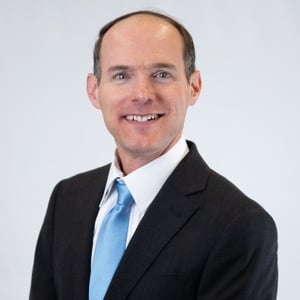
Associate Professor & Director, Constitutional Government Initiative, Wheatley Institute, Brigham Young University
James C. Phillips is the Constitutional Government Initiative Director and an associate professor at BYU’s Wheatley Institute. He is also a fellow with the UC-Berkeley School of Law’s Public Law and Policy Program and an academic affiliate with the D.C.-based law firm Schaerr|Jaffe. His scholarship has been cited by judges around the country, including at the U.S. Supreme Court, and has been covered in various media outlets, including the New York Times Magazine, USA Today, Reuters, CNN, and Fox News. He is a member of the Executive Committee of the Federalist Society's Religious Liberty Practice Group and the J. Reuben Clark Law Society Religious Liberty Committee.
Prior to joining Wheatley, Phillips was associate professor of law at Chapman University’s Fowler School of Law, where he taught Constitutional Law, Religion and the Constitution, Civil Procedure, Family Law, and Professional Responsibility and was named 1L Professor of the Year. Dr. Phillips has taught Administrative Law at BYU’s J. Reuben Clark Law School, where he also helped conceive and design the Corpus of Founding-Era American English. He was also a Non-resident Fellow with Stanford Law School’s Constitutional Law Center.
Dr. Phillips has published dozens of academic articles, primarily in law journals, but also communications, business, and history journals. His longer pieces have been published in, for example, the University of Pennsylvania Law Review, the Southern California Law Review, and the Harvard Journal of Law and Public Policy, and his shorter articles have been published in journals such as the Yale Law Journal Forum and the Duke Law Journal Online. Dr. Phillips has also written op-eds on constitutional issues for Newsweek, The Atlantic, the Los Angeles Times, the Orange County Register, Deseret News, and National Review.
Prior to his university posts, Dr. Phillips practiced law as a Constitutional Law Fellow for the Becket Fund for Religious Liberty and an associate for Kirton | McConkie. He has worked on dozens of cases at the U.S. Supreme Court, as well as cases in federal and state courts throughout the country. He is a member of the bar in Utah and D.C. He clerked for Judge Thomas B. Griffith on the U.S. Court of Appeal for the D.C. Circuit and for Justice Thomas R. Lee on the Utah Supreme Court. Dr. Phillips earned his JD, Order of the Coif, from UC-Berkeley’s School of Law, where he was a member of the California Law Review. He also has a PhD in Jurisprudence & Social Policy from UC-Berkeley, an M.A. in Mass Communication from BYU, and a B.A. in History from Arizona State University.
Professor, Case Western Reserve Univ. School of Law
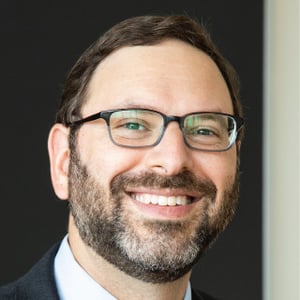
Antonin Scalia Professor of Law, Harvard Law School
Stephen E. Sachs is the Antonin Scalia Professor of Law at Harvard Law School, where he teaches civil procedure, conflict of laws, and seminars on constitutional law. His research focuses on the law and theory of constitutional interpretation, the jurisdiction of state and federal courts, the history of procedure and private law, and the role of the general common law in the U.S. legal system.
Sachs has authored numerous articles, essays, and book chapters. He is an elected member of the American Law Institute, an adviser to the ALI’s project on the Restatement of the Law (Third), Conflict of Laws, a former member of the Judicial Conference’s Advisory Committee on Appellate Rules, and a founding member of the Academic Freedom Alliance.
In 2020, Sachs received the Federalist Society’s Joseph Story Award, which recognizes a young academic who has demonstrated excellence in legal scholarship, a commitment to teaching, a concern for students, and who has made a significant public impact in a manner that advances the rule of law in a free society.
Sachs previously taught at Duke University School of Law and as a visiting professor at the University of Chicago Law School. Before entering academia, he practiced in the Washington, D.C., litigation group of Mayer Brown LLP, and he clerked for Chief Justice John G. Roberts Jr. as well as for Judge Stephen F. Williams of the U.S. Court of Appeals for the D.C. Circuit.
Sachs received his J.D. from Yale Law School, where he was executive editor of the Yale Law Journal and served both as executive editor and articles editor of the Yale Law & Policy Review. A Rhodes Scholar, he graduated from Oxford University with a first-class BA (Hons) degree in philosophy, politics, and economics. He received his A.B. degree summa cum laude in history from Harvard University, earning the Sophia Freund Prize.
Sachs is a licensed attorney in Massachusetts and the District of Columbia, and he is authorized to practice before the D.C. Circuit, the Second Circuit, the Seventh Circuit, and the Supreme Court of the United States.

Should Big Tech Platforms Be Viewpoint Neutral? Should the Government Care?
Adam Candeub, Neil Chilson, Carrie Goldberg, Arthur Milikh, Nadine Strossen
On March 4, 2020, the Regulatory Transparency Project sponsored a symposium with the University of...
Should Big Tech Platforms Be Viewpoint Neutral? Should the Government Care?
Penn Law Federalist Society Symposium: Regulating Big Tech
Philadelphia, PA7 Minute Presentations of Works in Progress Panel 2-A
19th Annual Faculty Conference
San Francisco, CA7 Minute Presentations of Works in Progress Panel 2-A
18th Annual Faculty Conference
New York, NY