Senior Fellow and Director of Constitutional Studies, Manhattan Institute
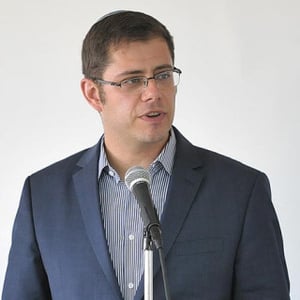
Ilya Shapiro is a senior fellow and director of constitutional studies at the Manhattan Institute and a contributing editor of City Journal. Previously he was executive director and senior lecturer at the Georgetown Center for the Constitution, and before that a vice president of the Cato Institute.
Shapiro is the author of Lawless: The Miseducation of America’s Elites (2025) and Supreme Disorder: Judicial Nominations and the Politics of America’s Highest Court (2020), coauthor of Religious Liberties for Corporations? (2014), and editor of 11 volumes of the Cato Supreme Court Review (2008-18). He has contributed to a variety of academic, popular, and professional publications, including the Wall Street Journal, Harvard Journal of Law & Public Policy, Washington Post, Los Angeles Times, USA Today, National Review, and Newsweek. He also regularly provides commentary for various media outlets, writes the Shapiro’s Gavel newsletter on Substack, and once appeared on the Colbert Report.
Shapiro has testified many times before Congress and state legislatures and has filed more than 500 amicus curiae “friend of the court” briefs in the Supreme Court. He lectures regularly on behalf of the Federalist Society, is a member of the board of fellows of the Jewish Policy Center, was an inaugural Washington Fellow at the National Review Institute, and has been an adjunct law professor at the George Washington University and University of Mississippi. He is also the chairman of the board of advisers of the Mississippi Justice Institute, a barrister in the Edward Coke Appellate Inn of Court, and a former member of the Virginia Advisory Committee to the U.S. Commission on Civil Rights.
Earlier in his career, Shapiro was a special assistant/adviser to the Multi-National Force in Iraq on rule-of-law issues and practiced at Patton Boggs and Cleary Gottlieb. Before entering private practice, he clerked for Judge E. Grady Jolly of the U.S. Court of Appeals for the Fifth Circuit. He holds an AB from Princeton University, an MSc from the London School of Economics, and a JD from the University of Chicago Law School.
Director, Robert A. Levy Center for Constitutional Studies, Cato Institute
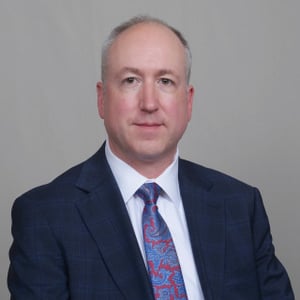
Thomas Berry is the director in the Cato Institute’s Robert A. Levy Center for Constitutional Studies and editor in chief of the Cato Supreme Court Review. Before joining Cato, he was an attorney at Pacific Legal Foundation and clerked for Judge E. Grady Jolly of the U.S. Court of Appeals for the Fifth Circuit. His academic work has appeared in NYU Journal of Law and Liberty, Washington and Lee Law Review Online, and Federalist Society Review. His popular writing has appeared in The Wall Street Journal, National Law Journal, Investor’s Business Daily, National Review Online, and The Hill Online. He has testified before the U.S. Senate, and his work has been cited by the U.S. District Court for the District of Columbia.
Berry holds a J.D. from Stanford Law School, where he was a senior editor on the Stanford Law and Policy Review and a Bradley Student Fellow in the Stanford Constitutional Law Center. He graduated with a B.A. in Liberal Arts from St. John’s College, Santa Fe.
Partner, Baker Hostetler LLP
David Rivkin is a member of the firm's litigation, international and environmental teams and is co-leader of the firm's national appellate practice. He has extensive experience in constitutional, administrative and international law litigation and has been involved in numerous high-profile cases. With his prior experience in the government sector, David draws on a wealth of knowledge when providing compliance advice to companies and handling enforcement proceedings before government agencies on issues arising out of multilateral and unilateral sanctions, the Foreign Corrupt Practices Act (FCPA), anti-boycott issues, bankruptcy and financial fraud matters, and environmental and energy issues.
David has developed and implemented legislative, regulatory and litigation initiatives for two presidential administrations. Over the years, he has published hundreds of articles, op-eds, book reviews and book chapters on a variety of international, legal, constitutional, defense, arms control, foreign policy, environmental and energy issues for various newspapers and magazines, including The Wall Street Journal, The Washington Post, The New York Times, USA Today and The Los Angeles Times, and has been a frequent commentator and guest on TV and radio shows including ABC, CBS, NBC, CNN, Fox News, NPR and PBS.
Partner, BakerHostetler, Adjunct Fellow, The Manhattan Institute
Andrew Grossman leads BakerHostetler’s Appellate and Major Motion team. He has appeared before the U.S. Supreme Court, nearly all the federal courts of appeals, as well as some state appellate courts, litigating high-profile and complex commercial, administrative and constitutional issues.
Andrew works with practice groups across BakerHostetler to identify and tackle complex issues, advise on administrative law and strategy, tee up issues for appeal and tackle appeals. He has developed and implemented litigation and administrative strategies for clients in several fields and industries.
In addition to his practice, Andrew advises members of Congress on matters of constitutional and administrative law, having testified more than a dozen times before the House and Senate Judiciary Committees. He has been a frequent legal commentator on radio and television, having appeared on Fox News, CNN, MSNBC, CNBC, NPR and its affiliates, CBN and elsewhere. His legal commentary has also appeared in dozens of magazines and newspapers, including The Wall Street Journal, USA Today, The Washington Post, The Washington Times and many others.
Andrew is a Senior Legal Fellow at the Buckeye Institute, an Adjunct Fellow the Manhattan Institute and a member of the leadership of the Federalist Society. He previously served as an adjunct scholar at the Cato Institute’s Robert A. Levy Center for Constitutional Studies and a legal fellow at the Heritage Foundation’s Meese Center for Legal and Judicial Studies. He clerked for Judge Edith H. Jones on the U.S. Court of Appeals for the Fifth Circuit.
Professor of Law, Antonin Scalia Law School, George Mason University
Eric R. Claeys is Professor of Law at the Antonin Scalia Law School, George Mason University. He has written widely in the fields of property, private law, and constitutional law. Professor Claeys’s current research interests focus on flourishing- and labor-based natural rights justifications for property—in American property theory, in intellectual property, and in contemporary regulation of shale gas exploration and hydraulic fracturing. He is a member of the American Law Institute, he serves on the ALI’s Members’ Consultative Group for the first Restatement of Copyright, and he also serves as an adviser to the Restatement (Fourth) of the Law of Property.
Professor Claeys received his JD from the University of Southern California Gould School of Law. He received his AB from Princeton University, and he is a former visiting fellow and current member of Princeton’s Politics Department’s James Madison Program in American Ideals and Institutions. After law school, Professor Claeys clerked for the Hon. Melvin Brunetti, U.S. Court of Appeals for the Ninth Circuit, and the Hon. William H. Rehnquist, Chief Justice of the United States.
Professor Claeys’s main teaching interests include Property, Torts, Jurisprudence, and Intellectual Property. In recent years, he has also taught Water Law, Remedies, Estates and Trusts, Trade Secrecy, Constitutional Law, Torts, and Oil and Gas law. Spring 2018, he is teaching Torts and Jurisprudence as a Visiting Professor at Harvard Law School.
Partner, Bracewell & Giuliani LLP
Jason Hutt advises energy companies, manufacturers, project developers, investor groups and financial institutions about environmental risks and liabilities associated with regulatory compliance, project development, congressional investigations, internal investigations and corporate transactions. He also assists in the defense of administrative, civil and criminal proceedings involving environmental enforcement agencies at the federal and state levels.
Mr. Hutt counsels clients on current and upcoming regulatory developments at the nexus of environmental and energy policy, with focused attention on natural gas development (including hydraulic fracturing), responses to the Deepwater Horizon incident, and climate change. He is nationally recognized for his work on shale gas issues on behalf of producers, oil field services companies, hedge funds and technology developers.
Mr. Hutt routinely is involved in identifying, evaluating and managing environmental risks and opportunities associated with corporate acquisitions, divestitures and financings, including environmental due diligence, purchase and sale agreement negotiation, and post-closing integration efforts. Within the energy sector, his representative experience includes transactions involving petroleum refineries, liquefied natural gas (LNG) import terminals, renewable energy projects (e.g., wind, biofuels and geothermal), natural gas processing plants, cogeneration facilities, oil and gas wells, pipelines, propane retailers and synfuel facilities.
Representative work in other sectors involves operations and industries such as chemical manufacturers, oil field services, independent tank terminal operators, glass manufacturing, textiles manufacturing, uranium mining, industrial cleaning operations, hazardous waste management facilities, paper and plastic manufacturing facilities, and medical equipment manufacturing facilities.
Mr. Hutt performs environmental risk evaluations and advises on permit strategy and contract negotiation in relation to project development. His most recent work has involved onshore and offshore LNG import terminals, highway expansions, coal-fired power plant siting on tribal lands, utility privatizations at military bases, international undersea pipelines, interstate undersea electric transmission cables and a pump-storage project.
Professor of Law Emeritus; Senior Fellow for Climate Policy, Environmental Law Center, Vermont Law School
Patrick A. Parenteau is Emeritus Professor of Law and Senior Fellow for Climate Policy in the Environmental Law Center at Vermont Law School. He previously served as Director of the Environmental Law Center and was the founding director of the EAC (formerly the Environmental and Natural Resources Law Clinic) in 2004.
Professor Parenteau has an extensive background in environmental and natural resources law. His previous positions include Vice President for Conservation with the National Wildlife Federation in Washington, DC (1976-1984); Regional Counsel to the New England Regional Office of the EPA in Boston (1984-1987); Commissioner of the Vermont Department of Environmental Conservation (1987-1989); and Senior Counsel with the Perkins Coie law firm in Portland, Oregon (1989-1993).
Professor Parenteau has been involved in drafting, litigating, implementing, teaching, and writing about environmental law and policy for over three decades. His current focus is on confronting the profound challenges of climate change through his teaching, publishing, public speaking and litigation.
Professor Parenteau is a Fulbright US Scholar and a Fellow in the American College of Environmental Lawyers. In 2005 he received the National Wildlife Federation’s Conservation Achievement Award in recognition of his contributions to wildlife conservation and environmental education. In 2016 he received the Kerry Rydberg Award for excellence in public interest environmental law.
Professor Parenteau holds a B.S. from Regis University, a J.D. from Creighton University, and an LLM in Environmental Law from the George Washington U.
President and CEO, Liberty Strategies LLC
Bob Barr represented the 7th District of Georgia in the U. S. House of Representatives from 1995 to 2003, and now practices law in Atlanta, Georgia, where he serves as chairman of the state’s Judicial Qualifications Commission. Bob also chairs Liberty Guard, Inc. a non-profit and non-partisan organization dedicated to protecting individual liberty. He also heads a consulting firm, Liberty Strategies, Inc., and is a registered Mediator and Arbitrator. Bob has taught constitutional law at Atlanta’s John Marshall Law School and government at Kennesaw State University.
Bob is a member of the Board of Directors for the National Rifle Association, and serves on the Board of the Interactive College of Technology. He is a member of Tau Kappa Epsilon Fraternity.
From 2003 to 2008, Bob occupied the 21st Century Liberties Chair for Freedom and Privacy at the American Conservative Union. He served as a member of The Constitution Project’s Initiative on Liberty and Security, and from 2003 to 2005 was a member of a project at Harvard University’s Kennedy School of Government addressing matters of privacy and security. Barr has served as an advisory board member for Privacy International, headquartered in London, and was labeled “Mr. Privacy” by former New York Times columnist William Safire. He was the Libertarian Party nominee for President in 2008.
Bob has appeared on virtually every major cable and network television program dealing with public policy matters. He writes regularly for Townhall.com, The Daily Caller, and The Marietta Daily Journal, and has been a columnist and blogger for the Atlanta Journal-Constitution. He writes occasional pieces for other publications and hosts a regular podcast, “Bob Barr’s Laws of the Universe.” He is the author of three books: “The Meaning of Is: The Squandered Impeachment and Wasted Legacy of William Jefferson Clinton,” “Patriot Nation: Bob Barr’s Laws of the Universe Volume One,” and “Lessons in Liberty.”
Bob was appointed by President Reagan as the United States Attorney for the Northern District of Georgia (1986-90), served as President of Southeastern Legal Foundation from 1990-91, and was an official with the CIA from 1971-78. Additionally, he has served as a member of U.S. delegations at several United Nations conferences on firearms.
Bob Barr was awarded his law degree from Georgetown University, his master’s degree from The George Washington University, and his bachelor’s degree from the University of Southern California. He and his wife Jeri live in Smyrna, Georgia just outside Atlanta.
Partner (retd.), Foley & Lardner LLP
Cleta Mitchell was a partner and political law attorney in the Washington, D.C. office of Foley & Lardner LLP and a member of the firm’s Political Law Practice. With more than 40 years of experience in law, politics and public policy, Ms. Mitchell advised nonprofit and issue organizations, corporations, candidates, campaigns, and individuals on state and federal campaign finance law, election law, and compliance issues related to lobbying, ethics and financial disclosure. Ms. Mitchell practiced before the Federal Election Commission, the ethics committees of the US House and Senate and similar state and local enforcement bodies and agencies.
Ms. Mitchell has extensive experience on the federal lobbying and ethics law enacted by Congress in 2007, having taught dozens of seminars on the subject since its passage. In 2008, Ms. Mitchell authored The Lobbying Compliance Handbook, published by Columbia Books, Inc.
Ms. Mitchell represented numerous candidates, campaigns and members of Congress, as well as state and national political party committees. She has served as legal counsel to the National Republican Senatorial Committee and the National Republican Congressional Committee. Ms. Mitchell served as co-counsel for the National Rifle Association in the Supreme Court case involving the 2002 federal campaign finance law.
Ms. Mitchell has testified before Congress on numerous occasions related to election law, campaign finance and lobbying and ethics laws, and is a frequent speaker and guest commentator on political law. In 1999, she authored "The Rise of America’s Two National Pastimes: Baseball and the Law," published by the University of Michigan Law Review, and in 2012, Ms. Mitchell authored “Donor Disclosure: Undermining The First Amendment,” published by the Minnesota Law Review. In 2013, she was interviewed by The Wall Street Journal, “How to Investigate the IRS.”
Ms. Mitchell served on the advisory council to the American Bar Association’s Standing Committee on Election Law and as an advisor on the American Law Institute's Election Law Project entitled, “Principles of Election Law: Dispute Resolution.” She serves on the board of directors of the Lynde and Harry Bradley Foundation, is chairman of the American Conservative Union Foundation, and has served as the president of the Republican National Lawyers Association.
Ms. Mitchell was a member of the Oklahoma House of Representatives from 1976-1984 where she chaired the House Appropriations and Budget Committee. She served on the executive committee of the National Conference of State Legislatures.
Ms. Mitchell was in private law practice in Oklahoma City in litigation and administrative law until 1991 when she became director and general counsel of the Term Limits Legal Institute in Washington, D.C. She litigated cases in state and federal courts nationwide on congressional term limits and served as co-counsel with former U.S. Attorney General Griffin Bell in the Supreme Court of the United States case on term limits for members of Congress.
Ms. Mitchell earned both her B.A., magna cum laude, and J.D. from the University of Oklahoma.
Founder, Paredes Strategies LLC
Troy A. Paredes is the founder of Paredes Strategies LLC. From 2008-2013, Mr. Paredes was a Commissioner of the U.S. Securities and Exchange Commission, having been appointed by President George W. Bush. At the SEC, Mr. Paredes was a strong advocate for small business and the JOBS Act, for solving the information overload problem of securities law disclosure, and for rigorous cost-benefit analysis. He also consistently expressed concerns about the overregulation and overreach of the Dodd-Frank Act. Since leaving government, Mr. Paredes has had an active consulting practice. Mr. Paredes advises on financial regulation, corporate governance, compliance, and governmental and regulatory affairs. He also serves as an expert and adviser in regulatory enforcement investigations and actions and in private litigation involving securities law and corporate law, and he has been an independent compliance consultant/monitor. Before becoming an SEC Commissioner, Mr. Paredes was a professor of law at Washington University in St. Louis and a professor of business (by courtesy) at Washington University’s Olin Business School. Currently, he is the Distinguished Policy Fellow and Lecturer at the University of Pennsylvania Law School and a Lecturer on Law at Harvard Law School. Next year he will be a Distinguished Scholar in Residence at NYU School of Law. Mr. Paredes is the author of numerous academic articles on financial regulation, corporate governance, innovation, and behavioral economics. He also is a co-author (beginning with the 4th edition) of a multi-volume securities regulation treatise with Louis Loss and Joel Seligman entitled Securities Regulation. Mr. Paredes serves on the board of directors of Electronifie Inc. and is a member of the board of advisors of StreetShares, Inc. Mr. Paredes holds a bachelor’s degree in economics from UC Berkeley and earned his J.D. from Yale Law School.
Emanuel S. Heller Professor of Law, University of California at Berkeley; Senior Research Fellow, School of Civic Leadership, Civitas Institute, University of Texas at Austin; Nonresident Senior Fellow, American Enterprise Institute
John Yoo is the Emanuel Heller Professor of Law. He is also Distinguished Visiting Scholar, School of Civic Leadership and Senior Research Fellow, Civitas Institute, at the University of Texas at Austin. He is also a Nonresident Senior Fellow at the American Enterprise Institute.
His most recent book, The Politically Incorrect Guide to the Supreme Court, co-authored with Robert Delahunty, was published in 2023. Professor Yoo’s other books include Defender-in-Chief: Trump’s Fight for Presidential Power; Striking Power: How Cyber, Robots, and Space Weapons Change the Rules for War, Point of Attack: Preventive War, International Law, and Global Welfare, and Crisis and Command: A History of Executive Power from George Washington to George Bush.
Professor Yoo has published more than 100 articles in academic journals on subjects including national security, constitutional law, international law, and the Supreme Court. He also regularly contributes to the editorial pages of the Wall Street Journal, New York Times, Washington Post, Los Angeles Times, and National Review, among others.
Professor Yoo has served in all three branches of government. He was an official in the U.S. Department of Justice, where he worked on national security and terrorism issues after the 9/11 attacks. He served as general counsel of the U.S. Senate Judiciary Committee. He has been a law clerk for Supreme Court Justice Clarence Thomas and federal appeals Judge Laurence Silberman. He has been a visiting professor at Seoul National University in South Korea, the Interdisciplinary Center in Israel, Keio University in Japan, Trento University in Italy, the University of Chicago, and the Free University of Amsterdam.
Professor Yoo supervises the Public Law and Policy Program and the California Constitution Center. He also serves on the boards of the Pacific Legal Foundation, the Federalist Society’s Separation of Powers and Federalism Division, the Universidad Cientifica del Sur Law School, and the Asia-Pacific Law Institute at Seoul National University. He is a winner of the Federalist Society’s Paul Bator award and been the Edwin Meese III Originalism Lecturer at the Heritage Foundation.
Professor Yoo graduated from Yale Law School and summa cum laude from Harvard College.
Evenwel v. Abbott: The Court Shanks Its Punt on “One Person, One Vote”
Ilya Shapiro, Thomas Berry
Note from the Editor: This article criticizes the Supreme Court’s recent decision in Evenwel v....
Topics
Department of Labor's Final Overtime Regulations Rundown
Minimum Salary Level Yesterday, the Department of Labor set the minimum salary level for the...
Transgender individuals and free speech in New York City
The government of New York City has decided that its citizens are no longer entitled...
The Alt-Chain Revolution: Regulatory Considerations for the Next Wave of Bitcoin Innovation
David B. Rivkin, Andrew Grossman
Bitcoin is dead. Long live Bitcoin. A counterintuitive feature of the groundbreaking cryptocurrency—and there are...
Topics
The Climate Change Inquisition
On March 29, the Attorneys General of nineteen states announced their intent to conduct concerted...
Topics
FDA's Amarin settlement fails to establish clear guidelines for speech
It’s a shame that in a nation that prizes free speech, the government routinely censors...
Drilling for Solutions: A Symposium
Vermont Student Chapter
South Royalton, VTTopics
Article: The true meaning of Justice Scalia
Lee Lieberman Otis, senior vice president and director of the Federalist Society’s Faculty Division, writes...
Topics
Supreme Court Preview: American Farm Bureau Federation v. EPA
At its February 19th conference, the Supreme Court will consider whether to hear American Farm...
Liberty's Nemesis: The Unchecked Expansion of the State
New York, New York