
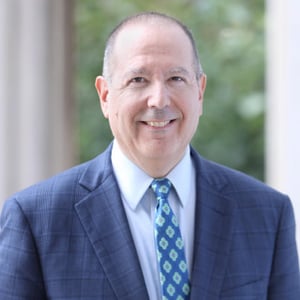
Dean Emeritus and Harvey R. Miller Professor of Law & Economics, Columbia Law School
David Schizer is Dean Emeritus and Harvey R. Miller Professor of Law & Economics at Columbia Law School. He served as Dean from 2004 to 2014, and as CEO of the American Jewish Joint Distribution Committee, a global Jewish humanitarian organization, from 2017 to 2019. He is the author of How to Save the World in Six (Not So Easy) Steps: Bringing Out the Best in Nonprofits. Schizer serves on the Board of Visitors of the Federalist Society. He is Second Vice Chair of the Tax Section of the New York State Bar Association, a co-founder and co-chair of the Richman Center for Law, Business, and Public Policy at Columbia University, and a co-founder and co-chair of the Center for Israeli Legal Studies at Columbia Law School. Schizer served as a law clerk to Justice Ruth Bader Ginsburg on the U.S. Supreme Court and Judge Alex Kozinski on the U.S. Court of Appeals for the Ninth Circuit.
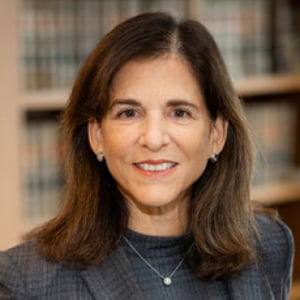
Professor of Clinical Law, Brooklyn Law School
Jodi S. Balsam is Professor of Clinical Law at Brooklyn Law School and a nationally recognized expert on Sports Law. She directs the BLS Sports Law Clinic and Sports Law Externship Program. She teaches Sports Law at both BLS and NYU School of Law, and has also taught the subject at New York Law School, University of New Hampshire School of Law, Bucerius Law School in Hamburg, Germany, Mathias Corvinus Collegium in Budapest, Hungary, and the MESGO Executive Masters Program in Global Sport Governance. Professor Balsam has served as an arbitrator for the National Collegiate Athletic Association on complex infractions cases, and now serves as a neutral for FAIR Sports, which hears cases involving college athletics.
Professor Balsam frequently writes and speaks on sports law topics, including as co-author of Weiler’s Sports and the Law, a leading casebook in the field. Her publications and presentations have addressed antitrust challenges to sports leagues and organizing bodies, sports trademarks, athletes’ rights of free expression and name/image/likeness exploitation, sports gambling and integrity, sports league governance, and the role of the sports agent. She frequently appears in the media on legal issues in sports, including NBC Sports/The Golf Channel, ESPN, Law360 Sports and Betting, The Athletic, Front Office Sports, USA Today, and the Wall Street Journal. She is on the editorial boards of Law360-Sports & Betting, the Journal of Legal Aspects of Sport, and the international sports law newsletter LawInSport.
Before joining academia, Professor Balsam was the National Football League's Counsel for Operations and Litigation, where she managed litigation in all areas of law, oversaw a variety of policy and operational matters, negotiated and drafted contracts for League special events including the Super Bowl, and administered the League's internal dispute resolution processes and compliance program. Prior to the NFL she was a litigator with the New York office of Simpson Thacher & Bartlett, where she represented sports and entertainment clients in antitrust matters and complex commercial litigation. She served as a law clerk for Judge Dennis Jacobs of the U.S. Court of Appeals for the Second Circuit and for Judge Charles Brieant of the U.S. District Court for the Southern District of New York. A graduate of Yale College, Professor Balsam received her law degree from NYU School of Law.
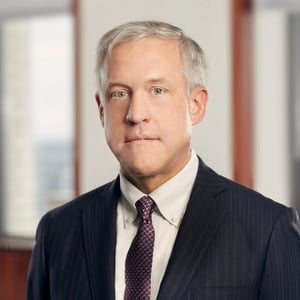
Senior Counsel, Alliance Defending Freedom
Roger G. Brooks serves as senior counsel with Alliance Defending Freedom, where he is a key member of the Center for Conscience Initiatives.
Mr. Brooks focuses his efforts on protecting freedom of speech, free exercise of religion, and parental rights, and defending those who believe that the biological reality of male and female matters. He represents clients in lawsuits protecting the freedom of speech of counselors and clients as they discuss sensitive matters of personal identity and desires; defending the right of Christian adoption agencies to operate in accordance with the teachings of their faith; challenging school policies that usurp the right of parents to direct life-critical therapeutic choices for their own children; and working to ensure that girls and women have fair and safe athletic opportunities in colleges and schools.
Prior to joining ADF in 2018, Mr. Brooks worked with the New York law firm of Cravath, Swaine & Moore for 25 years, 19 of those as a partner in the litigation department. In 2017, he took early retirement from Cravath in order to devote his energies to advancing free speech and religious liberty.
Mr. Brooks’ years of commercial practice centered on representing technology companies in high-stakes intellectual property and antitrust litigations. While in private practice, Mr. Brooks also advocated pro bono for religious freedom. He successfully defended pregnancy centers against intrusive investigations by the attorney general of New York. When the ACLU sued to overturn New Hampshire’s tuition tax credit, Mr. Brooks represented Christian schools and a Catholic diocese as friends of the court, defending school choice. In addition, he filed a friend-of-the-court brief in the U.S. Supreme Court case of Masterpiece Cakeshop v. Colorado Civil Rights Commission on behalf of several Christian medical associations.
Roger Brooks graduated from Princeton University in 1984, and received a Juris Doctor and Master of Arts in History from the University of Virginia in 1987. In 1995, he received his Master of Divinity from Regent College Seminary in Vancouver, British Columbia. He served on the board of ADF from 2012 through 2014 and on the board of the Christian Legal Society from 2002 through 2011.
Mr. Brooks is a member of the state bars of New York and North Carolina. He has been married since 1985, and has five children and one granddaughter.
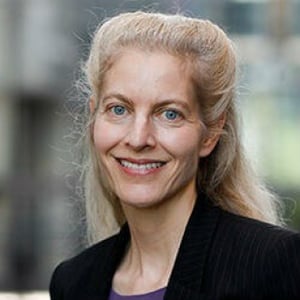
Judd and Mary Morris Leighton Professor of Law, Northwestern Pritzker School of Law
Kimberly Yuracko is a nationally recognized expert in antidiscrimination law. Her scholarship explores the demands of antidiscrimination law across categories and contexts. She is most interested in what nondiscrimination requires with respect to individuals and groups that are different in relevant ways. Her research has touched on some of the most pressing policy questions of recent years and has been impactful beyond the walls of the academy. Her book, Gender Nonconformity and the Law, explores courts’ expanding protection for gender nonconformists and the limitations of the current approach. The book won a Choice Award. Her work on Title IX explores how athletic opportunities should be allocated across sex-segregated sports teams. Her more recent Title IX work focuses on athletic opportunities for transgender girls. Her work on homeschooling explores the extent to which state constitutional rights to education require regulation or oversight of homeschooling. Her work on tort law, with Ronen Avraham, challenges the common use of race- and sex- based actuarial tables to calculate tort damages. Yuracko and Avraham published an Op Ed based on their research, The Use of Sex-Based Data To Calculate Damages is a Stain on Our Legal System, in the Washington Post. Their torts work has also been translated into Japanese. Yuracko is the author of numerous articles and is a co-author on two casebooks, Employment Law Cases and Materials, and Feminist Jurisprudence Cases and Materials.
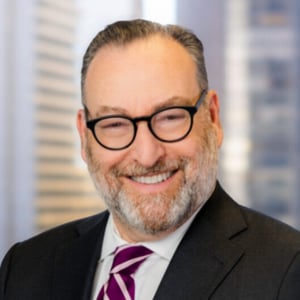
Founder, Chairman, and CEO, Louis D. Brandeis Center for Human Rights Under Law
Hon. Kenneth L. Marcus is an internationally recognized expert in civil and human rights, as well as a leader in the fight against anti-Semitism on and off university campuses. He is the Founder, Chairman, and CEO of The Louis D. Brandeis Center for Human Rights Under Law, the leading civil rights legal organization fighting against anti-Semitism. The New York Times has called him “The Man Who Helped Redefine Campus Anti-Semitism.” He been described, in that paper, as “the single most effective and respected force” to combat anti-Semitism.
During his public service career, Marcus served as Assistant U.S. Secretary of Education for Civil Rights; Staff Director at the U.S. Commission on Civil Rights; and General Deputy Assistant U.S. Secretary of Housing and Urban Development for Fair Housing and Equal Opportunity.
In academia, he serves as Professorial Lecturer in Law at George Washington University. He formerly held the Lillie and Nathan Ackerman Chair in Equality and Justice in America at the City University of New York’s Bernard M. Baruch College, served as Visiting Research Professor of Political Science at Yeshiva University, and was a Board of Visitors member George Mason University and Distinguished Senior Fellow at that university’s law school. He is a member of the editorial board of the Journal of Contemporary Antisemitism and previously served as Associate Editor of the Journal for the Study of Anti-Semitism.
Marcus is also author of The Definition of Anti-Semitism (Oxford University Press) and Jewish Identity and Civil Rights in America (Cambridge University Press). He has published widely in academic journals as well as in more popular venues such as The Wall Street Journal, Washington Post, Newsweek, USA Today, and Politico. He is a graduate of Williams College and the University of California at Berkeley School of Law.
Earlier in his career, he was a litigation partner in two major law firms, where he conducted complex commercial and constitutional litigation. He also serves as Chairman emeritus of the Executive Committee of the Federalist Society for Law & Public Policy Civil Rights Practice Group.
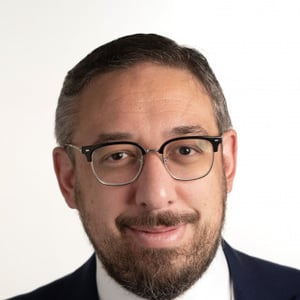
Senior Attorney, National Taxpayers Union Foundation
Tyler Martinez is a Senior Attorney at the Taxpayer Defense Center, the strategic litigation arm of National Taxpayers Union Foundation. He has experience setting up nonprofit public interest arms for multiple organizations in the Washington, DC area and thus has experience in First Amendment, Tax, and Administrative Law. He has practiced strategic litigation against government overreach since 2011, handling federal and state cases across the country.
Tyler’s interest in strategic public interest work and in tax law comes down to the simple principle: getting the government out of people’s business. Transparency is for the government, but privacy is for the people. He finds and focuses on examples of government overreach particularly those involving use of private information, dragnet data collection, and other attacks on privacy of association.
Tyler earned his Juris Doctor from the University of Colorado Law School, while winning accolades for his advocacy skills and serving as Executive Editor of the Journal on Telecommunications and High Technology Law. He is licensed to practice law in Colorado and the District of Columbia. He is further admitted to the bars of the following federal courts: Supreme Court of the United States, D.C. Circuit, First Circuit, Second Circuit, Third Circuit, Fourth Circuit, Fifth Circuit, Eighth Circuit, Tenth Circuit, and various federal district courts across the country.

Campus Speech, Antisemitism, and Other Challenges at Nonprofits
New York City Young Lawyers Chapter
New York, NYTopics
Claudine Gay’s ‘My Truths’ v. the Declaration’s ‘Self-Evident Truths’
Shortly after her resignation as Harvard’s president, in an interview with the Harvard Crimson, Claudine Gay said:...
Topics
The Meaning of “Regulate Commerce” to the Constitution’s Ratifiers: An Update
Constitutional Background The constitutional justification for much of the federal regulatory and administrative apparatus rests...
The Landmark Case Of Shaare Tefila v. Cobb
Kenneth L. Marcus
A review of Annalise E. Glauz-Todrank, Judging Jewish Identity in the United States (Lexington Books 2023)...
Debate: Does Title IX Permit Trans Athletes to Participate in Women’s Sports?
New York City Lawyers Chapter, New York City Young Lawyers Chapter
New York, NYTopics
Sectoral Bargaining for Rideshare Drivers in Massachusetts: Legally Dubious, Economically Disastrous
Voter initiatives can be a double-edged sword. While they often allow voters to bypass legislative...
Holiday Party
Long Island Lawyers Chapter
Mineola, NYNYC Metro Area Holiday Party
New York City Lawyers Chapter, New York City Young Lawyers Chapter
New York City, NYPennsylvania Supreme Court Grapples With Corporate Income Tax and the Attorney General's Independence
Tyler Martinez
With more than $2 million dollars of tax revenue and important separation of powers questions...
Topics
NRA v. Vullo: When Are Statements By Regulators Coercive?
This Term, the Supreme Court will hear the case of the National Rifle Association (NRA)...