

Laurence A. Tisch Professor of Law and Director, Classical Liberal Institute, New York University School of Law; Director, Classical Liberal Institute, Civitas Institute University of Texas at Austin
Richard A. Epstein is the inaugural Laurence A. Tisch Professor of Law at NYU School of Law. Prior to his joining the faculty, he was a visiting law professor at NYU from 2007 through 2009. He served as the Peter and Kirstin Bedford Senior Fellow at the Hoover Institution from 2000 to 2024. Since 2024 to the present he is a senior lecturer at the Civitas Institute at the University of Texas—Austin. Epstein is also the James Parker Hall Distinguished Service Professor of Law Emeritus and a senior lecturer at the University of Chicago. His initial law school appointment was at the University of Southern California from 1968 to 1972. Epstein received an LL.D., h.c. from the University of Ghent, 2003. He has been a member of the American Academy of Arts and Sciences since 1985 and was a Senior Fellow of the Center for Clinical Medical Ethics at the University of Chicago Division of Biological Sciences, also from 1983. to 2022 He served as editor of the Journal of Legal Studies from 1981 to 1991, and of the Journal of Law and Economics from 1991-2001. From 2001 to 2010 he was a director of the John M. Olin Program in Law and Economics at the University of Chicago.
His newest book, The Myth of Birthright Citizenship: What the Fourteenth Amendment Really Says was published in 2026 (Encounter Books). Prior to that he has published many books including, The Dubious Morality of the Modern Administrative State (Roman & Littlefield 2020).Earlier he published th Classical Liberal Constitution: The Uncertain Quest for Limited Government (Harvard 2014) iHis previous books include Design for Liberty: Private Property, Public Administration and the Rule of Law (Harvard 2011); The Case Against the Employee Free Choice Act (Hoover 2009); Supreme Neglect: How to Revive the Constitutional Protection of Property Rights (Oxford 2008); Antitrust Decrees in Theory and Practice: Why Less is More (AEI 2007); Overdose: How Excessive Government Regulation Stifles Pharmaceutical Innovation (Yale University Press. 2006); How Progressives Rewrote the Constitution (Cato 2006); Cases and Materials on Torts (Aspen Law & Business; 8th ed. 2004); Skepticism and Freedom: A Modern Case for Classical Liberalism (University of Chicago, 2003); Torts (Aspen Law & Business 1999); Principles for a Free Society: Reconciling Individual Liberty with the Common Good (Perseus Books, 1998): Mortal Peril: Our Inalienable Rights to Health Care (Addison-Wesley, 1997); Simple Rules for a Complex World (Harvard, 1995); Bargaining With the State (Princeton, 1993); Forbidden Grounds: The Case Against Employment Discrimination Laws (Harvard , 1992); Takings: Private Property and the Power of Eminent Domain (Harvard, 1985); and Modern Products Liability Law (Greenwood Press, 1980). He has also edited(with Catherine M. Sharkey) Cases and Materials on the Law of Torts (10th edition 2012).
Professor Epstein has written numerous articles on a wide range of legal and interdisciplinary subjects. He has taught courses in administrative law, antitrust law, civil procedure, communications, constitutional law, contracts, corporations, criminal law, employment discrimination law, environmental law, food and drug law health law and policy, legal history, labor law, property, real estate development and finance, jurisprudence, labor law; land use planning, patents, individual, estate and corporate taxation, Roman Law; torts, and workers' compensation.
Professor Epstein also writes a regular column for Civitas Institute, which also sponsors his podcast, The Libertarian with Charles C.W. Cooke, and Law Talk, with Cooke and John Yoo. He also does a podcast with John Batchelor. And appears regularly on the Freedom File with Judge Andrew Napolitano.
George Maverick Bunker Professor of Management, Sloan School of, MIT
Thomas A. Kochan is the George Maverick Bunker Professor of Management at MIT's Sloan School of Management and Co-Director of both the MIT Workplace Center and of the Institute for Work and Employment Research. He came to MIT in 1980 as a Professor of Industrial Relations. From 1988 to 1991 he served as Head of the Behavioral and Policy Sciences Area in the Sloan School. Prof. Kochan came to MIT from Cornell University where he was on the faculty of the School of Industrial and Labor Relations from 1973 to 1980.
In 1973, he received his Ph.D. in Industrial Relations from the University of Wisconsin. Since then he has served as a third-party mediator, fact finder, and arbitrator and as a consultant to a variety of government and private sector organizations and labor-management groups. He was a consultant for one year to the Secretary of Labor in the Department of Labor’s Office of Policy Evaluation and Research.
He has done research on a variety of topics related to industrial relations and human resource management in the public and private sector. Some of his recent books include: Restoring the American Dream: A Working Families’ Agenda for America; Management: Inventing and Delivering its Future; Working in America: A Blueprint for the Labor Market, Learning from Saturn; Managing for the Future: Organizational Behavior and Processes, 3rd edition, 2004; An Introduction to Collective Bargaining and Industrial Relations, 3rd ed. 2003; In 1988 his book, The Transformation of American Industrial Relations received the annual award from the Academy of Management for the best scholarly book on management.
Professor Kochan is a Past President of both the International Industrial Relations Association and the Industrial Relations Research Association (IRRA). In 2001 he was listed in Who’s Who in America and in 2000 he was listed in Blackwell’s Dictionary of Management Scholars. In 1999 he was awarded Doctor Honoris Cause from the University de San Martin de Porres de Lima. He received the Heneman Career Achievement Award from the Human Resources Division of the Academy of Management in 1996. He was elected to the National Academy of Human Resources in 1997. He was named the Centennial Visiting Professor from The London School of Economics in 1995. From 1993 to 1995 he served as a member of the Clinton Administration's Commission on the Future of Worker/Management Relations.
Partner, Gibson, Dunn & Crutcher, and Former United States Secretary of Labor
Eugene Scalia is a partner in the Washington, D.C. office of Gibson, Dunn & Crutcher, co-chair of the firm’s Administrative Law and Regulatory Practice Group, and a senior member of the firm’s Labor and Employment Practice Group and Financial Institutions Practice Group. He returned to the firm after serving as U.S. Secretary of Labor from September 2019 to January 2021.
Mr. Scalia has a nationally-prominent practice in two areas: Labor and employment law, and advice and litigation regarding the regulatory obligations of federal administrative agencies. He also has extensive appellate experience. Federal regulatory actions he has challenged include the SEC’s “proxy access” rule; the CFTC’s “position limits’” rule; MetLife’s designation as “too big to fail” by the Financial Services Oversight Council; the Labor Department’s “fiduciary” rule; and OSHA’s “cooperative compliance program.”
As Labor Secretary, Mr. Scalia engaged at the highest level with national employment policy and matters affecting the financial services industry and international trade, overseeing the enforcement and administration of more than 180 federal employment laws covering more than 150 million workers and 10 million workplaces. He also served as Chair of the Board of Directors of the Pension Benefit Guaranty Corporation and as a member of the White House Coronavirus Task Force. He was closely involved in the drafting and implementation of the CARES Act and other coronavirus-related legislation. Laws administered by the Labor Department also include the workplace safety requirements of OSHA and the Mine Safety and Health Administration, federal minimum wage and overtime protections, the anti-discrimination requirements applicable to federal contractors, and ERISA’s protection of the more than $11 trillion held in employee retirement plans and health plans.
Mr. Scalia served from 2002 to 2003 as Solicitor of the U.S. Department of Labor, with responsibility for all Labor Department litigation and legal advice on rulemakings and administrative law. He is the only person to have served as both Solicitor and Secretary of Labor.
He also served at the U.S. Department of Justice as a Special Assistant to the Attorney General, receiving the Department’s Edmund J. Randolph Award in 1993.
In private practice, Mr. Scalia has represented employers in high-profile matters under the National Labor Relations Act and in class actions and collective actions under Title VII, the Americans with Disabilities Act, the Age Discrimination in Employment Act, ERISA, and federal and state wage hour laws. He has extensive experience in federal district court, the courts of appeals, and in the arbitration of employment disputes. He has been a leading authority on “whistleblower” investigations and litigation since the 2002 enactment of the Sarbanes-Oxley Act. Mr. Scalia also counsels employers on reductions-in-force and the proper conduct of harassment and discrimination investigations. He has provided pro bono representation to workers in discrimination matters, wrongful separation disputes, and other matters.
Mr. Scalia is a Senior Fellow of the Administrative Conference of the United States, a federal agency that makes recommendations to Congress and the Executive Branch on ways to improve the administrative process. He is the author of more than 30 articles and papers on labor and employment law, administrative law, and other subjects. Among other accolades, he has been named an “Employment MVP,” a “Securities MVP,” and an “Appellate MVP” by Law360. The National Law Journal recognized Mr. Scalia as a “Visionary” for his litigation against financial regulatory agencies, and the Nation magazine has called him a “fearsome litigator.” He has been a Lecturer in labor and employment law at the University of Chicago Law School.
Mr. Scalia graduated cum laude from the University of Chicago Law School, where he was editor-in-chief of the Law Review. He graduated With Distinction from the University of Virginia in 1985 and was a speechwriter for Education Secretary William J. Bennett before attending law school. Mr. Scalia and his wife Trish have seven children.

General Counsel, Change to Win
Patrick J. Szymanski is General Counsel for Change to Win, an alliance of seven Unions representing 6 million members in the United States, Canada and Puerto Rico. The seven unions are the International Brotherhood of Teamsters, the Laborers’ International Union of North America, the Service Employees International Union, the United Brotherhood of Carpenters and Joiners of America, the United Farm Workers, the United Food and Commercial Workers International Union, and UNITE HERE.
Pat was raised in Detroit, Michigan, where his father was a professional football player, an elected state official and later a state court judge. His father is a member of the Polish Sports Hall of Fame and in 2007 was selected as a member of the Wall Street Journal Law Blog Football Hall Fame. His mother was a Detroit public school teacher and editor of The Polish World, a bilingual newspaper published in Hamtramck, Michigan. Pat attended the Massachusetts Institute of Technology, dropped out in the late 60’s and later received his undergraduate degree from Wayne State University where he majored in mathematics. He received his law degree from Wayne State University Law School in 1976.
He was a lawyer in the Enforcement Division of the National Labor Relations Board in Washington, D.C., from 1976 through 1978 and again from 1983 through 1988 where he briefed and argued cases before the United States District Courts and Courts of Appeal and briefed cases before the United States Supreme Court.
From 1978 through 1983 he was attorney with the San Francisco office of Beeson, Tayer & Bodine where he advised and represented Teamsters Local Unions and Joint Councils in Northern California, other labor organizations and related benefit funds in negotiations, internal affairs, arbitration cases and proceedings before various state and federal agencies and courts. From 1988 through 2002 he was an attorney and partner at the Washington, D.C., law firm of Baptiste & Wilder where he continued the practice of labor law representing primarily Teamster affiliates, related benefit funds and individual officers and members.
Pat became counsel to the Campaign of James P. Hoffa for presidency of the International Brotherhood of Teamsters in late 1995 and represented the Campaign throughout the 1996 Election, at the 1996 Teamsters International Convention, and in litigation that led to the 1998 Teamsters Rerun Election. He was named Teamsters General Counsel by General President Hoffa in March 1999 and served in that position until late 2005 when he became General Counsel to Change to Win.
He is a member of the bar in Michigan, California and the District of Columbia, the bar of the United States Supreme Court, and the bars of several federal district and appellate courts.
I. Herman Stern Professor of Law
David Post is currently the I. Herman Stern Professor of Law at the Beasley School of Law at Temple University, where he teaches intellectual property law and the law of cyberspace. Professor Post is also an Adjunct Scholar at the Cato Institute, a Fellow at the Institute for Information Law and Policy at New York Law School, and a contributor to the influential Volokh Conspiracy blog. [More detail on Professor Post's research and writings can be found here.]
Trained originally as a physical anthropologist, Professor Post spent two years studying the feeding ecology of yellow baboons in Kenya's Amboseli National Park, and he taught at the Columbia University Department of Anthropology from 1976 through 1981. He then attended Georgetown Law Center, from which he graduated summa cum laude in 1986. After clerking with then-Judge Ruth Bader Ginsburg on the DC Circuit Court of Appeals, he spent 6 years at the Washington D.C. law firm of Wilmer, Cutler & Pickering, practicing in the areas of intellectual property law and high technology commercial transactions. He then clerked again for Justice Ginsburg during her first term on the Supreme Court before joining the faculty of, first, the Georgetown University Law Center (1994-1997) and then the Temple University Law School (1997-present).
Professor Post is the author of Cyberlaw: Problems of Policy and Jurisprudence in the Information Age (3d Edition, West, 2007) (co-authored with Paul Schiff Berman and Patricia Bellia), and In Search of Jefferson's Moose: Notes on the State of Cyberspace (Oxford U. Press, forthcoming 2008), as well as numerous articles on intellectual property, the law of cyberspace, and the application of complexity theory to Internet legal questions that have appeared in the Stanford Law Review, Journal of Legal Studies, Berkeley Technology Law Journal, Esther Dyson's Release 1.0, Journal of Online Law, University of Chicago Legal Forum, Vanderbilt Law Review, Georgetown Law Journal, and numerous other publications. For four years (1994-1998) he wrote a monthly column on law and technology ("Plugging In") for the American Lawyer, and from 1998-2004 he wrote the "On the Horizon" column for InformationWeek (with Bradford Brown). He has appeared as a commentator on the Lehrer News Hour, Court TV's Supreme Court Preview, NPR's All Things Considered, BBC's World, and other television and radio shows, and recently was featured in the PBS documentary The Supreme Court. During 1996-1997 he conducted, along with two colleagues (Professors Larry Lessig and Eugene Volokh) the first Internet-wide e-mail course on "Cyberspace Law for Non-Lawyers" which attracted over 20,000 subscribers. He also sings and plays guitar, piano, banjo, and harmonica in the bands "Bad Dog," "The Dwights," and "The Zen Cohens."
Professor Post's writings can be accessed online via his publications page and personal site (http://www.davidpost.com).
J.D., Georgetown University
Ph.D. (Anthropology), Yale University
B.A., Yale University
Professor of Law, Southern Illinois University School of Law
Professor Mark F. Schultz joined the faculty in 2003. He teaches and writes primarily in the area of intellectual property.
Professor Schultz is a frequent author and speaker known for his work on the law and economics of the global intellectual property system. In one of his most influential projects, he worked with the Organization for Economic Cooperation and Development (OECD) to construct a groundbreaking global trade secret protection index (the TSPI). The TSPI is influencing policy discussions on this cutting-edge topic in capitals around the world. Other recent projects have included an empirical study that quantified for the first time the backlogs in patent offices worldwide, a report on how patented innovation is meeting global health challenges, and the construction of a new global index of copyright strength.
Professor Schultz is an influential voice in public policy debates regarding intellectual property. He has testified before the U.S. Congress on copyright law at the invitation of the House Judiciary Committee and has briefed the staff of the U.S. Senate Judiciary Committee on trade secret legislation. He speaks frequently around the world about the connection between secure and effective intellectual property rights and flourishing national economies and individual lives, with invitations from the U.S. Patent and Trademark Office, the U.S. Trade Representative, and the U.S. Copyright Office, as well as numerous academic institutions, think tanks, and industry groups. He served as an NGO delegate to the World Intellectual Property Organization (WIPO) for several years during the WIPO Development Agenda talks. He is also one of the organizers of an ongoing multilateral diplomatic dialogue on best practices in national trade secret laws, and is co-founder of the Center for Protection of Intellectual Property (CPIP) at George Mason University in Washington, D.C.
Among the awards and recognition he has received for his scholarship was the School of Law's Outstanding Scholar of the Year award in 2008. He has been a distinguished visiting scholar at the University of Botswana and a visiting professor at DePaul University College of Law.
Professor Schultz graduated with honors from the George Washington University School of Law. Following law school, he was a judicial clerk for the Hon. Daniel M. Friedman of the United States Court of Appeals for the Federal Circuit in Washington, D.C., and the Hon. Eric G. Bruggink of the United States Court of Federal Claims. Prior to joining academia, he practiced law for a decade, serving as outside general counsel to several tech startups and helping technology companies to expand their businesses and commercialize their intellectual property in dozens of countries. He holds a B.A. in International Economics from George Washington University and has done PhD level coursework in development economics at Southern Illinois University.
He is active in leadership roles in local and national organizations. He has served as chair of the Federalist Society's Intellectual Property Practice Group and the AALS Section on Internet and Computer Law. He is an officer of the American Bar Association's International IP Committee of the International Law Section and the American Intellectual Property Law Association’s Trade Secret Law Committee. He currently is chair of the Academic Advisory Board of the Copyright Alliance.
Professor Schultz teaches Copyright Law, Trade Secret Law, Trademark Law, and a senior seminar on Intellectual Property and Global Development. He established and directs both the Specialization in Intellectual Property Law and the IP Semester in Practice Externship Program. He also co-founded a Legal Globalization Class, offered every other year, that takes students to South Africa and Botswana after spending a semester learning about the legal system, culture, history, and politics of southern Africa. The popular course is a once-in-a-lifetime experience that introduces students to leading lawyers, judges, government officials, and human rights advocates, taking them from Cape Town to Johannesburg to Gaborone as well as many popular destinations including game reserves, national parks, the Cape of Good Hope, and the Cradle of Humankind.

Patrick Hotung Professor of Constitutional Law, Georgetown University Law Center; Faculty Director, Georgetown Center for the Constitution
Randy E. Barnett is the Patrick Hotung Professor of Constitutional Law at the Georgetown University Law Center and is the Faculty Director of the Georgetown Center for the Constitution. After graduating from Northwestern University and Harvard Law School, he tried many felony cases as a prosecutor in the Cook County States’ Attorney’s Office in Chicago. A recipient of a Guggenheim Fellowship in Constitutional Studies and the Bradley Prize, Professor Barnett has been a visiting professor at Penn, Northwestern and Harvard Law School.
Professor Barnett’s publications includes thirteen books, more than one hundred articles and reviews, as well as numerous op-eds. His most recent book is Felony Review: Tales of True Crime and Corruption in Chicago (2026). His other books on the Constitution include: A Life for Liberty: The Making of an American Originalist (2024); The Original Meaning of the Fourteenth Amendment: Its Letter and Spirit (2021) (with Evan Bernick); An Introduction to Constitutional Law: 100 Supreme Court Cases Everyone Should Know (2019) (with Josh Blackman); Restoring the Lost Constitution: The Presumption of Liberty (2nd ed. 2013); Our Republican Constitution: Securing the Liberty and Sovereignty of We the People (2016); and Constitutional Law: Cases in Context (5th ed. forthcoming 2027) (with Josh Blackman). His books on contracts are The Oxford Introductions to U.S. Law: Contracts (2010) and Contracts: Cases and Doctrine (7th ed. 2021) (with Nate Oman). And he is the author of The Structure of Liberty: Justice and the Rule of Law (2nd ed. 2014).
In 2004, he argued the medical marijuana case of Gonzalez v. Raich before the U.S. Supreme Court. In 2012, he was one of the lawyers representing the National Federation of Independent Business in its constitutional challenge to the Affordable Care Act in NFIB v. Sebelius. He’s appeared in numerous documentaries and portrayed a prosecutor in the 2010 science-fiction feature film, InAlienable: The Movie. On X he is @RandyEBarnett
University of Southern California, Gould School of Law
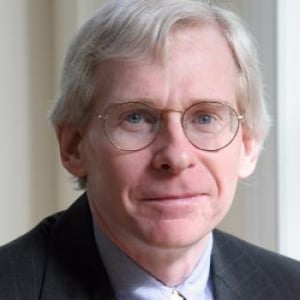
James Madison Distinguished Professor of Law and Class of 1941 Research Professor of Law, University of Virginia School of Law
Professor John C. Harrison is the James Madison Distinguished Professor of Law and Class of 1941 Research Professor of Law at the University of Virginia School of Law. He joined the faculty at University of Virginia in 1993 as an associate professor of law after a distinguished career with the U.S. Department of Justice. His teaching subjects include constitutional history, federal courts, remedies, corporations, civil procedure, legislation and property. In 2008 he was on leave from the Law School to serve as counselor on international law in the Office of the Legal Adviser at the U.S. Department of State.
A 1977 graduate of the University of Virginia, Harrison earned his law degree in 1980 at Yale, where he served as editor of the Yale Law Journal and editor and articles editor of the Yale Studies in World Public Order. He was an associate at Patton Boggs & Blow in Washington, D.C., and clerked for Judge Robert Bork on the U.S. Court of Appeals for the District of Columbia Circuit. He worked with the Department of Justice from 1983-93, serving in numerous capacities, including deputy assistant attorney general in the Office of Legal Counsel (1990-93).

Associate Justice, Supreme Court of the United States
Associate Justice Brett Kavanaugh was born in Washington, D.C., on February 12, 1965. He married Ashley Estes in 2004, and they have two daughters - Margaret and Liza. He received a B.A. from Yale College in 1987 and a J.D. from Yale Law School in 1990. He served as a law clerk for Judge Walter Stapleton of the U.S. Court of Appeals for the Third Circuit from 1990-1991, for Judge Alex Kozinski of the U.S. Court of Appeals for the Ninth Circuit from 1991-1992, and for Justice Anthony M. Kennedy of the U.S. Supreme Court during the 1993 Term. In 1992-1993, he was an attorney in the Office of the Solicitor General of the United States. From 1994 to 1997 and for a period in 1998, he was Associate Counsel in the Office of Independent Counsel. He was a partner at a Washington, D.C., law firm from 1997 to 1998 and again from 1999 to 2001. From 2001 to 2003, he was Associate Counsel and then Senior Associate Counsel to President George W. Bush. From 2003 to 2006, he was Assistant to the President and Staff Secretary for President Bush. He was appointed a Judge of the United States Court of Appeals for the District of Columbia Circuit in 2006. President Donald J. Trump nominated him as an Associate Justice of the Supreme Court, and he took his seat on October 6, 2018.
President, The William and Flora Hewlett Foundation; Lecturer in, Stanford Law School
Larry Kramer joined Stanford Law School in 2004 as Richard E. Lang Professor of Law and Dean. As the school’s 12th dean, he has spearheaded significant educational reforms, including dramatically expanding joint degree programs as part of a multidisciplinary approach to legal studies, enlarging the clinical education program to promote reflective lawyering, revamping programs to foster a public service ethos, and building the international law program to support a growing emphasis on globalization in legal practice.
Dean Kramer has written and taught in such varied fields as constitutional law, conflict of laws, civil procedure, federalism and its history, and the role of courts in society. He is a fellow of the American Academy of Arts and Sciences and a member of the American Philosophical Society and the American Law Institute. In December 2008, Equal Justice Works named Dean Kramer to its Board of Directors. He has appointments (by courtesy) with the Stanford University Department of History and with the Graduate School of Business. Before joining the Stanford faculty, Dean Kramer served as Associate Dean for Research and Academics and Russell D. Niles Professor of Law at New York University School of Law; professor of law at the University of Chicago and University of Michigan law schools; and consultant for Mayer, Brown, Rowe & Maw LLP. Early in his career, Dean Kramer clerked for Justice William J. Brennan Jr. of the U.S. Supreme Court and Judge Henry J. Friendly of the U.S. Court of Appeals for the Second Circuit.
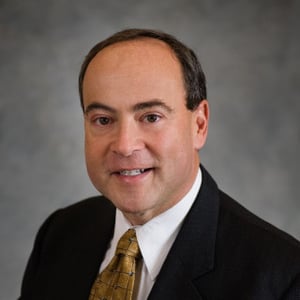
Justice, Supreme Court of Arizona
Clint Bolick was appointed by Governor Doug Ducey in January 2016 to serve on the Arizona Supreme Court and was retained by the voters in 2018 and 2024.
Prior to joining the Court, Justice Bolick litigated constitutional cases in state and federal courts from coast to coast, including the U.S. Supreme Court. Among other positions, he served as Vice President for Litigation at the Goldwater Institute and as Co-founder and Vice President for Litigation at the Institute for Justice. He has litigated in support of school choice, freedom of enterprise, private property rights, freedom of speech, and federalism, and against racial classifications and government subsidies.
Justice Bolick received his Juris Doctor degree from the University of California at Davis, where he has been recognized as a distinguished alumnus, and his Bachelor of Arts degree magna cum laude from Drew University. He serves as a research fellow with the Hoover Institution. Among other honors, he was named one of the 90 Greatest DC Lawyers in the Last 30 Years by Legal Times in 2008, received a Bradley Prize in 2006, and was recognized as one of the nation’s three lawyers of the year by American Lawyer in 2002 for his successful defense of school vouchers in Zelman v. Simmons-Harris.
Justice Bolick is a prolific author of a dozen books and hundreds of articles. Among his most recent books are Unshackled: Freeing America’s K-12 Education System: Immigration Wars: Forging an American Solution, co-authored with former Florida Governor Jeb Bush; and David’s Hammer: The Case for an Activist Judiciary. Bolick serves as an adjunct professor of constitutional law at Arizona State University’s Sandra Day O’Connor School of Law and has served as a lecturer at Harvard University’s John F. Kennedy School of Government.
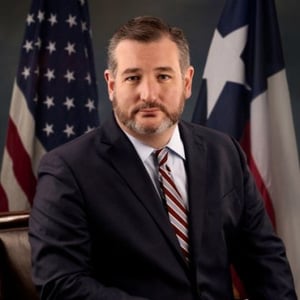
United States Senator, Texas
Ted Cruz represents 28 million Texans in the U.S. Senate as a passionate fighter for limited government and economic growth. He has authored 39 legislative measures signed into law. Recent victories include expanding 529 college savings accounts to allow parents to save for K–12 public, private, and religious education, leading the effort to repeal Obamacare’s individual mandate, imposing sanctions on terrorists who use civilians as human shields, designating North Korea as a state sponsor of terrorism, reauthorizing and reforming NASA, ensuring the availability of additional records to help solve civil rights cold cases, supporting thousands of Texas jobs, and leading the fight to confirm principled constitutionalists to our courts.
Senator Cruz is a graduate of Princeton University and Harvard Law School, a former law clerk to Chief Justice William Rehnquist, and former solicitor general of Texas. He has argued nine cases before the Supreme Court. In November of 2018, he was re-elected to the Senate by the people of Texas.

Jennifer Anju Grossman -- JAG-- became the CEO of the Atlas Society in March of 2016. She shifted the organization's focus to the engagement of young people with the ideas of Ayn Rand in creative ways, like animated videos, graphic novels, and social media, and through the expansion into international markets.
Prior to joining The Atlas Society, she served as Senior Vice President of Dole Food Company, launching the Dole Nutrition Institute — a research and education organization— at the behest of Dole Chairman David H. Murdock. Previously Grossman served as Director of Education at the Cato Institute, and worked closely with the late philanthropist Theodore J. Forstmann to launch the Children's Scholarship Fund. A speechwriter for President George H. W. Bush, Grossman has written for both national and local publications. She graduated with honors from Harvard College.
Executive Director, New York Civil Rights Coalition
Professor of Public Policy, Hunter College, CUNY
Joseph P. Viteritti is the Thomas Hunter Professor of Public Policy and Chair of the Urban Policy and Planning Department at Hunter. He was the founding faculty chair of the Public Policy Program at Hunter’s Roosevelt House Public Policy Institute, and is a member of the doctoral faculty in education policy at the CUNY Graduate Center.
He is recently the author of The Pragmatist: Bill de Blasio’s Quest to Save the Soul of New York (Oxford University Press, 2017), which chronicles the political career and tenure of the incumbent mayor. Written from a historical perspective, the book traces mayoral leadership through the rise, fall and regeneration of progressivism in New York City since the time of Fiorello La Guardia.
James C. Gaither Professor of Law; Vice Dean, Stanford Law School
Mark Kelman has tried, over the course of his career, to utilize the insights of neoclassical and behavioral economics, cognitive psychology, and political theory to illuminate a wide range of legal and policy controversies. He has paid special attention to antidiscrimination law (and most particularly disability law), criminal law, and taxation. He has written both articles and books that emphasize basic theory (e.g. THE HEURISTICS DEBATE, Oxford University Press 2011 or A GUIDE TO CRITICAL LEGAL STUDIES, Harvard University Press 1987, and a project on INJURIES that he is working on now, attempting both to elucidate what it means to be injured and why certain practices or outcomes – poverty, discrimination, sexual harassment, and death – are or are not injurious) as well as works that apply theoretical insights more directly to legal controversies (e.g. JUMPING THE QUEUE, with Gillian Lester, Harvard University Press, 1997 and the recently published, WHAT IS IN A NAME? TAXATION AND REGULATION ACROSS CONSTITUTIONAL DOMAINS, Carolina Academic Press, 2019). He employs a wide variety of methods in his work, from experiments (e.g. “Playing with Trolleys: Intuitions About the Permissibility of Aggregation,” with Tamar Kreps, JELS, 2014) to doctrinal analysis (e.g. “Untangling Horne, Resuscitating Nollan,” 104 Cornell Law Review Online, 2018) to eclectic pieces that blend empirical and conceptual analyses of contested social practices (e.g. “Concepts of Discrimination in ‘General Ability’ Job Testing,” Harvard Law Review, 1991 and “Hard Choices and Deficient Choosers,” Northwestern Journal of Law and Policy, 2018). He has, for many decades, taught first year courses in Property and Criminal Law and will, for the first time this academic year, offer a course attempting to synthesize the recurring themes and arguments that cut across the law school curriculum. He has also now served as Vice Dean at the Law School for the past fifteen years. Before joining the Stanford Law faculty in 1977, he served as Director of Criminal Justice Projects at the Fund for the City of New York.
Levin, Mabie & Levin Professor of Law, University of Florida Levin College of Law
Professor Gary Lawson joined the University of Florida Levin College of Law faculty on July 1, 2024, after twenty-four years at Boston University School of Law and eleven years at Northwestern University School of Law. While at Boston University, he was named a William Fairfield Warren Distinguished Professor in 2022 – the highest faculty honor within the university. He has authored or co-authored nine editions of a textbook on administrative law, a textbook on constitutional law, five university press books, one popular press book, and more than one hundred scholarly articles on topics ranging from aspects of constitutional theory and history to the proof of legal propositions. His works have been cited in more than twenty opinions of United States Supreme Court justices. He is a founding member, and serves on the Board of Directors, of the Federalist Society for Law and Public Policy Studies and is on the Editorial Advisory Board of the Heritage Guide to the Constitution.
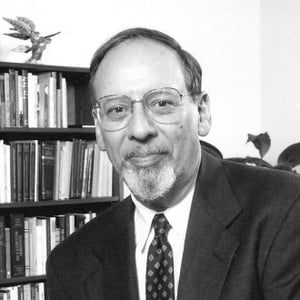
Dean Emeritus, George Mason School of Law
Lauded as a cultural laureate of the Commonwealth of Virginia, former Mason dean Henry G. Manne was the driving force behind the many innovations in legal education implemented at George Mason.
Professor Manne was designated one of the "founders" of the field of law and economics by the American Law and Economics Association. He launched the Law and Economics Center at Emory University and the University of Miami before bringing it to George Mason.
His monograph, An Intellectual History of the School of Law, George Mason University, traces the development of the law and economics movement and highlights the special contributions made by George Mason University School of Law to the movement. Professor Manne's other writings include such seminal works as Insider Trading and the Stock Market; Wall Street in Transition (with E. Solomon); and "Mergers and the Market for Corporate Control", Journal of Political Economy, April 1965. Professor Manne also designed and implemented at George Mason the nation's first system of fully integrated law school specialty track programs.
In August 2012, Dean Manne gave an oral history of his life, including his time at the Law and Economics Center, to the Securities and Exchange Commission Historical Society. An audio recording of the interview and transcript are available on the Society's website: audio (mp3); edited transcript (pdf).
He received a B.A. from Vanderbilt University (1950), J.D. from the University of Chicago (1952), J.S.D. from Yale University (1966), LL.D. from Seattle University (1987), and LL.D. from the Universidad Francesco Marroquin in Guatemala (1987).
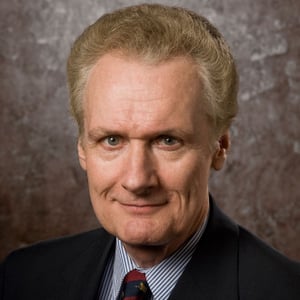
Vice President for Legal Affairs, Cato Institute
Roger Pilon is the Cato’s Institute’s vice president for legal affairs, the founding director of Cato’s Robert A. Levy Center for Constitutional Studies, the inaugural holder of Cato’s B. Kenneth Simon Chair in Constitutional Studies, and the founding publisher of the Cato Supreme Court Review.
Prior to joining Cato, Pilon held five senior posts in the Reagan administration, including at State and Justice, and was a national fellow at Stanford’s Hoover Institution. In 1989 the Bicentennial Commission presented him with its Benjamin Franklin Award for excellence in writing on the U.S. Constitution. In 2001 Columbia University’s School of General Studies awarded him its Alumni Medal of Distinction. Pilon lectures and debates at universities and law schools across the country and testifies often before Congress.
His writing has appeared in the Wall Street Journal, the Washington Post, the New York Times, the Los Angeles Times, Legal Times, National Law Journal, Harvard Journal of Law and Public Policy, Stanford Law and Policy Review, and elsewhere. He has appeared on ABC’s Nightline, CBS’s 60 Minutes II, Fox News Channel, NPR, CNN, MSNBC, CNBC, C-SPAN, and other media.
Pilon holds a BA from Columbia University, an MA and a PhD from the University of Chicago, and a JD from the George Washington University School of Law.
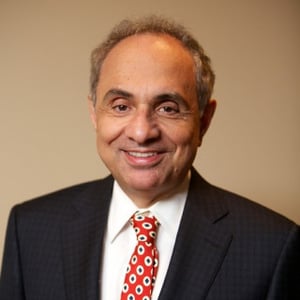
Professor of Economics; Co-Director of Classical liberal Institute, NYU Law School; Director of the Foundations of the Market Economy Program, New York University
Mario Rizzo is the Director of the Program on the Foundations of the Market Economy in the Department of Economics. He is also the Co-Director of the Classical Liberal Institute at the New York University School of Law. He has been a law and economics fellow at Yale Law School and the University of Chicago Law School. He teaches a yearly seminar at the NYU Law School called “Classical Liberalism.” He is the author of many articles in economics and in law journals. He is the coauthor of Austrian Economics Re-Examined: The Economics of Time and Ignorance. Professor Rizzo’s current research is focused on new or soft paternalism, behavioral economics, and the economic theory of rationality. He is completing a book, Puppets and Puppet Masters: Rationality, Behavioral Economics and New Paternalism, for Cambridge University Press.

The Employee Free Choice Act
Richard A. Epstein, Thomas Kochan, Eugene Scalia, Patrick Szymanski
On March 10, 2009, the Employee Free Choice Act (EFCA) was re-introduced to Congress by...
Panel II: Originalism and Historical Truth
2002 National Student Symposium
New Haven, CT2002 National Student Symposium
Law and Truth
New Haven, CTBringing Law to New Frontiers: Cyberspace
David G. Post, Andrew Shapiro, Mark F. Schultz
THURSDAY, NOVEMBER 12, 1998 PROCEEDINGS Following are excerpts from one of the Intellectual Property Practice...
Panel Three: School Choice: The Next Civil Rights Crusade? [Archive Collection]
1999 Stranahan National Issues Forum
Toldeo, OHPanel I: Methods of Interpreting the Economic Rights Provisions of the Constitution [Archive Collection]
A Symposium in Celebration of the Bicentennial of the Constitution
Arlington, VA