

Laurence A. Tisch Professor of Law and Director, Classical Liberal Institute, New York University School of Law; Director, Classical Liberal Institute, Civitas Institute University of Texas at Austin
Richard A. Epstein is the Laurence A. Tisch Professor of Law, at New York University, a senior research fellow at the Civitas Institute at the University of Texas Austin, and a senior Lecturer, the University of Chicago. He received an LL.D., h.c . from the University of Ghent, 2003 , and an LLD h.c . from the University of Siegen in 2018 and the Bradley Prize in 2011. He has been a member of the American Academy of Arts and Sciences since 1985. He has edited both the Journal of Legal Studies (1981-1991) and the Journal of Law and Economics (1991-2001). He is also a founder and director of the Classical Liberal Institute at NYU Law School. His most recent book is The Classical Liberal Constitution: The Uncertain Quest for Limited Government (2014). His other books include Takings: Private Property and the Power of Eminent Domain ( 1985); Bargaining with the State (1993); Simple Rules for a Complex World (1995); Principles for a Free Society: Reconciling Individual Liberty and the Common Good (1998); Skepticism and Freedom: A Modern Theory of Classical Liberalism (2003); Design for Liberty: Private Property, Public Administration and the Rule of Law (2011), and most recently, The Myth of Birthright citizenship—and Beyond (2026). He has taught courses in , administrative law, antitrust, constitutional, contracts, environmental law, land use planning; real property, torts and water law. He has written and spoken extensively on a wide range of topics, and is writes a regular column for Defining Ideas.

James Madison Distinguished Professor of Law and Class of 1941 Research Professor of Law, University of Virginia School of Law
Professor John C. Harrison is the James Madison Distinguished Professor of Law and Class of 1941 Research Professor of Law at the University of Virginia School of Law. He joined the faculty at University of Virginia in 1993 as an associate professor of law after a distinguished career with the U.S. Department of Justice. His teaching subjects include constitutional history, federal courts, remedies, corporations, civil procedure, legislation and property. In 2008 he was on leave from the Law School to serve as counselor on international law in the Office of the Legal Adviser at the U.S. Department of State.
A 1977 graduate of the University of Virginia, Harrison earned his law degree in 1980 at Yale, where he served as editor of the Yale Law Journal and editor and articles editor of the Yale Studies in World Public Order. He was an associate at Patton Boggs & Blow in Washington, D.C., and clerked for Judge Robert Bork on the U.S. Court of Appeals for the District of Columbia Circuit. He worked with the Department of Justice from 1983-93, serving in numerous capacities, including deputy assistant attorney general in the Office of Legal Counsel (1990-93).
Rothgerber Professor of Constitutional Law, Colorado Law
Robert Nagel joined the faculty of CU Law School in 1975, leaving a position as a deputy attorney general in Pennsylvania. Since that time, he has focused on constitutional law and theory. For an audience of legal scholars, Professor Nagel has written prolifically, including four books and over 50 law review articles. However, he has also contributed to the popular debate on constitutional issues, including free speech, hate codes, and federalism, by addressing his ideas to the general citizenry in articles and opinion pieces in publications such as The New Republic, the Wall Street Journal, First Things, and Washington Monthly. Much of his work has focused on the relationship between the judiciary (and its interpretation of the Constitution) and the wider context of American political culture. His two earlier books on this topic, Constitutional Cultures: The Mentality and Consequences of Judicial Review and Judicial Power and American Character: Censoring Ourselves in an Anxious Age, were widely read and reviewed. He has recently completed The Implosion of American Federalism, a book on the cultural and constitutional ramifications of political centralization. Professor Nagel has testified before several congressional committees. He was formerly the director of the Law School's Byron R. White Center for the Study of American Constitutional Law. In 2003, he was elected a Fellow of the American Academy of Arts and Sciences.
Inez Milholland Professor of Civil Liberties, New York University School of Law
Burt Neuborne is the Inez Milholland Professor of Civil Liberties and founding Legal Director of the Brennan Center for Justice at NYU Law School. For 45 years, he has been one of the nation's foremost civil liberties lawyers, serving as National Legal Director of the ACLU from 1981-86, Special Counsel to the NOW Legal Defense and Education Fund from 1990-1996, and as a member of the New York City Human Rights Commission from 1988-1992. He has argued numerous Supreme Court cases, and has litigated literally hundreds of important constitutional cases in the state and federal courts. He challenged the constitutionality of the Vietnam War, pioneered the flag burning cases, worked on the Pentagon Papers case, worked with Justice Ruth Bader Ginsburg when she headed the ACLU Women's Rights Project, anchored the ACLU's legal program during the Reagan years, and defended the Legal Services program against unconstitutional attacks. He currently directs the legal program of the Brennan Center, especially its efforts to reinforce American democracy and secure campaign finance reform. The Brennan Center was established in 1994 to honor Justice William Brennan, Jr.’s monumental contribution to American Law.
At the same time, Professor Neuborne has forged a national reputation as a constitutional scholar and teacher. In 1990, he was the recipient of the University-wide Distinguished Teacher Award at New York University for his work in teaching Civil Procedure, Evidence, Federal Courts and Constitutional Law. He is the author of three books and over 20 law review articles on diverse areas of constitutional law and procedure. Among his best known scholarly works is the two-volume Political and Civil Rights in the United States, which he co-authored with NYU colleagues Norman Dorsen and Sylvia Law and the Deputy Solicitor General of the United States, Paul Bender. His 1992 lectures on American law at Universitat Pompeu Fabra in Barcelona have been translated and published in Spanish. In 2001, in recognition of his scholarship and his work in the courts, Professor Neuborne was elected to membership in the American Academy of Arts and Sciences.
In 1996, Professor Neuborne appeared as Jerry Falwell's lawyer in Milos Forman's The People v. Larry Flynt.
For the past 14 years, Professor Neuborne has served as a principal counsel in a series of lawsuits seeking to recover property unjustly taken from Holocaust victims by Swiss banks and German corporations during the Nazi era. The litigation has succeeded in assembling more than $8.5 billion for distribution to Holocaust victims and their families throughout the world. Professor Neuborne was appointed by the Court to oversee the $1.25 Swiss bank settlement, and was appointed by the United States to serve on the Board of Trustees of the German Foundation “Remembrance, Responsibility and Future,” established to distribute the $5.2 billion settlement in the German slave labor litigation.
Professor Neuborne is married to Helen Redleaf Neuborne.
Dean and Foundation Professor of Law, George Mason University School of Law
Dean and Foundation Professor of Law Daniel D. Polsby joined the faculty of the law school in 1999 after serving 23 years on the Northwestern University law faculty, most recently (since 1990) as the Kirkland & Ellis Professor of Law. He has held visiting appointments in the law schools of the University of Southern California, the University of Michigan, and Cornell University. He was appointed acting dean of the George Mason School of Law in 2004 and was named dean in 2005.
Dean Polsby has published dozens of articles on such diverse subjects as voting rights, family law, employment rights, and spectrum utilization. He is the author of the award-winning article, "The False Promise of Gun Control," the cover essay of the March 1994 Atlantic Monthly. The article is one of the most widely anthologized essays of recent years.
Dean Polsby received his B.A. from Oakland University (1964) and earned his J.D. magna cum laude from the University of Minnesota (1971). He teaches Criminal Law, Family Law, Constitutional Law, and other subjects.
Partner, Akin Gump Strauss Hauer & Feld LLP
Steven Ross has extensive public- and private-sector experience in representing corporations, institutions, boards and individuals in all manner of investigations, including congressional, criminal and regulatory proceedings and related civil litigation. He concentrates on congressional investigations, internal investigations, governmental ethics, federal election law, white collar criminal defense and constitutional issues.
From 1983 to 1993, Steven served as the General Counsel of the U.S. House of Representatives, advising and representing its members, leadership, committees and employees from both political parties. He has also counseled the leadership and relevant committees on numerous congressional investigations.
In private practice, Steven guides clients through complex congressional inquiries and related litigation. He represents clients in investigations conducted by various federal executive branch departments, commissions and agencies, including the U.S. departments of Justice, Education, Health and Human Services, Defense and the Interior, as well as the Federal Election Commission and the Food and Drug Administration.
Steven has significant litigation experience, ranging from trials before U.S. district courts to arguments before the Supreme Court and numerous federal courts of appeals. He was actively involved in defending the constitutionality of multiple federal statutes, including the Independent Counsel Act, the Competition in Contracting Act and the Gramm-Rudman-Hollings Deficit Reduction Act.
Over the course of his career, Steven has litigated seminal cases regarding the scope of Congress’ oversight and investigations power, both on behalf of Congress and as counsel to private parties implicated by such inquiries. He has taught constitutional law as an adjunct professor at George Mason University Law School and served as a guest lecturer on the topic of congressional investigations at a number of law schools, including NYU, Fordham and the Georgetown University Law Center.
James Madison Distinguished Professor of Law and Class of 1941 Research Professor of Law, University of Virginia School of Law
Professor John C. Harrison is the James Madison Distinguished Professor of Law and Class of 1941 Research Professor of Law at the University of Virginia School of Law. He joined the faculty at University of Virginia in 1993 as an associate professor of law after a distinguished career with the U.S. Department of Justice. His teaching subjects include constitutional history, federal courts, remedies, corporations, civil procedure, legislation and property. In 2008 he was on leave from the Law School to serve as counselor on international law in the Office of the Legal Adviser at the U.S. Department of State.
A 1977 graduate of the University of Virginia, Harrison earned his law degree in 1980 at Yale, where he served as editor of the Yale Law Journal and editor and articles editor of the Yale Studies in World Public Order. He was an associate at Patton Boggs & Blow in Washington, D.C., and clerked for Judge Robert Bork on the U.S. Court of Appeals for the District of Columbia Circuit. He worked with the Department of Justice from 1983-93, serving in numerous capacities, including deputy assistant attorney general in the Office of Legal Counsel (1990-93).
Rothgerber Professor of Constitutional Law, Colorado Law
Robert Nagel joined the faculty of CU Law School in 1975, leaving a position as a deputy attorney general in Pennsylvania. Since that time, he has focused on constitutional law and theory. For an audience of legal scholars, Professor Nagel has written prolifically, including four books and over 50 law review articles. However, he has also contributed to the popular debate on constitutional issues, including free speech, hate codes, and federalism, by addressing his ideas to the general citizenry in articles and opinion pieces in publications such as The New Republic, the Wall Street Journal, First Things, and Washington Monthly. Much of his work has focused on the relationship between the judiciary (and its interpretation of the Constitution) and the wider context of American political culture. His two earlier books on this topic, Constitutional Cultures: The Mentality and Consequences of Judicial Review and Judicial Power and American Character: Censoring Ourselves in an Anxious Age, were widely read and reviewed. He has recently completed The Implosion of American Federalism, a book on the cultural and constitutional ramifications of political centralization. Professor Nagel has testified before several congressional committees. He was formerly the director of the Law School's Byron R. White Center for the Study of American Constitutional Law. In 2003, he was elected a Fellow of the American Academy of Arts and Sciences.
Inez Milholland Professor of Civil Liberties, New York University School of Law
Burt Neuborne is the Inez Milholland Professor of Civil Liberties and founding Legal Director of the Brennan Center for Justice at NYU Law School. For 45 years, he has been one of the nation's foremost civil liberties lawyers, serving as National Legal Director of the ACLU from 1981-86, Special Counsel to the NOW Legal Defense and Education Fund from 1990-1996, and as a member of the New York City Human Rights Commission from 1988-1992. He has argued numerous Supreme Court cases, and has litigated literally hundreds of important constitutional cases in the state and federal courts. He challenged the constitutionality of the Vietnam War, pioneered the flag burning cases, worked on the Pentagon Papers case, worked with Justice Ruth Bader Ginsburg when she headed the ACLU Women's Rights Project, anchored the ACLU's legal program during the Reagan years, and defended the Legal Services program against unconstitutional attacks. He currently directs the legal program of the Brennan Center, especially its efforts to reinforce American democracy and secure campaign finance reform. The Brennan Center was established in 1994 to honor Justice William Brennan, Jr.’s monumental contribution to American Law.
At the same time, Professor Neuborne has forged a national reputation as a constitutional scholar and teacher. In 1990, he was the recipient of the University-wide Distinguished Teacher Award at New York University for his work in teaching Civil Procedure, Evidence, Federal Courts and Constitutional Law. He is the author of three books and over 20 law review articles on diverse areas of constitutional law and procedure. Among his best known scholarly works is the two-volume Political and Civil Rights in the United States, which he co-authored with NYU colleagues Norman Dorsen and Sylvia Law and the Deputy Solicitor General of the United States, Paul Bender. His 1992 lectures on American law at Universitat Pompeu Fabra in Barcelona have been translated and published in Spanish. In 2001, in recognition of his scholarship and his work in the courts, Professor Neuborne was elected to membership in the American Academy of Arts and Sciences.
In 1996, Professor Neuborne appeared as Jerry Falwell's lawyer in Milos Forman's The People v. Larry Flynt.
For the past 14 years, Professor Neuborne has served as a principal counsel in a series of lawsuits seeking to recover property unjustly taken from Holocaust victims by Swiss banks and German corporations during the Nazi era. The litigation has succeeded in assembling more than $8.5 billion for distribution to Holocaust victims and their families throughout the world. Professor Neuborne was appointed by the Court to oversee the $1.25 Swiss bank settlement, and was appointed by the United States to serve on the Board of Trustees of the German Foundation “Remembrance, Responsibility and Future,” established to distribute the $5.2 billion settlement in the German slave labor litigation.
Professor Neuborne is married to Helen Redleaf Neuborne.
Dean and Foundation Professor of Law, George Mason University School of Law
Dean and Foundation Professor of Law Daniel D. Polsby joined the faculty of the law school in 1999 after serving 23 years on the Northwestern University law faculty, most recently (since 1990) as the Kirkland & Ellis Professor of Law. He has held visiting appointments in the law schools of the University of Southern California, the University of Michigan, and Cornell University. He was appointed acting dean of the George Mason School of Law in 2004 and was named dean in 2005.
Dean Polsby has published dozens of articles on such diverse subjects as voting rights, family law, employment rights, and spectrum utilization. He is the author of the award-winning article, "The False Promise of Gun Control," the cover essay of the March 1994 Atlantic Monthly. The article is one of the most widely anthologized essays of recent years.
Dean Polsby received his B.A. from Oakland University (1964) and earned his J.D. magna cum laude from the University of Minnesota (1971). He teaches Criminal Law, Family Law, Constitutional Law, and other subjects.
Partner, Akin Gump Strauss Hauer & Feld LLP
Steven Ross has extensive public- and private-sector experience in representing corporations, institutions, boards and individuals in all manner of investigations, including congressional, criminal and regulatory proceedings and related civil litigation. He concentrates on congressional investigations, internal investigations, governmental ethics, federal election law, white collar criminal defense and constitutional issues.
From 1983 to 1993, Steven served as the General Counsel of the U.S. House of Representatives, advising and representing its members, leadership, committees and employees from both political parties. He has also counseled the leadership and relevant committees on numerous congressional investigations.
In private practice, Steven guides clients through complex congressional inquiries and related litigation. He represents clients in investigations conducted by various federal executive branch departments, commissions and agencies, including the U.S. departments of Justice, Education, Health and Human Services, Defense and the Interior, as well as the Federal Election Commission and the Food and Drug Administration.
Steven has significant litigation experience, ranging from trials before U.S. district courts to arguments before the Supreme Court and numerous federal courts of appeals. He was actively involved in defending the constitutionality of multiple federal statutes, including the Independent Counsel Act, the Competition in Contracting Act and the Gramm-Rudman-Hollings Deficit Reduction Act.
Over the course of his career, Steven has litigated seminal cases regarding the scope of Congress’ oversight and investigations power, both on behalf of Congress and as counsel to private parties implicated by such inquiries. He has taught constitutional law as an adjunct professor at George Mason University Law School and served as a guest lecturer on the topic of congressional investigations at a number of law schools, including NYU, Fordham and the Georgetown University Law Center.
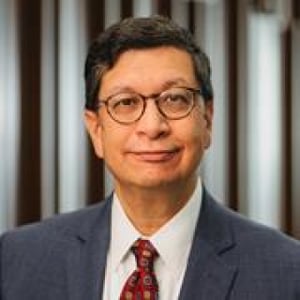
James T. Jensen Endowed Professor for Transactional Law & Director of the Program on Intellectual Property and Technology Law, University of Utah S.J. Quinney College of Law
Jorge L. Contreras is a Distinguished University Professor, the James T. Jensen Endowed Professor for Transactional Law and Director of the Program on Intellectual Property and Technology Law. He teaches and researches in the areas of intellectual property, property law, technical standardization, antitrust and science policy. In 2020 he received the University of Utah's Distinguished Research Award and is an elected member of the American Law Institute. He has testified before the U.S. Senate and House Subcommittees on Intellectual Property, and was awarded the Rossman Memorial Award by the Patent & Trademark Office Society in 2022.
Professor Contreras has written or edited fourteen books and published more than 150 scholarly articles and chapters. His book, The Genome Defense: Inside the Epic Legal Battle to Determine Who Owns Your DNA (NY: Hachette/Algonquin, 2021), has been praised by the NY Times, Wall St. Journal, Nature and numerous other outlets, and was named "Best Patent Law Book of the Year" by the international IPKat blog. His scholarly articles have appeared in leading scientific, legal and policy journals including Science, Nature, NYU Law Review, Georgetown Law Journal, Iowa Law Review and Antitrust Law Journal. He has been quoted by media outlets around the world including the New York Times, Wall Street Journal, Economist, Bloomberg, Washington Post, Korea Times and has been featured on C-SPAN, NPR, PRI and BBC shows and a range of podcasts and online news programs.
Professor Contreras currently serves Co-Chair of the Interdisciplinary Division of the ABA's Section of Science & Technology Law and a member of the Advisory Board of the American Antitrust Institute. He has previously served as Co-Chair of the National Conference of Lawyers and Scientists, a member of the National Academy of Sciences (NAS) Committee on Intellectual Property Management in Standard-Setting Processes, the National Institutes of Health (NIH) Council of Councils, the Advisory Council of NIH's National Center for the Advancement of Translational Sciences (NCATS), the National Advisory Council for Human Genome Research, and the Intellectual Property Rights Policy Committee of the American National Standards Institute (ANSI). In 2021 he served as Chair of the Art Law Section of the Association of American Law Schools (AALS) and currently serves as Chair of the AALS Remedies Section.
Professor Contreras has previously taught at American University Washington College of Law and Washington University in St. Louis. Prior to entering academia he was a partner at the international law firm Wilmer Cutler Pickering Hale and Dorr LLP, where he practiced transactional and intellectual property law in Boston, London and Washington DC. He is a cum laude graduate of Harvard Law School (JD) and Rice University (BA, BSEE) and clerked for Chief Justice Thomas R. Philips of the Texas Supreme Court.
Laurence A. Tisch Professor of Law and Director, Classical Liberal Institute, New York University School of Law; Director, Classical Liberal Institute, Civitas Institute University of Texas at Austin
Richard A. Epstein is the Laurence A. Tisch Professor of Law, at New York University, a senior research fellow at the Civitas Institute at the University of Texas Austin, and a senior Lecturer, the University of Chicago. He received an LL.D., h.c . from the University of Ghent, 2003 , and an LLD h.c . from the University of Siegen in 2018 and the Bradley Prize in 2011. He has been a member of the American Academy of Arts and Sciences since 1985. He has edited both the Journal of Legal Studies (1981-1991) and the Journal of Law and Economics (1991-2001). He is also a founder and director of the Classical Liberal Institute at NYU Law School. His most recent book is The Classical Liberal Constitution: The Uncertain Quest for Limited Government (2014). His other books include Takings: Private Property and the Power of Eminent Domain ( 1985); Bargaining with the State (1993); Simple Rules for a Complex World (1995); Principles for a Free Society: Reconciling Individual Liberty and the Common Good (1998); Skepticism and Freedom: A Modern Theory of Classical Liberalism (2003); Design for Liberty: Private Property, Public Administration and the Rule of Law (2011), and most recently, The Myth of Birthright citizenship—and Beyond (2026). He has taught courses in , administrative law, antitrust, constitutional, contracts, environmental law, land use planning; real property, torts and water law. He has written and spoken extensively on a wide range of topics, and is writes a regular column for Defining Ideas.
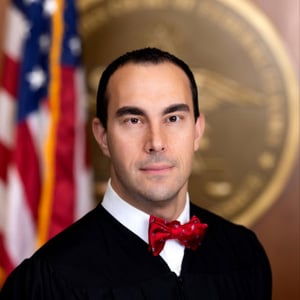
U.S. Court of Federal Claims and Jurist-In-Residence Professor of Law, The University of Akron School of Law
Judge Ryan T. Holte was sworn in as a judge on the United States Court of Federal Claims in July 2019. Prior to confirmation he served as the David L. Brennan Professor of Law and Director of the Center for Intellectual Property Law and Technology at The University of Akron School of Law (2017-2019) and an assistant professor of law at Southern Illinois University School of Law (2013-2017). Judge Holte has written and presented widely on patent law subjects and empirical legal studies of Federal Circuit and district court patent law cases. His most recent articles were published in the Iowa Law Review (2019), George Mason Law Review (2018), and Washington Law Review (2017).
In practice, Judge Holte served for six years as general counsel and partner of an electrical engineering technology company and is co-inventor of multiple patents related to Systems and Methods for Countering Satellite-Navigated Munitions. Prior to entering academia, Judge Holte practiced as a litigation attorney at the Federal Trade Commission and an associate in the Intellectual Property Practice Group at Jones Day. Prior to practice, he served as a law clerk to Judge Stanley F. Birch, Jr. on the United States Court of Appeals for the Eleventh Circuit and as a law clerk to Judge Loren A. Smith on the United States Court of Federal Claims.
Judge Holte received his JD from the University of California Davis School of Law and his BS, magna cum laude, in engineering from the California Maritime Academy where he was a First Class graduate of the Corps of Cadets Third Engineering Division and sailed as a U.S. Merchant Marine oiler.
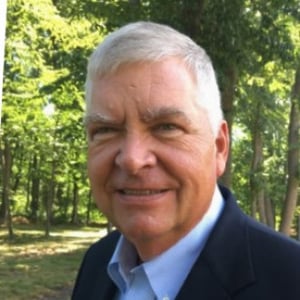
Founder and Principal, Johnson-IP Strategy & Consulting
Philip S. Johnson is Founder and Principal of Johnson-IP Strategy & Consulting. He previously served as Senior Vice President - Law Department and Chief Intellectual Property Counsel of Johnson & Johnson, having joined the corporation in January 2000 after 27 years in private practice. In this position, he managed about 110 patent and trademark attorneys worldwide. Phil is Chair of the Board of Directors of the American Intellectual Property Law Education Foundation, Vice President and President Elect of the Intellectual Property Owners Association, and a member of the Board of the Intellectual Property Owners Association Education Foundation (Past President). He is also a member of the Steering Committee of the Coalition for 21st Century Patent Reform, of the Association of Corporate Patent Counsel (Past President) and of PhRMA’s IP Focus Group (Chair Emeritus). Previously, Phil served as President of INTERPAT.
Before joining Johnson & Johnson, Phil was a senior partner and co-chair of IP litigation at Woodcock Washburn in Philadelphia, where he specialized in intellectual property issues affecting major pharmaceutical, medical device and consumer product companies. Phil has served as trial counsel in over 100 patent cases, including over 50 resulting in reported decisions of the federal district courts and/or of the Federal Circuit Court of Appeals. Phil regularly testifies before both the House and Senate Judiciary Committees on the subject of patent law reform and, more recently, abusive patent litigation. Phil served as a member of Chief Judge Michel’s Advisory Council on Patent Reform, and was recognized in the Congressional Record as a member of the Minority Whip’s “Kitchen Cabinet” for the America Invents Act. Thereafter, Phil served as IPO’s representative on the ABA-AIPLA-IPO committee of six experts (“COSE”) formed at Director Kappos’ request to propose to the USPTO implementing regulations for the PGR-IPR post-grant proceedings created by the AIA.
Phil co-authored “Compensatory Damages Issues In Patent Infringement Cases, A Pocket Guide for Federal District Court Judges,” published by the Federal Judicial Center, and has served that Center as a faculty member on its IP-related judicial education programming. Phil was also featured in the Landslide Publication March/April 2013 issue. The New Jersey Intellectual Property Law Association awarded Phil with its 2013 Jefferson Medal, presented on June 7, 2013.
Phil received his Bachelor of Science degree, cum laude with distinction in biology from Bucknell University, and his J.D. degree from Harvard Law School, where his third year advisor was now-Supreme Court Justice Stephen Breyer.
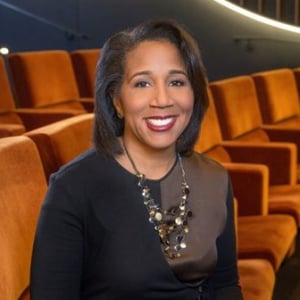
Senior Executive Vice President and Global General Counsel, Motion Picture Association
Karyn A. Temple is Senior Executive Vice President and Global General Counsel for the Motion Picture Association. One of the world’s leading authorities on copyright, Ms. Temple oversees all of the Association’s legal affairs and content protection efforts around the world.
Prior to joining the Motion Picture Association, Ms. Temple served more than eight years in the U.S. Copyright Office, most recently as the Register of Copyrights, where she led the 400-person agency and its eight divisions. Prior to leading the U.S. Copyright Office, Ms. Temple headed its Office of Policy and International Affairs, as well as served in policy and litigation roles at the U.S. Department of Justice; she most recently served in the Obama Administration as Senior Counsel to the Deputy Attorney General of the United States.
Ms. Temple received her J.D. from Columbia University School of Law and her B.A. in English from the University of Michigan.
James T. Jensen Endowed Professor for Transactional Law & Director of the Program on Intellectual Property and Technology Law, University of Utah S.J. Quinney College of Law
Jorge L. Contreras is a Distinguished University Professor, the James T. Jensen Endowed Professor for Transactional Law and Director of the Program on Intellectual Property and Technology Law. He teaches and researches in the areas of intellectual property, property law, technical standardization, antitrust and science policy. In 2020 he received the University of Utah's Distinguished Research Award and is an elected member of the American Law Institute. He has testified before the U.S. Senate and House Subcommittees on Intellectual Property, and was awarded the Rossman Memorial Award by the Patent & Trademark Office Society in 2022.
Professor Contreras has written or edited fourteen books and published more than 150 scholarly articles and chapters. His book, The Genome Defense: Inside the Epic Legal Battle to Determine Who Owns Your DNA (NY: Hachette/Algonquin, 2021), has been praised by the NY Times, Wall St. Journal, Nature and numerous other outlets, and was named "Best Patent Law Book of the Year" by the international IPKat blog. His scholarly articles have appeared in leading scientific, legal and policy journals including Science, Nature, NYU Law Review, Georgetown Law Journal, Iowa Law Review and Antitrust Law Journal. He has been quoted by media outlets around the world including the New York Times, Wall Street Journal, Economist, Bloomberg, Washington Post, Korea Times and has been featured on C-SPAN, NPR, PRI and BBC shows and a range of podcasts and online news programs.
Professor Contreras currently serves Co-Chair of the Interdisciplinary Division of the ABA's Section of Science & Technology Law and a member of the Advisory Board of the American Antitrust Institute. He has previously served as Co-Chair of the National Conference of Lawyers and Scientists, a member of the National Academy of Sciences (NAS) Committee on Intellectual Property Management in Standard-Setting Processes, the National Institutes of Health (NIH) Council of Councils, the Advisory Council of NIH's National Center for the Advancement of Translational Sciences (NCATS), the National Advisory Council for Human Genome Research, and the Intellectual Property Rights Policy Committee of the American National Standards Institute (ANSI). In 2021 he served as Chair of the Art Law Section of the Association of American Law Schools (AALS) and currently serves as Chair of the AALS Remedies Section.
Professor Contreras has previously taught at American University Washington College of Law and Washington University in St. Louis. Prior to entering academia he was a partner at the international law firm Wilmer Cutler Pickering Hale and Dorr LLP, where he practiced transactional and intellectual property law in Boston, London and Washington DC. He is a cum laude graduate of Harvard Law School (JD) and Rice University (BA, BSEE) and clerked for Chief Justice Thomas R. Philips of the Texas Supreme Court.
Laurence A. Tisch Professor of Law and Director, Classical Liberal Institute, New York University School of Law; Director, Classical Liberal Institute, Civitas Institute University of Texas at Austin
Richard A. Epstein is the Laurence A. Tisch Professor of Law, at New York University, a senior research fellow at the Civitas Institute at the University of Texas Austin, and a senior Lecturer, the University of Chicago. He received an LL.D., h.c . from the University of Ghent, 2003 , and an LLD h.c . from the University of Siegen in 2018 and the Bradley Prize in 2011. He has been a member of the American Academy of Arts and Sciences since 1985. He has edited both the Journal of Legal Studies (1981-1991) and the Journal of Law and Economics (1991-2001). He is also a founder and director of the Classical Liberal Institute at NYU Law School. His most recent book is The Classical Liberal Constitution: The Uncertain Quest for Limited Government (2014). His other books include Takings: Private Property and the Power of Eminent Domain ( 1985); Bargaining with the State (1993); Simple Rules for a Complex World (1995); Principles for a Free Society: Reconciling Individual Liberty and the Common Good (1998); Skepticism and Freedom: A Modern Theory of Classical Liberalism (2003); Design for Liberty: Private Property, Public Administration and the Rule of Law (2011), and most recently, The Myth of Birthright citizenship—and Beyond (2026). He has taught courses in , administrative law, antitrust, constitutional, contracts, environmental law, land use planning; real property, torts and water law. He has written and spoken extensively on a wide range of topics, and is writes a regular column for Defining Ideas.
U.S. Court of Federal Claims and Jurist-In-Residence Professor of Law, The University of Akron School of Law
Judge Ryan T. Holte was sworn in as a judge on the United States Court of Federal Claims in July 2019. Prior to confirmation he served as the David L. Brennan Professor of Law and Director of the Center for Intellectual Property Law and Technology at The University of Akron School of Law (2017-2019) and an assistant professor of law at Southern Illinois University School of Law (2013-2017). Judge Holte has written and presented widely on patent law subjects and empirical legal studies of Federal Circuit and district court patent law cases. His most recent articles were published in the Iowa Law Review (2019), George Mason Law Review (2018), and Washington Law Review (2017).
In practice, Judge Holte served for six years as general counsel and partner of an electrical engineering technology company and is co-inventor of multiple patents related to Systems and Methods for Countering Satellite-Navigated Munitions. Prior to entering academia, Judge Holte practiced as a litigation attorney at the Federal Trade Commission and an associate in the Intellectual Property Practice Group at Jones Day. Prior to practice, he served as a law clerk to Judge Stanley F. Birch, Jr. on the United States Court of Appeals for the Eleventh Circuit and as a law clerk to Judge Loren A. Smith on the United States Court of Federal Claims.
Judge Holte received his JD from the University of California Davis School of Law and his BS, magna cum laude, in engineering from the California Maritime Academy where he was a First Class graduate of the Corps of Cadets Third Engineering Division and sailed as a U.S. Merchant Marine oiler.
Founder and Principal, Johnson-IP Strategy & Consulting
Philip S. Johnson is Founder and Principal of Johnson-IP Strategy & Consulting. He previously served as Senior Vice President - Law Department and Chief Intellectual Property Counsel of Johnson & Johnson, having joined the corporation in January 2000 after 27 years in private practice. In this position, he managed about 110 patent and trademark attorneys worldwide. Phil is Chair of the Board of Directors of the American Intellectual Property Law Education Foundation, Vice President and President Elect of the Intellectual Property Owners Association, and a member of the Board of the Intellectual Property Owners Association Education Foundation (Past President). He is also a member of the Steering Committee of the Coalition for 21st Century Patent Reform, of the Association of Corporate Patent Counsel (Past President) and of PhRMA’s IP Focus Group (Chair Emeritus). Previously, Phil served as President of INTERPAT.
Before joining Johnson & Johnson, Phil was a senior partner and co-chair of IP litigation at Woodcock Washburn in Philadelphia, where he specialized in intellectual property issues affecting major pharmaceutical, medical device and consumer product companies. Phil has served as trial counsel in over 100 patent cases, including over 50 resulting in reported decisions of the federal district courts and/or of the Federal Circuit Court of Appeals. Phil regularly testifies before both the House and Senate Judiciary Committees on the subject of patent law reform and, more recently, abusive patent litigation. Phil served as a member of Chief Judge Michel’s Advisory Council on Patent Reform, and was recognized in the Congressional Record as a member of the Minority Whip’s “Kitchen Cabinet” for the America Invents Act. Thereafter, Phil served as IPO’s representative on the ABA-AIPLA-IPO committee of six experts (“COSE”) formed at Director Kappos’ request to propose to the USPTO implementing regulations for the PGR-IPR post-grant proceedings created by the AIA.
Phil co-authored “Compensatory Damages Issues In Patent Infringement Cases, A Pocket Guide for Federal District Court Judges,” published by the Federal Judicial Center, and has served that Center as a faculty member on its IP-related judicial education programming. Phil was also featured in the Landslide Publication March/April 2013 issue. The New Jersey Intellectual Property Law Association awarded Phil with its 2013 Jefferson Medal, presented on June 7, 2013.
Phil received his Bachelor of Science degree, cum laude with distinction in biology from Bucknell University, and his J.D. degree from Harvard Law School, where his third year advisor was now-Supreme Court Justice Stephen Breyer.
Senior Executive Vice President and Global General Counsel, Motion Picture Association
Karyn A. Temple is Senior Executive Vice President and Global General Counsel for the Motion Picture Association. One of the world’s leading authorities on copyright, Ms. Temple oversees all of the Association’s legal affairs and content protection efforts around the world.
Prior to joining the Motion Picture Association, Ms. Temple served more than eight years in the U.S. Copyright Office, most recently as the Register of Copyrights, where she led the 400-person agency and its eight divisions. Prior to leading the U.S. Copyright Office, Ms. Temple headed its Office of Policy and International Affairs, as well as served in policy and litigation roles at the U.S. Department of Justice; she most recently served in the Obama Administration as Senior Counsel to the Deputy Attorney General of the United States.
Ms. Temple received her J.D. from Columbia University School of Law and her B.A. in English from the University of Michigan.

President, Cass & Associates, PC
Ronald A. Cass is Dean Emeritus of Boston University School of Law (where he was Dean from 1990-2004), President of Cass & Associates, PC, former Vice-Chairman and Commissioner of the U.S. International Trade Commission, former faculty member at Boston University School of Law and the University of Virginia Law School, and Distinguished Senior Fellow at the C. Boyden Gray Center for the Study of the Administrative State. Dean Cass also sits as an arbitrator for commercial, international, and intellectual property rights disputes, and is a former United States member of the Panel of Conciliators of the International Centre for Settlement of Investment Disputes. He is a member of the Council of the Administrative Conference of the United States and has received seven presidential appointments, spanning Presidents Ronald Reagan to Donald J. Trump.
As a law professor, lecturer, and scholar, Dean Cass has been teaching and writing about a wide array of legal issues on topics such as administrative law and regulation, antitrust, constitutional law, communications, intellectual property, international trade, separation of powers, and legal process. He has published more than 160 scholarly books, chapters, articles, and papers, including a leading casebook on administrative law. Dean Cass has taught judges as well as students in schools of law, economics, business, and public policy and has held academic appointments in the United States, Europe, and Latin America.
In addition to his academic work, Dean Cass has participated in numerous important legal cases as an amicus, consultant, or expert, and has advised businesses, law firms, investment funds, and government agencies on a range of trade, antitrust, intellectual property, and regulatory issues. He has a broad range of affiliations with professional groups, and has received numerous honors, fellowships and awards.
Dean Cass is a graduate of the University of Virginia and the University of Chicago Law School.
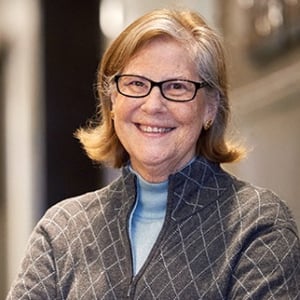
Professor of Practice and Distinguished Scholar in Residence; Co-Director of the Legislative and Regulatory Process Clinic, New York University School of Law
Sally Katzen served in the Clinton administration as administrator of the Office of Information and Regulatory Affairs in the Office of Management and Budget (OMB), as deputy assistant to the president for economic policy and deputy director of the National Economic Council in the White House, and then as the deputy director for management at OMB. She served as the head of the Agency Review Group for the Obama/Biden transition with responsibility for the Executive Office of the President and all government-wide agencies. She has taught both undergraduates and at various law schools. She is a member of the American Law Institute and the National Academy of Public Administration, has served on multiple panels for the National Academy of Sciences, testified frequently before Congress, and is on the board of several non-profit organizations. Before joining the Clinton administration, Katzen was a partner in the Washington, DC, law firm of Wilmer, Cutler & Pickering, specializing in regulatory and legislative matters, while serving in leadership roles in the American Bar Association (including chair of the Section on Administrative Law and Regulatory Practice and as DC delegate to the ABA’s House of Delegates), as president of the Federal Communications Bar Association and as president of the Women’s Legal Defense Fund. She graduated from Smith College and the University of Michigan Law School, where she was the first woman editor-in-chief of the Law Review. She clerked for Judge J. Skelly Wright of the United States Court of Appeals for the District of Columbia Circuit and served in the Carter administration as the general counsel of the Council on Wage and Price Stability in the Executive Office of the President.
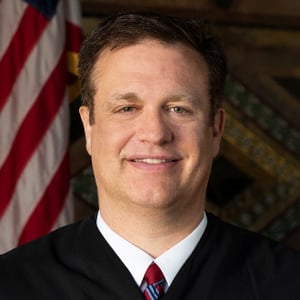
Judge, United States Court of Appeals, Ninth Circuit
Judge Nelson was confirmed to the Ninth Circuit in October 2018, as the youngest Circuit Judge to serve from Idaho and he has chambers in his hometown of Idaho Falls. Prior to his confirmation, Judge Nelson served for nine years as General Counsel of Idaho Falls-based Melaleuca, Inc., a consumer goods company. He previously worked in Washington, DC, where he served in all three branches of the federal government, including as Special Counsel for Supreme Court nominations to the Ranking Member of the Senate Judiciary Committee; Deputy General Counsel to the White House Office of Management and Budget; Deputy Assistant Attorney General in the Environment and Natural Resources Division of the United States Department of Justice; and a law clerk to Judge Henderson of the United States Court of Appeals for the D.C. Circuit. He has argued in most of the federal courts of appeals and worked on dozens of Supreme Court briefs. He started in the Washington, DC office of Sidley Austin as an appellate lawyer, after clerking for Judges Mosk and Brower of the Iran-U.S. Claims Tribunal at The Hague, and for now-Judge Tom Griffith, then-Senate Legal Counsel, during the impeachment trial of President Clinton. Judge Nelson earned his B.A. from Brigham Young University and his J.D., with honors, from BYU Law School. Judge Nelson has been a member of the Federalist Society since 1998.
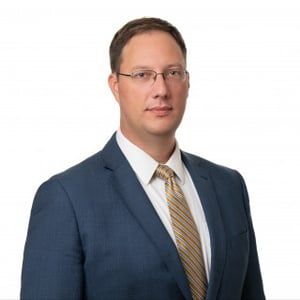
Laurence H. Silberman Chair in Constitutional Governance, American Enterprise Institute; Executive Director, Antonin Scalia Law School’s C. Boyden Gray Center for the Study of the Administrative State
Adam J. White is the Laurence H. Silberman Chair in Constitutional Governance and senior fellow at the American Enterprise Institute, where he focuses on the Supreme Court and the administrative state. He also directs the Antonin Scalia Law School’s C. Boyden Gray Center for the Study of the Administrative State.
He writes on regulation and constitutional government for a variety of publications. He practiced law in Washington, D.C., after clerking for the D.C. Circuit's Judge David Sentelle. He also has been chairman of the ABA's Administrative Law Section.
In 2021, he served on the Presidential Commission on the Supreme Court of the United States, where he criticized “Court packing” and other efforts to restructure the Supreme Court.
President, Cass & Associates, PC
Ronald A. Cass is Dean Emeritus of Boston University School of Law (where he was Dean from 1990-2004), President of Cass & Associates, PC, former Vice-Chairman and Commissioner of the U.S. International Trade Commission, former faculty member at Boston University School of Law and the University of Virginia Law School, and Distinguished Senior Fellow at the C. Boyden Gray Center for the Study of the Administrative State. Dean Cass also sits as an arbitrator for commercial, international, and intellectual property rights disputes, and is a former United States member of the Panel of Conciliators of the International Centre for Settlement of Investment Disputes. He is a member of the Council of the Administrative Conference of the United States and has received seven presidential appointments, spanning Presidents Ronald Reagan to Donald J. Trump.
As a law professor, lecturer, and scholar, Dean Cass has been teaching and writing about a wide array of legal issues on topics such as administrative law and regulation, antitrust, constitutional law, communications, intellectual property, international trade, separation of powers, and legal process. He has published more than 160 scholarly books, chapters, articles, and papers, including a leading casebook on administrative law. Dean Cass has taught judges as well as students in schools of law, economics, business, and public policy and has held academic appointments in the United States, Europe, and Latin America.
In addition to his academic work, Dean Cass has participated in numerous important legal cases as an amicus, consultant, or expert, and has advised businesses, law firms, investment funds, and government agencies on a range of trade, antitrust, intellectual property, and regulatory issues. He has a broad range of affiliations with professional groups, and has received numerous honors, fellowships and awards.
Dean Cass is a graduate of the University of Virginia and the University of Chicago Law School.
Professor of Practice and Distinguished Scholar in Residence; Co-Director of the Legislative and Regulatory Process Clinic, New York University School of Law
Sally Katzen served in the Clinton administration as administrator of the Office of Information and Regulatory Affairs in the Office of Management and Budget (OMB), as deputy assistant to the president for economic policy and deputy director of the National Economic Council in the White House, and then as the deputy director for management at OMB. She served as the head of the Agency Review Group for the Obama/Biden transition with responsibility for the Executive Office of the President and all government-wide agencies. She has taught both undergraduates and at various law schools. She is a member of the American Law Institute and the National Academy of Public Administration, has served on multiple panels for the National Academy of Sciences, testified frequently before Congress, and is on the board of several non-profit organizations. Before joining the Clinton administration, Katzen was a partner in the Washington, DC, law firm of Wilmer, Cutler & Pickering, specializing in regulatory and legislative matters, while serving in leadership roles in the American Bar Association (including chair of the Section on Administrative Law and Regulatory Practice and as DC delegate to the ABA’s House of Delegates), as president of the Federal Communications Bar Association and as president of the Women’s Legal Defense Fund. She graduated from Smith College and the University of Michigan Law School, where she was the first woman editor-in-chief of the Law Review. She clerked for Judge J. Skelly Wright of the United States Court of Appeals for the District of Columbia Circuit and served in the Carter administration as the general counsel of the Council on Wage and Price Stability in the Executive Office of the President.
Judge, United States Court of Appeals, Ninth Circuit
Judge Nelson was confirmed to the Ninth Circuit in October 2018, as the youngest Circuit Judge to serve from Idaho and he has chambers in his hometown of Idaho Falls. Prior to his confirmation, Judge Nelson served for nine years as General Counsel of Idaho Falls-based Melaleuca, Inc., a consumer goods company. He previously worked in Washington, DC, where he served in all three branches of the federal government, including as Special Counsel for Supreme Court nominations to the Ranking Member of the Senate Judiciary Committee; Deputy General Counsel to the White House Office of Management and Budget; Deputy Assistant Attorney General in the Environment and Natural Resources Division of the United States Department of Justice; and a law clerk to Judge Henderson of the United States Court of Appeals for the D.C. Circuit. He has argued in most of the federal courts of appeals and worked on dozens of Supreme Court briefs. He started in the Washington, DC office of Sidley Austin as an appellate lawyer, after clerking for Judges Mosk and Brower of the Iran-U.S. Claims Tribunal at The Hague, and for now-Judge Tom Griffith, then-Senate Legal Counsel, during the impeachment trial of President Clinton. Judge Nelson earned his B.A. from Brigham Young University and his J.D., with honors, from BYU Law School. Judge Nelson has been a member of the Federalist Society since 1998.
Laurence H. Silberman Chair in Constitutional Governance, American Enterprise Institute; Executive Director, Antonin Scalia Law School’s C. Boyden Gray Center for the Study of the Administrative State
Adam J. White is the Laurence H. Silberman Chair in Constitutional Governance and senior fellow at the American Enterprise Institute, where he focuses on the Supreme Court and the administrative state. He also directs the Antonin Scalia Law School’s C. Boyden Gray Center for the Study of the Administrative State.
He writes on regulation and constitutional government for a variety of publications. He practiced law in Washington, D.C., after clerking for the D.C. Circuit's Judge David Sentelle. He also has been chairman of the ABA's Administrative Law Section.
In 2021, he served on the Presidential Commission on the Supreme Court of the United States, where he criticized “Court packing” and other efforts to restructure the Supreme Court.
James T. Jensen Endowed Professor for Transactional Law & Director of the Program on Intellectual Property and Technology Law, University of Utah S.J. Quinney College of Law
Jorge L. Contreras is a Distinguished University Professor, the James T. Jensen Endowed Professor for Transactional Law and Director of the Program on Intellectual Property and Technology Law. He teaches and researches in the areas of intellectual property, property law, technical standardization, antitrust and science policy. In 2020 he received the University of Utah's Distinguished Research Award and is an elected member of the American Law Institute. He has testified before the U.S. Senate and House Subcommittees on Intellectual Property, and was awarded the Rossman Memorial Award by the Patent & Trademark Office Society in 2022.
Professor Contreras has written or edited fourteen books and published more than 150 scholarly articles and chapters. His book, The Genome Defense: Inside the Epic Legal Battle to Determine Who Owns Your DNA (NY: Hachette/Algonquin, 2021), has been praised by the NY Times, Wall St. Journal, Nature and numerous other outlets, and was named "Best Patent Law Book of the Year" by the international IPKat blog. His scholarly articles have appeared in leading scientific, legal and policy journals including Science, Nature, NYU Law Review, Georgetown Law Journal, Iowa Law Review and Antitrust Law Journal. He has been quoted by media outlets around the world including the New York Times, Wall Street Journal, Economist, Bloomberg, Washington Post, Korea Times and has been featured on C-SPAN, NPR, PRI and BBC shows and a range of podcasts and online news programs.
Professor Contreras currently serves Co-Chair of the Interdisciplinary Division of the ABA's Section of Science & Technology Law and a member of the Advisory Board of the American Antitrust Institute. He has previously served as Co-Chair of the National Conference of Lawyers and Scientists, a member of the National Academy of Sciences (NAS) Committee on Intellectual Property Management in Standard-Setting Processes, the National Institutes of Health (NIH) Council of Councils, the Advisory Council of NIH's National Center for the Advancement of Translational Sciences (NCATS), the National Advisory Council for Human Genome Research, and the Intellectual Property Rights Policy Committee of the American National Standards Institute (ANSI). In 2021 he served as Chair of the Art Law Section of the Association of American Law Schools (AALS) and currently serves as Chair of the AALS Remedies Section.
Professor Contreras has previously taught at American University Washington College of Law and Washington University in St. Louis. Prior to entering academia he was a partner at the international law firm Wilmer Cutler Pickering Hale and Dorr LLP, where he practiced transactional and intellectual property law in Boston, London and Washington DC. He is a cum laude graduate of Harvard Law School (JD) and Rice University (BA, BSEE) and clerked for Chief Justice Thomas R. Philips of the Texas Supreme Court.
Laurence A. Tisch Professor of Law and Director, Classical Liberal Institute, New York University School of Law; Director, Classical Liberal Institute, Civitas Institute University of Texas at Austin
Richard A. Epstein is the Laurence A. Tisch Professor of Law, at New York University, a senior research fellow at the Civitas Institute at the University of Texas Austin, and a senior Lecturer, the University of Chicago. He received an LL.D., h.c . from the University of Ghent, 2003 , and an LLD h.c . from the University of Siegen in 2018 and the Bradley Prize in 2011. He has been a member of the American Academy of Arts and Sciences since 1985. He has edited both the Journal of Legal Studies (1981-1991) and the Journal of Law and Economics (1991-2001). He is also a founder and director of the Classical Liberal Institute at NYU Law School. His most recent book is The Classical Liberal Constitution: The Uncertain Quest for Limited Government (2014). His other books include Takings: Private Property and the Power of Eminent Domain ( 1985); Bargaining with the State (1993); Simple Rules for a Complex World (1995); Principles for a Free Society: Reconciling Individual Liberty and the Common Good (1998); Skepticism and Freedom: A Modern Theory of Classical Liberalism (2003); Design for Liberty: Private Property, Public Administration and the Rule of Law (2011), and most recently, The Myth of Birthright citizenship—and Beyond (2026). He has taught courses in , administrative law, antitrust, constitutional, contracts, environmental law, land use planning; real property, torts and water law. He has written and spoken extensively on a wide range of topics, and is writes a regular column for Defining Ideas.
U.S. Court of Federal Claims and Jurist-In-Residence Professor of Law, The University of Akron School of Law
Judge Ryan T. Holte was sworn in as a judge on the United States Court of Federal Claims in July 2019. Prior to confirmation he served as the David L. Brennan Professor of Law and Director of the Center for Intellectual Property Law and Technology at The University of Akron School of Law (2017-2019) and an assistant professor of law at Southern Illinois University School of Law (2013-2017). Judge Holte has written and presented widely on patent law subjects and empirical legal studies of Federal Circuit and district court patent law cases. His most recent articles were published in the Iowa Law Review (2019), George Mason Law Review (2018), and Washington Law Review (2017).
In practice, Judge Holte served for six years as general counsel and partner of an electrical engineering technology company and is co-inventor of multiple patents related to Systems and Methods for Countering Satellite-Navigated Munitions. Prior to entering academia, Judge Holte practiced as a litigation attorney at the Federal Trade Commission and an associate in the Intellectual Property Practice Group at Jones Day. Prior to practice, he served as a law clerk to Judge Stanley F. Birch, Jr. on the United States Court of Appeals for the Eleventh Circuit and as a law clerk to Judge Loren A. Smith on the United States Court of Federal Claims.
Judge Holte received his JD from the University of California Davis School of Law and his BS, magna cum laude, in engineering from the California Maritime Academy where he was a First Class graduate of the Corps of Cadets Third Engineering Division and sailed as a U.S. Merchant Marine oiler.
Founder and Principal, Johnson-IP Strategy & Consulting
Philip S. Johnson is Founder and Principal of Johnson-IP Strategy & Consulting. He previously served as Senior Vice President - Law Department and Chief Intellectual Property Counsel of Johnson & Johnson, having joined the corporation in January 2000 after 27 years in private practice. In this position, he managed about 110 patent and trademark attorneys worldwide. Phil is Chair of the Board of Directors of the American Intellectual Property Law Education Foundation, Vice President and President Elect of the Intellectual Property Owners Association, and a member of the Board of the Intellectual Property Owners Association Education Foundation (Past President). He is also a member of the Steering Committee of the Coalition for 21st Century Patent Reform, of the Association of Corporate Patent Counsel (Past President) and of PhRMA’s IP Focus Group (Chair Emeritus). Previously, Phil served as President of INTERPAT.
Before joining Johnson & Johnson, Phil was a senior partner and co-chair of IP litigation at Woodcock Washburn in Philadelphia, where he specialized in intellectual property issues affecting major pharmaceutical, medical device and consumer product companies. Phil has served as trial counsel in over 100 patent cases, including over 50 resulting in reported decisions of the federal district courts and/or of the Federal Circuit Court of Appeals. Phil regularly testifies before both the House and Senate Judiciary Committees on the subject of patent law reform and, more recently, abusive patent litigation. Phil served as a member of Chief Judge Michel’s Advisory Council on Patent Reform, and was recognized in the Congressional Record as a member of the Minority Whip’s “Kitchen Cabinet” for the America Invents Act. Thereafter, Phil served as IPO’s representative on the ABA-AIPLA-IPO committee of six experts (“COSE”) formed at Director Kappos’ request to propose to the USPTO implementing regulations for the PGR-IPR post-grant proceedings created by the AIA.
Phil co-authored “Compensatory Damages Issues In Patent Infringement Cases, A Pocket Guide for Federal District Court Judges,” published by the Federal Judicial Center, and has served that Center as a faculty member on its IP-related judicial education programming. Phil was also featured in the Landslide Publication March/April 2013 issue. The New Jersey Intellectual Property Law Association awarded Phil with its 2013 Jefferson Medal, presented on June 7, 2013.
Phil received his Bachelor of Science degree, cum laude with distinction in biology from Bucknell University, and his J.D. degree from Harvard Law School, where his third year advisor was now-Supreme Court Justice Stephen Breyer.
Senior Executive Vice President and Global General Counsel, Motion Picture Association
Karyn A. Temple is Senior Executive Vice President and Global General Counsel for the Motion Picture Association. One of the world’s leading authorities on copyright, Ms. Temple oversees all of the Association’s legal affairs and content protection efforts around the world.
Prior to joining the Motion Picture Association, Ms. Temple served more than eight years in the U.S. Copyright Office, most recently as the Register of Copyrights, where she led the 400-person agency and its eight divisions. Prior to leading the U.S. Copyright Office, Ms. Temple headed its Office of Policy and International Affairs, as well as served in policy and litigation roles at the U.S. Department of Justice; she most recently served in the Obama Administration as Senior Counsel to the Deputy Attorney General of the United States.
Ms. Temple received her J.D. from Columbia University School of Law and her B.A. in English from the University of Michigan.

Feddie Night Festivus: Epstein v. The Rest of Us
Georgetown Student Chapter
Feddie Night Festivus: Epstein v. The Rest of Us
Richard A. Epstein
The Federalist Society's Student Division &Georgetown Student Chapter Present Feddie Night Festivus:Epstein v. The Rest of...
Panel IV: The Role of the Legislative and Executive Branches in Interpreting the Constitution [Archive Collection]
John C. Harrison, Robert F. Nagel, Burt Neuborne, Daniel Polsby, Steven R. Ross
On April 3-5, 1987, the Federalist Society's Chicago Student Chapter hosted the sixth annual National...
Panel IV: The Role of the Legislative and Executive Branches in Interpreting the Constitution [Archive Collection]
John C. Harrison, Robert F. Nagel, Burt Neuborne, Daniel Polsby, Steven R. Ross
On April 3-5, 1987, the Federalist Society's Chicago Student Chapter hosted the sixth annual National...
Intellectual Property: Intellectual Property Rights and the Rule of Law
Jorge L. Contreras, Richard A. Epstein, Ryan T. Holte, Philip Johnson, Karyn A. Temple
On November 11, 2020, The Federalist Society's Intellectual Property Practice Group hosted a virtual panel...
Intellectual Property: Intellectual Property Rights and the Rule of Law
Jorge L. Contreras, Richard A. Epstein, Ryan T. Holte, Philip Johnson, Karyn A. Temple
On November 11, 2020, The Federalist Society's Intellectual Property Practice Group hosted a virtual panel...
Administrative Law & Regulation: Regulatory Practice and Oversight in 2021 and Beyond
Ronald A. Cass, Sally Katzen, Ryan D. Nelson, Adam White
On November 9, 2020, The Federalist Society's Administration Law & Regulation Practice Group hosted a...
Administrative Law & Regulation: Regulatory Practice and Oversight in 2021 and Beyond
Ronald A. Cass, Sally Katzen, Ryan D. Nelson, Adam White
On November 9, 2020, The Federalist Society's Administration Law & Regulation Practice Group hosted a...
Intellectual Property: Intellectual Property Rights and the Rule of Law
2020 National Lawyers Convention
2020 National Lawyers Convention
Intellectual Property Rights and the Rule of Law