
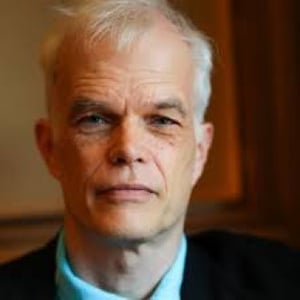
Senior Editor, National Review
Historian Richard Brookhiser is a senior editor of National Review, a senior fellow at the National Review Institute, and the author of several books, including Founders’ Son, Right Time, Right Place, George Washington on Leadership, What Would the Founders Do?, Gentleman Revolutionary, Rules of Civility, America’s First Dynasty, Alexander Hamilton, American, Founding Father: Rediscovering George Washington, Way of the WASP, and The Outside Story.
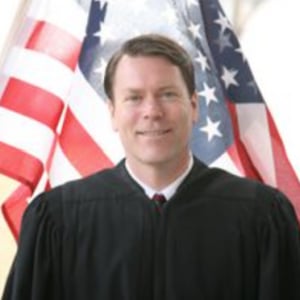
Appellate Division of the NYS Supreme Court, Second Judicial Department
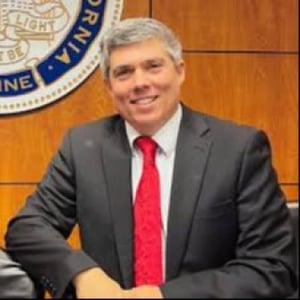
Partner, Friedland Cianfrani LLP
Joe has focused on IP litigation for his entire 25-year legal career. In that time, he has successfully represented clients in high-stakes intellectual property disputes at both the trial and appellate levels. Joe combines a strong technical background with a thorough understanding of his clients’ business goals and then tailors the legal strategy to achieve those goals.
Joe's practice primarily involves representing litigants in federal district court in patent and trademark cases, the Patent Trial and Appeal Board (PTAB), and before the United States Court of Appeals for the Federal Circuit, where he served as a law clerk to Judge Arthur Gajarsa. Joe has represented clients on more than 50 appeals and petitions for inter partes review involving computer peripherals, optics, electronics, software, pharmaceuticals, DNA sequencing, and medical devices.
Before founding Friedland Cianfrani, Joe was a partner at Knobbe Martens for two decades, where he served as the Chair of the firm’s Litigation Department and the co-chair of the appellate practice group. Joe is a leader in the intellectual property bar community and has served on the Board of Directors of the American Intellectual Property Association and has chaired the Association’s amicus and legislative committees. He has authored numerous amicus briefs for the AIPLA and other bar associations on a variety of intellectual property issues and is a frequent lecturer on intellectual property law and litigation strategy. Joe is also an active community leader and has coached local high school mock trial teams for the past several years.
Joe has also been consistently recognized with numerous awards as a “Rising Star,” "Super Lawyer," and "Best Lawyer," including Lawyer of the Year award by Best Lawyers in 2021.
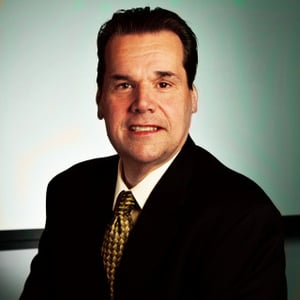
Partner, Patrick Doerr
Mr. Rando has represented clients in matters involving computer hardware and software, silicon chip manufacturing, biotechnology, medical devices, pharmaceuticals, chemical compounds, food additives, alternative energy, AI, autonomous vehicles, blockchain, consumer electronics, communications, internet, and e-commerce. He has appeared in courts across the country, including the Southern and Eastern Districts of New York and multiple U.S. Courts of Appeals.
As appellate counsel, Mr. Rando has served as counsel of record or co-counsel in more than 30 amicus briefs filed before the U.S. Supreme Court and Federal Circuit on issues of patent law, statutory interpretation, separation of powers, and constitutional law. Noteworthy filings include eBay Inc. v. MercExchange (2006), Oil States v. Greene’s Energy (2017), American Axle v. Neapco (2021), Amgen v. Sanofi (2023), and Cellect v. Vidal (2024).
Mr. Rando is a Fellow of the Academy of Court-Appointed Masters, having served by judicial appointment as Special Master in numerous complex patent cases, including multi-day Markman hearings and post-discovery proceedings. He also serves as a court-appointed Mediator and Neutral in both patent and commercial disputes.
He has played an active role in judicial and legislative engagement. Mr. Rando co-developed and conducted lecture series for the SDNY and EDNY Patent Pilot Program Judges and Clerks, covering the America Invents Act and Section 101 eligibility post-Alice and Mayo. He represented both the Federal Bar Association (FBA) and New York Intellectual Property Law Association (NYIPLA) at the Tillis/Coons Section 101 Patent Reform Roundtable, and submitted written testimony to the U.S. Senate Judiciary Committee in 2019.
Mr. Rando is a former president of the NYIPLA (2023–2024) and has held nearly every leadership position in the organization. He also served as Chair of the FBA’s Intellectual Property Law Section and was a founding member and president of the FBA’s EDNY Chapter. He is a founding member of the Association of Amicus Counsel, and an active contributor to the Federalist Society IP Practice Group Executive Committee.
He frequently lectures at CLE programs, universities, and legal associations on IP, constitutional law, and appellate advocacy. He has been quoted extensively in publications such as Law360, Bloomberg Law, WIPR, and National Law Journal. His scholarly publications include articles in The Federal Lawyer, Touro Law Review, and IPWatchdog.
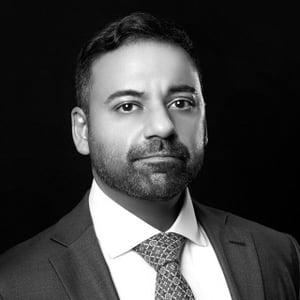
Partner, Kasowitz LLP
Amit R. Vora is Chair of Kasowitz LLP's Appellate & Constitutional Litigation practice group. He has extensive experience litigating before the U.S. Supreme Court and federal and state appellate courts nationwide. He represents companies and individuals in administrative, commercial, and patent disputes, and matters involving the First Amendment, separation of powers, due process, and other constitutional issues. For example, he represented former Attorney General Edwin Meese III and Professors Steven G. Calabresi and Garry S. Lawson as amici in SEC v. Jarkesy in the U.S. Supreme Court, SpaceX v. NLRB in the Fifth Circuit, and United States ex rel. Zafirov in the Eleventh Circuit.
Amit previously served as Assistant Solicitor General with the New York State Attorney General’s Office. Amit was also a Supervising Attorney and Teaching Fellow with Georgetown University Law Center’s Appellate Courts Immersion Clinic, and he clerked for Judge Edward C. Prado of the Fifth Circuit.
Amit is the author of several practice-oriented and scholarly pieces, including The Third Circuit’s Sun Valley Decision: An Illumination of Jarkesy’s Article III Implications, Washington Legal Foundation (2025); Constitutional Crowding and Article II, 85 Albany Law Review 857 (2022); and Defending an Under-21 Firearm Ban Under the Second Amendment, 71 Stanford Law Review Online 1 (2018).
Amit holds an LL.M. in appellate advocacy from Georgetown University Law Center, a J.D. from Harvard Law School, and a B.A. in cognitive science from Yale College.
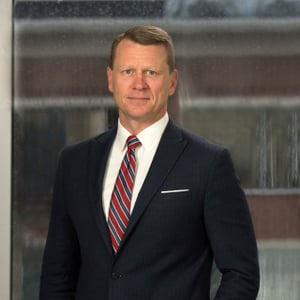
Partner, Phelps Dunbar LLP
Mike Hurst is a partner with Phelps Dunbar LLP where he optimizes his in-depth knowledge of the court system, investigative and prosecutorial agencies, the regulatory arena, and the public policy realm to help clients facing government investigations, enforcement actions, regulatory matters, general litigation and policy issues. Mike currently serves as the General Counsel of the Republican National Committee and as Chairman of the Mississippi Republican Party. He previously served as the U.S. Attorney for the Southern District of Mississippi from 2017-2021, and with over 20 years of experience before judges, juries and policy makers, handling some of the largest and most high-profile cases in Mississippi, he's known for untangling the most complex legal issues.
As U.S. Attorney, Mike was described as a “hard charger,” leading efforts to combat violent crime, human trafficking and public corruption, among many other issues, throughout Mississippi. He almost tripled prosecutions in the U.S. Attorney’s Office over a three-year period, resulting in the most indictments and federal defendants indicted in a one-year period in Mississippi history. He created innovative and national award-winning crime-fighting solutions, like “Project EJECT,” and he established the first statewide, multilevel and multidisciplinary human trafficking body, the Mississippi Human Trafficking Council, to comprehensively and holistically address this criminal scourge.
During his tenure as U.S. Attorney, Mike oversaw some of the biggest cases in Mississippi history: the largest health care fraud scheme (Wade Walters, et. al.), the largest Ponzi scheme (Lamar Adams), the largest False Claims Act health care fraud settlement (Region 8), and the largest nursing home False Claim Act settlement (Hyperion). In addition, as Chief Federal Law Enforcement Officer for the Southern District, Mike coordinated the largest single-state immigration worksite enforcement operation in our nation’s history, involving hundreds of federal law enforcement agents covering seven different locations operated by multiple companies.
Mike’s no show pony – he’s a work horse. Before his tenure as U.S. Attorney, Mike was an Assistant U.S. Attorney for the Southern District of Mississippi for more than eight years. He handled some of the most difficult and complex cases in that office, dealing with white collar crimes, public corruption and financial fraud, including numerous jury trials before almost every federal judge in the Southern District.
He also has experience in the private sector. He has practiced law in Washington, D.C., and has served as a litigator and general counsel for a conservative nonprofit. He also has extensive experience in public policy, having served as the Legislative Director to a U.S. Congressman and as Counsel to the House Judiciary Committee.
Mike has also testified before both the United States Senate and the U.S. House of Representatives on issues ranging from crime to Presidential pardons. He has worked on all sides of the legal, regulatory, investigative, prosecutorial and policy spectrum. The incredible insight gained from this varied experience enables him to find a path forward for clients, no matter how complicated the case.

Shareholder & Co-Chair of the Workplace Policy Institute, Littler Mendelson P.C.
Alexander T. MacDonald advises employers on all aspects of the employment and labor landscape, focusing on emerging legislation and regulation. He has extensive experience advising businesses on worker classification, arbitration, the administrative and regulatory process, and the future of work. He frequently writes, publishes, and speaks on these subjects. His work has been cited by scholars and appellate courts. He is a recognized voice for the management perspective.
Alexander is a co-chair of the Workplace Policy Institute (WPI) team. With WPI, he advises employers on legislative, administrative, and regulatory developments at the state and federal level. He advocates for employers in the regulatory and administrative process. He also helps employers protect their businesses by understanding and anticipating cutting-edge legal developments.
Alexander also has extensive experience in traditional labor law. He represents management in all aspects of labor-management relations, including unfair labor practice charges, grievance arbitrations, representation elections, contract negotiations, and related litigation, including litigation in the U.S. courts of appeals.
Before joining Littler, Alexander served as the director, future of work, for a major technology company. He also worked in a national labor and employment law firm and a major public-sector general counsel’s office. He was a law clerk to the senior judges in the District of Columbia Court of Appeals.
He is also a veteran of the U.S. Air Force. He served in Operations Enduring Freedom and Iraqi Freedom. In law school, he graduated first in his class
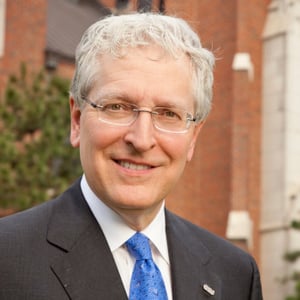
President, Oklahoma City University
Robert Henry is the 17th president of Oklahoma City University. He is a member of the Council on Foreign Relations, a member of the American Bar Association, serving as Chair of the Middle East and North Africa Council, board member of the Rule of Law Initiative, and was a board member of the Committee for the Africa Law Initiative Council. He is a member of the Judicial Advisory Board of the American Society of International Law. Henry is also a member of the American Law Institute, the Oklahoma Bar Association, the National Conference of Commissioners on Uniform State Law and the William J. Holloway Jr. American Inn of the Court, Master of the Court. He has served on the Civil Justice Reform Act Advisory Group, the Oklahoma Constitutional Revision Committee and the National Association of Attorneys General (Committees on Agricultural Law, Civil Rights, and Supreme Court Advocacy).
He returns to OCU after having served as Chief Judge of the United States Court of Appeals for the Tenth Circuit. Henry has a long-standing relationship with OCU, serving as Dean of the OCU School of Law and tenured Professor of Law from 1991-1994. He taught graduate and undergraduate courses at OCU and has been a frequent guest lecturer.
Henry has been a lifelong advocate for common and higher education. He co-authored the legislation that established the Oklahoma School of Science and Mathematics (OSSM), established the Sen. Penny Williams Lecture in Arts and Sciences at OSSM, and established the Henry Family Lecture Series at the University of Oklahoma College of Law and was the co-founder of the Oklahoma Symposium.
Henry has served on the Court of Appeals for 16 years. Prior to his appointment to the Court by President William J. Clinton, Henry served as Attorney General of the State of Oklahoma. He served ten years as a state representative in the Oklahoma House of Representatives, where he was Chair of the Majority Caucus, and Chair of the Committees on the Judiciary, Common Education and Appropriations and Budget Committee - General Government and Judiciary.
In addition to teaching at OCU, Henry also taught at the University of Oklahoma Honors College, Oxford Program; University of Oklahoma College of Law, served as Distinguished Judge in Residence, University of Tulsa College of Law and taught Business Law at Oklahoma Baptist University. He was a former chairman of the Board of Trustees of St. Gregory's College. He practiced law in Shawnee, Oklahoma for ten years.
Henry serves on the Committee on International Judicial Relations of the Judicial Conference of the United States, which he chaired from July 2005 – May 2008. He has also served on the Committee on Codes of Conduct of the Judicial Conference of the United States. He is also a Director and Honorary Lifetime Member of the Tenth Judicial Circuit's Historical Society Committee, and a member of the Tenth Judicial Circuit Court of Appeals Lawyer's Advisory Committee. He serves on the Board of Directors of the VERA Institute of Justice in New York; the Foundation for the Future, based in Amman, Jordan; and the Oklahoma Medical Research Foundation; on the Board of Visitors of the University of Oklahoma International Programs Center and Honors College; and on the Board of Advisors of the Jasmine Moran Foundation Children's Museum and the Columbia University National State Attorneys General Program.
The recipient of many honors and awards, Henry was inducted into the 2008 Oklahoma Hall of Fame. He was named "The Honored One," Oklahoma Sovereignty Symposium, Supreme Court of Oklahoma, 2008; received Certificate of Appreciation, US Department of State, 2008 and the Certificate of Gratitude, Council of Judges of the Russian Federation and Justice for substantial contribution to the development of relations between American and Russian Judges. Henry received the Distinguished Alumni award, University of Oklahoma Arts & Sciences, 2004; the E.T. Dunlap Award for Public Service, Southeastern Oklahoma University, 1998; Humanitarian of the Year Award, National Conference of Community and Justice, 1996. In 1993, Henry received the Myrtle Wreath Award for Humanitarianism, Oklahoma City Chapter of Hadassah; Conservationist of the Year, Oklahoma Wildlife Federation, 1989; Oklahoma Human Rights Award, Oklahoma Human Rights Commission, 1988; and Outstanding Young Oklahoman, Oklahoma Jaycees, 1988; the A. C. Hamlin Award, National Black Caucus of State Legislatures, 1984.
Henry has authored numerous chapters in a variety of volumes including: "Civil Rights Movement" in The Encyclopedia of Oklahoma History and Culture; "The Rehnquist Court: A Schwartzian Critique," in The Rehnquist Court: Farewell to the Old Order?; and "The Play and The Players," in The Burger Court: Counter-Revolution or Confirmation?. He was the principal author and narrator for the Oklahoma Educational Television Authority's series on arts and culture, "The People's Art," which received "Best of the Best" (program production) and also named 2008's finest news and information program for 2008 by the National Educational Telecommunications Association (NETA). In addition, Henry has authored scores of law review articles, scholarly journal articles and other published works. Henry serves as outside evaluator, reader, and columnist for World Literature Today Magazine, University of Oklahoma Press, Oklahoma Today, and Oklahoma Gazette.
Henry is married to Dr. Jan Ralls Henry, an Oklahoma City dentist, who will serve as first lady of Oklahoma City University. President and Dr. Henry reside in Wilson House on the OCU campus.
He has two children and four stepchildren: Rachel Henry, a recent graduate of the Tisch School of the Arts at New York University; Joshua Henry, a junior at OCU; Amie Bostian, a speech therapist in Edmond; Scott Ralls, a graphic designer in Seattle; Greg Ralls, an airline pilot in Edmond; and Daniel Ralls, an architect in Seattle.
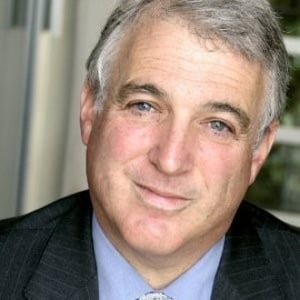
Partner, Spencer Fane LLP
Andy Lester has a civil litigation and appellate practice in both state and federal court. His fields of emphasis include complex business, civil rights, commercial, constitutional, and state and local government law. He has faced off against the White House over the use of Executive Privilege, has appeared as counsel before committees of the United States Senate and the United States House of Representatives, and has been a featured guest on television shows such as Hardball with Chris Matthews and The Situation Room with Wolf Blitzer. He has also served as Acting General Counsel for the Oklahoma House of Representatives, and has twice served as Chief Counsel to Special House Committees investigating public corruption.
While in law school, Lester served on President Ronald Reagan’s Transition Team for the Equal Employment Opportunity Commission. In 2002, he chaired Governor Brad Henry’s Law Enforcement/Corrections Transition Team and, as a member of the Budget/Finance Transition Team, helped write Governor Henry’s first State budget.
He is a former United States Magistrate Judge for the Western District of Oklahoma, and has served as Adjunct Professor at Oklahoma City University School of Law, having taught State & Local Government, Employment Law, Criminal Law, and International Law. Lester has written over 100 articles and papers on professional and public policy issues, and has published one book, Constitutional Law and Democracy, a collection of speeches he gave in 1993 in the former Soviet Union.
Lester is a former member of the Oklahoma State Regents for Higher Education, and in 2019 was named a State Regent Emeritus. He served on the board of Eureka College (President Reagan’s alma mater), is a former chairman of the Oklahoma Advisory Committee for the United States Commission on Civil Rights, and is a past president, past board chairman, and current board member of the Tenth Circuit Historical Society. He co-chaired the bipartisan Oklahoma Death Penalty Review Commission, which conducted the first-ever independent, objective, and thorough review of the state’s entire capital punishment system.
In 2012, Lester was named Citizen of the Year of Edmond, Oklahoma. He is a past president of the Rotary Club of Edmond, and in 2011 was named Rotarian of the Year.
Of Counsel, Crowe & Dunlevy
Highly distinguished and respected, William G. Paul serves as an of counsel attorney in the Firm’s Oklahoma City office. His areas of practice encompass alternative dispute resolution, commercial transactions, corporate governance, and trusts and estates law.
William’s prestige and respect are evidenced by his leadership in various professional organizations. He has served as president of both the Oklahoma and American Bar Associations, the American Bar Endowment, the Oklahoma County Bar Association, and the National Conference of Bar Presidents to name a few.
Judge, United States Court of Appeals, District of Columbia Circuit
LAURENCE HIRSCH SILBERMAN, senior circuit judge; recipient of the Presidential Medal of Freedom, June 19, 2008; born in York, PA, October 12, 1935; son of William Silberman and Anna (Hirsch); married to Rosalie G. Gaull on April 28, 1957 (deceased), married Patricia Winn on January 5, 2008; children: Robert Steven Silberman, Katherine DeBoer Fischer, and Anne Gaull Otis; B.A., Dartmouth College, 1957; LL.B., Harvard Law School, 1961; admitted to Hawaii Bar, 1962; District of Columbia Bar, 1973; associate, Moore, Torkildson and Rice, 1961–64; partner (Moore, Silberman and Schulze), Honolulu, 1964–67; attorney, National Labor Relations Board, Office of General Counsel, Appellate Division, 1967–69; Solicitor, Department of Labor, 1969–70; Under Secretary of Labor, 1970–73; partner, Steptoe and Johnson, 1973–74; Deputy Attorney General of the United States, 1974–75; Ambassador to Yugoslavia, 1975–77; President’s Special Envoy on ILO Affairs, 1976; senior fellow, American Enterprise Institute, 1977–78; visiting fellow, 1978–85; managing partner, Morrison and Foerster, 1978–79 and 1983–85; executive vice president, Crocker National Bank, 1979–83; lecturer, University of Hawaii, 1962–63; board of directors, Commission on Present Danger, 1978–85, Institute for Educational Affairs, New York, NY, 1981–85, member: General Advisory Committee on Arms Control and Disarmament, 1981–85; Defense Policy Board, 1981–85; vice chairman, State Department’s Commission on Security and Economic Assistance, 1983–84; American Bar Association (Labor Law Committee, 1965–72, Corporations and Banking Committee, 1973, Law and National Security Advisory Committee, 1981–85); Hawaii Bar Association Ethics Committee, 1965–67; Council on Foreign Relations, 1977–present; Judicial Conference Committee on Court Administration and Case Management, 1994; member, U.S. Foreign Intelligence Surveillance Act Court of Review, 1996–2003; Adjunct Professor of Law (Administrative Law and Labor Law) Georgetown Law Center, 1987–94; 1997; Adjunct Professor of Law, Harvard Law School, 1994-95, Adjunct Professor of Law, New York University Law School, 1995–96; Distinguished Visitor from the Judiciary, Georgetown Law Center, 2003–2019; co-chairman of the President’s Commission on The Intelligence Capabilities of the United States Regarding Weapons of Mass Destruction, 2004–05; appointed to the U.S. Court of Appeals for the District of Columbia Circuit by President Reagan on October 28, 1985.
Of Counsel, Fisher & Phillips, LLP
Greg Grisham has over 25 years of successful experience counseling and representing employers in all aspects of workplace law in Tennessee and across the United States.
He has helped employers avoid claims, charges and lawsuits with a focus on preventative practices. Preventative practices include counseling in situations involving discipline, termination, demotion, promotion and other workplace changes in the terms and conditions of employment, harassment investigations, wage and hour compliance, FMLA Compliance, Reasonable Accommodation assessment, supervisor training and the review of employment policies and procedures. In addition, Greg's practice includes the representation of business entities subject to Title III of the Americans with Disabilities Act in Public Accommodation cases.
Greg has successfully litigated hundreds of administrative charges, employment lawsuits, and arbitration demands on behalf of employers, including federal and state law claims alleging discrimination, harassment, retaliation, wrongful termination, defamation, invasion of privacy, breach of contract, wage and hour violations and ERISA violations, among others. He also represents employers before the National Labor Relations Board in unfair labor practice proceedings. He represents employers in the enforcement of post-employment restrictive covenants such as non-compete, non-solicitation and non-disclosure agreements and related trade secret litigation. Greg's practice also includes the defense of property owners and property management companies in federal and state Housing Discrimination charges and litigation. He also advises Tennessee Public Charter Schools on education law and workplace compliance matters.
Greg has extensive experience working with insurance carriers and their insureds in the defense of EPLI claims. He is a regular speaker at public seminars on workplace law issues and has authored numerous articles on a variety of labor and employment law related topics.
Greg holds an AV Preeminent Peer Review rating from Martindale-Hubbell and has been selected for inclusion in Mid-South Super Lawyers and Best Lawyers in America for Employment Litigation-Management side. Greg was elected as a 2016 Fellow to the College of Labor and Employment Lawyers and has been selected to the “Top 20 Lawyers in Traditional Labor & Employment Law” list in conjunction with Human Resource Executive Magazine and LawDragon’s 2017 and 2018 “Most Powerful Employment Attorneys” lists and specialty guides. Greg was also named a Fellow in the American Bar Foundation in 2017.
District Judge, United States District Court for the Eastern District of New York
Director of Litigation and Senior Attorney, Hamilton Lincoln Law Institute
Theodore H. Frank is director at the Hamilton Lincoln Law Institute and the Center for Class Action Fairness. Frank founded and ran CCAF as a non-profit, public interest law firm in 2009.
Frank has won several landmark appeals and tens of millions of dollars for consumers and other plaintiffs through his class action work. Adam Liptak of The New York Times calls Frank “the leading critic of abusive class action settlements” and the American Lawyer Litigation Daily referred to him as “the indefatigable scourge of underwhelming class action settlements.”
Previously, Frank clerked for the Honorable Frank H. Easterbrook on the Seventh Circuit Court of Appeals, and was a litigator at firms in Washington and Los Angeles and a resident fellow at the American Enterprise Institute. Frank is a frequent public speaker and has testified before Congress multiple times on legal issues. He has been profiled by The Wall Street Journal, Forbes, GQ, and the ABA Journal, among other publications.
In 2008, Frank was elected to membership in the American Law Institute. He also serves on the Executive Committee of the Federalist Society Litigation Practice Group. Frank graduated from The University of Chicago Law School in 1994 with high honors and as a member of the Order of the Coif and the Law Review. He is a member of the District of Columbia Bar and the state bars of California and Illinois.
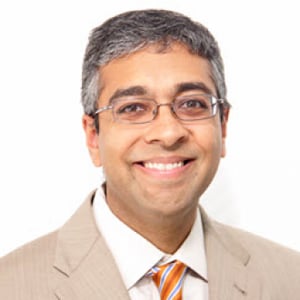
Solicitor General, State of Florida
Amit Agarwal was appointed as Florida's solicitor general in June 2016. The position, first established in February 1999, is patterned in part after the U.S. Office of the Solicitor General, which conducts litigation on behalf of the United States in the Supreme Court and supervises the handling of litigation in federal appellate courts. The Solicitor General in Florida serves three primary roles: overseeing civil appeals involving the state's interests in all state and federal appellate courts; teaching at the Florida State University College of Law where he holds the Richard W. Ervin Eminent Scholar Chair; and serving as a policy advisor to the Attorney General.
Agarwal served as deputy chief to the Appellate Division of the United States Attorney's Office for the Southern District of Florida before being named solicitor general. Previously, he clerked at the U.S. Supreme Court for Justice Samuel Alito and served as an attorney advisor in the Office of Legal Counsel of the United States Department of Justice. Additionally, he served as a law clerk for the Honorable Brett Kavanaugh, of the United States Court of Appeals for the District of Columbia Circuit, and the Honorable Edward Becker, of the United States Court of Appeals for the Third Circuit in Philadelphia, PA.
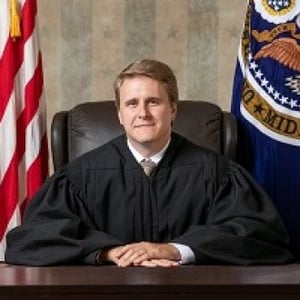
Judge, United States Court of Appeals for the Eleventh Circuit
Andrew Brasher served as a United States District Judge for the Middle District of Alabama. Before taking the bench in May 2019, Judge Brasher was the Solicitor General of the State of Alabama, where he argued cases before the United States Supreme Court, the United States Court of Appeals for the Eleventh Circuit, and the Alabama Supreme Court. He previously served for several years as the Deputy Solicitor General and practiced in the litigation and white-collar criminal defense practice groups in the Birmingham, Alabama office of Bradley Arant Boult Cummings LLP. Upon graduation from law school, Judge Brasher served as a law clerk to Judge William H. Pryor Jr. of the United States Court of Appeals for the Eleventh Circuit. Judge Brasher earned his B.A., summa cum laude, from Samford University and his J.D., cum laude, from Harvard Law School, where he was a member of the Harvard Law Review.
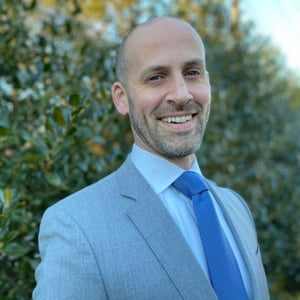
Partner, Lehotsky Keller LLP
The New York Times recognized Scott A. Keller as a “legal heavyweight,” who “is praised by opponents as a formidable advocate.”
Mr. Keller has argued 12 cases before the U.S. Supreme Court and 12 cases before the Texas Supreme Court. He is the only practicing lawyer to have argued at least 10 cases in both courts. Mr. Keller frequently represents parties in high stakes appeals, and he has argued many cases in federal courts of appeals throughout the nation. He has earned individual accolades from Lawdragon 500 Leading Litigators in America, Chambers, Legal 500, The American Lawyer, The National Law Journal, Law360, Super Lawyers, The Best Lawyers in America, and other publications.
Before founding Lehotsky Keller Cohn LLP, Mr. Keller headed Baker Botts LLP’s Supreme Court Practice. He also has significant experience at the highest levels in all three branches of government. Mr. Keller served as the Solicitor General of Texas, the State’s chief appellate litigator. He was U.S. Senator Ted Cruz’s chief counsel on the Senate Judiciary Committee. Mr. Keller was a law clerk for Justice Anthony Kennedy of the Supreme Court of the United States and Chief Judge Alex Kozinski of the U.S. Court of Appeals for the Ninth Circuit. He was also a Bristow Fellow in the U.S. Department of Justice’s Office of the Solicitor General.
Mr. Keller represents clients in cases where public communications strategy is crucial, and he has made numerous media appearances in major outlets such as The New York Times, The Wall Street Journal, BBC, Fox News, NPR, and Politico. As a sought after speaker and writer, Mr. Keller’s articles have appeared in the Stanford Law Review, Virginia Law Review, and Texas Law Review. He has also served as an adjunct professor of constitutional litigation, Supreme Court practice, and federal courts at the University of Texas School of Law.
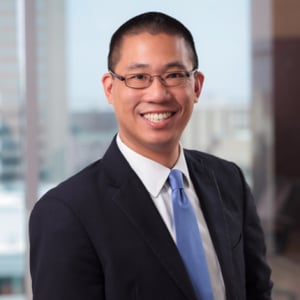
Chair, Issues & Appeals, Hunton Andrews Kurth LLP
The former Solicitor General of West Virginia, Mr. Lin has been on the front lines of many precedent-setting cases in appellate courts across the country, including in a US Supreme Court victory that George Will called “the court’s most severe rebuke of a president” since the Truman administration. Having argued more than 60 appeals, he brings to clients a well-honed ability to identify the most persuasive issues for appeal and a practiced understanding of how best to frame complex legal questions in appellate courts.
With experience in the private sector and multiple branches of government, Mr. Lin’s practice has spanned a wide range of issues, including major questions of constitutional and administrative law at the federal and state levels. On behalf of more than two dozen states, he won a stay from the US Supreme Court of the EPA’s Clean Power Plan. Described by the New York Times as an “unprecedented” order, the stay was the first time the Supreme Court had ever put a regulation on hold before review by a federal appeals court. In that same case, Elbert argued before the en banc DC Circuit in an historic proceeding that one commenter quoted in E&E News compared to “the NBA All-Star Game.” At the state level, Elbert led the effort that persuaded the West Virginia Supreme Court of Appeals to overturn an injunction of the state’s right-to-work law.
In 2013, Mr. Lin was appointed the Solicitor General of West Virginia. During his four-and-a-half year tenure, he served as a member of the Attorney General’s senior management team, oversaw all civil and criminal appeals, and argued nearly two dozen cases in federal and state appellate courts. He authored more than twenty-five briefs in the US Supreme Court and more than forty-five formal Opinions of the Attorney General.
Earlier in his career, Mr. Lin served as a trial attorney in the Federal Programs Branch of the US Department of Justice’s Civil Division, where he received a Special Service Award. He has also been a law clerk at all three levels of the federal judiciary: for Justice Clarence Thomas on the US Supreme Court; for Judge William H. Pryor Jr. on the US Court of Appeals for the Eleventh Circuit; and for Senior Judge Robert E. Keeton on the US District Court for the District of Massachusetts.
Mr. Lin speaks regularly on a wide variety of topics, including constitutional law, administrative law, environmental law, state and federal relations, the US Supreme Court, and appellate practice. He has testified before Congress, and has spoken at the national conventions of the American Bar Association, the Association of Corporate Counsel, the National Asian Pacific American Bar Association, the Federalist Society, Americans for Prosperity, and the American Legislative Exchange Council. He is an elected member of the American Law Institute, a public member of the Administrative Conference of the United States, and a fellow of the American Academy of Appellate Lawyers.
Mr. Lin is admitted to practice in the following federal courts: the Supreme Court of the United States; the First, Second, Third, Fourth, Fifth, Sixth, Seventh, Eighth, Ninth, Eleventh, D.C., and Federal Circuits; the District of Massachusetts; the Northern and Southern Districts of West Virginia; and the Eastern and Western Districts of Virginia.
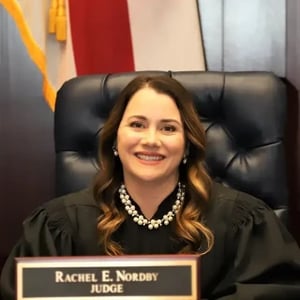
Judge, Florida First District Court of Appeal
Rachel Nordby was appointed to the First District Court of Appeal on October 16, 2019 by Governor Ron DeSantis; she took office on October 23, 2019.
Before her appointment to the bench, Judge Nordby was a partner in the Tallahassee office of Shutts & Bowen LLP and served as Vice-Chair of the firm’s Appellate Practice Group. Before joining Shutts & Bowen, Judge Nordby served as the Senior Deputy Solicitor General for Florida Attorney General Pam Bondi. In this role, she represented the State, its agencies, and public officials in cases involving constitutional challenges and issues of statewide impact.
Before joining the Office of the Attorney General, Judge Nordby clerked for Judge Bradford L. Thomas on Florida’s First District Court of Appeal. Judge Nordby is a 2008 graduate of the Florida State University College of Law, where she served as Editor-in-Chief of The Florida State University Law Review and interned in the chambers of Florida Supreme Court Justice Harry Lee Anstead. She earned her undergraduate degree in Classical Studies, summa cum laude, from the University of Florida.
Florida First District Court of Appeal
Allen Winsor is a judge on the Florida First District Court of Appeal. He was appointed to the court in February 2016 by Gov. Rick Scott.
Winsor was formerly solicitor general for the state of Florida. He was appointed by Attorney General Pam Bondi in June 2013. As solicitor general, he argued before the United States Supreme Court in October 2015.
Judge Winsor's initial appointment term expires in January 2019. He must stand for retention by voters in 2018 in order to remain on the bench.
President, Institute for Liberty and Democracy
Mr. de Soto is currently President of the ILD —headquartered in Lima, Peru— considered byThe Economistas one of the two most important think tanks in the world.Timemagazine chose him as one of the five leading Latin American innovators of the century in its special May 1999 issue "Leaders for the New Millennium", and included him among the 100 most influential people in the world in 2004. In its 85th anniversary edition, Forbes named Mr. de Soto as one of 15 innovators “who will reinvent your future”. In January 2000,Entwicklung und Zusammenarbeit, the German development magazine, described Mr. de Soto as one of the most important development theoreticians of the last millennium. In October 2005, over 20,000 readers ofProspectmagazine of the UK andForeign Policyof the US ranked him among the top 13 “public intellectuals” in the world from the magazines’ joint list of 100.
Mr. de Soto has served as an economist for the General Agreement on Tariffs and Trade, as President of the Executive Committee of the Copper Exporting Countries Organization (CIPEC), as CEO of Universal Engineering Corporation (Continental Europe’s largest consulting engineering firm), as a principal of the Swiss Bank Corporation Consultant Group, and as a governor of Peru’s Central Reserve Bank.
Currently, Mr. de Soto, together with his colleagues at the ILD, is focused on designing and implementing capital formation programs to empower the poor in Africa, Asia, Latin America, the Middle East, and former Soviet Nations. Some 30 heads of state have invited him to carry out these ILD programs in their countries. He also co-chairs with former US Secretary of State Madeleine Albright the Commission on Legal Empowerment for the Poor,and currently serves as honorary co-chair on various boards and organizations, including the World Justice Project.
Mr. de Soto has published two books about economic and political development: The Other Path, in the mid- 1980s, and at the end of 2000, The Mystery of Capital: Why Capitalism Triumphs in the West and Fails Everywhere Else. Both books have been international bestsellers – translated into some 20 languages
Professor of Law, George Mason University School of Law
With his work in regulatory takings and other aspects of property law, professor of law Steven Eagle plays an important role in the ongoing dialogue among American legal scholars, lawyers, and judges on the proper interpretation of property rights in the Constitution. He is the author of a leading property treatise and scholarly and popular articles and teaches in programs for judges and the practicing bar.
Professor Eagle came to George Mason in 1987 and also has taught at the law schools of Vanderbilt University, the University of Toledo, and Pace University. He earned his B.B.A. from the City College of New York (1965) and his J.D. from Yale Law School (1970). Professor Eagle teaches the first-year course, Property, Land Use Planning, and an advanced constitutional law seminar on property rights.
Professor of Law, Vermont Law School
John Echeverria is a Professor of Law at Vermont Law School where he teaches Property, Public Law and a wide range of environmental and natural resource law courses. Prior to joining the Vermont Law School faculty in 2009, he served for 12 years as Executive Director of the Georgetown Environmental Law & Policy Institute at Georgetown University Law Center. He also was General Counsel of the National Audubon Society and General Counsel and Conservation Director of American Rivers, Inc., and was an Associate for four years in the Washington, D.C. office of Hughes, Hubbard & Reed. He served for one year as law clerk to the Honorable Gerhard A. Gesell of the U.S. District Court for the District of Columbia immediately after graduating from law school.
Professor Echeverria has written several books and numerous scholarly articles on environmental and natural resource law topics. He has published pieces for more general audiences in The New York Times, The Washington Post, and The Christian Science Monitor. He has represented state and local governments, environmental organizations, and planning groups in a variety of legal matters at all levels of the federal and state court systems. In 2007, Professor Echeverria received the Jefferson Fordham Advocacy Award from the American Bar Association to recognize outstanding excellence within the area of state and local government law over a lifetime of achievement. In addition to teaching at Vermont Law School, he has served as a Visiting Professor at Harvard Law School and Georgetown University Law Center.
Professor Echeverria received a JD degree from the Yale Law School. He received a Master’s degree from the Yale School of Forestry and Environmental Studies as well as a BA degree from Yale College (summa cum laude).

Professor of Law and Executive Director, Law and Economics Center, Antonin Scalia Law School, George Mason University
Donald Kochan is Professor of Law and Executive Director of the Law & Economics Center (LEC). Professor Kochan is an elected member of the American Law Institute (ALI) and serves as an Adviser to ALI's Restatement of the Law Fourth, Property project. Professor Kochan is a Nonresident Scholar at the Center for the Constitution at Georgetown University Law Center, where he was a Visiting Scholar in residence during Fall 2018. Before joining the Antonin Scalia Law School faculty, he was the Parker S. Kennedy Professor in Law at Chapman University’s Dale E. Fowler School of Law from 2004 to 2020. From 2003 to 2004, Professor Kochan was an Olin Fellow at the University of Virginia School of Law. During 2002-2003, he was a Visiting Assistant Professor of Law at George Mason’s Scalia Law School.
Professor Kochan’s scholarship focuses on areas of property law, constitutional law, administrative law, local government law, natural resources and environmental law, and law & economics. He has published several books and more than 50 scholarly articles and essays in well-regarded law journals. His work has been cited in more than a dozen state and federal court opinions, in more than 75 briefs filed in state and federal courts including more than 25 filed in the U.S. Supreme Court, in dozens of books and treatises, and in more than 800 scholarly articles.
Professor Kochan received his JD from Cornell Law School, where he was a John M. Olin Scholar in Law and Economics and managing editor of the Cornell International Law Journal. During law school, he also served as editor and executive editor of the Harvard Journal of Law & Public Policy symposium issues in 1997 and 1998. He received his BA from Western Michigan University, magna cum laude, with majors in both political science and philosophy, where he studied as the John W. Gill Medallion Scholar and was honored as the Presidential Scholar (awarded to the top graduate in the political science department).
After graduating from law school, Professor Kochan was a law clerk to The Honorable Richard F. Suhrheinrich of the United States Court of Appeals for the Sixth Circuit. Following his clerkship, Professor Kochan was an associate with the firm of Crowell & Moring LLP in Washington, D.C., where he specialized in natural resources & environmental law as well as tort, products, and consumer civil litigation & legislative affairs.

Judge, United States Court of Appeals, Fifth Circuit
Judge Smith was appointed U.S. Circuit Judge for the Fifth Circuit by President Reagan and entered on duty in January 1988. He attended public schools in Lubbock, Texas, and graduated from Yale University, receiving a B.A. in 1969 and a J.D. in 1972.
Judge Smith was a Law Clerk to U.S. District Judge Halbert Woodward, Northern District of Texas, 1972-1973; with the Houston law firm of Fulbright & Jaworski as an Associate, 1973-1981, and as Partner, 1981-1984; and as City Attorney, City of Houston, 1984-1988. He was Chairman, Civil Service Commission, City of Houston, 1982-1984; and a Director, Harris County Housing Authority, 1978-1980.
Judge Smith lives in Houston and is married to Mary Jane Smith and has four children: Ruth Ann, Clark, J.J., and Brandon. He formerly was Chair of the Advisory Committee on Federal Rules of Evidence of the Judicial Conference of the United States. He assists LexisNexis/Matthew Bender & Co. in periodic revisions of several chapters of Moore’s Federal Practice.

America 250: The New York Lawyers - The Impact of Hamilton, Jay, & Morris on the American Founding
New York City Lawyer Chapter
New York City, NYThe Federal Circuit's Reliance on One-Word Affirmances Under Rule 36: Is it Lawful?
Joseph Cianfrani, Robert J. Rando, Amit R. Vora
The Federal Circuit’s first Chief Judge, the Honorable Howard T. Markey, announced, “In our Court...
Courthouse Steps Decision Webinar: Hemphill v. New York
Mike Hurst
On January 20, 2022, the U.S. Supreme Court decided Hemphill v. New York. In an 8-1...
Bargaining Rights Gone Wrong: How State Courts Invented a Constitutional Duty to Bargain and How It Harms Individual Workers
Alexander T. MacDonald
Constitutions often give you the right to do things. They give you the right to...
Lawyers & the U.S. Justice System [Archive Collection]
Robert H. Henry, Andy Lester, William G. Paul, Laurence H. Silberman
On June 22, 1999, the Oklahoma City Federalist Society Chapter hosted a panel discussion on...
Beyond the Red-Blue Divide: An Overview of Current Trends in State Non-Compete Law
J. Gregory Grisham
Introduction Covenants not to compete (“non-competes”)[1] have a long history dating back to the medieval...
A Modest Proposal for the Reduction of the Size of the Federal Judiciary by Two-Thirds
Brian M. Cogan
Note from the Editor: This is the first article in a new Commentary section in...
In Re: Walgreen Co. Stockholder Litigation Update - Podcast
Theodore "Ted" Frank
According to the Competitive Enterprise Institute, over 97% of mergers and acquisitions result in "strike...
Combating Federal Overreach
Amit Agarwal, Andrew Brasher, Scott Allen Keller, Elbert Lin, Rachel E. Nordby, Allen Winsor
This panel, Combating Federal Overreach, was held on February 4, 2017, at the 2017 Florida...
Environmental Law: Property Rights: The Forgotten Spark of the Arab Spring
Hernando de Soto, Steven J. Eagle, John D. Echeverria, Donald J. Kochan, Jerry E. Smith
The Environmental Law & Property Rights Practice Group hosted this panel on "Property Rights: The Forgotten...