
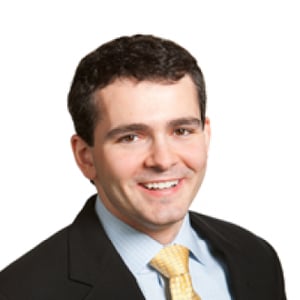
President, The Ethics and Public Policy Center
Ryan T. Anderson, Ph.D., is the President of the Ethics and Public Policy Center. In May 2025, Anderson was appointed by President Trump to the Religious Liberty Commission.
He is the author or co-author of five books, including the just-released Tearing Us Apart: How Abortion Harms Everything and Solves Nothing. Previous books include When Harry Became Sally: Responding to the Transgender Moment, Truth Overruled: The Future of Marriage and Religious Freedom, What Is Marriage? Man and Woman: A Defense, and Debating Religious Liberty and Discrimination. He is the co-editor of A Liberalism Safe for Catholicism? Perspectives from “The Review of Politics.”
Anderson’s research has been cited by two U.S. Supreme Court justices, Justice Samuel Alito and Justice Clarence Thomas, in two Supreme Court cases.
He received his bachelor of arts degree from Princeton University, graduating Phi Beta Kappa and magna cum laude, and he received his doctoral degree in political philosophy from the University of Notre Dame. His dissertation was titled: “Neither Liberal Nor Libertarian: A Natural Law Approach to Social Justice and Economic Rights.”
Anderson has made appearances on ABC, CNN, CNBC, MSNBC, and Fox News. His work has been published by the New York Times, the Washington Post, the Wall Street Journal, Oxford University Press, Cambridge University Press, the Harvard Journal of Law and Public Policy, the Harvard Health Policy Review, the Georgetown Journal of Law and Public Policy, First Things, the Claremont Review of Books, and National Review.
He is the John Paul II Teaching Fellow in Social Thought at the University of Dallas, a member of the James Madison Society at Princeton University, and a Fellow of the Institute for Human Ecology at the Catholic University of America, as well as the Founding Editor of Public Discourse, the online journal of the Witherspoon Institute of Princeton, New Jersey.
For 9 years he was the William E. Simon senior research fellow at The Heritage Foundation, and has served as an adjunct professor of philosophy and political science at Christendom College, and a Visiting Fellow at the Veritas Center at Franciscan University. He has also served as an assistant editor of First Things.
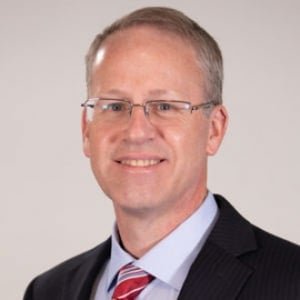
Senior Attorney, DC, Pacific Legal Foundation
Steve Simpson joined PLF in 2019 to head up its Separation of Powers practice group.
Steve’s career in public interest law started at the Institute for Justice in 2001, where he litigated free speech, campaign finance, and economic liberty cases. Among other high-profile cases in which Steve was involved, he was co-counsel in Arizona Free Enterprise Club’s Freedom Club PAC v. Bennett, IJ’s successful Supreme Court challenge to Arizona’s public financing law for political campaigns. He was the lead litigator in SpeechNow.org v. FEC, a joint effort between IJ and the Institute for Free Speech that led to the creation of super PACs. And he was co-counsel in Swedenburg v. Kelly, IJ’s successful Supreme Court challenge to New York’s ban on the interstate shipping of wine.
In 2013, Steve moved into the policy arena as the Ayn Rand Institute’s director of Legal Studies, where he spent five years writing and speaking on a wide variety of legal and cultural issues. From there, he moved back into law as senior litigation counsel at the New Civil Liberties Alliance in Washington, D.C.
Steve has spoken and written on a wide variety of legal and policy issues. He has testified in Congress and briefed congressional staffers. He has been interviewed on scores of television and radio programs, including PBS News Hour, Stossel, and The Rubin Report. His writings have appeared in many publications, including The Wall Street Journal and The Washington Post. In 2014, Steve was a Lincoln Fellow at the Claremont Institute. He is the editor of Defending Free Speech (ARI Press, 2016).
Steve earned his law degree magna cum laude from New York Law School in 1994. Following law school, he clerked for a federal district judge in the Southern District of Florida and spent several years as a litigator at Shearman & Sterling.
When he’s not at work or spending time with his wife and three daughters, Steve can usually be found mucking around in the woods at his cabin on Shenandoah Mountain.
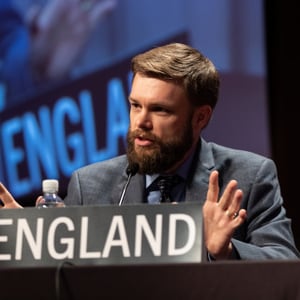
Founder and Executive Director, Save Our States
Trent England defends the Electoral College as the founder and director of Save Our States. He also serves as the David and Ann Brown Distinguished Fellow at the Oklahoma Council of Public Affairs.
Trent previously served as Executive Vice President of the Oklahoma Council of Public Affairs and earlier of the Olympia, Washington-based Freedom Foundation. He was also a morning-drive radio host, a state legislative candidate, a legal policy analyst at The Heritage Foundation, and a research analyst at the National Republican Senatorial Committee.
Trent is the author of "Why We Must Defend the Electoral College," co-author of "The Case Against Ranked-Choice Voting," and a contributor to "The Heritage Guide to the Constitution" and "One Nation Under Arrest: How Crazy Laws, Rogue Prosecutors, and Activist Judges Threaten Your Liberty." His writing has also appeared in the Wall Street Journal, Christian Science Monitor, Washington Times, and other newspapers. He is a producer of the feature-length documentary "Safeguard: An Electoral College Story."
Trent earned a law degree from The George Mason University School of Law and a bachelor of arts in government from Claremont McKenna College. He lives in Oklahoma City with his wife and their three children.
Chair, National Popular Vote
John R. Koza received his Ph.D. in computer science from the University of Michigan in 1972. He published a board game involving Electoral College strategy in 1966. From 1973 through 1987, he was co-founder, chairman, and CEO of Scientific Games Inc. where he co-invented the rub-off instant lottery ticket used by state lotteries. In the 1980s, he and attorney Barry Fadem were active in promoting adoption of lotteries by various states through the citizen-initiative process and state legislative action. Between 1988 and 2003, he taught a course on genetic algorithms and genetic programming at Stanford University, where he was a consulting professor. He is lead author of the book Every Vote Equal: A State-Based Plan for Electing the President by National Popular Vote and originator of the National Popular Vote legislation. He is Chair of National Popular Vote and a member of the Board of Directors. Koza has visited 29 states on behalf of National Popular Vote.
Co-Founder, Able Lending
Evan Baehr is the cofounder of Able, an online lender to small businesses. It launched June 2014 with the Wall Street Journal'sWeekend Interview and on TechCrunch. His passion at Able is to serve the Fortune 5 Million – the 5.8 million small businesses that represent the backbone of the American economy. His previous startup was Outbox, a consumer internet company aiming to takeover the US Postal Service and backed by venture capitalists Peter Thiel and Mike Maples, featured on Fox News, CNN, TechCrunch, FastCompany, Wall Street Journal, INC, the New York Times, and on Jay Leno.
He has worked on the Facebook platform under Sheryl Sandberg, helping shape a vision to make life better by making it social, and for Peter Thiel building a political data company. He’s an honors graduate of Princeton’s Woodrow Wilson School, Yale Divinity School, and Harvard Business School.
He has worked for the American Enterprise Institute’s Charles Murray, the Ethics and Public Policy Center, the Becket Fund for Religious Liberty, and the White House Office of Faith-Based Initiatives, served as a legislative aid on the House Appropriations Committee under Rep. Frank Wolf, was Chief of Staff on the Congressional Human Rights Caucus, under which he wrote the International Marriage Broker Regulation Act, and was the failed candidate for Princeton’s City Council, despite receiving more votes than George W. Bush.
He has served on the board of the Manhattan Institute’s Adam Smith Society, the New Canaan Society, the Rivendell Institute, and Harvard Business School's FIELD Program, and is a mentor with First Round Capital's Dorm Room Fund. He cofounded the Hoover Institute’s Rising Fellows Program, Harvard Business School’s Ideas@Work, Princetonians in the Nation’s Service, and the Yale Forum on Faith and Politics. He is the recipient of the Lily Endowment Thesis Prize, the Blackstone Legal Fellowship, and Princeton’s James Madison Fellowship. He lives in Austin, TX, with his wife, Kristina Scurry Baehr, a patent litigator, and children Cooper and Madeleine.

Judge, United States Court of Appeals, Ninth Circuit
Judge Carlos Bea serves as a judge on the United States Court of Appeals for the Ninth Circuit. He received his Bachelor's Degree from Stanford University in 1956 and his J.D. from Stanford Law School in 1958. Judge Bea was born in San Sebastian, Spain, and immigrated with his family to Cuba in 1939. In 1952, he represented Cuba on the Cuban National basketball team in the Helsinki Olympics. Judge Bea became a naturalized citizen of the United States in 1958. He engaged in private practice in San Francisco, principally in the area of civil trials (jury and non-jury), from 1959-75 at Dunne, Phelps & Mills and from 1975-90 at Carlos Bea, A Law Corporation. He taught courses in civil litigation advocacy at Hastings College of Law and Stanford Law School. From 1990 to 2003, Judge Bea served as a judge of the San Francisco Superior Court. He was nominated by President George W. Bush to the United States Court of Appeals for the Ninth Circuit and was confirmed in 2003.
Judge Bea and his wife Louise reside in San Francisco, where they raised their four sons, Sebastian, Alexander, Nicholas, and Dominic.
Chief Legal Officer, Paradigm
Principal, DeGroot Legal
Mr. DeGroot represents businesses in complex litigation, focusing on licensing, insurance, intellectual property, contract disputes, and toxic torts. He has experience in cases involving fraud, breach of contract, unfair competition, patents, business torts, mergers and acquisitions, creditors’ rights, and bankruptcy. He has extensive experience in all aspects of civil litigation, both in federal and state courts, including prejudgment remedies, discovery, trial, appeals, arbitration and mediation.
Mr. DeGroot works with clients in a variety of industries, including financial institutions, insurance, software, construction, semiconductors, and real estate.
Policy Counsel, Lyft
Associate Professor, University of Idaho College of Law
Stephen R. Miller joined the faculty of the University of Idaho College of Law in 2011. Prof. Miller received his undergraduate degree from Brown University, a master’s degree in city and regional planning from the University of California, Berkeley, and his J.D. from the University of California, Hastings College of Law. While in law school, Prof. Miller was senior articles editor of the Constitutional Law Quarterly. Prof. Miller also worked for a land use and environmental law firm in San Francisco, California prior to joining the faculty. His research interests include economic development, sustainable development, land use, environmental law, and local government law.
His academic works have been published by or are forthcoming from Cambridge University Press, Harvard Environmental Law Review, and a number of other law reviews and professional journals. In 2013, he was named Faculty Advisor of the Year by the Idaho Law Review and also received the Alumni Award for Faculty Excellence. In addition to his academic writings, Prof. Miller also blogs at Land Use Prof Blog, and writes an occasional column for the Idaho Statesman Business Insider.
Prof. Miller also runs the College of Law's Economic Development Clinic, which maintains the student-written blog Idaho NEXT. In 2013, the Clinic received the Planning Excellence Award for Best Practice from the Idaho chapter of the American Planning Association for Area of City Impact Agreements in Idaho. In 2014, the Clinic released Agritourism at the Rural-Urban Interface: A National Overview of Legal Issues with 20 Proposals for Idaho. In addition, the Clinic has been credited by state officials with popularizing the use of New Markets Tax Credits financing in Idaho, a financing tool that has already helped fund $50 million in investment in low income communities throughout the state.
Prof. Miller is also active in the community. He presently serves as a commissioner on the Boise City Planning and Zoning Commission and as a board member of the Joyce Ivy Foundation, which provides educational opportunities for talented high school students.
President, The Ethics and Public Policy Center
Ryan T. Anderson, Ph.D., is the President of the Ethics and Public Policy Center. In May 2025, Anderson was appointed by President Trump to the Religious Liberty Commission.
He is the author or co-author of five books, including the just-released Tearing Us Apart: How Abortion Harms Everything and Solves Nothing. Previous books include When Harry Became Sally: Responding to the Transgender Moment, Truth Overruled: The Future of Marriage and Religious Freedom, What Is Marriage? Man and Woman: A Defense, and Debating Religious Liberty and Discrimination. He is the co-editor of A Liberalism Safe for Catholicism? Perspectives from “The Review of Politics.”
Anderson’s research has been cited by two U.S. Supreme Court justices, Justice Samuel Alito and Justice Clarence Thomas, in two Supreme Court cases.
He received his bachelor of arts degree from Princeton University, graduating Phi Beta Kappa and magna cum laude, and he received his doctoral degree in political philosophy from the University of Notre Dame. His dissertation was titled: “Neither Liberal Nor Libertarian: A Natural Law Approach to Social Justice and Economic Rights.”
Anderson has made appearances on ABC, CNN, CNBC, MSNBC, and Fox News. His work has been published by the New York Times, the Washington Post, the Wall Street Journal, Oxford University Press, Cambridge University Press, the Harvard Journal of Law and Public Policy, the Harvard Health Policy Review, the Georgetown Journal of Law and Public Policy, First Things, the Claremont Review of Books, and National Review.
He is the John Paul II Teaching Fellow in Social Thought at the University of Dallas, a member of the James Madison Society at Princeton University, and a Fellow of the Institute for Human Ecology at the Catholic University of America, as well as the Founding Editor of Public Discourse, the online journal of the Witherspoon Institute of Princeton, New Jersey.
For 9 years he was the William E. Simon senior research fellow at The Heritage Foundation, and has served as an adjunct professor of philosophy and political science at Christendom College, and a Visiting Fellow at the Veritas Center at Franciscan University. He has also served as an assistant editor of First Things.
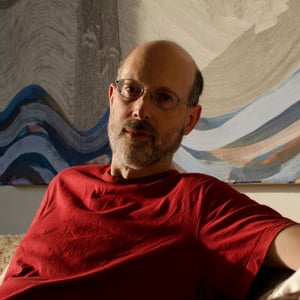
Maurice and Hilda Friedman Professor of Law, Columbia Law School; CEO, New Civil Liberties Alliance
Philip Hamburger is the Maurice and Hilda Friedman Professor of Law at Columbia Law School, and Chief Executive Officer at the New Civil Liberties Alliance. Before coming to Columbia, he was the John P. Wilson Professor at the University of Chicago Law School.
He writes on constitutional law and its history—with particular emphasis on religious liberty, freedom of speech and the press, judicial office, administrative power, and unconstitutional conditions.
His books are Separation of Church and State (Harvard 2002), Law and Judicial Duty (Harvard 2008), Is Administrative Law Unlawful? (Chicago 2014), The Administrative Threat (Encounter 2017), and Liberal Suppression: Section 501(c)(3) and the Taxation of Speech (Chicago 2018). A forthcoming book is Purchasing Submission: Conditions, Power, and Freedom (Harvard 2021).
He is a member of the American Academy of Arts and Sciences, and he has served on the board of directors of the American Society for Legal History. He has twice received the Sutherland Prize for the most significant contribution to English legal history, and has been awarded the Henry Paolucci - Walter Bagehot Book Award, the Hayek Book Prize, and the Bradley Prize.
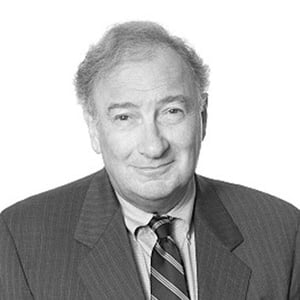
Retired, Winston & Strawn LLP
Jerry Loeser is of counsel in the Chicago office of Winston & Strawn, and his practice focuses on banking regulation. He has extensive experience in counseling financial services clients on, among other things, bank acquisitions, privacy, financial modernization, the USA PATRIOT Act, Basel II and III, lending limits, capital, trust, affiliate transactions, and Federal Reserve, OCC, FDIC, and CFPB regulations.
Prior to working at large corporate law firms, Jerry was chief regulatory and compliance counsel for Comerica Bank, where he also served as senior vice president and deputy general counsel and as general counsel of its retail bank division. Before that, he served as chief regulatory in-house counsel at Wells Fargo & Co. Jerry began his legal career advising the Board of Governors of the Federal Reserve System in Washington, D.C.
Co-Founder, Able Lending
Evan Baehr is the cofounder of Able, an online lender to small businesses. It launched June 2014 with the Wall Street Journal'sWeekend Interview and on TechCrunch. His passion at Able is to serve the Fortune 5 Million – the 5.8 million small businesses that represent the backbone of the American economy. His previous startup was Outbox, a consumer internet company aiming to takeover the US Postal Service and backed by venture capitalists Peter Thiel and Mike Maples, featured on Fox News, CNN, TechCrunch, FastCompany, Wall Street Journal, INC, the New York Times, and on Jay Leno.
He has worked on the Facebook platform under Sheryl Sandberg, helping shape a vision to make life better by making it social, and for Peter Thiel building a political data company. He’s an honors graduate of Princeton’s Woodrow Wilson School, Yale Divinity School, and Harvard Business School.
He has worked for the American Enterprise Institute’s Charles Murray, the Ethics and Public Policy Center, the Becket Fund for Religious Liberty, and the White House Office of Faith-Based Initiatives, served as a legislative aid on the House Appropriations Committee under Rep. Frank Wolf, was Chief of Staff on the Congressional Human Rights Caucus, under which he wrote the International Marriage Broker Regulation Act, and was the failed candidate for Princeton’s City Council, despite receiving more votes than George W. Bush.
He has served on the board of the Manhattan Institute’s Adam Smith Society, the New Canaan Society, the Rivendell Institute, and Harvard Business School's FIELD Program, and is a mentor with First Round Capital's Dorm Room Fund. He cofounded the Hoover Institute’s Rising Fellows Program, Harvard Business School’s Ideas@Work, Princetonians in the Nation’s Service, and the Yale Forum on Faith and Politics. He is the recipient of the Lily Endowment Thesis Prize, the Blackstone Legal Fellowship, and Princeton’s James Madison Fellowship. He lives in Austin, TX, with his wife, Kristina Scurry Baehr, a patent litigator, and children Cooper and Madeleine.
Judge, United States Court of Appeals, Ninth Circuit
Judge Carlos Bea serves as a judge on the United States Court of Appeals for the Ninth Circuit. He received his Bachelor's Degree from Stanford University in 1956 and his J.D. from Stanford Law School in 1958. Judge Bea was born in San Sebastian, Spain, and immigrated with his family to Cuba in 1939. In 1952, he represented Cuba on the Cuban National basketball team in the Helsinki Olympics. Judge Bea became a naturalized citizen of the United States in 1958. He engaged in private practice in San Francisco, principally in the area of civil trials (jury and non-jury), from 1959-75 at Dunne, Phelps & Mills and from 1975-90 at Carlos Bea, A Law Corporation. He taught courses in civil litigation advocacy at Hastings College of Law and Stanford Law School. From 1990 to 2003, Judge Bea served as a judge of the San Francisco Superior Court. He was nominated by President George W. Bush to the United States Court of Appeals for the Ninth Circuit and was confirmed in 2003.
Judge Bea and his wife Louise reside in San Francisco, where they raised their four sons, Sebastian, Alexander, Nicholas, and Dominic.
Chief Legal Officer, Paradigm
Principal, DeGroot Legal
Mr. DeGroot represents businesses in complex litigation, focusing on licensing, insurance, intellectual property, contract disputes, and toxic torts. He has experience in cases involving fraud, breach of contract, unfair competition, patents, business torts, mergers and acquisitions, creditors’ rights, and bankruptcy. He has extensive experience in all aspects of civil litigation, both in federal and state courts, including prejudgment remedies, discovery, trial, appeals, arbitration and mediation.
Mr. DeGroot works with clients in a variety of industries, including financial institutions, insurance, software, construction, semiconductors, and real estate.
Policy Counsel, Lyft
Associate Professor, University of Idaho College of Law
Stephen R. Miller joined the faculty of the University of Idaho College of Law in 2011. Prof. Miller received his undergraduate degree from Brown University, a master’s degree in city and regional planning from the University of California, Berkeley, and his J.D. from the University of California, Hastings College of Law. While in law school, Prof. Miller was senior articles editor of the Constitutional Law Quarterly. Prof. Miller also worked for a land use and environmental law firm in San Francisco, California prior to joining the faculty. His research interests include economic development, sustainable development, land use, environmental law, and local government law.
His academic works have been published by or are forthcoming from Cambridge University Press, Harvard Environmental Law Review, and a number of other law reviews and professional journals. In 2013, he was named Faculty Advisor of the Year by the Idaho Law Review and also received the Alumni Award for Faculty Excellence. In addition to his academic writings, Prof. Miller also blogs at Land Use Prof Blog, and writes an occasional column for the Idaho Statesman Business Insider.
Prof. Miller also runs the College of Law's Economic Development Clinic, which maintains the student-written blog Idaho NEXT. In 2013, the Clinic received the Planning Excellence Award for Best Practice from the Idaho chapter of the American Planning Association for Area of City Impact Agreements in Idaho. In 2014, the Clinic released Agritourism at the Rural-Urban Interface: A National Overview of Legal Issues with 20 Proposals for Idaho. In addition, the Clinic has been credited by state officials with popularizing the use of New Markets Tax Credits financing in Idaho, a financing tool that has already helped fund $50 million in investment in low income communities throughout the state.
Prof. Miller is also active in the community. He presently serves as a commissioner on the Boise City Planning and Zoning Commission and as a board member of the Joyce Ivy Foundation, which provides educational opportunities for talented high school students.
Retired, Winston & Strawn LLP
Jerry Loeser is of counsel in the Chicago office of Winston & Strawn, and his practice focuses on banking regulation. He has extensive experience in counseling financial services clients on, among other things, bank acquisitions, privacy, financial modernization, the USA PATRIOT Act, Basel II and III, lending limits, capital, trust, affiliate transactions, and Federal Reserve, OCC, FDIC, and CFPB regulations.
Prior to working at large corporate law firms, Jerry was chief regulatory and compliance counsel for Comerica Bank, where he also served as senior vice president and deputy general counsel and as general counsel of its retail bank division. Before that, he served as chief regulatory in-house counsel at Wells Fargo & Co. Jerry began his legal career advising the Board of Governors of the Federal Reserve System in Washington, D.C.
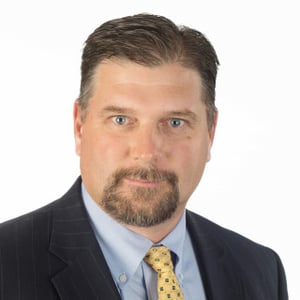
Executive Director, Ohio Dental Association
David J. Owsiany is the executive director of the Ohio Dental Association and a past president of the Columbus Lawyers Chapter of the Federalist Society.
He has served as CEO of a statewide health care association, president of the Buckeye Institute, chief of policy for the Ohio Department of Insurance, judicial law clerk for the Illinois Appellate Court, and staffer on the United State Senate Judiciary Committee.
Mr. Owsiany has written dozens of articles on legal and public policy issues for various publications, including the University of Toledo Law Review, the Federalist Society's State Court Docket Watch, Columbus Dispatch, Cincinnati Enquirer, Crain’s Cleveland Business, and Akron Beacon Journal.
Owsiany received his J.D. from Washington University School of Law in St. Louis and B.A. from the University of Michigan in Ann Arbor.
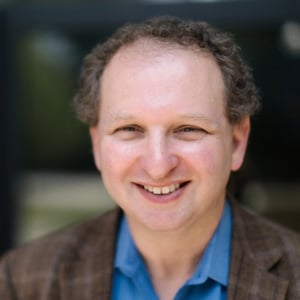
Assistant Professor of Law, Emory University School of Law
Alexander "Sasha" Volokh is an assistant professor of law, joining the Emory Law faculty in Fall 2009.
Professor Volokh earned his B.S. from UCLA and his J.D. and Ph.D. in economics from Harvard University. He clerked for Judge Alex Kozinski of the Ninth Circuit and for Supreme Court Justices Sandra Day O'Connor and Samuel Alito. Before coming to Emory, he was a visiting associate professor at Georgetown University Law Center and a visiting assistant professor at University of Houston Law Center.
His interests include law and economics, administrative law and the regulatory process, environmental law and policy, and legal history. His current research topics include the private management of government services, medieval law, judicial decisionmaking and statutory interpretation.

Obergefell v. Hodges: Same-Sex Marriage and the 14th Amendment
Fort Worth, TexasCampaign Finance and the First Amendment
Austin, TexasA President Of the People, By the People and For the People: The National Popular Vote Plan for Electing the President
Portland Lawyers Chapter
Portland, ORDevelopments at the Consumer Financial Protection Bureau: January 29, 2015 – March 10, 2015
Julius L. Loeser
Developments at the Consumer Financial Protection Bureau: January 29, 2015 – March 10, 2015 Julius...
Government Regulation in the Sharing Economy
Evan Baehr, Carlos T. Bea, Katie Biber, David DeGroot, Andrea Ambrose Lobato, Stephen R. Miller
In the innovation economy, entrants often confront increased regulatory hurdles, particularly on a state level, as...
Government Regulation in the Sharing Economy
2015 Annual Western Chapters Conference
Simi Valley, CADevelopments at the Consumer Financial Protection Bureau November 17, 2014 – December 9, 2014
Julius L. Loeser
Developments at the Consumer Financial Protection Bureau November 17, 2014 – December 9, 2014 Julius...
North Carolina Board of Dental Examiners v. Federal Trade Commission
David J. Owsiany, Alexander Volokh
Note from the Editor: The Federalist Society is pleased to present two different perspectives on the North...
Religious Liberty: The Founders' Intentions and Current Threats
Nashville, TennesseeIs Administrative Law Unlawful?
Morristown, NJ, New Jersey