
Associate Justice, New Hampshire Supreme Court
Law Clerk, U.S. District Court for the District of New Hampshire
Attorney, Hicks Thomas LLP
Associate Justice, New Hampshire Supreme Court
Bryan K. Gould is the 112th Justice of the New Hampshire Supreme Court. Justice Gould was sworn in as an Associate Justice of the Supreme Court on September 18, 2025 after confirmation by the Executive Council. Justice Gould was nominated to the bench by Governor Kelly Ayotte. Prior to his appointment, Justice Gould practiced law in New Hampshire for more than 35 years, primarily in the field of civil litigation. He represented a diverse array of clients before state and federal courts and state administrative tribunals. Justice Gould’s law practice included commercial litigation, appellate litigation, state and federal constitutional law, municipal law, land-use law, election law, and environmental law. He also represented clients before the New Hampshire legislature with respect to legislation affecting their interests. Justice Gould previously served as special counsel both to New Hampshire Governor Craig Benson and to the New Hampshire Executive Council. Justice Gould received his Bachelor of Science degree from Utah State University in 1980 and received his Juris Doctor from the University of Utah College of Law in 1984.
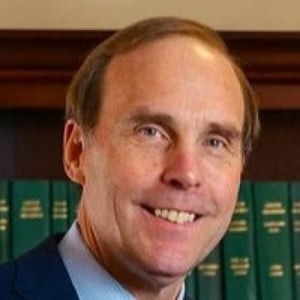
Distinguished Research Professor, Center for Citizenship and Constitutional Government, University of Notre Dame
Donald L. Drakeman is Distinguished Research Professor in the Center for Citizenship and Constitutional Government at the University of Notre Dame, and a Fellow of the Centre for Health Leadership and Enterprise at the University of Cambridge. His writings have been cited by the Supreme Courts of the United States and the Philippines. He has published seven books, including The Hollow Core of Constitutional Theory (Cambridge University Press, 2021), Why We Need the Humanities (Palgrave, 2016), and Church, State, and Original Intent (Cambridge University Press, 2010). He received an A.B. magna cum laude from Dartmouth College; a J.D. from Columbia Law School, where he was a Harlan Fiske Stone Scholar; and a Ph.D. from Princeton University. He is a Fellow of the Royal Historical Society, and he was the founding chair of the Advisory Council for the James Madison Program on American Ideals and Institutions at Princeton University.
Assistant Solicitor General, Office of the Texas Attorney General
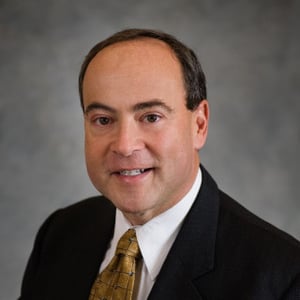
Justice, Supreme Court of Arizona
Clint Bolick was appointed by Governor Doug Ducey in January 2016 to serve on the Arizona Supreme Court and was retained by the voters in 2018 and 2024.
Prior to joining the Court, Justice Bolick litigated constitutional cases in state and federal courts from coast to coast, including the U.S. Supreme Court. Among other positions, he served as Vice President for Litigation at the Goldwater Institute and as Co-founder and Vice President for Litigation at the Institute for Justice. He has litigated in support of school choice, freedom of enterprise, private property rights, freedom of speech, and federalism, and against racial classifications and government subsidies.
Justice Bolick received his Juris Doctor degree from the University of California at Davis, where he has been recognized as a distinguished alumnus, and his Bachelor of Arts degree magna cum laude from Drew University. He serves as a research fellow with the Hoover Institution. Among other honors, he was named one of the 90 Greatest DC Lawyers in the Last 30 Years by Legal Times in 2008, received a Bradley Prize in 2006, and was recognized as one of the nation’s three lawyers of the year by American Lawyer in 2002 for his successful defense of school vouchers in Zelman v. Simmons-Harris.
Justice Bolick is a prolific author of a dozen books and hundreds of articles. Among his most recent books are Unshackled: Freeing America’s K-12 Education System: Immigration Wars: Forging an American Solution, co-authored with former Florida Governor Jeb Bush; and David’s Hammer: The Case for an Activist Judiciary. Bolick serves as an adjunct professor of constitutional law at Arizona State University’s Sandra Day O’Connor School of Law and has served as a lecturer at Harvard University’s John F. Kennedy School of Government.

Attorney, Institute for Justice
Anya Bidwell (née Cherkasova) leads IJ’s Project on Immunity and Accountability (“PIA”). Through this project, Anya works to promote judicial engagement and ensure that government officials are held to account when they violate individuals’ constitutional rights. Anya also serves as an adviser on the American Law Institute’s Restatement of the Law, Constitutional Torts project.
One of Anya’s PIA cases—Gonzalez v. Trevino—was heard by the United States Supreme Court on March 20, 2024. She argued the case for the petitioner, with the goal of convincing the Justices that retaliatory arrests not involving on-the-spot decisions by police officers should be actionable under the First Amendment regardless of probable cause. The decision is expected in June.
This was Anya’s third appearance before the U.S. Supreme Court. She second-chaired Brownback v. King (an excessive force case) and Tennessee Wine & Spirits Retailers Association v. Thomas (a commerce clause case) in November 2020 and January 2019 respectfully.
Before joining IJ, Anya worked for a top national law firm, handling cases in trial and appellate courts. She earned her J.D. with honors from the University of Texas. Two years prior to entering law school, Anya received a master’s degree in Global Policy Studies, also from the University of Texas, and wrote a thesis on asymmetric warfare.
Anya spent her childhood in Ukraine and Kyrgyzstan. At 16, she left her family behind and came to America on a university scholarship. Her upbringing motivated her to study law and become an advocate for a strong, independent judiciary.
Anya’s work has been featured in numerous publications, including the Washington Post, the Wall Street Journal, the New York Times, USA Today, and the Guardian. She is also the host of live recordings of our Short Circuit podcast and a co-producer of our documentary-style podcast Bound by Oath.

A Fireside Chat with New Hampshire Supreme Court Justice Melissa Countway
New Hampshire Lawyer Chapter
Concord, NHA Fireside Chat about Originalism with New Hampshire Supreme Court Justice Bryan Gould
New Hampshire Lawyer Chapter
Concord, NHTopics
New From FedSoc: State Court Docket Watch Newsletter
Federalism is a central feature of our American system of government. In recognition of the...
Establishing an Agreement to Disagree About Church and State
Donald L. Drakeman
A review of Nathan Chapman & Michael McConnell, Agreeing to Disagree: How the Establishment Clause...
Topics
New Hampshire Supreme Court Rejects Medical Monitoring
The New Hampshire Supreme Court has issued a decision rejecting a claim for medical monitoring...
State Court Docket Watch: Washington v. Palla Sum
Daniel Ortner
In Washington v. Palla Sum, the Washington Supreme Court considered whether courts in Washington should...
Principles of State Constitutional Interpretation
Clint Bolick
State constitutionalism—the practice of state courts deciding cases on independent state constitutional grounds—is a vital...
State Court Docket Watch: Hamen v. Hamlin County
Anya Bidwell
Note from the Editor: The Federalist Society takes no positions on particular legal and public...
Topics
The New Hampshire Supreme Court Is Taking Comments Through May 31
The New Hampshire Supreme Court is holding a public comment period through this Friday, May...
Topics
Why New Hampshire Should Not Adopt ABA Model Rule 8.4(g)
The New Hampshire Supreme Court is holding a public comment period through April 11, 2019, on a...