
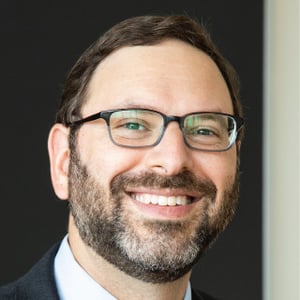
Antonin Scalia Professor of Law, Harvard Law School
Stephen E. Sachs is the Antonin Scalia Professor of Law at Harvard Law School, where he teaches civil procedure, conflict of laws, and seminars on constitutional law. His research focuses on the law and theory of constitutional interpretation, the jurisdiction of state and federal courts, the history of procedure and private law, and the role of the general common law in the U.S. legal system.
Sachs has authored numerous articles, essays, and book chapters. He is an elected member of the American Law Institute, an adviser to the ALI’s project on the Restatement of the Law (Third), Conflict of Laws, a former member of the Judicial Conference’s Advisory Committee on Appellate Rules, and a founding member of the Academic Freedom Alliance.
In 2020, Sachs received the Federalist Society’s Joseph Story Award, which recognizes a young academic who has demonstrated excellence in legal scholarship, a commitment to teaching, a concern for students, and who has made a significant public impact in a manner that advances the rule of law in a free society.
Sachs previously taught at Duke University School of Law and as a visiting professor at the University of Chicago Law School. Before entering academia, he practiced in the Washington, D.C., litigation group of Mayer Brown LLP, and he clerked for Chief Justice John G. Roberts Jr. as well as for Judge Stephen F. Williams of the U.S. Court of Appeals for the D.C. Circuit.
Sachs received his J.D. from Yale Law School, where he was executive editor of the Yale Law Journal and served both as executive editor and articles editor of the Yale Law & Policy Review. A Rhodes Scholar, he graduated from Oxford University with a first-class BA (Hons) degree in philosophy, politics, and economics. He received his A.B. degree summa cum laude in history from Harvard University, earning the Sophia Freund Prize.
Sachs is a licensed attorney in Massachusetts and the District of Columbia, and he is authorized to practice before the D.C. Circuit, the Second Circuit, the Seventh Circuit, and the Supreme Court of the United States.
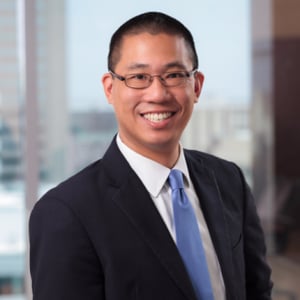
Chair, Issues & Appeals, Hunton Andrews Kurth LLP
The former Solicitor General of West Virginia, Mr. Lin has been on the front lines of many precedent-setting cases in appellate courts across the country, including in a US Supreme Court victory that George Will called “the court’s most severe rebuke of a president” since the Truman administration. Having argued more than 60 appeals, he brings to clients a well-honed ability to identify the most persuasive issues for appeal and a practiced understanding of how best to frame complex legal questions in appellate courts.
With experience in the private sector and multiple branches of government, Mr. Lin’s practice has spanned a wide range of issues, including major questions of constitutional and administrative law at the federal and state levels. On behalf of more than two dozen states, he won a stay from the US Supreme Court of the EPA’s Clean Power Plan. Described by the New York Times as an “unprecedented” order, the stay was the first time the Supreme Court had ever put a regulation on hold before review by a federal appeals court. In that same case, Elbert argued before the en banc DC Circuit in an historic proceeding that one commenter quoted in E&E News compared to “the NBA All-Star Game.” At the state level, Elbert led the effort that persuaded the West Virginia Supreme Court of Appeals to overturn an injunction of the state’s right-to-work law.
In 2013, Mr. Lin was appointed the Solicitor General of West Virginia. During his four-and-a-half year tenure, he served as a member of the Attorney General’s senior management team, oversaw all civil and criminal appeals, and argued nearly two dozen cases in federal and state appellate courts. He authored more than twenty-five briefs in the US Supreme Court and more than forty-five formal Opinions of the Attorney General.
Earlier in his career, Mr. Lin served as a trial attorney in the Federal Programs Branch of the US Department of Justice’s Civil Division, where he received a Special Service Award. He has also been a law clerk at all three levels of the federal judiciary: for Justice Clarence Thomas on the US Supreme Court; for Judge William H. Pryor Jr. on the US Court of Appeals for the Eleventh Circuit; and for Senior Judge Robert E. Keeton on the US District Court for the District of Massachusetts.
Mr. Lin speaks regularly on a wide variety of topics, including constitutional law, administrative law, environmental law, state and federal relations, the US Supreme Court, and appellate practice. He has testified before Congress, and has spoken at the national conventions of the American Bar Association, the Association of Corporate Counsel, the National Asian Pacific American Bar Association, the Federalist Society, Americans for Prosperity, and the American Legislative Exchange Council. He is an elected member of the American Law Institute, a public member of the Administrative Conference of the United States, and a fellow of the American Academy of Appellate Lawyers.
Mr. Lin is admitted to practice in the following federal courts: the Supreme Court of the United States; the First, Second, Third, Fourth, Fifth, Sixth, Seventh, Eighth, Ninth, Eleventh, D.C., and Federal Circuits; the District of Massachusetts; the Northern and Southern Districts of West Virginia; and the Eastern and Western Districts of Virginia.
Antonin Scalia Professor of Law, Harvard Law School
Stephen E. Sachs is the Antonin Scalia Professor of Law at Harvard Law School, where he teaches civil procedure, conflict of laws, and seminars on constitutional law. His research focuses on the law and theory of constitutional interpretation, the jurisdiction of state and federal courts, the history of procedure and private law, and the role of the general common law in the U.S. legal system.
Sachs has authored numerous articles, essays, and book chapters. He is an elected member of the American Law Institute, an adviser to the ALI’s project on the Restatement of the Law (Third), Conflict of Laws, a former member of the Judicial Conference’s Advisory Committee on Appellate Rules, and a founding member of the Academic Freedom Alliance.
In 2020, Sachs received the Federalist Society’s Joseph Story Award, which recognizes a young academic who has demonstrated excellence in legal scholarship, a commitment to teaching, a concern for students, and who has made a significant public impact in a manner that advances the rule of law in a free society.
Sachs previously taught at Duke University School of Law and as a visiting professor at the University of Chicago Law School. Before entering academia, he practiced in the Washington, D.C., litigation group of Mayer Brown LLP, and he clerked for Chief Justice John G. Roberts Jr. as well as for Judge Stephen F. Williams of the U.S. Court of Appeals for the D.C. Circuit.
Sachs received his J.D. from Yale Law School, where he was executive editor of the Yale Law Journal and served both as executive editor and articles editor of the Yale Law & Policy Review. A Rhodes Scholar, he graduated from Oxford University with a first-class BA (Hons) degree in philosophy, politics, and economics. He received his A.B. degree summa cum laude in history from Harvard University, earning the Sophia Freund Prize.
Sachs is a licensed attorney in Massachusetts and the District of Columbia, and he is authorized to practice before the D.C. Circuit, the Second Circuit, the Seventh Circuit, and the Supreme Court of the United States.

Courthouse Steps Oral Argument: Franchise Tax Board of California v. Hyatt: Reviving Sister-State Sovereign Immunity
Stephen E. Sachs
After Gilbert Hyatt, the petitioner, moved to Nevada he was investigated by the Franchise Tax...
Courthouse Steps Oral Argument: Franchise Tax Board of California v. Hyatt: Reviving Sister-State Sovereign Immunity
A Teleforum Call Sponsored by the Federalism & Separation of Powers Practice Group
TeleforumFranchise Tax Board of California v. Hyatt [SCOTUSbrief]
Elbert Lin
In the 1979 case Nevada v. Hall, the Supreme Court declared that states can be...
Topics
Should States Be Immune From Suit in Courts of Other States?
In a week of several big cases on state legislative redistricting and affirmative action, it'd...