
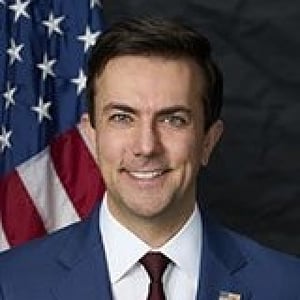
Deputy Administrator, United States Environmental Protection Agency
David Fotouhi was sworn in as Deputy Administrator of the United States Environmental Protection Agency on June 16, 2025.
Fotouhi is an experienced environmental attorney who previously served in senior roles at EPA. During the first term of the Trump Administration, Fotouhi served as EPA’s Acting General Counsel and Principal Deputy General Counsel. Prior to rejoining the agency, Fotouhi was a partner in the Washington, D.C. office of Gibson, Dunn & Crutcher LLP practicing environmental law.
Fotouhi grew up in Oklahoma and holds a B.A. from Vanderbilt University and a J.D. from Harvard Law School. Before entering private legal practice, Fotouhi served as a law clerk to the Honorable Raymond W. Gruender of the U.S. Court of Appeals for the Eighth Circuit.
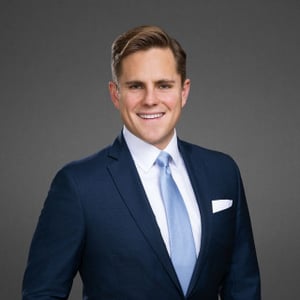
Environmental Law Attorney, DLA Piper
Garrett Kral is an attorney in DLA Piper’s Washington, DC, office, and a member of the Regulatory and Government Affairs Practice Group. His practice includes regulatory counseling, enforcement defense, and complex civil litigation on matters arising under major federal environmental statutes.
Garrett builds on a strong background in environmental science, a familiarity with technical processes involved in industrial operations, and valuable insights gained by serving in each branch of the federal government. With this experience, he advances the business objectives of Fortune 500 companies while limiting exposure and risk. Garrett is regarded as a strategic advisor to such clients on matters of environmental law and policy.
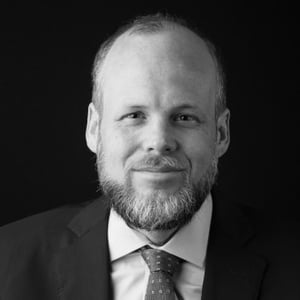
Founder, CGCN Law, PLLC

Attorney, Institute for Justice
Anya Bidwell (née Cherkasova) leads IJ’s Project on Immunity and Accountability (“PIA”). Through this project, Anya works to promote judicial engagement and ensure that government officials are held to account when they violate individuals’ constitutional rights. Anya also serves as an adviser on the American Law Institute’s Restatement of the Law, Constitutional Torts project.
One of Anya’s PIA cases—Gonzalez v. Trevino—was heard by the United States Supreme Court on March 20, 2024. She argued the case for the petitioner, with the goal of convincing the Justices that retaliatory arrests not involving on-the-spot decisions by police officers should be actionable under the First Amendment regardless of probable cause. The decision is expected in June.
This was Anya’s third appearance before the U.S. Supreme Court. She second-chaired Brownback v. King (an excessive force case) and Tennessee Wine & Spirits Retailers Association v. Thomas (a commerce clause case) in November 2020 and January 2019 respectfully.
Before joining IJ, Anya worked for a top national law firm, handling cases in trial and appellate courts. She earned her J.D. with honors from the University of Texas. Two years prior to entering law school, Anya received a master’s degree in Global Policy Studies, also from the University of Texas, and wrote a thesis on asymmetric warfare.
Anya spent her childhood in Ukraine and Kyrgyzstan. At 16, she left her family behind and came to America on a university scholarship. Her upbringing motivated her to study law and become an advocate for a strong, independent judiciary.
Anya’s work has been featured in numerous publications, including the Washington Post, the Wall Street Journal, the New York Times, USA Today, and the Guardian. She is also the host of live recordings of our Short Circuit podcast and a co-producer of our documentary-style podcast Bound by Oath.

Chief Policy Counsel, Council on Criminal Justice and Senior Advisor, Right on Crime
Marc A. Levin is the Chief Policy Counsel for the Council on Criminal Justice (counciloncj.org) and Senior Advisor for Right on Crime.
An attorney and accomplished author on legal and public policy issues, Marc began the Foundation’s criminal justice program in 2005. This work contributed to nationally praised policy changes that have been followed by dramatic declines in crime and incarceration in Texas. Building on this success, in 2010, Levin developed the concept for the Right on Crime initiative, a TPPF project in partnership with Prison Fellowship and the American Conservative Union Foundation. Right on Crime has become the national clearinghouse for conservative criminal justice reforms and has contributed to the adoption of policies in dozens of states that fight crime, support victims, and protect taxpayers.
In 2014, Levin was named one of the “Politico 50” in the magazine’s annual “list of thinkers, doers, and dreamers who really matter in this age of gridlock and dysfunction.”
Marc has testified on criminal justice policy on four occasions before Congress and has testified before legislatures in states including Texas, Nevada, Kansas, Wisconsin, and California. He also has met personally with leaders such as U.S. Presidents, Speakers of the House, and the Justice Commtitee of the United Kingdom Parliament to share his ideas on criminal justice reform. In 2007, he was honored in a resolution unanimously passed by the Texas House of Representatives that stated, “Mr. Levin’s intellect is unparalleled and his research is impeccable.”
Since 2005, Marc has published dozens of policy papers on topics such as sentencing, probation, parole, reentry, and overcriminalization which are available on the TPPF website. Levin’s articles on law and public policy have been featured in publications such as the Wall Street Journal, USA Today, Texas Review of Law & Politics, National Law Journal, New York Daily News, Jerusalem Post, Toronto Star, Atlanta Journal-Constitution, Philadelphia Inquirer, San Francisco Chronicle, Washington Times, Los Angeles Daily Journal, Charlotte Observer, Dallas Morning News, Houston Chronicle, Austin American-Statesman, San Antonio Express-News and Reason Magazine.
In 1999, Marc graduated with honors from the University of Texas with a B.A. in Plan II Honors and Government. In 2002, Marc received his J.D. with honors from the University of Texas School of Law. Marc was a Charles G. Koch Summer Fellow in 1996. He served as a law clerk to Judge Will Garwood on the U.S. Court of Appeals for the Fifth Circuit and Staff Attorney at the Texas Supreme Court.
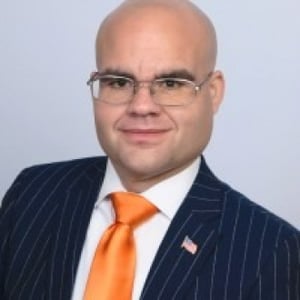
Counsel, Keller Postman LLC
John Masslon is a Counsel at Keller Postman LLC, where he works on a broad range of disputes, including products liability and consumer protections suits. He helps develop legal strategies, writes briefs, and presents argument on legal questions. Before joining Keller Postman, John was senior litigation counsel at Washington Legal Foundation. There, he wrote about 100 amicus briefs supporting free enterprise in courts across the country. He filed the first amicus brief in the Supreme Court supporting the challenge to OSHA’s vaccine mandate. He also filed a brief supporting ending the in-house proceedings at the Securities and Exchange Commission. Previously, John served as assistant solicitor general in a state attorney general’s office. There, he was first chair in a federal trial challenging a state election law that was ultimately upheld. He also wrote the briefs that convinced the state supreme court to uphold the State’s right-to-work statute.
John obtained his B.S. in economics with a minor in mathematical sciences from Clemson University. He then received his J.D. and LL.M. in Taxation from Georgetown University Law Center. After law school, John worked for Judge Arthur J. Schwab of the United States District Court for the Western District of Pennsylvania and clerked for Judge Judith Ference Olson of the Superior Court of Pennsylvania.
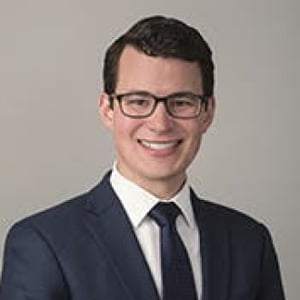
Associate Attorney, Gibson Dunn
David Casazza is an associate in the Washington, D.C. office of Gibson, Dunn & Crutcher. He practices in the firm’s Appellate and Constitutional Law, and Administrative Law and Regulatory Practice groups.
Mr. Casazza has represented clients in appellate and regulatory litigation before the Supreme Court of the United States, federal appellate courts, and federal district courts. These cases have involved a wide range of subjects including separation of powers, federal rulemaking challenges, data privacy protections, anti-terrorism claims and foreign sovereign immunity, energy infrastructure permitting, and a variety of First Amendment speech and religious liberty claims. He has also represented clients in complex litigation, obtaining dismissal with prejudice of consumer class actions attacking major brand names. He has been named by Best Lawyers as a 2021 and 2022 “One to Watch” in Appellate Practice.
He graduated magna cum laude from Harvard Law School, where he served as a Managing Editor for the Harvard Journal of Law and Public Policy and as Executive Vice President of the Harvard Federalist Society. Mr. Casazza received an A.B. magna cum laude in history from Princeton and an M.A. in history from the Johns Hopkins University.
Mr. Casazza served as a law clerk to Justice Samuel Alito on the Supreme Court of the United States and for Judge Jennifer Walker Elrod on the United States Court of Appeals for the Fifth Circuit.
He is a member of the bars of New York and the District of Columbia and is admitted to practice in the United States Courts of Appeals for the Third, Fourth, Fifth, and Ninth Circuits and in the United States District Court for the District of Columbia.

Of Counsel, Spencer Fane LLP
Anthony J. “A.J.” Ferate has built a multi-faceted background in the areas of the law, policy, energy, campaigns and elections, and defense over the last 20 years.
Through recent representation as Vice President of Regulatory Affairs for the Oklahoma Independent Petroleum Association (“OIPA”), A.J. held responsibilities over government efforts outside of the legislative branch on matters as broad as water, electric generation, commodity marketing, land matters, and seismicity. A.J. also maintained responsibility for legal matters at OIPA, including amicus briefing in appellate matters. A.J.’s extensive experience also includes management of public policy strategy for a Fortune 500 company.
For the past eleven years, A.J. has volunteered as General Counsel and spokesman for the Oklahoma Republican Party and has represented a number of elected officials, including U.S. Senator James Lankford, former statewide elected officials, a number of state legislators, and members of Congress.
Additionally, A.J. has assisted elected officials serve their constituents in all branches of government. Early in his career, A.J. held legislative aide duties in the Nebraska Legislature, then went on to work for former Nebraska Treasurer David Heineman. A.J. gained experience in the judiciary while serving Judge Gary L. Lumpkin at the Oklahoma Court of Criminal Appeals, the highest criminal appellate court in Oklahoma. Following this service, A.J. began work with Denise A. Bode of the Oklahoma Corporation Commission, assisting her in her duties regulating 70 percent of Oklahoma’s economy, including oil and gas and electric utilities.
A.J. honorably served ten years as an intelligence analyst for the United States Naval Reserve, including time at the Office of Naval Intelligence in the greater Washington DC area.
Opinion pieces authored or ghostwritten by A.J. have been published in the Seattle Times, Politico, Law360, The Oklahoman, Tulsa World and The Journal Record. A.J. has also been interviewed by national and international newspapers, and has also appeared on national radio programs including NPR’s The Diane Rehm Show and On Point with Tom Ashbrook.
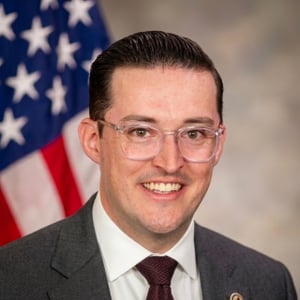
General Counsel and Senior Advisor, White House Task Force to Eliminate Fraud
Jason Manion has high-level legal experience in all three branches of federal government, in Ohio state government, and in private practice.
Since January 20, 2025, Jason has served in senior legal roles in the Trump-Vance Administration. He currently serves as General Counsel and Senior Advisor for the White House Task Force to Eliminate Fraud, a whole-of-government effort chaired by Vice President J.D. Vance to eliminate fraud, waste, and abuse within federal benefit programs.
Before joining the White House, Jason served as part of the senior leadership team at the U.S. Department of Justice, where he was Counselor to the Attorney General and Counselor and Chief of Staff to the Associate Attorney General. At the Justice Department, he oversaw a broad portfolio that included matters and issues arising out of the Civil, Civil Rights, Criminal, and National Security Divisions.
Previously, Jason was an award-winning federal prosecutor and accomplished appellate attorney. He worked as an appellate Assistant United States Attorney, a deputy Ohio solicitor general, and an appellate associate at Gibson, Dunn & Crutcher. In these various roles, he handled dozens of civil and criminal appeals (primarily in the U.S. Supreme Court, the U.S. Court of Appeals for the Sixth Circuit, and the Ohio Supreme Court) and presented eighteen oral arguments (in the Sixth Circuit, the D.C. Circuit, the Ohio Supreme Court, and federal district courts in Ohio and D.C.).
Jason has also worked on the confirmations of several of President Donald J. Trump’s Executive Branch and judicial nominees, including serving on the U.S. Senate Committee on the Judiciary as Special Counsel to Senator Ted Cruz for the confirmation of Justice Amy Coney Barrett.
Jason graduated from Harvard Law School and clerked for two Ohio-based Sixth Circuit judges, Judges Alice M. Batchelder and Eric E. Murphy. He has been an active member of the Federalist Society since law school and has served in multiple leadership roles in the Society.
Shareholder, Greenberg Traurig
Jennifer Weddle is the Co-Chair of Greenberg Traurig's American Indian Law Practice and has wide-ranging experience in complex regulatory and jurisdictional issues, with a focus in Indian law, handling a variety of matters for tribal and non-tribal clients. She has a dynamic, inter-disciplinary practice that centers on providing strategies for resolving complex jurisdictional problems. Much of her practice focuses in the areas of tribal economic development and natural resources development. Jennifer also has U.S. Supreme Court experience, including serving as one of the attorneys for the respondent in Nevada v. Hicks (2001) and representing the petitioners in Ute Mountain Ute Tribe v. Padilla (2012) and Grand Canyon Skywalk Development, LLC v. Grand Canyon Resort Corporation (2013) and cert stage amici in Saginaw-Chippewa Tribe v. NLRB (2016) and United States v. Cooley (2020) and amici on the merits in Lewis v. Clarke (2017), U.S. v. Washington (2018), Carpenter v. Murphy (2018), McGirt v. Oklahoma (2020), and United States v. Cooley (2021).
Jennifer's work also includes negotiations for mineral leasing employment matters and representation before federal agencies. She has also been involved in civil litigation, working on numerous complex federal, state and tribal litigation matters, including class action tort litigation and large commercial disputes. Her transactional experience includes oil and gas renewables projects throughout the west, as well as Endangered Species Act work. Jennifer frequently assists tribes, banks and non-bank entities with financing and regulatory matters with Indian law components. Jennifer has wide-ranging project siting experience, including the application of NEPA, NHPA, and other environmental laws on tribal and public lands, including with respect to large linear multi-state energy and infrastructure projects. Jennifer has deep transactional, regulatory and litigation experience involving very complex matters with both legal and policy components.
Jennifer is past President of the National Native American Bar Association and past two-term Chair of the Federal Bar Association Indian Law Section. She currently serves as the Tenth Circuit Representative on the American Bar Association Standing Committee on the Federal Judiciary, a role she has held since 2018, spanning the evaluations for more than two dozen federal judicial nominees at every level of the federal courts. She is a ’00 graduate of Harvard Law School and a ’97 graduate of the University of Michigan (Classical Languages and Literature).

Senior Counsel, First Liberty Institute
Stephanie N. Taub serves as Senior Counsel with First Liberty Institute, focusing on litigation, appellate advocacy, and legal education.
While at First Liberty, her article on the rights of faith-based organizations under Title VII of the Civil Rights Act of 1964 has been published in the Texas Review of Law and Politics. She has also authored pieces published in National Review, the Daily Signal, the Washington Times, the Des Moines Register, and the New York Daily News. In 2017, Taub was named one of 15 recipients of the James Wilson Fellowship in natural law.
Before joining First Liberty, Taub worked as a law clerk to the Honorable Reed O’Connor in the U.S. District Court of the Northern District of Texas.
Taub is a Harvard Law School graduate in the class of 2014 and a Blackstone Fellow in the class of 2012. During law school, she served as Co-President of the HLS Christian Fellowship and Managing Technical Editor of the Harvard Human Rights Journal. Taub spent her law school summers defending religious liberty in public interest law firms and clerking in the Texas Office of Solicitor General.
For her undergraduate studies at the University of Southern California, Taub graduated summa cum laude, majoring in Business Administration with a minor in Philosophy.
Chief Policy Counsel, Council on Criminal Justice and Senior Advisor, Right on Crime
Marc A. Levin is the Chief Policy Counsel for the Council on Criminal Justice (counciloncj.org) and Senior Advisor for Right on Crime.
An attorney and accomplished author on legal and public policy issues, Marc began the Foundation’s criminal justice program in 2005. This work contributed to nationally praised policy changes that have been followed by dramatic declines in crime and incarceration in Texas. Building on this success, in 2010, Levin developed the concept for the Right on Crime initiative, a TPPF project in partnership with Prison Fellowship and the American Conservative Union Foundation. Right on Crime has become the national clearinghouse for conservative criminal justice reforms and has contributed to the adoption of policies in dozens of states that fight crime, support victims, and protect taxpayers.
In 2014, Levin was named one of the “Politico 50” in the magazine’s annual “list of thinkers, doers, and dreamers who really matter in this age of gridlock and dysfunction.”
Marc has testified on criminal justice policy on four occasions before Congress and has testified before legislatures in states including Texas, Nevada, Kansas, Wisconsin, and California. He also has met personally with leaders such as U.S. Presidents, Speakers of the House, and the Justice Commtitee of the United Kingdom Parliament to share his ideas on criminal justice reform. In 2007, he was honored in a resolution unanimously passed by the Texas House of Representatives that stated, “Mr. Levin’s intellect is unparalleled and his research is impeccable.”
Since 2005, Marc has published dozens of policy papers on topics such as sentencing, probation, parole, reentry, and overcriminalization which are available on the TPPF website. Levin’s articles on law and public policy have been featured in publications such as the Wall Street Journal, USA Today, Texas Review of Law & Politics, National Law Journal, New York Daily News, Jerusalem Post, Toronto Star, Atlanta Journal-Constitution, Philadelphia Inquirer, San Francisco Chronicle, Washington Times, Los Angeles Daily Journal, Charlotte Observer, Dallas Morning News, Houston Chronicle, Austin American-Statesman, San Antonio Express-News and Reason Magazine.
In 1999, Marc graduated with honors from the University of Texas with a B.A. in Plan II Honors and Government. In 2002, Marc received his J.D. with honors from the University of Texas School of Law. Marc was a Charles G. Koch Summer Fellow in 1996. He served as a law clerk to Judge Will Garwood on the U.S. Court of Appeals for the Fifth Circuit and Staff Attorney at the Texas Supreme Court.
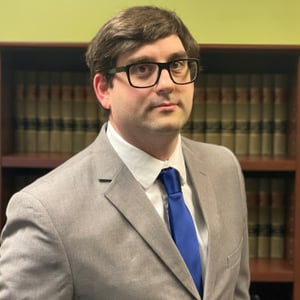
Bureau Chief of the Legal Affairs Unit, Albany County District Attorney’s Office
Vincent Stark is Bureau Chief of the Legal Affairs Unit at the Albany County District Attorney’s Office in Upstate New York. His practice primarily deals with appeals, post-conviction remedies, and sealing and expungement.
Vincent received his juris doctorate cum laude from the University of Notre Dame Law School, where he served as Executive Editor of the Journal of Legislation. He received his bachelor’s degree in Political Science magna cum laude from Syracuse University. After law school he served as a legislative fellow in the New York State Senate before joining the District Attorney’s Office. His published works have appeared in the Albany Law Review and the Georgetown Journal of Gender and the Law, and he has frequently taught classes and CLEs on criminal law, legal research and writing, and sealing and expungement programs to support the re-entry of convicts into society.

Attorney, Institute for Justice
Marie Miller is an attorney with the Institute for Justice. Her practice focuses on protecting economic liberty, property rights, and educational choice.
Marie received her law degree from Indiana University’s Maurer School of Law. She received her undergraduate degree in music from the University of Notre Dame. And she holds masters degrees in music, from Indiana University’s Jacobs School of Music, and public affairs, from Indiana University’s School of Public and Environmental Affairs. After law school, Marie clerked for Chief Justice Loretta H. Rush of the Indiana Supreme Court and for Judge Michael S. Kanne of the U.S. Court of Appeals for the Seventh Circuit.
Senior Counsel, First Liberty Institute
Stephanie N. Taub serves as Senior Counsel with First Liberty Institute, focusing on litigation, appellate advocacy, and legal education.
While at First Liberty, her article on the rights of faith-based organizations under Title VII of the Civil Rights Act of 1964 has been published in the Texas Review of Law and Politics. She has also authored pieces published in National Review, the Daily Signal, the Washington Times, the Des Moines Register, and the New York Daily News. In 2017, Taub was named one of 15 recipients of the James Wilson Fellowship in natural law.
Before joining First Liberty, Taub worked as a law clerk to the Honorable Reed O’Connor in the U.S. District Court of the Northern District of Texas.
Taub is a Harvard Law School graduate in the class of 2014 and a Blackstone Fellow in the class of 2012. During law school, she served as Co-President of the HLS Christian Fellowship and Managing Technical Editor of the Harvard Human Rights Journal. Taub spent her law school summers defending religious liberty in public interest law firms and clerking in the Texas Office of Solicitor General.
For her undergraduate studies at the University of Southern California, Taub graduated summa cum laude, majoring in Business Administration with a minor in Philosophy.
Senior Counsel, First Liberty Institute
Stephanie N. Taub serves as Senior Counsel with First Liberty Institute, focusing on litigation, appellate advocacy, and legal education.
While at First Liberty, her article on the rights of faith-based organizations under Title VII of the Civil Rights Act of 1964 has been published in the Texas Review of Law and Politics. She has also authored pieces published in National Review, the Daily Signal, the Washington Times, the Des Moines Register, and the New York Daily News. In 2017, Taub was named one of 15 recipients of the James Wilson Fellowship in natural law.
Before joining First Liberty, Taub worked as a law clerk to the Honorable Reed O’Connor in the U.S. District Court of the Northern District of Texas.
Taub is a Harvard Law School graduate in the class of 2014 and a Blackstone Fellow in the class of 2012. During law school, she served as Co-President of the HLS Christian Fellowship and Managing Technical Editor of the Harvard Human Rights Journal. Taub spent her law school summers defending religious liberty in public interest law firms and clerking in the Texas Office of Solicitor General.
For her undergraduate studies at the University of Southern California, Taub graduated summa cum laude, majoring in Business Administration with a minor in Philosophy.
Legal Director & General Counsel, Criminal Justice Legal Foundation
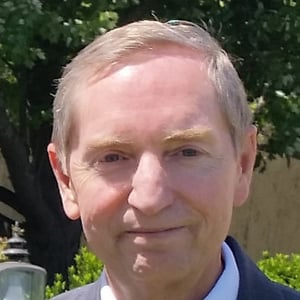
Kent S. Scheidegger has been the Legal Director of the Criminal Justice Legal Foundation since December 1986. He also served as Chairman of the Criminal Law Practice Group of the Federalist Society 2003 to 2005. His articles on criminal and constitutional law have been published in law reviews, national legal publications, and congressional reports. Legal arguments authored by Mr. Scheidegger have been cited and incorporated in several precedent-setting United States Supreme Court decisions.
After receiving a degree in physics with honors from New Mexico State University in 1976, Mr. Scheidegger served for six years in the United States Air Force as a Nuclear Research Officer. He took his law degree with distinction from the University of the Pacific, McGeorge School of Law in 1982 and practiced civil law in Northern California. He was general counsel of California Cooler, Inc. from 1984 until 1986, when he joined the Foundation.

Courthouse Steps Decision Webinar: West Virginia v. EPA
TeleforumCourthouse Steps Decision: Egbert v. Boule
TeleforumCourthouse Steps Decision: Oklahoma v. Castro-Huerta
TeleforumCourthouse Steps Decision: Kennedy v. Bremerton School District
TeleforumThe Federalist Paper, Summer 2022
Forty years and we’re still going strong! T he first half of 2022 has been...
Topics
Vaello Madero, Fitisemanu, and the Future of Citizenship
Though United States v. Vaello Madero did not make waves for its 8-1 majority or...
Courthouse Steps Decision: Determining Finality for Pursuing Liability: The Implications of Thompson v. Clark
Marc Levin, Vincent Stark, Marie Miller
In Thompson v. Clark, the plaintiff sought to bring a civil suit claiming he was...
Courthouse Steps Oral Argument Webinar: Kennedy v. Bremerton School District
Stephanie Taub
On April 25, 2022, the U.S. Supreme Court will hear oral argument in Kennedy v....
Courthouse Steps Oral Argument Webinar: Kennedy v. Bremerton School District
Stephanie Taub
On April 25, 2022, the U.S. Supreme Court will hear oral argument in Kennedy v....
Courthouse Steps Decision Webinar: United States v. Tsarnaev
Kent Scheidegger
On March 4, 2022, the U.S. Supreme Court decided United States v. Tsarnaev. In a 6-3...