
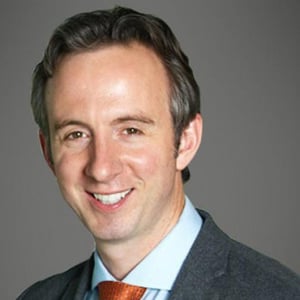
Professor of Law, University of Minnesota Law School
Professor James W. Coleman is a scholar of energy law. He specializes in North American energy infrastructure, transport, and trade. He is also a nonresident senior fellow at the American Enterprise Institute focused on energy policy.
Professor Coleman has testified before Congress on steps to speed up energy infrastructure permits. He also worked with a team of experts as part of Alberta's Royalty Review to revise the Canadian province's management of its vast oil and gas resources.
Before joining Minnesota, Professor Coleman taught at Southern Methodist University's Dedman School of Law, the University of Calgary’s law and business schools, and Harvard Law School. Earlier, he practiced environmental and appellate law at Sidley Austin in Washington, D.C., and clerked for the Honorable Steven M. Colloton of the U.S. Court of Appeals for the Eighth Circuit.
Professor Coleman received two degrees from Harvard University—a J.D. (cum laude) and B.A. in biology (magna cum laude with highest honors in the field). As a result of his undergraduate thesis on butterfly genetics, which required fieldwork in Central Asia, a species of lycaenid butterfly was named after him—Agrodiaetus ripartii colemani.
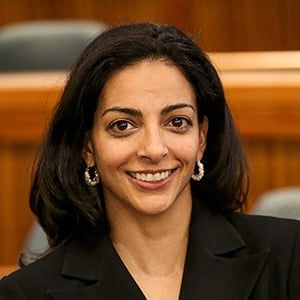
Associate Professor of Law, Suffolk University Law School
Sharmila L. Murthy is an Associate Professor at Suffolk University Law School, where she teaches and writes on issues of property law, environmental law, international environmental law, poverty, and human rights. A list of her scholarly publications is available.
Professor Murthy is active with the American Association of Law Schools. She currently serves as Chair of the International Human Rights Section, as Chair-Elect of the Environmental Law Section, and on the Executive Board of the Law and South Asia Studies Section. In 2017, she received the Woman of the Year: Faculty Division from the Suffolk Law Women of Color Law Student Association.
Previously, Professor Murthy was a Visiting Scholar at Harvard Kennedy School of Government, where she served as the lead investigator for water for the Project on Innovation and Access to Technologies for Sustainable Development through the Sustainability Science Program. She also co-founded the Human Rights to Water and Sanitation Program as a Fellow at Harvard Kennedy School’s Carr Center for Human Rights Policy. In addition, Professor Murthy has taught as part of the Water Diplomacy Workshop since 2013. In 2014, Professor Murthy was selected as a finalist for the United Nations Special Rapporteur on the human right to safe drinking water and sanitation.
Professor Murthy began her legal career as a public interest poverty lawyer. She was awarded a Skadden Fellowship to work with the Legal Aid Society of Middle Tennessee and the Cumberlands, where she created the Refugee and Immigrant Partnership Program for Legal Empowerment and litigated predatory lending and foreclosure rescue scam cases. For these efforts, she received the New Advocate of the Year award from the Tennessee Alliance of Legal Services. Professor Murthy also litigated complex and class action cases as an associate with Lieff Cabraser Heimann & Bernstein, where she represented members of the public in mortgage fraud and natural resource cases.
Professor Murthy received her JD from Harvard Law School, her MPA from Harvard Kennedy School of Government, and her BS in Natural Resources from Cornell University. She clerked for the Honorable Martha Craig Daughtrey on the U.S. Court of Appeals for the Sixth Circuit. She was also a U.S. Fulbright Scholar in India, where she studied the rural microfinance program of the Self-Employed Women’s Association.
Professor Murthy also volunteers with several civic and legal organizations. She currently serves on the Massachusetts State Board of the Conservation Law Foundation, on the Scientific Committee of WaterLex, and on the Steering Committee of the Boston Lawyer Chapter of the American Constitution Society (ACS). Previously, she was the President of the Tennessee Immigrant and Refugee Rights Coalition and the founding President of the Nashville ACS Chapter.

Professor Emeritus, Paul M. Hebert Law Center, Louisiana State University
In memoriam
Dr. John Baker is Professor Emeritus of Law, and previously the Dale E. Bennett Professor of Law, at Louisiana State University Law School. He is currently Visiting Professor at Peking University School of Transnational Law (via Zoom) and has been Visiting Professor at The Center for the Constitution, Georgetown Law School (2013-2020). He has also been a Visiting Fellow at Oriel College, the University of Oxford (2012-2014) and taught at Blackfriars Hall, Oxford in 2014. Dr. Baker has also been an adjunct Fellow at the Heritage Foundation (Spring, 2008) and a Distinguished Scholar at the Catholic University of America Law School (2011-12). He has taught at Tulane Law School, George Mason Law School, Pepperdine Law School, New York Law School, Hong Kong University, and the University of Dallas, School of Management and also taught and/or lectured in 17 foreign countries. Notable among his foreign visits are the
following: Visiting Professor at the University of Lyon III (France) (1999-2011); Visiting Professor at the Universidad de los Andes, Chile (2012), as a Fulbright Specialist (2006); and a Fulbright Scholar at various universities in the Philippines. Dr. Baker received his J.D., with honors, from the University of Michigan Law School and his B.A., magna cum laude, from the University of Dallas. He also earned a Ph.D. in Political Thought from the University of London. Baker has taught over a dozen different subjects, mostly courses in public law. His main areas of interest are Constitutional Law (particularly federalism and separation of powers), Criminal Law, Anti-Terrorism Law, International Law, Health Care Law, Mediation, and Comparative Law.
In addition to law review articles and book chapters, Dr. Baker’s academic publications include Hall's Criminal Law: Cases and Materials (with Benson, Force and George; 5th ed. Michie, 1993); An Introduction to the Law of the United States (ed. with Levasseur; University Press of America, 1992). He has also published on Forbes.com, FoxNews.com, in The Washington Times, and a number of times in The Wall Street Journal. He argues in federal court, including two oral arguments in the U.S. Supreme Court. For many years, he co-taught courses for the Federalist Society on separation of powers with the late Supreme Court Justice Antonin Scalia. In September 2016, he co-taught a Supreme Court seminar in China with Justice Samuel Alito. Following law school, he served as a law clerk in federal district court and as an assistant district attorney in New Orleans before joining LSU in 1975. While a professor, he has been as a consultant to USAID, USIA (since rolled into the State Department), the Justice Department, the U.S. Senate Judiciary Subcommittee on Separation of Powers, and the Office of Planning in the White House. He served on an ABA Task Force which issued the report, The Federalization of Crime (1998) and later as a consultant to the “Bi-Partisan Task Force on the Over- federalization of Crime” (2012-2014) created by the U.S. House Judiciary Subcommittee on Crime. Dr. Baker was a co-founder of the first iteration (1995) of Stratfor Inc., a global intelligence agency. He co-authored its first book: The Intelligence Edge (with Friedman, Friedman and Chapman; Crown Books/Random House 1997). In 2022, he began a short, weekly video podcast available on YouTube and Rumble, The Baker Brief.
Managing Partner, Faircloth, Melton & Keiser, LLC
Jimmy R. Faircloth, Jr., is the founder and managing partner of Faircloth, Melton & Keiser, LLC. He has over two decades of experience in a diverse and highly challenging practice involving hundreds of trials, hearings and appeals in many areas of the law, as well as a two-year stint as Executive Counsel to Governor Bobby Jindal. Mr. Faircloth is widely regarded as the legal architect of the 2008 Special Session on Ethics Reform and for having guided the Jindal administration through its early reform initiatives and the legal challenges posed by Hurricanes Gustav and Ike. He is one of only a few Louisiana attorneys with a masters degree in litigation, is Board Certified in Civil Trial Advocacy by the National Board of Trial Advocacy, and is AV rated by Martindale-Hubbell. Mr. Faircloth has practiced in some of the most high profile and complicated cases of the past decade. His practice involves complex commercial litigation, government law and litigation, and governmental relations.
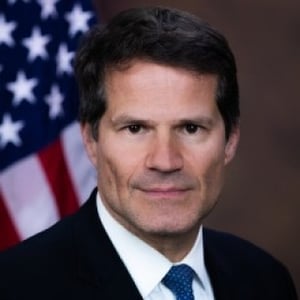
Solicitor General, United States of America
On April 4, 2025, D. John Sauer became the 49th Solicitor General of the United States. He previously served as Solicitor General of Missouri from 2017 to 2023.. Before that, he served as a federal prosecutor for five years and spent time in civil practice at boutique law firms, including the firm he founded, the James Otis Law Group. Mr. Sauer has first-chaired many jury and bench trials, and served as lead counsel in many appeals. He has presented oral argument in the U.S. Supreme Court, the U.S. Court of Appeals for the Eighth Circuit, the Supreme Court of Missouri, and many other state and federal appellate courts. Mr. Sauer served as a law clerk to Justice Antonin Scalia of the U.S. Supreme Court and Judge J. Michael Luttig of the U.S. Court of Appeals for the Fourth Circuit. He was a Rhodes Scholar and a magna cum laude graduate of Harvard Law School.
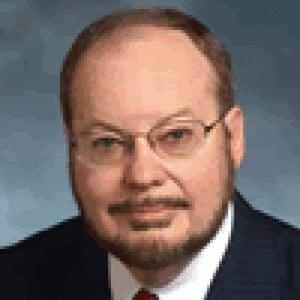
University Distinguished Professor of Political Science, Texas A&M University
George C. Edwards III is University Distinguished Professor of Political Science at Texas A&M University. He also holds the Jordan Chair in Presidential Studies and has served as the Olin Professor of American Government at Oxford and the John Adams Fellow at the University of London, and has held senior visiting appointments at Sciences Po-Paris, Peking University, Hebrew University of Jerusalem, and the U.S. Military Academy at West Point. He is an Associate Member of Nuffield College at the University of Oxford and was the founder and from 1991-2001 the director of The Center for Presidential Studies. In 2012-13, he will be Winant Professor of American Government at Oxford.
A leading scholar of the presidency, he has authored dozens of articles and has written or edited 25 books on American politics and public policy making. He is also editor of Presidential Studies Quarterly and general editor of the Oxford Handbook of American Politics series. Among his recent books, On Deaf Ears: The Limits of the Bully Pulpit examines the effectiveness of presidential leadership of public opinion; Why the Electoral College Is Bad for America evaluates the consequences of the method of electing the president; Governing by Campaigning analyzes the politics of the Bush presidency; and The Strategic President offers a new formulation for understanding presidential leadership. His most recent book,Overreach, analyzes presidential leadership during the Obama presidency.
Professor Edwards has served as president of the Presidency Research Section of the American Political Science Association, which has named its annual dissertation prize in his honor and awarded him its Career Service Award. A member of Phi Beta Kappa and a Woodrow Wilson Fellow, he has received the Decoration for Distinguished Civilian Service from the U.S. Army and the Pi Sigma Alpha Prize from the Southern Political Science Association. He is also a member of the Council on Foreign Relations. He has spoken to more than 200 universities and other groups in the U.S. and abroad, keynoted numerous national and international conferences, done hundreds of interviews with the national and international press, and can be heard on National Public Radio. Grants from the National Science Foundation, the Smith-Richardson Foundation, and the Ford Foundation have funded his work. He has served on the Board of Directors of the Roper Center and the Board of Trustees of the Center for the Study of the Presidency and on many editorial boards.
Dr. Edwards also applies his scholarship to practical issues of governing, including advising Brazil on its constitution and the operation of its presidency, Russia on building a democratic national party system, Mexico on elections, and Chinese scholars on democracy. He also authored studies for the 1988 and 2000 U.S. presidential transitions.
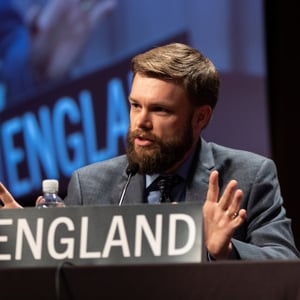
Founder and Executive Director, Save Our States
Trent England defends the Electoral College as the founder and director of Save Our States. He also serves as the David and Ann Brown Distinguished Fellow at the Oklahoma Council of Public Affairs.
Trent previously served as Executive Vice President of the Oklahoma Council of Public Affairs and earlier of the Olympia, Washington-based Freedom Foundation. He was also a morning-drive radio host, a state legislative candidate, a legal policy analyst at The Heritage Foundation, and a research analyst at the National Republican Senatorial Committee.
Trent is the author of "Why We Must Defend the Electoral College," co-author of "The Case Against Ranked-Choice Voting," and a contributor to "The Heritage Guide to the Constitution" and "One Nation Under Arrest: How Crazy Laws, Rogue Prosecutors, and Activist Judges Threaten Your Liberty." His writing has also appeared in the Wall Street Journal, Christian Science Monitor, Washington Times, and other newspapers. He is a producer of the feature-length documentary "Safeguard: An Electoral College Story."
Trent earned a law degree from The George Mason University School of Law and a bachelor of arts in government from Claremont McKenna College. He lives in Oklahoma City with his wife and their three children.

Chair, National Popular Vote
John R. Koza received his Ph.D. in computer science from the University of Michigan in 1972. He published a board game involving Electoral College strategy in 1966. From 1973 through 1987, he was co-founder, chairman, and CEO of Scientific Games Inc. where he co-invented the rub-off instant lottery ticket used by state lotteries. In the 1980s, he and attorney Barry Fadem were active in promoting adoption of lotteries by various states through the citizen-initiative process and state legislative action. Between 1988 and 2003, he taught a course on genetic algorithms and genetic programming at Stanford University, where he was a consulting professor. He is lead author of the book Every Vote Equal: A State-Based Plan for Electing the President by National Popular Vote and originator of the National Popular Vote legislation. He is Chair of National Popular Vote and a member of the Board of Directors. Koza has visited 29 states on behalf of National Popular Vote.
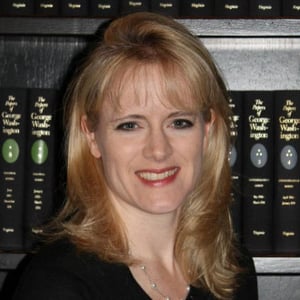
Author, The Indispensable Electoral College: How the Founders’ Plan Saves Our Country from Mob Rule and Enlightened Democracy: The Case for the Electoral College
Tara Ross is nationally recognized for her expertise on the Electoral College. She is the author of Why We Need the Electoral College (2019), The Indispensable Electoral College: How the Founders’ Plan Saves Our Country from Mob Rule (2017), We Elect A President: The Story of our Electoral College (2016), and Enlightened Democracy: The Case for the Electoral College (2d ed. 2012). She is also the author of She Fought Too: Stories of Revolutionary War Heroines (2019), and a co-author of Under God: George Washington and the Question of Church and State (2008) (with Joseph C. Smith, Jr.). Her Prager University video, Do You Understand the Electoral College?, is Prager’s most-viewed video ever, with more than 60 million views.
Tara often appears as a guest on a variety of talk shows nationwide, and she regularly addresses civic, university, and legal audiences. She’s contributed to several law reviews and newspapers, including the National Law Journal, USA Today, the Washington Examiner, The Hill, The Washington Times, and FoxNews.com. She’s appeared before institutions such as the Cooper Union, Brown University, the Dole Institute of Politics, and Mount Vernon. She’s appeared on Fox News, CSPAN, NPR, and a variety of other national and local shows.
Tara is a retired lawyer and a former Editor-in-Chief of the Texas Review of Law & Politics. She obtained her B.A. from Rice University and her J.D. from the University of Texas School of Law. She resides in Dallas with her husband and children.

Dr. John Eastman is the former Henry Salvatori Professor of Law & Community Service and former Dean at Chapman University's Dale E. Fowler School of Law, where he had been a member of the faculty since 1999, specializing in Constitutional Law, Legal History, and Property. He is a founding director of the Center for Constitutional Jurisprudence, a public interest law firm affiliated with the Claremont Institute that he founded in 1999. He has a Ph.D. in Government from the Claremont Graduate School and a J.D. from the University of Chicago Law School, and a B.A. in Politics and Economics from the University of Dallas. He serves as the Chairman of the Board of the National Organization for Marriage.
Prior to joining the Chapman law faculty, Dr. Eastman served as a law clerk to the Honorable Clarence Thomas, Associate Justice, Supreme Court of the United States, and to the Honorable J. Michael Luttig, Judge, United States Court of Appeals for the Fourth Circuit and practiced law with the national law firm of Kirkland & Ellis. Dr. Eastman has also represented numerous clients in important constitutional law matters and has argued before the Supreme Court. On behalf of the Claremont Institute Center for Constitutional Jurisprudence, he has participated as amicus curiae before the Supreme Court of the United States, U.S. Courts of Appeals, and State Supreme Courts in more than one hundred cases of constitutional significance, including Boy Scouts of America v. Dale, Zelman v. Simmons-Harris (the school vouchers case), Kelo v. New London, Ct. (eminent domain), and Van Orden v. Perry (the 10 Commandments case). He has also appeared as an expert legal commentator on numerous television and radio programs, including C-SPAN, Fox News, PBS, NewsHour, and The O'Reilly Factor.
Claire Sanders Clements Dean's Professor of Law, UC Berkeley School of Law

Professor of Law, Antonin Scalia Law School, George Mason University
Professor of Law Michael S. Greve joined the faculty of the Antonin Scalia Law School, George Mason University in fall 2012 after having served as John G. Searle Scholar at the American Enterprise Institute (AEI), where he specialized in constitutional law, courts, and business regulation and served as chairman of the Competitive Enterprise Institute. Prior to joining AEI, Greve was founder and co-director of the Center for Individual Rights, a public interest law firm specializing in constitutional litigation.
Greve has served previously as an adjunct professor at a number of universities, including Cornell and Johns Hopkins Universities, and has been a visiting professor at Boston College since 2004. He was awarded a PhD and an MA in government by Cornell University. Greve also earned a Diploma from the University of Hamburg in Germany.
A prolific writer, Greve is the author of nine books and a multitude of articles appearing in scholarly publications, as well as numerous editorials, short articles, and book reviews. He is a frequent speaker for professional and scholarly organizations and has made many appearances on radio and television.
In addition Greve has provided congressional and state legislative testimony, has lobbied and consulted in federal agency proceedings, and has provided litigation services and management in over 30 cases, including matters before the U.S. Supreme Court.

William T. Comfort, III Professor of Law, New York University School of Law
Roderick Hills teaches and writes in public law areas, including constitutional law, local government law, land-use regulation, administrative law, and statutory interpretation. His focus in each area is on the rules and policies governing division of powers between central and subcentral governments. He holds bachelor’s and law degrees from Yale University. Following law school, he served as a law clerk for Judge Patrick Higginbotham of the US Court of Appeals for the Fifth Circuit and practiced law in Colorado. Hills previously taught at the University of Michigan Law School from 1994 to 2006. He is a member of the state bar of New York and the U.S. Supreme Court.

Professor of Law, Antonin Scalia Law School, George Mason University
ILYA SOMIN is Professor of Law at George Mason University and the B. Kenneth Simon Chair in Constitutional Studies at the Cato Institute. His research focuses on constitutional law, property law, democratic theory, federalism, and migration rights. He is the author of Free to Move: Foot Voting, Migration, and Political Freedom (Oxford University Press, revised and expanded edition, 2022), Democracy and Political Ignorance: Why Smaller Government is Smarter (Stanford University Press, revised and expanded second edition, 2016), and The Grasping Hand: Kelo v. City of New London and the Limits of Eminent Domain (University of Chicago Press, 2015, rev. paperback ed., 2016), coauthor of A Conspiracy Against Obamacare: The Volokh Conspiracy and the Health Care Case (Palgrave Macmillan, 2013), and co-editor of Eminent Domain: A Comparative Perspective (Cambridge University Press, 2017). Democracy and Political Ignorance has been translated into Italian and Japanese.
Somin’s work has appeared in numerous scholarly journals, including the Yale Law Journal, Stanford Law Review, Northwestern University Law Review, Georgetown Law Journal, Critical Review, and others. Somin has also published articles in a variety of popular press outlets, including the New York Times, Washington Post, Wall Street Journal, Los Angeles Times, CNN, NBC, The Atlantic, USA Today, Boston Globe, US News and World Report, South China Morning Post, National Law Journal and Reason. He has been quoted or interviewed by the New York Times, Washington Post, Wall Street Journal, Time, Newsweek, The Economist, the Christian Science Monitor, the Financial Times, The Guardian, the Associated Press, CBS, MSNBC, NPR, BBC, Reuters, the Canadian Broadcasting Corporation, the Australian Broadcasting Corporation, Radio Free Europe/Radio Liberty, Al Jazeera, and the Voice of America, among other media.
Somin’s writings have been cited in decisions by the United States Supreme Court, multiple state supreme courts and lower federal courts, and the Supreme Court of Israel. He is co-counsel for the plaintiffs in VOS Selections, Inc. v. Trump, a case challenging the constitutionality of President Trump’s “Liberation Day” tariffs. Somin has testified on the use of drones for targeted killing in the War on Terror before the US Senate Judiciary Subcommittee on the Constitution, Civil Rights, and Human Rights. In 2009, he testified on property rights issues at the United States Senate Judiciary Committee confirmation hearings for Supreme Court Justice Sonia Sotomayor. Somin writes regularly for the popular Volokh Conspiracy law and politics blog, now affiliated with Reason magazine (previously affiliated with the Washington Post from 2014 to 2017). From 2006 to 2013, he served as Co-Editor of the Supreme Court Economic Review, one of the country’s top-rated law and economics journals.
Somin has served as a visiting professor at the University of Pennsylvania Law School. He has also been a visiting professor or scholar at the Georgetown University Law Center, the University of Hamburg, Germany, the University of Torcuato Di Tella in Buenos Aires, Argentina, Uriel Reichman University in Israel, and Zhengzhou University in China. He is a University Affiliate of the Schar School of Policy and Government at George Mason University, and an affiliated faculty member of the George Mason University Institute for Immigration Research. Before joining the faculty at George Mason, Somin was the John M. Olin Fellow in Law at Northwestern University Law School in 2002-2003. In 2001-2002, he clerked for the Hon. Judge Jerry E. Smith of the U.S. Court of Appeals for the Fifth Circuit. Professor Somin earned his B.A., Summa Cum Laude, at Amherst College, M.A. in Political Science from Harvard University, and J.D. from Yale Law School.
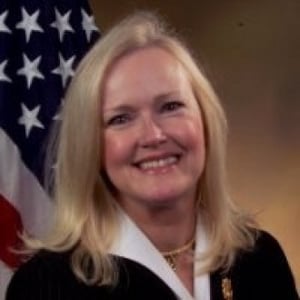
Founder, Law Office of Eileen J. O'Connor PLLC
After nearly 30 years as a national tax specialist with the IRS and major accounting firms, Eileen J. O’Connor, now an attorney in private practice, was Assistant Attorney General for the Justice Department’s Tax Division for six years during the administration of President George W. Bush and a member of then-President-elect Trump’s Treasury Department Transition Team. She focuses on federal administrative and tax law.

Deep Dive Episode 92 – The Constitutionality of California’s Cap and Trade Agreement with Quebec
James W. Coleman, Sharmila L. Murthy
The state of California and the Canadian province of Quebec have agreed to link their...
Warning to Corporate Counsel: If State AGs Can Do This to ExxonMobil, How Safe Is Your Company? - Podcast
John S. Baker
Nation-states have long fought wars for control of oil. In a novel development, American states...
Coming Soon to a School Near You?: Common Core - Podcast
Jimmy R. Faircloth, D. John Sauer
The Common Core State Standards attempts to define what K-12 students should know at the...
The National Popular Vote Plan
George C. Edwards, Trent England, John R. Koza, Tara Ross
When Alexander Hamilton spoke of the Electoral College, he said: “[If] the manner of it...
Panel I: Competitive and Cooperative Federalism
John C. Eastman, Malcolm M. Feeley, Michael S. Greve, Roderick M. Hills, Ilya Somin
Prof. Malcolm Feeley, UC Berkeley Law Dr. Michael Greve, AEI Prof. Roderick Hills, NYU Law...
SCOTUScast 4-22-08 featuring Eileen O'Connor
Eileen J. O'Connor
On April 15, 2008, the Supreme Court decided MeadWestvaco Corp. v. Illinois Dept. of Revenue, ruling...